DTLA

Los Angeles’s Central Library on 5th Street & Hope

Los Angeles’s Central Library on 5th & Flower

On Thursdays, I find myself taking the Expo Line Train into downtown Los Angeles, or as the locals call it, DTLA. Before the free mindful meditation classes at 12:30 (taught by UCLA’s Mindful Awareness Research Center—or MARC), I spend a couple hours reading in the literature and fiction center on the third floor. Then I make my way to lunch at one of several locations: Chinatown, Olvera Street, Little Tokyo, or the Grand Central Market on Broadway. Sometimes I stop at the Last Bookstore at 5th and Spring. When the afternoons are hot, as it was today, I return by the air-conditioned Santa Monica Bus Line Rapid 10 Freeway Flyer, which lets me off a block from home.

Since I started exploring the downtown area, I have gotten a better, more favorable feel for the city in which I live. LADT is nowhere near as white bread as the outlying areas, and there are interesting ethnic enclaves scattered about.

When it gets a little cooler, I hope to wander farther afield, perhaps taking in bits of Koreatown and Filipinotown.


Do You Ever Want to Live There?

Parque El Carmen in Lima’s Pueblo Libre Municipalidad

Parque El Carmen in Lima’s Pueblo Libre Municipalidad

If you’ve read my blog for any length of time, you know that I love to travel. The question that many people have asked me is, “Yes, but wouldn’t you like to live there?”

The answer is very simply no. It’s not because I have any great hopes for the United States, but because I know that many of the places I love to visit have or have had insurmountable difficulties which make me think twice.

For instance, I love Iceland; but I dread the idea of six dark months out of every year in which the weak sun comes up for only a few minutes in the middle of the afternoon. And even though virtually everyone speaks English, I would probably have difficulties getting my kennitala (registration number), because officialdom likes to do its business in Icelandic.

Of all the countries I have visited, I would probably like Argentina the best. Even though my Spanish is adequate for travel, however, it would not fare too well dealing with the authorities in matters relating to housing and taxation. Also, all the South American countries I like (including Peru, Uruguay, and Chile) have had problems in the not too distant past with rightist dictators and left wing insurgencies.

We’re not quite there in the U.S.—yet!

As for Hungary, Slovakia, France, England, Scotland, Belgium, and the Netherlands—they’re nice, but I have a feeling they are just at the point of entering a bad time, what with the hoards invading from the Middle East and Africa. I just don’t see a good path around the problems they are just beginning to face.

There’s always Canada, I suppose, and I really like the Canadian people, even the Québecois, but I think I’ll stick it out in the U. S. of A. for the time being.


The Five Year Curse

It Seems That Computers Last for Only About Five Years

It Seems That Computers Last for Only About Five Years

Poor Martine! Every time my computer craps out, she is at the keyboard. And it’s not her fault—though it’s not easy to convince her of that—it’s just that the system just lost track of its hard drive. I hit the on/off switch and held it until the screen went dark. Then it seemed to come up normally when I punched it again.

But my Dell Optiplex 990 is now five years old, and five is a dangerous age for desktops. I’m going to start the replacement process this week and be even more fanatical about backing up my files. It looks as if I’ll have to start using Windows 10, which shouldn’t be much of a problem, as that is what I use at work.

If you see that I do not post for three or four days in a row, it’ll be because I am in transition. Wish me luck!

Favorite Films: La Belle et la Bête

Jean Marais as the Beast and Josette Day as Beauty

Jean Marais as the Beast and Josette Day as Beauty

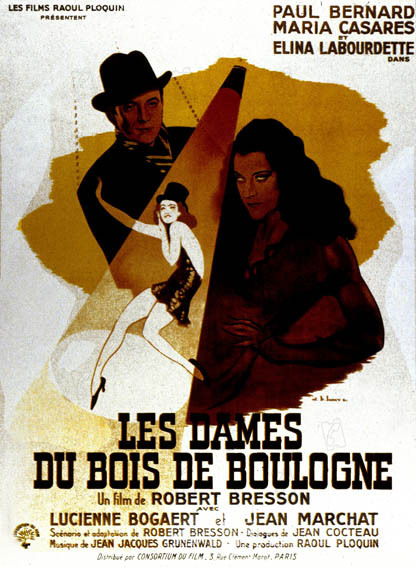
Today was probably the tenth or fifteenth time I have ever viewed Jean Cocteau’s La belle et la bête (1946). Each time, I was enthralled by the magic; and, today, for the first time I introduced Martine to the film, fearing that she wouldn’t like it. She loved it! So much so that she asked about Cocteau’s other films.

The version Cocteau used was written by Jeanne-Marie Leprince de Beaumont and published in 1757 along with other fairy tales. Cocteau seems to have set the story in the 17th century. Riding horseback to town through the forest to inquire about his merchant ships, which were overdue in port. On his way back, he stops at a magical castle, from whose gardens he cuts a rose to give to his daughter Belle. At once, he is confronted by the beast, who demands either his life or that of one of his daughters.

Here the story seems almost to merge with the Cinderella fairy tale, in that Belle’s two sisters  are vain and selfish. But Belle returns (via a magic horse called La Magnifique) to the Beast’s castle. The Beast falls for her and tells her that he requests to have dinner with him once a day at seven o’clock, whereupon he would ask if she would become his wife.

In the end, she falls for the Beast. Once she pledges her troth to him, he is transformed into a resplendent prince who flies away with her through the air.

The strength of the film is Cocteau’s devotion to the magic of the story. In the film prologue, he writes:

Children believe what we tell them. They have complete faith in us. They believe that a rose plucked from a garden can bring drama to a family. They believe that the hands of a human beast will smoke when he kills a victim, and that this beast will be shamed when confronted by a young girl. They believe in a thousand other simple things. I ask of you a little of this childlike simplicity, and to bring us luck, let me speak four truly magic words, Childhood’s Open Sesame: “Once upon a time…”

Over the last fifty-odd years, this film has become a perennial favorite of mine. The nobility of Jean Marais in the role of the Beast and the loveliness of Josette Day as Belle have become hard-wired in my brain.

I highly recommend seeing this film either on the big screen or the Criterion DVD version (which I saw today). It is one of the evergreen masterpieces of the cinema.


The Infamous Shad Bake

Major General George E. Pickett, C.S.A.

Major General George E. Pickett, C.S.A.

He is most famous for leading a spectacularly failed charge against an entrenched elevated position at the Battle of Gettysburg. But he was not to blame for that: The charge was ordered by Lee and executed as ably as possible considering that it was foredoomed to end in disaster.

But that was not the last act of Pickett’s career in Lee’s Army of Northern Virginia. Pickett was commanding general of C.S.A. forces at Five Points, off the right flank of the Petersburg defenses. Lee had given his general direct orders regarding holding his position: “Hold Five Forks at all hazards. Protect road to Ford’s Depot and prevent Union forces from striking the Southside Railroad. Regret exceedingly your forced withdrawal, and your inability to hold the advantage you had gained.” [Italics mine]

The tone of this order did not sit well with General Pickett. Whereupon, feeling that he had covered his bases adequately in case Sheridan should attack, Pickett accepted an invitation from a fellow officer to join in a picnic of shad that had been caught in the Nottoway River. Both he and Fitzhugh Lee left their forces to subordinates and indulged in a nice shad bake.

Unfortunately, Sheridan picked that point to attack Five Forks and stage one of the most decisive victories of the long Siege of Petersburg, sending the defenders scampering for their lives.

Needless to say, that did not sit well with Robert E. Lee, who terminated Pickett’s command a few days later.


In at the Finish

Abe Lincoln Walking he Streets of Richmond in April 1865

Abe Lincoln Walking he Streets of Richmond in April 1865

It is not generally remembered that Abraham Lincoln was visiting the Union lines during the final breakthrough of the siege of Petersburg. Once  General Sheridan crushed the Confederate resistance at Five Points, there was no more holding back of the Grant’s army: Richmond would have to be abandoned.

Even before it was entirely safe to do so, Lincoln had Admiral Porter sail up the James River and land him in the Rebel capital. On April 4, 1865, he walked around what remained of the city (part of which was still in flames). At first, he was accompanied only by a few Naval officers and men, until General Weitzel, who controlled the Union forces in the city, provided an adequate guard for him.

It is a pity that Matthew Brady was not there to take photographs of the lanky President being approached by Black Virginians, who recognized him at once and sang hymns of thanksgiving. Of course, he received a much less welcoming response from most White residents.

I am close to finishing Volume III of Shelby Foote’s great The Civil War: A Narration, which covers the period from the Red River Campaign of 1864 to Lee’s surrender at Appomattox. Since the beginning of the month, I have read little else, and my mind is full of Civil War battles and the awful destruction of thousands of Americans of both sides. To this day, the butcher’s bill for the Civil War dwarfs the sum total of casualties of all other wars in which the U.S. has participated since its inception in 1776.

The End of Summer

White Peaches

White Peaches

I do not regard Labor Day as the end of summer. Instead, I track the fruits that are in season. My favorites—cherries and apricots—have a short season lasting scarcely more than a month or so. Lasting about two or three months are when white peaches are in season. (I prefer them to yellow peaches, which I find to be too sweet.) When white peaches become pulpy, as I have observed at several places this week, summer is over.

Coming up is the season of Fuyu persimmons and pomegranates, which will last until some time in December. Then, or even before, I will have to switch to apples—preferably Honeycrisps. The worst time of the year for fruits is January and February, until the new season strawberries are ready for harvest.

As a diabetic, I am dependent on fruits for natural sweetness that does not tear down my health. And that’s why I am so fastened on fruit. I love going to places like Oak Glen in San Bernardino County, past Yucaipa, for fresh apples. There is a fruit stand called Cornejo’s near Fillmore where I can find wonderful fresh-picked fruit (though right now they are into Valencia oranges). The best fruits I have ever eaten were purchased from orchards in Tulare County on the road to Sequoia National Park.

So it goes, the year in fruit.


Stymie the Pollsters!

It Would Be Nice If This Election Unified Us, But....

It Would Be Nice If This Election Unified Us, But….

We’ve all had it up to here with the damnable Presidential Election of 2016. I think it’s time to throw some monkey wrenches, particularly at the work of political pollsters. When they call you in the evening (it’s always in the evening), politely but firmly decline to state your preferences or, in fact, to answer any questions at all. Just tell them it’s in violation of your religion.

Let’s face it, more than half the polls are abominations, but even the ones that aren’t deserve to be stymied at every turn. Until the candidates themselves lose all faith in the polls, the horrendous campaign meat grinder will continue to burn money and patience until we are so disgusted as to consider renouncing our citizenship.

Whether its Cheeto-Brain or the Great Stone Spouse who wins, no one will be particularly happy. We are in a period that resembles the Roman Empire after the Antonine “good” emperors, when Rome had one ruler after another mercifully assassinated by the Praetorian Guard, until the reign of the truly dreadful Elagabalus from AD 218 to 222 .

Marching Through Georgia

The Route of Sherman’s March to the Sea

The Route of Sherman’s March to the Sea

Much has been written about William Tecumseh Sherman’s March to the Sea in terms of its savagery—but almost nothing in terms of its ingenuity. After Atlanta was destroyed by Sherman’s forces, Confederate General John Bell Hood decided to attack toward Tennessee, destroying Sherman’s supplies.

But what Sherman had decided instead was to avoid Hood’s army altogether and march to Savannah, where he could be resupplied with Union ships waiting near the harbor. So he divided his army into two columns and, while marching, supplied his army with provender hijacked from plantations in the rich farm land along the route. In fact, Sherman arrived in Savannah with more cattle than he started from in Atlanta. And his men were well fed with turkeys, hogs, sweet potatoes, molasses, and corn that they were able to commandeer enroute.

William Tecumseh Sherman - 1893 Stamp Issue

William Tecumseh Sherman – 1893 Stamp Issue

It had been always been the Union Army’s strategy to fight and defeat the enemy’s army. Even Ulysses S. Grant, besieging Petersburg on the outskirts of Richmond, had doubts about the plan, but finally decided to give his approval. Sherman wasted no time in disappearing from the scene, fighting no battles until he re-emerged at Savannah.

The Confederates were thoroughly confused. Hood was marching his army into Tennessee, where it ran into George Thomas’s forces at Franklin and Nashville. Other Confederates thought that Sherman’s goal was Macon or Augusta, which they dutifully reinforced, only to be avoided by Sherman’s columns as they attacked no city larger than Milledgeville, which was until 1868, the State Capitol.

I am currently reading Shelby Foote’s The Civil War: A Narrative, Red River to Appomatox, which provides a Southern view of the end of the Civil War. Even Foote does not accept that Sherman’s soldiers were particularly brutal, though there was a considerable amount of agricultural theft, freeing of slaves, and destruction of property. It seems to have been under control, however, and Foote makes no claims of murder or rapine.


Walk Like an Egyptian

Part of the Painted Facade of Grauman’s Egyptian Theater in Hollywood

Part of the Painted Facade of Grauman’s Egyptian Theater in Hollywood

If it’s Labor Day weekend, it’s also time for the 52nd Annual Cinecon Classic Film Festival. So Martine and I invaded Hollywood, parked our chariot at Loew’s Hollywood Hotel, and proceeded to view several newly restored films at Grauman’s Egyptian Theater. These included:

  • An episode of a hokey old serial called Jungle Mystery.
  • Three Laurel & Hardy rareties, including Berth Marks and Come Clean.
  • A silent comedy called More Pay—Less Work from 1926.
  • A Columbia film released during World War Two which uniquely accuses the Nazis of atrocities against the Jews: None Shall Escape (1944) starring a radiant Marsha Hunt and directed by Andre de Toth.

Cinecon has thinned out a bit since last year. President Robert S. Birchard, having served in that capacity since 1998, died of a heart attack in May. Many such as my late friends Norman Witty and Lee Sanders had also passed on. Every year, there are more canes and more geriatric ailments in evidence. The pity of it is that Cinecon has difficulties recruiting younger members, who would consider the restored 1920s and 1930s films as ancient history. The organization would have to move more into the 1950s-1970s to get the attention of Generation Xers, not to mention Millennials.

The Hollywood Walk of Fame

The Hollywood Walk of Fame

Hollywood itself was filled with young tourists of the tattooed and pierced variety who sashayed up and down the street shooting pictures of the commemorative stars on the sidewalk with their cell phones. On holiday weekends, the Boulevard is a big-time crowd scene, with scores of tour buses taking them to see homes of the rich and famous—or whatever it is they show them. Whenever they accost me for a tour, I offer to give it myself, saying “Hey, I live in this dump!”