Revisiting: Anna Politkovskaya

Anna Politkovskaya: Read Her Books to Understand Today’s Russia

Anna Politkovskaya: Read Her Books to Understand Today’s Russia

This is an article I wrote for the old Yahoo! 360 back in 2008. Currently, I am reading Is Journalism Worth Dying For? Final Dispatches.

I have just had a harrowing experience, having finished reading Anna Politkovskaya’s A Dirty War: A Russian Reporter in Chechnya. We don’t hear much about Chechnya these days: Vladimir Putin has succeeded in muddying the waters by getting us all to regard the entire civilian population of the province as Muslim terrorists. Based on Politkovskaya’s reportage, there are actually four groups of terrorists in Chechnya:

  1. The actual terrorist bands themselves, highly mobile groups widely dispersed in the mountains of Chechnya, Ingushetia, and Daghestan.
  2. The Chechen civilian government under the Russians, which cynically exploits the suffering of the local population for financial gain.
  3. Contract soldiers, the Russian equivalent of Blackwater, which is a force on its own. They maintain pseudo-checkpoints which are simply an excuse for mayhem.
  4. The Russian Army itself, which authorizes local “cleansing” operations, consisting of robbery, torture, rape, and murder without being held responsible to anyone. Also, Russian soldiers themselves are frequently the victims of other units which have a bone to pick with them.

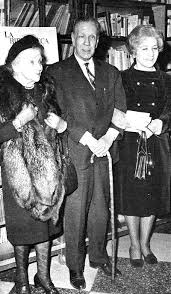
Running through the book are a series of stories about the Grozny Old Peoples’ Home. Most of the sick, elderly tenants are Russians, not Chechens; Russian Orthodox, not Islamic. Yet the residents are treated by all parties as the enemy. Politkovskaya (photograph above) wrote several articles explaining their plight, checking back with them every few months. They had no food or medical care, and were afraid to venture outside for fear of running afoul of armed parties of any description.

The only hospital in bombed-out Grozny had a few volunteer doctors, but no medicines. Such medications as were sent from Moscow were intercepted by the Chechen [pro-Russian] civilian government and sold on the black market.

When there were too many casualties in a Russian army operation, it was not unusual for the wounded to be taken not to a nearby military hospital, but to a more distant civilian hospital where there was no electricity, no medications, and only a skeleton staff. Whether they live or die, they are considered as deserters and therefore do not adversely affect any Russian officer’s military reputation. Many of the wounded soldiers die without identification, leading their families to spend years and a small fortune trying to find out what happened to their sons. (I wonder if this sort of thing was also going on [during the Soviet occupation of] Afghanistan.)

If you leave your apartment in Grozny, be very careful. You might find well-hidden anti-personnel mines at your doorstep or even within the apartment. This is a common cause of death throughout Chechnya.

When Politkovskaya encountered particularly obnoxious politicians or generals, she would publish their cell phone numbers in the Novaya Gazeta, for whom she worked at that time, and urge people to say to their face what they thought of them.

As one could expect, a woman like this makes lots of powerful enemies. On October 7, 2006, the crusading journalist was shot to death in the elevator on the way to her apartment in Moscow. After an “investigation” of sorts, no guilty party was found. Vladimir Putin, who most likely ordered the assassination, points the finger at some unnamed gunman from the West. After all, he says, she had no influence in Russia: Her audience were mostly liberals in Europe and America.

Politkovskaya was a singularly brave journalist and paid the ultimate price for it. Compare them to American journalists who were supinely complicit in the atrocities of the Bush-Cheney administration. No awards for courage there.

He’ll Probably Get Away With It

Vladimir Putin Shows Us He’s a Man’s Man

Vladimir Putin Shows Us He’s a Man’s Man

As far as the Crime of the Crimea is concerned, Vladimir Putin will probably not only get away with it: He’ll come out ahead in the hearts and minds of the Russian voters. He stood up for the poor Russian majority in the Crimea, where they were being harassed by Ukrainian thugs, such as the notorious Svoboda Party skinheads, who are actually part of the government in Kiev.

We are dealing with a part of the world where good guys are few and far between. All the leaders of the Ukraine, including the somewhat cute Yulia Tymoshenko, were corrupt to varying degrees, with the deposed Viktor Yanukovych bidding fair to be the worst. Admittedly, we’re not talking about people who are as bad-ass as Putin himself. (If you want some background about Putin’s crimes, read whatever you can find by Anna Politkovskaya, the Novaya Gazeta reporter who investigated the Chechen War and who Putin had assassinated at the door of her flat.)

If you go back a few years to the Second World War, you will see some strange things happening: there were guerrillas who were simultaneously fighting Hitler and Stalin, and conducting their own pogroms just for fun. (These are the goons who morphed into the Svoboda Party.)

So was it “right” for Russia to annex the Crimea? Strictly speaking, no. But then, the Crimea was a gift to the Ukrainian SSR from Nikita Khrushchev, himself a Ukrainian, some fifty years ago. Before then? It was a part of Russia. Demographically, it’s heavily Russian; so it was perhaps inevitable. But do I think well of Putin for pulling his strong man act? Not really, he is to my mind a contemptible cur, a murderer at arm’s length, and quite possibly a Dick Tracy villain. (But then, that is true of many of our politicians as well, no?)

One final note: Two days of a run-up in the stock markets of Europe and the United States indicates to me that most of the talk about sanctions is pure swamp gas. It would only strengthen Putin.

The Digital Divide

With Every New Technology, There Is a Die-Off

With Every New Technology, There Is a Massive Die-Off

Little by little, I am becoming aware of a tendency in our culture to downplay everything that is before the Internet. Wikipedia and Google are so convenient that we tend to ignore older sources of knowledge. And now that libraries are trashing many of their old books and periodicals and replacing them with computers, there is a real danger that many of the old sources that used to pass for knowledge are slowly disappearing.

For example, I have many books that pre-date the ISBN code. When I read one of them, I have some difficulty describing the book to GoodReads.Com because the likelihood is that there is no reference to the edition I have. And when I try to sell the books on Half.Com (which is owned by eBay), I can’t enter the book because it lacks the ISBN code used to identify the edition. It’s actually keeping me from reading my essays by Sainte-Beuve or many of the hundreds of Oxford World Classics I own in hardbound. Ever since I got in the habit of reviewing everything I read, I tend to hesitate with some of my older editions. Just in front of me, for example,  is a 1926 Alfred A. Knopf edition of Arthur Machen’s The Canning Wonder. I could review the book on Goodreads only if I answer a questionnaire about the edition. If I wanted to sell it on Half.Com, I’d be out of luck.

Most at risk is the history of our civilization based on original archival materials that date back to the Middle Ages. Fortunately, the Europeans are willing to spend the money (in most cases) to protect their history. But what about the Americans? All it would take is for some idiot like Ted Cruz or Rand Paul to sniff at supporting libraries, and millions of words of our country’s history would go by the wayside.

But what about Google Books, you might ask? It is a noble effort, but only a small percentage of old books have been scanned. I collect the works of Sir Richard F. Burton (no relation to the actor). He’s not exactly a popular item, but he is one of the most exciting explorers and travelers of the Nineteenth Century. I can find Burton’s Two Trips to Gorilla Land and the Cataracts of the Congo, but only Volume I has been scanned. The same is true for his Exploration of the Highlands of Brazil. Oh, the books will still be around, but they will be fabulously expensive. (On the other hand, I have been able to find some Burton titles on Gutenberg.Com that I could never afford to buy in print—so the argument cuts both ways.)


It’s Like … Whatever

You’ll Never Guess the Most Frequently Used Word

You’ll Never Guess the Most Frequently Used Word

Today I had to work in an un-air-conditioned high rise on a day when the temperature rose into the 90s. Midway through, I took a break and walked over to the UCLA campus, where I had lunch and hung out in the student bookstore for a while. Along the way (it was one mile in each direction), I heard snippets of a lot of conversations. You’ll never guess what the most frequently used work was. It was, like, like.

Let’s get Bill O’Reilly involved in this, because it looks as if there is a concerted attack by young women on the verb “to be.” Nothing any more is, it is “like.” It’s much worse than the War on Christmas or the Amphibious Assault on Arbor Day. When was it that young women realized they they weren’t anything in particular, just “like” something. The similes multiply so much that it resembles this at times:

Is Moon Unit Zappa to Blame for All This?

Is Moon Unit Zappa to Blame for All This?

By the way, note the misspelling of the word “Academy” in the lower left of the above illustration. That’s what happens when one starts over-using the word “like.” A certain level of brain rot takes place, and it spreads to other areas. I think it all started with Moon Unit Zappa singing “Valley Girl” back in 1982. Almost overnight, young women adopted the idiom:

Like, OH MY GOD! (Valley Girl)
Like-TOTALLY (Valley Girl)
Encino is like SO BITCHEN (Valley Girl)
There’s like the Galleria (Valley Girl)
And like all these like really great shoe stores
I love going into like clothing stores and stuff
I like to buy the neatest mini-skirts and stufl
It’s like so BITCHEN cuz like everybody’s like
Super-super nice…
It’s like so BITCHEN..,

On Ventura, there she goes
She just bought some bitchen clothes
Tosses her head ’n flips her hair
She got a whole bunch of nothin’ in there.

Yep, it sure sounds like “a whole bunch of nothin’ in there.” Wonder what they sound like in philosophy class trying to discuss something, like, really PROFOUND. Oh, like whatevah!

Bird of Paradise

Bird of Paradise at Los Angeles Arboretum

Strelitzia reginae at Los Angeles Arboretum

Even before I came to Los Angeles for the first time in 1966, I could identify the Bird of Paradise, or Strelitzia reginae. For me, it always represented the exoticism of the tropics. It went with all those palm trees and other flora that one never found in Cleveland or New Hampshire. There is a funny thing about those exotic plants, including the Bird of Paradise. Whereas Eastern plants are more tactile, the palms and flowers in Southern California are not friendly to the touch.

That is especially true of palm trees. When I found out that rats like to live in palm trees, I lost all interest in touching them. As for the Bird of Paradise, which is actually an import from South Africa, where it is called the Crane Flower, it has no inviting scent, nor is it soft and approachable. It’s like many succulents, many of which are interesting looking, but do not reward close scrutiny.

Sometimes I wonder if the people in Los Angeles resemble the local plant life in that regard. We’re all from somewhere else, like the Bird of Paradise, but we’re hard tom get to now. There is a certain feeling of noli me tangere. (Do not touch!)

What Would I Have Done Differently?

Our Embattled President

Our Embattled President

As we approach the end of the Obama presidency, a few thoughts are running through my mind, mostly along the lines of what I would have done differently. I am really not cut out to be a politician: From me. one is more likely to get a smoldering look along the lines of “What’s with you, f*ckwit?” than a glad hand.

The President has made an honest attempt to reach across the aisle to the Republicans and conduct his office for the benefit of all Americans. I would probably have been better known as the leader who invited the Republican leadership to the Oval Office, from which they mysteriously and unaccountably disappeared. Instead of playing golf with John Boehner and Mitch McConnell, I would have introduced those two traitorous obstructionists to a cat-’o-nine-tails and liberally (I use the adverb advisedly) slathered chile habañero onto their wounds. I would be like those ancient Roman leaders who urged certain opposition leaders to depart the political scene by opening their veins in a hot bath, lest they face something a whole lot worse.

Okay, so I’m not a nice guy, especially to people I perceive as having done me dirt. None of this turning the other cheek business. After all, these Evangelical tools don’t follow that rule, so why should I?

Barack Obama was probably too nice, too reasonable to be President. Within those constraints, I think he did a good job at a truly horrible time. Americans are being jerked around big time by a combination of Corporate Fat Cats and a few million Secessionists who just want to blow away anyone who looks at them cross-eyed or won’t let them marry their twelve-year-old cousins.

Attack of the Killer Fungus

Bakersfield in a Windstorm

Bakersfield in a Windstorm

I have always felt that, as long as I’ve lived in the American Southwest, I’ve never wanted to live somewhere that had the word “Valley” in its name. After reading Dana Goodyear’s article entitled “Devil Dust” in the January 20, 2014 issue of The New Yorker, I find that I have better reasons for saying this than ever before. The culprit is a deadly fungus that dwells in the soil called Coccidiotes immitis, which causes a disease for which there is no cure called coccidioidomycosis, better known as Valley Fever:

C. immitis is adapted to lodge deep: its spores are small enough to reach the end of the bronchioles at the bottom of the lungs. We can breathe them in, but we can’t breathe them out. Once in the lung, the spore circles up into a spherule, defined by a chitinous cell wall and filled with a hundred or so baby endospores. When the spherule is sufficiently full, it ruptures, releasing the endospores and stimulating an acute inflammatory response that disrupts blood flow to the tissue and can lead to necrosis. The endospores, each of which will become a new spherule, travel through the blood and lymph systems, allowing the cocci to spread, as one specialist says, “anywhere it wants.” In people with weakened immune systems, cocci can take over.

Unfortunately, cocci, as it’s called, is endemic throughout the desert Southwest, as well as the desert portions of Central and South America. When there is  building, farming, clearing, or drilling activity, it gets stirred up and transported by the hot winds that characterize the deserts of the New World.

From 1998 to 2011, the Centers for Disease Control reported a 1,000% increase in the number of reported cases. The sad thing is that, because the more temperate areas are unaffected, there is less likelihood of a pharmacological solution to the disease. I’m sure that scientists in Europe and the Eastern part of the United States would prefer to find solutions to diseases that are much more widely disseminated.

So consider me a lifelong non-dweller in the valleys of California. I don’t care how cheap the housing is!


A Neglected Poet

Rain as a Subaltern

Rain as a Subaltern

Thomas Hardy is not one of our most widely-read poets. If anything, people are far more familiar with his novels, such as Jude the Obscure, Tess of the D’Urbervilles, and Far from the Madding Crowd. Fortunately, after years of neglect, his poems are coming into their own. The other night, I was reading an essay on the 20th century Russian poet Joseph Brodsky in J. M. Coetzee’s Stranger Shores: Literary Essays 1986-1999, and I came across the following:

[Joseph] Brodsky’s system can best be illustrated from the essay on Thomas Hardy. Brodsky regards Hardy as a neglected major poet, “seldom taught, less read,” particularly in America, cast out by fashion-minded critics into the limbo of “premodernism” (On Grief, pp. 373, 315, 313)

It is certainly true that modern criticism has had little of interest to say about Hardy. Nevertheless, despite what Brodsky says, ordinary readers and (particularly) poets have never deserted him. John Crowe Ransom edited a selection of Hardy’s verse in 1960 [I have a copy]. Hardy dominates Philip Larkin’s widely read Oxford Book of Twentieth-Century English Verse (1973), with 27 pages as opposed to 19 for Yeats, 16 for Auden, a mere 9 for [T. S.] Eliot. Nor did the Modernist avant-garde dismiss Hardy en bloc. Ezra Pound, for instance, tirelessly recommended him to younger poets. “Nobody has taught me anything about writing since Thomas Hardy died,” he remarked in 1934.

Here is my favorite of Hardy’s poems. Picture a man struggling to walk through a rainstorm:

The Subalterns

I

“Poor wanderer,” said the leaden sky,
“I fain would lighten thee,
But there are laws in force on high
Which say it must not be.”

II

–“I would not freeze thee, shorn one,” cried
The North, “knew I but how
To warm my breath, to slack my stride;
But I am ruled as thou.”

III

—“To-morrow I attack thee, wight,”
Said Sickness. “Yet I swear
I bear thy little ark no spite,
But am bid enter there.”

IV

—“Come hither, Son,” I heard Death say;
“I did not will a grave
Should end thy pilgrimage to-day,
But I, too, am a slave!”

V

We smiled upon each other then,
And life to me had less
Of that fell look it wore ere when
They owned their passiveness.

Hardy can be at one and the same time incredibly simple and incredibly deep. At the same time, we have sickness and death acting with compassion against the poor traveler. Who can write such a poem today?

Tarnmoor’s ABCs: Film

Mack Sennett Bathing Beauties

Mack Sennett Bathing Beauties

I was very impressed by Czeslaw Milosz’s book Milosz’s ABC’s. There, in the form of a brief and alphabetically-ordered personal encyclopedia, was the story of the life of a Nobel Prize winning poet, of the people, places, and things that meant the most to him. Because his origins were so far away (Lithuania and Poland) and so long ago (1920s and 1930s), there were relatively few entries that resonated personally with me. Except it was sad to see so many fascinating people who, unknown today, died during the war under unknown circumstances.

This blog entry is my own humble attempt to imitate a writer whom I have read on and off for thirty years without having sated my curiosity. Consequently, over the next few months, you will see a number of postings under the rubric “Tarnmoor’s ABCs” that will attempt to do for my life what Milosz accomplished for his. I don’t guarantee that I will use up all 26 letters of the alphabet, but I’ll do my best.

These Mack Sennett Bathing Beauties are not what you usually think of when you think of the movies, but that was about a hundred years ago. Film has been around for more than a century, and I have been  a film freak for almost half that time. It all started at Dartmouth College, where there were frequent free screenings at Fairbanks Hall. One afternoon in my freshman year, I saw Carl Theodor Dreyer’s Day of Wrath (1943), about witchcraft in seventeenth century Denmark. I was hooked.

Although my original intention was to become a professor of English, somewhere during my second or third year at college, I decided to switch to film. The Hopkins Center had just opened, and there was a large beautiful theater for screening films. The Dartmouth Film Society put on an ambitious year-long Alfred Hitchcock Retrospective, and my career choice began to waver. When, finally, Arthur L. Mayer, the author of Merely Colossal, came to teach a class in film history, my mind was made up.

Dartmouth had a long history of ties with the film industry. Its Baker Library was the home of the Irving Thalberg collection of Hollywood scripts. Graduates included such film luminaries as Joseph Losey, Robert Ryan, Budd Schulberg, David Picker, and Max Youngstein. Even before my senior year, I had decided to do my graduate work in film history and criticism. During the summer of 1965, I went with my parents to New York, mainly to see Haig P. Manoogian, who ran the film department at New York University. Mr. Manoogian was kind enough to see me, but not kind enough to encourage me—although he was a favorite of Martin Scorsese, who went to school there. I guess he was more interested in film production. (That summer, I also saw the New York World’s Fair of 1964-1965.)

That left the University of Southern California (USC) and UCLA. One of my Dartmouth classmates from the Class of 1965 had attended UCLA. When he came up to Dartmouth to visit, he discouraged me about USC, which he said was a slum and Smog Central.

So I came out to Southern California, where I still live. I attended graduate school at UCLA for several years until Professor Howard Suber put the kibosh on my budding career as a film professor. He was a lackadaisical academic who supposedly was working on a shot-by-shot analysis of Citizen Kane and who didn’t much like movies. I was about to write a thesis about the Westerns of John Ford with Robert Epstein as head of my thesis committee, but then Suber replaced him with himself. At that point, I knew I was finished, as there was little love lost between us. Years later, I joined a letter-writing campaign to have his tenure denied, calling him a cross between Mr. Pickwick and Caligula.

Although I’ve always loved film, I had by this time taught myself how to operate and program computers, and I got a job at System Development Corporation in Santa Monica. Curiously, the person I replaced at SDC was a young woman who had been murdered by a UCLA film student. So here I am today, a computer expert at a Westwood accounting firm, still in love with film, though greatly disappointed because all the great filmmakers I idolized are dead, and the quality of films now being produced has fallen markedly.

Tarnmoor’s ABCs: Earthquakes

Earthquake Fissure in Road

Earthquake Fissure in Road

I was very impressed by Czeslaw Milosz’s book Milosz’s ABC’s. There, in the form of a brief and alphabetically-ordered personal encyclopedia, was the story of the life of a Nobel Prize winning poet, of the people, places, and things that meant the most to him. Because his origins were so far away (Lithuania and Poland) and so long ago (1920s and 1930s), there were relatively few entries that resonated personally with me. Except it was sad to see so many fascinating people who, unknown today, died during the war under unknown circumstances.

This blog entry is my own humble attempt to imitate a writer whom I have read on and off for thirty years without having sated my curiosity. Consequently, over the next few months, you will see a number of postings under the rubric “Tarnmoor’s ABCs” that will attempt to do for my life what Milosz accomplished for his. I don’t guarantee that I will use up all 26 letters of the alphabet, but I’ll do my best.

If there is any natural phenomenon that frightens me, I would have to say it is earthquakes. During my years in Southern California, I have lived through two big ones: The Sylmar earthquake on February 9, 1971 (Richter 6.6) and the Northridge earthquake of January 17, 1994 (Richter 6.7).

On Friday, we had a small tremor centered on nearby Marina Del Rey. It was only a 3.2, but I acted as if it were just the start of a much bigger shake. Sitting in my library reading Proust, I dropped the book, jumped clear over the hassock and headed to the hallway just outside my bathroom to brace myself for what (perhaps) was to come. It didn’t. In the meantime, Martine peered around the corner and asked what was wrong. Did she feel the quake? Yes, but it was only a tiny one. But there I was, standing in the doorway with my heart racing, preparing myself for the worst.

The origins of my fear go back to 1994, when I used to sleep on an improvised futon in my living room. It was around 4:30 am when the earth began to shake in the darkness of the pre-dawn hours. Lights flashed whenever a nearby transformer exploded. Things were falling down from the walls and shelves, and some of them even rolled to where I was lying in terror as the sounds and smells and shaking had incapacitated me. What happened immediately after, I don’t recall because I actually lost my memory. All I know was that I was picked up by the police several hours later carrying two gallon jugs of purified water on Santa Monica Boulevard with blood flowing down my right leg.

Little by little, my terror subsided, only to be ramped up again with each aftershock. The damage caused by the quake was substantial: some nearby buildings were askew, and my kitchen had to be cleaned up with a shovel.

Ever since then, I do not go to bed without laying out all my clothes for the next day on a chair between the bedroom and the front door. Walking barefoot on broken glass and crockery is not a pleasant experience. So even now, a small temblor is capable of bringing back the terror, for however short a time.