Hidden in the Credits

Production Designer Sir Ken Adam

Production Designer Sir Ken Adam

Above all, we tend to give credit to the actors in a movie. Those who know a little more about how films will tend to credit the director. But it doesn’t stop there. What about producers like Val Lewton and Henry Blanke, cinematographers like Gregg Toland and Gabriel Figueroa, editors like Slavko Vorkapich, and—more to the point here—production designers like Sir Ken Adam?

I remember having a Dartmouth Film Society dinner with Hollywood producer Max Youngstein in the mid 1960s. He had just produced Fail-Safe (1964). When I asked him if the production had been designed by Ken Adam, he positively beamed at me. He prided himself for having found someone else who gave the film a Ken Adam touch.

Why? Ken Adam was responsible for film designs which will forever be associated in our minds with the best of the 1960s, such as Doctor No (1962) and Doctor Strangelove (1964).

Doctor No’s “Reception Room” in the Film of the Same Name

Doctor No’s “Reception Room” in the Film of the Same Name

In addition there was the War Room in Doctor Strangelove, or How I Learned to Stop Worrying and Love the Bomb (1964):
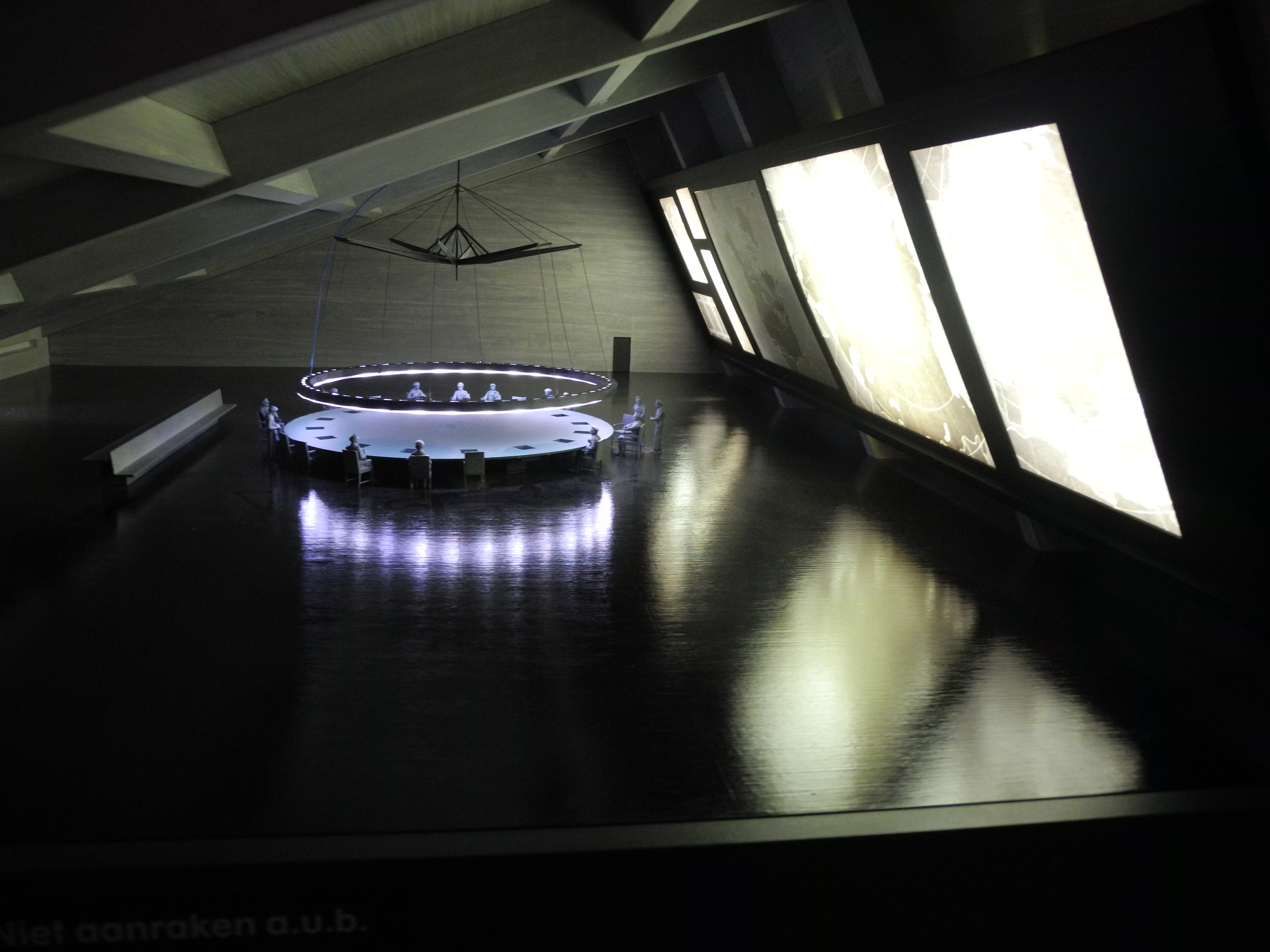
 

Kubrick’s War Room in Doctor Strangelove

Model for Kubrick’s War Room in Doctor Strangelove

As one who lived through that anxious time, I will always remember Ken Adam’s sets for these and other films. Perhaps he is unknown to the general film-going public, but now that we lost him, his vision will be missed.
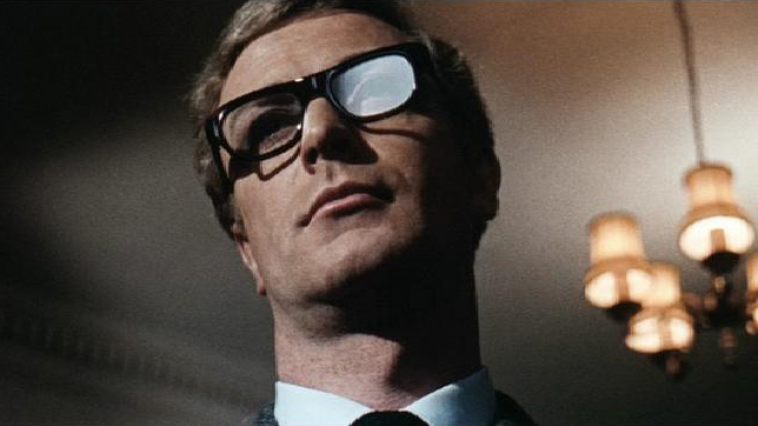
Favorite Films: The IPCRESS File

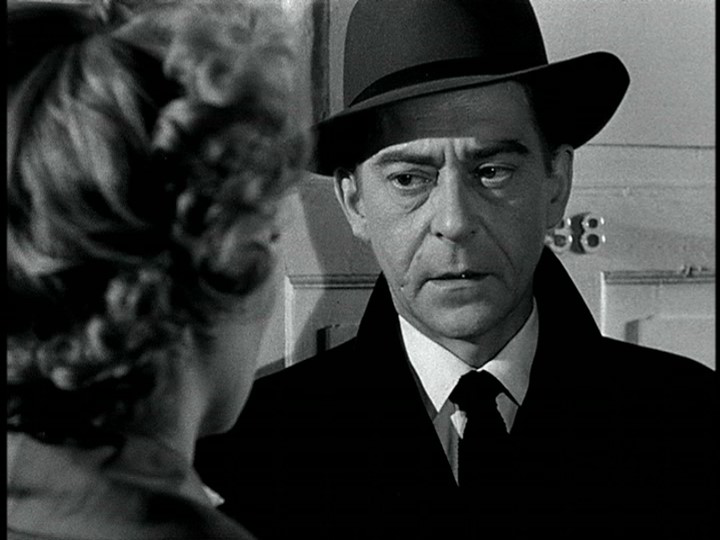
Michael Caine in The IPCRESS File (1965)

Michael Caine in The IPCRESS File (1965)

Michael Caine co-starred with a pair of glasses (curiously similar to the ones that Rick Perry sported while he was still running for President) in a spy film that was most un-James-Bond-like, despite the fact that Harry Saltzman produced both The IPCRESS File and many of the classic Bonds.

(By the way, if you’re wondering why IPCRESS is in all caps, it’s because it’s an acronym for Induction of Psycho-neuroses by Conditioned Reflex with Stress, the brainwashing scheme used by Commie spies to “turn” British scientists.)

The IPCRESS File was Michael Caine’s first big shot at stardom. His spy is unnamed in Len Deighton’s novels, but you couldn’t very well have an unnamed character in a film who is constantly being directly addressed by his friends and co-workers. It was Caine who came up with the moniker Harry Palmer, and it stuck.

Palmer’s world of spies is much dirtier than Bond’s. You wouldn’t suspect M or Q or Miss Moneypenny for being a Russian plant; but in Harry Palmer’s WOOC(P) [SIC] organization no one is near as squeaky clean.

In the film, Harry accidentally kills one CIA operative in an underground garage who was tailing him too closely and is suspected of killing another whose bullet-riddled body is found in his flat.

Kidnapped from a train, Harry finds himself in an Albanian prison being brainwashed to forget everything he knew about the IPCRESS project. Some people, and Harry is one of them, just can’t succumb to brainwashing; and he comes out ahead.

Sidney J. Furie’s film direction is edgy and effective. I had not seen the film since my college days when I saw that it was being screened on Turner Classic Movies. Coincidentally, I had read Deighton’s novel just a couple of weeks ago.


… And the Envelope Please …

#OscarsSoPolitical

#OscarsSoIrrelevant

This shouldn’t come as a surprise to anyone who knows me, but I have ignored the Oscars for the last thirty or forty years. For one thing, they have rarely honored the films I liked, and they primarily reflect the opinions of a lot of privileged old white men. Just as significant: I rarely see new films.

Los Angeles is something of a company town, so the media is full of “countdowns” to the Oscars. Do they really need a pre-game show?

Fortunately, a lot of people watch this and other awards shows. As with the Super Bowl, that clears the freeways of a lot of excess traffic. I plan to take advantage by going with Martine to visit my friends Bill and Kathy Korn in Altadena.

No offense to Chris Rock, who will probably be a lot more entertaining than the films being honored.

Tea with Mary Ellen

William S. Hart, Silent Star of Westerns

William S. Hart, Silent Star of Westerns

Martine and I usually visit the William S. Hart house in Newhall at least twice a year. It is operated by the Los Angeles Natural History Museum and receives numerous visitors, most of whom have little idea of who Hart was. I have seen many of his silent Westerns, such as Hell’s Hinges (1916), Blue Blazes Rawden (1918), and Tumbleweeds (1925).

Moreover, I knew his son William S. Hart, Jr., who taught classes in real estate at Cal State Northridge. I spoke as an expert in demographic data for site location to his classes several times in the early 1980s.

For a three month period in 1922, William S. Hart, Sr. was married to Hollywood actress Winifred Westover. During this time, William, Jr. was conceived. Several years later their divorce was finalized.

William, Sr., lived out the rest of his life at La Loma de los Vientos, his hilltop house in Newhall, with his sister Mary Ellen, who had to move about in a wheelchair. She assisted her brother in writing and publishing a series of novels with Western themes.

The Door to Mary Ellen’s Little Tea House

The Door to Mary Ellen’s Little Tea House

Mary Ellen’s brother never married again. They lived together until 1943, when Mary Ellen died. William followed her three years later. They are both buried in Green Wood Cemetery in Brooklyn, New York.

There was a strain of loneliness in the family. Once, when Bill Hart, Jr., offered me a ride after lecturing to one of his classes, he told me he married a single mother with a child and suggested I do so as well as a means of staving off isolation. Bill died in 2004.

\

Beware of Deadly Hype

Berkeley Breathed’s Take on the New Star Wars

Berkeley Breathed’s Take on the New Star Wars

For the last several months, I have been closely following the cartoons of Berkeley Breathed, author of the Bloom County comic strip, newly resuscitated in view of the sudden rise of Donald Trump.  You can follow the progress of Opus, Bill the Cat, Steve Dallas, Milo, Binkley, and the gang on Breathed’s Facebook page. (His last name, by the way, is pronounced BRETH-edd.)  That’s where I got the two posters displayed on this page.

I was a big fan of the original Star Wars, which I saw previewed at Twentieth Century Fox studio before it was premiered. It was electrifying with its gritty view of outer space. But then they just kept adding curlicues to it, and for me the magic palled. I still love science fiction, but I stick with the classics, such as Philip K. Dick, Stanislaw Lem, and Boris and Arkady Strugatsky.

Say, Is That a Pooper Scooper, Boba?

Say, Is That a Pooper Scooper, Boba?

You probably will not find me sleeping outside the theater to be first in line for the premiere of the Disney Star Wars: Instead, I will be wending my way to Palm Desert to visit my brother and his family.

The Franchise

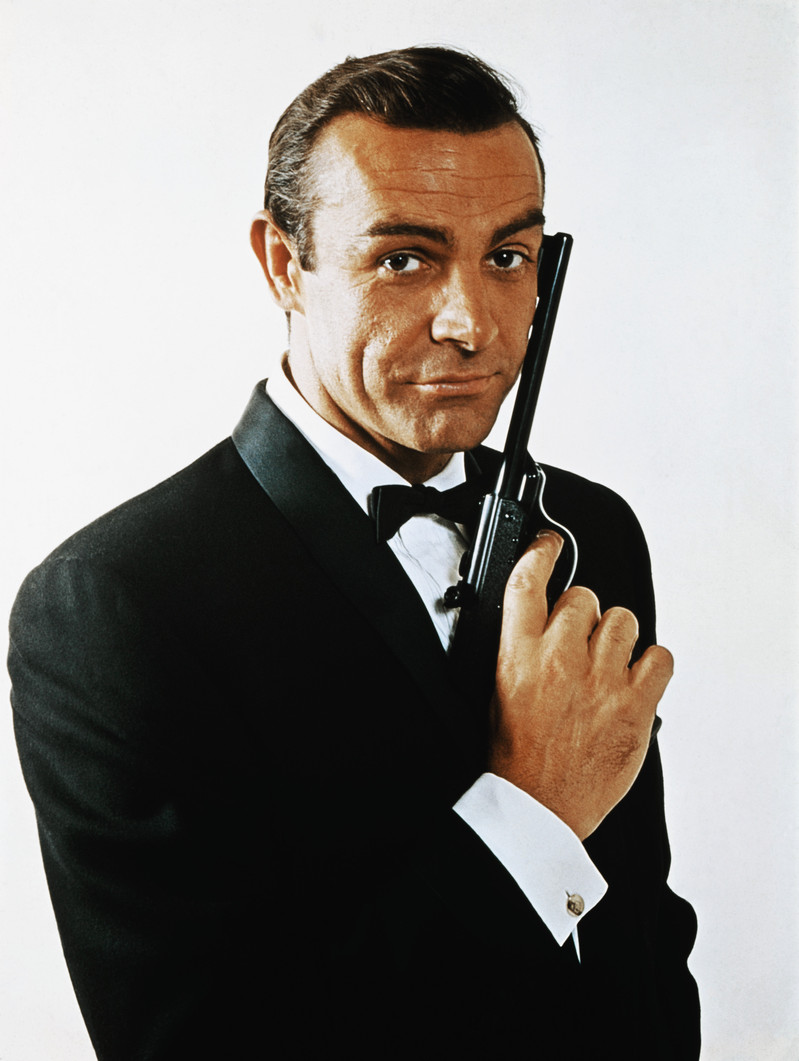
Sean Connery as James Bond

Sean Connery as James Bond

It’s been going strong for over half a century and shows no signs of letting up. I saw my first James Bond film, Doctor No (1962), at the Nugget Theater in Hanover, New Hampshire, when I was a freshman at Dartmouth College. I saw my most recent 007 epic, Spectre (2015), at the Village Cinema in Recoleta, Buenos Aires, last month.

When I was a grad student at UCLA, I wrote a feature article for the Daily Bruin entitled “James Bond in Vietnam,” about how the technologically superior U.S. military were losing to the Viet Cong—that we were, in effect, hypnotized by the gadgets of war furnished by our military’s equivalent of Q.

What amazes me is that, during its long run, the James Bond franchise has maintained a high level of quality despite the fact that not all of the subsequent Bonds were up to the level of Sean Connery. When you go to see a Bond film, you know what you’re going to get: a high level of action and entertainment. The sophisticated British secret agent with his taste for martinis that are “shaken, not stirred” makes all of us peasants wish that we were as suave as he is.

Over the last six months, I have been reading the Ian Fleming Bond books in succession, having just finished Doctor No, the sixth in the series. The books are good, but not quite up to the level of the films.


A Halloween Present for You

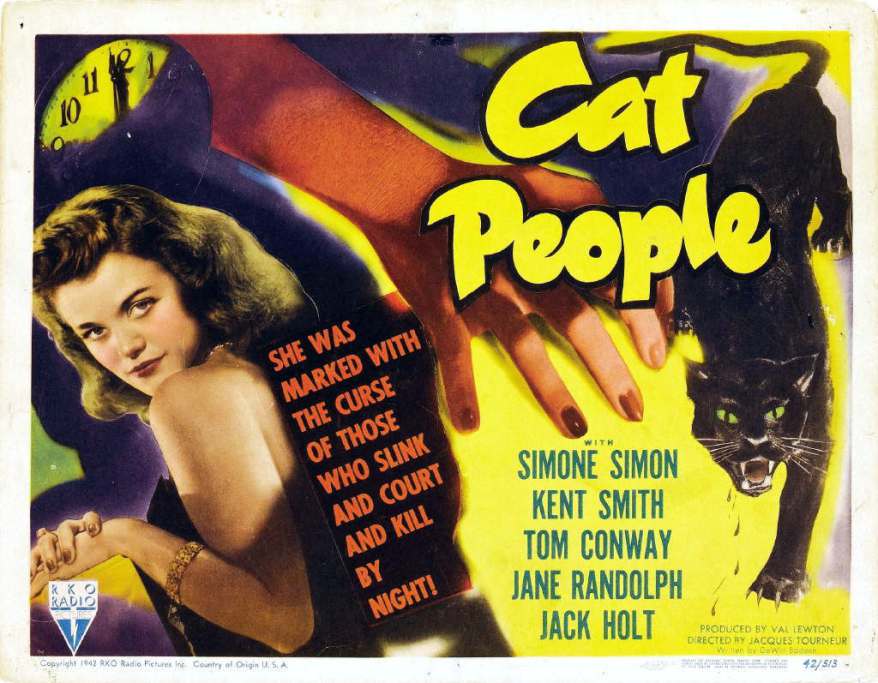
Lobby Card for Val Lewton’s The Cat People

Lobby Card for Val Lewton’s The Cat People

The following is a re-post which originally appeared in 2015.

There are horror films, and there are horror films. They can scare you out of your wits, like Curse of the Demon (1957) and Poltergeist (1982), or they can make you understand that the world is both light and dark in equal measure, like Val Lewton’s great films of the 1940s, such as The Cat People (1942).

Val Lewton, born Vladimir Ivanovich Leventon in Yalta, Russia, was interested in making low budget films to compete with Universal Pictures’ highly successful Frankenstein, Dracula, Mummy, and Wolf Man franchises. The title for The Cat People was assigned to Lewton by RKO, and Lewton went to work on a psychological thriller in which there is no overt violence. Perhaps the greatest scene takes place in a swimming pool in which a young woman is swimming all by herself at night. In the shadows, we imagine there is a black panther, but neither the swimmer nor we the viewers are absolutely sure.

Even though Halloween is just about over, I highly recommend all the following Lewton films:

  • The Cat People (1942)
  • I Walked with a Zombie (1943)
  • The Leopard Man (1943)
  • The Seventh Victim (1943)
  • The Ghost Ship (1943)
  • The Curse of the Cat People (1944)
  • The Body Snatcher (1945)
  • Isle of the Dead (1945)
  • Bedlam (1946)

PICCatPeopleTitle

All are great films worthy of being seen multiple times. They are short, thoughtful, extremely moody, and highly successful. Also available is a Turner Classics biopic about Lewton’s career called Shadows in the Dark narrated by Martin Scorsese. Martine and I watched it last night and recommend you see it.

In all of Hollywood’s history, Lewton was probably the only film producer who controlled his products as if he were the director. Even though Lewton directorial protegés Jacques Tourneur, Robert Wise, and Mark Robson went on to have brilliant careers, when one is watching a Lewton film, one recognizes it as a Lewton film.

The Middle Ground Between Light and Shadow

Rod Serling at Work

Rod Serling at Work

“There is a fifth dimension, beyond that which is known to man. It is a dimension as vast as space and as timeless as infinity. It is the middle ground between light and shadow, between science and superstition.” It is this middle ground that television writer Rod Serling ruled in he years between 1955 and 1975, when he died at the age of 50 of a heart attack.

After the Second World War, Americans were delighted they had won, but frightened by the devil’s bargain we had made with the atomic bomb. And once the Russians were able to not only produce their own super weapons but match us megaton for megaton, there was a sick feeling in the pit of our stomachs. I remember that period vividly, especially around the time the Berlin Wall was erected. Between then and the Cuban Missile Crisis of 1962, I was convinced that the world would end in mutual nuclear destruction.

Apparently Hollywood thought so, too. There were films like Them (1954) about giant ants affected by nuclear radiation; The Giant Gila Monster (1959); and the many films of Bert I. Gordon such as The Amazing Colossal Man (1957) and Village of the Giants (1965). The uncertainty spread to visitors from outer space who may or may not have been drawn to us by our discovery of nuclear power. The Day the Earth Stood Still (1951) and The Thing (1951) are classical examples.

It was into this world that Rod Serling came with his great television series, The Twilight Zone. He scripted many of the episodes himself, and it quickly became evident that he was a master of the genre. Today alone, I saw four episodes at the Paley Center for Media in Beverly Hills. The best of the stories was “And When the Sky Was Opened” (1959) starring Rod Taylor about three spacemen who crash land back on earth after their ship temporarily disappeared from radar screens. The three not only start disappearing one by one, but all memory of each one is wiped clean as if he never existed, both from the minds of the people who knew them and from the documentary record of their existence.

In my opinion. The Twilight Zone is one of the best five shows ever to appear on TV. Some day, I hope to buy all the episodes on DVD (which costs a pretty penny) because I know that the stories are great and will always affect me every time I see them.

He Iz What He Iz

“Popeye Meets Sindbad the Sailor”

“Popeye the Sailor Meets Sindbad the Sailor”

What a strange little world it is! First of all, there’s this sixtyish bowlegged sailor named Popeye. Then there’s this skinny beanpole of a young woman named Olive Oyl. Filling out the cast are the bull-necked giant Bluto the Sailor, who is always in conflict with Popeye, and occasionally the moocher Wimpy, whose great love is hamburgers, for which he will gladly pay you Tuesday.

The amazing thing is that it works. Popeye is always pushed to his limit, when suddenly he pulls out a can of spinach from his tight shirt, tears it open and, to the sound of a trumpet cadenza, swallows its contents, thereby becoming invincible and multi-talented. And, of course, successfully rescuing Olive Oyl from the leering Bluto.

I love all the Popeye shorts from the early days, when they were animated by Max and Dave Fleischer, whether they were in black and white or color. The color two-reelers, including “Popeye the Sailor Meets Sindbad the Sailor” (1936), as shown above; “Popeye the Sailor Meets Ali Baba’s Forty Thieves” (1937); and “Aladdin and His Wonderful Lamp” (1939) were my own personal favorites—but only by a hair.

Last weekend, I watched a great DVD of selected Popeye shorts put together by Steve Stanchfield of Thunderbean Animation. I was completely hooked.


Poster for Robert Altman’s Popeye (1980)

Poster for Robert Altman’s Popeye (1980)

I also loved director Robert Altman’s live version of Popeye with Robin Williams as the eponymous sailor and Shelley Duvall as the perfect Olive Oyl. Altman captures the craziness of the original cartoons while adding a sophisticated visual element in the ramshackle port city of Sweet Haven, ruled by a mafioso Bluto.

Both the originals—especially those made by the Fleischers—and Altman’s tribute deserve to be seen and enjoyed by unsophisticates such as myself.


Favorite Films: Rififi (1955)

Jean Servais in Rififi

Jean Servais in Rififi

It was another blast furnace day in Los Angeles (after numerous mendacious weather forecasts predicting a cool-down). So Martine and I decided to take in a movie. The one we picked was a Jules Dassin classic called Rififi (Du rififi chez les hommes). According to the lyrics of a song in the film sung by a torch singer, the term rififi means “rough and tumble,” which is a pretty good description of the film’s action.

The cast is relatively little known, with the brilliant Jean Servais in the lead role of Tony, a sickly ex-con with puffy eyes that look as if they were stuffed full of coffee grounds. All the characters in the film are hoods, and it is as if we were watching a Greek tragedy enacted before our eyes. One of the four jewel thieves, the safe cracker, is played by Dassin himself.

After first refusing to join in the heist of a luxe Paris jewelry, Tony changes his mind and takes over the planning of the job. All goes well, until a ring from the job is found on the finger of a dancer working for a rival mob. From this point on, the plot works itself out, with bodies strewn all over Paris.

Dassin was an American director working in France to escape the Blacklist. In the United States, he is responsible for such films as Naked City (1948), Never on Sunday (1960), and Topkapi (1964).

The print we saw look as fresh and new as if we were watching its first run some sixty years ago.