My Muses Part 1

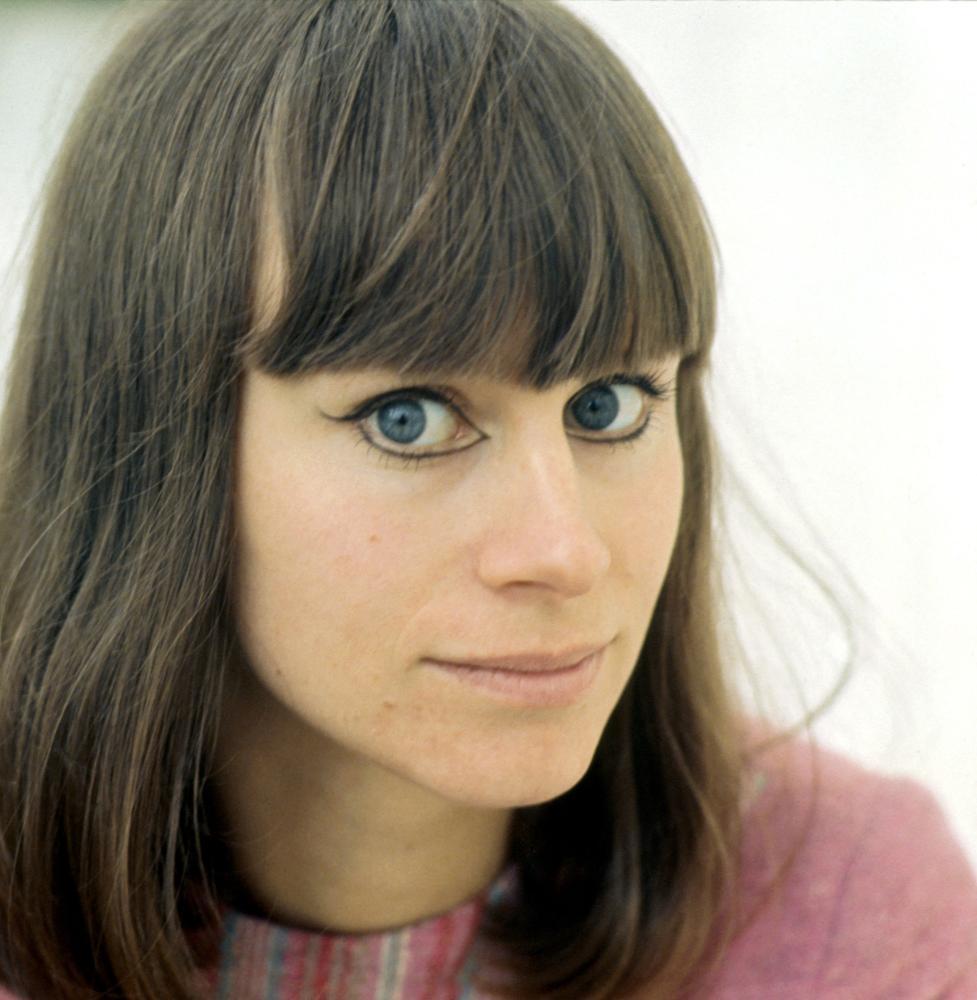
Rita Tushingham

I had always viewed myself as something of an ugly duckling. In grade school, I was always close to being the shortest kid in class. Also, I was always a bit on the scruffy side—and I still am. So when I wound up in college, some six hundred miles from home (and me never having been more than a few miles from home before), I found myself gravitating toward the movies.

The first film I saw projected at Dartmouth’s Fairbanks Hall was Carl Dreyer’s Day of Wrath (1943), a film about witchcraft that got me started thinking about film as an art form. I was particularly impressed by the Danish actress Lisbeth Movin, who plays a young witch married to a minister. I don’t think I had ever seen an actress quite so beautiful. Now, some sixty years later, I still think of her as radiant.

Lisbeth Movin in Dreyer’s Day of Wrath

I was always enthralled by the beauty of certain actresses, even though I felt like Caliban in front of most girls. At the time, Dartmouth College had only male students; so I was relatively safe from making a fool of myself.

My next “muse” was Rita Tushingham who made a big impact on me during the 1960s.

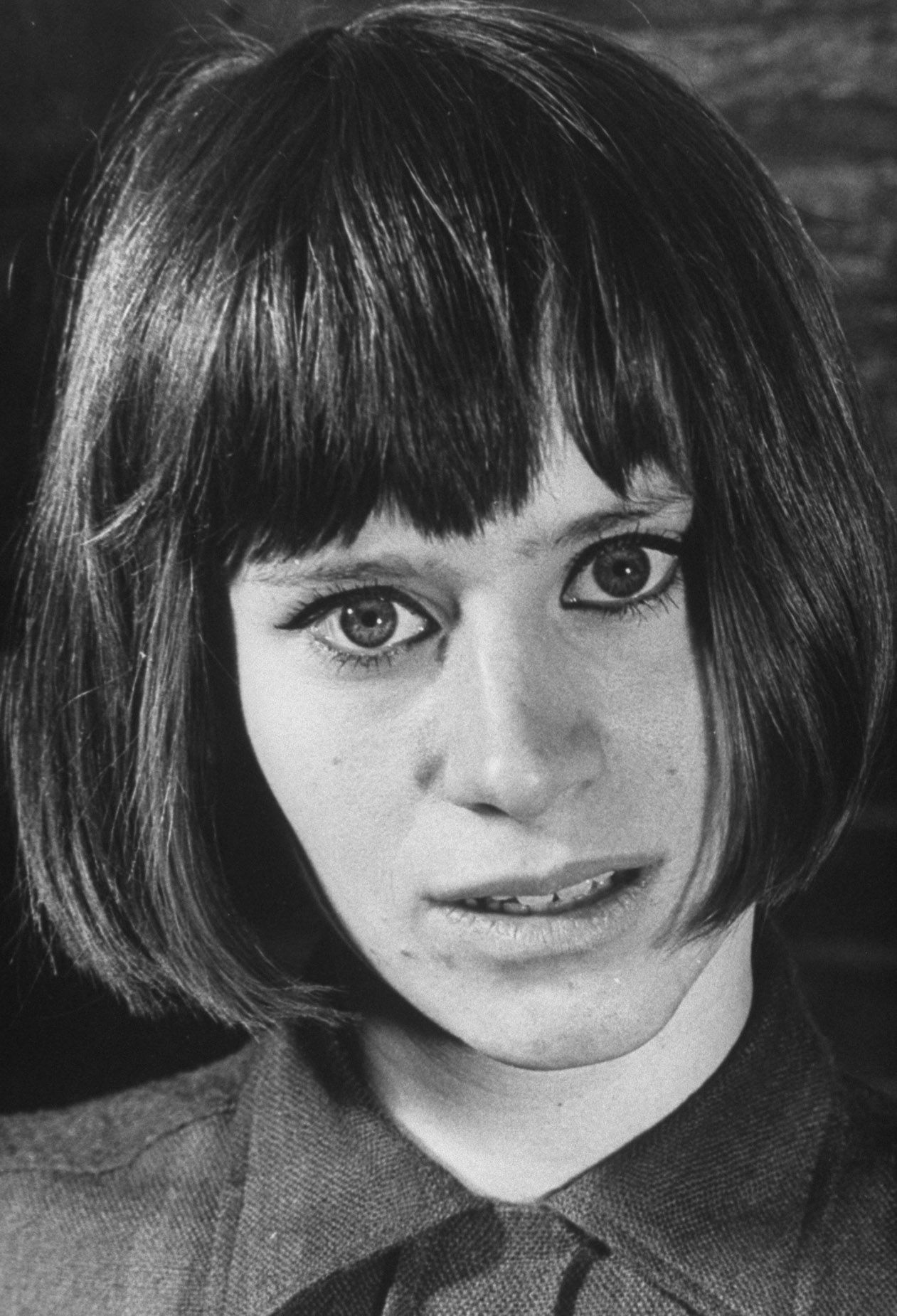
Another View of Lovey Rita

Her eyes were so close together under her bangs, and her nose was the perfect ski jump, but I was enthralled. She had been described by some in the press as “ugly,” but I did not think so. According to an article in the guardian, “A New York Times reporter who met her described her as ‘a slip of a girl, her uncosmeticised face framed in straight dark hair, wearing a sweater and jeans, with those enormous eyes incessantly expressive even when the rest of the small face disappeared behind a big yellow coffee cup.’”

I think it was the eyes that did it. I have always been a sucker for women with eyes that seemed to come to life. Today I saw her first film, Tony Richardson’s A Taste of Honey (1961). She was to appear in other 1960s productions such as The Girl with Green Eyes (1964) and Doctor Zhivago (1965), but it was that gamine Rita of the 1960s that I so dearly loved.

Medical Miracles

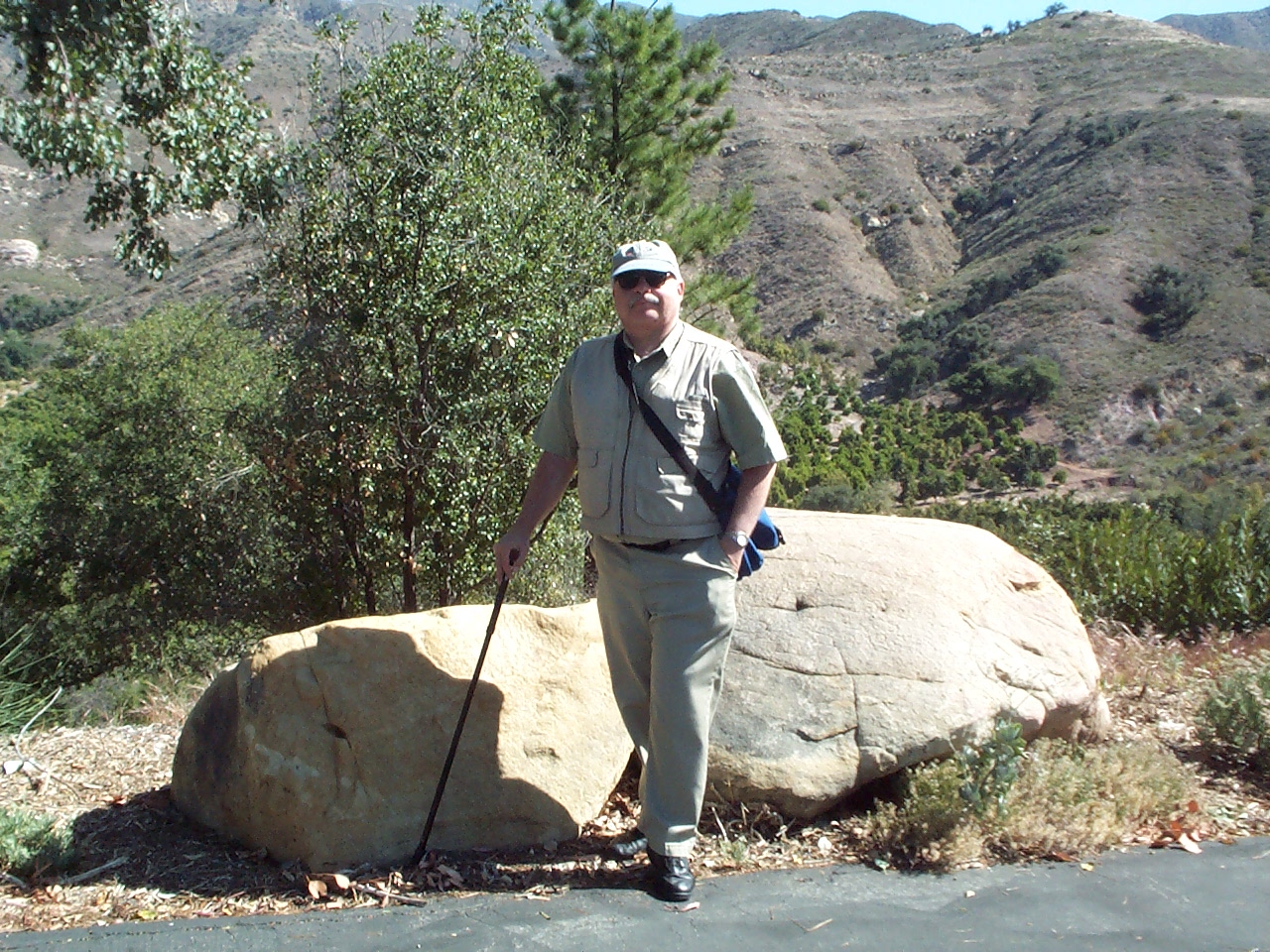
Me in Ojai 1999

I bought my first digital camera, a Kodak, in 1999. Although I had severe osteoarthritis in my left hip and did not dare walk without a cane, I was still pretty active, working full-time at a busy Westwood accounting firm, traveling, and even hiking on weekends. It was not without pain, however, which was to get worse until 2002, when I visited my orthopedist who asked me, while looking at my X-Ray, “Tell me, Mr. Paris, how is it you are able to walk at all?” At that point, my left leg was 1½ inches shorter than my right; and I had a few bad falls.

Within a few months, I had a hip replacement, during which my left leg was somehow lengthened to be even with my right. After my release from Cedars-Sinai and several visits to a physical therapist, I was able to walk without cane and without pain.

The surgery was nothing less than a miracle—and not even the first one in my life. Back in September 1966, I was hospitalized at Cleveland’s Fairview Park Hospital with a chromophobe adenoma, a pituitary tumor that had given me over ten years of severe frontal headaches on most days. With considerable pain, I managed to get a four-year education at an Ivy League college thinking I was just just being a coward about pain. My headaches were due to migraines, a “lazy eye,” hay fever—you name it! It was only when I got the mother of all headaches, one that segued into a coma, that my doctors figured out there was something else happening. In those days,it was not easy to look inside the body except via X-Rays, and X-Rays did not show tumors.

Fortunately, my family doctor just happened to be an endocrinologist who managed to guess I had a pituitary tumor. The surgery was one which typically killed the patient, turned him into a paralytic or a blind man. I was the first person ever to have my pituitary accessed through the brain without dying or becoming totally disabled. And the headaches are totally gone, except for an occasional small one that responds well to aspirin.


Breakfast

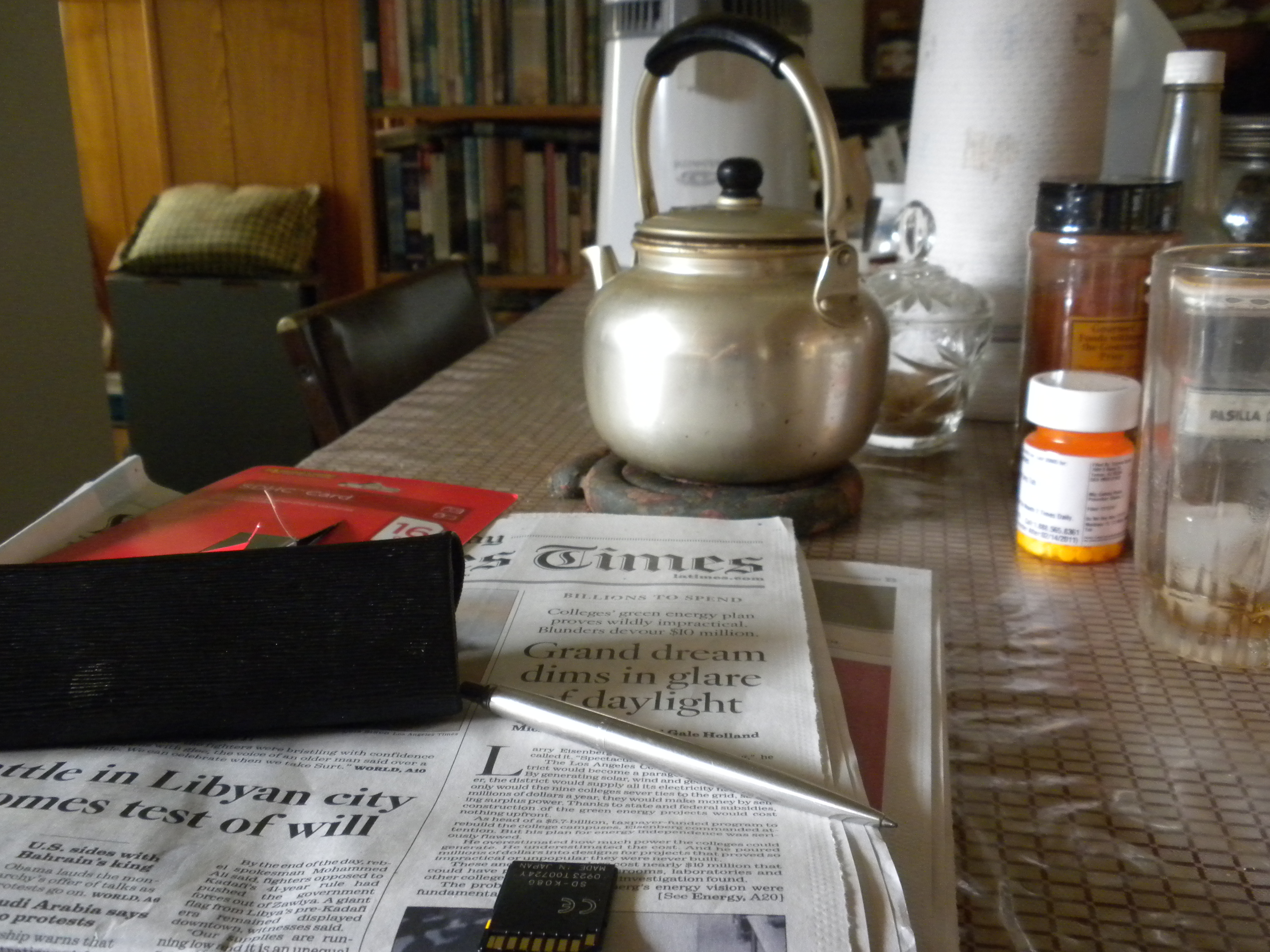
Our Dinner Table in 2011

My main meal of the day is breakfast; and the most important component of my breakfast is a fresh pot of tea. The above photo was taken nine years ago, but I am using the same cheap metal Japanese teapot. I like it because it has a removable insert which captures all the tea leaves so I don’t end up pouring any in my cup. Visible in the upper left of the photo is a green and grey houndstooth-checked tea cosy, which I hardly use any more. After breakfast, I let my tea cool and, for lunch and dinner, pour the cold tea into a glass and add ice cubes. If I want to be fancy, I could also add Splenda, a little splash of dark rum, and a squeeze of lemon or lime.

My tea preference is almost always an Indian black, consisting of Ahmad of London’s loose teas, sometimes a mix of Darjeeling, Ceylon, Assam, and Brooke Bond Red Label tea. Right now, I am drinking pure Darjeeling, which I consider the best of Indian teas. When the coronavirus eventually subsides, I will shop for a high-quality Chinese Oolong from Ten Ren Tea Company for occasional entertaining.

At present, I add a bit of Mesquite Honey to the tea in my cup and a squeeze of lime.

Along with the tea, I rotate between steel-cut oatmeal with dried cranberries; grits with sausage, butter, and pepper; scrambled eggs with Serrano chiles; onion or sesame bagel with butter and cream cheese; my own kind of Welsh Rarebit on a sourdough English muffin with sharp Cheddar cheese and spicy red chile powder; crunchy peanut butter and jelly sandwich; sausage and biscuit; or, if I am pressed for time, just buttered toast.

It’s not much, but it makes an excellent start to my day. Martine and I usually eat breakfast separately, so I usually read the Los Angeles Times, concentrating on the comics, Sudoku and Kenken games, and (finally) the news.

My Musical Career

I Thought It Would Be a Neat Idea, But What Did I Know?

One of the problems of being the firstborn son of poor parents is that you are elected to fulfill their unfulfilled wishes for their own lives. When I was nine years old, they decided that I should play a musical instrument. That sounded fine to me; it’s just that I didn’t realize the extent to which the hook was baited.

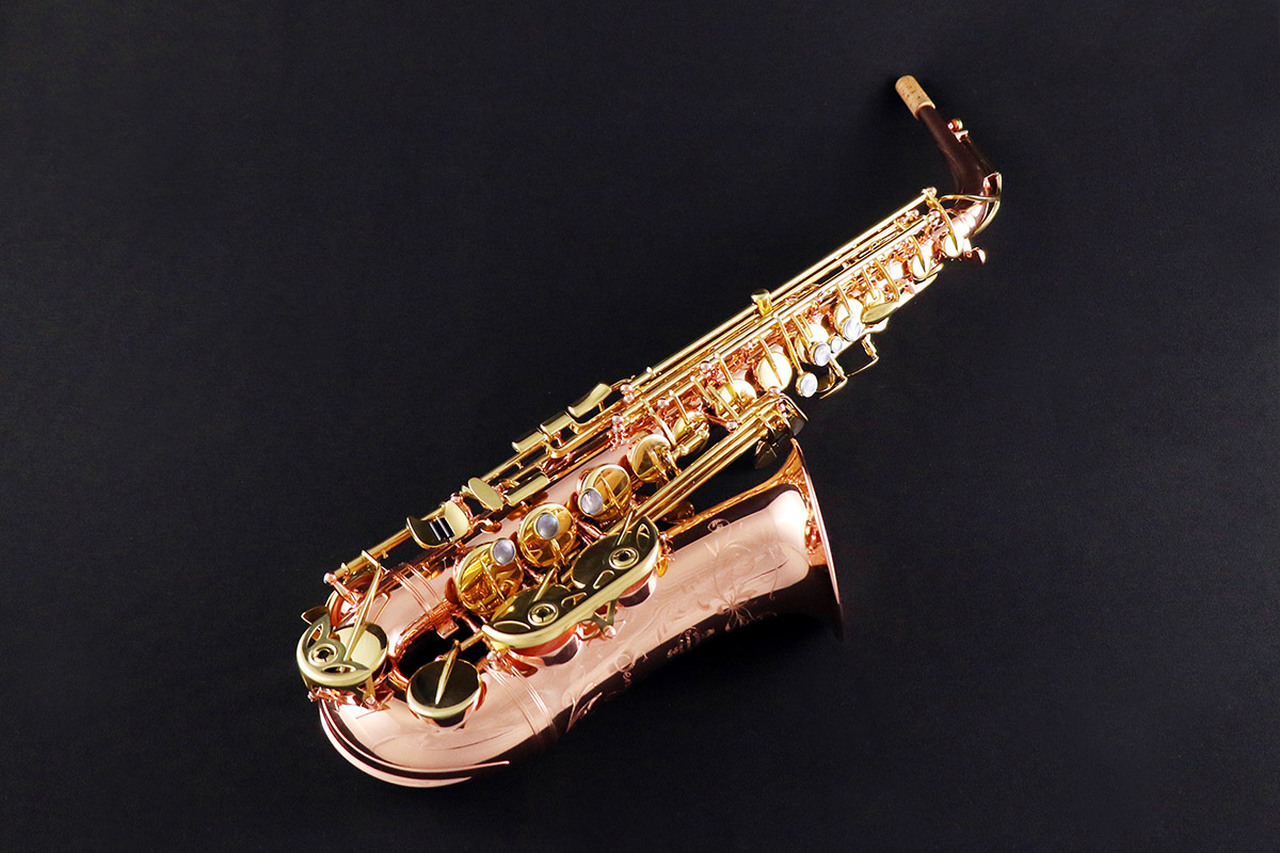
For some reason, I wanted to play a trombone. At the music store, my mother and father got the salesman to point out that my teeth weren’t right for playing the trombone. They both suggested I play the saxophone instead. I didn’t even know what a saxophone was. So I foolishly said, okay. Before I could say “Help: Get me out of here!” I had a music teacher downtown who would teach me the ways of the alto saxophone.

What follows resembles an episode of Leave It to Beaver. Each Saturday morning, I had to take the 56A bus downtown to Prospect and Ontario, from where I trudged with my instrument case to East 3rd Street where Mr. Jack Upson tried to make a musician out of me. The lessons were okay, I suppose, but the daily practice sessions were, quite simply, horrible. When I wanted to go outside to play, I was sternly reminded that I had roped my family into buying me a saxophone, which they couldn’t afford; and I had damned well sit down for an hour and practice. My mom’s favorite song was “Londonderry Air,” which she knew as “Danny Boy.” Just to make things totally untenable, my little brother Dan would show up for the song and grin while I tootled away while staring daggers at him.

At Chanel High School, I joined the Firebirds marching band. Just imagine what it was like to take the field at halftime and do formations with only twenty-odd instruments. All anyone in the stands ever heard was the booming of the drums.

This nonsense continued until I went away to college. Although I showed up for several Dartmouth band practices, I immediately saw that I was among people who knew how to play their instruments and who loved performing. I quietly left the band before the first football game and never picked up my saxophone again. After all, in Hanover, New Hampshire, there was no one to make me practice—and several classmates who would have tarred and feathered me if I had.


Catholic School

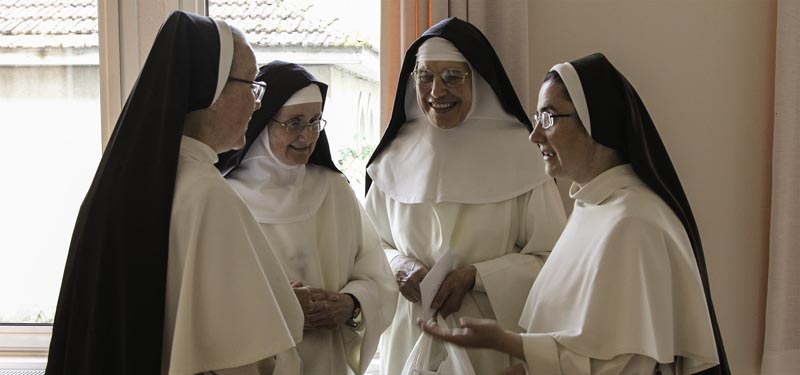
Dominican Sisters Wearing Traditional Habits

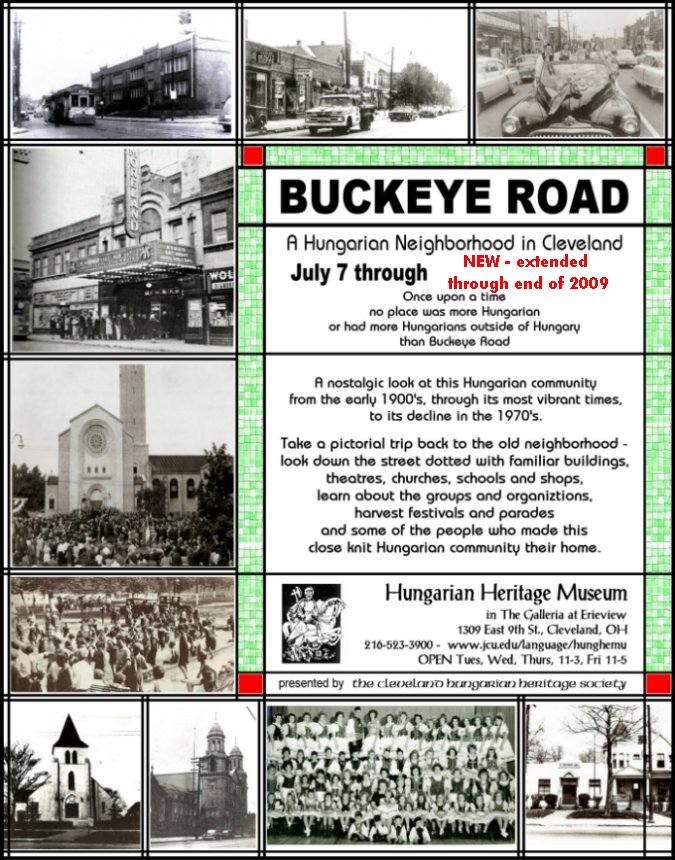
When we lived in the Buckeye Road Hungarian neighborhood, I didn’t do well in school. It started in Kindergarten when my friend András and I started kicking our teacher in class for being angry with us because we didn’t speak English. What in blue blazes was this English? Everyone on Buckeye Road spoke the Magyar tongue, and Harvey Rice Elementary School was in the middle of Buckeye Road. Was our teacher stupid or something?

My mother and father understood the problem. My little brother Daniel had just been born when they decided we would have to move to a white bread Anglo neighborhood, which we did in the summer of 1951. Being born in January, I had just finished the first half of first grade when—poof!—I started second grade in September at a new Catholic school, Saint Henry, where I was taught by Dominican sisters (and some lay teachers). Fortunately, by this time I had some notion of the English language, but was still thought of as being a tad slow. My teacher, Sister Frances Martin, would sneak up behind me in class, pull my ears, and call me “cabbagehead.”

In fact I was just an average student, and a bit of a disciplinary problem, until I reached fifth grade. By then, I started getting the hang of things. Unfortunately, that’s also the time my pituitary tumor started bothering me with frequent severe frontal headaches. I was now a whiz kid, but looked very young for my age.

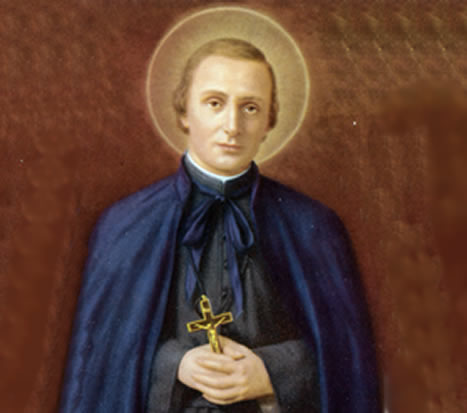
Saint Peter Chanel

After eighth grade, I got a tuition-free scholarship to attend Chanel High School in nearby Bedford, Ohio. The school was named after a missionary from the Marist order of priests who taught me, one St. Peter Chanel, who was martyred for his faith in Polynesia. (Coco Chanel came from the same family.) I got the idea from somewhere, though I’ve never been able to confirm it, that St. Peter Chanel was cooked and eaten by the savages he was trying to convert.

Anyhow, I was considered a whiz kid at Chanel and was always on top of the honor roll. I graduated as class valedictorian and received the Mr. Chanel award for being the best all-round student at the school, despite the fact that I was too sickly for sports. I lettered in band and academic achievement, which made me the natural enemy of those students who toiled for the letters on the sports field. So it goes.

Although I am no longer a practicing Catholic, I have nothing but respect for the sisters, priests, and lay teachers who taught me. I was never an abused altar boy: In fact, I was never even an altar boy. The idea of getting up at 5 am to serve Mass was not my cup of tea, though my brother did it for several years.


Putting Myself Down

I Have Always Underestimated Myself…

When I was young, I was always one of the shortest kids in my class—and one of the sickest. The result was that I habitually underestimated myself. Everyone else looked taller, happier, and more accomplished than me. And that even after I was the valedictorian of my class at Chanel High School in Bedford, Ohio. In fact, it was not until I reached the age of forty that I realized what I had been doing to myself. That was the age at which I was finally able to drive. Before that, I was on a medication (Catapres) that made me fall asleep whenever I got into a moving vehicle.

Within weeks after I got off Catapres, I took driving lessons and passed with flying colors. But then something happened to my picture of other people: The moment I saw drivers who committed moving violations at the rate of once every hundred feet or so, I began to revise my impressions of the rest of the human race.

Politics also stepped in to lower my estimation of my fellow Americans. I first became aware of political conservatism during the 1964 election, when Barry Goldwater was trounced by Lyndon Johnson. Conservatism was to become my bête noire during the following decades, where now I regard most Republicans and Trump followers to be mental defectives. Now that so many of these so many of these Trumpists are advocating a return to normalcy during a dreadful epidemic, I now look at people such as the individuals in the above photograph as suicidal fools who would think nothing of infecting their friends, neighbors, and families with a potentially fatal disease.

Do I have any regrets for being so hard on myself all those years? Not a bit. I think that I am happier than most people and less likely to be played like a marionette out of baseless fears.


The Best Laid Plans…

Chace Park Seen from the Air

In my post of July 3 entitled “Plotting a Holiday Picnic,” I wrote about my plans for a 4th of July weekend picnic for two (Martine and me). It’s sometimes laughable how circumstances can change. I decided to choose today, Sunday, July 5, for the picnic—because I suspected that there would be too many people with too many fireworks on Saturday.

Martine wanted to go to Chace Park in the Marina because, regardless how hot the weather was near us, it always had a comfortable sea breeze. Originally, I thought of getting a picnic lunch at Chick-Fil-A, but I forgot that the restaurant is closed on Sundays. So we headed to Bay Cities Italian Deli in Santa Monica, but saw a humongous line waiting to get in. Ditto for Trader Joe’s in Marina Del Rey. So on Martine’s suggestion, we got our lunches in the deli and produce sections of a nearby Ralph’s Supermarket.

The only real negative about going to Chace Park was that parking cost ten dollars on this holiday weekend. No matter, I paid the fee and resolved to make myself comfortable with the peninsula’s sea breezes. There were no seals in evidence today, but we were able to eat our lunch and take a walk around the peninsula.

There were a lot of young males who flouted the social distancing rule, but we managed to keep our distance from them as they attempted their abortive “herd immunity” practices. I kept thinking back to my days working with U.S. Census data. In the United States, there are 21 males born to every 20 females; but, by around the age of 18, the number of females exceeds the number of males. Why? Because young American males find their way to an early grave through sheer stupidity.


Plotting a Holiday Picnic

Tongva Park Santa Monica from the Air

Now that Governor Newsom of California has come down hard on people doing any kind of celebratory activities, I am plotting a picnic for Saturday (July 4) or Sunday. At some point in the late morning, I will pick up two Chick-Fil-A chicken sandwiches with French fries, get a couple of cold beverages, and head with Martine to Tongva Park in Santa Monica, where I understand there are some benches and picnic tables. I hope to have a short picnic while we eat our lunch and enjoy the sea air (we will be across the street from the Santa Monica Pier).

If the local constabulary forbids us to use the park for fear of spreading virus to the plants, tables, and benches, we will look for another grassy place—I know several—and head to the alternates. There will just be the two of us. If anyone wants to join us, we will just have to throw rocks at them until they go away. We hardy survivors in the era of coronavirus don’t cotton to strangers.


Pining for the Pyramids

Maya King at Mérida Anthropology and History Museum

With the continuing bad news of the continuing ravages of the coronavirus, I begin to wonder whether I will ever again be able to travel. Of the countries that have encountered the virus, the United States has perhaps been the one nation whose people have been most incompetent at surviving. It doesn’t help that our national leadership seems to be intent on running up the totals of people infected and killed by the virus. I become increasingly furious at people who act as if Covid-19 didn’t exist.

My friend Peter tells me of seeing a wedding rehearsal at a park in San Pedro consisting of some two hundred people, none of whom were wearing face masks. Using the plague’s mortality statistics, it is likely that two of the people present will lose their lives, and possibly more will come down with the virus who are friends and family of the attendees.

There appears to be a large population that couldn’t be bothered with protecting themselves from the coronavirus. Either they see themselves as invincible, or they are resentful of politicians who are trying to enforce the quarantine, or they are f—ing stupid.

Admittedly, I don’t like wearing a face mask. When I am driving or walking outside in such a way that I could swing around people I encounter, I don’t wear a mask. Indoors, however, there is a danger that someone could cough or sneeze or even talk in my direction; so I don my mask and grit my teeth.

On my kitchen table is an old Lonely Planet guide to Mexico that I page through every day. I have found dozens of places that look interesting to me, from Baja California to Sonora to the Chihuahua al Pacifico Railroad … and the list goes on and on. My fingers are crossed that the stupidity of my fellow Americans does not turn me into an involuntary shut-in.


My World 1951-1962

Where I Spent My Elementary and High School Years

I had a Proust moment this afternoon as I bit into a chocolate nonpareil, which is a round piece of chocolate covered with little white dots of sugar candy (see picture below). It took me back to my visits to the old Shaker movie theater, which was demolished forty-odd years ago. When I lived on East 176th Street, I used to ride my bicycle down to the theater, which was located on Lee Road just south of Chagrin Blvd, which used to be called Kinsman Road back then. The pictures I saw were all Saturday matinees, complete with serials, cartoons, and the usual kiddie foofaraw. There, I would buy some popcorn and, if I had enough money, some nonpareils.

Nonpareils

My world at that time did not stretch far from the map shown above. Occasionally, I would go downtown on the old 56A bus, boarding at at East 177th Street, a block from home. I went to elementary school at Saint Henry’s, shown on the above map as Archbishop Lyke school (now closed). My high school was a bus ride away in Bedford, Ohio at Chanel High School (now closed). I played at JoAnn Playground, trying to avoid the usual run of bullies who wanted to establish their dominance.

I had a difficult but happy childhood. The difficulty came with allergies and the start of the brain tumor that would result in surgery in the distant future year of 1966. My little brother and I were six years apart, but I did not really begin to appreciate him until after I graduated from college.

The Only Picture I Could Find of the Shaker Theater

The world in which I lived back then is completely unrecognizable today. For one thing, the tiny trees in the postwar housing that dominated are now enormous. And most of the businesses I recognized, such as the New York Bakery on Lee Road, are now a fading memory. I used to go there weekly on my bike to pick up an unseeded Jewish rye (the caraway seeds got stuck in my Dad’s teeth).

It was an interesting world in which to grow up.