Another Side of Me

My Father’s People

My Father’s People

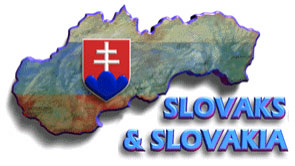
When I was born in Cleveland in 1945, the firstborn in my family, my father got an insurance policy from the First Catholic Slovak Ladies Association (FCSLA) in my name. I still maintain that account, hoping some day, if I have the money, to invest more with them.

My father was a poor factory worker who was born in Prešov  in what is now the Republic of Slovakia, but back in 1911 was part of the Austro-Hungarian Empire under Hungarian administration. It was only in the 1990s that the country became independent—for the first time in its history.

I still get a copy of the FCSLA’s magazine, Fraternally Yours, and read it for news of my Slavik forebears around Ohio and Pennsylvania, where most of the Slovak population is centered. With the most recent issue, I even found out that my old classmate Frank Basa from the Class of ’62 at Chanel High School in Bedford is a Catholic priest in Akron, Ohio.

There isn’t too much to tie me to Cleveland these days. All I have are three graves: my father, my mother, and my great-grandmother Lidia. I would like some day to visit Cleveland with Martine and show her the scenes of my youth, sedate as they were.


War Games and Random Play

Norman Mailer

Norman Mailer

As I read the words, I felt the hairs on the back of my neck rising. The book was Norman Mailer’s The Armies of the Night (1968), about a demonstration against the Pentagon against the Viet Nam war. At the time, I was also under the political influence of another Norman, my late friend Norman Witty, who was very active with the Los Angeles draft resistance movement.

This is a good look at the sort of thing that influenced me some half a century ago:

On a day somewhat early in September, the year of the first March on the Pentagon, 1967, the phone rang one morning and Norman Mailer, operating on his own principle of war games and random play, picked it up. That was not characteristic of Mailer. Like most people whose nerves are sufficiently sensitive to keep them well-covered with flesh, he detested the telephone. Taken in excess, it drove some psychic element of static ino the privacies of the brain; so he kept himself amply defended. He had an answer service, a secretary, and occasional members of his family to pick up the receiver for him—he discouraged his own participation on the phone—sometimes he would not even speak to old friends. He had the idea—it was undeniably oversimple—that if you spent too much time on the phone in the evening, you destroyed some kind of creativity for the dawn. (It was taken for granted that nothing respectable would come out of the day if the morning began on the phone, and indeed for periods when he was writing he looked on transactions vis telephone as Arabs look upon pig.)

To this day, I still feel that way about receiving telephone calls. Was it Mailer’s influence? Or is it some ornery impulse that makes it all right for me to make a call, but a damned imposition to receive one?

I was so impressed by Mailer writing about himself in the third person, with his occasional wry asides, that for many years I thought of him as America’s best essayist. Curiously, to this day I have not read any of his fiction, even his famous WW2 novel, The Naked and the Dead. Well, maybe later.


“They Stomped the Floor”

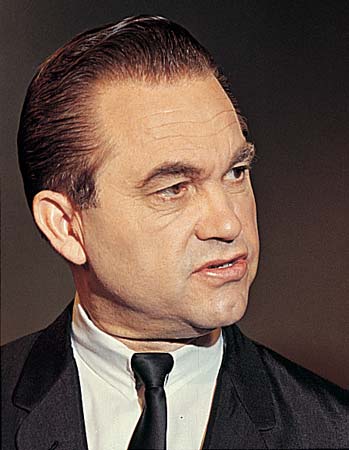
Alabama Governor and Presidential Candidate George C. Wallace (1919-1998)

Alabama Governor and Presidential Candidate George C. Wallace (1919-1998)

Politically speaking, I come from a very divided family. My brother and I were Liberal Democrats, my mother was an independent (she loved John B. Anderson in 1980), and my father was a staunch follower of segregationist Alabama Governor George C. Wallace.

Actually Wallace was not always a segregationist. He started out as a circuit judge of the Third Judicial Circuit in Alabama, where he was known for his fairness, irrespective of race. He even called Black attorneys “Mister” rather than patronizingly referring to them by their first names.

When he ran for governor of Alabama in 1958, he was defeated by John Malcolm Patterson, who ran with the support of the Ku Klux Klan, against which Wallace had spoken on occasion. (in fact, the NAACP had supported Wallace.) This loss wrought a change in the candidate: “You know why I lost that governor’s race? … I was outniggered by John Patterson. And I’ll tell you here and now, I will never be outniggered again.” And he wasn’t.

From this point on, Wallace adopted an wavering segregationist policy. “You know, I tried to talk about good roads and good schools and all these things that have been part of my career, and nobody listened. And then I began talking about niggers, and they stomped the floor.”

Alas, my poor father was also anti-integration. As an uneducated factory worker, he was afraid that Southern Blacks were coming to take away his job. So he thought Wallace was the man to stem that tide. Today, he would probably vote for Trump.

Bad Alumnus

Omigosh, Is It Time for My 50th Reunion Already?

Omigosh, Is It Time for My 50th Reunion Already?

On June 3, 1966, I graduated with an A.B. from Dartmouth College. What’s an A.B, you may ask? Well, as my diploma is entirely in Latin, it stands for Artium Baccalaurei, or Bachelor of Arts.

Although I am besieged with mail from the college, asking for money, participation in local and national alumni events (such as my 50th Reunion), and deluxe trips around the world with other alums. Will I participate? Uh, no. That despite the fact that I was awarded a four-year alumni scholarship, for which I am grateful—but not in any material way.

What bothers me is that none of the people I knew and liked at Dartmouth are active with the alumni. Instead, it’s all the same gladhander crew that was active in the fraternity system (which I loathed), student government (for which I was not popular enough), and/or sports (for which I didn’t qualify). I went through four years of Dartmouth with a brain tumor, which was not operated on until September 1966. Until then, I looked like an extraordinarily pale and sickly middle school or high school student.

It’s not that I didn’t make friends easily. My oldest friend was one of my classmates who now lives only 25 miles from me in San Pedro. There are others, but they were all like me in one way or another—and none saw fit to become active with the alums.

Somehow I managed to survive the college years, and even enjoyed them despite a level of pain that would sink me into my grave today. Those frontal headaches were almost constant, the result of a pituitary tumor pressing against my optic nerve. Today I am a different person altogether.

The one debt I feel I owe Dartmouth is actually to the Catholic Student Center there. When I was lying near death at Fairview General Hospital in Cleveland, my parents were shocked to find that my student insurance had just expired. They told Monsignor William Nolan of the Center to pray for me, which he did—and more. He went to bat for me and bullyragged the insurance company into covering me. Imagine that happening today!

Monsignor Nolan has since gone to join his ancestors, but I still owe him. And he gets paid in full before anyone else at Dartmouth gets dime one from me.

Schachnovelle

Staunton Design Chess Pieces in Play

Staunton Design Chess Pieces in Play

Chess is for me a lifelong obsession. Not that I’m any good at it: I tend to be too unaggressive, too defensive. But I love to follow the game and even, from time to time, solve endgame problems.

Why am I drawn to chess? Is it because it approaches infinity in the number of possible chess games—a number that exceeds the number of atoms in the universe. According to Chess.Com:

The number of legal chess positions is 10^40 [that’s 10 to the 40th power], the number of different possible games, 10^120. Authors have attempted various ways to convey this immensity, usually based on one of the few fields to regularly employ such exponents, astronomy. In his book Chess Metaphors, Diego Rasskin-Gutman points out that a player looking eight moves ahead is already presented with as many possible games as there are stars in the galaxy. Another staple, a variation of which is also used by Rasskin-Gutman, is to say there are more possible chess games than the number of atoms in the universe. All of these comparisons impress upon the casual observer why brute-force computer calculation can’t solve this ancient board game. They are also handy, and I am not above doing this myself, for impressing people with how complicated chess is, if only in a largely irrelevant mathematical way.

After only a few moves, the chess player is staring at infinity. No doubt, many of the moves are atrocious, perhaps even borderline illegal; but the variety of possible moves is truly staggering.

Even if I am not a good player, I love the literature of chess. I have just finished re-reading Stefan Zweig’s Schachnovelle (translated as Chess Story). That short novel was itself turned into a great film directed by Gerd Oswald called Brainwashed (1960) starring Curd Jürgens.

Borges has written a great poem about chess, which I will post soon. Also, you can expect to see a short story by Lord Dunsany entitled “The Three Sailors’ Gambit.”

I will also tell you about some of my heroes, such as the Estonian Grandmaster Paul Keres, Former World Champion Mikhail Tal of Latvia, and. of course, the never-to-be-forgotten Bobby Fischer.


M-I-C-K-E-Y M-O-U-S-E!

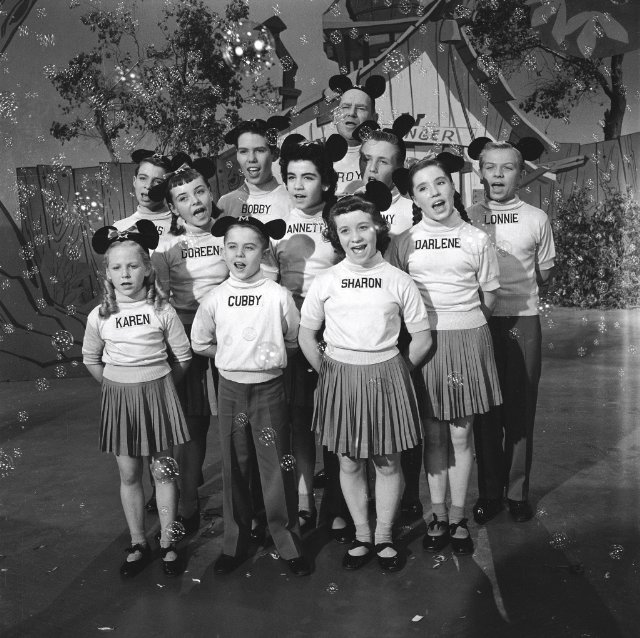
Mousketeers with Jimmie Dodd

Mousketeers Around the 1950s

It all started in 1955. Not that it was the first TV show for kids—the Howdy Doodie Show beat it by eight years—but it was the first kids show featuring kids. I am referring, of course, to the Mousketeers of the Mickey Mouse Club.

After a morning doing tax returns at work, I acceded to Martine’s request to drop in at the Paley Center for Media in Beverly Hills. While Martine was watching some of her faves, I decided to see two episodes of the Mickey Mouse Club show, one from 1956 and one from 1957.

I saw at once why the show was a success. Not because I was entertained the way when I was a kid, but because Walt Disney had so much material lying around in film cans that there wasn’t as much of a burden to come up with new material for every show. Every show ended with a quarter hour cartoon segment from the vaults, and there were regularly repeating cartoon intros for the opening and many of the segment categories.

The live portions included the talents of the Mousketeers, including singing and dancing, and visiting a training center for firemen. They also featured local talent such as an archery champion and two yo-yo experts, all of whom were in their teens.

Of course, I watched the show religiously until I deemed myself too old and sophisticated and no longer in love with Annette Funicello with her dark hair and flashing eyes.

Tannu Tuva or Bust!

Very Nice, But There Were No Railroads in Tuva

Very Nice, But There Were No Railroads in Tuva

One of the things I remember most vividly from my stamp collecting days was the availability of postage stamps for non-countries. These were for real places on the map, but not for entities that had their own postal services. The one I remember most vividly is Tannu Tuva (formerly in the Soviet Union).

According to Wikipedia:

Tuva was a region in central Asia between Russia and Mongolia, which in 1921, under Russian instigation, became the Tuvan People’s Republic. A treaty between the Soviet Union and the Mongolian People’s Republic in 1926 affirmed the country’s independence, although no other countries formally recognized it. In 1944, it was annexed to the Soviet Union as part of the Tuvan Autonomous Oblast and in 1961 became the Tuva Autonomous Soviet Socialist Republic. Its successor since 1992, the Tuvan Republic, is a member of the Russian Federation.

I remember reading a book in the 1990s about American physicist Richard Feynman’s failed attempts to visit Tuva, which were detailed in a book by Ralph Leighton entitled Tuva or Bust!: Richard Feynman’s Last Journey. Apparently he never got a visa approval before his final illness.

Some early Tuvan stamps may actually have been used postally, at least in the early days. Most, however, were issued in Moscow with picturesque settings to hard currency from capitalist collectors for Mother Russia. The stamp pictured above of a camel racing a railroad train was a bit fanciful, as there are no railroads in Tuva. Also, why wasn’t the text on the stamp in Cyrillic or even Mongolian letters?

I remember confronting an old family friend about his extensive collection of Tuvan postage stamps. A former postal employee, he became red in the face when told by a little boy that his Tuvan stamps were merely pretty paper.


Adventures in Stamp Collecting

20 Fillér Stamp Honoring Hungarian Radio Manufacturing

20 Fillér CTO Stamp Honoring Hungarian Radio Manufacturing

One would think that nothing can be so staid and stolid a pastime as stamp collecting. Mind you, it’s getting increasingly difficult since most stamps—in the U.S. anyway—are of the peel and stick variety. As a child, I remember soaking stamps still attached to pieces of envelope and postcard in lukewarm water to remove the gum. Then I carefully dried the stamps under a blotter weighted down with a book so the stamps wouldn’t curl. The end result was pretty presentable.

But then the Soviet block discovered CTO—short for canceled to order—with perfect cancellations that were printed right on the stamp which came without gum. In effect they were mint ungummed stamps.

Of course, mint never used stamps were more expensive. Putting them in albums caused a certain amount of existential angst. One could use a stamp hinge, but (horrors!) it left a mark on the gum. The option was to buy expensive mounts in which the mint stamps were wholly encased.

My guess is that there are relatively few stamp collectors left, and that they are mostly aging rapidly. What with smart phones and their ilk, kids are not interested in anything that requires patience, knowledge, and care. Too bad! I learned a lot from my old hobby and had lots of fun.

This is the first of several posts under the general heading of “Adventures in Stamp Collecting,” consisting of stories I remember from my collecting days.

Some of these stories are more interesting than they seem at first glance.

The Best of 2015

I Never Would have Thought It Possible....

I Never Would have Thought It Possible….

A couple of weeks ago, while I was visiting my brother in Palm Desert, the best thing about 2015 hit me right between the eyes. It was a four-month old baby named Oliver Moorman. I normally don’t go goo-goo-eyed over infants, but I have to admit I did this time. Little Ollie’s mother, my niece Hilary, and her husband Joe Moorman have collaborated on a co-production that has radiated hope in the lives of our tight little family. As you may know, I am a terrible pessimist, but little Ollie has given me some glimmerings of hope for the future.

He makes me want to help make this a better world.


Tarnmoor’s ABCs: Zsófi, Elek and the Two Boys

Our Family Around 1962

Our Family Around 1962

All the blog posts in this series are based on Czeslaw Milosz’s book Milosz’s ABC’s. There, in the form of a brief and alphabetically-ordered personal encyclopedia, was the story of the life of a Nobel Prize winning poet, of the people, places, and things that meant the most to him.

My own ABCs consist of places I have loved (Iceland, Patagonia, Quebec, Scotland, Yucatán), things I feared (Earthquakes), writers I have admired (Chesterton, Balzac, Proust, Borges, and Shakespeare); locales associated with my past life (Cleveland, Dartmouth College, and UCLA), people who have influenced me (John F. Kennedy), foods I love (Olives and Tea), and things I love to do (Automobiles and Books). This is my last entry in the series, having gone through the entire alphabet from A to Z, including even the difficult letters like J, Q, and X.

I hope you’ve enjoyed the series, which you can review by hitting the tag ABC’s at the bottom of this post.

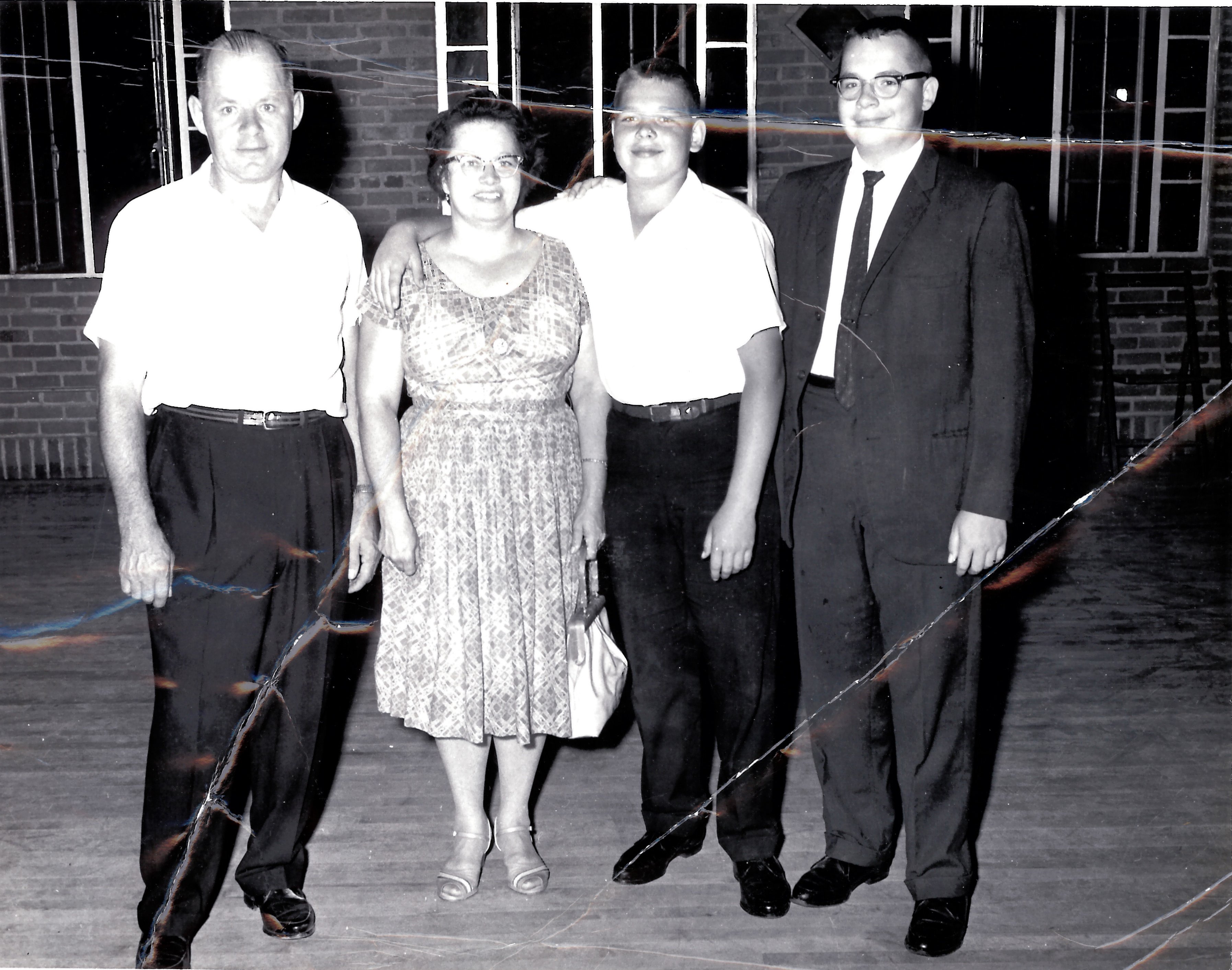
Above you can see a picture of our little family taken around 1962. I was about to enter college, while my brother was in the 6th grade at Saint Henry School on Harvard Avenue in Cleveland, from which I graduated in 1958. My mother is Sophie—Zsófi in Hungarian—and my father is Alex—Elek in Slovak and Hungarian.

This was a difficult time for the family, as my father was under suspicion of conducting an extramarital affair with a married woman. With the tense atmosphere at home, I was eager to attend college in New Hampshire, some 600 miles east, where I would be out of the fray. Although there were some bad times around then, my mother and father stayed together. They loved Dan and me, and in the end that kept them together.

For the next twenty years, Mom had few good words to say about Dad. Except, when Alex died in 1985 at the age of of 74, he became a saint. I went along with that, because all my life I tried to please him.

Dad never understood where I was going in life. I wanted to be a professor of film history in criticism at the university level. One day, I made the mistake of calling the profession “cinematology.” Ever afterward, Dad pronounced it as if I had said “cosmetology.”

Although Dan was more like Dad in being an athlete, Dad was harder on him. When Dan was at Macalaster College in St. Paul, Minnesota, he took some time off to travel around Europe and North Africa, thus delaying getting his college diploma. (He did eventually, but Dad kept riding him for his gap year.)

I like the above picture. It shows a normal family in which all the stresses are carefully kept hidden. But the fold lines over time come out as if they were fault lines along which our family could fracture.

Fortunately, it never did.