He died at the age of fifty in Barcelona, thousands of miles from home in Chile. I am currently reading a collection of his short stories issued under the title The Return. It made me look up some of his poetry, where I found the following:
My Literary Career
Rejections from Anagrama, Grijalbo, Planeta, certainly also from Alfaguara, Mondadori. A no from Muchnik, Seix Barral, Destino … all the publishers … all the readers All the sales managers … Under the bridge, while it rains, a golden opportunity to take a look at myself: like a snake in the North Pole, but writing. Writing poetry in the land of idiots. Writing with my son on my knee. Writing until night falls with the thunder of a thousand demons. The demons who will carry me to hell, but writing.
The proper names in the first two lines are the names of publishing companies, mostly in Spain where Bolaño was living at the time.
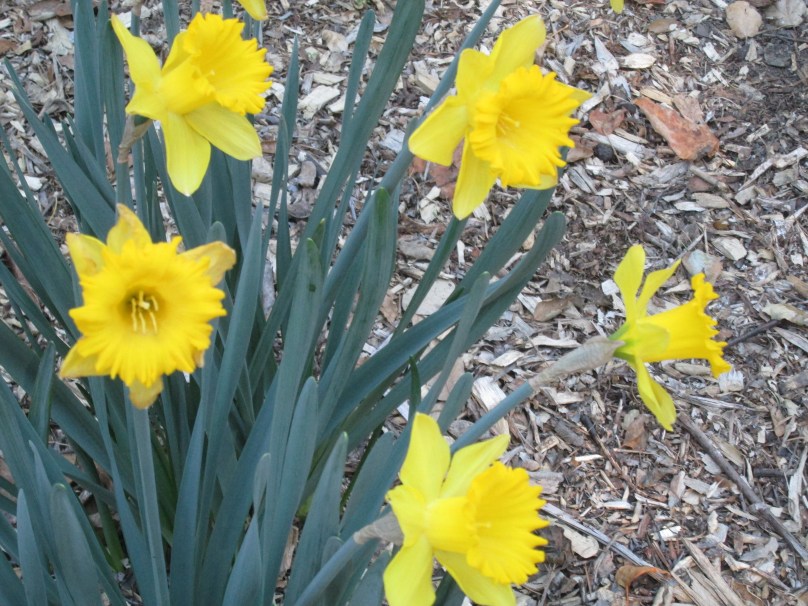
Two weeks ago, Martine and I visited Descanso Gardens in La Cañada-Flintridge. In full bloom were the camellias and the daffodils. The latter were in the Lilac Garden, which is still some weeks from coming into bloom.
This evening, I just finished reading an exceptional book which took the journals that Dorothy Wordsworth wrote when she lived with her poet brother William at Grasmere and interspersed them with William’s poems, The book, published by Penguin, is called Home at Grasmere: Extracts from the Journal of Dorothy Wordsworth and from the Poems of William Wordsworth. For instance, on April 15, 1802, Dorothy wrote:
When we were in the woods beyond Gowbarrow Park we saw a few daffodils close to the water-side. We fancied that the sea had floated the seeds ashore, and that the little colony had so sprung up. But as we went along there were more and yet more; and at last, under the boughs of the trees, we saw that there was a long belt of them along the shore, about the breadth of a country turnpike road. I never saw daffodils so beautiful. They grew among the mossy stones about and above them; some rested their heads upon these stones, as on a pillow, for weariness; and the rest tossed and reeled and danced, and seemed as if they verily laughed with the wind, that blew upon them over the lake; they looked so gay, ever glancing, ever changing. This wind blew directly over the lake to them. There was here and there a little knot, and a few stragglers higher up; but they were so few as not to disturb the simplicity, unity, and life of that one busy highway.
And here is the poem William wrote based on that walk he took with his sister:
The Daffodils
I wandered lonely as a cloud That floats on high o’er vales and hills, When all at once I saw a crowd, A host, of golden daffodils; Beside the lake, beneath the trees, Fluttering and dancing in the breeze.
Continuous as the stars that shine And twinkle on the milky way, They stretched in never-ending line Along the margin of a bay: Ten thousand saw I at a glance, Tossing their heads in sprightly dance.
The waves beside them danced; but they Out-did the sparkling waves in glee: A poet could not but be gay, In such a jocund company: I gazed—and gazed—but little thought What wealth the show to me had brought:
For oft, when on my couch I lie In vacant or in pensive mood, They flash upon that inward eye Which is the bliss of solitude; And then my heart with pleasure fills, And dances with the daffodils.
In his sonnet entitled “England in 1819,” Percy Bysshe Shelley evinced as great a disgust of what was happening in England during the last days of George III as I do when I look at Trump’s America. Sadly, Shelley did not outlive George III by much: He died in an 1822 boating accident off the coast of Italy.
England in 1819
An old, mad, blind, despised, and dying King; Princes, the dregs of their dull race, who flow Through public scorn,—mud from a muddy spring; Rulers who neither see nor feel nor know, But leechlike to their fainting country cling Till they drop, blind in blood, without a blow. A people starved and stabbed in th’ untilled field; An army, whom liberticide and prey Makes as a two-edged sword to all who wield; Golden and sanguine laws which tempt and slay; Religion Christless, Godless—a book sealed; A senate, Time’s worst statute, unrepealed— Are graves from which a glorious Phantom may Burst, to illumine our tempestuous day.
Here is a 1,200-year-old Zen poem by Bai Juyi that was written on the walls of a priest’s cell circa 828. Translated by Arthur Waley, it appears in Peter Harris’s Zen Poems, published by Knopf Everyman’s Library. According to the biographical endnotes:
BAO JUYI (772-846). Also known as Bo Juyi … Bai Juyi was a mid-Tang poet of great versatility. He lived through troubled times, including an official attack on Buddhism that led to the closure of monasteries in 842-5. His own lifelong devotion to Buddhism was eclectic rather than relating to one particular sect. In his admiring biography of Bai the translator Arthur Waley remarked on Bai’s extraordinary compassion, reflected in the tone of much of what he wrote, including his popular ballad, “The Song of Lasting Sorrow.”
Realizing the Futility of Life
Ever since the time I was a lusty boy Down till now when I am ill and old, The things I have cared for have been different at different times, But my being busy, that has never changed. Then on the shore,—building sand-pagodas; Now, at Court, covered with tinkling jade. This and that, equally childish games, Things whose substance passes is a moment of time! While the hands are busy, the heart cannot understand; When there are no Scriptures, then Doctrine is sound. Even should one zealously strive to learn the Way, That very striving will make one’s error more.
I have always admired Arthur Waley. There was a period half a century ago when I sought out his translations of various Oriental texts. In my library are a number of his titles.
Here is another great poem by Jorge Luis Borges, a poet who has had perhaps a greater influence on my life than any other. Among other things, my thirst for knowledge about him has led me to Buenos Aires three times in the last twenty years.
Limits
Of these streets that deepen the sunset, There must be one (but which) that I’ve walked Already one last time, indifferently And without knowing it, submitting
To One who sets up omnipotent laws And a secret and a rigid measure For the shadows, the dreams, and forms That work the warp and weft of this life.
If all things have a limit and a value A last time nothing more and oblivion Who can say to whom in this house Unknowingly, we have said goodbye?
Already through the grey glass night ebbs And among the stack of books that throws A broken shadow on the unlit table, There must be one I will never read.
In the South there’s more than one worn gate With its masonry urns and prickly pear Where my entrance is forbidden As it were within a lithograph.
Forever there’s a door you have closed, And a mirror that waits for you in vain; The crossroad seems wide open to you And there a four-faced Janus watches.
There is, amongst your memories, one That has now been lost irreparably; You’ll not be seen to visit that well Under white sun or yellow moon.
Your voice cannot recapture what the Persian Sang in his tongue of birds and roses, When at sunset, as the light disperses, You long to speak imperishable things.
And the incessant Rhone and the lake, All that yesterday on which today I lean? They will be as lost as that Carthage The Romans erased with fire and salt.
At dawn I seem to hear a turbulent Murmur of multitudes who slip away; All who have loved me and forgotten; Space, time and Borges now leaving me.
To understand this cynical poem by Endre Ady (1877-1919), you should first read my post entitled “A Legacy of Losers,” posted last week. The word “Magyar” means “Hungarian” in the Hungarian language.
The Magyar Messiahs
More bitter is our weeping, different the griefs that try us. A thousand times Messiahs are the Magyar Messiahs. A thousand times they perish, unblest their crucifixion, for vain was their affliction, oh, vain was their affliction.
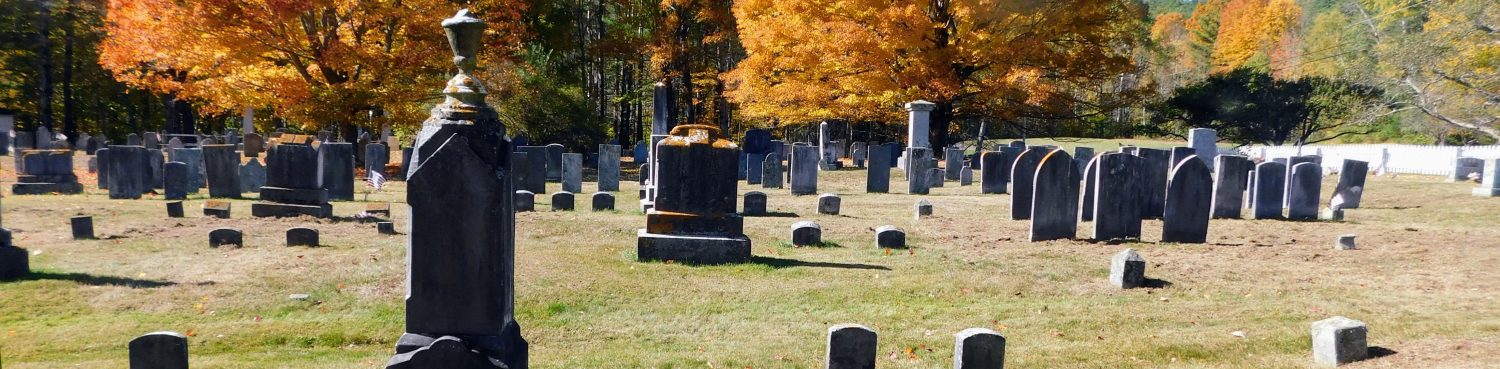
He lived a long life, yet he was famous for writing epitaphs, which he published in two books: The Spoon River Anthology (1915) and The New Spoon River (1924). Curiously, his own epitaph was just as poetic:
Good friends, let’s to the fields … After a little walk, and by your pardon, I think I’ll sleep. There is no sweeter thing, Nor fate more blessed than to sleep.
I am a dream out of a blessed sleep – Let’s walk, and hear the lark.
I’m starting the New Year by quoting a poem from Edna St. Vincent Millay:
Sonnet IV-X
I shall go back again to the bleak shore And build a little shanty on the sand In such a way that the extremest band Of brittle seaweed shall escape my door But by a yard or two; and nevermore Shall I return to take you by the hand. I shall be gone to what I understand, And happier than I ever was before. The love that stood a moment in your eyes, The words that lay a moment on your tongue, Are one with all that in a moment dies, A little under-said and over-sung. But I shall find the sullen rocks and skies Unchanged from what they were when I was young.
I know it’s sad, but it is at the same time beautiful.
His poems are written in a difficult-to-read Scottish Lowland dialect, but somehow the intensity shines through. Here the poet expresses his disdain for the horrors of a Scottish winter, ending with a comic proposal to the deity.
Winter: A Dirge
The wintry west extends his blast, And hail and rain does blaw; Or, the stormy north sends driving forth The blinding sleet and snaw: While tumbling brown, the burn comes down, And roars frae bank to brae; And bird and beast in covert rest, And pass the heartless day.
The sweeping blast, the sky o’ercast, The joyless winter-day, Let others fear, to me more dear Than all the pride of May: The tempest’s howl, it soothes my soul, My griefs it seems to join; The leafless trees my fancy please, Their fate resembles mine!
Thou Pow’r Supreme, whose mighty scheme These woes of mine fulfil, Here, firm, I rest, they must be best, Because they are Thy will! Then all I want (O, do Thou grant This one request of mine!) Since to enjoy Thou dost deny, Assist me to resign.
In the spirit of the Christmas season, I am posting a Navajo Blessing Ceremony prayer called “Walking in Beauty.” I have always found it to be beautiful and inspiring.
In beauty I walk With beauty before me I walk With beauty behind me I walk With beauty above me I walk With beauty around me I walk It has become beauty again
Today I will walk out, today everything negative will leave me I will be as I was before, I will have a cool breeze over my body. I will have a light body, I will be happy forever, nothing will hinder me. I walk with beauty before me. I walk with beauty behind me. I walk with beauty below me. I walk with beauty above me. I walk with beauty around me. My words will be beautiful.
In beauty all day long may I walk.
Through the returning seasons, may I walk. On the trail marked with pollen may I walk. With dew about my feet, may I walk. With beauty before me may I walk. With beauty behind me may I walk. With beauty below me may I walk. With beauty above me may I walk. With beauty all around me may I walk. In old age wandering on a trail of beauty, lively, may I walk. In old age wandering on a trail of beauty, living again, may I walk. My words will be beautiful…








You must be logged in to post a comment.