Beatitudes Visuales Mexicanas

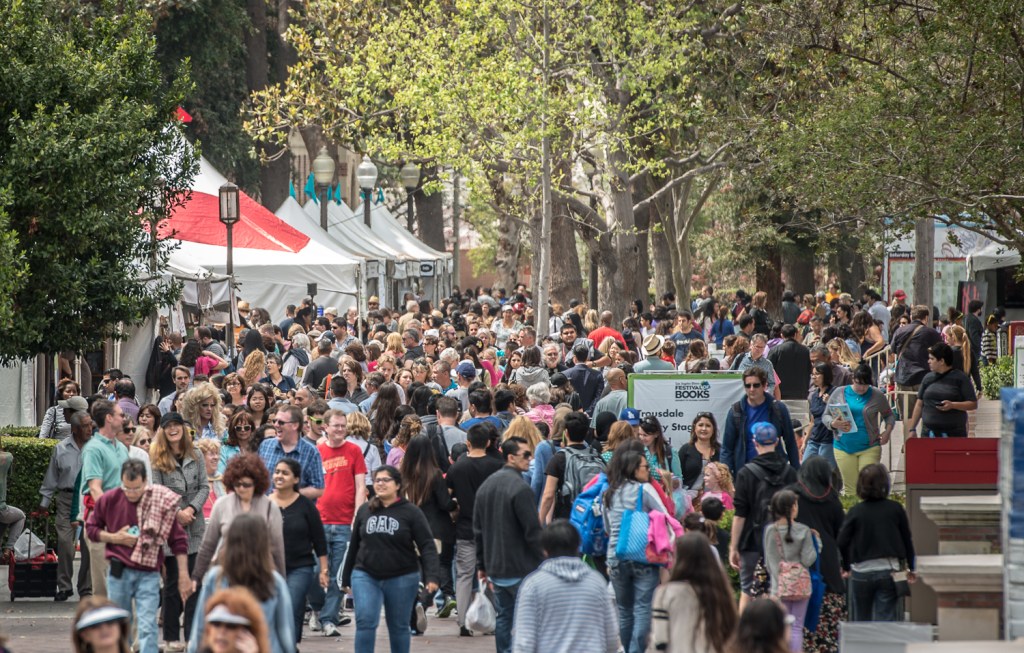
Street Scene: Xalapa, Mexico

Here is a prose poem from Lawrence Ferlinghetti (1919-2021). I remember going to a poetry reading which he gave at Dartmouth during my freshman year. He impressed me mostly because he was so clever at handling questions from smart-asses like Richard J. Dellamora, who was the teacher’s pet of the English Department.

This is a prose poem which was dated right at the time of my first trip to Mexico in November 1975. Ferlinghetti, however, was west of me in Mexico City and the State of Veracruz. I was in Yucatán. Later I was to visit all the places mentioned in his poem.

Beatitudes Visuales Mexicanas

October–November 1975

Autobus on Paseo de la Reforma with destination signs: bellas artes insurgentes. Exactamente. Just what’s needed: Insurgent Arts. Poesía Insurgente. This is not it …

1

Bus to Veracruz via Puebla + Xalapa … Adobe house by highway, with no roof and one wall, covered with words: la luz del mundo.

2

Passing through Puebla late Sunday afternoon. A band concert in a plaza next to a Ferris wheel — I have passed through many places like this, I have seen the toy trains in many amusement parks. When you’ve seen them all you’ve seen One.

3

Halfway to Xalapa a great white volcano snow peak looms up above the hot altiplano — White god haunting Indian dreams.

4

A boy and three burros run across a stubble field, away from the white mountain. He holds a stick. There is no other way.

5

Deep yellow flowers in the dusk by the road, beds of them stretching away into darkness. A moon the same color comes up.

6

As the bus turns + turns down the winding hill, moon swings wildly from side to side. It has had too many pathetic phallusies written about it to stand still for one more.

7

In Xalapa I am a head taller than anyone else in town — A foot of flesh and two languages separate us.

8

At a stand in the park at the center of Xalapa I eat white corn on the cob with a stick in the end, sprinkled with salt, butter, grated cheese + hot sauce. The dark stone Indian who hands it to me has been standing there three thousand years.

9

I’m taking this trip from Mexico City to the Gulf of Mexico and back without any bag or person — only what I can carry in my pockets. The need for baggage is a form of insecurity.

10

Two hours in this town and I feel I might live forever (foreign places affect me that way). The tall church tower tolls its antique sign: pray.

11

In early morning in the great garden of Xalapa, with its terraces and immense jacaranda trees, pines + palms, there are black birds with cries like bells, and others with hollow wooden voices like gourds knocked together. The great white volcano shimmers far off, unreached by the rising sun.

12

Brown men in white palmetto cowboy hats stand about the fountains in groups of three or four, their voices lost to the hollow-sounding birds. Along a sunlit white stone balustrade, student lovers are studying each other, novios awaiting the day. The sun beats down hot and melts not the mountain.

13

On the bus again to Veracruz, dropping down fast to flat coast. A tropical feeling — suddenly coffee plantation + palms — everything small except the landscape, horses the size of burros, small black avocados, small strong men with machetes — each still saying to himself Me llamo yo.

The Barbarians Are Coming! The Barbarians Are Coming!

There are two ways of looking at the Barbarian Invasions of the Roman Empire. For the first, we have Orientius, said to be a cleric from Gascony, in his Commonitorium:

Look at how death has swept through the entire world,
at how many peoples have been affected by the madness of war.
What use are thick forests or high and inaccessible mountains,
what use the raging torrents with violent whirlpools,
carefully located fortresses, cities protected by their walls,
positions defended by the sea, the squalor of hiding places,
the darkness of caves and the hovels among the rocks;
nothing has been of use in avoiding the barbarians hunting in a pack….
In the villages and the villas, in the fields and at the crossroads,
in all the hamlets, on the roads and in every other place,
death, suffering, massacres, fire-raising, and mourning:
the whole of Gaul was burning in a single blaze.

Then there is the view of Greek poet Constantine Cavafy in his wonderful poem:

Waiting for the Barbarians

What are we waiting for, assembled in the forum?

The barbarians are due here today.

Why isn’t anything going on in the senate?
Why are the senators sitting there without legislating?

Because the barbarians are coming today.
What’s the point of senators making laws now?
Once the barbarians are here, they’ll do the legislating.

Why did our emperor get up so early,
and why is he sitting enthroned at the city’s main gate,
in state, wearing the crown?

Because the barbarians are coming today
and the emperor’s waiting to receive their leader.
He’s even got a scroll to give him,
loaded with titles, with imposing names.

Why have our two consuls and praetors come out today
wearing their embroidered, their scarlet togas?
Why have they put on bracelets with so many amethysts,
rings sparkling with magnificent emeralds?
Why are they carrying elegant canes
beautifully worked in silver and gold?

Because the barbarians are coming today
and things like that dazzle the barbarians.

Why don’t our distinguished orators turn up as usual
to make their speeches, say what they have to say?

Because the barbarians are coming today
and they’re bored by rhetoric and public speaking.

Why this sudden bewilderment, this confusion?
(How serious people’s faces have become.)
Why are the streets and squares emptying so rapidly,
everyone going home lost in thought?

Because night has fallen and the barbarians haven’t come.
And some of our men just in from the border say
there are no barbarians any longer.

Now what’s going to happen to us without barbarians?
Those people were a kind of solution.

Now which attitude do we take if Donald Trump and his incel hoards should regain the Presidency of the United States?


Where Lions Roam

Self Portrait of William Blake

William Blake was not only a visionary artist, but also a visionary poet, whose works range from simple lyrical pieces to long, complicated prophetic books redolent of the Old Testament. For these latter, he invented his own mythology, with beings named Enitharmon, Los, Urizen, Albion, and such like.

The excerpt below is taken from my favorite Blake poem, “The Marriage of Heaven and Hell.” In it the character of Rintrah appears as a personification of the just wrath of a prophet.

THE ARGUMENT

Rintrah roars & shakes his fires in the burden’d air;
Hungry clouds swag on the deep.

Once meek, and in a perilous path,
The just man kept his course along
The vale of death.
Roses are planted where thorns grow,
And on the barren heath
Sing the honey bees.

Then the perilous path was planted,
And a river and a spring
On every cliff and tomb,
And on the bleached bones
Red clay brought forth;

Till the villain left the paths of ease,
To walk in perilous paths, and drive
The just man into barren climes.

Now the sneaking serpent walks
In mild humility,
And the just man rages in the wilds
Where lions roam.

Rintrah roars & shakes his fires in the burden’d air;
Hungry clouds swag on the deep.

Here is a link to an interesting video called The Otherworldly Art of William Blake: YouTube Video.

Death By Comfy Chair

La-Z-Boy Maverick-582 Rocker Recliner

I have never understood why people buy those overstuffed recliners. Is it because they are tired of living and just want to sink into something soft while their body functions shut down? Never forget the old Monty Python episode in which the Spanish Inquisition uses comfy chairs as a form of (not unwelcome) torture.

All the seating in my apartment tends to be on the firm side. In fact, I refer to them as my uncomfy chairs. To that I attribute the back that, at my advanced age, my back doesn’t hurt; and I am more agile than most of my age cohort.

This brings to mind one of my favorite poems by Dylan Thomas entitled “Do Not Go Gentle Into That Good Night.”

Do Not Go Gentle Into That Good Night

Do not go gentle into that good night,
Old age should burn and rave at close of day;
Rage, rage against the dying of the light.

Though wise men at their end know dark is right,
Because their words had forked no lightning they
Do not go gentle into that good night.

Good men, the last wave by, crying how bright
Their frail deeds might have danced in a green bay,
Rage, rage against the dying of the light.

Wild men who caught and sang the sun in flight,
And learn, too late, they grieved it on its way,
Do not go gentle into that good night.

Grave men, near death, who see with blinding sight
Blind eyes could blaze like meteors and be gay,
Rage, rage against the dying of the light.

And you, my father, there on the sad height,
Curse, bless, me now with your fierce tears, I pray.
Do not go gentle into that good night.
Rage, rage against the dying of the light.

And so I continue to burn and rave at close of day from my uncomfy chair.

A Fragment of the Golden Eternity

Jack Kerouac spent many years studying the Dharma of Buddhism. It shows up in many of his earlier works, particularly in his The Scripture of the Golden Eternity, from which the following excerpts are taken:

11.

If we were not all the golden eternity we wouldn’t be here. Because we are here we cant help being pure. To tell man to be pure on account of the punishing angel that punishes the bad and the rewarding angel that rewards the good would be like telling the water “Be Wet”—Never the less, all things depend on supreme reality, which is already established as the record of Karma-earned fate.

16.

The point is we’re waiting, not how comfortable we are while waiting. Paleolithic man waited by caves for the realization of why he was there, and hunted; modern men wait in beautiful homes and try to forget death and birth. We’re waiting for the realization that this is the golden eternity.

22.

Stare deep into the world before you as if it were the void: innumerable holy ghosts, buddhies, and savior gods there hide, smiling. All the atoms emitting light inside wavehood, there is no personal separation of any of it. A hummingbird can come into a house and a hawk will not: so rest and be assured. While looking for the light, you may suddenly be devoured by the darkness and find the true light.

I am not sure that Kerouac’s Buddhism is the genuine article, but in a way it doesn’t matter. His questing had its value and brushes against the truth at a wide number of places.

A Poem for Boxing Day

The period between Christmas and New Years Day has always been strange. Even among the ancient Mayans, the last five days of the 365-day Haab calendar were called Uayeb, just to fill out the remainder of the year after the 18 months of 20 days each had transpired.

In much of the English-speaking world—but not the United States—today is Boxing Day. It has nothing to do with pugilism and is more a commemoration of certain Victorian practices regarding gifting servants.

It’s also Kwanzaa, a made-up holiday for African-Americans to celebrate their origins and serve as an alternative to that White persons’ holiday known as Christmas.

I was delighted to find a Scottish poem that also celebrates (or debunks) this period. It is “The Daft Days” by Robert Fergusson (1750-1774), written in a broad Scots dialect:

The Daft Days

Now mirk December’s dowie face
Glowrs owr the rigs wi sour grimace,
While, thro’ his minimum of space,
The bleer-ey’d sun,
Wi blinkin light and stealing pace,
His race doth run.

From naked groves nae birdie sings,
To shepherd’s pipe nae hillock rings,
The breeze nae od’rous flavour brings
From Borean cave,
And dwyning nature droops her wings,
Wi visage grave.

Mankind but scanty pleasure glean
Frae snawy hill or barren plain,
Whan winter, ‘midst his nipping train,
Wi frozen spear,
Sends drift owr a’ his bleak domain,
And guides the weir.

Auld Reikie! thou’rt the canty hole,
A bield for many caldrife soul,
Wha snugly at thine ingle loll,
Baith warm and couth,
While round they gar the bicker roll
To weet their mouth.

When merry Yule-day comes, I trou,
You’ll scantlins find a hungry mou;
Sma are our cares, our stamacks fou
O’ gusty gear,
And kickshaws, strangers to our view,
Sin fairn-year.

Ye browster wives, now busk ye braw,
And fling your sorrows far awa;
Then come and gie’s the tither blaw
Of reaming ale,
Mair precious than the well of Spa,
Our hearts to heal.

Then, tho’ at odds wi a’ the warl’,
Amang oursels we’ll never quarrel;
Tho’ Discord gie a canker’d snarl
To spoil our glee,
As lang’s there’s pith into the barrel
We’ll drink and ‘gree.

Fidlers, your pins in temper fix,
And roset weel your fiddle-sticks;
But banish vile Italian tricks
Frae out your quorum,
Not fortes wi pianos mix –
Gie’s Tulloch Gorum.

For nought can cheer the heart sae weel
As can a canty Highland reel;
It even vivifies the heel
To skip and dance:
Lifeless is he wha canna feel
Its influence.

Let mirth abound, let social cheer
Invest the dawning of the year;
Let blithesome innocence appear
To crown our joy;
Nor envy wi sarcastic sneer
Our bliss destroy.

And thou, great god of Aqua Vitae!
Wha sways the empire of this city,
When fou we’re sometimes capernoity,
Be thou prepar’d
To hedge us frae that black banditti,
The City Guard.

The Blind Librarian

Argentinian Writer and Poet Jorge Luis Borges (1899-1986)

Just as he was descending into blindness, Jorge Luis Borges was appointed director of the Argentine National Library. He wrote a poem about how he, as a lifelong bibliophile, felt about being in charge of so many books he could no longer read. In the last stanza, he mentions Paul Groussac, a previous director of the Library in the 1920s, who was also blind and, like Borges, also a distinguished writer.

Poem About Gifts

Let none think I by tear or reproach make light
Of this manifesting the mastery
Of God, who with excelling irony
Gives me at once both books and night.

In this city of books he made these eyes
The sightless rulers who can only read,
In libraries of dreams, the pointless
Paragraphs each new dawn offers

To awakened care. In vain the day
Squanders on them its infinite books,
As difficult as the difficult scripts
That perished in Alexandria.

An old Greek story tells how some king died
Of hunger and thirst, though proffered springs and fruits;
My bearings lost, I trudge from side to side
Of this lofty, long blind library.

The walls present, but uselessly,
Encyclopedia, atlas, Orient
And the West, all centuries, dynasties,
Symbols, cosmos, and cosmogonies.

Slow in my darkness, I explore
The hollow gloom with my hesitant stick,
I, that used to figure Paradise
In such a library’s guise.

Something that surely cannot be called
Mere chance must rule these things;
Some other man has met this doom
On other days of many books and the dark.

As I walk through the slow galleries
I grow to feel with a kind of holy dread
That I am that other, I am the dead,
And the steps I make are also his.

Which of us two is writing now these lines
About a plural I and a single gloom?
What does it matter what word is my name
If the curse is indivisibly the same?

Groussac or Borges, I gaze at this beloved
World that grows more shapeless, and its light
Dies down into a pale, uncertain ash
Resembling sleep and the oblivion of night.

Parable of the Palace

The Forbidden City in Beijing

This short tale by Jorge Luis Borges (1899-1986) is, to my mind, the most incredible tale ever told about the power of poetry. It is told here in its entirety. It and many equally wonderful poems and stories can be found in Dreamtigers (in Spanish, El Hacedor).

That day, the Yellow Emperor showed the poet his palace. They left behind, in long succession, the first terraces on the west which descend, like the steps of an almost measureless amphitheater, to a paradise or garden whose metal mirrors and intricate juniper hedges already prefigured the labyrinth. They lost themselves in it, gaily at first, as if condescending to play a game, but afterwards not without misgiving, for its straight avenues were subject to a curvature, ever so slight, but continuous (and secretly those avenues were circles). Toward midnight observation of the planets and the opportune sacrifice of a turtle permitted them to extricate themselves from that seemingly bewitched region, but not from the sense of being lost, for this accompanied them to the end. Foyers and patios and libraries they traversed then, and a hexagonal room with a clepsydra, and one morning from a tower they descried a stone man, whom they then lost sight of forever. Many shining rivers did they cross in sandalwood canoes, or a single river many times. The imperial retinue would pass and people would prostrate themselves. But one day they put in on an island where someone did not do it, because he had never seen the Son of Heaven, and the executioner had to decapitate him. Black heads of hair and black dances and complicated golden masks did their eyes indifferently behold; the real and the dreamed became one, or rather reality was one of dream’s configurations. It seemed impossible that earth were anything but gardens, pools, architectures, and splendrous forms. Every hundred paces a tower cleft the air; to the eye their color was identical, yet the first of all was yellow, and the last, scarlet, so delicate were the gradations and so long the series.

It was at the foot of the next-to-last tower that the poet—who was as if untouched by the wonders that amazed the rest—recited the brief composition we find today indissolubly linked to his name and which, as the more elegant historians have it, gave him immortality and death. The text has been lost. There are some who contend it consisted of a single line; others say it was a single word. The truth, the incredible truth, is that in the poem stood the enormous palace, entire and minutely detailed, with each illustrious porcelain and every sketch on every porcelain and the shadows and the light of the twilights and each unhappy or joyous moment of the glorious dynasties of mortals, gods, and dragons who had dwelled in it from the interminable past. All fell silent, but the Emperor exclaimed, “You have robbed me of my palace!” And the executioner’s iron sword cut the poet down.

Others tell the story differently. There cannot be any two things alike in the world; the poet, they say, had only to utter the poem to make the palace disappear, as if abolished and blown to bits by the final syllable. Such legends, of course, amount to no more than literary fiction. The poet was a slave of the Emperor and as such he died. His composition sank into oblivion and his descendants still seek, nor will they find, the one word that contains the universe.

By the Time You Read This

“The Sandhills of Saskatchewan”

I found this poem by the Irish poet Paul Muldoon in the January 6 issue of The Times Literary Supplement. Here’s hoping you like it as much as I do.

By the Time You Read This

By the time you read this I’ll be gone
for a newspaper and quart of milk
never to return, a half-mowed lawn
leading to me as a scroll of silk
once led to the mulberry silkworm.
By the time you read this I’ll be gone
AWOL in spite of the fact, in terms
of domesticity, I’ve outshone
even he heedful trumpeter swan
that spends five weeks constructing a nest.
By the time you read this I’ll be gone
less because of some profound unrest
than my fascination with the Cree
and the sandhills of Saskatchewan
into which windswept immensity,
by the time you read this, I’ll be long gone.

“Barren the Comings and Goings on This Shore”

The Rock Pillar Known as the Old Man of Hoy

The following poem is taken from a volume entitled The Wreck of the Archangel. It is from my favorite Scottish poet, George Mackay Brown, whom I met at Stromness on the Orkney Mainland in 1976.

In Memoriam I. K.

That one should leave The Green Wood suddenly
     In the good comrade-time of youth,
     And clothed in the first coat of truth
Set out alone on an uncharted sea:

Who’ll ever know what star
     Summoned him, what mysterious shell
     Locked in his ear that music and that spell,
And what grave ship was waiting for him there?

The greenwood empties soon of leaf and song.
     Truth turns to pain. Our coats grow sere.
     Barren the comings and goings on this shore.
He anchors off The Islands of the Young.