A Camus Notebook 1942

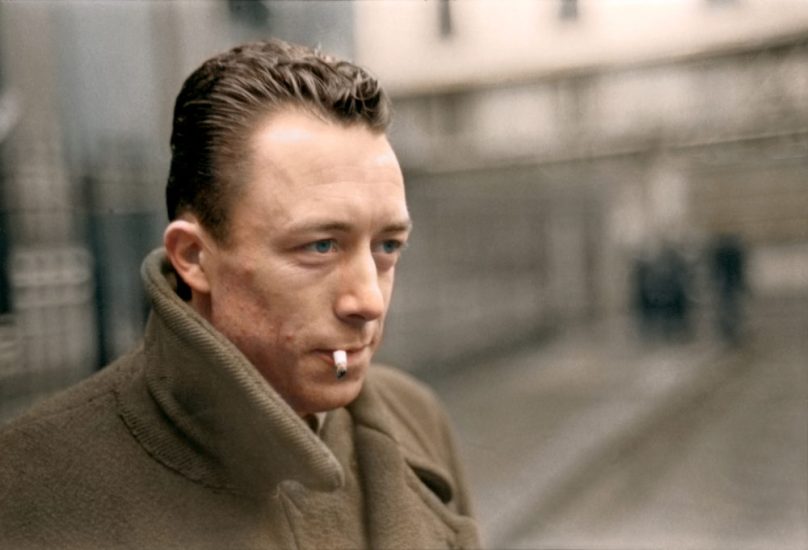
French Existentialist Writer/Philosopher Albert Camus (1913-1960)

I have been Reading Albert Camus’ Notebooks 1942-1951 from which I have excerpted the following selections from the year 1942. Even a fragmentary work by such a great writer is well worth the effort. I keep thinking of Blaise Pascal, whose Pensées have been a major part of my life since high school.

Secret of my universe: Imagining God without human immortality.

Capital punishment. The criminal is killed because the crime has spent all the capacity for living a man has. He has experienced everything if he has killed. He can die. Murder drains a man.

“What am I thinking that is greater than I and that I experience without being able to define it? A sort of arduous progress toward a theory of negation—a heroism without God—man alone, in short.”

Nostalgia for the life of others. This is because, seen from the outside, another’s life forms a unit. Whereas ours, seen from the inside, seems broken up. We are still chasing after an illusion of unity.

Solitary arrivals at night in strange cities—that sensation of stifling, being transcended by an organism a thousand times more complex. It is enough to locate the main street on the morrow, everything falls into place in relation to it, and we settle in. Collect memories of night arrivals in strange cities, live on the power of those unknown hotel rooms.

Novel. Beside the dying body of the woman he loves: “I can’t, I can’t let you die. For I know that I shall forget you. Hence I’ll lose everything and I want to keep you on this side of the world, the only one where I am capable of embracing you, etc., etc.”
She: “Oh, it’s a dreadful thing to die knowing one will be forgotten.”
Always see an express at the same time the two aspects.

Sexual life was given to man to distract him perhaps from his true path. It’s his opium. With it everything falls asleep. Outside it, things resume life. At the same time chastity kills the species, which is perhaps the truth.

Wuthering Heights, one of the greatest love novels because it ends in failure and revolt—I mean in death without hope. The main character is the devil. Such a love can be maintained only through the ultimate failure that is death. It can continue only in hell.

Living with one’s passions amounts to living with one’s sufferings, which are the counterpoise, the corrective, the balance, and the price. When a man has learned—and not on paper—how to remain alone with his suffering, how to overcome his longing to flee, the illusion that others may share, then he has little left to learn.

14 Diamonds in the Rough

Marie NDiaye, Franco-Senegalese Writer and Playwright

In this year of the quarantine, I have found particular solace in reading writers that most people have never heard of before—and some that were new to me as well. The list is alphabetical by author, followed by the name of the book(s) I read in 2020:

  • Algren, Nelson (1909-1981). The Man with the Golden Arm. This novelist had a years-long relationship with Simone de Beauvoir, who is also on this list.
  • Bakewell, Sarah. At the Existentialist Café: Freedom, Being, and Apricot Cocktails. A wonderful nonfiction book primarily about the French and German Existentialist philosophers from Husserl to Sartre.
  • Beauvoir, Simone de (1908-1986). The Mandarins. A powerful novel about the French postwar existentialists.
  • Collins, Wilkie (1824-1889). No Name and A Rogue’s Life. Not as well known as Dickens, but I think a better writer. His best novel is The Woman in White.
  • Dourado, Autran (1926-2012). Pattern for a Tapestry. This Brazilian writer from Minas Gerais is a real find.
  • Hrabal, Bohumil (1914-1997). I Served the King of England. I wonder why this great Czech novelist never won the Nobel Prize. Consistently great.
  • Marra, Anthony. A Constellation of Vital Phenomena. The youngest writer (only 36) on the list, but shows promise of great things to come.
  • Modiano, Patrick. Dora Bruder. Winner of the 2014 Nobel Prize in Literature. He is one of my favorite living novelists.
  • NDiaye, Marie. The Cheffe and My Heart Hemmed In. Winner of the Prix Goncourt in France. Clearly deserves the Nobel as well.
  • Neruda, Jan (1834-1891). Prague Tales. The Czech writer whose last name Pablo Neruda hijacked for himself.
  • Portis, Charles (1933-2020). Gringos. I really admire this Arkansas novelist’s work. Best known for True Grit, which is also worth reading.
  • Stasiuk, Andrzej. Fado. Hurry up and translate more of this great Polish writer’s work!
  • Westover, Tara. Educated. A nonfiction autobiographical book about growing up in an Idaho survivalist household.
  • Wright, Austin Tappan (1883-1931). Islandia. A novel in a genre by itself: A realistic fantasy novel set in a nonexistent Southern Hemisphere country.

As you can see, this list skips around the world and across two centuries.

Dostoyevsky Explains Trump’s Base

Proud Boys at Play

I have read Fyodor Dostoyevsky’s Notes from the Underground several times over the last fifty years. At the same time, nothing has puzzled me so much in the last five years as the rise of Donald Trump and the persistence of the scraggly individuals that are referred to as his “base.” (An appropriate term, especially when used adjectivally.)

This time, on re-reading, something clicked. Dostoyevsky’s narrator was the archetypal Trumpite:

Merciful Heavens! but what do I care for the laws of nature and arithmetic, when, for some reason I dislike those laws and the fact that twice two makes four? Of course I cannot break through the wall by battering my head against it if I really have not the strength to knock it down, but I am not going to be reconciled to it simply because it is a stone wall and I have not the strength.

The Underground Man is a spiteful creature who enjoys sticking his tongue out. And who better to nominate as your enemy than the Coastal Elites, the “Libtards,” who have the nerve to ignore or flout you.

You will ask why did I worry myself with such antics: answer, because it was very dull to sit with one’s hands folded, and so one began cutting capers. That is really it. Observe yourselves more carefully, gentlemen, then you will understand that it is so. I invented adventures for myself and made up a life, so as at least to live in some way. How many times it has happened to me–well, for instance, to take offence simply on purpose, for nothing; and one knows oneself, of course, that one is offended at nothing; that one is putting it on, but yet one brings oneself at last to the point of being really offended

He talks of others erecting a kind of Crystal Palace based on mathematical certainties, such as two plus two making four.

[M[an everywhere and at all times, whoever he may be, has preferred to act as he chose and not in the least as his reason and advantage dictated. And one may choose what is contrary to one’s own interests, and sometimes one POSITIVELY OUGHT (that is my idea). One’s own free unfettered choice, one’s own caprice, however wild it may be, one’s own fancy worked up at times to frenzy–is that very “most advantageous advantage” which we have overlooked, which comes under no classification and against which all systems and theories are continually being shattered to atoms. And how do these wiseacres know that man wants a normal, a virtuous choice? What has made them conceive that man must want a rationally advantageous choice? What man wants is simply INDEPENDENT choice, whatever that independence may cost and wherever it may lead. And choice, of course, the devil only knows what choice.

Here it all is. Sit down and read Part I of Notes from the Underground, and you will begin to understand why sick, poor, ignorant people will fight the Affordable Care Act, Social Security, and college education. They had best be careful, because they can easily fall off the edge of the Flat Earth of their ideology and into the void.

A Little Fable

Daunt Books in London

Following is a short short story from Wilkie Collins (1824-1889), while I am still in the clouds after reading his novel No Name. It is called “A Little Fable”:

The other day, two good friends – a lawyer and a mathematician – happened to meet in a remote part of London, in front of a cheap book-shop. The stall outside the shop presented a row of novels, offered at half price.

Having exchanged the customary expressions of pleasure and surprise, and having made the necessary enquiries on the subject of wives and children, the two gentleman relapsed into a momentary silence. Perceiving in his friend signs of mental pre-occupation, the lawyer asked what he was thinking of. The mathematician answered, “I was looking back along the procession of small circumstances, which has led me from the starting-point of my own door to this unexpected meeting in the street.”

Hearing this, it occurred to the lawyer to look back, on his side. He also discovered that a procession of small circumstances had carried him, by devious ways, to the morsel of pavement on which he then stood. “Well,” he said, “and what do you make of it?”

“I have led a serious life,” the mathematician announced, “for forty years.”

“So have I,” the lawyer said.

“And I have just discovered,” the other continued, “that a man in the midst of reality is also, in this strange life of ours, a man in the midst of romance.”

The lawyer pondered a little on that reply. “And what does your discovery amount to?” he asked.

“Only to this. I have been to school; I have been to college; I am sixty years old – and my education is not complete. Good morning.”

They parted. As soon as the lawyer’s back was turned, the mathematician retraced his steps to the book-shop – and bought a novel.

The lawyer looked round at that moment. A strong impression was produced on him. He walked back to his friend. “When you have done with that book,” he said, lend it to me.”

Of Two Minds About Christmas

Christmas Display at L.A.’s Grier-Musser Museum

It is very easy to regard Christmas as both a time of happiness and a major pain in the ass—all at one and the same time. Below are some excerpts from the letters of Victorian novelist Wilkie Collins (1824-1889):

  • “This awful Christmas time! I am using up my cheque-book – and am in daily expectation of fresh demands on it.” to Charles Ward, December 1860-62 (I 286).
  • “at this festive season when the Plague of Plum pudding extends its ravages from end to end of the land, and lays the national digestion prostrate at the feet of Christmas…I had planned to give up eating and drinking until the return of Spring …”  to Miss Frith, 27 December 1870 (II 226).
  • “…are the filthy ‘Christmas festivities’ still an insurmountable obstacle to any proceeding that is not directly connected with the filling of fat bellies, and the exchange of vapid good wishes?” to William Tindell, 29 December 1874 (III 60; B&C II 387).
  • “…there are all sorts of impediments – literary and personal – which keep me in England at the most hateful of all English seasons (to me), the season of Cant and Christmas…But for Christmas-time, I should have read it long ago. I have returned to heaps of unanswered letters, bills, payments to pensioners, stupid and hideous Christmas cards, visits to pay – and every other social nuisance that gets in the way of a rational enjoyment of life…There is no news. Everybody is eating and drinking and exchanging conventional compliments of the season. You are well out of it” to Nina Lehmann, 28 December 1877 (III 180; B&C II 409-410).
  • “I suppose the dreadful Christmas literature is absorbing Mr Kelly’s printers.” to A P Watt 5 November 1883 (III 434).
  • “There is every temptation to die. We have not seen the sun for three weeks, in London – the plague of Christmas Cards is on the increase…Oh, what a miserable world to live in!” to Sebastian Schlesinger, 29 December 1883 (III 452; B&C II 463-465).
  • “Your kind and liberal letter reaches me , at the season devoted to prodigious eating and drinking, universal congratulating and holiday-making, and voluminous appearance of tradesmen’s Christmas bills. ‘Business’ is at a standstill, this year, until Monday next” to Perry Mason & Co, 26 December 1884 (IV 74). 
  • “But there is surely a chance of a change for the better, after the horrors of Christmas are over” To Emily Wynne, 19th December 1885 (IV 139).
  • “The horrid Christmas Day is over -. Let me forget it – and heartily wish you a happy New Year.” to A P Watt, 28 December 1885 (IV 140).
  • “It is a relief to hear that you have got over Christmas Day, and that you have energy enough to confront (I don’t say to eat) that dreadful composition called plum pudding.” to Emily Wynne, 28 December 1885 (IV 141).
  • “I have just discovered a letter of mine dated the 1st of this month – and thanking you for your kind new year’s gifts – huddled away, God knows how, among a mass of Christmas and New years’ cards in my ‘Answered Letters’ basket.” to A P Watt, 5 January 1887 (IV 222).

Despite these feelings Wilkie did keep Christmas. On 18 December 1854 he invited his friend Edward Pigott to his home in Hanover Terrace.

“Don’t talk about having no home to go to – you know you are at home here. Come and eat your Christmas dinner with us – you will find your knife, fork, plate and chair all ready for you. Time six o’clock…Mind you come on Christmas Day.” (I 110; B&C I 129).

I owe the above selections to the Wilkie at Christmas website, which also contains much useful information about this author, whose work I like more the more I read him.

What the Dickens?!

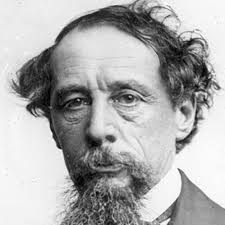
Charles Dickens (1812-1870)

It was bound to happen sooner or later. After many decades regarding him as a great writer, I seem to have suddenly fallen out of love with Charles Dickens. It happened while re-reading David Copperfield, one of my hitherto favorites of his. All of a sudden, early in the book, I just didn’t feel like continuing after Mrs Copperfield married the cruel Edward Murdstone.

Shortly thereafter, I started reading Wilkie Collins’s No Name, which I found enthralling. Where Dickens puts together a series of humorous or tragic character sketches, Collins has a rogue hero named Captain Horatio Wragge who is a mixed scoundrel, but one who seems to have a good heart. And his tall, slightly retarded wife Matilda is a compassionate portrait of a disabled woman of the 19th century.

I will try reading Dickens again—probably either The Pickwick Papers or Bleak House; but I feel that somehow I have thrown in my lot with his competition. Wilkie Collins and Anthony Trollope are, to my mind, better writers of fiction. Though perhaps not quite so deft with memorable character sketches.

Wilkie Collins (1824-1889)

Interestingly, Wilkie Collins and Charles Dickens were not only close friends, but partners who co-wrote some works and who had a marked influence on each other. It was Dickens who won all the fame, but Collins who singlehandedly invented the detective novel (The Moonstone) and who retained in his work much of the edginess which has become more popular today.

In his major novels, Collins seems to distrust marriage, seeing it almost as an existential stepping off into the void. He himself was never married, though he had a lifelong relationship with Caroline Graves and her daughter from a previous marriage.

If you are interested in learning more about Collins, there is an excellent website dedicated to his life and work.

A Fragmented Life

Our Lives Are Not Quite an Uninterrupted Triumphal March

I have just finished reading Virginia Woolf’s Orlando: A Biography, which she wrote in 1928. Actually, it is not the biography of a real character, but of a highly fictional one. Not only does Orlando live for upwards of 400 years, but the character physically changes gender at some point in the early 18th century. And he/she manages the change swimmingly.

As Woolf wrote about her Orlando:

For she had a great variety of selves to call upon, far more than we have been able to find room for, since a biography is considered complete if it merely accounts for six or seven selves, whereas a person may well have as many thousand.

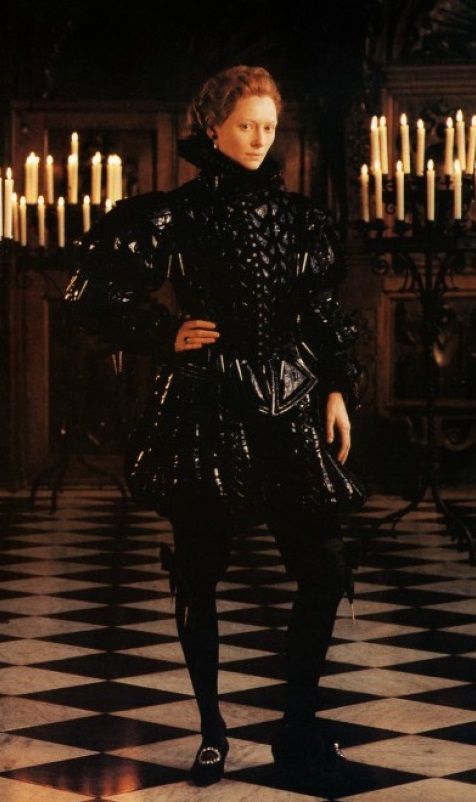
Tilda Swinton as the Male Orlando in the 1992 Sally Potter Film

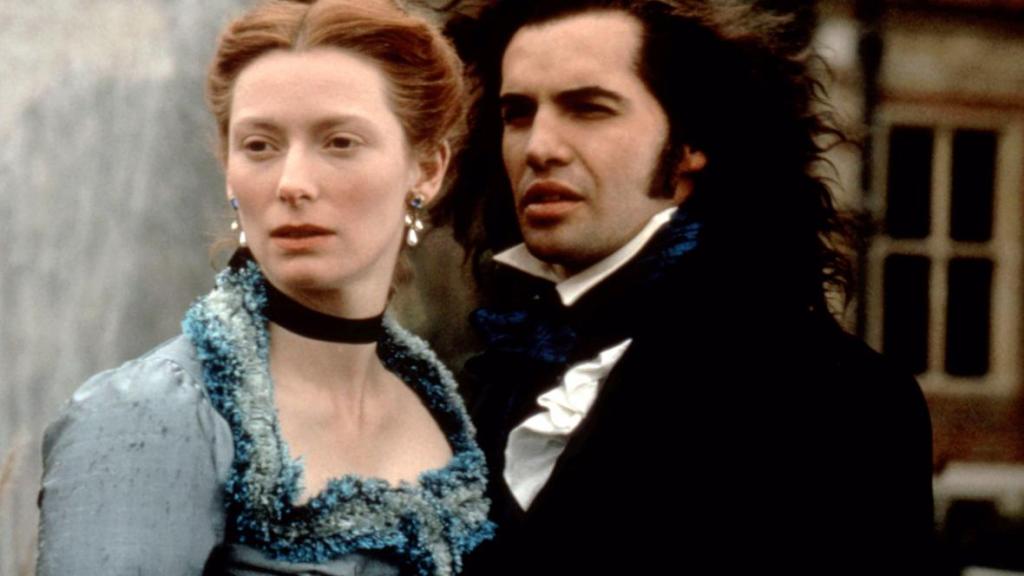
There was an excellent film version of Orlando released in 1992, with Tilda Swinton playing both the male and female lead.

Both the book and the film set me to thinking of my own fragmented life, which included the following scenes:

  • The 5-year-old sent home from kindergarten for not being able to speak in English (my native language is Hungarian).
  • The teenager who has turned sickly with punishing frontal headaches.
  • The high school valedictorian who has won a four-year scholarship to an Ivy League college.
  • The college graduate, within days of leaving for graduate study at UCLA, goes into a coma and subsequent brain surgery. My pituitary gland was destroyed by a tumor that was causing the headaches and making me, at 21, look like an 11-year old.
  • The young man in his 20s who feels as if he were from Mars, looks absurdly young, and can’t get girls interested in him.
  • The same young man in a few years learning that alienation is part of the human condition.
  • In his 40s, he finds love with a cute woman born in France, who doesn’t mind that he can’t father a child.

… and so on.

Tilda Swinton as the Female Orlando from the Film

I guess I managed all those years without once having to change my gender. Of course, there is little chance that I will reach the ripe old age of 400.

The Death of Boris Vian

Writer and Jazz Musician Boris Vian (1920-1959)

This is a reprint of a blog I posted on October 1, 2018—with some minor changes. Vian was not only a member of the Oulipo literary movement, but he was a renowned jazz musician.

There is a myth that the French are contemptuous of everything that the United States stands for. They might be now, seeing how how our country has sunk to Stygian depths since November 2016. But there have been many exceptions, consisting of key figures in the arts who have paid homage to American art forms. In the case of Boris Vian (1920-1959), the contributions have been in the form of music (he was a jazz trumpeter who knew Duke Ellington, Hoagie Carmichael, and Miles Davis), literature (detective and Oulipo), and translation (Raymond Chandler and sci-fi writer A. E. Van Vogt). In addition, he was a friend to the existentialist writers of the 1950s.

I have just finished [in 2018] reading Vian’s Mood Indigo, the English title of L’écume des jours. It is an inventive work of the Oulipo school of literature. It starts out as a manic love story and becomes ever more somber and even tragic as the characters come to sad ends. It is reminiscent of works by Raymond Queneau and Georges Perec.

Boris Vian at the Trumpet

Vian died at the age of thirty-nine of a heart attack while watching the credits of a French film adaptation of his novel I Spit On Your Graves [not to be confused with the various rape revenge films released under the name of I Spit on Your Grave without the “s”]. You can see the credit sequence by clicking here. Reportedly, Vian cried out “These guys are supposed to be American? My ass!” and collapsed in his seat. He died en route to the hospital.

He had a point, it looks a lot more French than American. It’s a pity we lost him, because he was a real friend to American literature and music.

The Swamp of Evil

Swamps in Our Culture Are Places of Evil

One of the grisliest places I ever visited was the Mexican State of Tabasco, where storms upriver caused floods in Villahermosa. From the banks of the Grijalva, my brother and I saw the carcasses of cows and other livestock come floating past in the fast-flowing muddy waters. The humidity easily stood at 100%, if not more.

We have our swampy regions in the States as well. Take Louisiana, for instance, where the Atchafalaya Basin could become the new course of the Mississippi, if it jumps the Army Corps of Engineers dams to the north.

James Lee Burke, Author of the David Robicheaux Novels

I have just finished reading James Lee Burke’s Sunset Limited, in which David Robicheaux of the New Iberia Police confronts evils that are scarcely to be imagined, let alone experienced.

Years ago, a labor leader named Frank Flynn was murdered by being crucified upside-down with a nail gun on the side of an old barn. His children Cisco and Megan are back in the Bayou Teche area, along with some of the nastiest contract killers ever portrayed in literature. But then, as Dave reminds us, “Evil doesn’t have a zip code.”

The gnarliest of them, one Harpo Scruggs, also has a wicked sense of humor:

“You got a lot of brass,” I said to him.

“Not really. Since I don’t think your bunch [the police] could drink piss out of a boot with the instructions printed on the heel,” [Harpo] replied. He unscrewed the cork in the mescal bottle with a squeak and tipped another shot into his glass.

One thing that characterizes a Dave Robicheaux novel is the tendency of its hero, along with his friend Clete Purcel, a former New Orleans police officer, to confront evil head on, with intensity and frequency.

To date, I have read over ten of Burke’s Robicheaux novels with their brooding atmosphere of Cajun eeriness—and I intend to keep going.

The Philosophers

Jean-Paul Sartre and Simone de Beauvoir

Just as the Second World War was ending, there was a philosophical renaissance of sorts that was born in the streets and cafés of Paris. Most associated with it are Jean-Paul Sartre, Albert Camus, and Simone de Beauvoir. Best known for her book The Second Sex, Simone de Beauvoir had written a novel about the French existentialists in 1954 called The Mandarins.

It is a classical roman à clef, in which real people appear under fictional names:

  • Jean-Paul Sartre becomes Robert Dubreuilh
  • Simone de Beauvoir becomes Anne Dubreuilh, Robert’s wife (In real life, Sartre and de Beauvoir were an unmarried couple for over fifty years)
  • Albert Camus becomes Henri Perron
  • American novelist Nelson Algren becomes Lewis Brogan

The book’s characters are deeply involved in leftist political issues without subjecting themselves to control by the Russian Politburo. Yet they find that it was easier to blow up trains and otherwise sabotage the Nazi war machine than to find a path through the messy politics of the Fourth Republic in France, particularly during the postwar political rise of Charles De Gaulle.

The Camus/Perron character struck home with me, because he is the most disaffected of the group after the war ends. As he gets pushed more and more by his friends into the messy politics of the French Republic, he becomes increasingly dispirited. This reflects his relationships with his women and his male friends.

Curiously, although Simone de Beauvoir never married and never had children, she is both married and with a troublesome daughter (Nadine) in The Mandarins. Her relationship with Sartre/Debreuilh is an open marriage, and she carries on a long affair with an American novelist, Nelson Algren/Lewis Brogan, the author of The Man with the Golden Arm.

The Mandarins is one of the best books I have read all year. I rather suspect that I will revisit the French existentialists in my reading during the months to come. Also, I have concluded that de Beauvoir is a badly underrated author considering her importance in a major twentieth century philosophical movement.