The Halloween 2020 Book List

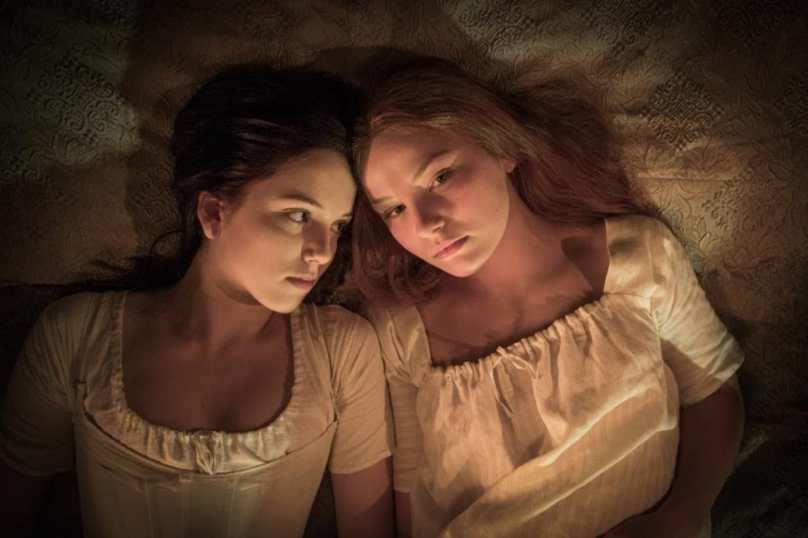
A Canadian Adaptation of LeFanu’s Carmilla (2017)

Every October, I usually read several novels and short stories in the horror genre. I do not care that much for the current stuff, like Stephen King or Dean Koontz. My preference is for the classics, and those tend to be concentrated in the late 19th century.

The books I read this month were:

  • Shirley Jackson’s Dark Tales
  • Joseph Sheridan LeFanu’s In a Glass Darkly, which included the short novels Carmilla and The Room in the Dragon Volant
  • Arthur Machen’s The Great God Pan and Other Horror Stories, a new collection edited by Aaron Worthy

Shirley Jackson is most famous for her short story “The Lottery,” but she also wrote such novels as We Have Always Lived in the Castle and The Haunting of Hill House.

Sheridan LeFanu (1814-1873) was an Irish author who wrote some classic tales of horror, especially Carmilla, a tale of a lesbian vampire who predated Bram Stoker’s Dracula by some twenty years. In 1960, it was made into a film by Roger Vadim entitled Blood and Roses (in France: Et mourir de plaisir). At the time I attended college, it was the most popular film showed by the Dartmouth Film Society.

Welsh Horror Tale Author Arthur Machen

Finally, there was a delightful collection of novellas and tales by Arthur Machen (1863-1947). Most of Machen’s best work was composed up to the late 1920s and included the classic The Great God Pan (1894), which tells of what happened when a young woman who, upon being exposed to the Greek god Pan, created a trail of destruction that spanned several continents.

Women Walking Away

They Walk Away From Me, So To Hell With ’Em

Today I stopped in at Barnes & Noble at The Grove (adjacent to the original L.A. Farmers Market at 3rd and Fairfax). I never cease to be amazed at the lack of variety in the cover designs of paperbacks meant for the women’s market. Here are the basic elements:

  • Women walking away with their faces infrequently shown
  • Extra points for wearing fashions of bygone days
  • Or: Back mostly bare

The above photograph shows a montage of women’s titles circa 2013. Now, seven years later, it’s still the same.

This monotony does perform a useful function for me: With rare exceptions, I wouldn’t select one of those “women walking away” books. I would expect to find that their contents are mostly what I call excessively “relationshippy,” and mostly from a parochial feminine perspective.

No offense meant, but most fiction targeted primarily at female readers is not my cup of tea.

One exception:

Omigosh! Four Women Walking Away—and One Guy!

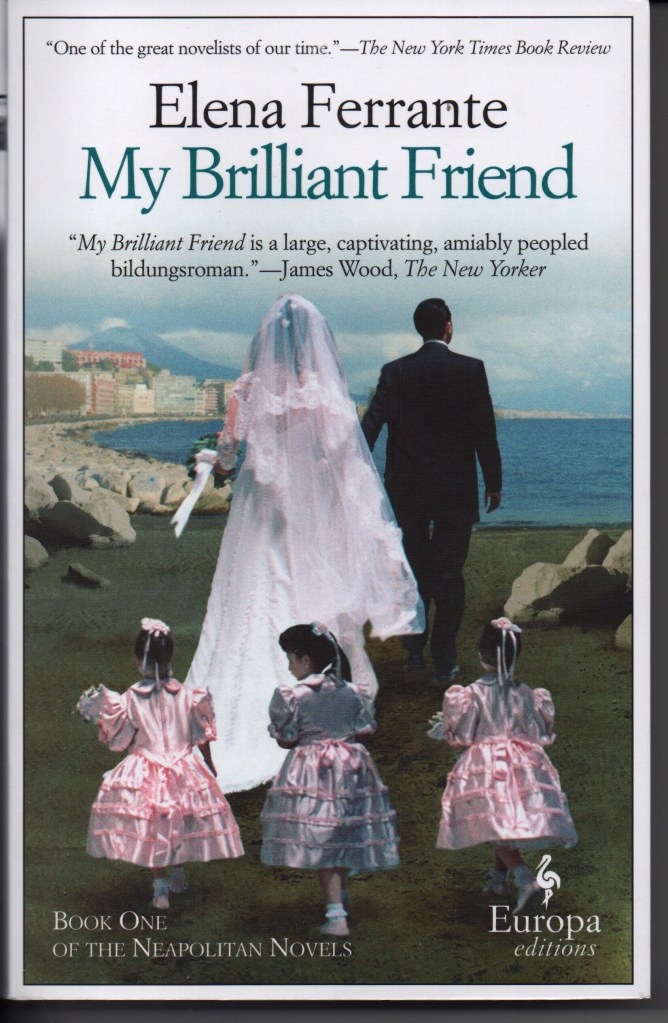
Elena Ferranate’s My Brilliant Friend was an excellent novel about a girlhood in Naples, Italy. Eventually, I’ll tackle the sequels in the trilogy.

The God Abandons Antony

Marc Antony on Cleopatra’s Barge

It was in the first century AD that Plutarch first mentioned the tale that, as he was to face ultimate defeat from both Octavian (later Augustus) and his love Cleopatra, that he was visited by a strange vision:

During this night, it is said, about the middle thereof, while the city was quiet and depressed through fear and expectation of the future, all at once certain harmonious sounds from all kinds of instruments were heard, and shouts of a crowd with Evoes and satyric leapings, as if some company of revellers not without noise were going out of the city; and the course of the procession seemed to be through the middle of the city to the gate leading outwards in the direction of the enemy, and at this point the tumult made its way out, being loudest there. And those who reflected on the sign were of opinion that the god to whom Antonius all along most likened himself and most claimed kinship with was deserting him.

In his play Antony and Cleopatra, Shakespeare makes mention of this vision in Act IV, Scene 3.

But it was the Greek poet Constantine Cavafy, a citizen of Alexandria, who wrote one of his greatest poems on the subject:

Constantine P. Cavafy

The God Abandons Antony

When suddenly, at midnight, you hear
an invisible procession going by
with exquisite music, voices,
don’t mourn your luck that’s failing now,
work gone wrong, your plans
all proving deceptive—don’t mourn them uselessly.
As one long prepared, and graced with courage,
say goodbye to her, the Alexandria that is leaving.
Above all, don’t fool yourself, don’t say
it was a dream, your ears deceived you:
don’t degrade yourself with empty hopes like these.
As one long prepared, and graced with courage,
as is right for you who proved worthy of this kind of city,
go firmly to the window
and listen with deep emotion, but not
with the whining, the pleas of a coward;
listen—your final delectation—to the voices,
to the exquisite music of that strange procession,
and say goodbye to her, to the Alexandria you are losing.

The poem is mentioned in Lawrence Durrell’s Justine and even printed there, but in Durrell’s translation. I have chosen instead to include the translation by Edmund Keeley and Philip Sherrard.

Alexandria on the Pacific

The Port of Alexandria As It Is Today

Every once in a while, I re-read a book that has meant a lot to me in the past, in the hopes of somehow rediscovering myself as I was when I first encountered it. Around 1967-1968, I first delved into Lawrence Durrell’s Justine, the first volume of his Alexandria Quartet.

I had just reached the age of puberty in my early twenties thanks to regular injections of depo-testosterone. In September 1966, I had a pituitary tumor (chromophobe adenoma) removed by slicing through my forehead and hinging my brain upward. As a result, I was a strange sort of late-blooming virgin who was mightily puzzled by and preoccupied with sex.

The Edition I Read

Imagine me as I lie in the sand on Santa Monica Beach by lifeguard station 12 reading the following:

Five races, five languages, a dozen creeds: five fleets turning through their greasy reflections behind the harbour bar. But there are more than five sexes and only demotic Greek seems to distinguish among them. The sexual provender which lies to hand is staggering in its variety and profusion. You would never mistake it for a happy place. The symbolic lovers of the free Hellenic world are replaced here by something different, something subtly androgynous, inverted upon itself. The Orient cannot rejoice in the sweet anarchy of the body—for it has outstripped the body. I remember Nessim once saying—I think he was quoting—that Alexandria was the great winepress of love, those who emerged from it were the sick men, the solitaries, the prophets—I mean all who have been deeply wounded in their sex.

So there I was on the hot sands of Santa Monica, surrounded by women in bikinis, indulged in morose delectation.

Actually, Justine is pretty good, though it is quite arch at times. I am no longer the same unhappy young man on the beach. I read all four volumes of the Alexandria Quartet that one summer, and I loved it—however disturbing I found it.

Islandia

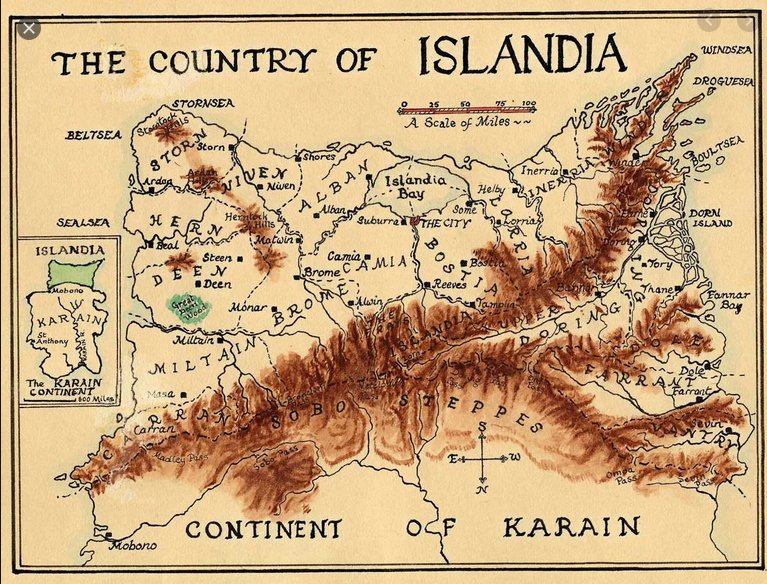
Map of Austin Tappan Wright’s Invented Country

It’s not often that I will undertake to read a thousand plus page novel. Most of the time, it’s just not worth it. There are some rare exceptions: One of them in Austin Tappan Wright’s Islandia, published in 1942, more than ten years after its author died in a New Mexico auto accident. During the interval, the author’s two thousand pages of text were edited and submitted for publication. Fortunately for us, they were accepted. The result is a one-of-a-kind classic that will probably remain in print as long as there are literate readers.

Mind you, Wright is no master stylist. What makes Islandia such a great novel is the author’s incredible imagination in creating an imaginary country with its own culture, language, and mores. Add to that what I regard as the most acute study of love in the Western World with some of the most brilliantly drawn female characters, particularly Dorna, Nattana, Stellina, and Gladys Hunter.

The 2001 Edition That I Read

The story tells of an American named John Lang who is appointed as consul to the isolated nation of Islandia (which is actually not an island), where no more than 100 non-consular foreigners are allowed to live at one time. He falls in love with two Islandian women, is reluctantly rejected by both of them, and eventually marries a fellow American named Gladys Hunter, whom he brings to Islandia to live on a farm with him.

When John and Gladys come together in Islandia, there is none of that “and they lived happily ever after” claptrap that destroys so many stories: Gladys does not immediately take to her new adopted country, and John must patiently ensure that her needs are being met before she is wholly at ease in her new situation. This type of extended dénouement is rare in fiction, so I was greatly surprised to find it here.

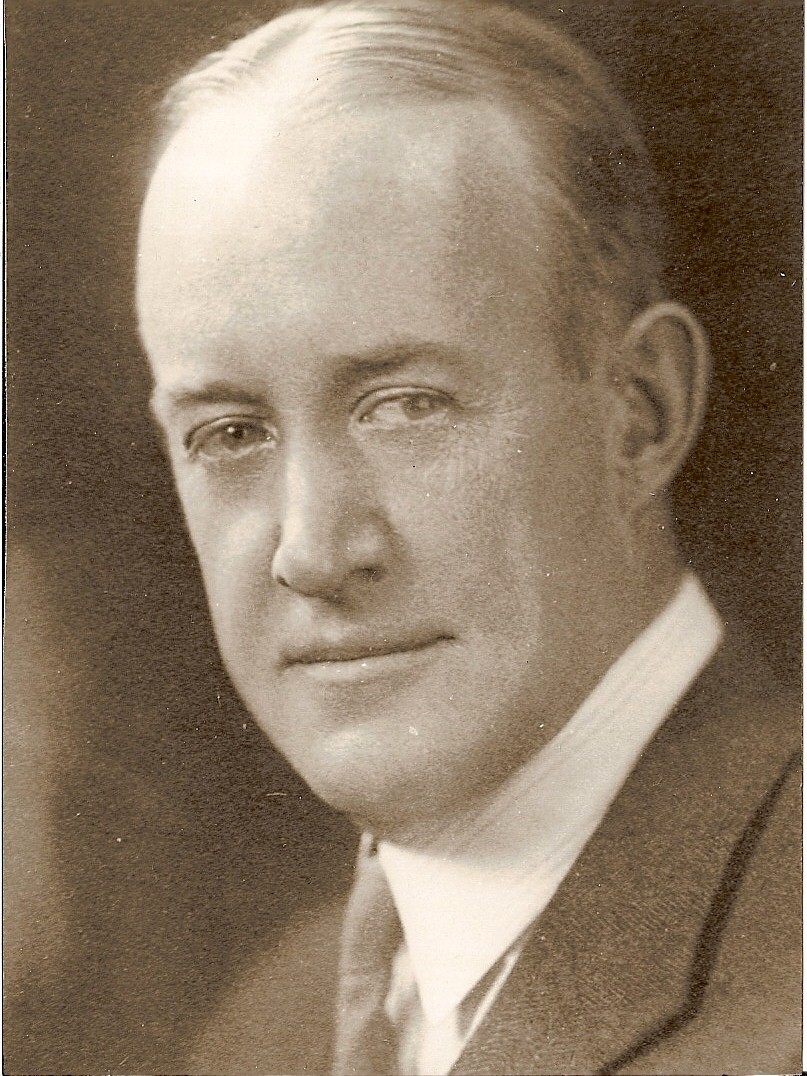
The Author: Austin Tappan Wright (1883-1931)


I loved this book deeply, and I hope to be able to read it again some day. It made me feel good about my fellow humans, an emotion I do not readily feel during this election year of 2020.

A Villa on Capri

Italian Writer Curzio Malaparte’s Villa on Capri

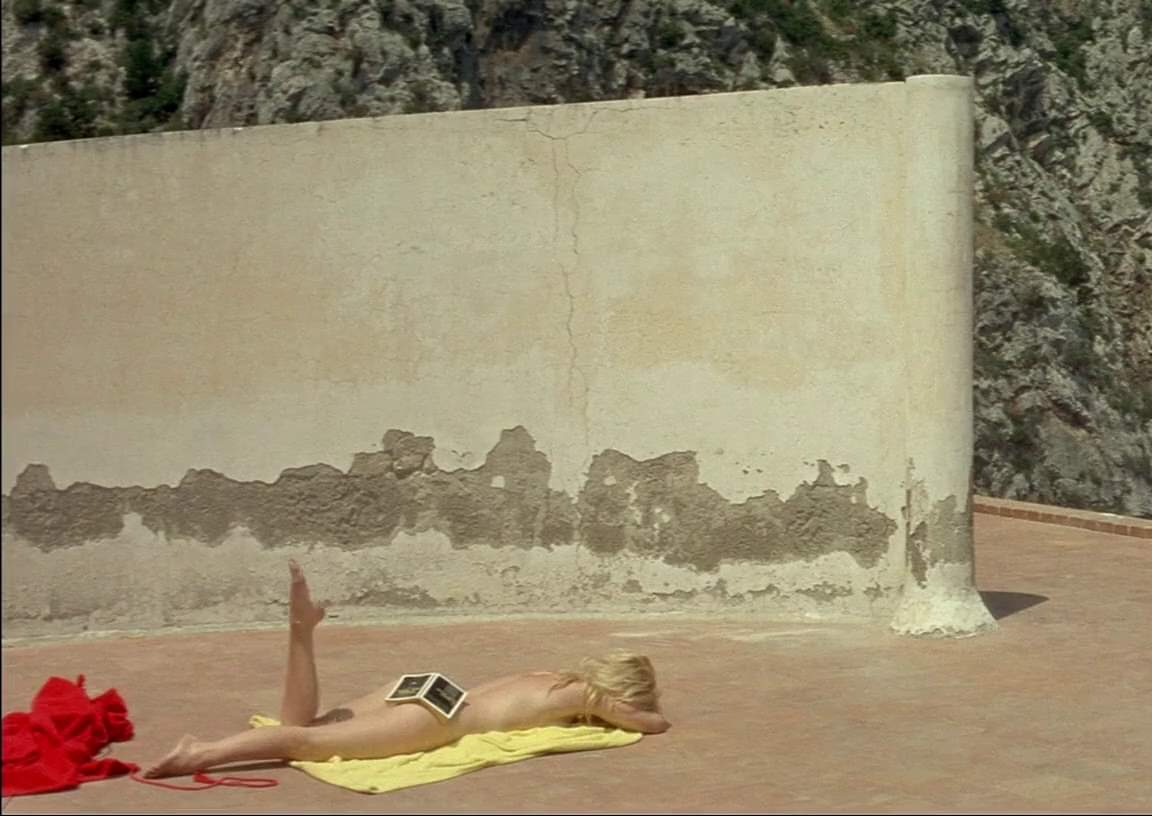
This is the story of a coincidence that I didn’t realize at the time (in the 1960s), but that I learned about much later as I became more well read. I will start with the film, Jean-Luc Godard’s Contempt (in French Le Mépris) filmed in 1963. Based on a 1954 novel by Alberto Moravia, known in the English world as either Contempt or A Ghost at Noon, the Godard film tells the tale of a marriage between a writer named Paul Javal (played by Michel Piccoli) whose marriage to his wife Camille (Brigitte Bardot) falls apart as Camille is used as bait an American film producer named Jeremy Prokosch (Jack Palance). The second half of the film was shot at a beautiful villa in Capri (shown above).

In the late 1960s, I thought the film one of the greatest ever made, largely because I was so impressed by the nude body of Brigitte Bardot. Now, I no longer think of it even as Godard’s best film. For that, I would now select either Alphaville or Pierrot le Fou, both made in 1965.

Brigitte Bardot Sunbathing on the Roof of Malaparte’s Villa in Contempt

Only much later did I learn that the villa featured in Contempt was actually the villa of a great—albeit twisted—Italian writer who called himself Curzio Malaparte (1898-1957). Born Curt Erich Suckert of a German father and an Italian mother, he chose the pen name Malaparte because it was the opposite of Napoleon’s family name: Malaparte means “bad side,” whereas Buonaparte means “good side.” And he tried in his works to live up to his pen name. If you are interested in acquainting yourself with his works, I suggest you read Kaputt (1944) about the German Eastern Front and The Skin (1949) about the American invaders of Italy in Naples.

Curzio Malaparte

Oh, and I still think you should see Godard’s Contempt. Even after all these years, Bardot’s derrière is still capable of inspiring lofty thoughts.


The Great American Novel

It Has Already Been Written—In 1851

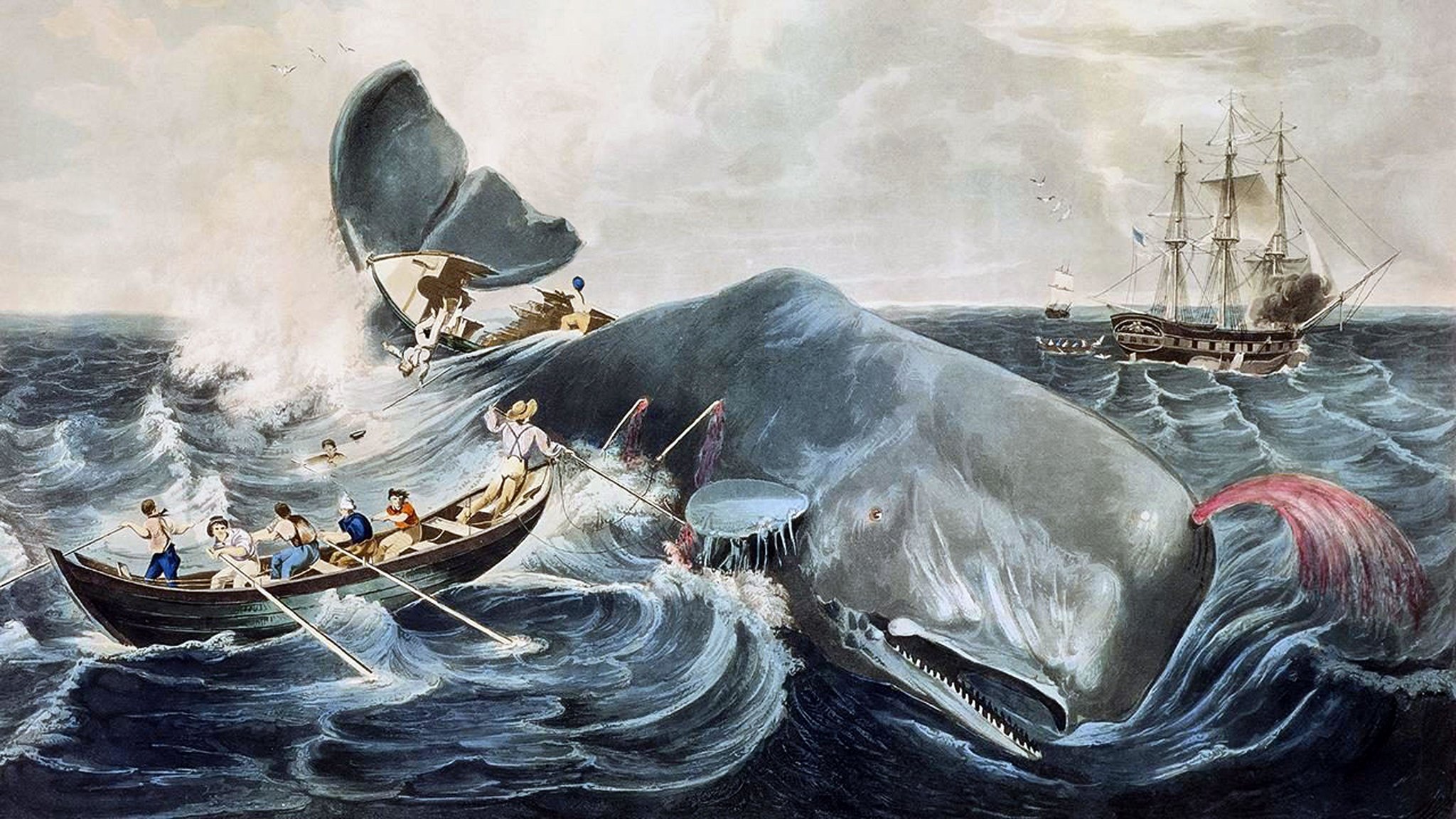
All the time I was growing up, I kept hearing of writers wishing to write the Great American Novel—as if it were hovering in our future. It actually became something of an obsession with many. Sorry to disappoint, but I think the Great American Novel was written in 1851 by Herman Melville. It is called Moby-Dick, or The Whale. To date, I have read it three times, and each time was a revelation to me.

Unlike Tolstoy, Dostoyevsky, Balzac, Proust, and Jane Austen, Melville was a highly inconsistent author. If you read Mardi: and a Voyage Thither (1849) or The Confidence-Man, His Masquerade (1857), you are dealing with a folk philosopher who is interested only in somewhat uninteresting bon mots. He did write some great short fiction, such as “Bartleby, the Scrivener” (1853); “The Encantadas, or Enchanted Isles” (1854); “Benito Cereno” (1855); and finally “Billy Budd, Sailor (An Inside Narrative)” (1892). Of the other works I have read, they run the gamut from interesting to “Why Was This Written?”

His Novel Is Still as Relevant as Tomorrow’s News

On the occasion of the 200th anniversary of his birth in 1819, Philip Hoare wrote a fascinating article for The Guardian entitled “Subversive, Queer and Terrifyingly Relevant: Six Reasons Why Moby-Dick Is the Novel for Our Times.” You can find it here.

There have been many other American novelists whose work is near great. I am thinking of Nathaniel Hawthorne, Edgar Allan Poe (though he wrote only one unfinished magnificent novel in The Narrative of A. Gordon Pym), Henry James, and William Faulkner.

I am not trying to discourage my fellow countrymen from trying their own hand at the Great American Novel, but I think that before long the medium of the novel will no longer be as important as it once was. And then, a major consideration, who will still be around to read it?


America Subterranean

This Is a Book That Got Me Thinking

I have just finished reading a book recommended to me by my friend Suzanne: Tara Westover’s Educated. Ever since 2016, I have been pondering what it is about the United States of America that gives rise to all these anti-governmental splinter groups that are directly or indirectly associated with Trump’s base.

Tara is an attractive young woman who was raised in a small town in Franklin County, Idaho, of a Mormon survivalist parents. Her father ran a junkyard; and her mother, starting out as a midwife, became a producer of essential oils called Butterfly Express. What the author describes is almost an archetypal experience of a religiously conservative familial craziness:

  • The father is a staunch survivalist who collects guns, including one that could shoot down helicopters such as those involved in Ruby Ridge.
  • Insists that all the children be home-schooled and work in the family junkyard and essential oil business.
  • Doctors and hospitals were to be avoided. Instead, Mrs Westover effected all cures using natural remedies.
  • There was an emphasis on the Old Testament (and, in Tara’s case, The Book of Mormon).
  • Women were expected to dress modestly lest they be considered sluts.
  • There was no involvement with government. Tara did not get her birth certificate until she was nine. (She was born at home.)
  • The males in the family tend to be bullies that enforce compliance with their fringe beliefs.

Tara Was Not Only Smart, But Tough As Nails

Somehow, Tara showed that she had the brains despite her desultory home schooling to get into Brigham Young University, and then Cambridge University in England and Harvard, where she got her PhD.

I don’t normally read best sellers, but Educated was an exception that was definitely worth reading. There was something about her upbringing which was truly horrifying, such as the repeated life-threatening auto and junkyard accidents that had to be dealt with using only the mother’s natural remedies. Today, Tara Westover is no longer in touch with her parents. She, for one, managed to escape.


Tiger Hunting

Jim Corbett with Man-Eating Tiger

There are relatively few tigers left in the world today; but, a hundred years ago, there were individual tigers who were responsible for the deaths of hundreds of villagers in the northwest Indian region of Kumaon, just west of Nepal. Perhaps the most famous of the “white hunters” of these man-eating tigers was Edward James Corbett, better known as Jim Corbett (1875-1955).

Now what am I doing talking about a killer of endangered tigers? Surprisingly, Corbett himself was a naturalist:

A tiger’s function in the scheme of things is to help maintain the balance in nature and if, on rare occasions, when driven by dire necessity, he kills a human being or when his natural food has been ruthlessly exterminated by man he kills two percent of the cattle he is alleged to have killed, it is not fair that for these acts a whole species should be branded as being cruel or bloodthirsty.

Corbett is as famous for photographing and preserving the tiger population as he is for hunting them. In the introduction to his most famous book, Man-Eaters of Kumaon, he writes:

When, therefore, a tiger is suffering from one or more painful wounds, or when its teeth or missing or defective and its claws worn down, and it is unable to catch the animals it has been accustomed to eating, it is driven by necessity to killing human beings.

I was surprised how well-written his book is. He is able to produce an elegant word picture of the circumstances of each hunt. Because of the strength and agility even of man-eating tigers, one rarely has time to reload if one misses. Even if he shoots his prey in the head, the tiger can survive long enough to make a meal of his hunter.


Born in Cleveland

Sci-Fi Writer Harlan Ellison (1934-2018)

The city of my birth—Cleveland, Ohio—has given birth to few celebrities. Among actresses, there were the meltingly lovely Halle Berry and Dorothy Dandridge. Among literary figures, there was only one: Science Fiction author Harlan Ellison. During his career, Ellison has won eight Hugo Awards, four Nebula Awards, five Bram Stoker Awards, and two Edgar Awards.

More to the point, he has written some of the most striking and memorable stories in the sci-fi, horror, and mystery genres. These include “’Repent, Harlequin!“ Said the Tick-Tock Man” (1965) and “I Have No Mouth, and I Must Scream” (1968). He edited two famous sci-fi collections of stories in Dangerous Visions (1967) and Again, Dangerous Visions (1972). And he wrote what was probably the most remembered episode of the original “Star Trek” series entitled “The City on the Edge of Forever” (1967).

Most of his oeuvre consists of short stories which are as eye-popping today as when they first came out. I am slowly working my way through these stories.

This afternoon, I saw a 2007 film by Erik Nelson about the writer entitled Harlan Ellison: Dreams with Sharp Teeth, which includes multiple instances of the author’s abrasive style. During his heyday, that abrasiveness won him many enemies. In the end, however, what will be remembered are his stories.

It’s good to know that at least one great writer came from my home town.