Travel Without Leaving Home

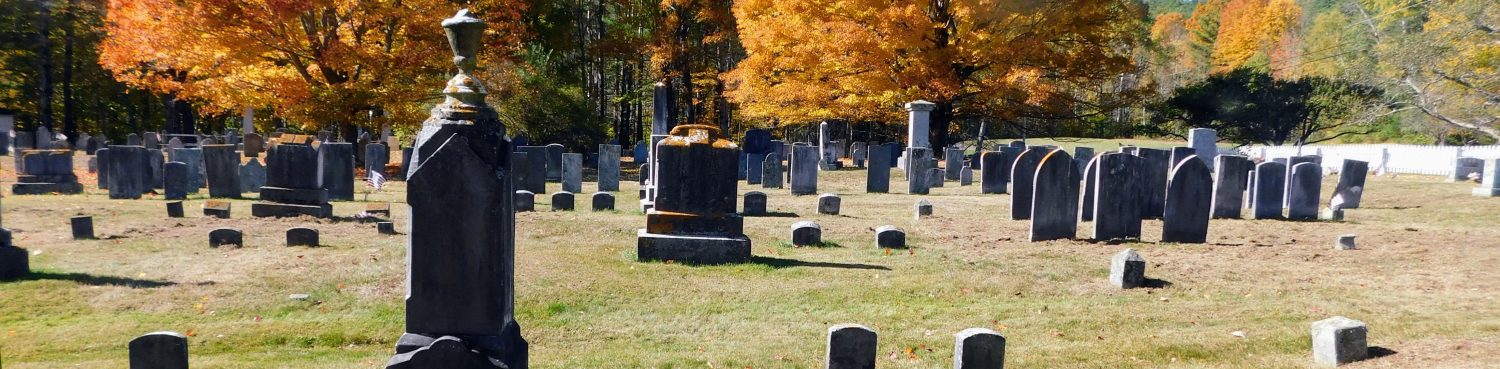
Vicuñas Seen on the Road to Puno, Peru

Why should I care that you become an armchair traveler rather than an actual traveler? Curmudgeon that I am, if I ran into you on my travels, all eager to talk about your lovely home town of East Jesus, Arkansas, you would be met with a torrent of Hungarian and not a word of English. I would be perfectly happy to see you indulge your desire for travel by reading a book rather than obtruding with your actual presence.

As for myself, I not only like to travel, but I like to read about travel. Here is a list of an even dozen travel classics. Curiously, they are all written by English or American travelers. Not that other peoples have not written travel classics: Only, they tend to be more obscure in the Anglo-American world of publishing. And besides, the English are so damned good at it!

The following are presented in alphabetical order by author:

  • Robert Byron: The Road to Oxiana (1937). Driving through Persia to reach Afghanistan at a time when roads were few and hairy.
  • Bruce Chatwin: In Patagonia (1977). Not everything Chatwin says is 100% true, but it always is 100% fascinating.
  • Lawrence Durrell: Prospero’s Cell, A Guide to the Landscape and manners of Corcyra (1945). All Durrell’s travel books are worth reading.
  • Patrick Leigh Fermor: A Time to Keep Silence (1957). About the first part of a walking tour from Holland to Istanbul, just as the Second World War is about to break out.
  • John Gimlette: At the Tomb of the Inflatable Pig (2003). A fascinating book about Paraguay, its history and people.
  • Graham Greene: The Lawless Roads (1939). Greene’s research for his novel The Power and the Glory, about a trip to Mexico during a persecution of the Catholic Church.
  • Eric Newby: Slowly Down the Ganges (1966). About an attempt to navigate the sacred river of India all the way to the Indian Ocean.
  • Freya Stark: The Valley of the Assassins and Other Persian Travels (1934). By a woman traveling alone in the Middle East!
  • John Steinbeck: The Log from the Sea of Cortez (1951). Travels in the Gulf of California doing oceanographic research.
  • John Lloyd Stephens: Incidents of Travel in Central America, Chiapas, and Yucatán (1841). Travels in Maya land in the middle of a civil war.
  • Paul Theroux: The Old Patagonian Express (1979). The book that inspired my own travels to South America.
  • Colin Thubron: To a Mountain in Tibet (2011). A religious pilgrimage to Mount Meru, a magnet for three religions.

I could have added another twelve without too much further thought. Hell, I could have added another hundred.

Born in Cleveland, we were too poor to afford travel far beyond Northeastern Ohio. That resulted in my case with an insatuiable desire to see the world, which I started to do in 1975. God, how I wish I could live long enough to continue in the same vein.


Frustration

Russian Writer Kirill Kobrin

There is an Italian saying which applies here: “Traddutore, traditore!” Or, in other words, to translate is to betray.

Today I finished reading the Dalkey Press Edition of Kirill Kobrin’s Eleven Prague Corpses. It was a work that hovered on the edge of brilliance. The author was even conversant with G. K. Chesterton, one of my favorite authors. The only problem was that I had a feeling that one of two things was happening:

  1. The work was badly translated from the original Russian.
  2. The author has problems following a story through to its conclusion.

I tend to think the Option 1 is the case here. Each of the eleven stories that make up this volume aroused my interest, but usually stumbled before the close. Throughout, I had this feeling that Kobrin is the kind of writer I really like, at least from what I have been able to determine.

Old Soviet Poster: “I Redeemed My Guilt Before the Motherland. There Will Be No Return to the Past.”

The above poster was from Kirill Kobrin’s Twitter feed. It caught my eye and I include it here for no particular reason except that I like it. So there!

As for following Kirill’s work in future, I am hopeful that he will take a more active role in translating his own work as he now lives in London and knows English. And presumably, his own English will improve.

I certainly hope so, as I think he has a lot to say.


Better Than Ever

Monaco Stamp Commemorating Honoré de Balzac

It has been over six years since I opened a book by one of my favorite authors, Honoré de Balzac (1799-1850). Sometimes when I revisit a favorite author after a long absence, I find that my ardor has cooled somewhat. Not so with Balzac!

In the Yahoo French Literature Reading Group, I recommended that we select A Harlot High and Low, a.k.a. Splendeurs et misères des courtisanes (1838-1847) for our July read. It didn’t take too many pages before I was as entranced as ever. It was almost half a century ago that I first undertook to read Père Goriot (1835), still my favorite among his works. Interestingly, two of the characters from the earlier book—Eugène de Rastignac and Vautrin—appear in the work I am re-reading.

The period of the author’s life somehow tied together the French Revolution (1789-1799), the reign of Napoleon Bonaparte, the Bourbon Restoration, the reign of Louis-Philippe “The Citizen King,” and the Revolutions of 1848. No other writer on the Continent was able to bridge these critical periods as Balzac did with his Comédie Humaine series of stories and novels, although Charles Dickens at times came close.

Balzac was the first writer to share characters between stories. As one reads his works, one gains a deeper understanding not only of the characters, but the times and milieus in which they lived.

The Work I’m Re-Reading Now

As I re-read A Harlot High and Low, I see myself returning to my favorites among his works:

  • The Wild Ass’s Skin (Le Peau de Chagrin), 1831
  • Eugénie Grandet, 1833
  • Old Goriot (Le Père Goriot), 1835—probably the best place to start if you want to read Balzac
  • César Birotteau, 1837
  • Lost Illusions (Illusions Perdues),  1837-1842
  • Cousin Bette (La Cousine Bette), 1846
  • Cousin Pons (Le Cousin Pons), 1847
  • A Harlot High and Low (Splendeurs et Misères des Courtisanes), 1838-1847

Over the years, I have actually read all 50-odd novels and all 20-odd short stories that have been translated into English, some more than once. And it appears that I’m not finished yet.


Hard-Boiled

Lauren Bacall and Humphrey Bogart in Howard Hawks’s Masterpiece The Big Sleep (1946)

I’ve written before about American film noir, which includes many of my favorite films, such as The Big Sleep, High Sierra (1941), Double Indemnity (1944), and The Big Heat (1953)—not to mention several hundred other likely prospects.

Today I would like to say a few words about the literary genre that spawned these films. Although it was not until 1945 that the French publishing house Gallimard introduced its Serie Noir editions that gave birth the the genre’s name, noir novels had been written for years. There was even an early noir film by D. W. Griffith entitled The Musketeers of Pig Alley (1913).

What is it about the United States that produced this genre of hard-boiled urban crime fiction? It probably has something to do with our fascination with hard-boiled dicks, cigarettes, hard-luck losers, cheap booze, hot floozies, and guns. Here are just a few mileposts in the genre, alphabetically ordered:

  • W. R. Burnett: High Sierra (1941)
  • James M. Cain: The Postman Always Rings Twice (1934)
  • Raymond Chandler: The Long Goodbye (1953), probably my favorite of all the noir writers.
  • James Ellroy: L.A. Confidential (1990)
  • Kenneth Fearing: The Big Clock (1946)
  • David Goodis: The Moon in the Gutter (1953), which I’m reading now.
  • William Lindsay Gresham: Nightmare Alley (1946)
  • Dashiell Hammett: The Maltese Falcon (1930)
  • Patricia Highsmith: Strangers on a Train (1950)
  • Chester Himes: The Real Cool Killers (1959)
  • Dorothy B. Hughes: In a Lonely Place (1947)
  • Jim Thompson: The Killer Inside Me (1952)
  • Cornell Woolrich: Night Has a Thousand Eyes (1945)

I think I’ll stop at thirteen writers—a most appropriate number for this list. Not coincidentally, all have been made into classic films, both in the U.S. and France. Without straining my mind too much, I could probably double the size of the list. What’s interesting is that this list includes women (Highsmith and Hughes) and one African-American (Himes).

While none of the above names fit in with Beckett, Joyce, Faulkner, and the other literary heavyweights of the last hundred years, I would not be surprised if their works could be found on their night-stands.

V.—That Obscure Object of Desire

Swedish Book Cover for Thomas Pynchon’s V.

I have just finished reading Thomas Pynchon’s first novel, V. (1963). This is one of those works which is so disturbing to readers who feel they must understand every reference, every symbol, every character. And what if the novel has hundreds of characters, most of them with highly fanciful names like Herbert Stencil or Benny Profane or Rachel Owlglass or Pig Bodine. For good or ill, something happened in the twentieth century that resulted in a great divorce of art from the common everyday experience of reality.

One can find it in James Joyce (Finnegan’s Wake), Samuel Beckett (The Unnamable), Georges Perec (Life: A User’s Manual), William Faulkner (Absalom, Absalom!), and Gertrude Stein (The Making of Americans). And, in fact, all over the place.

Because my academic training is in film history and criticism, I was able to make a connection to one of my favorite directors, the Spaniard Luis Buñuel. In an interview with André Bazin and Jacques Doniol-Valcroze that appeared in Cahiers du Cinéma in June 1954, Buñuel wrote:

For me it is natural to tend to see and to think of a situation from a sadistic rather than from, say, a neorealistic or mystical point of view. I ask myself: What must this character reach for? A revolver? A knife? A chair? In the end, I always choose whichever is most disturbing. That’s all…. [Quoted in Ado Kyrou, Luis Buñuel: An Introduction (New York: Simon & Schuster, 1963)]

Film Director Luis Buñuel (1900-1983)

If one looks at Pynchon’s novel V., one finds a search for a feminine entity referred to as V., presumably because that is the first letter of her name. In the course of the novel, there are dozens of characters who could qualify, and Pynchon is in no hurry to identify which one is right. The candidates include Victoria Wren, Vera Meroving, the goddess Venus, Veronica Manganese, a rat named Veronica in the sewers of New York, Madame Viola, Hedwig Vogelsang, the Blessed Virgin, or ??? Then again, V. could be a place, such as Valetta (Malta), Venezuela, the mysterious Vheissu (never explained), Vesuvius, or the V-Note Jazz Club in Manhattan ???

Thomas Pynchon is not terribly interested in providing closure, but he does know how to suck you in and keep turning those pages until you get to the strange death by waterspout of Sydney Stencil in 1919.


Filling In the Gaps

No One Considers This To Be One of Faulkner’s Best

If one has read a whole lot of books, as I have, one eventually gets to the point of filling in the minor works that are not highly regarded by the critics. In William Faulkner’s case, that includes his first two novels, Soldiers’ Pay (1926) and Mosquitoes (1927). It was only when he began setting his stories in his mythical Yoknapatawpha County that Faulkner’s reputation began its steady ascent. And even then, he was not frequently read until he received the Nobel Prize for Literature in 1949 that Americans decided to start reading his work. Since that point, his work has remained in print.

What is to be gained from reading an author’s minor works, especially at the beginning of his career? I enjoyed Soldiers’ Pay only because I love Faulkner. I better understand the steps he took to be able to write The Sound and the Fury (1929), As I Lay Dying (1930), Light in August (1932), Absalom! Absalom! (1936), The Hamlet (1940), and Go Down Moses (1942).

I will continue to “fill in the gaps” in my reading of Faulkner’s work. In the next year or so, I plan to read Mosquitoes, Pylon (1935), and A Fable (1954). At the same time, I’ll re-read one of the great novels just to remind myself what I am trying to do.

William Faulkner

I am doing the same thing with the opus of Fyodor Dostoyevsky, but in a slightly different way. I am midway through Joseph Frank’s five-volume biography of the writer and am reading or re-reading his work in tandem with the biography. I am about to re-read Notes from the Underground (1864).


The Trilogy from Hell?

Samuel Beckett (1906-1989)

I finally finished reading Samuel Beckett’s “trilogy” of novels: Molloy (1955), Malone Dies (1956), and The Unnamable (1958). The years are for the English versions written by Beckett of works originally released in French.

In recommending it to you, I am doing you a favor, or I am doing you no favors, or you are probably wondering about my sanity, which you might well do, as I do myself even on changeable days in the spring. Have I gone too far? Or have I not gone far enough?

It took me many years to read this trilogy, though I only started in 2010. (It took me eight years to read 414 pages? I must be slipping.) I owned the edition below since the 1970s at least.

The Evergreen Black Cat Edition I Read

Molloy wasn’t too bad. At times, it even resembled a novel as I knew it, or thought I knew it:

And if I failed to mention this detail in its proper place, it is because you cannot mention everything in its proper place, you must choose, between the things not worth mentioning and those even less so. For if you set out to mention everything you would never be done, and that’s what counts, to be done, to have done.

Malone Dies are the thoughts of a dying man (who must actually be pretty healthy to remember so many thousands of words in his “condition”):

For I want as little as possible of darkness in his story. A little darkness, in itself, at the time, is nothing. You think no more about it and you go on. But I know what darkness is, it accumulates, thickens, then suddenly bursts and drowns everything.

With The Unnamable, one is on altogether dicier terrain. There are paragraphs that seem to go on for a hundred pages and sentences that go on for two or three pages. Molloy and Malone had actual human existences at some point, but the unnamed character in the final novel, who may once have been called Mahood and who may once have been called The Worm, has one arm and one leg, or no arms and no legs. At one point he has a single lidless unblinking eye, and he seems to have ears and a mouth, or maybe not. There isn’t a lot to hold on to in The Unnamable. Except, of course, the language:

…I don’t feel a mouth on me, I don’t feel the jostle of words in my mouth, and when you say a poem you like, if you happen to like poetry, in the underground, or in bed, for yourself, the words are there, somewhere, without the least sound, I don’t feel that either, words falling, you don’t know where, you don’t know whence, drops of silence through the silence, I don’t feel it, I don’t feel a mouth on me, nor a head, do I feel an ear, frankly now, do I feel an ear, well frankly now I don’t, so much the worse, I don’t feel an ear either, this is awful, make an effort, I must feel something, yes, I feel something, they say I feel something, I don’t know what I feel, tell me what I feel and I’ll tell you who I am…

Now all of that is just a small part of a single sentence near the end of The Unnamable. Can you wrap your head around a hundred and twenty pages of that? I managed to and even loved it. This is a “story” in which nothing happens, in which everything ventured meets its opposite. It’s like a collision of matter with anti-matter. Boom!


An Excerpt from My Book List

My Excel List of Books I’ve Read Since Early March

I know it’s a little fancy, but I’ve been messing with computers since 1964, when I was a junior at Dartmouth College. There are a lot of abbreviations and symbols which may not make sense, but which I will try to explain here:

  • Col B: A star indicates a new author I have never read.
  • Col D: If an entry is in Italics, I read it on my Kindle. A Commercial-At (@) indicates a re-read.
  • Col H: Either a miniature Guatemalan flag for my vacation reading, or a 2-character country abbreviation. FR=France, AS=Asian, GE=Germany, IS=Iceland, IT=Italy, RU=Russia.
  • Col I: My rating from 0 (worst) to 10 (best).
  • Col K: Genre. FIC=Fiction, MYS=Mystery,BIO=Biography, TRA=Travel, SS=Short Stories, AA=Anthropology & Archeology, SFF=Sci-Fi and Fantasy, DRM=Drama, YAF=Young Adult Fiction, and so on.

The first column is a counter indicating I have read 2,096 works since 1998, when I started. Now that I am retired (for now), I am reading more than ever.


Among the Night Witches

A Young Adult Novel About Women Night Bomber Pilots for the Russians in WW2

I don’t usually read Young Adult fiction, but circumstances dictated that I read Among the Red Stars by Gwen C. Katz. First of all, my friend Bill Korn recommended it to me and suggested that I visit the author at last weekend’s Los Angeles Times Festival of Books. The which I proceeded to do last Saturday. Gwen was there in a shared booth, and I purchased a hardbound copy of her book.

Yesterday, I finally had a chance to start the book. Given Bill’s recommendation, I expected it would be interesting. It was actually written well enough to almost qualify as standard adult fiction. The book was about what the Wehrmacht troops invading Russia called the Nachthexen, the Night Witches. The term referred to young women who flew primitive old bombers at night behind enemy lines. The heroes are Valka (Valentina) and Iskra, a pilot and navigator who knew each other from childhood. Valka corresponds with Pasha, a friend from her home town who is conscripted into a rifle company.

Almost half of the novel consists of letters between Valka and Pasha, which gradually turn into love letters as Valka begins to realize how much her childhood friend means to her.

Valka (Valentina) , the Heroine

Many of the events described as well as many of the minor characters are taken from real life. Although I do not know much about the women flyers in the VVS (short for Военно-воздушные силы, or Military Air Forces), I felt that Gwen Katz did a creditable job researching her book. Added to that were interesting and diverse characters and well-plotted-out action that was exciting without being too subject to shallow wish fulfillment.  The ending, in which Valka and Iskra fly to rescue Pasha in German-held territory might be a bit much; but it is well within the standards of YA literature.

Author Gwen C. Katz at the L.A. Times Festival of Books

I am curious to see what Miss Katz will do for her next novel. And I will be looking out for it.


Serendipity: The Writer Gives an Interview

Jorge Luis Borges Giving an Interview for Spanish Television in 1967

I was just looking through V. S. Naipaul’s A Turn in the South (1989) when a passage on page 57 suddenly struck my eyes. Toward the end of his life, Jorge Luis Borges was blind. During this time, he gave many interviews which were published (I have at least a dozen of them on my shelves). My guess is that he saw the interviews as an easy replacement for having to write the stories, essays, and poems for which he was famous.

It was something I had worried about that these figures of Atlanta, because they had been so often interviewed, and though they might appear new to the out-of-towner, might in fact have been reduced to a certain number of postures and attitudes, might have become their interviews. Like certain writers—Borges, to give a famous example, who had given so many interviews to journalists and others who, in the manner of interviewers, had wanted absolutely the set interview, the one in the file, had wanted to leave out nothing that had occurred in every other interview, that he, Borges, had finally become nothing more than his interview, a few stories, a few opinions, a potted autobiography, a pocket personality. Which was the way, I had been told, the media created two or three slogans for a politician and reduced him to those easily spoken words.

Fortunately, Borges was wily enough to give a series of varied interviews which, though they had some common elements, especially in the area of “a potted autobiography,” are still capable of entrancing the reader.