The following paragraph was pretty much self-contained in Renata Adler’s Speedboat, which consists of hundreds of similar paragraphs, some of which are loosely linked.
Kate was walking along Forty-second Street from the subway station. She saw a tall, young, scholarly-looking man obviously about to say something to her. “Excuse me,” he said at last. He said he was from the Stanford urban-contaminations study. Kate said nothing. “Sidewalks,” he went on, frowning slightly. “Sidewalk contamination.” He said they were working on the right shoes of pedestrians. He wondered whether he might take a slide from hers? Kate nodded. She felt a flash of unease the moment she leaned against a wall and raised her foot to take the shoe off. He was already on the sidewalk, quietly licking the sole. No passerby took any notice. In another moment, he had stood up and walked away.
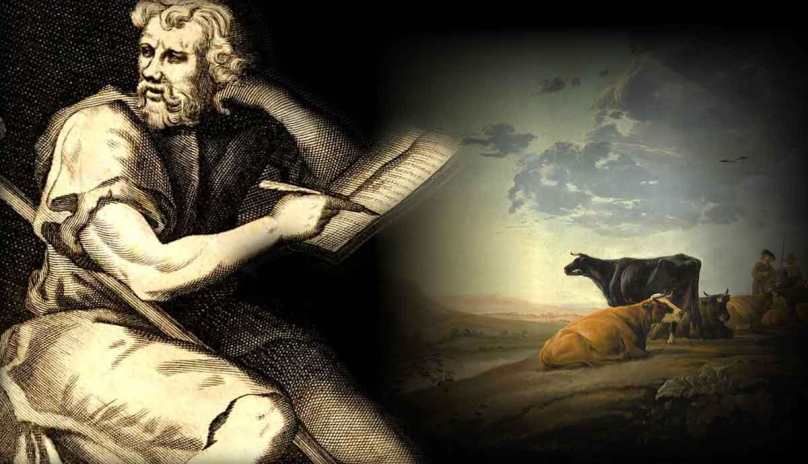
In my previous post, I mentioned three Roman Stoic philosophers. One of them was Epictetus (50-135 AD). Here are the opening paragraphs to his most famous work, The Enchiridion:
There are things which are within our power, and there are things which are beyond our power. Within our power are opinion, aim, desire, aversion, and, in one word, whatever affairs are our own. Beyond our power are body, property, reputation, office, and, in one word, whatever are not properly our own affairs.
Now the things within our power are by nature free, unrestricted, unhindered; but those beyond our power are weak, dependent, restricted, alien. Remember, then, that if you attribute freedom to things by nature dependent and take what belongs to others for your own, you will be hindered, you will lament, you will be disturbed, you will find fault both with gods and men. But if you take for your own only that which is your own and view what belongs to others just as it really is, then no one will ever compel you, no one will restrict you; you will find fault with no one, you will accuse no one, you will do nothing against your will; no one will hurt you, you will not have an enemy, nor will you suffer any harm.
Aiming, therefore, at such great things, remember that you must not allow yourself any inclination, however slight, toward the attainment of the others; but that you must entirely quit some of them, and for the present postpone the rest. But if you would have these, and possess power and wealth likewise, you may miss the latter in seeking the former; and you will certainly fail of that by which alone happiness and freedom are procured.
Seek at once, therefore, to be able to say to every unpleasing semblance, “You are but a semblance and by no means the real thing.” And then examine it by those rules which you have; and first and chiefly by this: whether it concerns the things which are within our own power or those which are not; and if it concerns anything beyond our power, be prepared to say that it is nothing to you.
English Poet, Writer, and Novelist Walter de la Mare (1873-1956)
Usually, during the month of January, I concentrate on reading the work of authors that I have not read before. Due to illness and wildfires, my reading this month has been mostly nil. As a result of reading an article in the New York Review of Books, however, I have decided on my next new “discovery,” Walter de la Mare. The following quote comes from his Memoirs of a Midget (1921).
Not that in an existence so passive riddles never came my way. As one morning I brushed past a bush of lads’ love (or maidens’ ruin, as some call it), its fragrance sweeping me from top to toe, I stumbled on the carcass of a young mole. Curiosity vanquished the first gulp of horror. Holding my breath, with a stick I slowly edged it up in the dust and surveyed the white heaving nest of maggots in its belly with a peculiar and absorbed recognition. “Ah, ha!” a voice cried within me, “so this is what is in wait; this is how things are”; and I stooped with lips drawn back over my teeth to examine the stinking mystery more closely. That was a lesson I have never unlearned.
I’ve said on many occasions, usually around this time of year, that only a fool celebrates the passing of time. Every January 1, take a picture of yourself in your bathroom mirror and note the thinning and graying of your hair, the mottling of your skin, and the network of spidery lines demarcating the zones of your face. Oh, well, it’s all a natural process.
On a more positive note, let’s see what the youthful Charles Dickens wrote about New Years Day in his first book, Sketches by Boz:
Next to Christmas-day, the most pleasant annual epoch in existence is the advent of the New Year. There are a lachrymose set of people who usher in the New Year with watching and fasting, as if they were bound to attend as chief mourners at the obsequies of the old one. Now, we cannot but think it a great deal more complimentary, both to the old year that has rolled away, and to the New Year that is just beginning to dawn upon us, to see the old fellow out, and the new one in, with gaiety and glee.

There must have been some few occurrences in the past year to which we can look back, with a smile of cheerful recollection, if not with a feeling of heartfelt thankfulness. And we are bound by every rule of justice and equity to give the New Year credit for being a good one, until he proves himself unworthy the confidence we repose in him.

This is our view of the matter; and entertaining it, notwithstanding our respect for the old year, one of the few remaining moments of whose existence passes away with every word we write, here we are, seated by our fireside on this last night of the old year, one thousand eight hundred and thirty-six, penning this article with as jovial a face as if nothing extraordinary had happened, or was about to happen, to
disturb our good humour.

Hackney-coaches and carriages keep rattling up the street and down the street in rapid succession, conveying, doubtless, smartly-dressed coachfuls to crowded parties; loud and repeated double knocks at the house with green blinds, opposite, announce to the whole neighbourhood that there’s one large party in the street at all events; and we saw through the window, and through the fog too, till it grew so thick that we rung for candles, and drew our curtains, pastry-cooks’ men with green boxes on their heads, and rout-furniture-warehouse-carts, with cane seats and French lamps, hurrying to the numerous houses where an annual festival is held in honour of the occasion.

We can fancy one of these parties, we think, as well as if we were duly dress-coated and pumped, and had just been announced at the drawing-room door.
I just finished reading John Cleese’s Professor at Large, which reprises a number of talks he gave at Cornell University while he was a visiting Professor-at-Large there over a period of some eighteen years. I broke out laughing when I read the following:
CLEESE: I had to switch to law [at Cambridge University] because there was almost nothing else I could switch to:
INTERVIEWER: So, you’re saying law is easier?
CLEESE: Well, law was kind of easier for me because I am fairly precise with my use of words and I can think in terms of categories, which is all law is—until you start practicing, and then it’s about villainy and low cunning.
I’ll tell you my favorite joke about lawyers because it actually involves universities. The psychological departments of universities are using lawyers now, instead of rats, in their experiments. There are three reasons for this. One is that there are more lawyers than rats. Second, there are some things that rats just won’t do. And thev third is is that there was a bit of a problem because sometimes the experimenters got fond of the rats. And I want you to know that joke has nothing to do with the fact that I am going through an expensive divorce at the moment.
I am currently reading William S. Burroughs’s The Ticket That Exploded, and what a ride it is! As Anthony Burgess wrote, “Burroughs seems to revel in a new medium … a medium totally fantastic, spaceless, timeless, in which the normal sentence is fractured, the cosmic tries to push its way through the bawdry, and the author shakes the reader as a dog shakes a rat.” Here is a little sample for your delectation:
In this organization, Mr Lee, we do not encourage togetherness, esprit de corps. We do not give our agents the impression of belonging. As you know most existing organizations stress such primitive reactions as unquestioning obedience. Their agents become addicted to orders. You will receive orders of course and in some cases you will be well-advised not to carry out the orders you receive. On the other hand your failure to obey certain orders could expose you to dangers of which you can have at this point in your training no conception. There are worse things than death Mr Lee for example to live under the conditions your enemies will endeavor to impose. And the members of all existing organizations are at some point your enemy. You will learn to know where this point is if you survive. You will receive your instructions in many ways. From books, street signs, films, in some cases from agents who purport to be and may actually be members of the organization. There is no certainty. Those who need certainty are of no interest to this department. This is in point of fact a non-organization the aim of which is to immunize our agents against fear despair and death. We intend to break the birth-death cycle. As you know inoculation is the weapon of choice against virus and inoculation can only be effected through exposure … exposure to the pleasures offered under enemy conditions: a computerized Garden of Delights: exposure to the pain posed as an alternative … you remember the ovens I think … exposure to despair: ‘The end is the beginning born knowing’ the unforgivable sin of despair. You attempted to be God that is to intervene and failed utterly … Exposure to death: sad shrinking face … he had come a long way for something not exchanged born for something knowing not exchanged. He died during the night.
I have been reading Maxim Gorky’s Fragments from My Diary (Заметки из дневника) published in 1924. Here are two excerpts.
SUBSTITUTES FOR MONKEYS
Professor Z., the bacteriologist, once told me the following story.
‘One day, talking to General B., I happened to mention that I was anxious to obtain some monkeys for my experiments. The General immediately said, quite seriously:
‘“What about Jews—wouldn’t they do? I’ve got some Jews here, spies that are going to be hanged anyway—you’re quite welcome to them if they are of any use to you.”
‘And without waiting for an answer he sent his orderly to find out how many spieas were awaiting execution.
‘I tried to explain to His Excellency that men would not be suitable for my experiments, but he was quite unable to understand me, and opening his eyes very wide he said:
‘“Yes, but men are cleverer than monkeys, aren’t they? If you inoculate a man with poison he will be able to tell you what he feels, whereas a money won’t.”
‘Just then the orderly came in and reported that there was not a single Jew among the men arrested for spying—only Rumanians and gypsies.
‘“What a pity!” said the General. “I suppose gypsies won’t do either? … What a pity …!”’
The second is a paragraph excerpted from a fragment labelled:
ANTI-SEMITISM
I have read, thoroughly and attentively, a number of books which try to justify anti-Semitism. It is a hard and even repugnant duty to read books written with a definitely ugly and immoral design: to brand a nation, a whole nation. A remarkable task indeed! And I never found anything in those books but a moral ignorance, an angry squeal, a wild beast’s bellowing, and a grudging, envious grinding of teeth. Thus armed, there is nothing to prevent one from proving that Slavs, and all the other nations as well are also incurably depraved. And is not this the reason for the violent hatred of the Jews, that they, of all races of mixed blood, are the ones who have preserved comparatively the greatest purity of outward life as well as of the spirit? Is there not more perhaps of the ‘Man’ in the Jew than there is in the anti-Semite?
For Halloween, I’ve decided to excerpt as short short story in its entirety from Thomas Ligotti’s excellent collection entitled Noctuary.
One May Be Dreaming
Beyond the windows a dense fog spreads across the graveyard, and a few lights beam within hazy depths, glowing like old lamps on an empty street. Night is softly beginning.
Within the window are narrow bars, both vertical and horizontal, which divide it into several smaller windows. The intersections of these bars form crosses. Not far beyond the windowpanes, there are other crosses jutting out of the earth-hugging fog in the graveyard. To all appearances, it is a burial ground in the clouds that I contemplate through the window.
Upon the window ledge is an old pipe that seems to have been mine in another life. The pipe’s dark bowl must have brightened to a reddish-gold as I smoked and gazed beyond the window at the graveyard. When the tobacco had burned to the bottom, perhaps I gently knocked the pipe against the inside wall of the fireplace, showering the logs and stones with warm ashes. The fireplace is framed within the wall perpendicular to the window. Across the room are a large desk and a high-backed chair. The lamp positioned in the far right corner of the desk serves as illumination for the entire room, a modest supplement to those pale beacons beyond the window. Some old books, pens, and writing paper are spread across the top of the desk. In the dim depths of the room, against the fourth wall, is a towering clock that ticks quietly.
Those, then, are the main features of the room in which I find myself: window, fireplace, desk, and clock. There is no door.
I never dreamed that dying in one’s sleep would encompass dreaming itself. I often dreamed of this room and now, near the point of death, have become its prisoner. And here my bloodless form is held while my other body somewhere lies still and without hope. There can be no doubt that my present state is without reality. If nothing else, I know what it is like to dream. And although a universe of strange sensation is inspired by those lights beyond the window, by the fog and the graveyard, they are no more real than I am. I know there is nothing beyond those lights and that the obscured ground outside could never sustain my steps. Should I venture there I would fall straight into an absolute darkness, rather than approaching it by the degrees of my dying dreams.
For other dreams came before this one—dreams in which I saw lights more brilliant, a fog even more dense, and gravestones with names I could almost read from the distance of this room. But everything is dimming, dissolving, and growing dark. The next dream will be darker still, everything a little more confused, my thoughts … wandering. And objects that are now part of the scene may soon be missinfg: perhaps even my pipe—if it was ever mine—will be gone forever.
But for the moment I am safe in my dream, this dream. Beyond the window a dense fog spreads across the graveyard, and a few lights beam within hazy depths, glowing like old lamps along an empty street. Night is softly beginning.
The following short short story is from a collection of Antonio Tabucchi’s short stories entitled Message from the Shadows. The author, an Italian who lives in Portugal, is known for his diverse points of view, In this story, we see humanity from the perspective of a whale.
Postscript: A Whale’s View of Man
Always so feverish, and with those long limbs waving about. Not rounded at all, so they don’t have the majesty of complete, rounded shapes sufficient unto themselves, but little moving heads where all their strange life seems to be concentrated. They arrive sliding across the sea, but not swimming, as if they were birds almost, and they bring death with frailty and graceful ferocity. They’re silent for long periods, but then shout at each other with unexpected fury, a tangle of sounds that hardly vary and don’t have the perfection of our basic cries: the call, the love cry, the death lament. And how pitiful their lovemaking must be: and bristly, brusque almost, immediate, without a soft covering of fat, made easy by their threadlike shape, which excludes the heroic difficulties of union and the magnificent and tender efforts to achieve it.
They don’t like water, they’re afraid of it, and it’s hard to understand why they bother with it. Like us, they travel in herds, but they don’t bring their females, one imagines they must be elsewhere, but always invisible.
Sometimes they sing, but only for themselves, and their song isn’t a call to others, but a sort of longing lament. They soon get tired and when evening falls they lie down on the little islands that take them about and perhaps fall asleep or watch the moon. They slide silently by and you realize they are sad.
This is a re-post of a blog I wrote ten years ago this month about my visit to the Chapel of St Martin de Porres in Lima, Peru.
He is usually depicted in the garb of a Dominican lay brother, holding a broom, and with a dog, a cat, and a mouse at his feet. St. Martin de Porres is one of my favorite saints. My memories of him go back to grade school, years before Pope John XXIII canonized him in 1962.
The following is taken from Ricardo Palma’s Peruvian Traditions and tells the story of his three pets:
And from the same dish ate a dog, a cat and a mouse.
With this couplet we come to the end of an account of the virtues and miracles attributed to Friar Martín de Porres. It was actually a broadside that was circulated in Lima about the year 1840 for the purpose of celebrating in our cultured and very religious capital city the solemn activities related to the beatification of this miracle worker.
This holy man, Friar Martín, was born on December 9, 1579, the natural son of the Spaniard Don Juan de Porres, Knight of Alcántara, and of a Panamanian slave. When he was still very young little Martín was taken to Guayaquil, where in a school in which the teacher made good use of the whip, he learned to read and write. Two or three years later his father and Martín returned to Lima and the boy was placed as an apprentice, learning the trade of barber and bloodletter in a barbershop on Malambo Street.
Martín wasn’t very adept with the razor and the lancet and this kind of work didn’t appeal to him so he opted for another career—that of sainthood, for in those days the career of a saint was just as legitimate a profession as any other. He took the habit of a lay brother at the age of twenty-one in the Monastery of San Domingo and remained there until he died in the odor of sanctity on November 3, 1639.
While he lived, and even after death, our countryman Martín de Porres performed miracles on a wholesale scale. He performed miracles as easily as others compose verses. One of his biographers (I don’t remember if it is Father Manrique or Doctor Valdés) says that the Prior of the Dominicans had to prohibit his continuing to perform miracles or milagrear (forgive me the use of the word). And to prove how deeply rooted in Martín the spirit of obedience was, on one occasion while he was passing a mason working on some scaffolding the worker fell a distance of some twenty-five to thirty feet. But while he was still in mid-air Martín stopped his fall—and there was the man suspended above the ground. The good Friar shouted, “Wait a moment, brother,” and the mason remained in the air until Martín returned with permission from his superior to complete the miracle.
That’s a doozy of a little miracle, don’t you agree? Well, if you think that one is great, wait until you read the next one.
The Prior sent the extraordinary lay brother on an errand to purchase a loaf of sugar for the infirmary. Perhaps he didn’t give Martín sufficient money to buy the white refined type so he returned with a loaf of brown sugar.
“Where are your eyes, Brother Martín,” said the Father Superior. “Can’t you see that it is so dark that it’s more like unrefined sugar?”
“Don’t get upset, Reverend Father,” answered Martín slowly. “All we have to do is wash this loaf of sugar right away and everything will be fine.”
Without allowing the Prior to argue the point the Friar submerged the loaf of sugar in the water in the baptismal font, and when he pulled it out it was white and dry.
Hey! Don’t make me laugh! I have a split lip!
Believe it or make fun of it. But let it be known that I don’t put a dagger at anyone’s breast forcing him to believe. Freedom must be free, as a newspaperman of my country once said. And here I note that because I had intended to speak of mice under Martín’s jurisdiction, I went off on a tangent and forgot what I was doing. That’s enough for the prologue; let’s get right down to business and see what happened to the mice.
* * *
Friar Martín de Porres had a special predilection for mice, unwelcome guests who came for the first time, it appears, with the Conquest, because until the year 1552 no mention of them was made. They arrived from Spain in a boat carrying codfish that had been sent to Peru by a certain Don Gutierre, Bishop of Palencia. Our Indians gave them the name hucuchas, which means creatures that came from the sea.
During the time that Martín was serving as a barber a mouse was still considered a curiosity, for the mouse population had just begun to multiply. Perhaps it was during that period that he began to concern himself with the welfare of the little animals, seeing in them the handiwork of God; that is to say he could see a relationship between himself and these small beings. As a poet put it:
The same time that God took to create me He also took to create a mouse, or perhaps two, at the most.
When our lay brother served as a male nurse in the Monastery the mice overran everything and made a nuisance of themselves in the cells, the kitchen and the refectory. Cats, which made their presence known in 1537, were scarce in the city. It is a documented fact that the first cats were brought by Montenegro, a Spanish soldier who sold one in Cuzco for 600 pesos to Don Diego de Almagro, the Elder.
The friars were at their wits’ end with the invasion of the little rodents and invented various kinds of traps to catch them, but with little success. Martín put a mouse trap in the infirmary and one rascal of a mouse who was inexperienced, attracted by the odor of some cheese, found himself trapped. The lay brother freed him from the trap, and then placing him in the palm of his hand said to him, “On your way, little brother, and tell your companions not to bother the friars in their cells. From now on all of you stay in the garden and I promise to take food to you every day.”
The ambassador complied with his mission and from that moment the mob of mice abandoned the cloister and took up residence in the garden. Of course Martín visited them every morning carrying them a basket of leftovers and other food and they would come to meet him as if they had been summoned by a bell.
In the cell Martín kept a cat and a dog. Through his efforts he had succeeded in having them live together in fraternal harmony, to such an extent that they both ate from the same dish.
One afternoon he was watching them eat in holy peace when suddenly the dog growled and the cat arched its back. What had happened was that a mouse had dared to stick its nose outside of its hole, attracted by the smell of the food in the dish. When Martín saw the mouse he said to the dog and cat, “Be calm, creatures of God. Be calm.” He then went over to the hole in the wall and said, “Come on out, brother mouse, have no fear. It appears that you are hungry; join in with the others. They won’t hurt you.” And speaking to the dog and cat he added, “Come on, children, always make room for a guest; God provides enough for the three of you.”
And the mouse, without being invited, accepted the invitation, and from that day on it ate in love in the company of the cat and dog.
And…, and…, and… A little bird without a tail? What nonsense!




You must be logged in to post a comment.