Redwood Camp Lodge

The Log Home My Brother Is Building in Idyllwild, CA

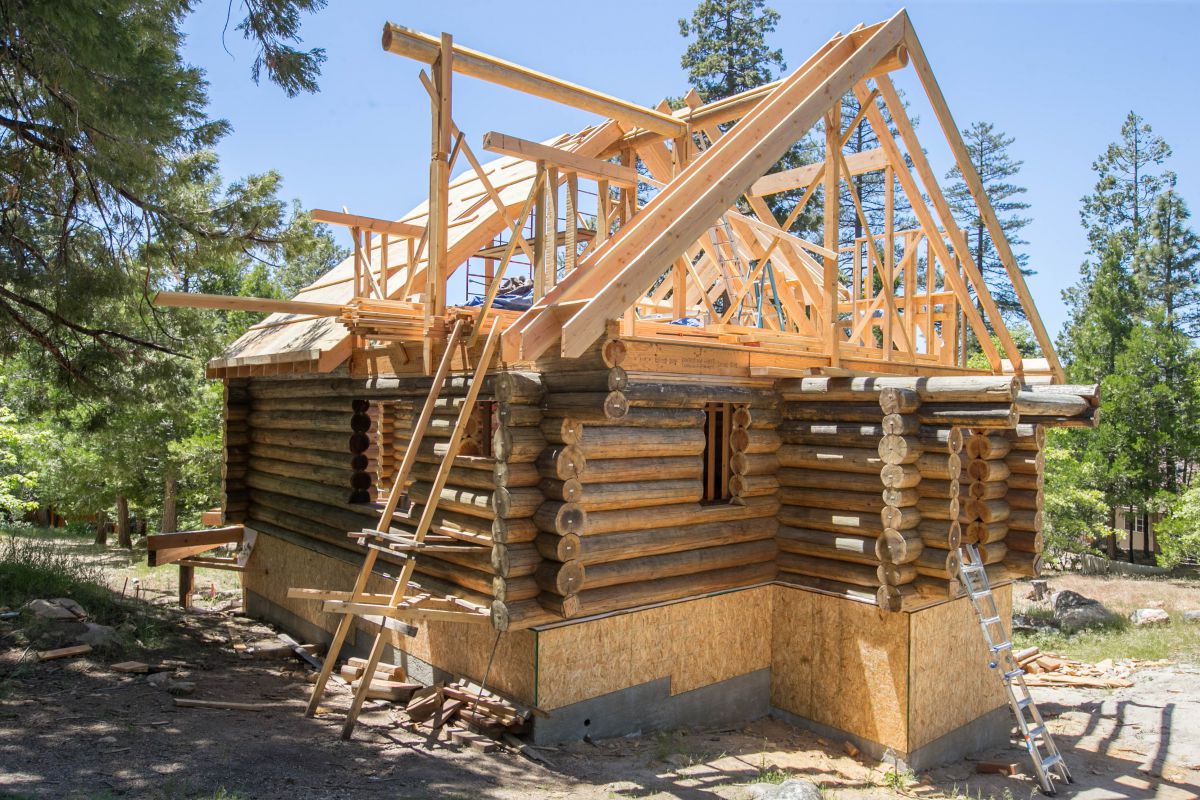
I may have mentioned once or twice that my brother is a home builder. He started building log homes in Minnesota, then moved on to the North Shore of Lake Tahoe, subsequently diversifying his efforts in Paso Robles. Now he lives in Palm Desert (near Palm Springs) and is working on a log home in the San Jacinto Mountains at Idyllwild. What distinguishes his log homes is that they do not employ any kind of mortar, or “chinking” as it is also called, between the logs. Instead, the logs are scribed by chainsaw to fit exactly one on top of another, as shown in the following photograph:

Logs Put Together Without Mortar

To see the realtor’s link to the project, click here. To learn more about Idyllwild, click the city’s tourist website. Dan originally planned to build the house for himself, but found it was more convenient to headquarter himself in Palm Desert.

Below is a picture of my brother Dan which I took in Ecuador. Here, he is examining religious sculptures from the former Cathedral of Cuenca:

My Brother Is the One Leaning to the Left

You could do far worse than live in one of Dan’s superbly built log homes.

Another Day, Another Nationality

Costumed Children Waiting to Dance

Yesterday was Scottish, today was Greek. Every Memorial Day weekend, Saint Nicholas Greek Orthodox Church in North Hills puts on a three-day Greek festival with food, dancing, and vendors. It is one of three Southern California Greek festivals that Martine and I attend. For Martine, the main attraction is spanakopita, Greek spinach and cheese pie, the baked goods redolent of honey and nuts, and he beautifully decorated church.

My preference is to see the children dancing. As they go through their steps, members of their family step forward and shower the dancers with one-dollar bills, which are picked up after the performance. And, although I was raised as a Roman Catholic, I have always had a warm spot in my heart for the Greek Church.

I sometimes wonder what will happen in the years to come as the younger generation grows more detached from the values of their parents. Many of the older parishioners still speak to one another in demotic Greek, while the children are just American kids trying to make their own way in the world. When the girls in the above picture grow up, will the old ways matter to their own children? What about the Greek language? the cuisine? even the religion?

Are we seeing the last florescence of children trying to adhere to their parents’ folkways? Perhaps not. Trumpf to the contrary, America is still seeing waves of immigrants, mostly from Asia and Latin America. As a Hungarian, I am closer to the European ethnic ways; though the Central Americans and Koreans and Persians also have a lot to offer.

Acting Your Nationality

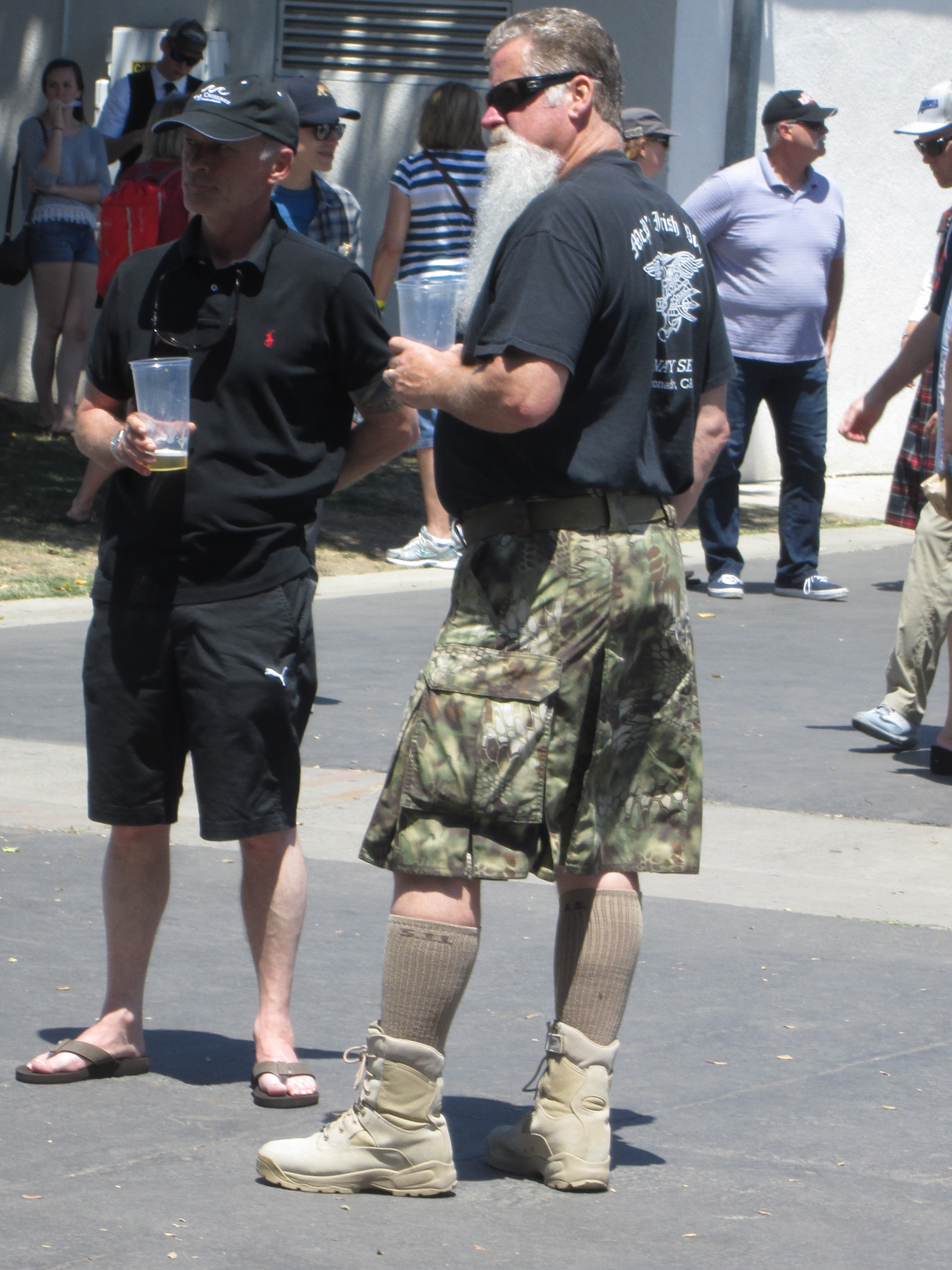
Macho Scotch/Irish Dude

This weekend Martine and I attended the Scottish Fest 2017 held by the United Scottish Society of Southern California, Inc. It was much like the Irish Festival we will miss by going to New Mexico, but much bigger, occupying a large part of the Orange County Fairgrounds in Costa Mesa.

There are a whole lot of men who spend too much time dressing up for these festivals. They usually wear generic kilts like the camouflage number above and are not to be found without a beer in hand.  This way, they could attend the Irish festival as well in the same outfit without missing a step.

I used to be much more serious about my Hungarian nationality, but imagine what I would look like if I dressed the part:

Hungarian Cowboy from the Puszta

Now if I dressed like this, complete with black boots and a nasty-looking bullwhip, what kind of impression would I make? Yet this is what the csikosok, the cowboys of the Hungarian Puszta, look like. The only part of the Hungarian costume I adopt is the moustache, though it is nowhere near as splendid in the above illustration. Yet it is even more authentic than all the Scottish tartans and other frou-frou. According to the Wikipedia entry for Tartans:

Until the middle of the nineteenth century, the highland tartans were only associated with either regions or districts, rather than any specific Scottish clan. This was because like other materials, tartan designs were produced by local weavers for local tastes and would usually only use the natural dyes available in that area, as chemical dye production was non-existent and transportation of other dye materials across long distances was prohibitively expensive.

The patterns were simply different regional checked-cloth patterns, chosen by the wearer’s preference—in the same way as people nowadays choose what colours and patterns they like in their clothing, without particular reference to propriety. It was not until the mid-nineteenth century that many patterns were created and artificially associated with Scottish clans, families, or institutions who were (or wished to be seen as) associated in some way with a Scottish heritage. The Victorians’ penchant for ordered taxonomy and the new chemical dyes then available meant that the idea of specific patterns of bright colours, or “dress” tartans, could be created and applied to a faux-nostalgic view of Scottish history.

I believe that if the word got out that these Tartan patterns are not authoritatively antient, I am sure that many of the Scottish Fair participants would break down in tears. Sorry about that, Guys!

Grass Roots

The Logo of the Los Angeles Unified School District

It’s election time in Los Angeles again. This time, it’s a runoff between two school board candidates, incumbent Steve Zimmer and challenger Nick Melvoin. The issue between them relates to which candidate is for Charter Schools and which is against. On one hand (Zimmer), you have the teachers’ unions; on the other (Melvoin), you have big corporations. In an election such as this, I look carefully to see who’s spending more money—and I vote against that candidate or issue.

I am amazed that so many millions of dollars are being spent for two seats on the school board. Today alone, I have received eight live telephone calls and robocalls. Because of the tendency for elections in L.A. to go toxic quickly, I tend to be a bit abrupt with the live callers. One accused me of being against grass roots campaigning. I agreed with him and said that, increasingly, I find election campaigns—in general—to be overlong and overblown. So, yes, mark me down as being against grass roots or any other type of roots that are being shoved forcibly down my gullet.

The more money that is spent on politics, the more corrupt it is likely to be. Since I have no school aged children (or any other for that matter), I have no horse in this particular race; but I am more than willing to study the issues and vote according to my conscience. That usually involves ignoring all phone calls and TV ads (I don’t even watch TV) and reading the Los Angeles Times and maybe doing some Internet research. That might sound primitive to you, but that’s how I decide for whom or what to vote.

Wings Around the World

The First Douglas DC-3, “The Spirit of Santa Monica”

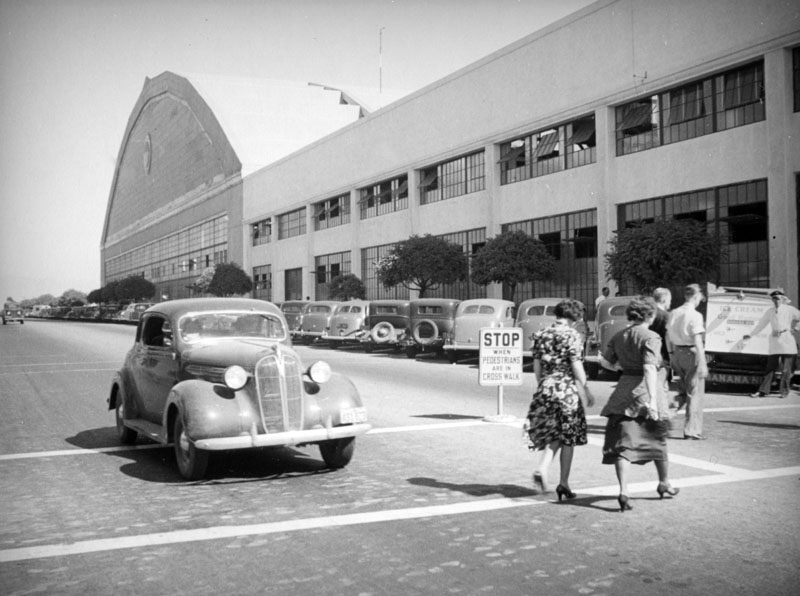
When I first moved in Los Angeles at the tail end of 1966, a large chunk of the City of Santa Monica consisted of the Douglas Aircraft plant between Ocean Park and Airport Boulevards. It is long since gone. All that remains is a small Museum of Flying that mostly celebrates the legacy of Donald Douglas and his company. Out front, permanently mounted, is the first DC-3, “The Spirit of Santa Monica.”

The first airplanes to circumnavigate the globe was a team of Douglas World Cruiser planes piloted by U.S. Army Air Service pilots in 1924. A number of displays at the museum dedicate that Herculean 175-day series of flights.

When it was located a couple blocks north, the Museum of Flying used to be bigger, but then it was forced to move out to the boonies. After a few years, a much smaller museum came back. No matter, it’s still fun.

When I look back over the last hundred or so years, the biggest miracle was the airplane. Man has wanted to fly ever since he learned how to use tools, but it was only about a hundred years ago that passenger flight became possible. My two-hour flight to Albuquerque next month would have been impossible. I would have had to board a Santa Fe train that takes many more hours to cover the distance. And before the Transcontinental Railroad, it would take 20 miles a day by horse and wagon—if I were lucky.

Douglas Aircraft in Santa Monica in the 1940s

Probably the best aviation museum Martine and I have visited is the one in Palm Springs. It’s so mhuge that one could easily spend two days exploring all the exhibits. There is also a nice one on the outskirts of Paso Robles north of San Luis Obispo. Probably what makes these museums fun is that there are so many retired pilots acting as docents who have their subject down cold. Within a few years, as the World War Two generation fades into memory, many of these airports may no longer be viable. So see them while you can.

Why Fix When You Could Demolish?

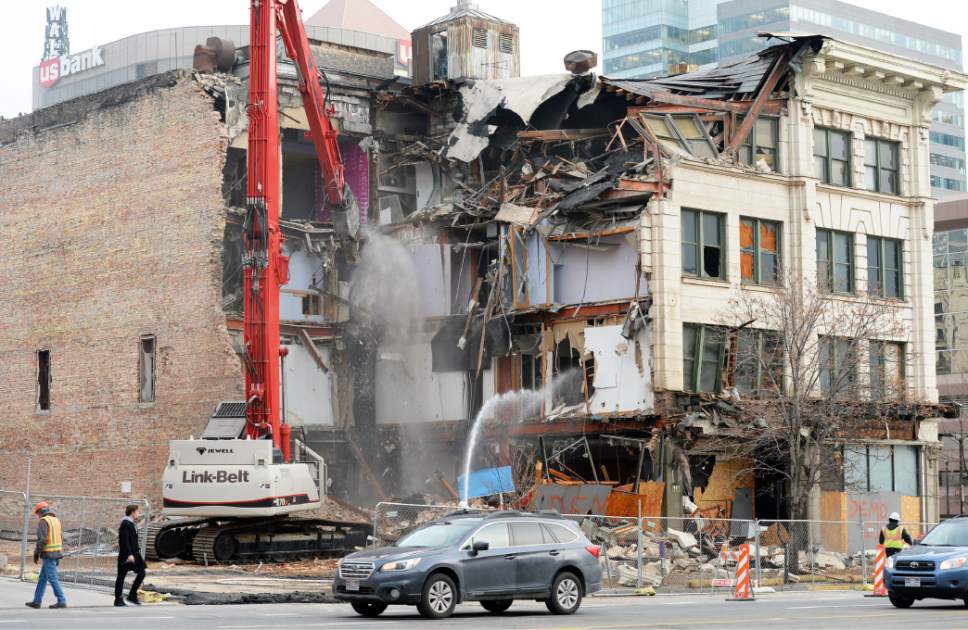
Wiping the Architectural Slate Clean in Salt Lake City

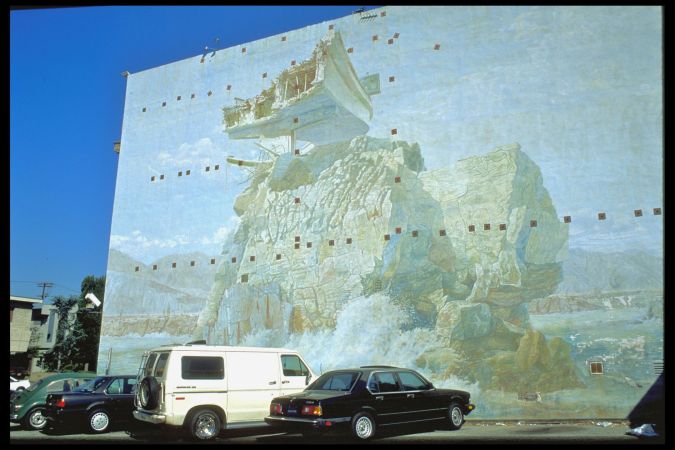
Los Angeles is particularly intent on demolishing its architectural history. And it’s so wasteful when there are so many interesting old building about. I know that many old buildings are not quite earthquake-proof, but they could be made so without driving ugly bolts through them visible from the outside. A classic example is a building in West Los Angeles at the southeast corner of Santa Monica Blvd and Butler. Its rear has a beautiful old mural showing the aftermath of California falling into the ocean “after the next big one.” Unfortunately, the owners of the building have dozens of ugly bolts sticking out of the mural (see below).

Mural Entitled “The Isle of California” with Earthquake Bolts Destroying the Image

This is a typical tendency in California. We know how to build, but we don’t know how to preserve. Instead, we prefer to wipe the architectural slate clean and build something inadequate, with the specious reasoning that we could always ’doze it and start over again in a few years. It’s all part of a larger tend in which we throw up new buildings, but have no interest in maintaining old ones. I for one would love to see the mural above touched up with the bolt heads either covered or removed.

We are not just talking about buildings. Our freeways were so lovely when I moved to Southern California in 1966. Then they started getting rattier and rattier, with ugly potholes. When CalTrans started using concrete to re-pave several freeways, what we got stuck with is an ugly patchwork of variously colored concrete patches interspersed with asphalt, the whole thing looking like a crazy quilt with enough transitional bumps to send your wheels in unwanted directions.

Then, too, are our fast trains that have to go twenty miles per hour because the tracks in many urban areas cannot take higher speeds.

It’s time to consider such things as repair, maintenance, and refurbishment when we look to evaluate our structures and transportation.

The Original Farmer’s Market

Mickey Jacobs of The Bread Bin (Closed in 2008)

Today, I went to the original Farmer’s Market at 3rd and Fairfax with my 88-year-old neighbor Luis. We had lunch at Moishe’s, which has delicious lamb shish-kabobs. I could not help remembering that some of my first digital pictures were taken at the Market with my old Kodak in July 2006. Hunting up my photo library on Flickr, I saw the above picture of Mickey Jacobs, proprietor of the Bread Bin. This was Martine’s favorite stop the times we went there: She loved to see me talk in Hungarian to Mickey, who had some delicious pastries. Unfortunately, Mickey sold his business two years later; and his replacement was not quite up to snuff.

Still, the original Farmer’s Market is a great place to go. Even on a Wednesday, it was full of tourists, looking for good food, fresh meats and produce, and souvenirs. They also used to have a bookstore and even antiques, but they are no more. What there are are a lot of good places to eat and relatively few vacancies. With all that foot traffic, if you open a decent place, you are bound to have a successful business.

Cherries at the Farmer’s Market

It’s still too early for cherries by a few weeks, but it won’t be long now. The above picture was taken in July 2008, at the height of their season.

I plan to visit the Farmer’s Market as much as once a week to have a good lunch and to hole up with a good book for a few hours. I know a place on the second floor where I can eat and read without getting trampled by all the foot traffic.

The Venice Canals

Garden Statue with Cacti

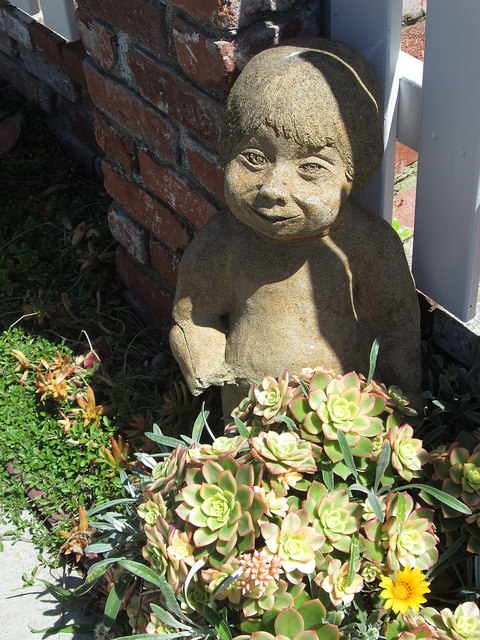
It being another beautiful day, Martine and I took a walk along the Venice Canals. The six remaining canals are what remains of Abbot Kinney’s original 1905 plan for the area. In addition to the vertical Grand Canal and the Eastern Canal, there are four horizontal canals that link them. To remember them, I use the mnemonic ScHLoCk—for Sherman, Howland, Linnie, and Carroll.

In the past, we would visit the area only around the holidays, especially Halloween and Christmas, to see the decorations. But suddenly, one year, the decorations all but disappeared. The area is interesting, nonetheless, because of the residents’ attempts to create gemlike little gardens and house fronts. There were more than a few vacancies and notices portending structural modifications. There are numerous types of succulents and flowering plants on display, and not a few architectural monstrosities, especially of the modern variety.

I have a feeling that the neighborhood can go either way at this point, either becoming a slightly disreputable slum or a major tourist draw. Most of the other walkers were speaking French and other foreign languages, so it is obviously hitting the European and Asian guidebooks. In any case, it’s a pleasant walk.

The Dominguez Rancho Adobe

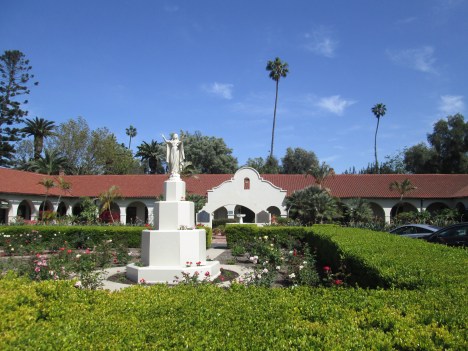
The Main Building of the Dominguez Rancho Adobe

The same Spanish names are dotted all over the map of California, namely of the Spanish and Mexican land grants that were made before the United States occupied the state during the Mexican-American War. The oldest of these land grants was the Rancho San Pedro, granted to a retired Spanish soldier named Juan José Dominguez by Pedro Fages, Lieutenant Governor of California, in 1784.

When the armed forces of the United States occupied the state beginning in 1846, Rancho San Pedro was the scene of a battle between Californios loyal to Mexico and a poorly led American naval force under Captain William Mervine. The Americans were attempting to relieve the siege of Los Angeles by another Californio force and were driven back in disarray. The conflict is also known as the Battle of the Old Woman’s Gun.

The next time the Adobe enters history was in 1910, when the Rancho was the scene of the first national aviation meet in the United States. According to Wikipedia:

It is estimated that over a half-million passengers traveled by train to see this historic event. An open grandstand was erected that was more than six hundred feet in length. Use of the field was provided without rental charge by the Dominguez family, though the family asked to have front row seats for the entire event. Many of the early aviation pioneers were present, including the Wright brothers, Curtiss, Martin, Paulhan, and Willard. Roy Knabenshue flew in one of the very first blimps. The aviation meet lasted for 10 days, establishing the first speed and endurance records.

The first time Martine and I saw the Dominguez Rancho Adobe was in June 2010 at a celebration honoring the 100th anniversary of the the 1910 event.

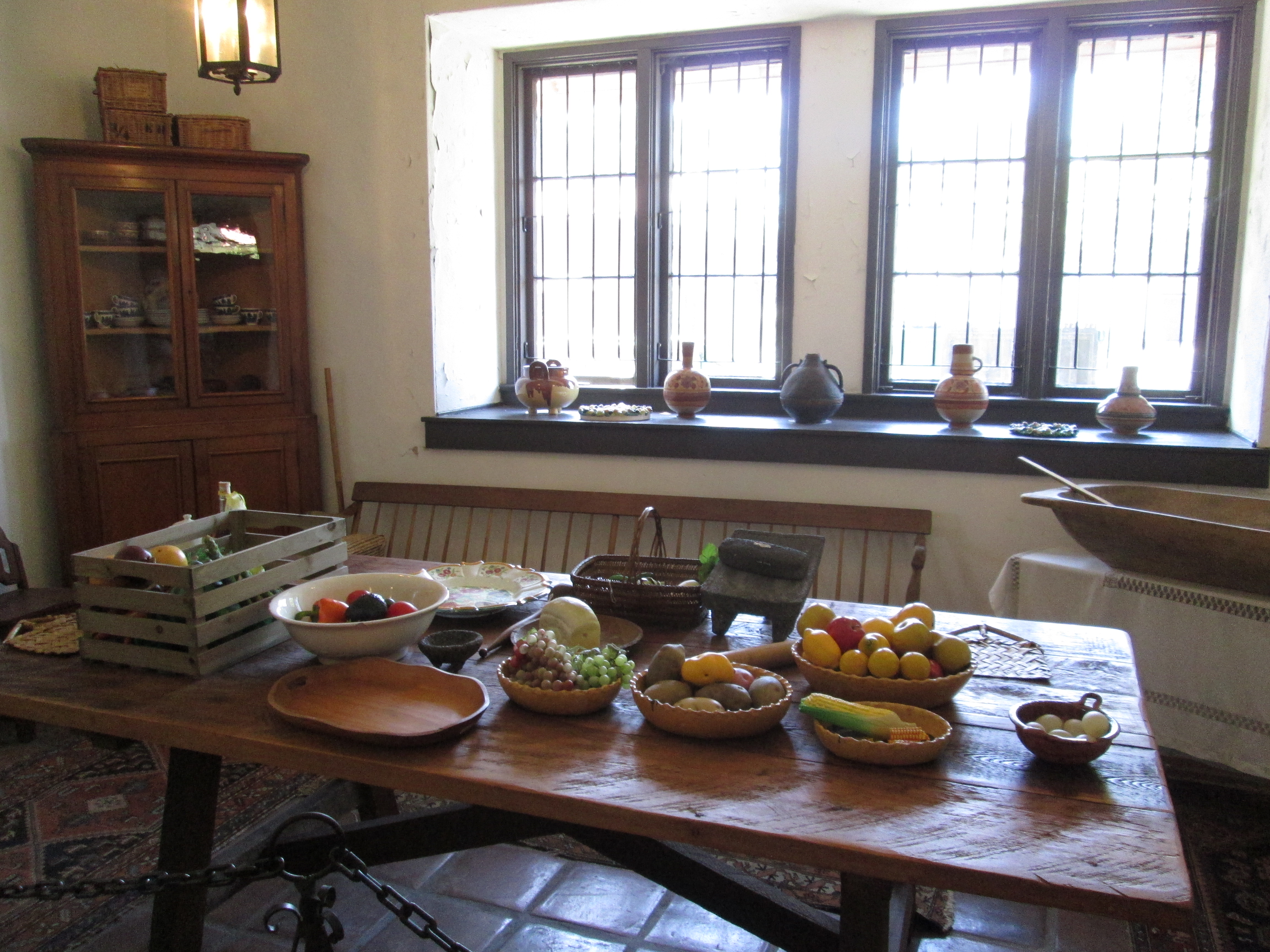
Today, the adobe was much more quiet. We were given an excellent tour by a docent. Many of the furnishings of the adobe building belonged to original members of the Dominguez family. When Manuel Dominguez, Juan José’s only surviving male heir, fathered six daughters, the names of Carson, Del Amo, and Watson, many of whose descendants are still extant.
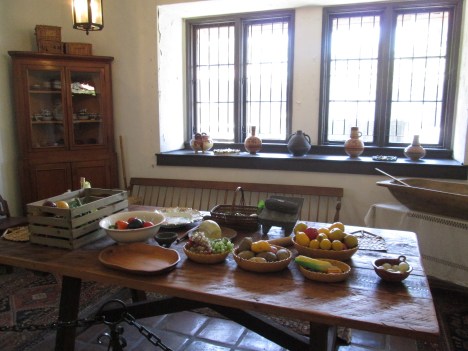
The Adobe Kitchen

To perpetuate the Dominguez name, Manuel’s daughters in 1922 donated land to the Claretian Missionaries. Today, there is a two-story retirement home for Claretians on the premises. They are partly responsible for the attractive rose and cactus gardens on the premises. In the cactus garden, I even saw a cacao tree which was bearing fruit, similar to the ones my brother and I saw in Mindo, Ecuador in October 2016.

Handicap

Originally a Good Idea, Until the Abuses Started

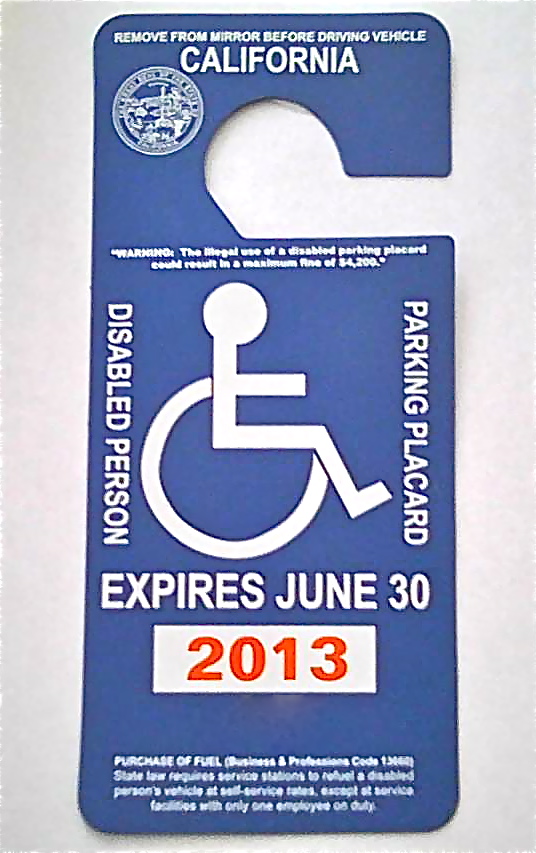
I am writing this blog post at Martine’s behest. She frequently takes walks around the neighborhood and is disgusted by the large numbers of cars indicating a handicap driver, where neither the driver nor the passengers are in fact disabled. One of the problems of living in West Los Angeles or neighboring communities filled with people who feel themselves entitled to free parking. On some of her walks, up to 75% of the parked cars sport handicap placards. Only twice in the last few days has she actually seen disabled people emerge from those vehicles, one with a walker and the other with a cane.

There is something wrong with people who assume they are entitled to free parking because, well, they are special. It is easy to convince a physician to write a note giving them the right to purchase such a placard. From that point on, until the placard expires, they can park without paying for the privilege.

These same drivers frequently cut me off in traffic, whether I am driving or am a pedestrian. They frequently drive expensive cars such as Porsches, BMWs, Mercedes-Benzes, or—worst of all—Range Rovers.

If there is any single symbol of inequality in our society, it is a luxury car with a handicap placard when there is no disability involved. And yet there are whole parts of Southern California where many or most of the luxury cars sport the blue placard. Everlasting shame to them!

When I had severe osteoarthritis sixteen years or more ago, my orthopedist suggested that I get one. I refused, telling him that my habitual practice was to park far and walk, even though I was in excruciating pain. But then, even then, I walked several miles every weekend with Martine and my friends.

As actress Teri Garr once said: “When you hear the word ‘disabled,’ people immediately think about people who can’t walk or talk or do everything that people take for granted. Now, I take nothing for granted. But I find the real disability is people who can’t find joy in life and are bitter.” To which I add people who assume they are entitled to do whatever they want.