Why Fix When You Could Demolish?

Wiping the Architectural Slate Clean in Salt Lake City

Los Angeles is particularly intent on demolishing its architectural history. And it’s so wasteful when there are so many interesting old building about. I know that many old buildings are not quite earthquake-proof, but they could be made so without driving ugly bolts through them visible from the outside. A classic example is a building in West Los Angeles at the southeast corner of Santa Monica Blvd and Butler. Its rear has a beautiful old mural showing the aftermath of California falling into the ocean “after the next big one.” Unfortunately, the owners of the building have dozens of ugly bolts sticking out of the mural (see below).

Mural Entitled “The Isle of California” with Earthquake Bolts Destroying the Image

This is a typical tendency in California. We know how to build, but we don’t know how to preserve. Instead, we prefer to wipe the architectural slate clean and build something inadequate, with the specious reasoning that we could always ’doze it and start over again in a few years. It’s all part of a larger tend in which we throw up new buildings, but have no interest in maintaining old ones. I for one would love to see the mural above touched up with the bolt heads either covered or removed.

We are not just talking about buildings. Our freeways were so lovely when I moved to Southern California in 1966. Then they started getting rattier and rattier, with ugly potholes. When CalTrans started using concrete to re-pave several freeways, what we got stuck with is an ugly patchwork of variously colored concrete patches interspersed with asphalt, the whole thing looking like a crazy quilt with enough transitional bumps to send your wheels in unwanted directions.

Then, too, are our fast trains that have to go twenty miles per hour because the tracks in many urban areas cannot take higher speeds.

It’s time to consider such things as repair, maintenance, and refurbishment when we look to evaluate our structures and transportation.

The Original Farmer’s Market

Mickey Jacobs of The Bread Bin (Closed in 2008)

Today, I went to the original Farmer’s Market at 3rd and Fairfax with my 88-year-old neighbor Luis. We had lunch at Moishe’s, which has delicious lamb shish-kabobs. I could not help remembering that some of my first digital pictures were taken at the Market with my old Kodak in July 2006. Hunting up my photo library on Flickr, I saw the above picture of Mickey Jacobs, proprietor of the Bread Bin. This was Martine’s favorite stop the times we went there: She loved to see me talk in Hungarian to Mickey, who had some delicious pastries. Unfortunately, Mickey sold his business two years later; and his replacement was not quite up to snuff.

Still, the original Farmer’s Market is a great place to go. Even on a Wednesday, it was full of tourists, looking for good food, fresh meats and produce, and souvenirs. They also used to have a bookstore and even antiques, but they are no more. What there are are a lot of good places to eat and relatively few vacancies. With all that foot traffic, if you open a decent place, you are bound to have a successful business.

Cherries at the Farmer’s Market

It’s still too early for cherries by a few weeks, but it won’t be long now. The above picture was taken in July 2008, at the height of their season.

I plan to visit the Farmer’s Market as much as once a week to have a good lunch and to hole up with a good book for a few hours. I know a place on the second floor where I can eat and read without getting trampled by all the foot traffic.

The Venice Canals

Garden Statue with Cacti

It being another beautiful day, Martine and I took a walk along the Venice Canals. The six remaining canals are what remains of Abbot Kinney’s original 1905 plan for the area. In addition to the vertical Grand Canal and the Eastern Canal, there are four horizontal canals that link them. To remember them, I use the mnemonic ScHLoCk—for Sherman, Howland, Linnie, and Carroll.

In the past, we would visit the area only around the holidays, especially Halloween and Christmas, to see the decorations. But suddenly, one year, the decorations all but disappeared. The area is interesting, nonetheless, because of the residents’ attempts to create gemlike little gardens and house fronts. There were more than a few vacancies and notices portending structural modifications. There are numerous types of succulents and flowering plants on display, and not a few architectural monstrosities, especially of the modern variety.

I have a feeling that the neighborhood can go either way at this point, either becoming a slightly disreputable slum or a major tourist draw. Most of the other walkers were speaking French and other foreign languages, so it is obviously hitting the European and Asian guidebooks. In any case, it’s a pleasant walk.

The Dominguez Rancho Adobe

The Main Building of the Dominguez Rancho Adobe

The same Spanish names are dotted all over the map of California, namely of the Spanish and Mexican land grants that were made before the United States occupied the state during the Mexican-American War. The oldest of these land grants was the Rancho San Pedro, granted to a retired Spanish soldier named Juan José Dominguez by Pedro Fages, Lieutenant Governor of California, in 1784.

When the armed forces of the United States occupied the state beginning in 1846, Rancho San Pedro was the scene of a battle between Californios loyal to Mexico and a poorly led American naval force under Captain William Mervine. The Americans were attempting to relieve the siege of Los Angeles by another Californio force and were driven back in disarray. The conflict is also known as the Battle of the Old Woman’s Gun.

The next time the Adobe enters history was in 1910, when the Rancho was the scene of the first national aviation meet in the United States. According to Wikipedia:

It is estimated that over a half-million passengers traveled by train to see this historic event. An open grandstand was erected that was more than six hundred feet in length. Use of the field was provided without rental charge by the Dominguez family, though the family asked to have front row seats for the entire event. Many of the early aviation pioneers were present, including the Wright brothers, Curtiss, Martin, Paulhan, and Willard. Roy Knabenshue flew in one of the very first blimps. The aviation meet lasted for 10 days, establishing the first speed and endurance records.

The first time Martine and I saw the Dominguez Rancho Adobe was in June 2010 at a celebration honoring the 100th anniversary of the the 1910 event.

Today, the adobe was much more quiet. We were given an excellent tour by a docent. Many of the furnishings of the adobe building belonged to original members of the Dominguez family. When Manuel Dominguez, Juan José’s only surviving male heir, fathered six daughters, the names of Carson, Del Amo, and Watson, many of whose descendants are still extant.

The Adobe Kitchen

To perpetuate the Dominguez name, Manuel’s daughters in 1922 donated land to the Claretian Missionaries. Today, there is a two-story retirement home for Claretians on the premises. They are partly responsible for the attractive rose and cactus gardens on the premises. In the cactus garden, I even saw a cacao tree which was bearing fruit, similar to the ones my brother and I saw in Mindo, Ecuador in October 2016.

Handicap

Originally a Good Idea, Until the Abuses Started

I am writing this blog post at Martine’s behest. She frequently takes walks around the neighborhood and is disgusted by the large numbers of cars indicating a handicap driver, where neither the driver nor the passengers are in fact disabled. One of the problems of living in West Los Angeles or neighboring communities filled with people who feel themselves entitled to free parking. On some of her walks, up to 75% of the parked cars sport handicap placards. Only twice in the last few days has she actually seen disabled people emerge from those vehicles, one with a walker and the other with a cane.

There is something wrong with people who assume they are entitled to free parking because, well, they are special. It is easy to convince a physician to write a note giving them the right to purchase such a placard. From that point on, until the placard expires, they can park without paying for the privilege.

These same drivers frequently cut me off in traffic, whether I am driving or am a pedestrian. They frequently drive expensive cars such as Porsches, BMWs, Mercedes-Benzes, or—worst of all—Range Rovers.

If there is any single symbol of inequality in our society, it is a luxury car with a handicap placard when there is no disability involved. And yet there are whole parts of Southern California where many or most of the luxury cars sport the blue placard. Everlasting shame to them!

When I had severe osteoarthritis sixteen years or more ago, my orthopedist suggested that I get one. I refused, telling him that my habitual practice was to park far and walk, even though I was in excruciating pain. But then, even then, I walked several miles every weekend with Martine and my friends.

As actress Teri Garr once said: “When you hear the word ‘disabled,’ people immediately think about people who can’t walk or talk or do everything that people take for granted. Now, I take nothing for granted. But I find the real disability is people who can’t find joy in life and are bitter.” To which I add people who assume they are entitled to do whatever they want.

A Shakespearean Tragedy

The House in Which Richard M. Nixon Was Born

Today Martine and I visited the Richard M. Nixon Library and Birthplace in Yorba Linda. It is a humble house that was built from a kit by Nixon’s father in 1912. Most of the furniture is original, including the bed in which Hannah Nixon gave birth to the 37th President of the United States. In keeping with that humility, within a few feet of the house’s rear entrance are the graves of Richard and Pat Nixon, who died within a year of each other.

There is no doubt that Nixon was a flawed man. Yet—at the same time—his list of accomplishments in office is impressive. He ended the unpopular war in Viet Nam. He ended the military draft. He was a staunch supporter of civil rights. His Title IX legislation made women’s sports at the collegiate level a major success. He courageously took it upon himself to re-open China to the West. He founded the Environmental Protection Agency (EPA). The list goes on and on.

Yet, despite his smashing victory over George McGovern in the 1972 election, he saw his opponents as a personal threat to him and initiated a burglary of the weakened Democratic National Committee in the Watergate Building. Like our current President, who also maintains an enemies list, Nixon was also a public servant who was intelligent and hard-working on behalf of the American People—which our current President is decidedly not.

The Grave Site of Richard M. Nixon

During the Sixties and Seventies, I was a determined enemy of Nixon. Now I am not so sure I feel that way. There was something about the man which could have made him our greatest political leader of this century. But he was all too human, and his life is like a Shakespearean tragedy of overwhelming promise and ambition brought down by an all-too-human flaw.

WTF: Tofu Spa Massage

What Strange Animal Is This?

It was late yesterday afternoon. I had parted with my friend Bill at the Antelope Valley California Poppy Reserve and, while he took the mountain route back to Altadena, I took the I-5 and I-405 back home to West LA. But first, I decided to drop in at what used to be my favorite Mexican restaurant in L.A., Dos Arbolitos at Nordhoff and Woodley. It was still pretty good, with that smoky chipotle chile salsa casera, and the chile verde pork was excellent.

What got to me, however, was its neighbor, the Tofu Spa Massage (illustrated above). Now what is it they do? Do they rub soft tofu into all your nooks and crannies prior to a vigorous massage? Do they first wrap your private parts in organic kale and stuff purple broccolini up your fundament? I would have stepped inside and asked them; but, seriously, Folks, I was just about to eat. So I could be forgiven, no?

This mysterious business has inspired a new series entitled “WTF,” concentrating on some of the weirder things I see, especially in Southern California.

Bumlandia

It’s Beginning to Look a Lot Like Calcutta

Whether you call them by the term bums or the more forgiving “the homeless,” the streets of Southern California are filling up with raggedy men (and some women) who are living off the streets, They like to position themselves near markets and convenience stores and ask for the inevitable “spare change.” Across the street from where I live, there are several more-or-less permanent tents where several bums (yeah, these guys are properly called bums) spend the night, howling at the moon.

There are food distribution programs that cater to L.A.’s street people, but they still beg for spare change. My theory is that the money they get is strictly for CBD—cigarettes, booze, and drugs. At least one of the bums across the street is a drug dealer: He has two cars parked on the curb and is frequently seen talking on a burn cellphone.

I am somewhat torn. I like the idea of helping the true homeless—those who have some chance of getting out of their present dire situation—but I absolutely refuse to help bums. It’s like putting out a cockroach feeder. I support the Salvation Army and several other charities that help the homeless, but I would prefer that the bums move on elsewhere. I can hear them all night swearing loudly at each other and sometimes fighting in he street. Every once in a while, the LAPD stops and asks them to move on, but they cannot force them unless there is a clear violation of the law.

In nearby Santa Monica, bums are not allowed to set up tents and sleep on the pavement; but Los Angeles has always been a bit more forgiving. In the meantime, there are breakins to the apartment laundry rooms where the perpetrators are searching for quarters. A neighbor’s bicycle was stolen; and other small crimes of the typr that did not happen until the bum encampment was set up.

Would You Spend Your Afterlife With This Guy?

Marshall Applewhite, Alias “Do”

We are coming up on one of those sad anniversaries with which our history as a nation is crowded. Twenty years ago, the Heaven’s Gate cult committed mass suicide in a Rancho Santa Fe, California mansion. The members of the cult believed that, in the wake of the comet Hale-Bopp was a spaceship that was going to taken them to heaven. They dressed in black track suits with patches that said “Heaven’s Gate Away Team.” They also wore identical Nike Decade sneakers and took enough amphetamines with vodka to send them into another world, though probably not heaven.

Their leader was one Marshall Applewhite, who went by the name “Do”—and, yes, he did himself in as well. Looking at his picture (above), would you give your life for this obvious flake? Apparently thirty-nine people did, most of them in their forties, at an age when presumably they should have known better.

Logo From the Heaven’s Gate Website

The website of the group is still in existence, maintained by a couple who used to be members, but transgressed by getting married. It has a very 90s look to it, but then the group didn’t survive the decade. According to an article in today’s Los Angeles Times:

Several hundred people joined the group over the years, although the vast majority left for a variety of reasons. Some who left came back. Those who remained to the end were largely longtime devotees. Twenty-one were women, 18 men. They ranged in age from 26 to 72, with more than half in their 40s.

Almost all of them were veteran seekers of spiritual truths, people who had tried other religions, tried tarot cards, tried hallucinogenic drugs.

So when comet Hale-Bopp began to arrive, it was time to check out.


Deep in Cinnabon America

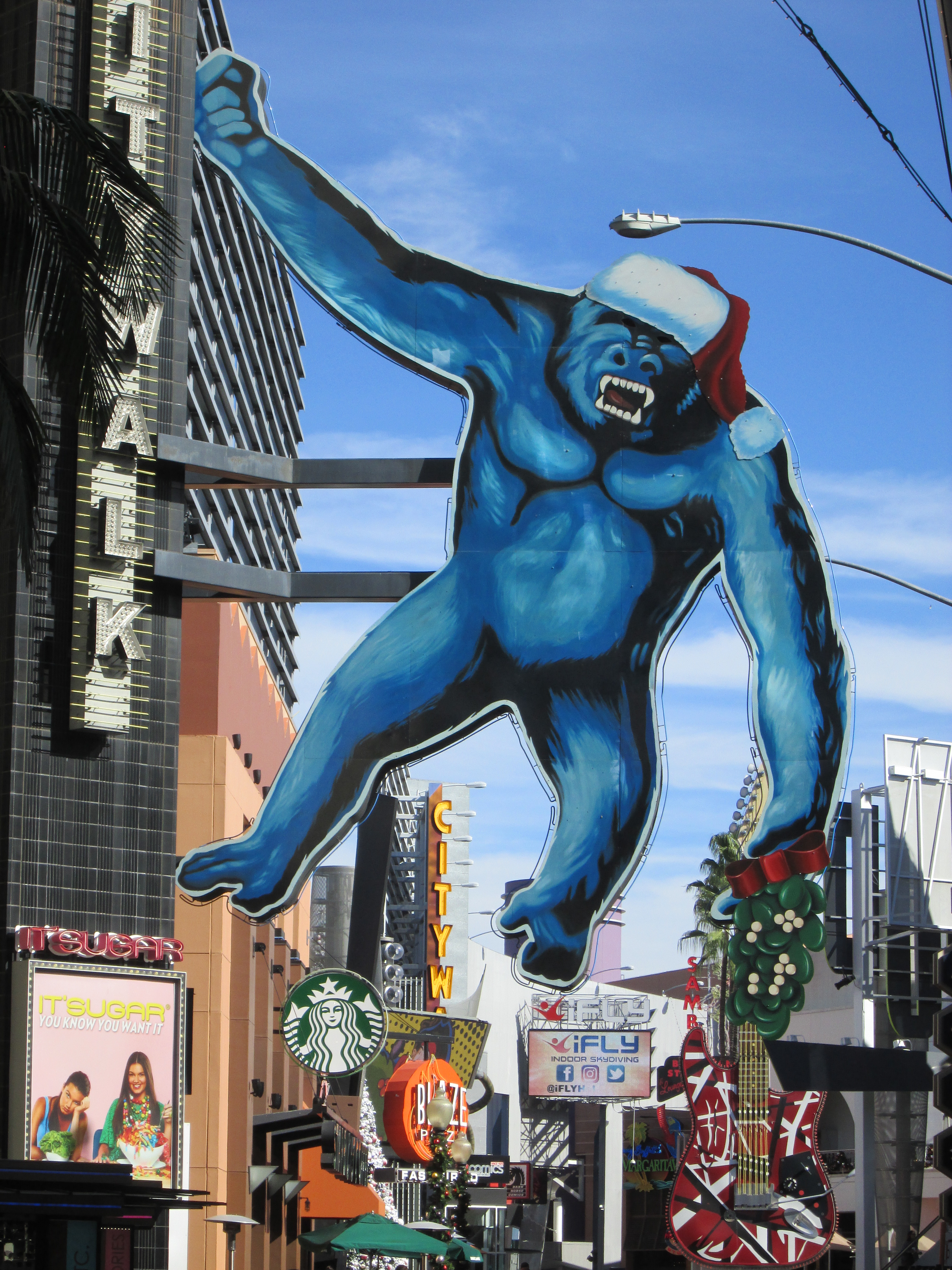
Universal City’s City Walk

Universal City’s City Walk

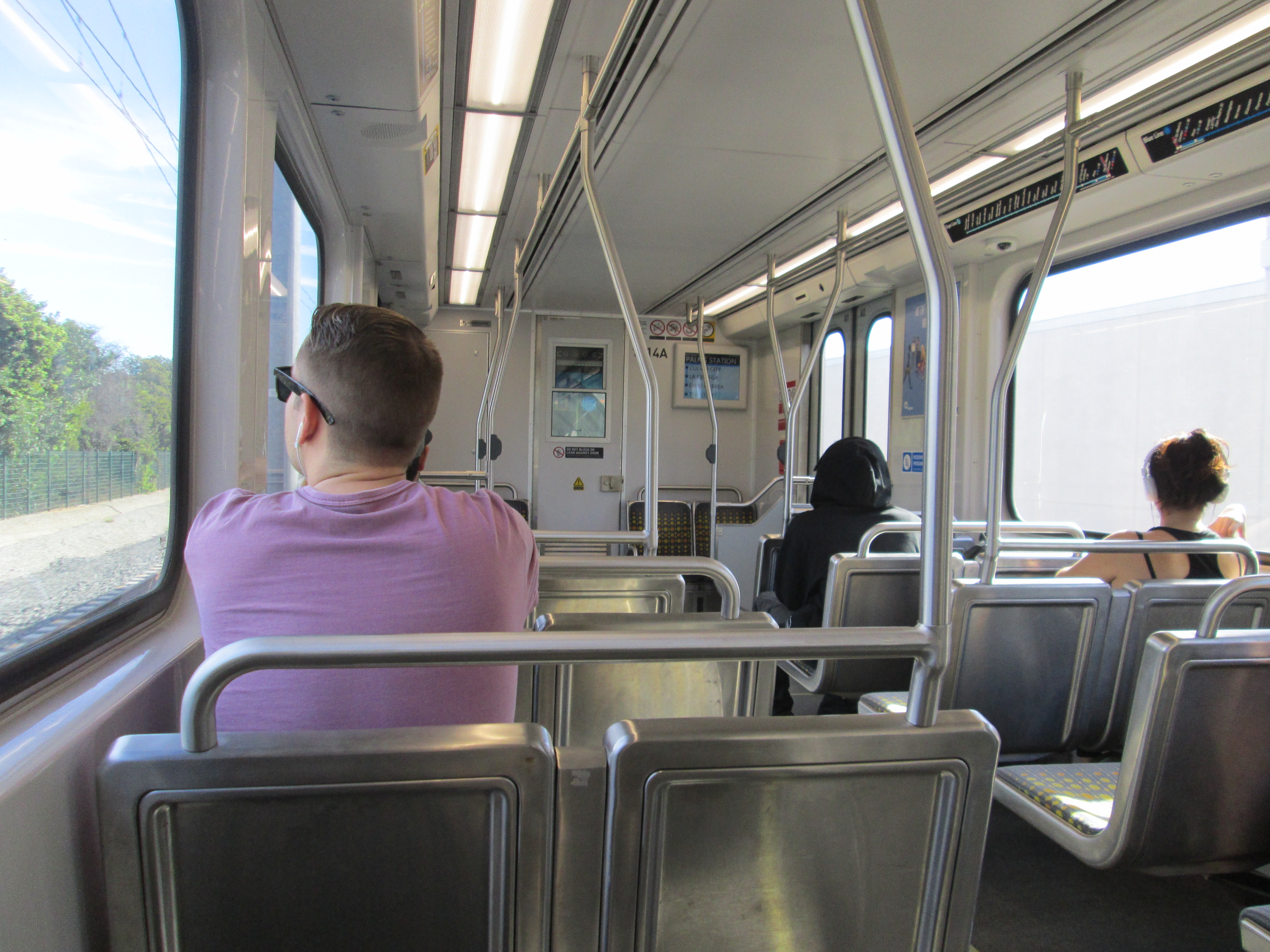
There are parts of Los Angeles that are no really for Angelenos. They are for the Flyover People who come to see a fake-o version of my city. I paid my 35¢ and took the Metro Rail downtown, transferring to the Red Line subway to get me to Universal City. I used to enjoy going there more when Gladstones 4 Fish was located there, but now there are other glitzy (mostly chain) restaurants that promise more than they deliver.

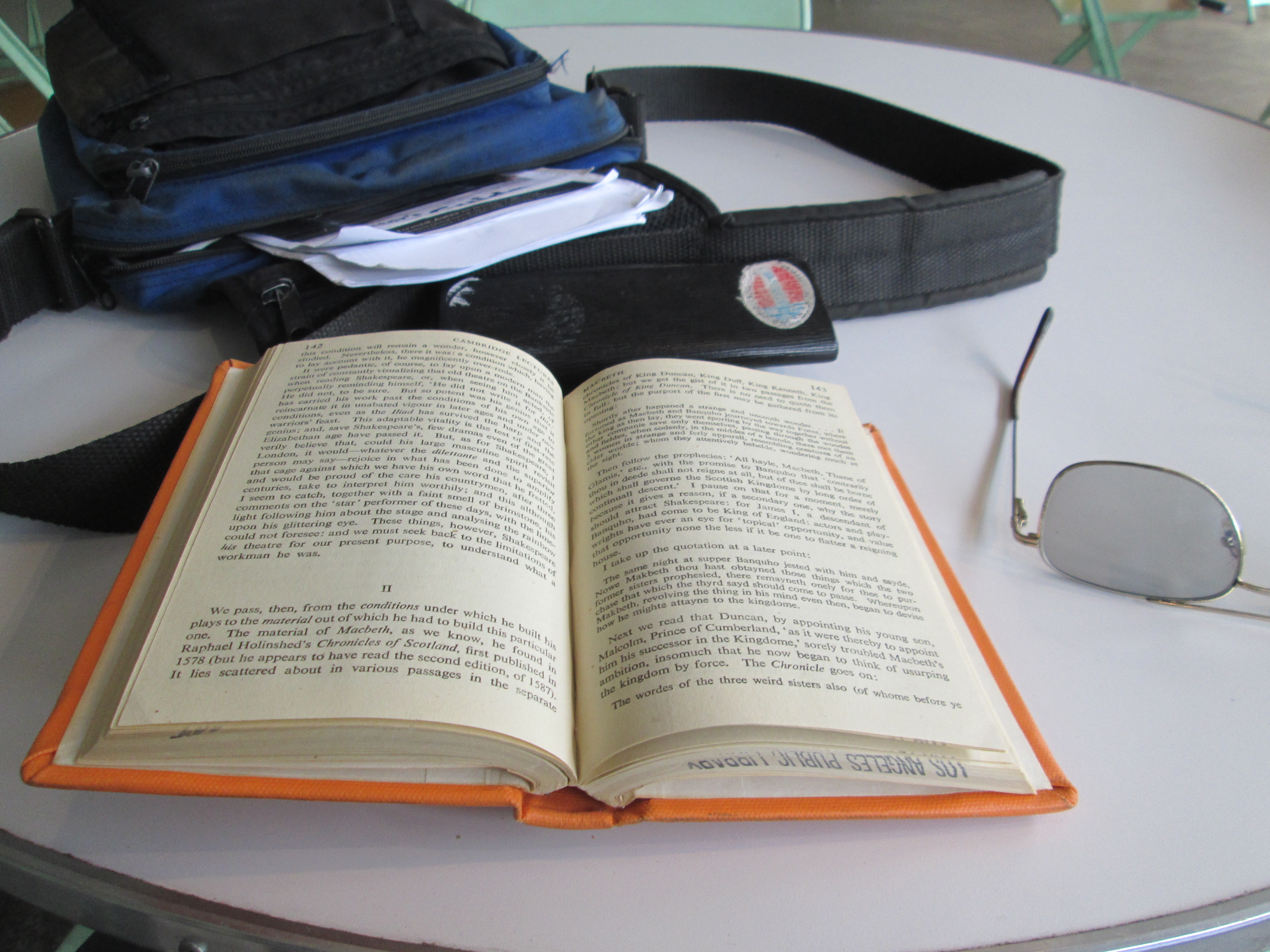
The whole place was crawling with tourists, including many Chinese and Japanese who were taking cellphone photographs of everything. I had a decent Smokehouse Burger at Johnny Rocket’s, and wandered around seeing the sights. In my hands was a book, Hunter S. Thompson’s Generation of Swine about the craziness of the 1980s. Well, Thompson is gone now, but things are crazier than ever. For one thing, I was probably the only person in the place who was carrying a book. Everybody else was playing with their smart phones, taking pictures of the sights, and of each other, proving conclusively that they were in striking distance of the sights.

I am of an age which confers a certain degree of invisibility. I have no tattoos, no beard, no wrinkled camouflage shorts with dozens of pockets, no smart phone. I felt like some ancient saurian dripping with mud that had just crawled out of a primitive past. But then, did I have anything in common with the scads of tourists? Not really, nor did I have anything against them. We were just inhabiting different planes of existence.

In the end, I felt good about myself. I felt I had nothing to prove. I left my camera at home, and didn’t take any pictures with my flip phone. I did read a few chapters of Hunter Thompson, and I felt that was good.