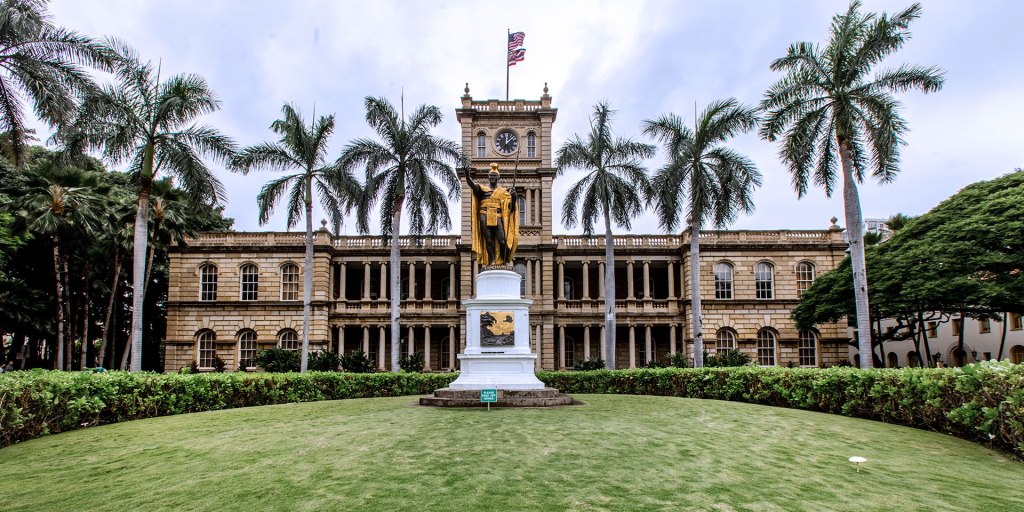
Royal Palaces on American Soil

The Iolani Palace, Honolulu

Most Americans are not aware that there are at least three royal palaces in the Hawaiian Islands. Two of them are in the Honolulu area: the Iolani Palace downtown and Queen Emma’s Summer Palace on the Pali Highway. Martine and I have been to the Iolani Palace in 1996 and intend to revisit it on our upcoming trip to O’ahu along with Queen Emma’s Summer Palace.

Hawai’i was a perfectly viable kingdom when the United States annexed the islands in 1898. In the wake of the Spanish-American War, Americans were eager for new colonies; and there was already in place a willing cadre of American settlers willing to raise Old Glory. The reigning monarch, Queen Lili’uokalani was kept a prisoner in the Iolani Palace under suspicion of “treason,” namely for being loyal to her country.

Interior Queen Emma’s Summer Palace

The other palace is connected with a happier time, when Queen Emma (1836-1885), wife to King Kamehameha IV preferred the cooler temperatures of her hillside retreat, which today is a museum operated by the Daughters of Hawai’i. The same group operates a third royal palace on the Big Island of Hawai’i, the Hulihe’e Palace in Kailua-Kona.

In my reading in preparation for our trip, I am concentrating on the period between Captain Cook’s landing on the islands in 1778 and the American annexation in 1898. The memory of the royal families of Kamehameha and Kalakaua is still alive in the islands. There is even a Royal Mausoleum in Honolulu where most of the royal family is interred.

Not So Fragile After All

Isabella Lucy Bird (1831-1904)

Were Victorian women really as fragile as depicted? Take the case of Isabella Lucy Bird, who is described in her Wikipedia entry as follows:

From early childhood Bird was frail, suffering from a spinal complaint, nervous headaches, and insomnia. The doctor recommended an open-air life, and consequently, Bird learned to ride in infancy, and later to row. Her only education came from her parents: her father was a keen botanist who instructed Bird in flora, and her mother taught her daughters an eclectic mix of subjects. Bird became an avid reader. However, her “bright intelligence, [and] an extreme curiosity as to the world outside, made it impossible for her brain and her nature generally to be narrowed and stiffened by the strictly evangelical atmosphere of her childhood.”

So what did this proper lady do for kicks? She traveled around the world for several decades, writing a series of creditable travel classics. I am currently reading Six Months in the Sandwich Islands, amongst the Palm Groves, Coral Reefs and Volcanoes (1874), which described her seven-month stay in the Hawaiian Archipelago.

Other books and articles describe her travels to Australia, the American West, Japan, Malaya, Greece, Persia, Tibet, China, Korea, and Morocco.

Isabella Bird was by no means the only woman solo traveler of her time. There was also Lady Florence Dixie (1855-1905), who wrote an excellent book about Patagonia; Frances Trollope (1779-1863), mother of novelist Anthony Trollope, who wrote of her travels in the United States; and Lady Hester Stanhope (1776-1839), who traveled extensively in the Middle East.

Dame Freya Stark (1893-1993)

Somewhat later, there was Dame Freya Stark, who traveled by herself among the Arabs and lived to the ripe old age of a hundred. I have read several of her books, which are uniformly excellent.

I can only look upon these women travelers with wonder and admiration.

WW2-Land

The USS Arizona Memorial

It’s a strange feeling to be standing on the Arizona Memorial at Pearl Harbor. Beneath your feet is a sunken battleship in which 1,277 sailors are interred. That is roughly half the total U.S. casualties from the Japanese attack on Pearl Harbor.

The island of O’ahu has numerous military and naval bases, roughly 21% of the total land area. That includes not only Pearl Harbor itself, but Fort De Russy on Waikiki, Schofield Barracks, Hickam Air Force Base, Dillingham Field, Fort Shafter, and a whole host of others.

In fact, if there is anywhere on American soil that is a center of World War Two commemoration, it would have to be O’ahu. There have been at least four films made about the attack:

  • From Here to Eternity (1953) with Burt Lancaster and Montgomery Clift
  • Tora! Tora! Tora! (1970) with an American and Japanese Cast
  • Pearl Harbor (2001) directed by Michael Bay
  • Midway (2019), which begins with the attack on Pearl Harbor

There have also been numerous books on the subject. (And there still continue to be.) No doubt about it, America is still stuck on WW2.

When Martine and I visit Honolulu later this summer, we will spend a day going over all the exhibits and taking the shuttle over to the Arizona Memorial, as we did back in 1996. No doubt a lot has changed since then.

A Tricky Language

Children learning their native language in Hawaii don’t study their ABCs. For one thing, there is no “B” or “C” in the Hawaiian alphabet. In fact, their are only twelve letters in all—the same five vowels we have and seven consonants. Then, too, there is the okina, or glottal stop, which looks like a single apostrophe. You can see it in the above illustration next to the Hawaiian flag.

The sparseness of the alphabet could be the reason there are so many long words in the language. For instance, my favorite Hawaiian singer, the late Israel Kamakawiwo’ole has a name that is virtually unpronounceable to us haoles (i.e., mainlanders). When Bruddah Iz, as he was called, died in 1997 at the age of 38, he was well over 700 pounds. The flag of Hawaii flew at half mast—the only non-governmental-official to be so honored. He had the voice of an angel. I own several of his albums on CD and regard them among my most treasured possessions.

As a rare treat, here is Iz singing “Somewhere over the Rainbow”:

The video also shows his funeral, when his ashes were scattered in the Pacific.

Here are just a few Hawaiian street and neighborhood names in Honolulu. Imagine trying to pronounce them aloud to a native after you’ve had a few drinks::

  • Kaka’ako
  • Kekeaulike
  • Kalakaua
  • Kawaiaha’o
  • Nu’uanu
  • ’Aihualama
  • Pu’uohi’a
  • Likelike
  • Kapahulu
  • Kapi’olani

Sadly, the Hawaiian language is endangered, with most natives reverting to Pidgin, which I discussed in an earlier post.

Blue Hawai’i

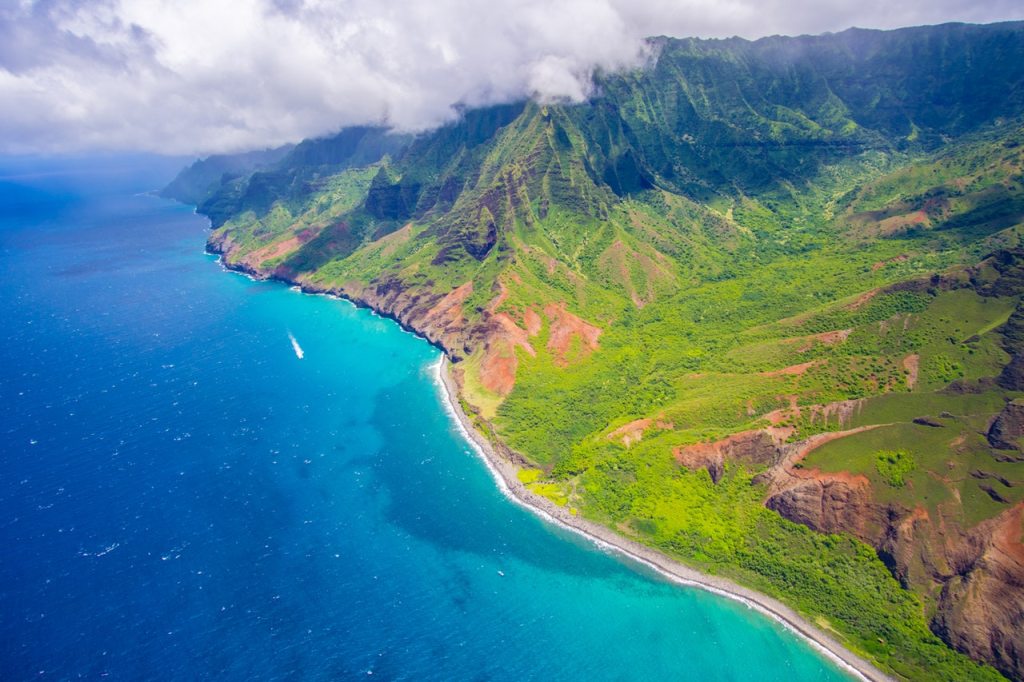
Waimanalo Beach on the Windward Side of O’ahu

Martine and I are planning a trip to Hawaii this September, after all the kids are back in school. We plan to visit only the island of O’ahu, as that’s where all the museums and special attractions that Martine wants to see are located. This won’t be our first trip: We were there in 1996, staying at what then was called the Pacific Beach Hotel.

We plan to revisit some of the sights we saw then, including:

Some sights I would like to add to what we’ve already seen: Waimanalo Beach, Honolulu’s Chinatown, and the Ala Moana Shopping Center.

Some things have changed for the worse since our last visit. Not only are automobile rentals more expensive than ever, but some hotels charge as much as $50 a night just for parking. Then, too, many hotels now charge up to $50 a day for “resort fees,” whether or not you use their resort services. Since I am now on a fixed income, I will be particularly interested in saving money.

Before September, I would like to read some of O. A. Bushnell’s novels about Hawaiian history and see some movies set in Hawaii, such as Elvis Presley in Blue Hawaii and several movies featuring the Japanese attack on Pearl Harbor (Tora Tora Tora and From Here to Eternity).

Politics in Tabriz, 1953

Image of Old Tabriz, Persia, by Eugène Flandin

I am reading a great travel classic written in the 1950s about two Swiss who drove a ratty old Fiat from Yugoslavia to the Khyber Pass on the Afghanistan/Pakistan border. Nicolas Bouvier’s The Way of the World describes Persian politics in Tabriz in 1953, when Muhammad Musaddeq’s government was overthrown by a Royalist coup. Wonderful stuff! BTW, is this where we’re headed?

The Musaddeq trial, which had just opened in Tehran, led to fears of skirmishes in Tabriz. They didn’t take place because that very morning the Governor demonstrated to the town that he was in full control: five armoured cars, several mortars and twenty trucks, carrying troops whose numbers had been increased for the occasion.

The Governor was a wily old man, a cruel jester, oddly esteemed even by opponents of the government he represented. He was forgiven much because everyone knew he had no political convictions and had entirely devoted his rule to building up his personal fortune, with a skill that had won him many admirers. Tabriz had always been a recalcitrant town, but it recognized ‘fair play’, and well-aimed shots. That unexpected parade, for example, which had the town by the scruff of the neck when it woke up, was absolutely in the style of the man to whom the town referred familiarly by his first name. A despot, of course, whose disappearance would have been welcomed with relief, and who was intently watched in case he should slip up. Meanwhile, informed, bland, pitiless and efficient, he was impressive. The town, familiar with despotism, granted his talent.

How Did They Know That?

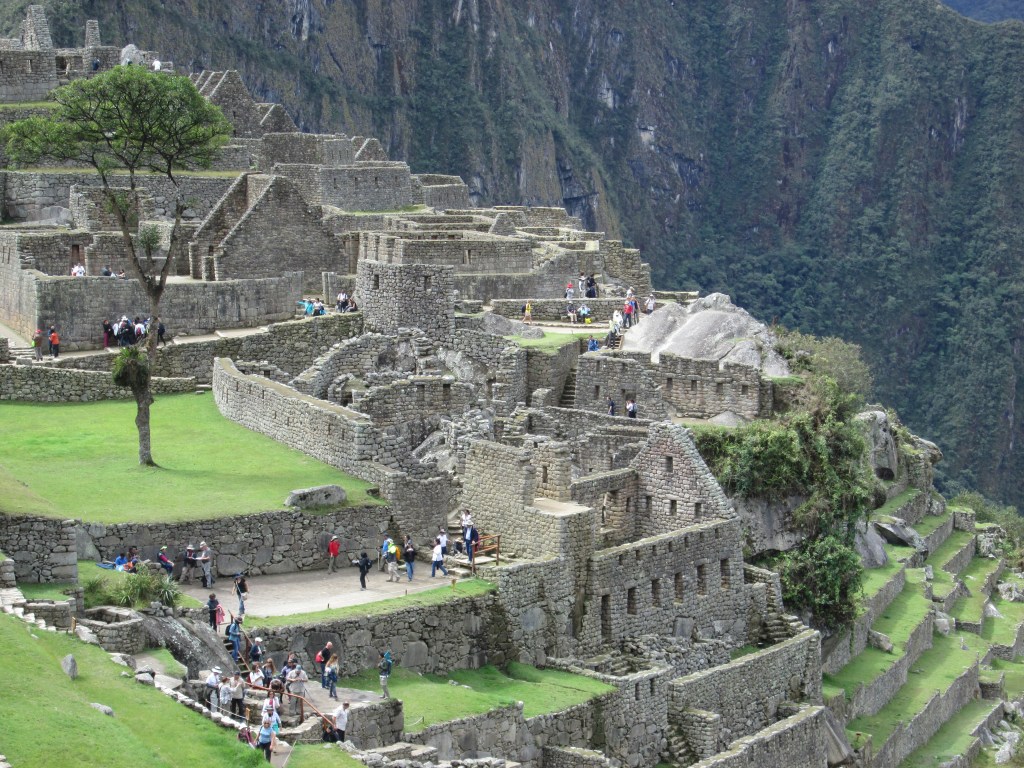
The Inca Ruins at Something Something Picchu

I was surprised to find out that, according to a professor of anthropology, Machu Picchu should be called Huayna Picchu instead. The reason I was surprised is that the Incas never had a written language like the Maya and the Aztecs. They were great engineers and stonemasons, but left no writings or even hieroglyphs. The only “communication” of any sorts we have from the Incas are in the form of quipu, knotted cords that were used to quantify taxes or inventories.

Quipu at the Museo Larco in Lima, Peru

You can read the story here at CNN Travel. It doesn’t much matter what the “official” name of the Inca ruins was. After all, most Meso-American ruins are probably misnamed. Either the Conquistadores or the archeologists just assigned a name for convenience. And, for good or ill, it stuck.

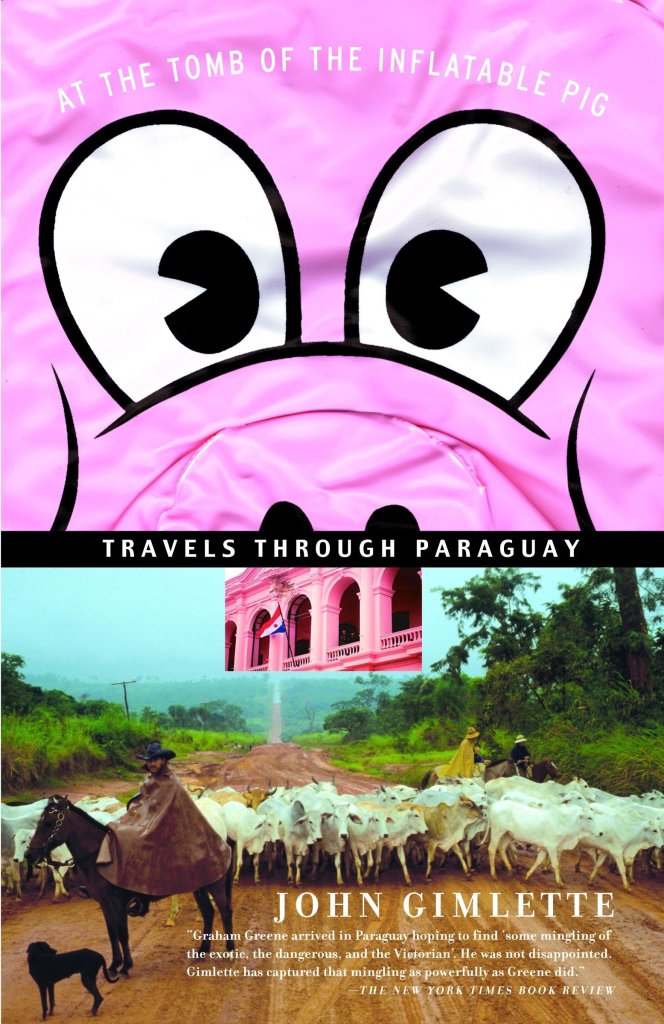
At the Tomb of the Inflatable Pig

Definitely on my travel bucket list is one of South America’s two landlocked countries (the other one is Bolivia, which had a seaport on the Pacific until they lost it in an 1870s war with Chile). I am speaking, of course, of Paraguay, which is surrounded by Argentina, Brazil, and Bolivia. I personally know no one who has been to Paraguay, yet I am yearning to visit it.

What piqued my interest was John Gimlette’s At the Tomb of the Inflatable Pig, which captures the insane history of this little known country, which is known for:

  • The Paraguayan War (1864-1870) against, simultaneously, Argentina, Brazil, and Uruguay, in which 50% of the population lost their lives.
  • The Chaco War (1930s) against Bolivia, in which two armies confronted each other in a waterless desert and which, surprisingly, Paraguay won despite horrendous casualty rates.
  • The dictatorship of Alfredo Stroessner (1954-1989) in which the country welcomes fleeing Nazis.

While it is theoretically possible to fly into the capital, Asunción, I would rather enter by bus from Argentina. When I visited Iguazu Falls in 2015, I was only a few miles from Ciudad del Este, which is a known hangout of smugglers and Hezbollah terrorists—but I chose not to visit it at that time. (Actually, probably never would suit me.)

If I went to Paraguay, I would be interested in visiting the old Jesuit missions that were destroyed by the Brazilians. At one time, in the 18th century, Paraguay was controlled by the Jesuits and was considered a paradise on earth. To corroborate, read Voltaire’s Candide and see Roland Joffe’s 1986 film The Mission with Robert De Niro and Jeremy Irons. But after the missions were destroyed, things went bad.

And I would like to stay in Asunción sipping Tereré, a cold preparation made with Yerba Mate. If I had time, I would like to see a little bit (a very little bit) of the Chaco region in the northwest.

Crossroads

The one part of Asia that I would like to visit is the island nation of Singapore. To me, it is like China and India rolled into one convenient package, yet not too far from its British colonial heritage to force me to learn a difficult new language.

What particularly earns it a spot on my travel bucket list is the cuisine. I love both Chinese and Indian food, and Singapore is known for both, as well as several adjoining cuisines such as Thai and Malayan.

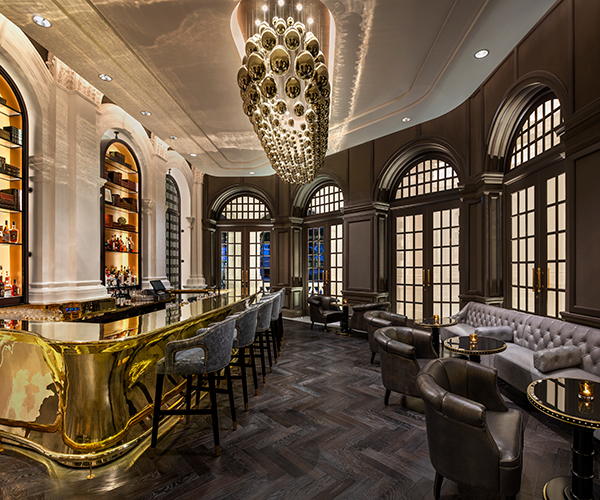
In fact, I cannot imagine myself losing weight during a Singapore visit. And that’s when I’m not drinking cold beers at the Writers’ Bar at the Raffles Hotel—the height of colonial decadence,

Of course I would fly there on Singapore Airlines and hang out a while at Changi Airport, reputed to be the most interesting airport in the world.

Lanesmanship

I came late to driving. In fact, I did not get my license until I was forty. Starting late as I did, I did not have many youthful bad habits exercising a baneful effect on my driving.

Other than adhering religiously to speed limits, what probably characterizes my driving more than anything else is, whenever possible, knowing what lane I want to be in and sticking to it, unless I feel I absolutely must pass some slow-moving vehicle.

Returning home from the desert, for example, I prefer to take the Pomona Freeway (California 60). I start out in lane 2 and change to lane 1 as I approach Interstate 5. That lane in turn becomes lane 3, giving me several miles to change to lane 2. If I stay on lane 2 as the highway becomes the Santa Monica Freeway (Interstate 10), I can ride it all the way to my exit ramp at Centinela Avenue fifteen miles farther on.

Why change lanes unless you have to? One of my beefs with performance cars is they feel as if they fail to change lanes every hundred feet, Elon Musk or Ferdinand Porsche will come and painfully twist their privates and take away their car keys. I estimate that, on the same trip, frequent lane changers drive 10-15% more miles as a result of traveling sideways.