Visiting the Equator

The Yellow Painted Line Is Supposedly the Equator

In November 2016—a time of evil omen for the United States—my brother Dan and I visited Ecuador. One of our destinations was latitude zero, the line of the equator. The Ecuadorians built a big park with museums. a planetarium, and restaurants at a place they called La Ciudad Mitad del Mundo—“Middle of the World City.” The line of the equator was as it was defined by scientists in the 18th century.

The only problem was that the actual equator line is some 250 meters to the north of Middle of the World City. But this was not determined until GPS was invented.

Dan and I didn’t much care that the Middle of the World City was slightly misplaced. It was a nice park, and the real equator line didn’t have as big a budget. So it goes.

Dan Paris with the Equator Monument in the Background

It’s always a tricky business to identify the location of the poles, the tropics, as well as the equator. Did you know, for instance, that because the earth is not a perfect sphere, if one were to identify the tallest mountain on the planet based not on its height from sea level, but from an imaginary point at the center of the earth, the tallest mountain would not be Everest but Ecuador’s own Mount Chimborazo? Don’t believe me? Check out this website from the National Oceanic and Atmospheric Administration.

Temperate Rainforest

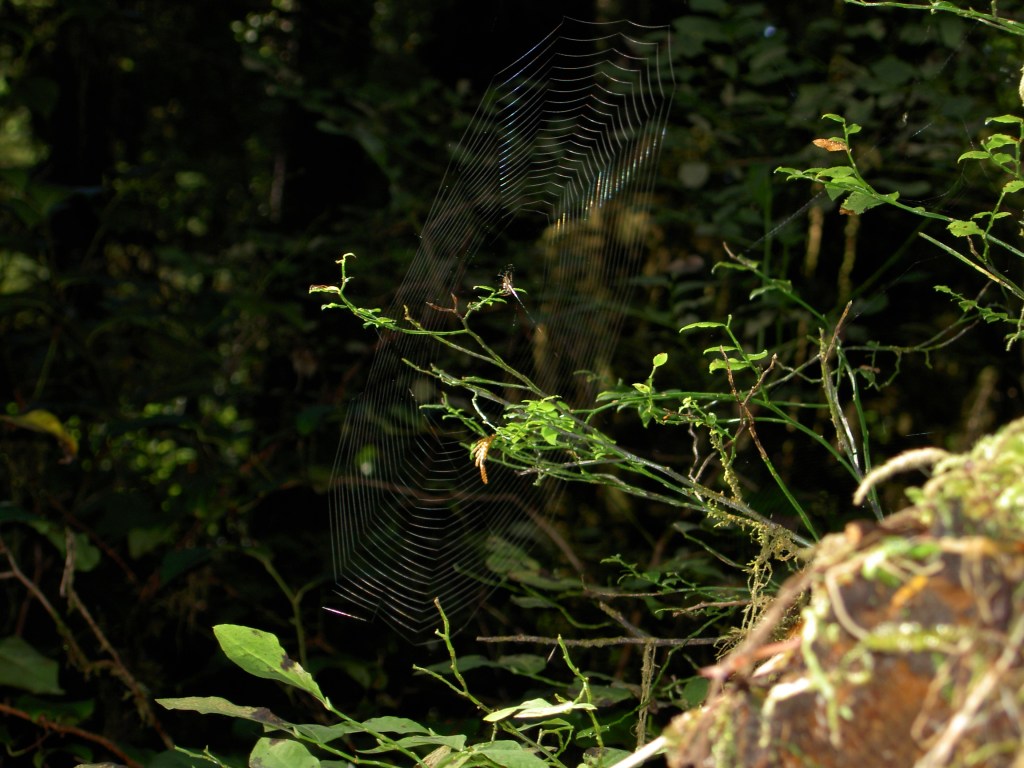
Forest Near Tofino on Vancouver Island, BC

Until I saw it with my own eyes, I did not know there was such a thing as a temperate rain forest. They are relatively rare, but you can find them in the Pacific Northwest and even in the Eastern Appalachians. Basically, they have an average temperature range between 39° and 54° Fahrenheit (4° and 12° Celsius) and are characterized by annual precipitation over 50 inches, dense canopies, and a proliferation of ferns, lichens, and mosses.

My encounter with one such temperate rain forest was close to the Vancouver Island town of Tofino. I was able to take a guided hike through it and take pictures.

Notice the Large Spider Web

Walking through the woods, I was reminded of my mother’s made-up fairy tales, which were always set in a sötét erdő (dark forest) and involved a tündérléány (fairy princess). I was walking not only through an actual forest but the land of my childhood dreams.

A Cemetery for Halloween

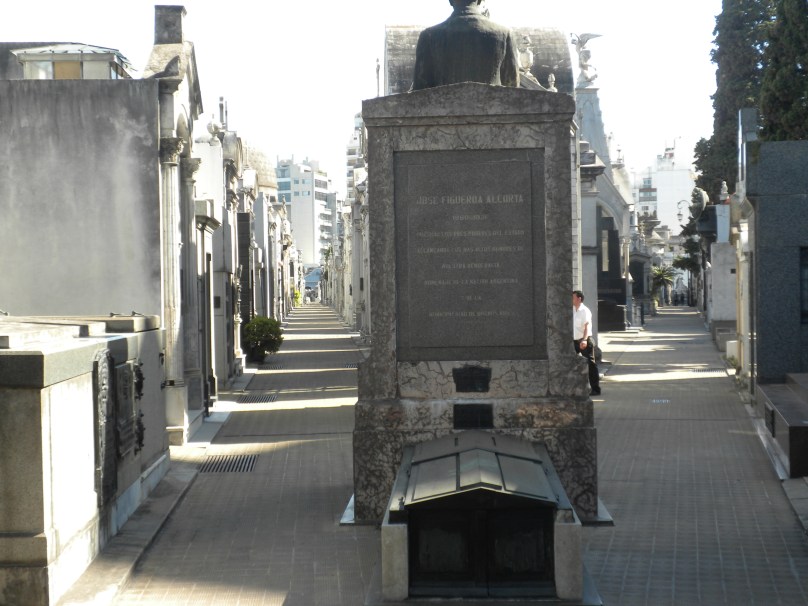
Recoleta Cemetery in Buenos Aires

I have been to some spooky cemeteries, but I think that the spookiest one of all is El Cementario de la Recoleta in Buenos Aires. Curiously, it is also perhaps the city’s main tourist attraction.

Practically everybody who was anybody in Argentina is buried there—with some interesting exceptions. Jorge Luis Borges is interred in Geneva, Switzerland, where he died. Although Evita Perón is buried in Recoleta under her maiden name of Duarte, her husband, former dictator Juan Perón was not allowed in. He is buried on the grounds of his presidential estate at Olivos.

Many of the funerary monuments at Recoleta are spectacular. Some are grim. In a few vaults, one can look through gaps in the gates and see some occupied coffins in bad shape, apparently from families that have died out and not left instruction for their maintenance.

The last time I was in Buenos Aires, I stayed in a hotel that was across Avenida Azcuenaga from the high west wall of the cemetery. It didn’t feel spooky to me at all. It’s only by wandering up and down the rows of funerary monuments that one gets a spooky forechill.

O Canada

Floating Post Office on Vancouver Island

It was 2004. I was on an old packet boat called the Lady Rose that went back and forth on the Alberni Inlet on Vancouver Island between Port Alberni and Bamfield. It was a beautiful day, and I was surrounded by a congenial group of Canadians.

The Lady Rose has since been decommissioned, but my memories of that trip will last a lifetime. The next day, I took another ship to Ucluelet, from which I took a bus to Tofino, where I stayed for several days.

I would love to spend some more time in British Columbia. Andrew Marvell had it right: “Had we but world enough and time ….”

There is something about Canada that Martine and I love—from Nova Scotia and Quebec to Alberta and B.C. Martine loves practicing her French (she was born in Paris) in Quebec; and she loves the fact that Canadian food is generally non-threatening. I know that she would accompany me to Canada in a heartbeat, whereas Latin America is more problematic.

I know our current President (I forget his name) has a grudge against Canada, but that’s his problem.

Totem

Detail from Totem Pole in Victoria BC

Totem poles are some of the most accessible images of aboriginal spirits. The best I’ve seen were on Vancouver Island in British Columbia, mostly in Victoria and Cowichan. After seeing them, I read Franz Boas’s book Primitive Art (1927). As I wrote in a previous blog, “It’s a difficult read, but like many difficult reads, eminently worthwhile.”

One of the reasons that totem poles are so stunningly impressive is that they are still being made by Indians in the U.S. and First Nations members in British Columbia. Unlike Hopi Kachinas, which are also still being made, they are a public art form; and many old poles have been gathered together and put on display.

I would love to visit the Alaska panhandle to see the Haida totem poles on Prince of Wales Island, and perhaps also the Haida Gwaii archipelago in British Columbia north of Vancouver Island.

Totem Poles at Cowichan in 2004

One could stand in front of a totem pole and try to guess at what the images are signifying. For instance, in the loincloth-clad figure on the right above, he is cradling a fish (probably a salmon) in his left hand while wearing an oversized hat with blue and red strips along the bottom. What does that mean?

If I were to go back to Cowichan for another look, I would be deeply disappointed. When I did go back a few years later, the totem poles were looking uncared for and there was talk of turning the tribal facility into a conference center. I wonder if that ever happened.

Influencers on the Road

Have Camera, Will Travel

Since I am planning for a possible trip to Isla Mujeres in Mexico, I have been watching dozens of videos posted on YouTube by mostly young influencers. They have proven to be helpful in one way: I have a pretty good idea what Isla Mujeres looks like.

On the other hand, I have never seen so many mispronunciations and errors of fact. I don’t get the feeling that many of these influencers ever did their research before picking up their camera and buying a plane ticket. Fortunately, there are exceptions, such as this eminently useful post on how to avoid the “shark tank” at the Cancun International Airport, with its ravenous timeshare condo salespersons.

One unfortunate tendency is for most of these influencers to get sloshed on cocktails with every meal and between meals. Many of the travel videos for Isla Mujeres are 50% taken up with drinking sessions. Talk about Ugly Americans!

Also, it becomes very evident that these influencers are selling their recommendations of hotels, destinations, restaurants, and bars—presumably for free or heavily discounted products or services.

I will still consult many of these videos because they do give me some ideas. One simply has to learn to separate the wheat from the chaff.

Plotting a Getaway

Isla Mujeres Seen from the Air

The island is a half hour boat ride from Cancun’s Puerto Juarez. It is approximately 4.3 miles (7 km) long and on an average of 0.4 miles (650 meters) wide. In the above photo, you are viewing the eastern tip of the island, known as Punta Sur. The main town and the best swimming beaches are at the far end.

I am in the process of trying to convince Martine to come with me for a week in Isla Mujeres. It would be a low stress visit with lots of great seafood and, at Playa Norte, a beach that has a sand bottom, no waves, no rip tides, no rocks, no seaweed, and plenty of clear, utterly transparent water of the right temperature.

Martine does not like traveling to Mexico (she’s been to Yucatán once and Cabo San Lucas once). I am hoping I can lure her with pictures of a no-fuss, no-muss destination with great seafood, swimming, and shopping. And virtually no automobiles, except for taxis.

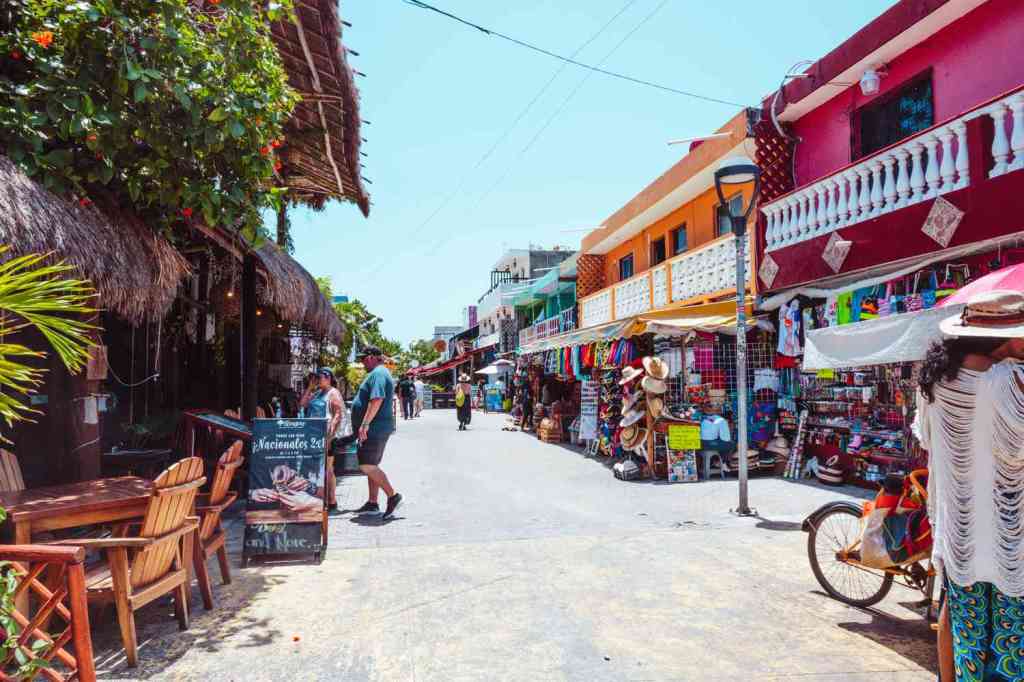
Shopping on Isla Mujeres

Although Isla Mujeres is famous for diving and snorkeling, I have no intention to do either. I have never dived or snorkeled before, and I don’t intend to start at age 80.

I have been watching YouTube videos submitted by Internet Influencers. They have been useful for showing what the place looks like, and how young influencers like to get sloshed when they’re away from home.

Wish me luck with Martine.

I Visit Maximon

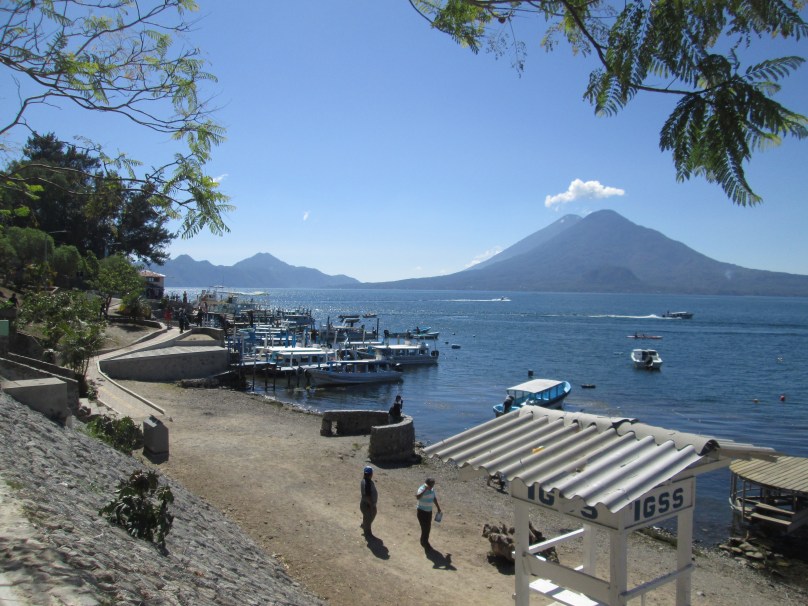
Lago de Atitlán from Panajachel

It was 2019 when I spent several weeks in Guatemala and Honduras. After five days in Antigua Guatemala, I took a bus to Panajachel, the main port on the Lago de Atitlán. I very much wanted to meet Maximón, a folk saint or deity based in Santiago de Atitlán, a city that had seen much strife during the persecution of the native Maya people.

According to the National Geographic Society’s website:

Maximón, also known as San Simón, represents light and dark. He is considered a trickster—both a womanizer and protector of virtuous couples. According to legend, the village fishermen traveled frequently for trade and enlisted Maximón to protect the virtue of the wives they left behind. It backfired. Instead, Maximón is said to have disguised himself as a loved one so he could have sex indiscriminately.

Today, Maximón’s effigy resides in a different family’s home every year—his wooden body is dressed in a typical male suit of the region and placed on a petate, or straw mat. Traditionally he was only brought out during Holy Week, but because of high demand from pilgrims, tourists, and brujos (shamans), he is on display year-round.

Those seeking miracles, good health, and love make offerings at his shrine in exchange for his favor—moonshine, hand-rolled cigarettes, and money are his vices of choice. His cofrades, or attendants, spend their days smoking and drinking by his side, and it is considered the highest honor to host him. He is brought out during Holy Week and paraded through the streets before being placed in a different home for the following year.

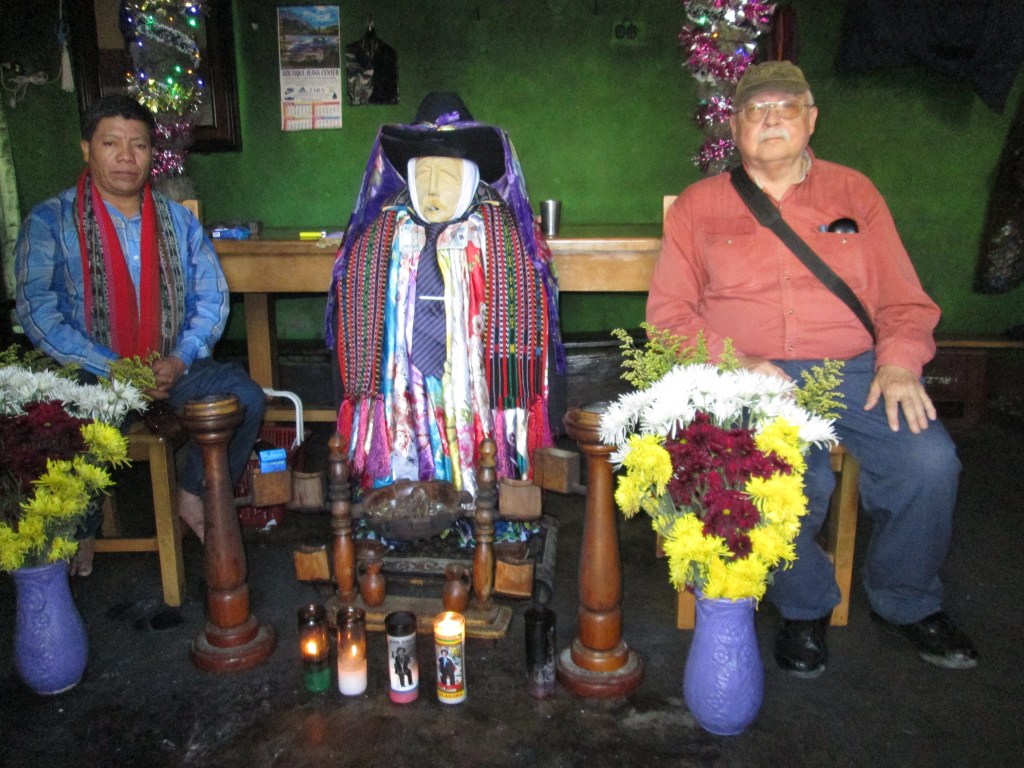
With Maximón (Center) in Santiago de Atitlán

I made my own offering to Maximón to protect me during my travels, as I had a number of hard-to-get-to Maya ruins still to visit, including Copán in Honduras and Quiriguá and Tikal in Guatemala. He rewarded me with one of my best trips in Latin America.

The Royal Mile

The Busiest Mile in All of Tourism

If you want to see the most concentrated real estate in all of tourism, I recommend the Royal Mile in Edinburgh, Scotland. At one end is Edinburgh Castle. One passes historic pubs and fascinating museums, the towering hulk of St. Giles Cathedral in the center, and ending at Holyroodhouse Palace, from where Mary Queen of Scots ruled.

In my visits to Britain, I have always preferred Scotland to England. The food is better, the history more poignant, and the people more friendly. And then there’s the whisky, which can be ethereal. (In one of my boxes of photos is an image of Martine hugging the distillery at Bowmore on Islay.)

I particularly love the Highlands and Islands. My travels north of Edinburgh have included Stirling, Perth, Oban, Loch Ness, Inverness, and the isles of Iona, Mull, Islay, and the Orkney Mainland.

One can’t walk up to Stonehenge and look at it up close, but one can walk up to the Standing Stones of Stenness and the Ring of Brodgar.

As I sit here in Los Angeles during yet another overlong heat wave, I dream of re-visiting some of the places in Scotland Martine and I have seen and having a good meal of haggis and neaps washed down with a wee drappit of Scotch.

Mexican Rules

Benito Juarez Airport in Mexico City

I was reading Oliver Sacks’s Oaxaca Journal—a book I do not recommend you read unless you are a botanist—when I came across this passage which reminded me of past trips to Mexico:

“What gate do we go from?” everyone is asking. “It’s Gate 10,” someone says. “They told me it was Gate 10.”

“It’s Gate 3,” someone else says, “It’s up there on the board, Gate 3.” Yet another person has been told we are leaving from Gate 5. I have an odd feeling that the gate number is still, at this point, indeterminate. One thought is that there are only rumors of gate numbers until, at a critical point, one number wins. Or that the gate is indeterminable in a Heisenbergian sense, only becoming determinate at the final moment (which, if I have the right phrase, “collapses the wave function”). Or that the plane, or its probability, leaves from several gates simultaneously, pursuing all possible paths to Oaxaca..

. . . . . . . . . . . . . . . . . . . . . . . . . . . . . . . . . .

This reminds me of a trip my brother and I took to Mexico in 1979. We flew into Mexico’s Benito Juarez Airport and were to take a connecting flight to the misnamed city of Villahermosa. Not only was the gate uncertain, not only was the time uncertain, but whether the flight would take place at all was uncertain. (You can read more about it here.) This was a interesting lesson in traveling under Mexican rules.

This was no longer the precise Anglo-Saxon world we had just left behind. There was uncertainty everywhere. If you let it bother you, you will mot enjoy your vacation. If, on the other hand, you take it as a “Heisenbergian” event and hang in there to see how it all sorts out, you not only win but you learn an interesting lesson that, in the end, you can take back home with you.