Indian Country

The Area Covered by the Auto Club Indian Country Map (in Orange)

This posting is about a map that I love. Ever since 1985 when I drove with my friends Peter and Gayle to the area around Flagstaff, Arizona, I have fallen in love with the Southern California Auto Club map that covers the main tourist areas of the American Southwest. It is called, simply, the Indian Country map. It covers southern Utah, Northern Arizona, southwest Colorado, and northwest New Mexico. Within its coverage area lie Acoma Sky City, Arches, Bryce Canyon, Canyon de Chelly, Chaco Canyon, Durango, Grand Canyon, the Hopi and Navajo Indian reservations, Lake Powell, Mesa Verde, the Petrified Forest, most of the Pueblo Indian reservations, Sandia Peak, Santa Fe, and Zion—all of which I have visited on various trips.

It is probably the most useful tourist map produced in the United States. Especially for someone like myself, who loves this part of the country above all others.

The AAA Indian Country Map

There are times when I wish I had a camper van that I could use to visit the many hundreds of tourist sights covered by this map. What with my age, I can no longer kneel on the ground to put up a tent, but I could sleep—most comfortably—in a good camper van.

If you are interested, there is an interesting article about the cartographer who produced and updates this map. You can find it by clicking here.
A Little Bit of Wales

A Welsh Tea House in the State of Chubut, Argentina

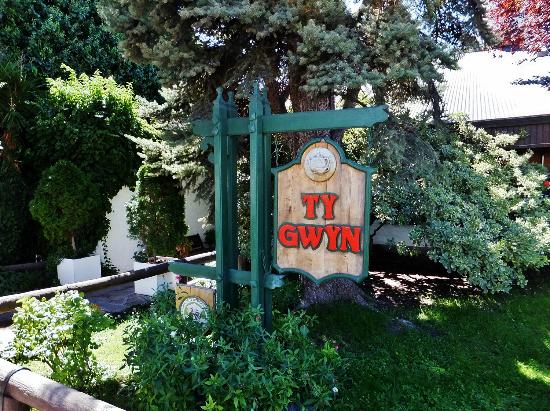
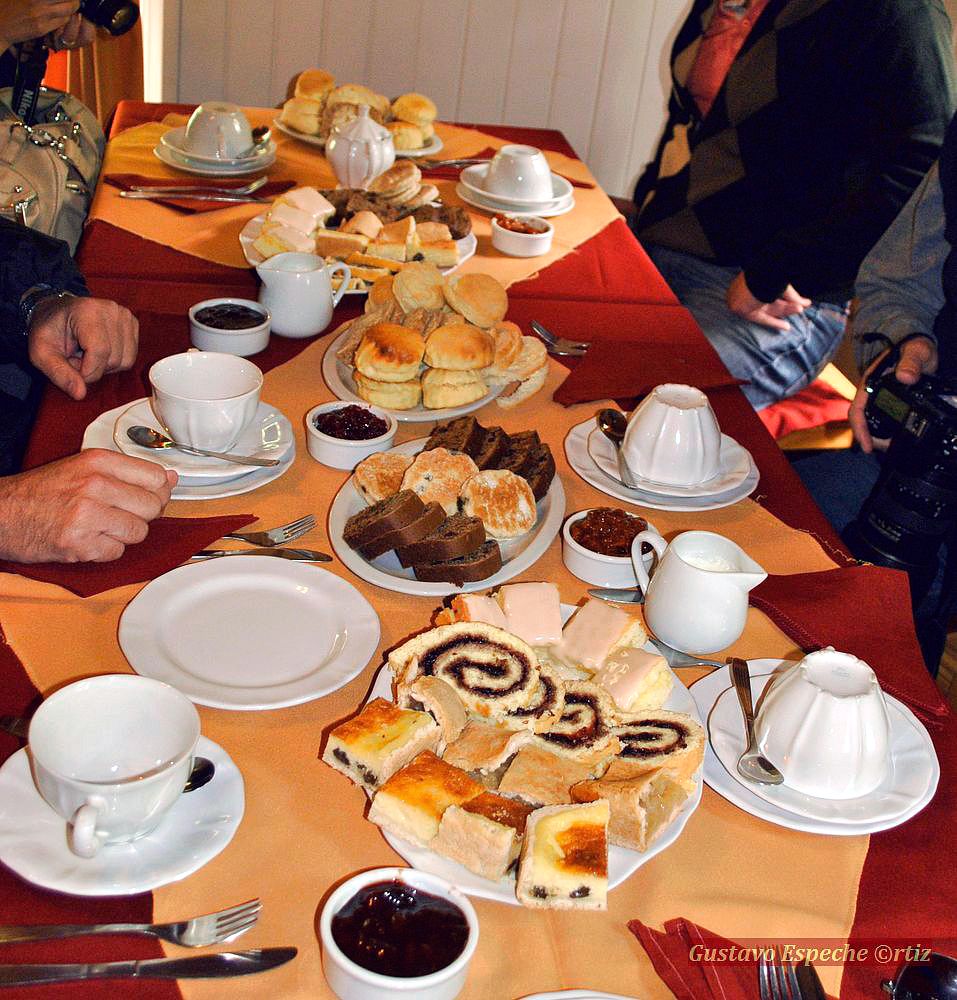
Today’s post is the result of finding a business card in Spanish for one of our 2011 Argentina destinations. It was part of the best day on that particular trip. In the morning, Martine and I went to the giant Magellanic penguin rookery at Punta Tombo where we saw baby penguin eggs hatching under the watchful eyes of hungry shore birds. Then we drove to the Welsh settlement at Gaiman where we had high tea at the Ty Gwyn.

Although we were many thousands of miles from Wales, it was as if we were in the Old Country. The tea, sandwiches, and cakes were absolutely delicious. In fact, we had such a good time that we took a bus from Puerto Madryn back to Gaiman and had another high tea.

High Tea at Ty Gwyn

The State of Chubut was originally settled by the Welsh who settled in a number of communities, including Gaiman, Puerto Madryn, Trelew, and Dolavon. At the souvenir shops at the Trelew airport, a conspicuous presence were the packages of Torta Negra Galesa, the dark Welsh Cake that is the highlight of a Welsh tea.

The only other places where Martine and I had high tea were at Blenheim Palace in England—the birthplace of Winston Churchill—and Butchart Gardens near Victoria, British Columbia, Canada. It is interesting that the Welsh in Argentina were easily on a par with the other two.


Uxmal

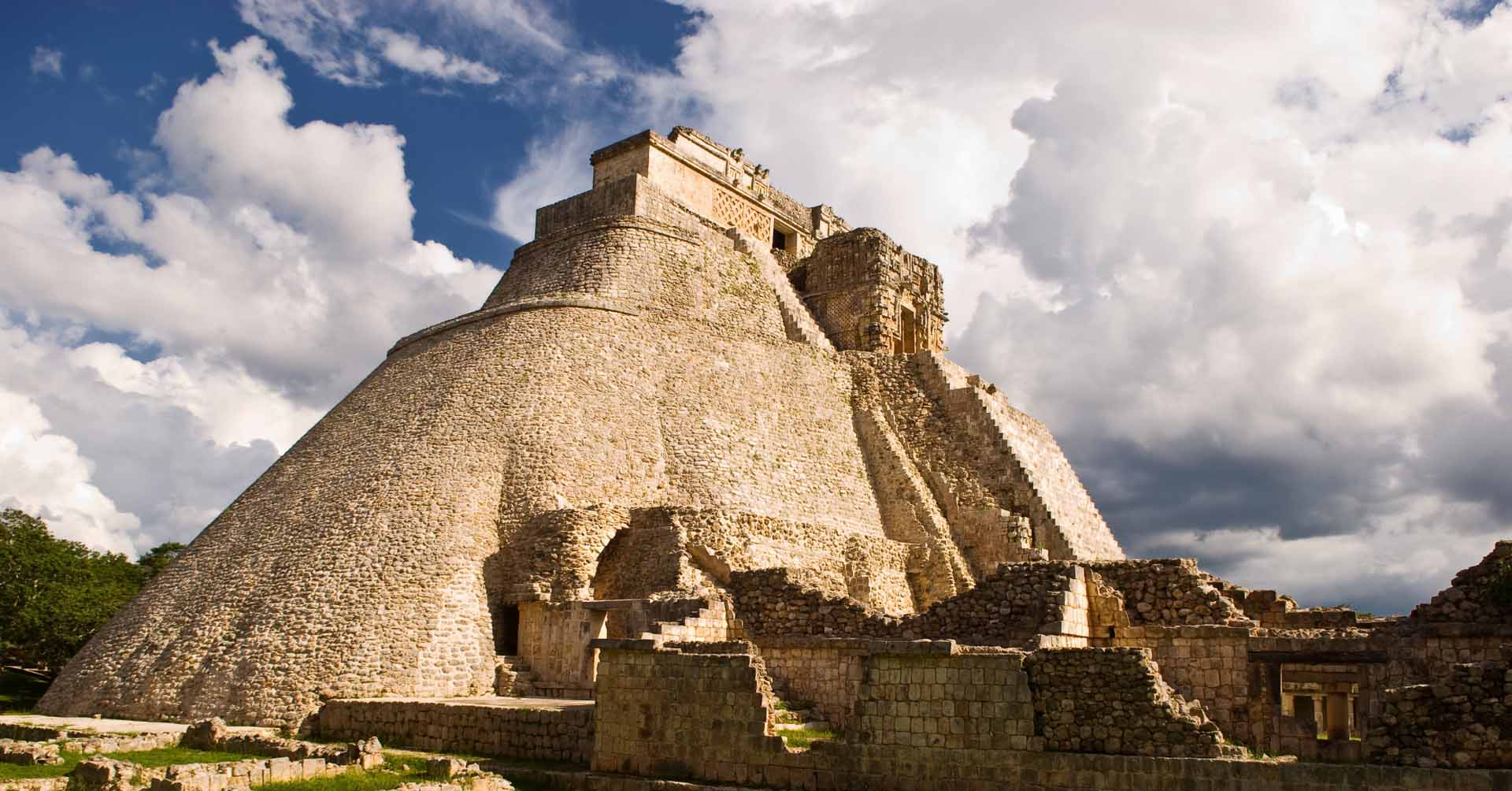
The Pyramid of the Magician at Uxmal in Yucatán

I may have to delay my trip to Mexico until I know what’s happening with the pain in my knee. To refresh your memory, there is some sort of muscular pain in the crook of my left knee, initially diagnosed to be a Baker’s Cyst or some sort of tendonitis. With luck, I will be able to go at some point in January, unless the condition requires surgery.

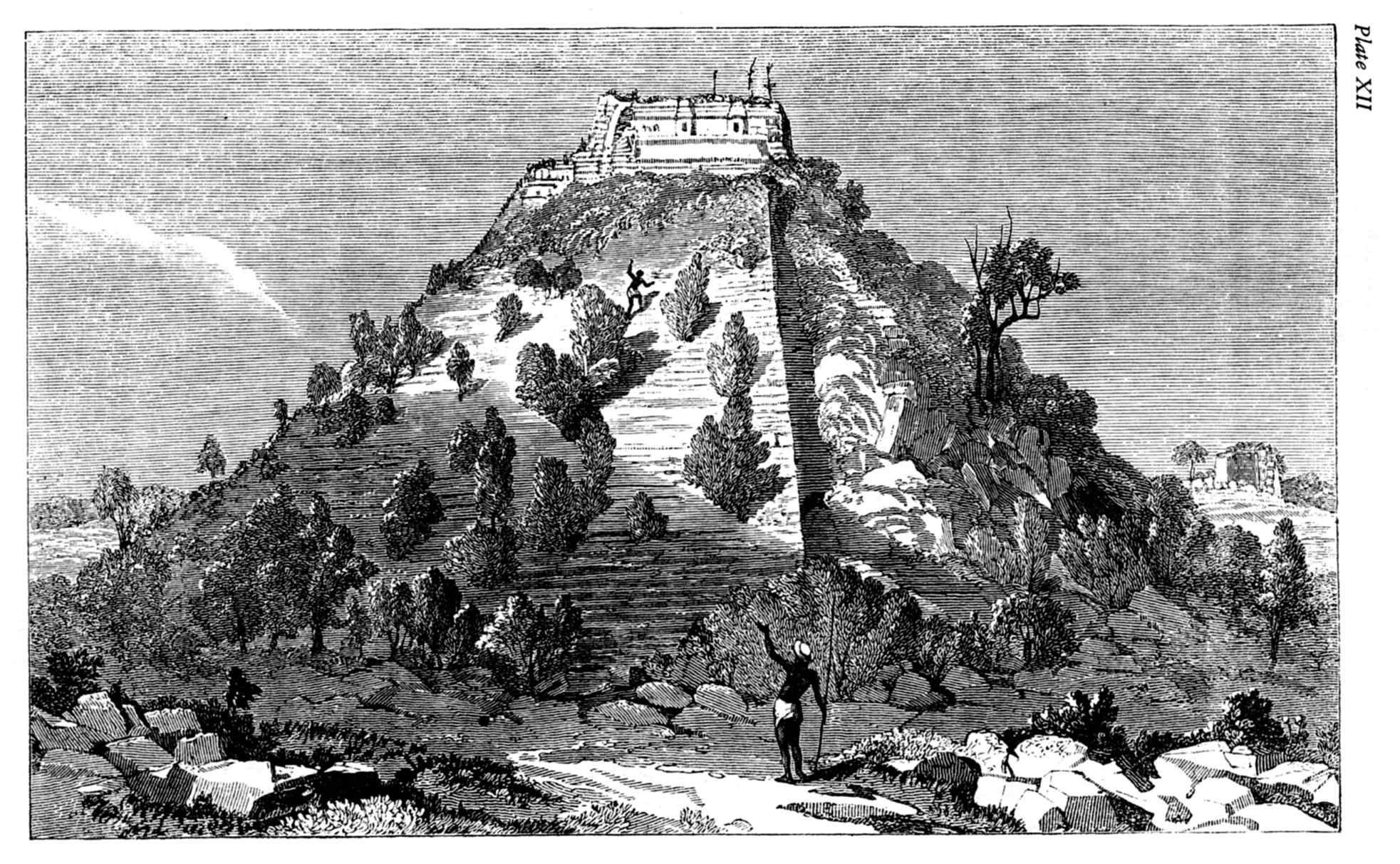
In all, I have been to Uxmal twice, in 1975 and 1992. Both times, I have been impressed that it is the most beautiful of Maya ruins. It is built in the classical Puuc (named after the range of hills where it is located), with smooth rectangular limestone blocks interspersed with images of various Maya deities. It looks even better today, after archeologists have cleared away much of the foliage. Below is an image of the same structure around 1840 when Frederick Catherwood drew it:

Frederick Catherwood’s Illustration of the Pyramid

The city of Uxmal was occupied only up to some point in the 9th century AD, when it is speculated that drought made the ruins in the Puuc Hills uninhabitable. There are no above ground rivers in the limestone peninsula that is Yucatán, and the underground rivers would have required digging through hundreds of feet of rock. Instead, rain water was collected in chultunes, underground storage chambers that circled the ruins.

I was sold on Uxmal from the very start. The van that took me there stopped close by the Pyramid of the Magician. The driver bowed his head and did the sign of the cross upon setting eyes on the pyramid. It is still considered a sacred site by the Maya, even though they have not inhabited it for over a thousand years.


La Merced

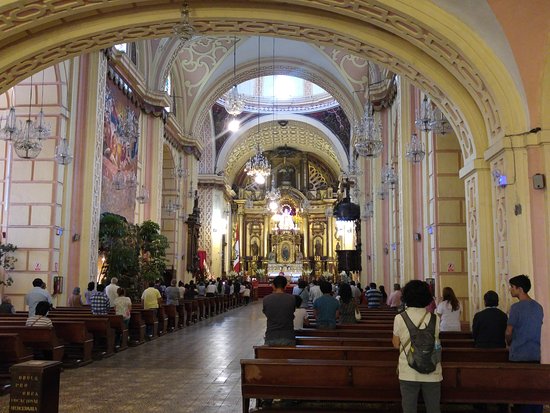
Basilica and Convent of Nuestra Señora de la Merced in Lima, Peru

In the historic center of Lima, Peru, on the Jirón de la Union, sits one of the oldest churches in South America. When I visited Peru five years ago, I would have the taxi driver let me off at the south end of the Jirón so that I could pass by the elaborate Churrigueresque façade of La Merced and wander in. When I dropped in at these old churches I frequently found myself attending Holy Mass as I was gaping at the gorgeous decorations. I always stayed to the end, out of respect for the religious orders which built such splendid edifices to worship God.

I do believe that the Spanish kings only got a fraction of the gold that was mined in the New World, and that the lion’s share went to the Church and is visibly on display.

Interior of La Merced

As I have said on other occasions, I visited Peru because of the Incas, but what really caught my eye were the old Catholic churches, some dating back almost 500 years. La Merced was built around 1535 by the Mercedarians, short for the Royal, Celestial, and Military Order of Our Lady of Mercy and the Redemption of Captives. In fact, if I were to visit Peru again—as I hope to—I would skip Machu Picchu and spend more time viewing the Catholic churches and their related ecclesiastical art.


Manzanar Revisited

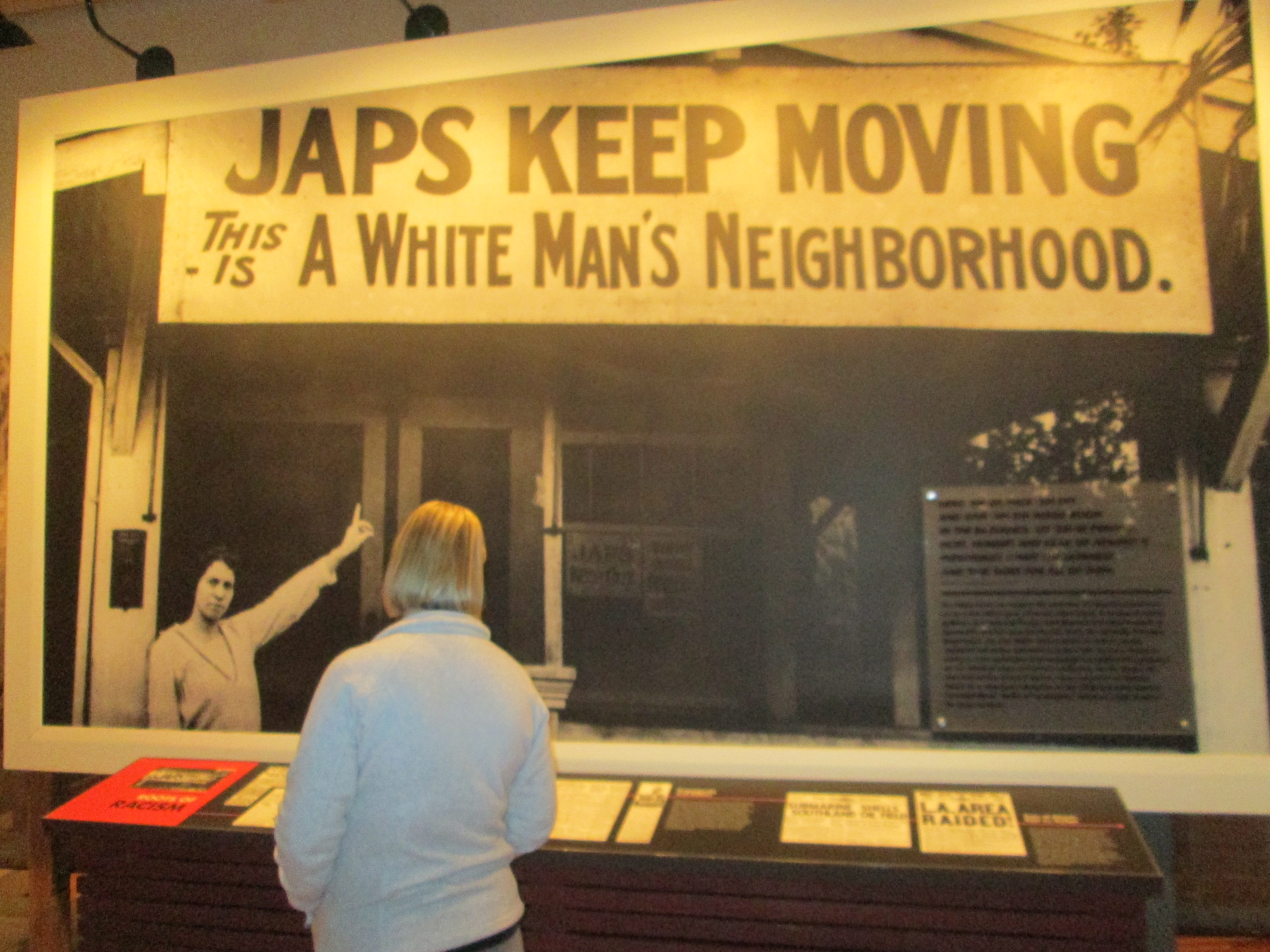
White Racism at Its Ugliest

Living in Los Angeles as I have for over half a century, I have lived and worked with many Japanese whom I regard as my friends. They are also as American as apple pie—if not more so. So it strikes me as one of America’s crimes that 112,000 Japanese Nisei and issei were interned in some ten concentration camps scattered across the Western States.

The most famous of these camps is Manzanar, located midway between Lone Pine and Independence in the Eastern Sierras. The former camp is now the Manzanar National Historic Site, managed by the National Park Service (NPS). Martine and I had visited it in the past, perhaps as much as three times. Last week, we visited it again. We were happy to see that the NPS had reconstructed four buildings in Block 14 of the camp: two barracks, a women’s latrine, and a mess hall. (Beware of dinner on Tuesdays, when the infamous Slop Suey was served.)

In the crazy divided political world of today, it is nice to see a park whose reason for existence is an indictment of American racism during World War II. Yes, the Japanese were our enemy; but so were the Germans, and we didn’t intern any of them. More’s the pity: Perhaps our current Presidente might never have been born.

If you are driving up (or down) Highway 395, it is worth spending an hour or two visiting Manzanar. And be sure to see the 22-minute video shown every half hour.


The Alabama Hills Trifecta

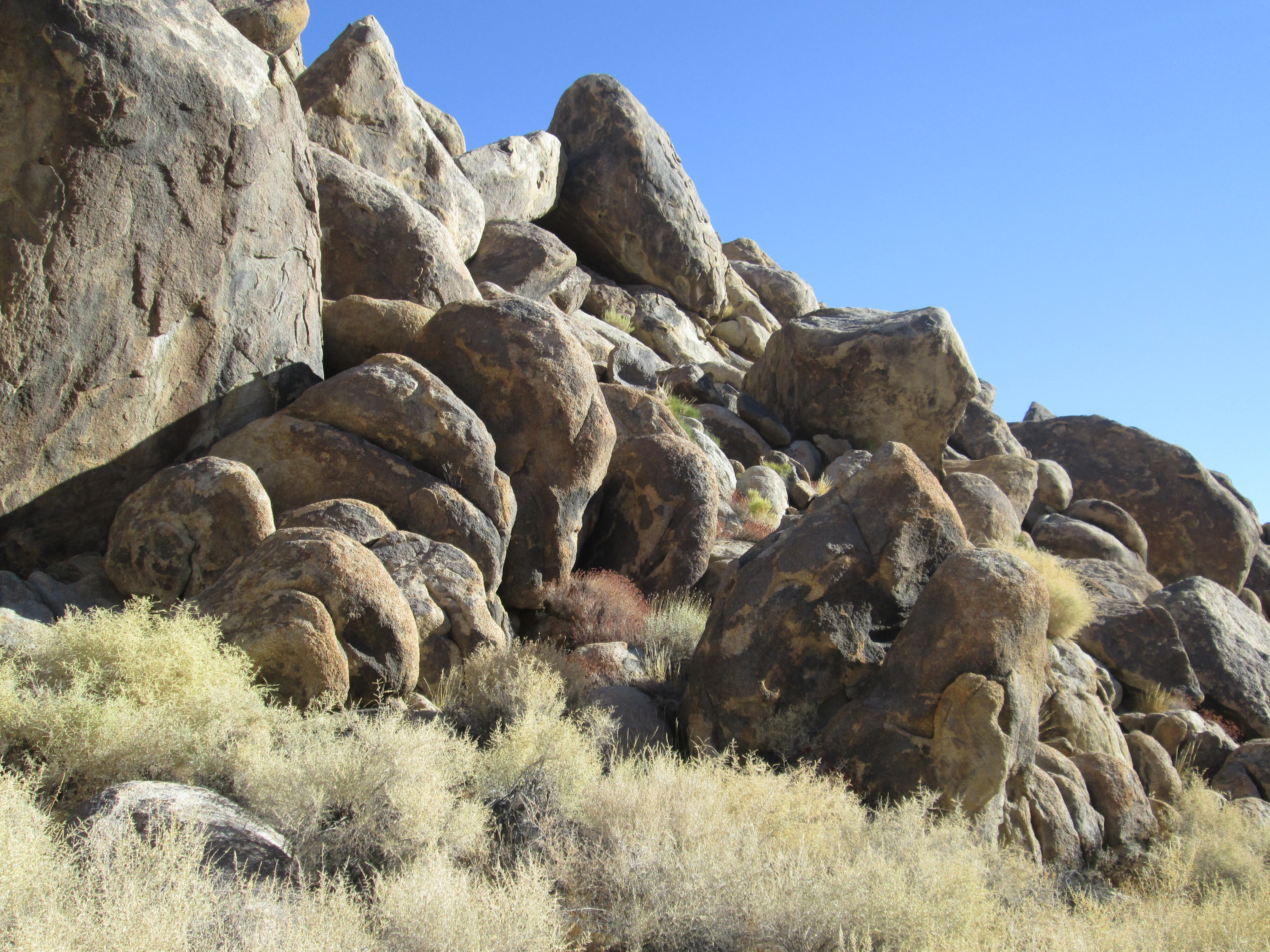
Seemingly Endless Piles of Rounded Rocks

Just west of the town of Lone Pine are a strange set of foothills comprised of picturesque rounded rocks piled up for hundreds of feet or more, behind which are the tallest peaks of the Sierra Nevada, including Mount Whitney. Among these rounded rocks were shot hundreds of Westerns, not to mention horror films, sci-fi, and you-name-it. Following is a ridiculously partial list:

  • 3 Godfathers (1948), with John Wayne and directed by John Ford
  • Around the World in 80 Days (1956), with David Niven
  • Bad Day at Black Rock (1955), with Spencer Tracy
  • Chaplin (1992), with Robert Downey, Jr.
  • Django Unchained (2012), directed by Quentin Tarantino
  • Gladiator (2000), with Russell Crowe
  • Gunga Din (1939), with Cary Grant
  • High Sierra (1941), with Humphrey Bogart
  • Lost Horizon (1937), with Ronald Colman
  • The Ox-Bow Incident (1942), with Henry Fonda
  • Ride Lonesome (1959), with Randolph Scott
  • Riders of the Purple Sage (1925), with Tom Mix
  • Zabriskie Point (1970), directed by Michelangelo Antonioni

And the list goes on and on, including whole series of Westerns with the Lone Ranger, Jack Hoxie, Hopalog Cassidy, Randolph Scott, Tim Holt, Ken Maynard and others too numerous to mention. Not for nothing is there a Lone Pine Western Film History in town. In fact, the perfect visit to Lone Pine should include a visit to the museum (allow two to three hours) and a morning visit to the Alabama Hills, where so many films were shot.

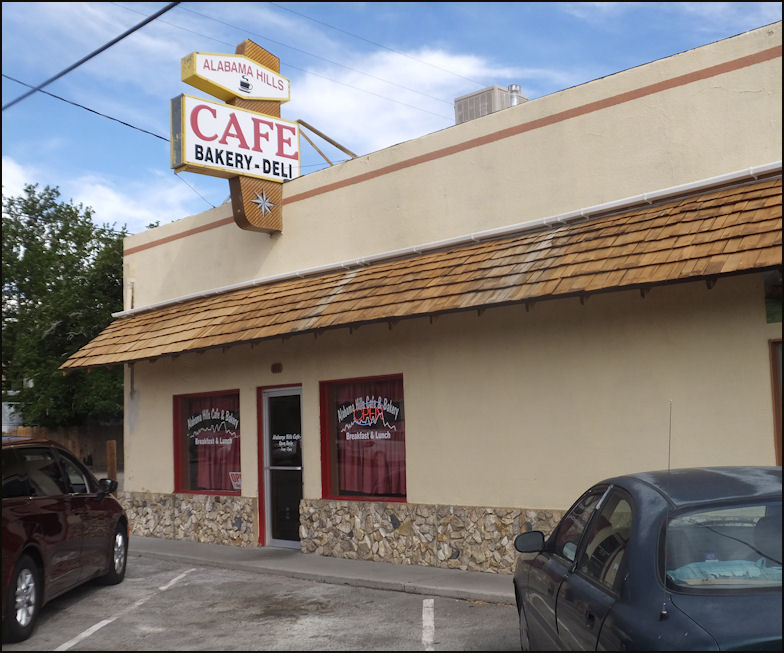
The Alabama Hills Cafe on Post Street in Lone Pine

Actually, why not make a Trifecta out of your visit? Eat breakfast or lunch at the Alabama Hills Cafe and Bakery for absolutely delicious food lovingly prepared. On our trip last week, Martine and I ate there for three meals: one breakfast and two lunches. The restaurant is closed for dinner, and you may have to wait for a table. (If necessary, do so: It’ll be worth your while.)


Strokkur

The Geyser Strokkur (“Churn”) Erupts

Everyone knows what a geyser is, but do you know that it is named after a particular geyser named Geysir in the Haukadalur Valley east of Reykjavík, Iceland? Its situation is similar to that of Old Faithful in Yellowstone National Park. In their hurry to precipitate an eruption hordes of tourists over the years have poured detergents and other foreign substances into the holes and succeeded only in making the eruptions more sporadic and unpredictable.

Tourists still visit the area in great numbers in the various Golden Circle or Great Circle tours offered by coach lines. (These tours usually include Þingvellir National Park and the waterfall at Gullfoss, among others.) Instead of waiting for Geysir, they have the nearby frequent eruptions of Strokkur, “The Churn,” which sends a column of steam 15-40 meters high every 6-10 minutes.

Tourists Waiting for the Next Eruption of Strokkur


Iceland has a number of these geothermal areas. Visiting them calls for a certain amount of care as a slight misstep can result in boiling your foot as the soil around your footprints starts to sink. Not all of these areas are carefully fenced; and tourists, being their usual irrepressible selves, have a tendency to risk a serious hotfoot.

Different

Columbus Discovered a Whole New World

As we approach Columbus Day (October 12), it is useful to note that there few monuments to him in most of the New World. Just as there are few monuments to Hernan Cortés or Francisco Pizarro. It would be sort of like Jews creating monuments to Heinrich Himmler or Adolph Eichmann. Since most Gringos are of European ancestry, we have a hard time seeing the world from the eyes of the Caribs who first saw Columbus on San Salvador on October 12, 1492. Oh, by the way, there are no more Caribs. They all died off from the diseases the conquerors brought with them or the subsequent enslavement by their new masters.

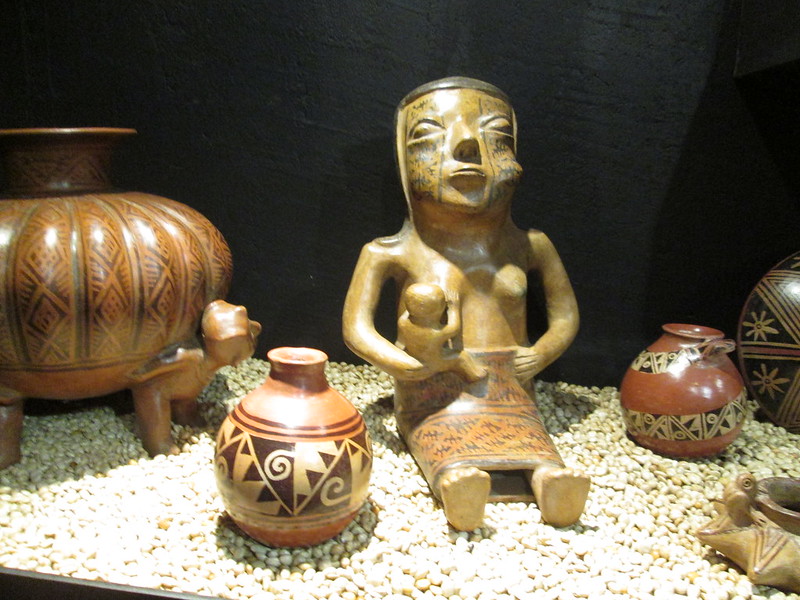
The above image from Quito’s Mindalae Museum has a distinctively non European air about it. Pre-Columbian art, in general, looks odd to Gringos, unless they have developed the fine art of seeing the world through the eyes of other peoples. This is something even our President hasn’t done, inasmuch as he sees Mexican and Central American refugees as rapists. (Talk about the pot calling the kettle black!)

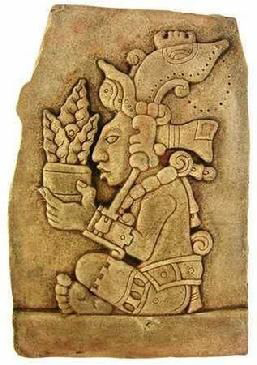
Nowhere is the difference between our culture and theirs more prominent than on the subject of religion. Below, for instance, is an image of the Maya maize god, Hun Hunahpu:

The Maya Maize God

The gods of the Maya pantheon at times appear to partake of the characteristics of lizards, alligators, monkeys, and other creatures—quite different from the Judaeo-Christian and Islamic Deity.

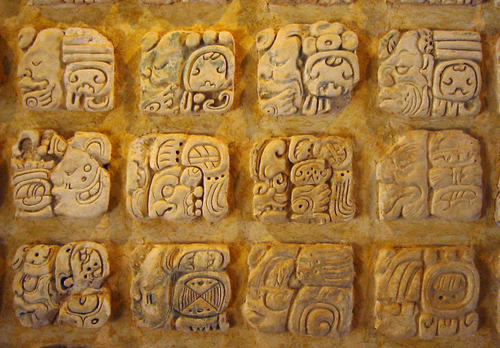
Different as they were from us, the Maya developed a calendar that, even after over a thousand years, is more accurate than our own. They had writing, which, though resembling monsters more than characters in the Greek and Roman alphabets, still enabled them to write their history.

Mayan Glyphs

Even though the cultures of the Old World have proven so dominant, we are only now discovering that the Maya had their own strengths. Although the Aztecs and Inca are no longer active cultures, there are still six million Maya speaking some thirty dialects of the Mayan tongue. The old Mayan glyphs may no longer be in use, but there is still an active Maya culture—actually, a number of them.


The White City

Mérida at Night

There are a handful of cities with which I have fallen in love over the years. They include Edinburgh, Scotland; Paris, France; Budapest, Hungary; Lima, Peru; and Mérida, Yucatán in Mexico. Mérida is widely known as the White City for the whitewashed look of its buildings. I don’t know if they have any “glass box” high-rises that have been built since 1992 (when I was there last), but I am willing to bet there are none.

I vividly remember arriving there for the first time in November 1975. The taxi ride from Manuel Crescencio Rejón Airport to the Hotel Mérida on Calle 60 was an entirely new experience for me. We passed a huge Coca Cola bottling plant on the road to the airport and a large number of single-story homes that seemed to be open to the street. I saw families sitting at their dinner table as if there were no fourth wall.

It was warm and humid: We were in the tropics. Everything looked so different. Then as we passed the Zócalo, I saw the scruffy looking old cathedral of San Ildefonso, and the large central square with its confidenciales (S-shaped love seat benches).

Confidenciales: Love Seat Benches in Mérida’s Parks

The next few days were an education for me. I decided to take a few tours, but I was up to the challenge of trying my Spanish. I went through a Spanish-only travel agency called Turistica Yucateca and spent two days traveling to such obscure Maya sites as Acanceh, Dzibilchaltún, and Mayapan with an English speaking guide named Manuel Quinones Moreno, who had his own automobile. I played chess with him at the ruins of Dzibilchaltún, losing all my games. We even visited an old henequén hacienda where rope was manufactured. You may recall that there used to be a kind of rope called sisal, named after the Port of Sisal in Yucatán from where the rope was shipped across the world.

I have nothing but happy memories of Mérida, and I look forward to renewing my acquaintance with the White City.