Essays

Michel Eyquem de Montaigne (1533-1592)

I would like to consider myself as a writer—in a small way. I’ve tried fiction and failed: My Hungarian-American detective,Emeric Toth, was an interesting character. My dialogue was fine, but I could never think of an interesting plot line for him to exercise his talents. I’ve never really tried poetry, but would like to at some point. Time, however, is running out.

So what I am left with are essays. In my library are several hundred volumes of essays by such luminaries as Michel Eyquem de Montaigne, who invented the word, which in French means “attempts”; Thomas De Quincey, William Hazlitt, G. K. Chesterton, Hilaire Belloc, William Cobbett, Dr. Samuel Johnson, Charles Lamb, Albert Camus, Hunter Thompson, Norman Mailer, J. M. Coetzee, and scores of others.

Probably the best essays are those of the terms originator, Montaigne. And perhaps the best essay I’ve ever read is ”Of Experience,” in which the author talks about his excruciating pain from kidney stones. Even after all the intervening centuries, it is a tribute to how to live despite all that suffering. If I were to teach a class about him, I would make that essay the first reading assignment. Then I might ass Chesterton’s collection entitled Tremendous Trifles, to be followed by a selection of Hazlitt’s work, especially his essay on boxing.

These posts are all fairly brief, but I look forward to living my life in such a way that I might have interesting things to say. The coronavirus outbreak has made that difficult, but what it has done is made me turn more toward books and film. I occasionally still write about politics, but I feel I have nothing original to say in that area.

To start you thinking, here is a quote from Montaigne:

To begin depriving death of its greatest advantage over us, let us adopt a way clean contrary to that common one; let us deprive death of its strangeness, let us frequent it, let us get used to it; let us have nothing more often in mind than death… We do not know where death awaits us: so let us wait for it everywhere.

To practice death is to practice freedom. A man who has learned how to die has unlearned how to be a slave.

There exist excellent translations by Donald Frame and J. M. Cohen.

Getting the Vaccine

Today I Got My First Covid-19 Vaccine Injection

Earlier this week, I talked to my doctor. She recommended I get either the Pfizer or the Moderna Covid-19 vaccine, preferably through Kaiser-Permanente. So this morning, Martine and I drove to the Kaiser hospital in Baldwin Park, roughly three quarters of an hour from home. Why so far? Apparently, the Kaiser representative who set up the appointment is in another city and is not familiar with Los Angeles. No matter. I got there in plenty of time and got the first shot.

Although Martine was with me, she opted not to be vaccinated. She listens to AM talk radio a lot, and the pundits there kept emphasizing how dangerous the vaccine is. Martine tends to be hypersensitive, so she thought she would probably suffer some horrible reaction if she got the shot. Well, I got my shot (it was the Pfizer vaccine); and it didn’t feel any different than getting my annual flu shot at Walgreen’s.

The vaccination setup at Kaiser was very well organized. As part of the process, they gave me an appointment for the second shot on Saturday, March 15.

I can hardly wait until this whole coronavirus outbreak is a thing of the past.

A Poem About Donkeys

“With Monstrous Head and Sickening Cry”

Having just finished re-reading G. K. Chesterton’s Autobiography, my mind is still reeling with his view of life. Here is one of his funniest poems, entitled, simply, “The Donkey”:

 When fishes flew and forests walked
And figs grew upon thorn,
Some moment when the moon was blood
Then surely I was born.

With monstrous head and sickening cry
And ears like errant wings,
The devil’s walking parody
On all four-footed things.

The tattered outlaw of the earth,
Of ancient crooked will;
Starve, scourge, deride me: I am dumb,
I keep my secret still.

Fools! For I also had my hour;
One far fierce hour and sweet:
There was a shout about my ears,
And palms before my feet.

The last quatrain refers to Christ’s entry into Jerusalem on the original Palm Sunday, mounted on a donkey.

The Only Way To Be a Vegetarian

Chick Pea and Spinach Pilau

I am a frustrated vegetarian, mostly because Martine wants me to cook more meat dishes. But every once in a while, such as when her irritable bowel syndrome acts up, I will prepare for myself a vegetarian curry dish redolent with chiles and other spices.

Why do most people become vegetarians? I suspect the answer is that they feel a certain Yuck Factor when it comes to meat. At that point, they usually turn to the boringly bland and unimaginative diet that seems to characterize many Americans. I’m talking about lots of salad (which Martine calls “rabbit food”) and plant-based meat imitations.

To me, it makes more sense to use an existing vegetarian cuisine which is flavorful and exciting. That describes Indian cooking to a tee. I like food that is rich with layers of flavor. Coming from a Hungarian background, I find most bland food more than slightly offensive, as if no one cared to make it good.

When I visit Latin America, I have no trouble settling into a comfortable routine of vegetarian food and my one meat craving, fresh seafood. I remember an octopus ceviche in Progreso, Yucatán, and a filete de pescado Veracruzana in Champotón that sent me into ecstasy.

In Ecuador, I fell in love with the soups, particularly an avocado-based soup in Quito and an egg soup in Cuenca. Insofar as salads are concerned, in Latin America I love the fruit salads.

“Something Buried Somewhere in the Book”

G. K. Chesterton Holding Book and Pen

I can think of few authors who can be read and re-read with as much pleasure as G. K. Chesterton (1874-1936). I am currently re-reading his Autobiography, which is less an autobiography than a collection of essays on various themes suggested by his life. If there is any vestige remaining within me of the Catholicism with which I was raised and educated, it is owing largely to Chesterton and such writers as Trappist Monk Thomas Merton. What Chesterton says here about a soi-disant biography he wrote about Robert Browning applies equally to his own autobiography.

Finally, a crown of what I can only call respectability came to me from the firm of Macmillan; in the form of a very flattering invitation to write the study of Browning for the English Men of Letters Series. It had just arrived when I was lunching with Max Beerbohm, and he said to me in a pensive way: “A man ought to write on Browning while he is young.” No man knows he is young while he is young. I did not know what Max meant at the time; but I see now that he was right; as he generally is. Anyhow, I need not say that I accepted the invitation to write a book on Browning. I will not say that I wrote a book on Browning; but I wrote a book on love, liberty, poetry, my own views on God and religion (highly undeveloped), and various theories of my own about optimism and pessimism and the hope of the world; a book in which the name of Browning was introduced from time to time, I might almost say with considerable art, or at any rate with some decent appearance of regularity. There were very few biographical facts in the book, and those were nearly all wrong. But there is something buried somewhere in the book; though I think it is rather my boyhood than Browning’s biography.

Buckeye Days

Szent Erzsébet (Saint Elizabeth) Church, Where I Was Baptized

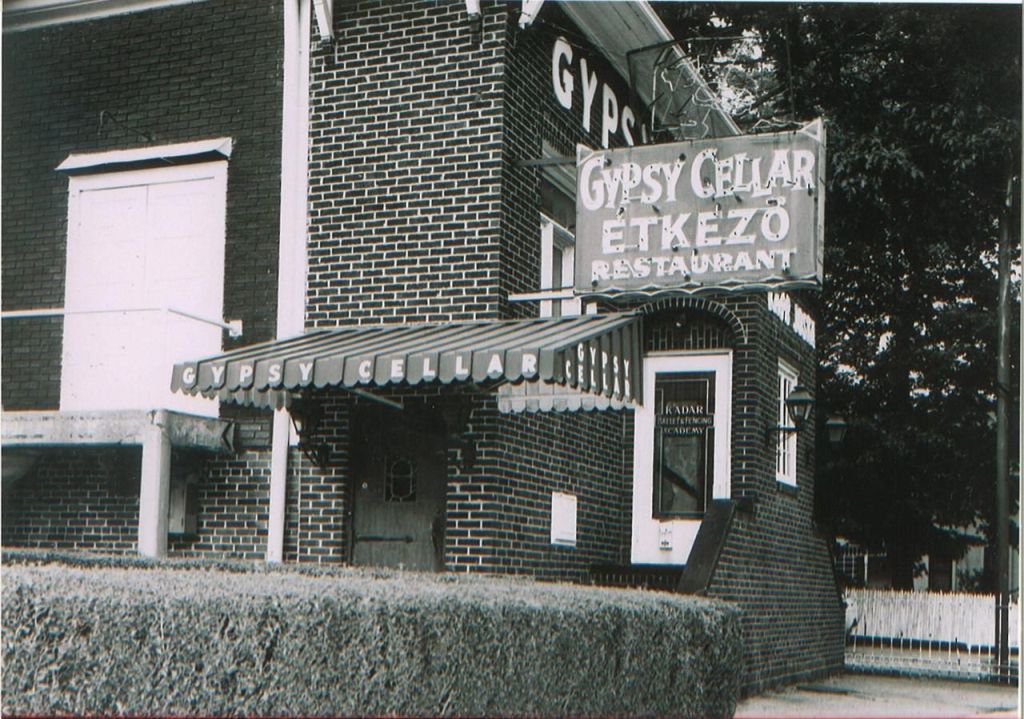
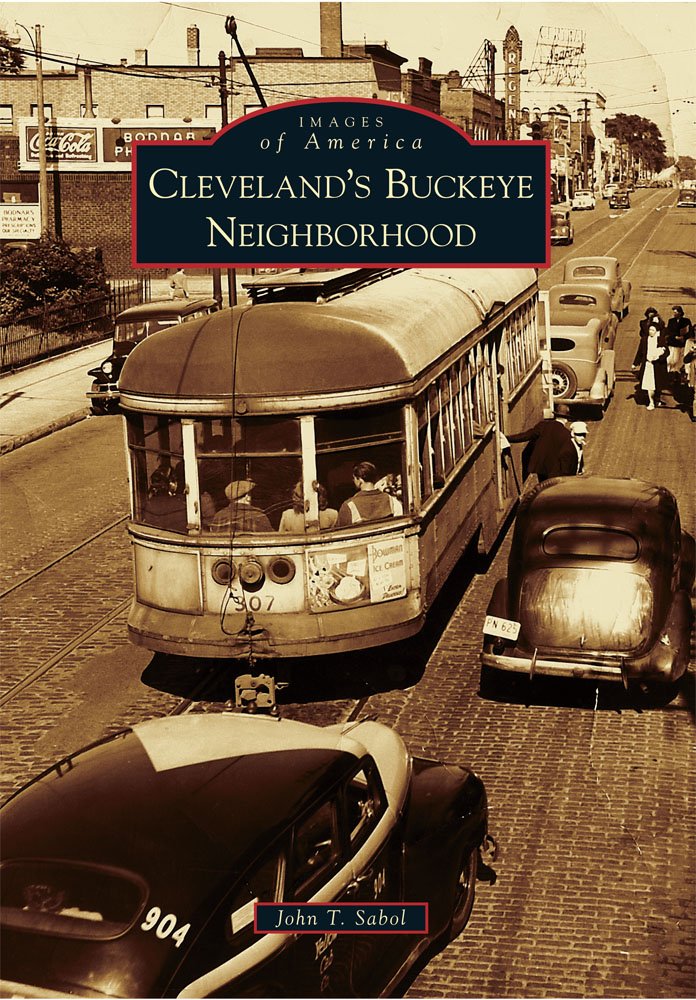
I have written before about my formative years living in Cleveland’s Buckeye Road Hungarian neighborhood. (See the links below.) For some reason, Cleveland was for many years—and still might be, for all I know—the most Hungarian city in America. Well before the Second World War, it became a magnet for Magyar immigrants. On Buckeye Road, there were Hungarian churches, butcher shops, bakeries, bars (Oroszláni’s tavern was at our corner of East 120th and Buckeye), and restaurants. The ,most famous was the Gypsy Cellar, which I never went to because it didn’t cater to children, followed by Settlers’, which I saw only years after I had left Cleveland for good.

The Gypsy Cellar Restaurant on Buckeye Road

In the late 1940s-early 1950s, Buckeye Road was a safe neighborhood and remained so until it was “blockbusted” by unscrupulous realtors in the 1960s trying to precipitate white flight by selling properties to black families. Today, it is a largely black neighborhood. When I visited with my father in the 1960s, a big Irish cop warned us to leave the area before the “niggers started waving their spears.”

We moved out in 1951, the year my brother was born. I had been having trouble in school, because it seems I didn’t understand English very well and caused a ruckus with my friend András by kicking our kindergarten teacher, Mrs. Idell in the ankles. By that time, my Dad felt more financially secure, so he bought a bungalow on East 176th Street in the Lee-Harvard area, just one block away from his twin brother.

I’ve always been afraid to go back to Buckeye Road because I never really finished first grade at Harvey Rice School. I was pulled out after one semester and immediately started Catholic school at Saint Henry’s in second grade. I paid a price for that, being considered something of a dunce and troublemaker until I made it to fourth grade.

This Is a Book I Need to Find

In the above photo, you can see the Regent Theater, where I was taken by my parents to see movies. Actually, I just ran up and down the aisles and messed around with the soda machine. At my age, there I was no way I could sit through an entire movie. That was a few years in the future.

Back Online

My Internet Connection Has Been Restored!

For the last ten days or so, my Internet connection has been nonexistent. I called up Spectrum Cable (my Internet Service Provider) and scheduled a visit. Wouldn’t you know it? “Because of Covid-19” they weren’t able to send anyone out until this morning. Fortunately, the two techs who came out were extremely competent (the older one was mentoring the younger one), and my connection was quickly restored after a kink in the line was discovered. In the process, I got a new router and modem—which is all to the good as the old Arris unit was outdated.

So, I’m back … and I’m bad!

The French Have a Phrase for It

The Paris Metro at the Stalingrad Stop

You know the colloquial expression for it: Work, work, work! (and several variants thereof). But the French have a more picturesque phrase to describe the thankless boredom of life under the Coronavirus outbreak:

Métro, Boulot, Dodo

According to the Thought.Co website from 2019, the term is explained as follows:

The informal French expression métro, boulot, dodo (pronounced [may tro boo lo do do]) is a wonderfully succinct way of saying you live to work. Métro refers to a subway commute, boulot is an informal word for work, and dodo is baby talk for sleeping.

The English equivalents—the rat race, the same old routine, work work work—don’t quite capture the same sense of constant movement, and a more literal English translation, “commute, work, sleep,” isn’t as poetic as the French.

Boswell’s Clap

A Scene from William Hogarth’s The Rake’s Progress

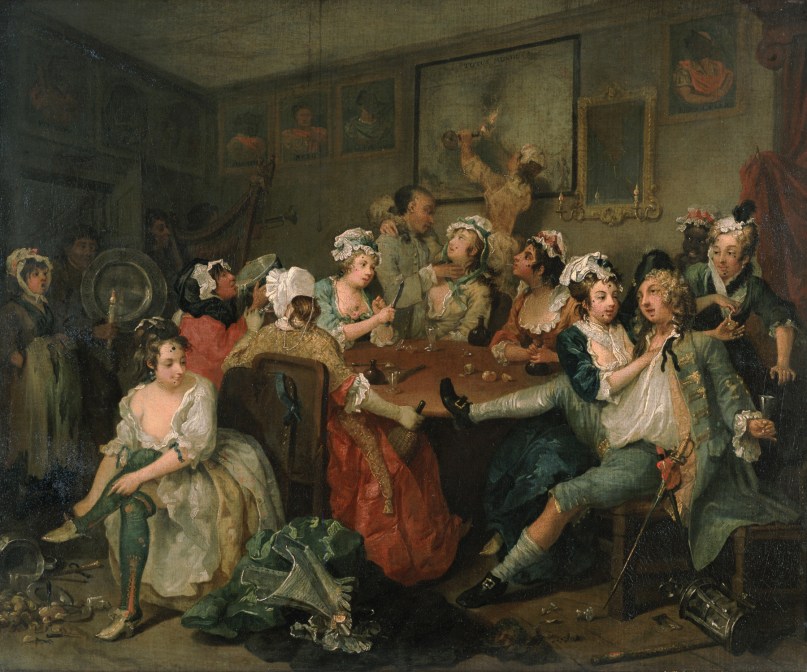
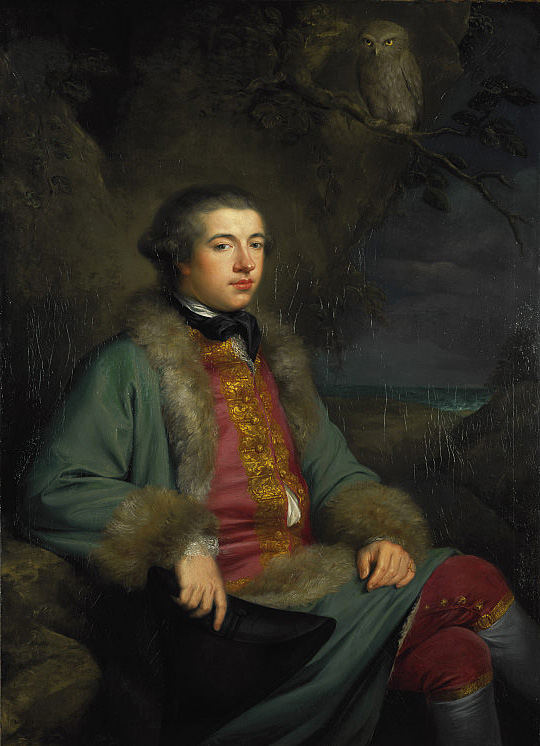
I have been reading James Boswell’s London Journal 1762-1763. Inasmuch as I thought Boswell’s Life of Samuel Johnson LLD was one of the greatest books ever written, I thought it a shame that I had not read more of the great biographer.

At the time, Boswell was in his early twenties. His father, Lord Auchinlech (pronounced Affleck), had insisted that his son become a lawyer or merchant. Instead, James wanted to become an officer of the Guards, stationed in London. I am currently halfway through the book. Boswell spent many an anxious hour trying to win the patronage of powerful Scottish lords of the King’s party currying favor to this end. But, alas, no one went out of his way to help him.

James Boswell (1740-1795)

What the young Scot found was a stubborn case of gonorrhea contracted from a pretty young actress whom he code-named Louisa. He built up to the affair with many weeks of visitations and gifts, only to come down with the clap for the third time in his life.

When he discovered he had been infected, Boswell mused about the effect his cure would have on his daily journal:

What will now become of my journal for some time? It must be a barren desert, a mere blank. To relate gravely that I rose, made water, took drugs, sat quiet, read a book, saw a friend or two day after day, must be exceedingly poor and tedious. My journal must therefore, like the newspapers, yield to the times.

Sounds like the coronavirus quarantine, doesn’t it?

Boswell’s journal makes for excellent reading. It shows its author to be an ambitious and randy young man who delights in conversation, especially with his fellow Scots. I can see myself making several more posts based on or inspired by this excellent book.

The Good, the Bad, and the Ugly

Kate Harris and Melissa Yule Atop India’s Nun-Kun Massif

I was a good boy during the month of January: I read all of the books I had planned to read during this year’s Januarius Project and then some. Here is the final list, in the order I read them with a short evaluation for each:

  • George Washington Cable, The Grandissimes. A pleasant surprise. ****
  • Ivy Compton-Burnett, Bullivant and the Lambs. Abandoned. Couldn’t abide it. *
  • Fredrik Backman, A Man Called Öve. Delightful Swedish novel. ****
  • Georges Lefebvre, The Coming of the French Revolution. Scholarly and interesting. ****
  • Trygve Gulbranssen, Beyond Sing the Woods. Interesting Norwegian tale. ****
  • Robert Goolrick, A Reliable Wife. Married life in Wisconsin in the 1800s. ****
  • Anne Brontë, Agnes Grey. Children are not always nice. ****
  • Kate Harris, Lands of Lost Borders: A Silk Road Journey. Great travel book. ****
  • Ragnar Jónasson, Nightblind. Icelandic police procedural. ***
  • Su Tong, Rice. A nasty character in 1930s China. ****
  • E R Eddison, The Worm Ourobouros. A fantasy novel that I abandoned, too wormy. *
  • Dzongsar Jamyang Khyentse, What Makes You NOT a Buddhist. A great intro. ****
  • Rachel Kushner, The Flamethrowers. The 1970s in New York and Italy. *****
  • Olga Grushin, The Dream Life of Sukhanov. Life is tough as the USSR comes unglued. *****
  • Ma Jian, Red Dust. A dissident travels around China in the 1980s. Great. *****

Chinese Dissident Ma Jian

That’s 15 books in all, not including F E Sillanpää’s Meek Heritage, which I finished on the last day of December 2020 ****.

With the exception of the two turkeys I abandoned (by Eddison and Compton-Burnett), I would have to say that this year’s Januarius Project was a smashing success. So successful, in fact, that I am planning a similar project for March, namely: reading only women authors. More about this as the month progresses.