
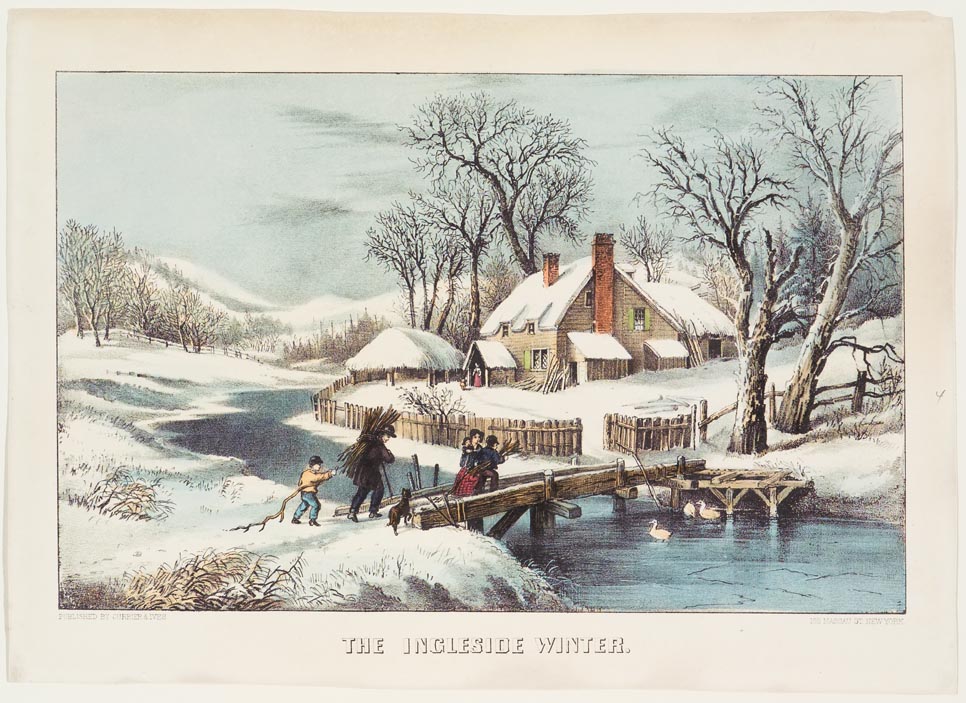
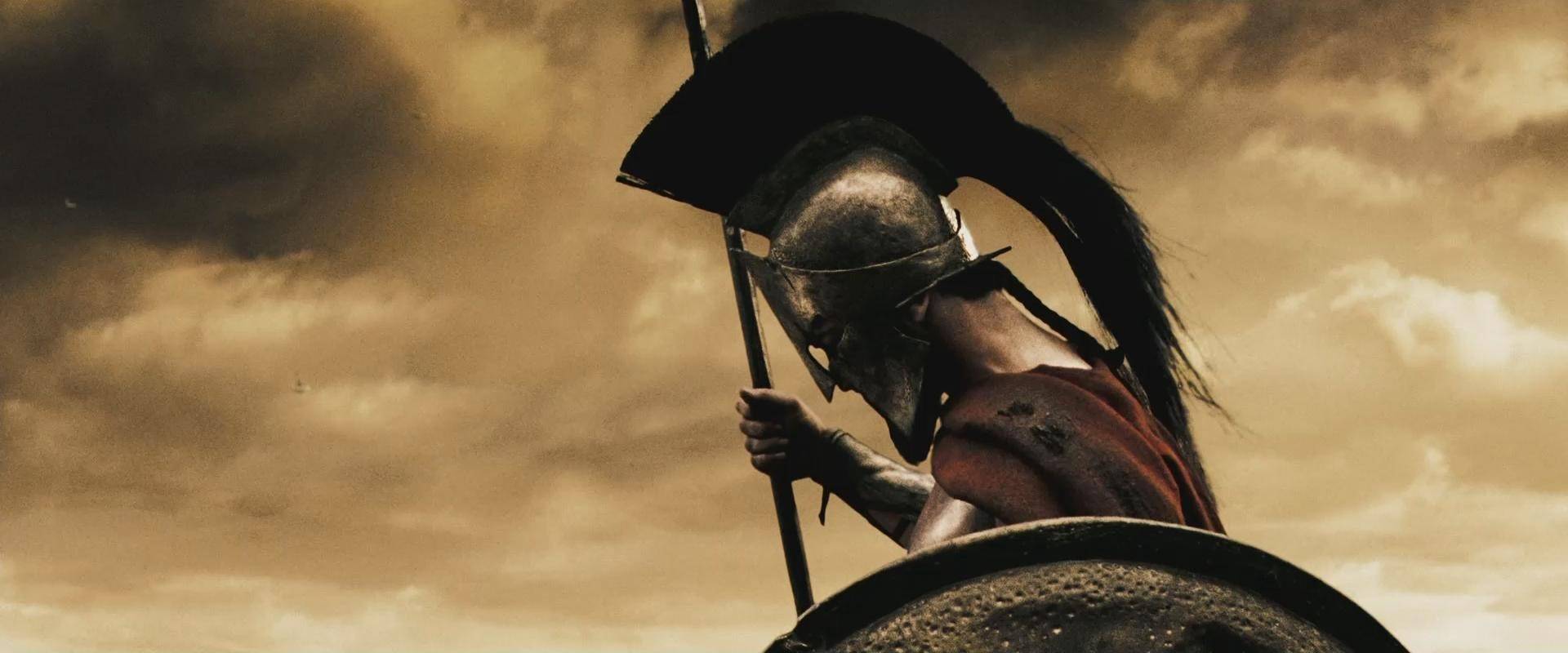
The Vesuvius Eruption as Imagined by an Artist
I have just finished reading the complete letters of Pliny the Younger (AD 61-113). They were interesting on three counts. First of all, I was impressed by Pliny’s honesty and sense of civic responsibility. Secondly, toward the end of his life, he was governor of Bithynia and Pontus, where he died in AD 113. Finally he writes as a first hand witness of the eruption o Vesuvius in AD 79. He and his uncle Pliny the Elder were across the bay as it happened. The uncle crossed the bay to investigate, and died in the process. Here is his nephew’s account in a letter he wrote to the historian Cornelius Taci
Your request that I would send you an account of my uncle’s death, in order to transmit a more exact relation of it to posterity, deserves my acknowledgments; for, if this accident shall be celebrated by your pen, the glory of it, I am well assured, will be rendered forever illustrious. And notwithstanding he perished by a misfortune, which, as it involved at the same time a most beautiful country in ruins, and destroyed so many populous cities, seems to promise him an everlasting remembrance; notwithstanding he has himself composed many and lasting works; yet I am persuaded, the mentioning of him in your immortal writings, will greatly contribute to render his name immortal. Happy I esteem those to be to whom by provision of the gods has been granted the ability either to do such actions as are worthy of being related or to relate them in a manner worthy of being read; but peculiarly happy are they who are blessed with both these uncommon talents: in the number of which my uncle, as his own writings and your history will evidently prove, may justly be ranked. It is with extreme willingness, therefore, that I execute your commands; and should indeed have claimed the task if you had not enjoined it. He was at that time with the fleet under his command at Misenum. On the 24th of August, about one in the afternoon, my mother desired him to observe a cloud which appeared of a very unusual size and shape. He had just taken a turn in the sun and, after bathing himself in cold water, and making a light luncheon, gone back to his books: he immediately arose and went out upon a rising ground from whence he might get a better sight of this very uncommon appearance. A cloud, from which mountain was uncertain, at this distance (but it was found afterwards to come from Mount Vesuvius), was ascending, the appearance of which I cannot give you a more exact description of than by likening it to that of a pine tree, for it shot up to a great height in the form of a very tall trunk, which spread itself out at the top into a sort of branches; occasioned, I imagine, either by a sudden gust of air that impelled it, the force of which decreased as it advanced upwards, or the cloud itself being pressed back again by its own weight, expanded in the manner I have mentioned; it appeared sometimes bright and sometimes dark and spotted, according as it was either more or less impregnated with earth and cinders. This phenomenon seemed to a man of such learning and research as my uncle extraordinary and worth further looking into. He ordered a light vessel to be got ready, and gave me leave, if I liked, to accompany him. I said I had rather go on with my work; and it so happened, he had himself given me something to write out. As he was coming out of the house, he received a note from Rectina, the wife of Bassus, who was in the utmost alarm at the imminent danger which threatened her; for her villa lying at the foot of Mount Vesuvius, there was no way of escape but by sea; she earnestly entreated him therefore to come to her assistance. He accordingly changed his first intention, and what he had begun from a philosophical, he now carries out in a noble and generous spirit. He ordered the galleys to be put to sea, and went himself on board with an intention of assisting not only Rectina, but the several other towns which lay thickly strewn along that beautiful coast. Hastening then to the place from whence others fled with the utmost terror, he steered his course direct to the point of danger, and with so much calmness and presence of mind as to be able to make and dictate his observations upon the motion and all the phenomena of that dreadful scene. He was now so close to the mountain that the cinders, which grew thicker and hotter the nearer he approached, fell into the ships, together with pumice-stones, and black pieces of burning rock: they were in danger too not only of being aground by the sudden retreat of the sea, but also from the vast fragments which rolled down from the mountain, and obstructed all the shore. Here he stopped to consider whether he should turn back again; to which the pilot advising him, “Fortune,” said he, “favours the brave; steer to where Pomponianus is.” Pomponianus was then at Stabiae, separated by a bay, which the sea, after several insensible windings, forms with the shore. He had already sent his baggage on board; for though he was not at that time in actual danger, yet being within sight of it, and indeed extremely near, if it should in the least increase, he was determined to put to sea as soon as the wind, which was blowing dead in-shore, should go down. It was favourable, however, for carrying my uncle to Pomponianus, whom he found in the greatest consternation: he embraced him tenderly, encouraging and urging him to keep up his spirits, and, the more effectually to soothe his fears by seeming unconcerned himself, ordered a bath to be got ready, and then, after having bathed, sat down to supper with great cheerfulness, or at least (what is just as heroic) with every appearance of it. Meanwhile broad flames shone out in several places from Mount Vesuvius, which the darkness of the night contributed to render still brighter and clearer. But my uncle, in order to soothe the apprehensions of his friend, assured him it was only the burning of the villages, which the country people had abandoned to the flames: after this he retired to rest, and it is most certain he was so little disquieted as to fall into a sound sleep: for his breathing, which, on account of his corpulence, was rather heavy and sonorous, was heard by the attendants outside. The court which led to his apartment being now almost filled with stones and ashes, if he had continued there any time longer, it would have been impossible for him to have made his way out. So he was awoke and got up, and went to Pomponianus and the rest of his company, who were feeling too anxious to think of going to bed. They consulted together whether it would be most prudent to trust to the houses, which now rocked from side to side with frequent and violent concussions as though shaken from their very foundations; or fly to the open fields, where the calcined stones and cinders, though light indeed, yet fell in large showers, and threatened destruction. In this choice of dangers they resolved for the fields: a resolution which, while the rest of the company were hurried into by their fears, my uncle embraced upon cool and deliberate consideration. They went out then, having pillows tied upon their heads with napkins; and this was their whole defence against the storm of stones that fell round them. It was now day everywhere else, but there a deeper darkness prevailed than in the thickest night; which however was in some degree alleviated by torches and other lights of various kinds. They thought proper to go farther down upon the shore to see if they might safely put out to sea, but found the waves still running extremely high, and boisterous. There my uncle, laying himself down upon a sail cloth, which was spread for him, called twice for some cold water, which he drank, when immediately the flames, preceded by a strong whiff of sulphur, dispersed the rest of the party, and obliged him to rise. He raised himself up with the assistance of two of his servants, and instantly fell down dead; suffocated, as I conjecture, by some gross and noxious vapour, having always had a weak throat, which was often inflamed. As soon as it was light again, which was not till the third day after this melancholy accident, his body was found entire, and without any marks of violence upon it, in the dress in which he fell, and looking more like a man asleep than dead. During all this time my mother and I, who were at Misenum—but this has no connection with your history, and you did not desire any particulars besides those of my uncle’s death; so I will end here, only adding that I have faithfully related to you what I was either an eye-witness of myself or received immediately after the accident happened, and before there was time to vary the truth. You will pick out of this narrative whatever is most important: for a letter is one thing, a history another; it is one thing writing to a friend, another thing writing to the public.
34.052234
-118.243685










You must be logged in to post a comment.