Unutterably Alien

Arkady (1925-1991) and Boris (1933-2012) Strugatsky, the World’s Greatest Sci-Fi Writers

There is something about these two Russian brothers: They wrote the simply most incredible science fiction novels. I am thinking particularly of Roadside Picnic (Пикник на обочине), writen in 1972. At some time in the past, parts of Earth were visited by one or more bands of interstellar travelers. They left their mark on the places they have stayed—in strange, unaccountable ways. Nowhere is there a description of the visitors: no one alive has ever seen them. But the laws of matter and energy don’t seem to work there any more.

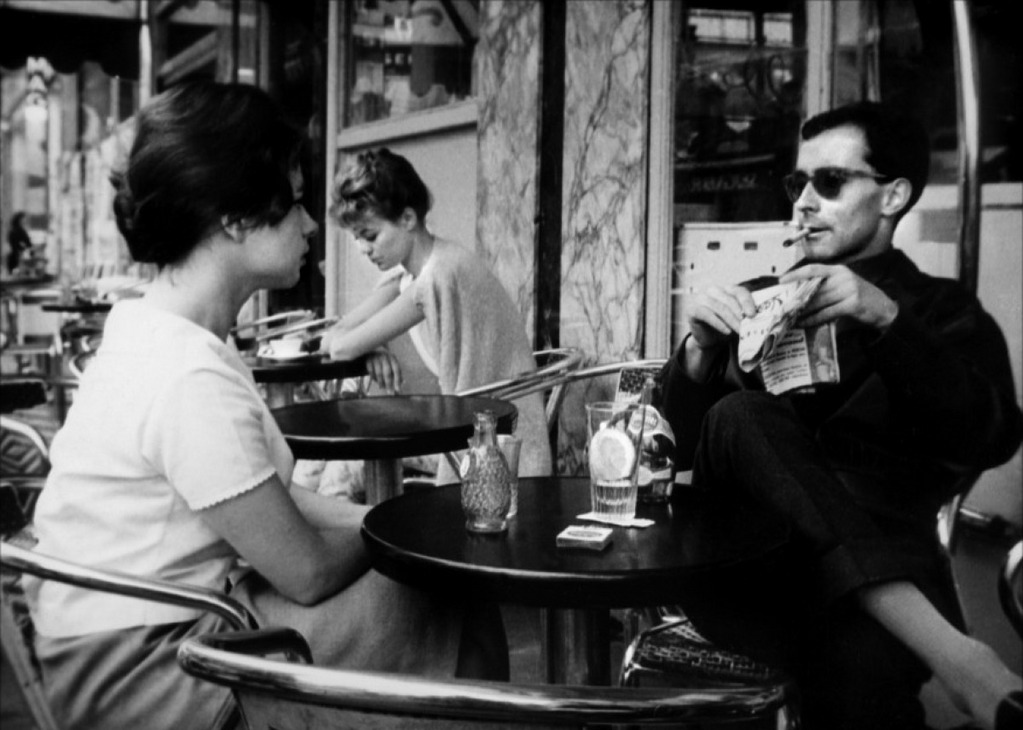
The novel was turned into a film by fellow Russian Andrei Tarkovsky in 1979. The film was called Stalker, and it was one of the greatest films produced anywhere in that decade. The film so influenced Geoff Dyer that he wrote a book in 2012 called Zona about his memories of the movie.

Scene from Tarkovsky’s Stalker

This is some powerful stuff. Those two brothers had some freaky visions that could so influence so many follow-on works. I am currently reading one of their earlier works, Space Apprentice (Стажеры) (1962). It’s not quite the level of Roadside Picnic, but it is fascinating.

While we’re on the subject of Eastern European sci-fi writers, I thought I’d put in a word for Poland’s Stanisław Lem , author of Eden (1959). In that novel, the earthling explorers go to a strange new world, where they are ignored. The protagonists can make nothing whatsoever of the local inhabitants.

Walking Into History

The Original House of the Seven Gables

I have been looking back at some of my older digital pictures. The first vacation I took with a digital camera was to Massachusetts, New Hampshire, Vermont, and a little piece of Maine in the fall of 2005. Although I had been there before, none of my destinations struck me the way Salem did. Not only for its history of witchcraft, though there was plenty there. Not only for its literary history, what with Nathaniel Hawthorne’s Customs House and the actual House of the Seven Gables. And not only for its Federalist architecture, what with whole streets with houses built before 1800. Probably what struck me about Salem was the density of its historical sights, almost as if I were in parts of London or Paris.

There was no doubt about it: Salem, Massachusetts, played an outsize role in American history.  Its ships ranged the seas to China, as shown in the Peabody Essex Museum. In fact, I found it to be better than Boston for its highly concentrated slice of early American history.

Federalist Era House in Salem

Only a short train ride from Boston, I found Salem to be a better place to base oneself than Boston. And a whole lot less crowded! There seems to be several hundred colleges in the Boston area, and the students always seemed to be using the same public transit that Martine and I were.

The Original Farmer’s Market

Mickey Jacobs of The Bread Bin (Closed in 2008)

Today, I went to the original Farmer’s Market at 3rd and Fairfax with my 88-year-old neighbor Luis. We had lunch at Moishe’s, which has delicious lamb shish-kabobs. I could not help remembering that some of my first digital pictures were taken at the Market with my old Kodak in July 2006. Hunting up my photo library on Flickr, I saw the above picture of Mickey Jacobs, proprietor of the Bread Bin. This was Martine’s favorite stop the times we went there: She loved to see me talk in Hungarian to Mickey, who had some delicious pastries. Unfortunately, Mickey sold his business two years later; and his replacement was not quite up to snuff.

Still, the original Farmer’s Market is a great place to go. Even on a Wednesday, it was full of tourists, looking for good food, fresh meats and produce, and souvenirs. They also used to have a bookstore and even antiques, but they are no more. What there are are a lot of good places to eat and relatively few vacancies. With all that foot traffic, if you open a decent place, you are bound to have a successful business.

Cherries at the Farmer’s Market

It’s still too early for cherries by a few weeks, but it won’t be long now. The above picture was taken in July 2008, at the height of their season.

I plan to visit the Farmer’s Market as much as once a week to have a good lunch and to hole up with a good book for a few hours. I know a place on the second floor where I can eat and read without getting trampled by all the foot traffic.

My Los Angeles

Tree on Ocean Avenue in Venice

I guess that by now I’m officially an Angeleno. It was late in December 1966 that I took a train to arrive at L.A.’s Union Station and was met by former neighbors from Cleveland, Ohio. It was the first time I had ever been west of Chicago, so all I saw was new to me. All that pastel stucco instead of the sooty red brick of Northeastern Ohio. The plants were all different. The climate was strange. Even the people were somewhat odd. Fortunately, I was rooming on Sunset Boulevard with a friend from Dartmouth College days, with whom I am still a close friend.

Mind you, I did not take to the place at once. For years, I thought of myself as an Easterner. It was only by slow degrees that the light of Southern California, with those beautiful sunsets over the Pacific, started to work a sea change in me. There were some things that repulsed me. Numero Uno: Earthquakes. The Sylmar quake of 1971 hurled me out of my bed and scared the stuffing out of me. Last night, while I was recording a Max Ophüls film—The Earrings of Madame de … (1953)—on videotape, I felt a sharp jolt. Even after all these years, I felt a moment of terror. Should I run for the bedroom hallway, where I would be safe from falling building parts? Should I just shrug my shoulders? I opted to go to bed.

Martine is even more nonchalant about temblors than I am—probably because she never felt one of the big ones, such as the ones in 1971 and 1994. Ah, well, she’ll learn!

I still don’t think much of L.A. drivers. They tend to be lazy about following the law, such as signalling lane changes and crashing red lights and stop signs. But then, it could be that way in most other big cities, too. I seem to remember not liking to drive in Miami, Calgary or Las Vegas either.

Some things I really like about Los Angeles are:

  • The food. California looks South (Latin America) and West (Asia) for its cuisine.
  • The politics. As a determined Trumpf-hater I feel in good company in this very Blue State.
  • The mountains. There are some mountains in Los Angeles County that are 10,000 feet high, a far cry flat flat Ohio.
  • The deserts. So we don’t get much rain, but the deserts of the Southwest are beautiful, so long as you don’t make the mistake of visiting them at the wrong time.
  • The coast. Driving along the Pacific can be gorgeous, especially in the early morning before the Beemer bozos get out of bed.

You’ll notice that I didn’t mention the weather. I’ve never liked really hot weather: And every year we get about 20 days of horrendously torrid weather. Fortunately, Martine and I live only two miles inland from the coast, so we can usually catch a few breezes, but not always.

Betty, Veronica, and Racism in America

One Can Learn a Lot from These Two Young Women

Both Women Were Equally AttractiveI came back to my apartment early this afternoon while Martine was watching The Courtship of Eddie’s Father (1963) on TCM starring Glenn Ford, Dina Merrill, and Stella Stevens. The two latter stars are in competition with each other to marry Glenn, who is the father of Eddie (played by Ron Howard), his son from an earlier marriage. It is Stella, the blonde, who wins, while the raven-haired Dina ends up sucking a mop in left field.

The film made me think of the Archie comic books I used to read in my youth. In these comics, the blonde Betty is pitted against the dark-haired Veronica for Archie’s affections and, not coincidentally, ours. I seem to remember that my sympathies were with Betty, and probably intended by the cartoonist to be so. There is something of the Dragon Lady about Veronica.

Both Women Were Equally Attractive

I grew up thinking that blondes were more beautiful. After all, there were Marilyn Monroe, Scarlett Johansson, Dominique Sanda, Brigitte Bardot, Uma Thurman, Grace Kelly, and Catherine Deneuve—not to mention several hundred others. It was only later that I fell for brunettes like Nastassja Kinski and Natalia Tolokonnikova of the Russian rock group Pussy Riot.

But for the longest time, I was in love with golden-haired beauties. I cannot help but wonder whether it was a subtle form of racism implicit in the dichotomy between Betty and Veronica. Thank God, now I think all kinds of women are beautiful, even the green ones shown on the old Star Trek show. Fortunately, I have not become fixated exclusively on the green ones, because else I would be desperately lonely.

Green Women Can Be Nice…


At Banff

Snowcapped Rockies in Banff National Park

Few places in North America are as drop-dead stunning as Banff National Park in Alberta. In September 2010 Martine and I rented a car in Spokane, WA and took a grand loop that encompassed Banff, Yoho, and Jasper National Parks in Alberta and Glacier, Yellowstone, and Teton National Parks in the U.S.before returning to Spokane.

There was a period around then that Martine just couldn’t get enough of Canada. We had already visited Victoria and Vancouver and were to go twice to Eastern Canada, including Montreal, Quebec, New Brunswick, and Nova Scotia. She developed a taste for lobster rolls that she can’t satisfy in Southern California because of the substandard quality of the shellfish here.

Canoe on Lake Louise

Perhaps the best hike we took was the trail that went around the northern bank of Lake Louise, where we saw the canoe in the above photo. The emerald shade of the water comes from glacial melt and the silt called “rock flour” that is constantly being deposited in the lake below. We saw this same phenomenon several other times that trip, at Emerald Lake in Yoho National Park, as well as Peyto and Maligne Lakes in Jasper National Park.


The Cube from Outer Space

The New Mexico Museum of Space History in Alamogordo

Not too many people think of outer space when you mention that State of New Mexico. Yet, in many ways, New Mexico is where much of the future came together. First there was the Manhattan Project at Los Alamos, followed by the first atomic blast in the Jornada del Muerto, code-named Trinity. Then there was the nearby White Sands Missile Range. And don’t forget the Karl G. Janski Very Large Array (VLA) of the National Radio Astronomy Observatory (NRAO) just west of Socorro.

When Martine and I last visited New Mexico, we stopped in at the New Mexico Museum of Space History in Alamogordo to view their four floors of exhibits ranging from the early days of rocketry to NASA, the moon, and beyond. The mirrored glass cube seemed to us like a visitor from outer space and put us in the right frame of mind for the two or three hours we spent there.

If we keep to our tentative itinerary, the museum will be our last stop before returning to Albuquerque and flying back to Los Angeles.

Don’t Read Me! Watch the Video!

Be Even More Passive! Sit Back and Watch Us! NOW!

We are beautiful people with all the right cultural traits. And we are all naked below the waist. So stop reading the news right now and watch us interact with each other. It’s more fun. We know you can read the text twenty times faster than we stumble our way through it all coked and boozed up. So what if your Internet is as fast as a snail going backwards. Just be patient: Sit and wait for the little whirligig to stop rotating and return with us in glorious motion. It’ll be worth it. It won’t do anything for you, but we’ll be even bigger celebrities than before. And, after all, what you read isn’t as glittering as having a celebrity mouth it for you and titter complicitly.

It seems as if all the news websites are intent on ramming videos down your throat—even when your browser is set to exclude videos. It doesn’t help matters that we are forced to watch an ad of indeterminate length for starters, always beginning with loud voices assuming a corporate tone that only vaguely resembles human discourse.

My reaction is to start by turning the sound all the way down and then hitting the STOP button on the lower left. For good measure, I scroll down past the video so it disappears from view. Some websites like CNN have gone one better: They put a miniature video screen off to the side in case we want to return to the Blah Blah Bling Bling.

All I can say is Double Ugh!

Serendipity: The Broken Prism

The Blessed Virgin Mary

You could be a million miles away when, quite suddenly, you can be confronted with what you believe—and what you don’t believe. Today, I was sitting in the Santa Monica Library reading Tim Cahill’s Hold the Enlightenment: More Travel, Less Bliss, ostensibly a book of adventure travel essays, when the following paragraph hit me smack between the eyes:

My own background is Catholic. I suppose my current status in that Church can best be described as long-lapsed. Even so, no one who has suffered a Catholic education is ever entirely free of the belief, or at least the discipline. Quaint notions, punitive and medieval, color my perception of the physical world. I tend to see the wilderness through the broken prism of my faith.

That holds true for me as much as it does for Tim Cahill, one of the founders of Outside magazine. The only change I would make is that I never “suffered” a Catholic education: I merely “experienced” it, and not unwillingly. My grade school, Saint Henry in Cleveland, Ohio, was staffed by Dominican sisters; and my high school, St. Peter Chanel in Bedford, Ohio, was taught by Marist priests. At Dartmouth College, I was an active participant in Catholic services at the Newman Club under Monsignor William Nolan.

When asked whether I believe in God, my answer is always, Yes. I quickly add that I have no idea what God is like or what He/She/It wants. I only know that the Godhead manifests itself in some very curious ways to the peoples of this planet. I cannot pretend to be an atheist with any degree of certitude, nor do I wish to. There is enough left of the shards of my faith to see me through the day.

What will I believe a year from now? I don’t know. It’s all subject to change.

A Look Back at Ecuador

Native Otavaleños Entering Church

There are few places I have visited to which I would not like to return. I am speaking particularly of my travels in Europe, Canada, Mexico, and South America. There are a fairly large number of cities in the United States that, I hope, will never see my shadow again. On the other hand, there are parts of the U.S., particularly in the Southwest, that I love. New Mexico, for instance. My mouth is watering for those red and green chile peppers, the best in the world.

Last year at this time, I was planning for the trip that my brother and I took to Ecuador. I loved the places that we chose to visit, particularly Quito, Otavalo, Mindo, and Cuenca. The only problem was that traveling by automobile through the larger Ecuadoran cities required the tracking skills of a scout: Street signs around the periphery of every city were practically nonexistent. We finally got into the habit of following what looked to us like intercity buses, which were pretty easy to distinguish from the local rat-traps.

Otavalo was perhaps my favorite place. That was mostly because the inhabitants were mostly Otavaleños. Gringos stood out like sore thumbs. That’s okay, because sometimes it’s fun to be lost in a crowd of indigenous people, even if they didn’t speak a word of Spanish. (Their language was mostly Quechua.) Just taking a walk through their marketplace was like being in another world.

My problem is a simple one. If I were to go back to all the places I loved, I would be alive for several more decades—and no man knows how much time is left to him.