Atacama

The Driest Place on Earth

The Driest Place on Earth

As we in Southern California swelter through a seemingly endless series of hot, humid weather, my mind turns to the Norte Grande of Chile, where the Atacama Desert is the driest place on earth. At one time, I desperately wanted to take the Ferrocarril Antofagasta a Bolivia (FCAB), which ran passenger trains between Antofagasta, Chile and Oruro, Bolivia, from which it was possible to change trains to La Paz.

Years ago, I saw a television documentary about one such trip: I was instantly sold. Unfortunately, although trains still run along the FCAB route, they are all freights.

In My Invented Country, Isabel Allende describes fleeing Chile by this train in 1973 after her cousin Salvador was killed with the participation of the CIA. She remembers an endless, hot, dry expanse.

The FCAB Today

The FCAB Today

Another refugee from Augusto Pinochet’s dictatorship was writer Ariel Dorfman, who has this to say about the Atacama in Desert Memories: Journeys Through the Chilean North:

Less rain falls on these sands than on any other similarly blighted expanse on Earth. I talked to men born in Arica, a woman brought up in Pisagua, men and women who had never ventured forth from the nitrate town of María Elena or who have never left the oasis of Pica, which produces the most fragrant oranges your tongue has ever rolled over, and none of them had felt one drop of rain on their bodies in their lives….

Oh yes, it rained once, some years ago, in Antofagasta. Two millimeters. And several residents died in the ensuing mudslide…. That semi-sprinkle had not reached Antofagasta itself, though there was an unusual front of turbulence sweeping in from the sea, so the reporter on the local radio was already trying to calm down a populace that had begun to panic, a woman had called in to say—much to our cruel mirth—that she thought she had felt a drop of rain on her cheek, and what should she do, should she evacuate her children?

We might smirk a bit at that, though with our California drought, we ought to be prepared for anything. With luck, we might see some appreciable rain this winter … or else!


The Whole Enchilada

A Server Farm at Night

A Server Farm at Night

Oscar Wilde said it: “It is only shallow people who do not judge by appearances. The true mystery of the world is the visible, not the invisible.” For Thomas Pynchon, it’s not only the true mystery, but the whole enchilada.

There is no introspection or doubt in his novels: Things happen according to a kind of internally generated gonzo energy. In the case of Bleeding Edge, that energy involves—most especially—the Internet, September 11, hidden server farms, insane conspiracies, Russian gangsters, bent right-wing government men, Satanic CEOs, and a sinister firm called hashslingerz.com that could be either pro or anti government.

What is nowhere are any steps one millimeter closer to finding the meaning of life. That gonzo energy is life itself. Why be paralyzed by doubts, when those omnipresent marionette strings are urging you on to the next adventure?

Okay, no, scratch introspection. What there is, is the energy—and great gobs of interesting trivia and wit. Whenever heroine Maxine Tarnow jumps into action, I want to know what will happen in all these terribly involved situations that would have me, were I in her shoes, edging out the door, down the street, across the country—hell, halfway to Argentina.

Maybe I’m just a big coward. But at least I know what I like, and I do like Thomas Pynchon with his paraphernalia. Maybe Horace Engdahl of the Nobel Prize for Literature selection committee was right about American literature:

“There is powerful literature in all big cultures, but you can’t get away from the fact that Europe still is the centre of the literary world … not the United States,” he told the Associated Press. “The US is too isolated, too insular. They don’t translate enough and don’t really participate in the big dialogue of literature…. That ignorance is restraining.”

But it sure is fun.

Modest Divinities

Shinto Shrine

Shinto Shrine

Jorge Luis Borges spent the last thirty to forty of his years in blindness, but like Tiresias and Milton, he saw more than most of us. The following poem is called “Shinto.”

Shinto

When misfortune confronts us
in an instant we are saved
by the humblest actions
of memory or attention:
the taste of fruit, the taste of water,
that face returned to us in dream,
the first jasmine flowers of November,
the infinite yearning of the compass,
a book we thought forever lost,
the pulsing of a hexameter,
the little key that opens a house,
the smell of sandalwood or library,
the ancient name of a street,
the colourations of a map,
an unforeseen etymology,
the smoothness of a filed fingernail,
the date that we were searching for,
counting the twelve dark bell-strokes,
a sudden physical pain.

Eight million the deities of Shinto
who travel the earth, secretly.
Those modest divinities touch us,
touch us, and pass on by.


Twenty Years in the Middle East

Do We Know Our Way About the Middle East Any More Now Than in 1995?

Do We Know Our Way About the Middle East Any More Now Than in 1995?

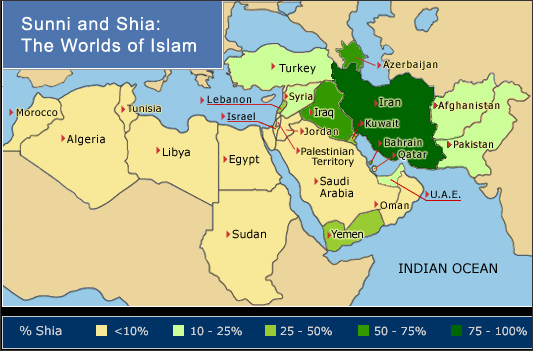
North Africa, the Middle East—in fact, the entire Islamic world—remain a giant mystery to us because we prefer to continue with our deadly combination of naiveté and sophisticated weaponry. Are we culturally aware of the peoples of the Islamic world? Are we teaching Arabic, Turkish, and Farsi in our schools to the generation that will take up the burden laid on our shoulders by the Bushes, Cheneys, Rumsfelds, and their discredited Neocon advisers?

The problem is, we are babes in the woods … where there are no woods. They know all about us, but we still know squat about them.

We are not winning anyone’s hearts and minds with our ignorance and fecklessness. What we are doing is creating a war zone that looks to be getting worse each year, despite the much-vaunted Arab spring. Given enough time, perhaps the entire population of the countries between Morocco and Iraq will cross over the border into Europe. (Fortunately, it’s too difficult to sail a flimsy raft full of refugees across the oceans.) Then there won’t be a Middle East, just a Muslim Europe—which is certainly not where the nations of Europe want to be.

Macedonian Police and Syrian Refugees

Macedonian Police Holding Back Syrian Refugees

It’s difficult to predict what will happen, especially since all we seem to be doing is committing random mayhem in the name of combating “terrorism.”

So who is to blame? Everyone. The United States for being willfully stupid. The Arabs and North Africans for thinking that Islamic fundamentalism is the answer … to everything. The Europeans, for letting themselves be overrun. It doesn’t look good.


Serendipity: The Burning Coal, A Zen Tale

“A Buddhist Parable”

“A Buddhist Parable”

This passage comes from p. 182 of Thomas Pynchon’s Bleeding Edge. It’s not a bad description of some people I know.

Shawn tells her the Buddhist Parable of the Burning Coal. “Dude is holding this burning hot coal in his hand, obviously suffering a lot of pain. Somebody comes by—‘Whoa, excuse me, isn’t that a burning hot coal in your hand, there?’

“Ooh, ooh, ow, man, yes and like, like it really hurts, you know?’

“I can see that. But if it’s making you suffer, why do you keep holding on to it?’

“‘Well, duh-uhh? ’cause I need to, don’t I—aahhrrgghh!’

“You’re … into pain? you’re a nutcase? what is it? Why not just let it go?’

“‘OK, check it out—can’t you see how beautiful it is? lookit, the way it glows? like, the different colors? and aahhrrhh, shit …’

“‘But carrying it around in your hand like this, it’s giving you third-degree burns, man, couldn’t you like set it down someplace and just look at it?’

“‘Somebody might take it.’

“So forth.”

“So,” Maxine asks, “what happens? He lets go of it?”

Shawn gives her a nice long stare and with Buddhist precision, shrugs. “He lets go of it, and he doesn’t let go of it.”


Thierry Legault, Astrophotographer

Indonesian Volcanoes

Indonesian Volcanoes – Thierry Legault www.astrophoto.fr

It was my friend Bill Korn who told me about him. Now Bill is no mean astrophotographer himself, though he has several counts again him by virtue of living in Southern California, where the sky is often milky white with clouds or smog.

Thierry Legault is perhaps one of the great astrophotographers, as can be seen from visiting his website at http://www.astrophoto.fr where a number of his best photographs are on view. I have also taken the liberty of creating a permanent link to his website from here.

Surface of the Moon -

Surface of the Moon – Thierry Legault www.astrophoto.fr

Usually, I end to be fairly lax about seeking permission to reproduce photographs on my website; but I thought I would make an exception in the case of M. Legault because I admire his work so much.

The Milky Way from Australia -

The Milky Way from Australia –  Thierry Legault www.astrophoto.fr


Shown here are just three examples from M. Legault’s website.

Grace Notes

Ex-President Jimmy Carter

Ex-President Jimmy Carter

I’m not going to wait for Jimmy Carter to die before giving him the tribute I think he so richly deserves. No man who has served as President of the United States has gone on to have such an inspiring post-political career. He has been a force for good both in the United States (Habitat for Humanity) and across the world (The Carter Center).

In a recent interview, he says he has had a good life, and that the best decision he ever made was marrying his wife Rosalynn. (The worst decision was not sending an additional helicopter to rescue the Iranian hostages.) He is thankful for his life—and millions around the world who have been touched by his good deeds are thankful for his life.

I once worked with Manuel D. Plotkin, who served as Carter’s director of the Bureau of the Census. He recalls once meeting his former boss in a hotel lobby. Upon recognizing him, Carter asked how he feels the 1980 census, which was performed under his watch, came out. Plotkin smiled and said, “It was a resounding success, Mr. President.” Carter smiled and shook his hand, replying, “I’m happy something turned out well.”

Today, as his days dwindle down to a few, Carter is the closest thing we have to a living saint. Never have I seen an Evangelical Christian who not only showed he had something between his ears other than mucus, but demonstrated in his own life a muscular and honest Christianity that serves as a beacon to all men of all faiths. I understand that after his cancer treatments today and tomorrow, he plans to teach Sunday school. I think that what he would have to say would be worth listening to, because who today—especially if he or she has been in politics—has lived the Sermon on the Mount the way he has?

If the Christian heaven truly exists, President Carter, it is because of the efforts and beliefs of men like you!

A Murky Business

Argentine Special Prosecutor Alberto Nisman

Argentine Special Prosecutor Alberto Nisman

It all started on the morning of July 18, 1994. A Renault utility truck packed with explosives blew sky high in front of Buenos Aires’s Asociación Mutual Israelita Argentina (AMIA) killing 85 Jews and injuring 300 more. This set off an investigation that involved three Argentinian presidents (Carlos Menem, Néstor Kirchner, and Cristina Fernández de Kirchner), Hezbollah (who claimed to have set off the bomb), Iran (who sponsors Hezbollah), and several other countries besides (including Venezuela and the United States). During most of the last 21 years, Alberto Nisman was involved in the investigation as a prosecutor and was intent on skewering Iran.

Until 2013, the Argentine government was behind him. Then it changed sides and decided to not pursue the case. That left the outraged Nisman determined to go after the government. He promised to have a big show and tell on Monday, January 18, of this year before the Congress. Sometime that night, however, he was killed with a rickety old 22 caliber pistol lent to Nisman by his computer technician, Diego Lagomarsino.

At first, it was suspected that it was death by suicide, though there were no gunpowder on his hands. Eventually, President Cristina Fernández de Kirchner decided it was murder. The question was: Who killed him? Was it the nefarious Secretaría de Inteligencia de Estado (SIDE), which has been suspected of numerous crimes under the Videla dictatorship? Was it Iran and Hezbollah, which had tired of Nisman’s relentless charges over two decades? Was it Diego Lagomarsino, whose gun it was? At this point, it’s difficult to exonerate anyone.

Nisman himself was a bit strange. According to an article entitled “Death of a Prosecutor” by Dexter Filkins in the July 20 issue of The New Yorker:

In the years that Nisman presided over the AMIA investigation, he became a famous man. Separated from his wife, he was a fixture at Buenos Aires’ night clubs and sometimes appeared in gossip magazines with various girlfriends. He relished his image as a lone prosecutor going after terrorists in the Middle East. With a large staff and a big budget, he cultivated relationships with American intelligence analysts, conservative think-tank experts, and the staff of Senator Marco Rubio, who kept track of his work. He rented a luxury apartment in the chic neighborhood of Puerto Madero and indulged a passion for windsurfing.

Since January, Nisman’s death has been page one news in a country whose judicial system reminds one of Kafka’s The Trial. Even in today’s issue of the Buenos Aires Herald, there’s a story about ex-President Carlos Menem offering more information about the AMIA bombing.


Serendipity: “Nothing Perishes”

C. K. Scott Moncrieff, Translator

C. K. Scott Moncrieff, Translator (Painting by Edward Stanley Mercer)

This is a translation of a passage by the Roman poet Ovid from The Metamorphoses. The remarkable thing is that is was made by a thirteen-year-old boy who later grew up to translate Marcel Proust’s multi-volume masterwork, In Search of Lost Time:

Everything is changed but nothing perishes. The spirit wanders, going hence, thither, coming thence, hither and takes possession of any limbs it pleases. With equal ease it goes from beasts into human bodies and from us into beasts, nor in any length of time does it fail. And as wax is easily moulded in new shapes, nor remains as it had been before, nor keeps the same form, but is yet itself the same; so do I teach that the soul is ever the same, but migrates into different shapes.

Although many think that Scott Moncrieff’s translations are growing a little long in the tooth, there is no doubt of their excellence. As Walter Kaiser wrote in The New York Review of Books (June 4, 2015):  “Not surprisingly, Scott Moncrieff’s translations from Latin and Greek in the examination that year [1903] were awarded higher scores than anyone else’s, for it turns out that the astutely ingenious, poetic use of language for which he is celebrated in his great translation of Proust was his from an early age.”


Ilex paraguariensis

Traditional Yerba Mate Tea Popular in South America

Traditional Yerba Mate Tea Popular in South America

When cooler weather returns to Southern California, in about twenty years or so, I will resume my habit of drinking yerba mate tea. In the meantime, I will enjoy Robert Southey’s poem “Introductory to South America Yerba Mate.” I was pleasantly surprised to see a 19th century British poet conversant with the Ilex paraguariensis, or yerba mate.

Introductory to South America
Yerba Mate
Robert Southey (1774–1843)

(From A Tale of Paraguay)

AMID those marshy woodlands far and wide
Which spread beyond the soaring vulture’s eye,
There grew on Empalado’s southern side
Groves of that tree whose leaves adust supply     [scorched
The Spaniards with their daily luxury;
A beverage whose salubrious use obtains
Through many a land of mines and slavery,
Even over all La Plata’s sea-like plains,
And Chili’s mountain realm, and proud Peru’s domains.

But better for the injured Indian race
Had woods of manchineel the land o’erspread:
Yea, in that tree so blest by Nature’s grace
A direr curse had they inherited,
Than if the Upas there had reared its head
And sent its baleful scions all around,
Blasting where’er its effluent force was shed,
In air and water, and the infected ground,
All things wherein the breath or sap of life is found.

The poor Guaranies dreamt of no such ill,    [Paraguayan natives
When for themselves in miserable hour,
The virtues of that leaf, with pure good-will,
They taught their unsuspected visitor,
New in the land as yet. They learnt his power
Too soon, which law nor conscience could restrain,
A fearless but inhuman conqueror,
Heart-hardened by the accursed lust of gain,
O fatal thirst of gold! O foul reproach for Spain!

For gold and silver had the Spaniards sought,
Exploring Paraguay with desperate pains,
Their way through forests axe in hand they wrought;
Drenched from above by unremitting rains
They waded over inundated plains,
Forward by hope of plunder still allured;
So they might one day count their golden gains,
They cared not at what cost of sin procured,
All dangers they defied, all sufferings they endured.

Barren alike of glory and of gold
That region proved to them; nor would the soil
Unto their unindustrious hands unfold
Harvests, the fruit of peace,—and wine and oil,
The treasures that repay contented toil
With health and weal; treasures that with them bring
No guilt for priest and penance to assoil,
Nor with their venom arm the awakened sting
Of conscience at that hour when life is vanishing.

But keen of eye in their pursuit of gain
The conquerors looked for lucre in this tree:
An annual harvest there might they attain,
Without the cost of annual industry.
’T was but to gather in what there grew free
And share Potosi’s wealth. Nor thence alone.
But gold in glad exchange they soon should see
From all that once the Incas called their own,
Or where the Zippa’s power or Zaque’s laws were known.

For this, in fact though not in name a slave,
The Indian from his family was torn;
And droves on droves were sent to find a grave
In woods and swamps, by toil severe outworn,
No friend at hand to succor or to mourn,
In death unpitied, as in life unblest.
O miserable race, to slavery born!
Yet when we look beyond this world’s unrest,
More miserable then the oppressors than the opprest.