A Cemetery for Halloween

Recoleta Cemetery in Buenos Aires

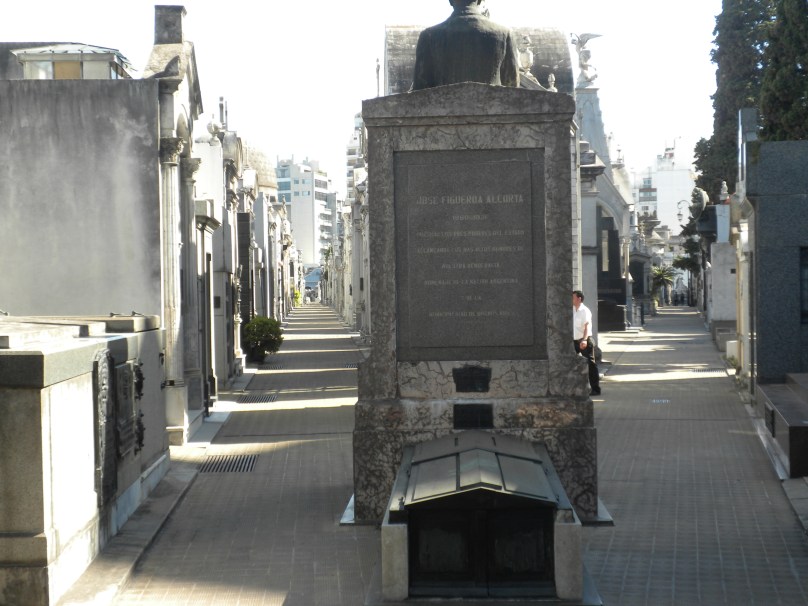
I have been to some spooky cemeteries, but I think that the spookiest one of all is El Cementario de la Recoleta in Buenos Aires. Curiously, it is also perhaps the city’s main tourist attraction.

Practically everybody who was anybody in Argentina is buried there—with some interesting exceptions. Jorge Luis Borges is interred in Geneva, Switzerland, where he died. Although Evita Perón is buried in Recoleta under her maiden name of Duarte, her husband, former dictator Juan Perón was not allowed in. He is buried on the grounds of his presidential estate at Olivos.

Many of the funerary monuments at Recoleta are spectacular. Some are grim. In a few vaults, one can look through gaps in the gates and see some occupied coffins in bad shape, apparently from families that have died out and not left instruction for their maintenance.

The last time I was in Buenos Aires, I stayed in a hotel that was across Avenida Azcuenaga from the high west wall of the cemetery. It didn’t feel spooky to me at all. It’s only by wandering up and down the rows of funerary monuments that one gets a spooky forechill.

Incident at Retiro

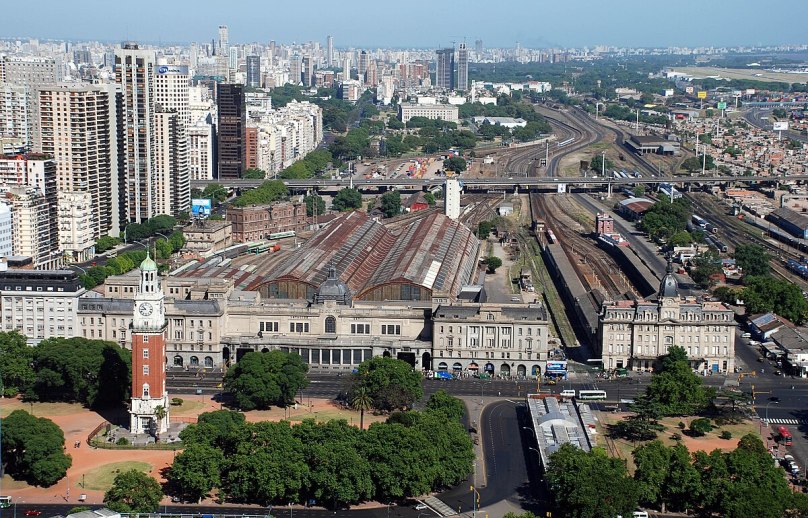
The Retiro Train Station in Buenos Aires

It was November 2015. I had just returned by train from Tigre where I had explored the delta of the Rio Paraná on a boat. That evening, I wanted to take a night bus to Puerto Iguazú to see the famous waterfalls. First I had to get a bus ticket, then take a cab back to my hotel in Recoleta and pick up my luggage, which was being held for me at the desk.

The main Buenos Aires bus station is a couple hundred yards’ walk to the north of the train station, just to the right (not shown) of the train station shown above.

As I walked along the crowded walkway to the bus station, I smelled an odorous mix of steak sauce and mustard that was squirted onto my back by a young couple that was following me. They were exceedingly polite as they applied paper towels to the mess and offered to accompany me to a location on the left where I would be cleaned up.

Cleaned out was more like it. I was familiar with this pickpocket trick. As I was carrying several thousand Argentinean pesos on my person, as well as several hundred dollars cash, I immediately went to my right and hailed one of the numerous cabs that had just dropped someone off at the bus and train stations. I jumped into the cab and asked them to drive me to my hotel in Recoleta.

The cab driver was not happy to be dealing with a rider who made his cab smell weird. Still, he drove me and I gave him a generous tip to clean the steak sauce/mustard smell from the back seat.

I picked up my bags and took another cab—this time directly to Retiro Bus Station, avoiding the walkway between it and the train station. I bought my ticket to Iguazú and got on the bus, still reeking. When, after a good night sleep, I got to my destination, I talked my hotel into laundering my still-smelly clothes.

It was an interesting experience.

Los Arrayanes

At Los Arrayanes National Park in Argentina’s Lake District

It’s one of the smallest national parks in Argentina, being wholly contained within 6.77 square miles (17.53 square kilometers). I rode out there on Lago Nahuel Huapi on a beautiful Glasgow-built steamship called the Modesta Victoria and wandered for a couple of hours among the beautiful Arrayán trees (Luma apiculata) with their cinnamon-colored bark.

The Modesta Victoria on Lago Nahuel Huapi

The little national park was one of the highlights of my 2015 visit to Argentina and Chile. There is a myth that the color of the trees inspired Walt Disney in designing the look of the forest for Bambi (1942). I don’t know whether Walt traveled to Argentina or saw some pictures—or indeed whether he or any of his animators were even aware of the place.

One thing for sure, there are no Arrayán trees (aka Chilean Myrtles) naturally growing in the United States.

Puerto Iguazu/Foz de Iguaçu

Three of the 200+ Waterfalls at Iguazu National Park

I was exhilarated by the two days I spent viewing the falls at Iguazu. There were trails leading off in all directions, as the falls were in an area several kilometers long.

My only regret is that I was not able to see the falls from the Brazilian side. Although the falls were in Argentina, the best long-distance view was from the city of Foz de Iguaçu. At the time I was there, in 2015, I would have had to pay a heavy fee to cross the border into Brazil.

The Panoramic View of the Falls from Brazil

It is not always possible to see all the sights, and I was content to view the falls from the Argentinean side—close up. Particularly impressive was the most powerful of the falls, the Garganta del Diablo, or Devil’s Throat. Here is a video from YouTube:

If you ever manage to fly the 6,000 miles to Argentina, I highly recommend spending several days at the falls. On the Argentinean side, Puerto Iguazu has excellent tourist amenities.

Puerto Iguazu 2015

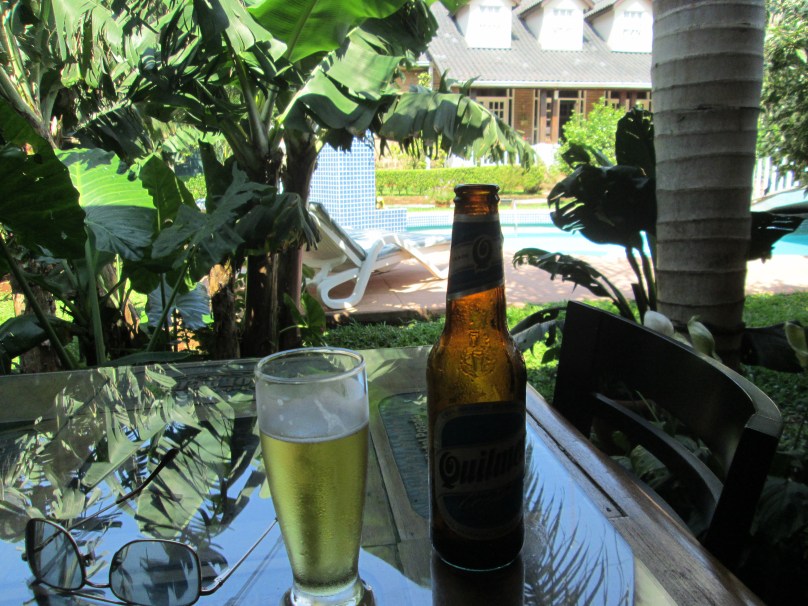
Drinking Beer in Puerto Iguazu

I had good reason to celebrate: I had just survived a hamfisted pick-pocketing attempt as I was walking to the Retiro Bus Terminal in Buenos Aires with over 2,000 Argentinean pesos in my wallet. I finally made it to my all-night bus to Puerto Iguazu, where the borders of Argentina, Brazil, and Paraguay meet. I was there to see the falls, which were spectacular (more about that tomorrow).

At Puerto Iguazu, I was in the jungle, right by the massive falls of the Rio Iguazu—all 275 of them. This was my first visit to what I call a monkey jungle. There were monkeys aplenty, as well as coatimundis and picturesque birds.

Colorful Bird at the Local Aviary

I had always been afraid of the jungle because I hate mosquitoes. Curiously, I did not encounter any, though I spent two days viewing multiple falls in the area. I did encounter a lot of coatimundis, but numerous posted signs warned against feeding them: They have a tendency to get aggressive and go on the attack.

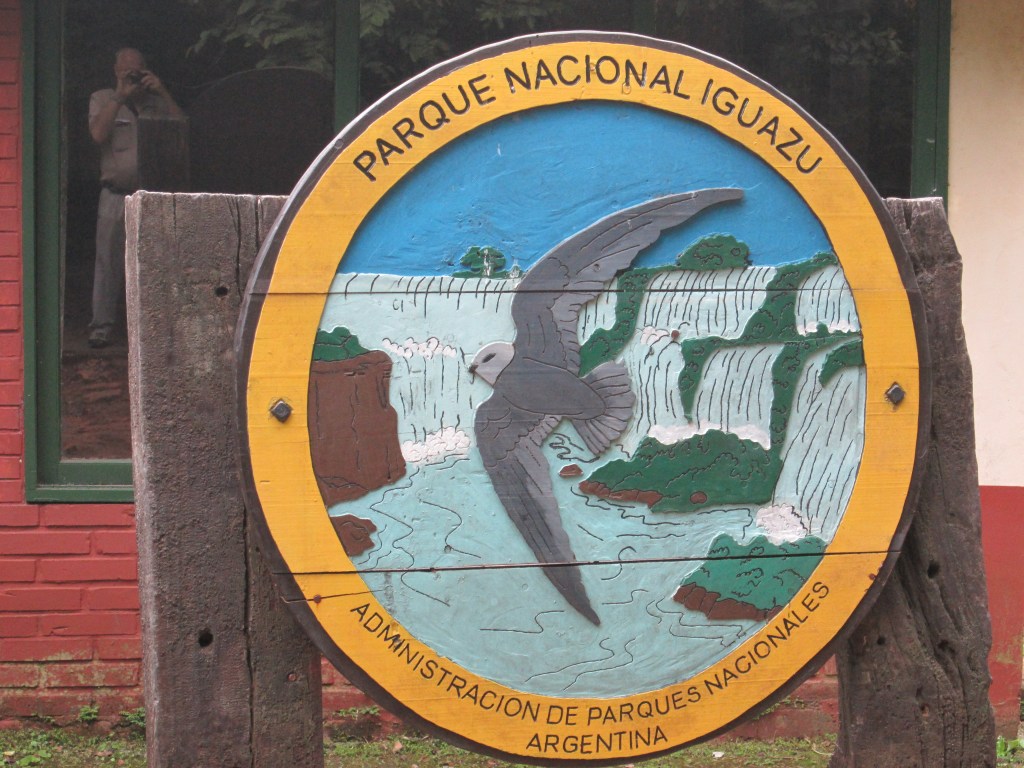
Iguazu National Park Seal

Argentina is a country with numerous national parks. I have visited both the northernmost (Iguazu) and the southernmost (Tierra del Fuego on the Beagle Channel). It is a pity that so few Americans have had the opportunity to visit any of them.

To the Ends of the Earth

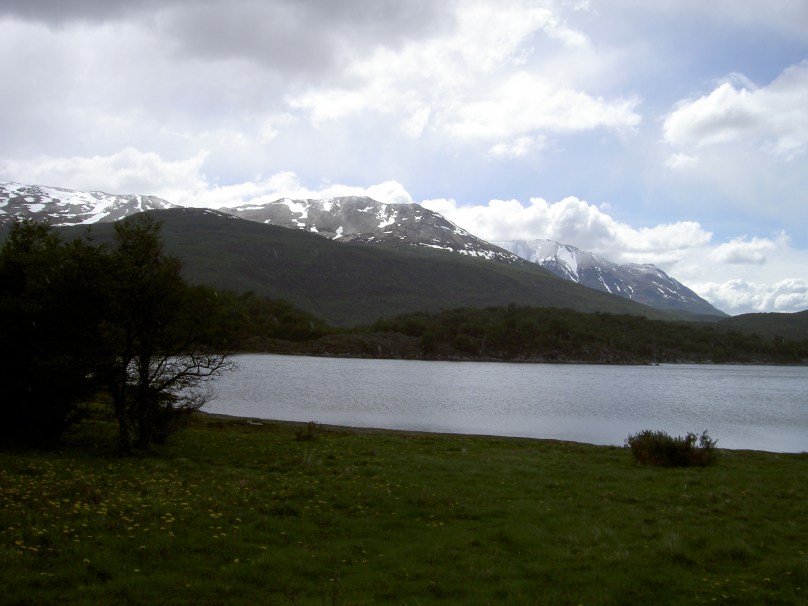
Tierra del Fuego National Park

Twice I have been to the southernmost city on Earth—Ushuaia in the State of Tierra del Fuego. The first time was in 2006, when I broke my shoulder on the high curb when crossing Magallanes at Rivadavia. The second time was when I visited with Martine in 2011.

Actually, there is one populated town south of Ushuaia, but it is maintained by Chile mostly as a naval base and has a much smaller population.

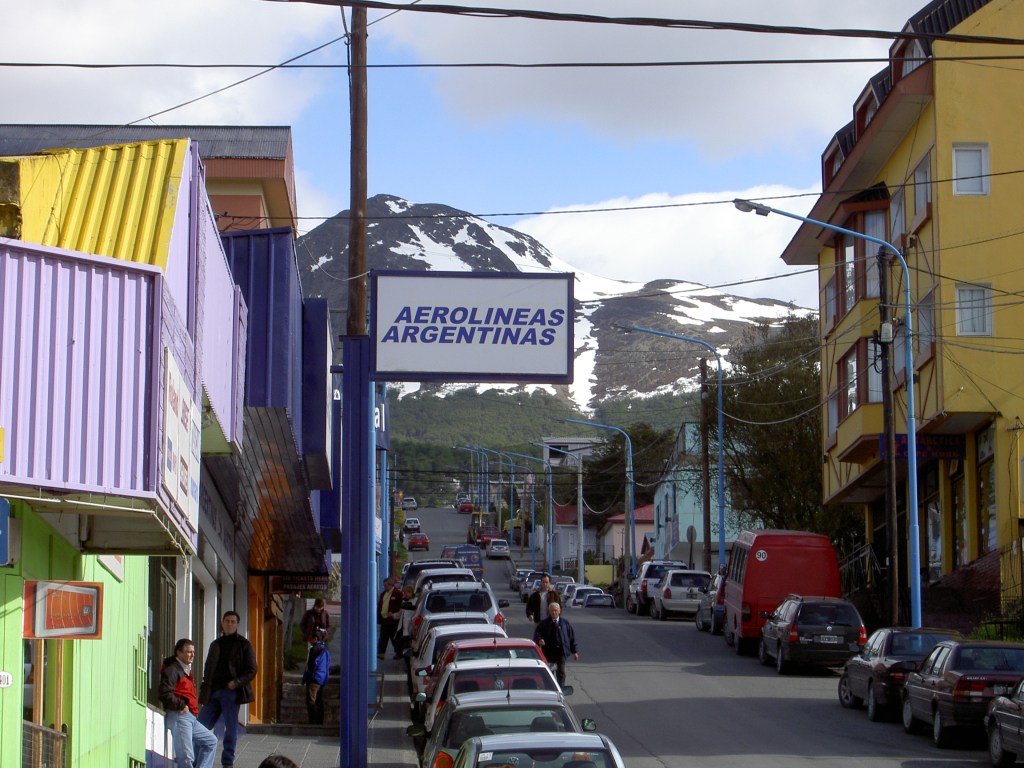
On Rivadavia in Ushuaia Looking North

Ushuaia pretty march marks the southern end of the Andes, which are only a couple thousand feet (610 meters) in altitude, though they are still covered in snow. It can get mighty cold at that latitude, which is only about 600 miles (966 kilometers) across the Drake Channel from Antarctica.

I wouldn’t mind going back to Tierra del Fuego and maybe seeing Punta Arenas and Puerto Williams in Chile. By the way, Puerto Williams is the only town south of Ushuaia—just across the Beagle Channel.

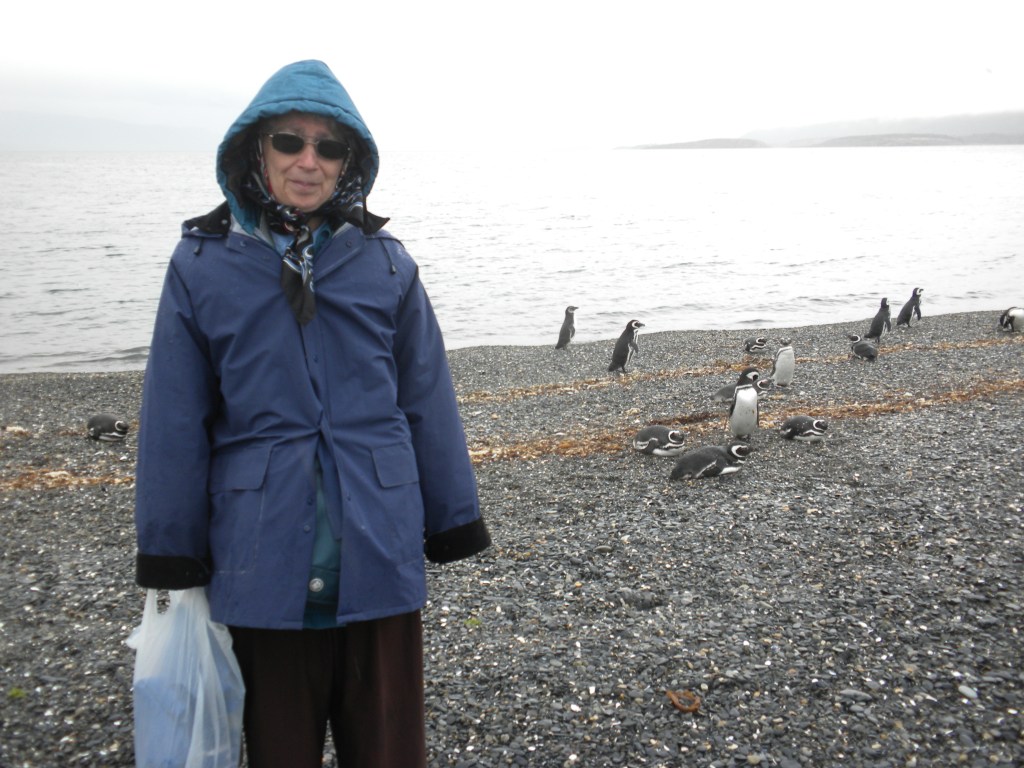
What is there to do in Ushuaia? There are several impressive museums, one of which was formerly a prison. There is Estancia Harberton, which settled by the Bridges family and is written about at length in E. Lucas Bridges’s The Uttermost Part of the Earth, a travel classic. Then there are the Magellanic Penguins on nearby Isla Pajaros; and there is Tierra del Fuego National Park, which ends at the border with Chile.

The Last Time I Was in Argentina

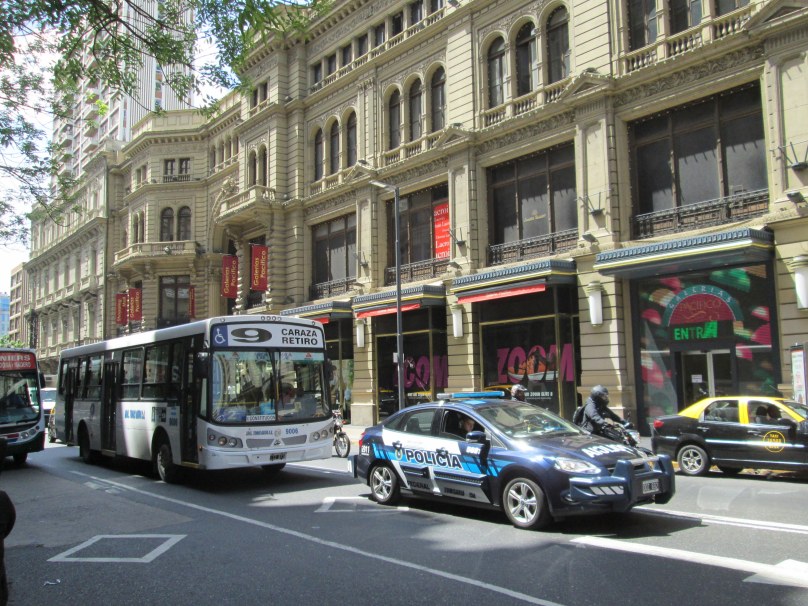
Buenos Aires: Traffic on Calle Florida

It has now been ten years since my last visit to Argentina. Cristina Kirchner was still President of the Republic. I had an itinerary that included a visit to the Foz de Iguazu by the border with Brazil, the Patagonian resort of San Carlos Bariloche, and a bus and boat trip over the Andes to Puerto Varas in Chile.

I revisited the spectacular cemetery at Recoleta where Eva Perón is buried and the port of Tigre by the delta of the Paraná River. On my way to the bus station in Retiro, a serious attempt was made to pick my pocket at a time when I was carrying $2,000 in Argentinean pesos. (I quickly sidestepped to the right and hailed a cab.)

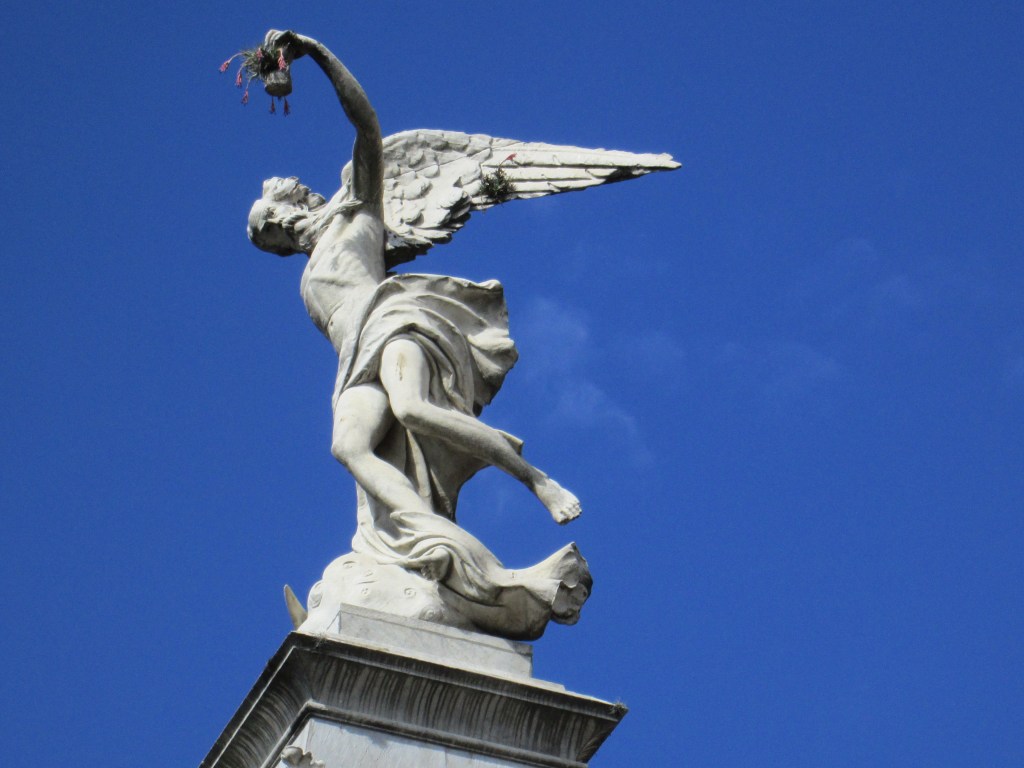
Funerary Statue at Recoleta Cemetery

I got violently ill at a hotel by the Congreso after eating a dubious steak dinner the night before, but I managed nonetheless to catch my bus to Puerto Iguazu and got better after a 10-hour bus ride that passed hundreds of fields where yerba mate was growing.

In sum, it was a great trip. As long in the tooth as I am, I would jump at the chance to visit Argentina again. The long plane ride over the Andes could be brutal, but the country is endlessly fascinating. I especially love Patagonia and Tierra del Fuego.

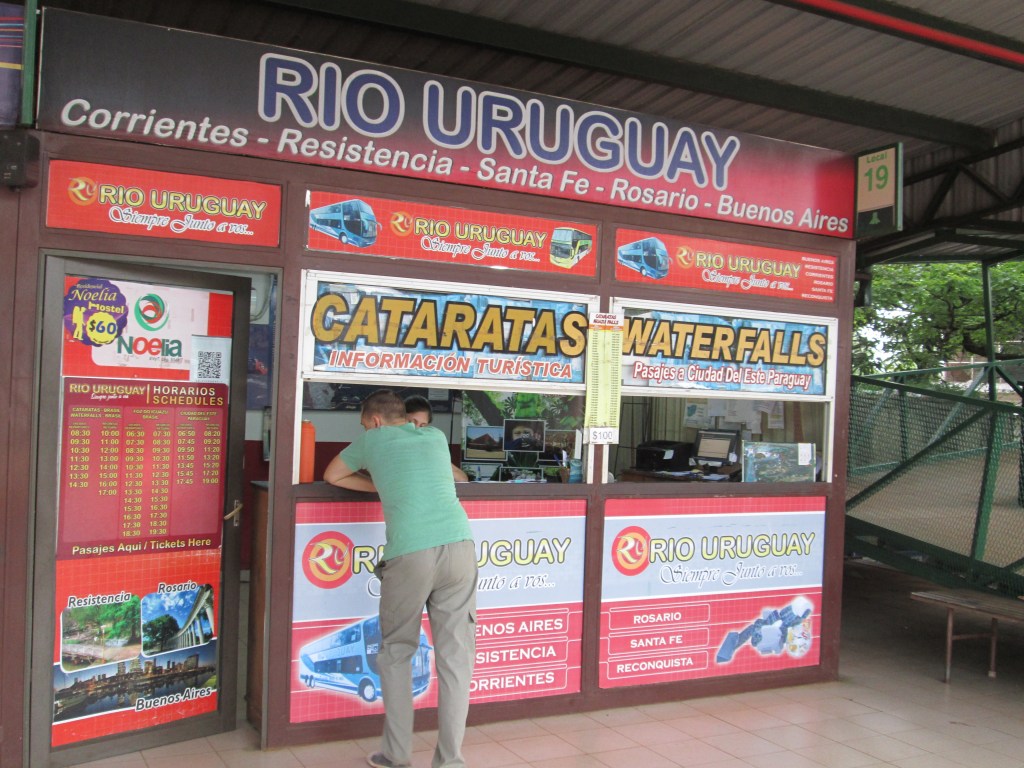
At the Puerto Iguazu Bus Station

Most Americans have little or no idea of what South America is really like. Over the last twenty years, I have been to Argentina, Chile, Uruguay, Peru, and Ecuador and enjoyed just about every minute of my travels there.

My Cities: Buenos Aires

Plaza de Mayo with Jacarandas

In my mind, Buenos Aires is forever associated with Jorge Luis Borges. It is my love of the author’s works which led me to Argentina three times: in 2006, 2011, and 2015. God knows, I would welcome a fourth visit. It’s a huge city (17 million population in the metropolitan area); it’s difficult to get around in; but I love it nonetheless.

What does one say to a city whose biggest tourist attraction is a cemetery? Each time, I visited the Recoleta Cemetery and viewed the crypt where Evita Peron is buried. Yet, poor Borges is buried in Geneva, Switzerland.

Funerary Monuments at Recoleta Cemetery

Borges taught me that Buenos Aires is a city of neighborhoods, of which my favorite is Palermo. At Borges 2135 in Palermo is where Jorge Luis spent his boyhood.

Palermo is also home to some of the loveliest parks in the city, including the Botanical Garden and the zoo where he visited the tigers that appeared in so many of his poems and stories.

Palermo’s Jardin Botanico

One thing that impressed me was the large stray cat population of the Jardin Botanico. While I was there, a local resident came and fed them. He then folded up his bag and walked toward the exit.

I think I would probably choose to stay in Palermo the next time I visit.

Hats Off to Eddie Muller!

Turner Classic Movies (TCM) Host Eddie Muller

Most every Saturday around 9 PM Pacific Time, I turn on the television to watch the “Noir Alley” show on TCM hosted by the amiable Eddie Muller. He is one of the reigning experts on film noir, which he defined in an interview hosted by the World Literature Today website as:

A noir story is about people who know what they’re doing is wrong, and they do it anyway. And, typically, there’s hell to pay. We love watching them break the law; we love watching them reap the consequences.

Although in the interview, he is talking about literature, one can easily see how that translate into film. Just think of such Hollywood films as John Huston¹s The Maltese Falcon (1941); Billy Wilder’s Double Indemnity (1944); Howard Hawks’s The Big Sleep (1946); Jacques Tourneur’s Out of the Past (1947); and Robert Aldrich’s Kiss Me Deadly (1955). The genre reached its apogee during the 1940s and 1950s.

Yesterday, Eddie outdid himself. He introduced two great noir films produced in Argentina. However tired I was, I stayed up late to watch two masterpieces by Carlos Hugo Christensen (1914-1999): Never Open That Door (No abras nunca esa puerta) and If I Should Die Before I Wake (Si muero antes de despertar). Both films were produced in 1952.

I particularly liked If I Should Die Before I Wake, a film about a child killer which even today might run into censorship problems. A son of a Buenos Aires detective finds himself identifying and running to ground a child molester who had kidnapped a female classmate whom he had befriended. It’s even more exciting than Fritz Lang’s classic M (1931) with Peter Lorre on the same subject.

By the way, if you want to read a really good book about film noir, I highly recommend Eddie Muller’s Dark City: The Lost World of Film Noir (New York: Running Press, 2021).

What I’m about to say may be counted as heresy, but I think these films out-Hitchcock Hitchcock. Apparently, there is more than one master of suspense, and I am grateful to Eddie Muller for screening these two subtitled films.

The Blind Librarian

Argentinian Writer and Poet Jorge Luis Borges (1899-1986)

Just as he was descending into blindness, Jorge Luis Borges was appointed director of the Argentine National Library. He wrote a poem about how he, as a lifelong bibliophile, felt about being in charge of so many books he could no longer read. In the last stanza, he mentions Paul Groussac, a previous director of the Library in the 1920s, who was also blind and, like Borges, also a distinguished writer.

Poem About Gifts

Let none think I by tear or reproach make light
Of this manifesting the mastery
Of God, who with excelling irony
Gives me at once both books and night.

In this city of books he made these eyes
The sightless rulers who can only read,
In libraries of dreams, the pointless
Paragraphs each new dawn offers

To awakened care. In vain the day
Squanders on them its infinite books,
As difficult as the difficult scripts
That perished in Alexandria.

An old Greek story tells how some king died
Of hunger and thirst, though proffered springs and fruits;
My bearings lost, I trudge from side to side
Of this lofty, long blind library.

The walls present, but uselessly,
Encyclopedia, atlas, Orient
And the West, all centuries, dynasties,
Symbols, cosmos, and cosmogonies.

Slow in my darkness, I explore
The hollow gloom with my hesitant stick,
I, that used to figure Paradise
In such a library’s guise.

Something that surely cannot be called
Mere chance must rule these things;
Some other man has met this doom
On other days of many books and the dark.

As I walk through the slow galleries
I grow to feel with a kind of holy dread
That I am that other, I am the dead,
And the steps I make are also his.

Which of us two is writing now these lines
About a plural I and a single gloom?
What does it matter what word is my name
If the curse is indivisibly the same?

Groussac or Borges, I gaze at this beloved
World that grows more shapeless, and its light
Dies down into a pale, uncertain ash
Resembling sleep and the oblivion of night.