Back from Ensenada

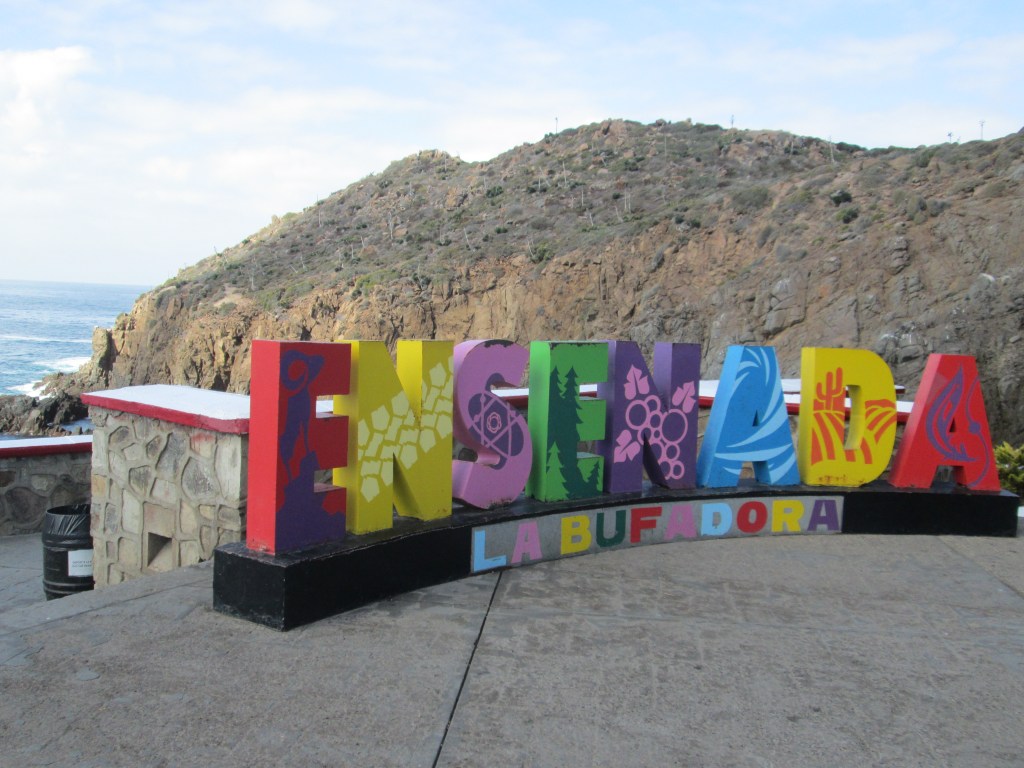
Ensenada Sign at La Bufadora

Yesterday afternoon I returned from Ensenada, where I spent a couple of days with my brother Dan. Unfortunately, the long drive left me with a bit of a sore throat, which I fought by sucking Ricola lozenges. It made me think that I have to scale down some of my travel ambitions, as I am no longer as young as I used to be. But that doesn’t mean that I am falling out of love with travel: It just means I have to do everything more slowly, in stages.

I met my brother in front of one of the San Ysidro parking lots by the border crossing. He drove down I-15 from the Coachella Valley, while I took the I-405, the I-5, and the I-805. Because of heavy traffic and several accidents on the highway, it took me four hours to reach the border.

At that point, Dan took the wheel to cross the border and take the scenic 1-D Quota Road past Rosarito Beach to Ensenada. I was relieved to be just a passenger for that final leg of the trip, as driving in Mexico could be a challenge.

Fortunately, the weather on Tuesday and Wednesday was perfect: breezy and in the low 70s Fahrenheit (21 to 26° Celsius). For some reason there weren’t many American tourists in town, so it felt as if we had the whole place to ourselves. We were surprised to see that a lot of the businesses were closed, until we realized that most of the Yanqui invaders came from cruise ships like The Navigator of the Seas and various Carnival Cruise liners. In fact, only as we were leaving town yesterday morning did we see a liner loosing boat people on the streets of Ensenada.

For the next few days, I will describe in some detail about what we did, what we ate (hey, we went down there for fish tacos—and we were not disappointed), and what we saw.
Ceviche

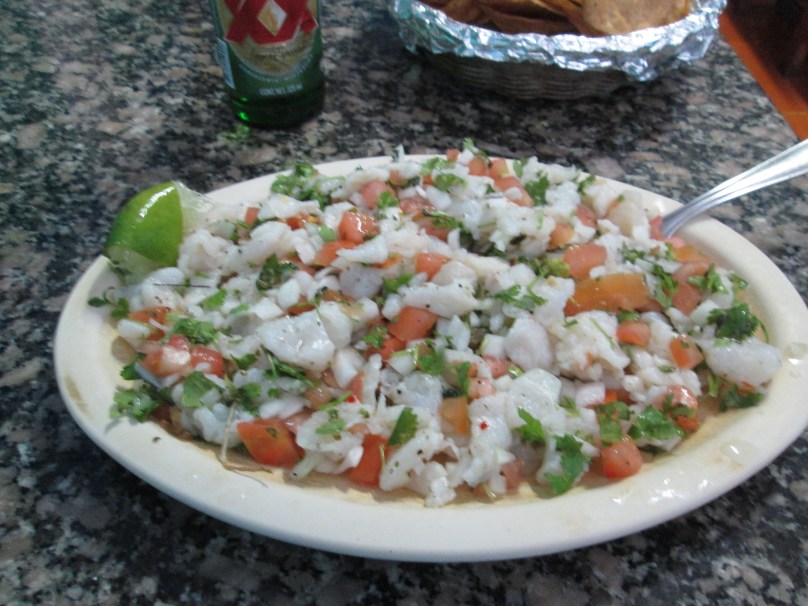
Ceviche de Pescado con Limon

My last meal in Mérida before returning to the U.S. was at a grungy little seafood dive on Calle 62 called the Blue Marlin (Marlin Azul). It was a raw fish dish called ceviche de pescado that is “cooked” with the addition of fresh lime juice. Also it contains cut-up tomatoes, chiles, and cilantro. It is served cold and is an ideal lunch dish.

In Progreso, a few days earlier, I had a ceviche de pulpo made with the same ingredients, except that octopus replaces the fish. I was in hog heaven.

Actually the seafood dish I ate the most in Yucatán this last trip was filete de pescado veracruzana. It was a grilled filet of fish in a tomato sauce with onions, olives, and capers. I never got tired of it, especially when I was near the sea and knew that the fish was super fresh.

During this awful coronavirus outbreak, I dream of traveling by bus between various seaport cities in Baja California and living on fish tacos and other local specialties.

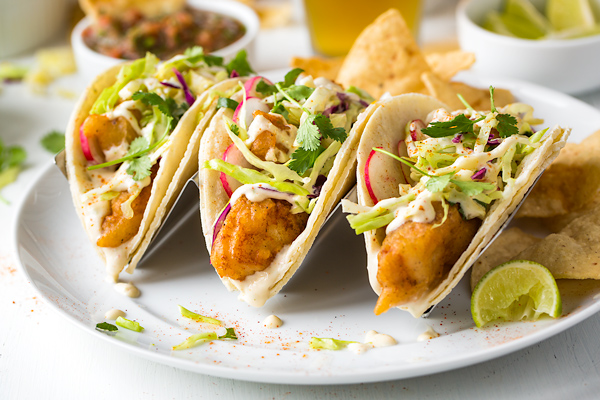
Baja Style Fish Tacos

When I was growing up in Cleveland, I didn’t think much of fish. Lake Erie, the shallowest of the Great Lakes, was for all intents and purposes a body of water noted for dead fish floating on its surface. I have had some good seafood in Los Angeles, but avoid shrimp and lobster, as I seem to be allergic to them—possibly because of the pollution of the Pacific Ocean around the coast of Southern California.

Traveling to places like Iceland or Mexico where the seafood is so fresh and interesting makes me dream of travel again. Sigh.

The Cancer Deal with the Venusians

Downtown Dallas Skyline

It is the opening of William Burroughs’s Nova Express:

“Listen to my last words anywhere. Listen to my last words any world. Listen all you boards syndicates and governments of the earth. And you powers behind what filth consummated in what lavatory to take what is not yours. To sell the ground from unborn feet forever—

“Don’t let them see us. Don’t tell them what we are doing—

“Are these the words of the all-powerful boards and syndicates of the earth?”

“For God’s sake don’t let that Coca-Cola thing out—”

“Not The Cancer Deal with The Venusians—”

“Not The Green Deal – Don’t show them that—”

“Not The Orgasm Death—”

“Not the ovens—”

Whenever I think of these lines, I think that Burroughs, in his own way, saw the cancerous growth of modern civilization. I have already written of the crazed commercial and residential real estate construction during the coronavirus epidemic.

Almost two hundred years ago, Henry David Thoreau writing in Walden saw where it would all lead, even before the first skyscraper was ever erected (or did the Tower of Babel not count?):

Men have an indistinct notion that if they keep up this activity of joint stocks and spades long enough all will at length ride somewhere, in next to no time, and for nothing; but though a crowd rushes to the depot, and the conductor shouts “All aboard!” when the smoke is blown away and the vapor condensed, it will be perceived that a few are riding, but the rest are run over,—and it will be called, and will be, “A melancholy accident.”

I saw this quote from Thoreau at the end of Joseph Wood Krutch’s The Forgotten Peninsula: A Naturalist in Baja California written in 1961. This was almost sixty years before the massive development of Los Cabos and La Paz changed the state of Baja California Sur forever.

Deatinations: Baja

Suddenly, in My Quarantined Stupor, Baja California Looked Better and Better

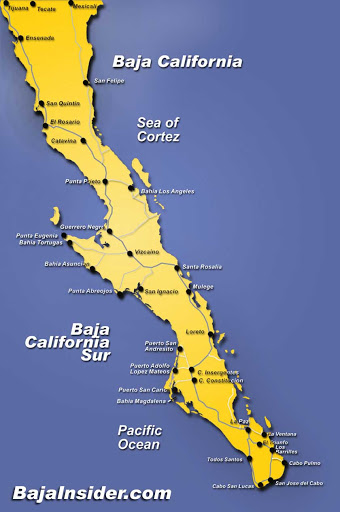
Next to my seat at the kitchen table sits a stack of Lonely Planet and Moon travel guides. Of late, the top volume in the stack has been the Moon Baja guide. I have nibbled at the edges of the 775-mile (1,274 km) peninsula several times: once to Cabo San Lucas for several days, once to Ensenada for three days, once to Tijuana on a day trip, and once to Mexicali.

What begins to interest me of late is a drive on Mexica Route 1 from Tijuana all the way to Cabo San Lucas. If I went by bus, it would be a 24-hour ride. If I went by car, it would be much longer, because there are a number of towns along the way at which I’d like to stop for several days, and a number of side trips to the old Jesuit missions which are the Mexican equivalent of the Serra’s missions in my State of (Alta) California.

Mapa of the Baja California Peninsula

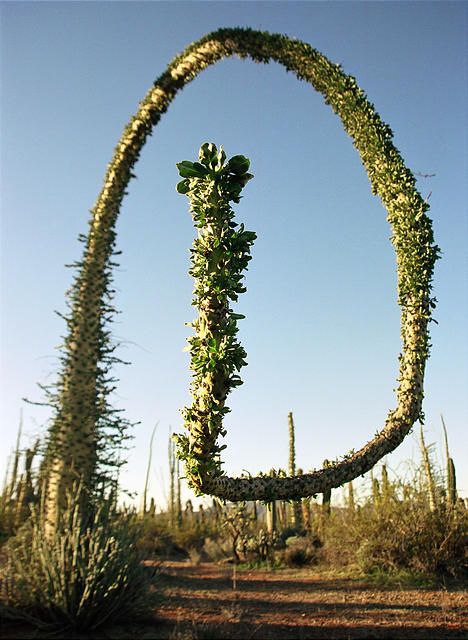
I am not much of a beach person, but I do love the desert—but never during the heat of summer. I see myself visiting missions, Indian cave paintings, taking pangas to se the Grey Whales, eating fish tacos and drinking good Mexican beer. I want to see the desert full of strange Boojum Trees (Fouquieria columnaris), which look as if they could have been invented by Dr. Seuss.

Paging Dr. Seuss

The damnable thing is that Baja is so close to Los Angeles. It would take me maybe three hours to drive to the border. I would prefer to rent a car, but I don’t like the idea of driving from TJ to Los Cabos and back again. I’ll have to see if some special arrangement could be made for me to fly back after dropping the car off.

Well, it’s maybe just a pipe dream; but it could happen.