It’s Good To Be King

An Ode to the Carnie Lifestyle

An Ode to the Carny Lifestyle

After a lifetime of hating Stephen King—not that I ever gave him much of a chance—I picked up Joyland chiefly because I thought the cover illustration by Glenn Orbik (above) was hot. It showed a scene that was not even in the book: a red-headed Erin Cook (a co-worker of the book’s hero) screaming in fear while casually wielding a Speed Graphic camera which, if she had ever made a regular practice of doing so, would have left her with a forearm like Popeye’s.

So, what did I think? Actually, I liked the book. Partly because I am drawn to the whole carny world after reading William Lindsay Gresham’s Nightmare Alley, and partly because I thought King exercised admirable restraint in crafting the novel. I wasn’t quite sure about the action scenes at the end, and there were a couple of connections I never quite understood, but I liked the tone of the whole thing.

Devin Jones is a twenty-one-year-old college student who spends a summer working for a North Carolina amusement park called Joyland. He is a man who has been discarded by his apathetic girlfriend Wendy, who, once she parts from him, consigns him to oblivion posthaste. He likes the carny lifestyle, makes friends easily, discovers he has a talent for entertaining “zamps” (small children), and doesn’t object to some of the less desirable tasks around the midway.

He is drawn by the mystery of a young woman named Linda Gray who had been killed by an unknown assailant in the scary funhouse. In fact, he drops out of college and hangs on into the fall, when the only work is preparing the park for the next summer. During that time, he makes the acquaintance of a young mother with a severely disabled son—one who can foretell the future. You can bet this figures in the plot. Devin finally loses his virginity—to Annie Ross, the mother—and becomes a favorite of her son.

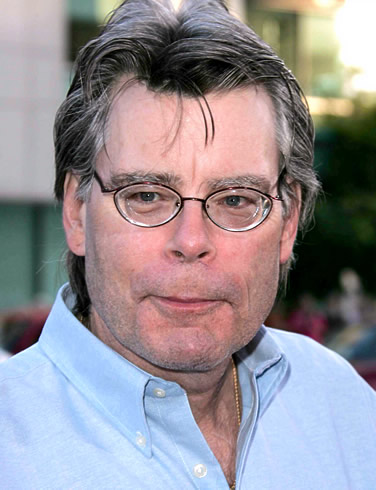
Stephen King

Stephen King

Finally, it all comes together for Devin. The killer is … someone Devin knows who calls him at home minutes after his discovery and lures him to the park, where King suddenly goes into overt mode. Perhaps one of the reasons I haven’t liked King all these years is that I thought he was too overt and not sufficiently psychological. But Joyland strikes a nice balance.

Also, I loved all the carny slang, which King took from this website. Maybe, I’ll read some more King: I always liked Kubrick’s film version of The Shining. Perhaps I’ll read that, or Dolores Claiborne, as suggested by my friend Lynette.

Strange Joy

Be Afraid! Be Very Afraid!

Be Afraid! Be Very Afraid!

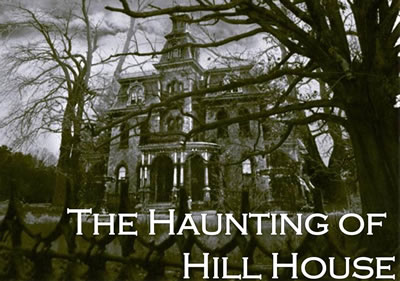
Every October, in honor of Halloween, I love to read classic horror stories. This last week, I read Hugh Lamb’s Dover collection of rare finds entitled A Bottomless Grave and Other Victorian Tales of Terror. Last year at this time, I read We Have Always Lived in the Castle, but this year I ventured on Shirley Jackson’s other famous novel, The Haunting of Hill House, which is equally spellbinding. (What I do not bother to read are the Stephen King and Dean Koontz type of novels that go in strictly for crude shocks.)

Usually, haunted house novels like to go in for crude effects. In contrast Jackson’s The Haunting of Hill House is delicately nuanced. Does this haunted house really do any damage with all its noise and strange writing on the walls and apparent destruction of one lady’s wardrobe? Actually, it does only one thing: It recognizes in Eleanor Vance, a spinster who is one of the party investigating the house, a kindred spirit. And it wants her. Badly.

Shirley Jackson (1916-1965)

Shirley Jackson (1916-1965)

The real terror is not external, it resides within the human breast. Eleanor had spent her adult life as a nursemaid to her mother, who has died before the action of the story begins. She has, as the saying goes, no life of her own. The one line that keeps running through her mind during the course of the book is, “Journeys end in lovers meeting.”

For Shirley Jackson to see into the tortured heart of Eleanor Vance—and through all the flummery of haunted houses and planchettes—makes her one of the great writers of horror fiction. And this after Eleanor’s initial response to the house, which is one of horror and loathing. At the risk of giving the whole shooting match away, I will continue the quote that ends the last paragraph:

Journeys end in lovers meeting; I have spent an all but sleepless night, I have told lies and made a fool of myself, and the very air tastes like wine. I have been frightened half out of my foolish wits, but I have somehow earned this joy; I have been waiting for it for so long.

This book deserves on the same shelf with that other great psychological story of haunting, Henry James’s The Turn of the Screw.

Tarnmoor’s ABCs: Marcel Proust

He Went As Far As One Could Go with a Cookie

           He Went About As Far As One Could Go with a Cookie

I was so very impressed by Czeslaw Milosz’s book Milosz’s ABC’s. There, in the form of a brief and alphabetically-ordered personal encyclopedia, was the story of the life of a Nobel Prize winning poet, of the people, places, and things that meant the most to him. Because his origins were so far away (Lithuania and Poland) and so long ago (1920s and 1930s), there were relatively few entries that resonated personally with me. Except it was sad to see so many fascinating people who, unknown today, died during the war under unknown circumstances.

My own ABCs consist of places I have loved (Iceland), things I feared (Earthquakes), writers I have admired (Chesterton, Balzac, and Borges); things associated with my past life (Cleveland and Dartmouth College), people who have influenced me (John F. Kennedy), and things I love to do (Automobiles and Books). This blog entry is my own humble attempt to imitate a writer whom I have read on and off for thirty years without having sated my curiosity. Consequently, over the months to come, you will see a number of postings under the heading “Tarnmoor’s ABCs” that will attempt to do for my life what Milosz accomplished for his. To see my other entries under this category, hit the tag below marked “ABCs”. I don’t guarantee that I will use up all 26 letters of the alphabet, but I’ll do my best. Today, we’re at the letter “M,” for Marcel Proust, whose In Search of Lost Time I am now reading for the third time.

There are many literary giants of the Twentieth Century—writers such as James Joyce, Fernando Pessoa, William Faulkner, Jorge Luis Borges, Gabriel García Marquez, Graham Greene, G. K. Chesterton, Ryonosuke Akutagawa, Eugene O’Neill, Bertolt Brecht, Thomas Mann, Italo Svevo, Mikhail Bulgakov … the list stretches on and on. One who has had a particular role to play in my life is Marcel Proust. It seems I cannot let a year pass by without re-reading another installment of his massive In Search of Lost Time, which consists of seven full-sized novels:

  • Swann’s Way
  • In the Shadow of Young Girls in Flower (originally translated as Within a Budding Grove)
  • The Guermantes Way
  • Sodom and Gomorrah (originally translated as Cities of the Plain)
  • The Prisoner
  • The Fugitive (originally translated as The Sweet Cheat Gone)
  • Finding Time Again (originally translated as The Past Recaptured)

The first four volumes were completely edited by Proust during his lifetime. The last three received their final proofing from others (but are still great).

Quite frankly, it is not easy to read Proust. Some sentences seem to go on for pages. It requires intense concentration not to go astray, even within an individual paragraph. One old friend, who is a high school English teacher, abandoned Swann’s Way in the first section.

Why do I so highly regard a not-particularly-successful gay social climber whose world has so little in common with mine? For one thing, Proust writes about not so much memory as of the shimmering obsessions that monopolize so much of our attention yet, in the long run (the series spans decades), fall by the wayside as life goes on.

I have already had my fourth reading of Swann’s Way. When I return from Peru, I plan to re-read In the Shadow of Young Girls in Flower for the third time. If God is good to me, there will be a fourth and—who knows—maybe even a fifth reading of the series in the time that remains to me.

“Don’t Read Books!”

Chinese Scroll

Chinese Scroll

Don’t read books!
Don’t chant poems!
When you read books your eyeballs wither away,
leaving the bare sockets.
When you chant poems your heart leaks out slowly
with each word.
People say reading books is enjoyable.
People say chanting poems is fun.
But if your lips constantly make a sound
like an insect chirping in autumn,
you will only turn into a haggard old man.
And even if you don’t turn into a haggard old man,
it’s annoying for others to have to hear you.

It’s so much better
to close your eyes, sit in your study,
lower the curtains, sweep the floor,
burn incense.
It’s beautiful to listen to the wind,
listen to the rain,
take a walk when you feel energetic,
and when you’re tired go to sleep.

—Yang Wan-li (1127-1206), “Don’t Read Books!”

Television IS News?

Look What’s Popping Up on TV News Websites?

Look What’s Popping Up on TV News Websites?

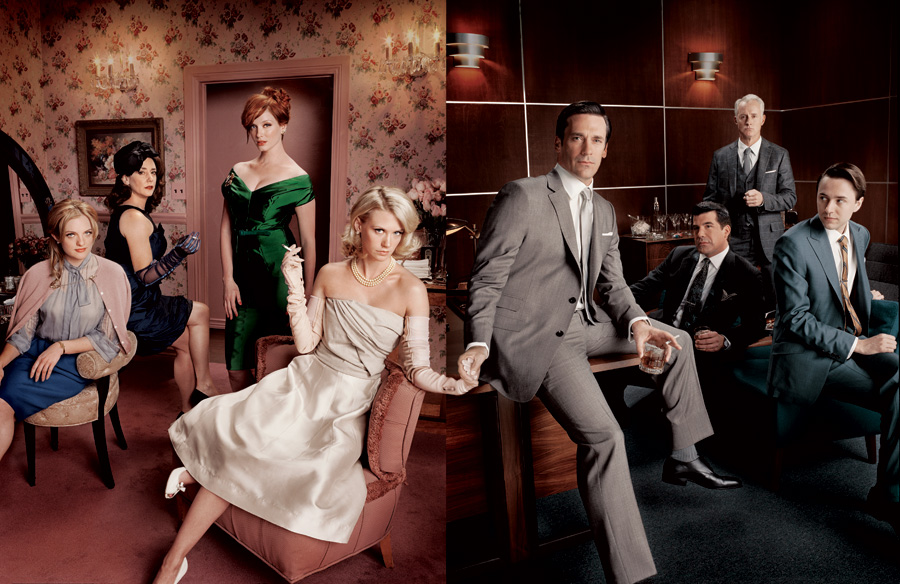
It was bound to happen sooner or later. Now that the same corporations that own television news also own popular television series.One can’t look at CNN.com or NBCNews.com without running into articles about the latest developments in “Man Men,” “Breaking Bad,” or even the dwindling “American Idol.” That never used to happen before. Even Salon.Com, which insofar as I know, is unaffiliated with any entertainment producers, is heavily interlarded with references to popular shows.

Since I have deliberately abandoned television programming over ten years ago, all these references in the news mean nothing to me. They end up as descriptions of cultural phenomena that are meaningless to me. In no case do I ever become interested enough to see what all the hoopla is about. I think the last time I tried was a few years ago when I rented the first season of “The Sopranos” from Netflix. I thought it was all right, but not good enough to maintain my interest.

Instead of television series, it would be interesting to see more news articles about books. That occasionally happens on Salon.Com, but almost never on the mainstream media websites. Oh, well, you can always come here and look at what I am reading. You are bound to encounter quite a few books. I have made a commitment to Goodreads.Com to read 106 books this year. So far, I am 16 books ahead on my goal. Maybe I should alert CNN?

“Not More Foolish Than Any Other Love”

Books

Books

The love of books is really a commendable taste. Bibliophiles are often made fun of, and perhaps, after all, they do lend themselves to raillery. But we should rather envy them, I think, for having successfully filled their lives with an enduring and harmless pleasure. Detractors think to confound them by declaring they never read their books. But one of them had his answer pat: “And you, do you eat off your old china?” What more innocent hobby can a man pursue than sorting away books in a press? True, it is very like the game the children play at when they build sand castles on the seashore. They are mighty busy, but nothing comes of it; whatever they build will be thrown down in a very short time. No doubt it is the same with collections of books and pictures. But it is only the vicissitudes of existence and the shortness of human life that must be blamed. The tide sweeps away the sand castles, the auctioneer disperses the hoarded treasures. And yet, what better can we do than build sand castles at ten years old, and form collections at sixty? Nothing will remain in any case of all our work, and the love of old books is not more foolish than any other love.—Anatole France, The Garden of Epicurus

The Digital Divide

With Every New Technology, There Is a Die-Off

With Every New Technology, There Is a Massive Die-Off

Little by little, I am becoming aware of a tendency in our culture to downplay everything that is before the Internet. Wikipedia and Google are so convenient that we tend to ignore older sources of knowledge. And now that libraries are trashing many of their old books and periodicals and replacing them with computers, there is a real danger that many of the old sources that used to pass for knowledge are slowly disappearing.

For example, I have many books that pre-date the ISBN code. When I read one of them, I have some difficulty describing the book to GoodReads.Com because the likelihood is that there is no reference to the edition I have. And when I try to sell the books on Half.Com (which is owned by eBay), I can’t enter the book because it lacks the ISBN code used to identify the edition. It’s actually keeping me from reading my essays by Sainte-Beuve or many of the hundreds of Oxford World Classics I own in hardbound. Ever since I got in the habit of reviewing everything I read, I tend to hesitate with some of my older editions. Just in front of me, for example,  is a 1926 Alfred A. Knopf edition of Arthur Machen’s The Canning Wonder. I could review the book on Goodreads only if I answer a questionnaire about the edition. If I wanted to sell it on Half.Com, I’d be out of luck.

Most at risk is the history of our civilization based on original archival materials that date back to the Middle Ages. Fortunately, the Europeans are willing to spend the money (in most cases) to protect their history. But what about the Americans? All it would take is for some idiot like Ted Cruz or Rand Paul to sniff at supporting libraries, and millions of words of our country’s history would go by the wayside.

But what about Google Books, you might ask? It is a noble effort, but only a small percentage of old books have been scanned. I collect the works of Sir Richard F. Burton (no relation to the actor). He’s not exactly a popular item, but he is one of the most exciting explorers and travelers of the Nineteenth Century. I can find Burton’s Two Trips to Gorilla Land and the Cataracts of the Congo, but only Volume I has been scanned. The same is true for his Exploration of the Highlands of Brazil. Oh, the books will still be around, but they will be fabulously expensive. (On the other hand, I have been able to find some Burton titles on Gutenberg.Com that I could never afford to buy in print—so the argument cuts both ways.)


“The Best Solitary Company in the World”

I Mean the Book

I Mean the Book

Here is the best solitary company in the world, and in this particular chiefly excelling any other, that in my study I am sure to converse with none but wise men; but abroad it is impossible for me to avoid the society of fools. What an advantage have I, by this good fellowship, that, besides the help which I receive from hence, in reference to my life after this life, I can enjoy the life of so many ages before I lived! — that I can be acquainted with the passages of three or four thousand years ago, as if they were the weekly occurrences! Here, without travelling so far as Endor, I can call up the ablest spirits of those times, the learnedest philosophers, the wisest counsellors, the greatest generals, and make them serviceable to me. I can make bold with the best jewels they have in their treasury, with the same freedom that the Israelites borrowed of the Egyptians, and, without suspicion of felony, make use of them as mine own. I can here, without trespassing, go into their vineyards and not only eat my fill of their grapes for my pleasure, but put up as much as I will in my vessel, and store it up for my profit and advantage.—William Waller, Divine Meditations: Meditation Upon the Contentment I Have in My Books and Study

Tarnmoor’s ABCs: Books

Some of My Books About Iceland

Some of My Books About Iceland

I was very impressed by Czeslaw Milosz’s book Milosz’s ABC’s. There, in the form of a brief and alphabetically-ordered personal encyclopedia, was the story of the life of a Nobel Prize winning poet, of the people, places, and things that meant the most to him. Because his origins were so far away (Lithuania and Poland) and so long ago (1920s and 1930s), there were relatively few entries that resonated personally with me. Except it was sad to see so many fascinating people who, unknown today, died during the war under unknown circumstances.

This blog entry is my own humble attempt to imitate a writer whom I have read on and off for thirty years without having sated my curiosity. Consequently, over the next few months, you will see a number of postings under the rubric “Tarnmoor’s ABCs” that will attempt to do for my life what Milosz accomplished for his. I don’t guarantee that I will use up all 26 letters of the alphabet, but I’ll do my best. My previous posting on this theme was last month.

Well, B is for Books, the love of my life. It all started before I could read … before I could even speak English. I remember my mother reading me stories (translating them into Hungarian). And when she didn’t have a story to read, she made up one. These were just as good as the published stories. I remember walking with her from our apartment on East 120th Street to the public library next to Harvey Rice School. A few doors down, between Buckeye Road and Van Aken, there was a very good doughnut shop where we would sometimes stop.

In 1951, after my brother Dan was born, we moved to the then treeless suburbs of the Harvard-Lee area. I guess my parents didn’t want to have two boys who couldn’t speak English. I was signed up to attend second grade (even though I completed only the first half of first grade at Harvey Rice—Shhh! Please don’t tell anyone) at Saint Henry School on Harvard Road.

Once I got a handle on the English language, by about the fourth or fifth grade, I started accumulating books. On one hand, my parents were delighted at my strides in understanding English. On the minus side, whenever they got some insurance document written in legalese, I had to interpret it for them. (Ever since, I have hated that fine print crap.)

Also, the books started getting to my parents. “Jimmy, why do you need so many books?” “Uh, because I just do.” “Well, pick up after yourself please.”

Years later, the books started getting to Martine. “Jimmy, why do you need so many books?” “Uh, because I just do.” “Well, pick up after yourself please.”

Actually, I have improved some. I now own two Kindles with fifteen hundred books on them. How many physical books do I own? Oh, somewhere around six or seven thousand.

Currently, I read something like ten books a month, usually literature and history, but some travel, science, economics, and philosophy on occasion. If you are curious about my bookish habits, I suggest you check out my page on Goodreads.Com. You’ll see reviews of every book I read. Click here. You can see links to reviews off to the right side of the four or five books I have read most recently.

I have always assumed that God would let me live as long as I have books to read. And I keep buying more books. It’s like finding the genie in the bottle and wishing for an infinite number of wishes.

Okay, so I’m a bit delusional.


Some Things Get Better

The Rare Ballantine Adult Fantasy Edition

The Rare Ballantine Adult Fantasy Edition

I am currently re-reading G. K. Chesterton’s The Man Who Was Thursday, perhaps his best work of fiction. I came to it first some forty years ago, and since then have read it two or three times. After going through all the Chesterton volumes at the Santa Monica Public Library—that took all of ten years—I decided to start collecting his work. At the outset, there weren’t many works in print. Fortunately, Ignatius Press of San Francisco started coming out with an edition of his Collected Works. To date, I have all the volumes that have been released so far: I say “so far” because they are still dribbling out at a rate of one or two a year.

Currently, all of Chesterton’s major works are in print, sometimes in multiple editions. It is only in some of the more abstruse titles such as GKC as MC, The Victorian Age in Literature, Sidelights of New London and Newer York, and William Cobbett that require some digging around. But Gutenberg.Com has full texts of more than forty of his works, including fiction, plays, essays, journalism, and poetry. (Click here and scroll about 40% of the way down.)

It isn’t easy to compile the complete works of someone who was so prolific as GKC. His short pieces appear in newspapers and magazines from all over the English-speaking world, many in publications which no longer exist. Fortunately, most of his books are still around. In fact, I would have been delighted (and bankrupted) if such were the case in 1986. I regularly scour the listings in eBay, but only once or twice a year can a find a title I don’t have on my shelves in some form.

In addition, Chesterton is also widely available cheap or free for readers of Kindles and other e-books.

Before I go any further, let me answer one question that might be hovering at the back of your mind if you’ve gotten this far: What is the point of reading Chesterton at all? I mean, didn’t he convert to Catholicism and write a whole lot of religious books?

Yes, he did—among scores of books not relating to religious subjects—despite the fact that the Catholic Church is considering canonizing him as a saint. Having read widely in both his religious and secular works, I think they are equally of value. His biographies of Saints Francis and Thomas Aquinas are well worth a read, as well as The Everlasting Man. He is probably most famous for the Father Brown stories, in which the hero/detective is a Catholic priest. Although his Catholicism certainly enters into the stories, it is not in an obtrusive way. (There is also an excellent 1954 British comedy called The Detective, starring Alec Guinness as Father Brown.)

What I like most about Chesterton is the way he exorcised his own demons, and he had a few. The early years of the Twentieth Century were an anxious time in Europe, with a nasty arms race between Britain and Germany, and the prospect of a war looming in the near horizon. At the same time, it was the high water mark of both anarchism and international socialism. And that was not to mention any personal demons lurking in the writer’s heart. GKC faced his demons with optimism, humor, and style. He did it so successfully that even today I will read an obscure Chesterton if I am feeling down in the dumps. In his own way, he is much like P. G. Wodehouse in that regard—but that is another story.