The Long Goodbye


The First Time I Read This Edition

The First Time I Read This Edition

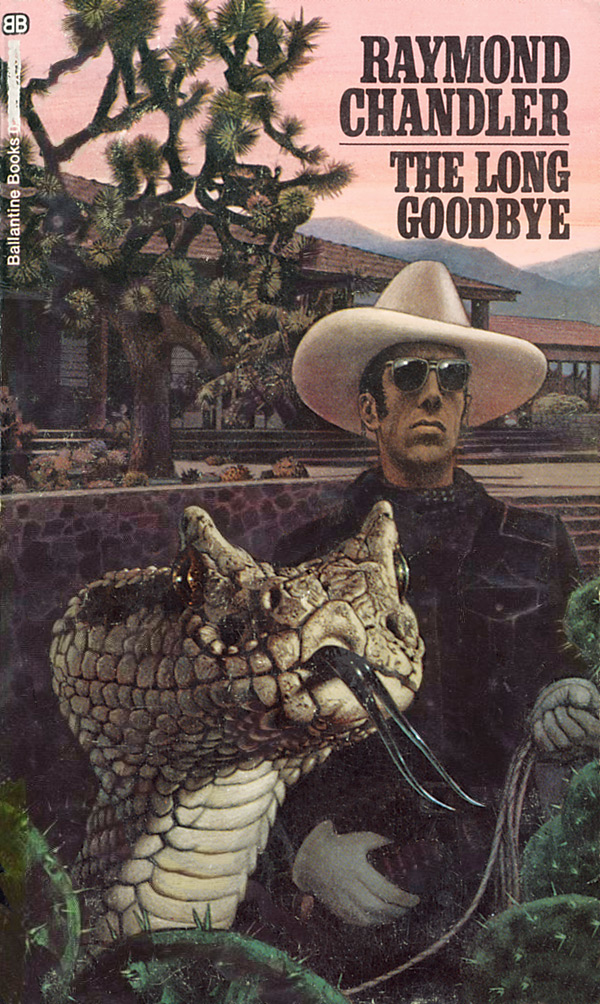
The following is based on my review of Raymond Chandler’s The Long Goodbye for Goodreads.Com:

I had read The Long Goodbye many years ago, and liked it. In the meantime, I have aged—not exactly like a fine wine, but aged nonetheless—and found myself loving Raymond Chandler’s penultimate work. I might even go so far as to say it is his masterpiece, though back then I liked The Big Sleep and Farewell My Lovely more.

This time I detected the raggedness. Chandler’s wife, Cissy, was dying and he felt more vulnerable. This is no tight Agatha Christie thriller than runs like a Swiss clockwork. Not by a long shot. It’s about a nasty, persistent evil that, once you poke it with a stick, keeps coming back to snare you and hurt you. Somehow, Chandler’s detective Marlowe walks the straight and narrow path and comes out alive at the end:

I was as hollow and empty as the spaces between the stars. When I got home I mixed a stiff one and stood by the open window in the living room and sipped it and listened to the groundswell of the traffic on Laurel Canyon Boulevard and looked at the glare of the big angry city hanging over the shoulder of the hills through which the boulevard had been cut. Far off the banshee wail of police or fire sirens rose and fell, never for very long completely silent. Twenty-four hours a day somebody is running, somebody else is trying to catch him. Out there in the night of a thousand crimes people were dying, being maimed, cut by flying glass, crushed against steering wheels or under heavy tires. People were being beaten, robbed, strangled, rape, and murdered. People were hungry, sick, bored, desperate with loneliness or remorse or fear, angry, cruel, feverish, shaken by sobs. A city no worse than others, a city rich and vigorous and full of pride, a city lost and beaten and full of emptiness.

A French Edition of The Long Goodbye

A French Edition of The Long Goodbye

And mind you, this is just the background in which a series of murders and/or suicides take place that call Marlowe’s actions into question and put him in personal peril, such as the time four toughs waylay him in his own house. They included the following:

A man was sitting across the room with his legs crossed and a gun resting sideways on his thigh. He looked rangy and tough and his skin had that dried-out look of people who live in sun-bleached climates. He was wearing a dark brown gabardine-type windbreaker and the zipper was open almost to his waist. He was looking at me and neither his eyes nor the gun moved. He was as calm as an adobe wall in the moonlight.

That last short sentence inspired writer Walter Mosley to begin writing his own series of detective novels featuring Easy Rawlins.

I feel I have not rendered justice to this great novel—probably because it is still working its way through my bloodstream and opening channels in my body that I did not know existed.

[Not] The Nobel Prize for Literature

Yet Another Great Writer Who Never Received a Nobel

Yet Another Great Writer Who Never Received a Nobel

I don’t have too much good to say about the Swedish Academy, which decides who will receive the Nobel Prize for Literature. If you look at the list of its recipients, it would not take too much effort to produce a list of as great as or even greater literary figures who have not received the laureate. Let me take a stab at it:

  • Kobo Abe (Japan), Woman in the Dunes
  • Chinua Achebe (Nigeria), Things Fall Apart
  • Ryunosuke Akutagawa (Japan), Rashomon
  • Jorge Amado (Brazil), Gabriela: Clove and Cinnamon
  • W. H. Auden (UK), Poetry
  • Georges Bernanos (France), Mouchette
  • Jorge Luis Borges (Argentina), Ficciones
  • Joseph Conrad (UK/Poland), Nostromo
  • Richard Flanagan (Australia), The Narrow Road to the Deep North
  • Graham Greene (UK), The Heart of the Matter
  • Vassili Grossman (Russia), Life and Fate
  • Henry James (US/UK), The Ambassadors
  • James Joyce (Ireland), Ulysses
  • Yashar Kemal (Turkey), Memed, My Hawk
  • Gyula Krúdy (Hungary), The Red Post Coach
  • Stanislaw Lem (Poland), Solaris
  • Osip Mandelstam (Russia), Poetry
  • Vladimir Nabokov (US/Russia), Lolita
  • Fernando Pessoa (Portugal), The Book of Disquiet
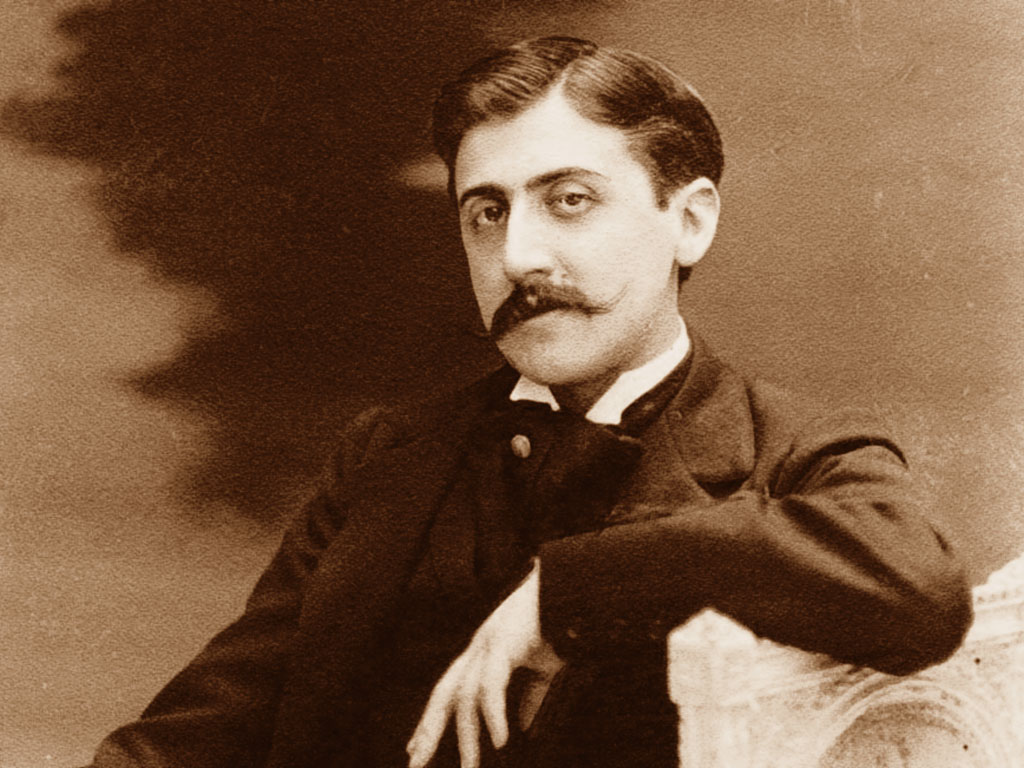
  • Marcel Proust (France), In Search of Lost Time
  • Arkady and Boris Strugatsky (Russia), Roadside Picnic
  • Italo Svevo (Slovenia), Confessions of Zeno
  • Leo Tolstoy (Russia), Novels and Stories
  • Mark Twain (US), Novels and Stories
  • Evelyn Waugh (UK), Brideshead Revisited
  • Virginia Woolf (UK), Mrs Dalloway

As you can see, I have not overloaded the list with the names of American authors, in the interests of being fair. If I wanted to, I can add names like Philip Roth, Ursula K. Le Guin, Joyce Carol Oates, Philip K. Dick, Cormac McCarthy, James Baldwin, Ralph Ellison, and a few others.

These can replace such figures as the following, whose reputations have not kept up with the times: Bjornsterne Bjornson, José Echegaray, Giosue Carducci, Rudolf Christoph Eucken, Paul von Heyse, Verner von Heidenstam, Karl Adolph Gjellerup, Henrik Pontopiddan, Carl Spitteler, Jacinto Benavente, Grazia Deledda, Erik Axel Karlfeldt, Pearl S. Buck, Frans Eemil Sillanpaa [SIC], Johannes Vilhelm Jensen, Earl Russell, and a few dozen others—mostly Scandinavian nonentities which at one time were highly thought of by a couple dozen mouldy Swedish academics. (Please forgive me for being lax about the diacritical marks in the above names.)


The Return of Januarius

Janus: God of New Beginnings

Janus: God of New Beginnings

Just as there are drinking games, there can also be reading games. Such is my annual Januarius tradition, which I’ve been doing for more than fifteen years now. I merely wedded the name of Janus, the two-faced god of new beginnings, withthe month of January: During that month, I only read books by authors whom I have never before read.

So far this month, I have completed:

  • Helgi Olafsson’s Bobby Fischer Comes Home: The Final Years in Iceland, a Saga of Friendship and Lost Illusions
  • Zachary Karabell’s Peace Be Upon You: A Story of Muslim, Christian, and Jewish Coexistence
  • Leonid Tsypkin’s Summer in Baden-Baden
  • Stan Jones’s Shaman Pass
  • Pierre Boulle’s The Face of a Hero

… and the month is not yet half over. I am looking forward to reading works by Sjón (the Icelandic novelist), Yashar Kemal, and Thomas Flanagan—among others.

So far, Leonid Tsypkin is my favorite of the five, with the author’s insight into the life of Fyodor Dostoyevsky and his wife Anna Grigori’evna, though all were pretty good.


Restlessness

My Vacation Is Getting Closer

My Vacation Is Getting Closer

In the last few weeks before my vacation, I am feeling restless. All other things aside, here are the books I plan to read before the month is over:

  • Christopher Hill, The World Turned Upside-Down. Revolutionary movements in 17th century England.
  • Guy de Maupassant, Afloat. For my French literature group on Yahoo!
  • Pablo Neruda, Canto General. I plan to visit the poet’s houses in Chile.
  • Macedonio Fernandez, The Museum of Eterna’s Novel, by a friend and hero of Jorge Luis Borges.
  • John Lynch, San Martin: Argentine Soldier, American Hero. A biography of the Founding Father of Argentina.
  • Aldous Huxley, Complete Essays, Vol. 1, 1920-1925.

And that’s probably half of what I will end up reading this month. Only, it’s always more difficult when one faces a deadline. One thing I will not do is stuff my suitcase full of books, nor concrete blocks either. While I am traveling, I will be reading exclusively from my two Kindles.

As usual, I have a dental emergency just before my vacation. Two small pyramidal chunks of tooth came loose the other day, so I will have to go to the dentist tomorrow. Plus I have two medical appointments this month.

Most of my shopping is done, but I will need a new belt: My old one fell to pieces a couple weeks ago. Plus I will have to get some mosquito repellent (for the Iguasu Falls area), and possibly a two-pocket shirt if I can find one. Oh, and I’m sure I’ll find a couple of other things I will need, or at least feel I’ll need.

The picture above is by Paulo Zerbato and nicely expresses what I am feeling right now.

The Wonderful Wizard of … Mo?

Oz Was Just One of L. Frank Baum’s Invented Worlds

Oz Was Just One of L. Frank Baum’s Invented Worlds

If great stories constitute one of the riches of the earth, then America has nothing to be ashamed of. We may not have the Brothers Grimm, we might not have Hans Christian Anderson, we might not have Boccaccio—but we do have L. (short for Lyman) Frank Baum. He gave us not only The Wonderful Wizard of Oz (1900) but sixteen sequels! (And they’re all pretty good!)

Then there are the other invented worlds, such as the one represented by The Surprising Adventures of the Magical Monarch of Mo and His People (1900), written the same year he created Oz. That’s only the beginning, for Baum’s fertile mind was busily at work for the last nineteen years of his life, and did not rest until he populated his fairylands with hundreds of characters and situations that not only amaze children, but not a few adults as well. Like me, for instance.

Now with the advent of e-books, it is possible to get virtually all of Baum’s work for free, or for pennies. You can try Kindle, or even Gutenberg.Com, which also contains the original illustrations. If you need cheering up, try one of his lesser-known books, which contain a wealth of treasures.


Summer in Balbec

The Viking Penguin Edition of Proust Edited by Christopher Prendergast

The Viking Penguin Edition of Proust Edited by Christopher Prendergast

It has been beastly hot in Southern California, but I have been diverted from mere animal sweating by reading Marcel Proust’s In the Shadow of Young Girls in Flower as translated by James Grieve. Although his translation is considered the bastard orphan of the series as pictured above, I still loved it—after reading the authoritative C. K. Scott-Moncrieff translation twice.

Generally, it takes me a whole decade to go through the entire In Search of Lost Time, but it’s time well spent. I hope to tackle The Guermantes Way (again, for the third time) after my vacation; and I hope to live long enough for at least one or two more complete re-readings.

Many who have tackled Swann’s Way have been put off by its opening, in which young Marcel schemes for about fifty pages to have his mother come in to his bedroom and kiss him goodnight despite his father’s general disapproval of the practice. Then there are those long sentences that seem to go on forever—but which carry a significant amount of meaning in the process. Once you get over those two hurdles, the rewards come fast and furious.

Chief among those rewards is being in the mind of Marcel, the narrator. (He never gives his last name.) His hopes and desires are sketched with such intensity that few have experienced in this life. These relate to his family, his acquaintances, his heroes, his reading, his knowledge of art (just tracking the paintings he mentions is a full-time job), and his loves.

In the Shadow of Young Girls in Flower is mostly about his two main loves, Gilberte Swann and Albertine Simonet. In the first volume of the book, he reluctantly gives up on Gilberte, who has on occasion treated him contemptuously. Still, he hangs out with her parents hoping to demonstrate to the daughter that he is worthy of her attention.

In the second volume, Marcel is with his grandmother at the seaside resort of Balbec. There, he meets Robert de Saint-Loup, who becomes his friend, and the “little gang” of girls that become his obsession. Of the latter, Marcel toys with Andree, Rosemonde, and Gisele, but his real obsession is for Albertine. The book just stops short of the relationship with her actually commencing. (That, and Marcel’s anxieties about Albertine, are for the later volumes.)

Reading Proust takes a long time: I devoted two weeks to this book, but I loved every minute of it.

The Most Influential Books in My Life

I Read All These Books Multiple Times, Starting at Least Thirty Years Ago

I Read All These Books Multiple Times, Starting at Least Thirty Years Ago

These are not necessarily the greatest books I have ever read. They are, however, the ones that have most influenced me. Each of them, I have read multiple times, and I first read them all before 1985. I have presented them here in alphabetical order by author:

  1. Anonymous. Njals Saga. Why haven’t more Americans read this book? It tells of a time when Iceland was governed by clans, and justice was crude but effective. It’s one of two Icelandic sagas that have a museum dedicated to them. The Njals Saga museum is in Hvöllsvollur, and I have visited it twice. The other honors Egils Saga and is located in Borgarnes.
  2. Balzac, Honoré de. Old Goriot. How does a young man make his way through life? Balzac’s hero, Eugène de Rastignac, is one of the great heroes in fiction.
  3. Borges, Jorge Luis. Labyrinths. Borges has been one of my teachers, having turned me on to so many of the books, people, and places that have mattered in my life. I am re-reading it now for the fifth time.
  4. Chatwin, Bruce. In Patagonia. Maybe not every word that Chatwin writes is true, but even his fictions have lured me to the southern tip of Argentina twice, and soon, for the third time.
  5. Chesterton, G. K. The Man Who Was Thursday. Learn with Gabriel Syme how to see the lamppost from the light of the tree instead of vice versa. Here we are in the world of paradox.
  6. García Marquez, Gabriel. One Hundred Years of Solitude. This is a book I bought at a souvenir stand at the ruins of Chichén Itzá in Yucatán. It showed me that life was magical.
  7. Highet, Gilbert. The Art of Teaching. Originally, I wanted to become a college professor. I never quite made it, but Highet made me wish I had. I first read this book while I was in high school.
  8. Orwell, George. Keep the Aspidistra Flying. Another high school read: How does one tread the fine line between genteel poverty and selling out?
  9. Proust, Marcel. In Search of Lost Time. I am reading this now for the third time. I hope to live to read it several times more. Generally, it takes me a decade to re-read all seven novels in the series. When reading it, I am totally absorbed in the world of Marcel.
  10. Strunk, William and White, E. B. The Elements of Style. Strunk & White showed me that good writing is essentially simple and direct. Another classic from my teen years.

I could easily add more titles, but these titles keep swirling around in my head and influencing me.


In Search of the Deskable

My Adventures with E-Books

My Adventures with E-Books

About a third of the books I read are on one of my two Kindles—especially if I am traveling where a bag full of books would limit my range. Most of the time, the experience is pleasant, especially when the e-book I purchase is from a reputable publisher such as Penguin. Sometimes, however, you get an otherwise worthy book that is marred by the bane of e-publishing: namely, Optical Character Recognition, or OCR.

I have just finished reading C.S. Lewis’s superb autobiography, Surprised by Joy: The Shape of My Early Life. In between passages of great beauty, I would find sentences such as: “…but the real Deskable would have evaded one, the real Deske would have been left saying, ‘What is this to me?’”

Deskable? Deske?

The publisher of this e-book decided to forego human proofreading in favor of OCR software. Unfortunately, the software used rendered Desire as Deske and Desirable as Deskable.

At one point, I recognized the word “horkon” as the computer’s reading of “horizon.” The first person singular pronoun was frequently rendered by the decimal digit 1.

Fortunately, the work was good enough for me to persist to the end; but, many a time, usually when dealing with cheapster editions, I have given up in disgust.

James Bond and Me

James and I Go Way Back

James and I Go Way Back

I was a student at Dartmouth College when I first saw Sean Connery in Dr. No (1962). The film hit me right between the eyes, as if it had been fired at me from 007’s Beretta. Here was a guy with the ultimate cool: He was a bon vivant, handsome to women, and pitted against enemies who were the ultimate in evil. In Live and Let Die (1954), the second novel in the series after Casino Royale, Bond came up against the massive Mr. Big, a gargantuan Negro with not only pretensions to Voodoo (as Baron Samedi himself), but an operative of SMERSH, short for Смерть шпионам, “Death to Spies,” a Soviet counter-intelligence agency named by Joseph Stalin during World War Two.

The second part is dangled before us, but we don’t see any real Soviet spy business; and its role in the novel is negligible and could have omitted entirely. As with most of the Bond novels, it’s pretty easy to see what’s going to happen: The plot twists are well telegraphed. When 007 is preparing an underwater incursion on Mr. Big’s Jamaican hideaway and we are told that it would take 48 hours for the shark and barracuda repellent to arrive from the States, well we all know what is about to happen: Underwater feeding frenzy!

I must have read most of the Bond thrillers during my college years. It was candy for the mind and great adolescent wish-fulfillment. I guess that, into each life, some froth must fall.

The End of a Book

It Barely Lasted the 3 Days It Took to Read the Book

It Barely Lasted the Three Days It Took to Read the Book

It is always sad whenever I have to throw out a book, especially when I enjoyed reading it like this one. Over the years, I have red about two dozen or more Georges Simenon novels, and loved most of them. This old Signet paperback had glued signatures using cheap pulp paper. Even as I read it, it started shedding little triangles of paper from the cover and the interior. So now I’ll just throw it out before it ends up as a random pile of kipple on my bookshelf.

Whence comes this love of books? I think I got it from my mother. I have vivid memories of lying in my crib while she read stories to me. When she didn’t have enough time to stop in at the library, she made up her own story, usually about a fairy princess in a dark European forest. From the earliest age, I was hooked.

Now my apartment contains literally thousands of books. I love reading them. I even love handling them. Alas, Georges Simenon’s The Bells of Bicêtre has come to the end of the line. No more will someone want to pick it up and gently turn the pages. Requiescat in pace!