Going Vegetarian With Style

You Start by Fire-Roasting Hatch or Ancho Chiles…

I think that if you are seriously interested in going vegetarian, you should avoid bland vegetarian dishes altogether. That’s why I think that most American vegetarian recipes are yuck.

Of late, I have been working on a Spanish rice recipe that is inspired by three sources:

  • Rice-a-Roni Spanish Rice, combining rice with vermicelli
  • Mexican dishes based on fire-roasted chiles
  • My Mom’s unbearably hot home Hungarian lecso, or tomato and pepper stew (unbearable because I was only a kid at the time)

Here are the steps to making my Spanish Rice recipe:

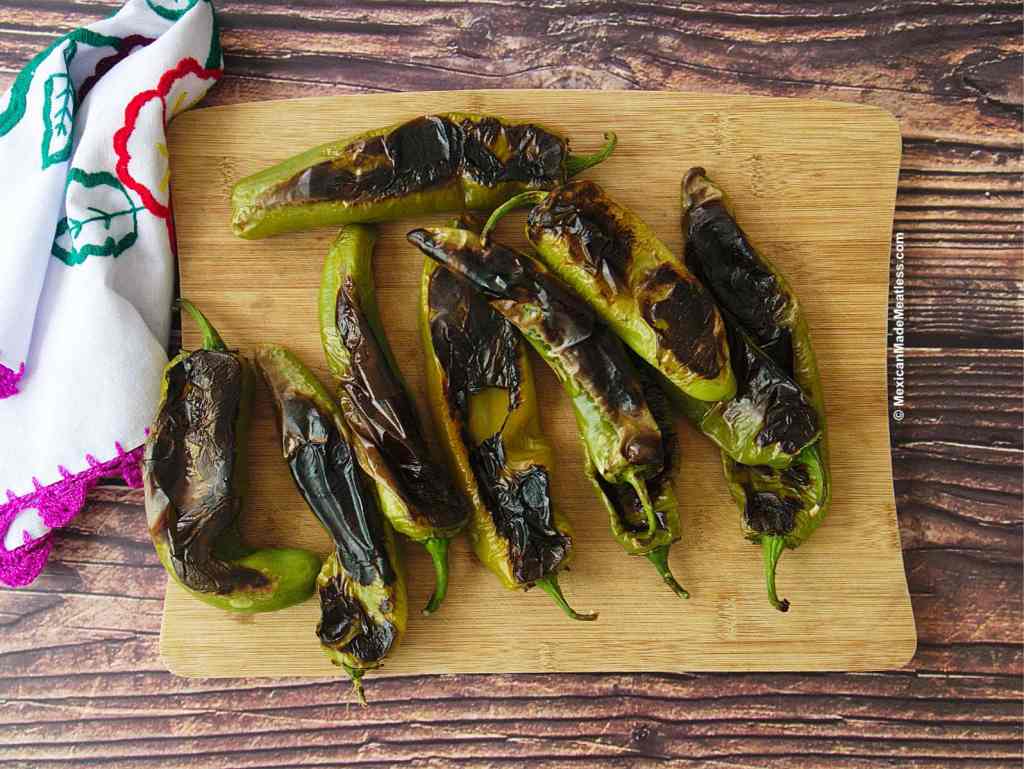
  1. Get two or more Hatch or Ancho or California or Pueblo chiles. They are about six inches long. Fire roast them until the skin is black and blistered, as in the above photo. Lay them aside to cool.
  2. Toss a half handful of vermicelli or fideo noodles in a pan with olive oil and heat until they turn dark brown. Lay them aside. Pieces should be 1/2 to 3/4 inches in length.
  3. In a large pot with cover, add about a quarter cup of olive oil and begin to heat (medium).
  4. Peel and chop one Spanish onion and add.
  5. Using a small sharp knife, trim the blistered skin from the chiles you have fire roasted. Chop them and add to the onions.
  6. Crush six (yes, six!) cloves of garlic and add to the onions and chile.
  7. Add one cup of long grain rice (I use Trader Joe’s Jasmine Rice) to the mixture and stir for a couple of minutes.
  8. Chop up a pound of ripe, fresh tomatoes and add to the rice. I like Campari Tomatoes for this.
  9. Add the browned vermicelli noodles at this point.
  10. Add salt and pepper to taste.
  11. Add one can of chicken (or vegetable) stock and about 3/4 cup of water.
  12. Lower heat and cover.
  13. When most of the liquid has been absorbed, chop one can of pitted black olives roughly and add to the rice mix. Stir to prevent burning from the bottom.

And that’s pretty much it. The fire-roasted chiles give this dish a nice background burn. If you’re a real chile-head, you can also add a Jalapeño or Serrano chile for an added foreground burn. Yow!

I’m still playing with this recipe, so you may hear more from me about this.

Jack Sprat

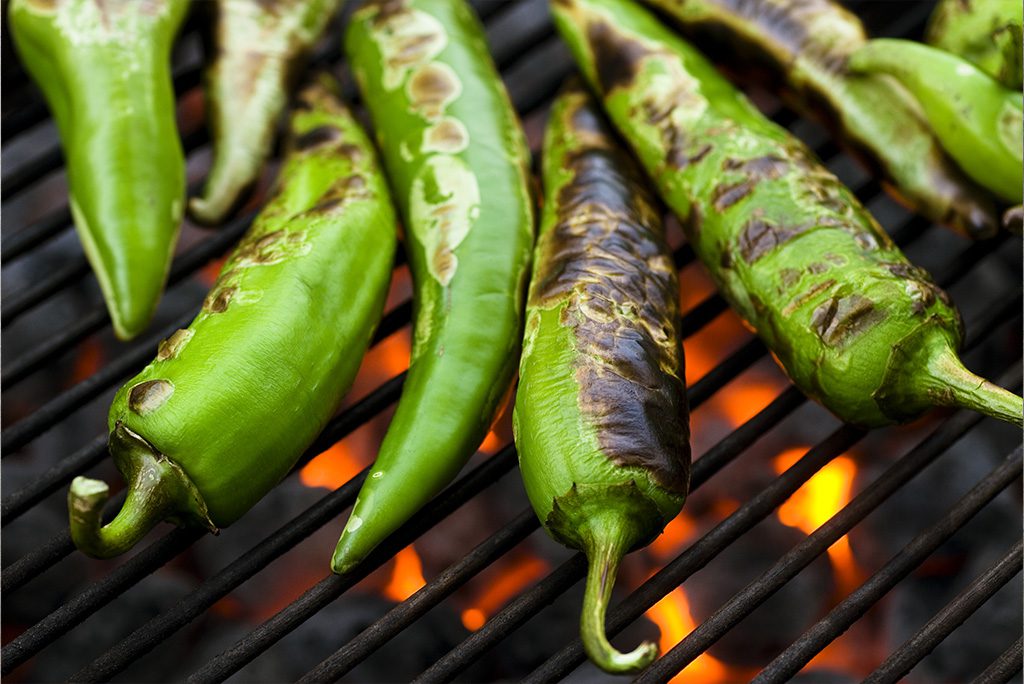
Hatch Chiles Being Roasted on a Grill

You have no doubt heard the old nursery rhyme:

Jack Sprat could eat no fat,
His wife could eat no lean.
And so between them both, you see,
They licked the platter clean.

Martine and I are similarly a study in contrasts. She’s a Republican; I’m an independent Libtard. She has irritable bowel syndrome (IBS), so she pretty much cannot eat anything that has a vowel in its name. I, on the other hand, love highly spiced foods, preferably including my favorite vegetable: hot chile peppers. Somehow we manage to get by despite the differences.

I think it all started with my childhood: My father was a member of the American Independent Party and a staunch supporter of George C. Wallace and his racist platform. I was originally a Democrat, but got tired of the whole circular firing squad thing. So I tend to vote Democratic—but not always on the local level and always as an Independent (No Party Affiliation)..

Somehow I think the contrasts help maintain our relationship, which has been going fairly steady for the last three decades or so. I won’t say it’s been going strong, but steady will do just fine, and I will accept it.

Spanish Barley

Sort of What My Recipe for Spanish Barley Looked Like

Although I am tending more and more toward a non-Vegan vegetarianism, I have always thought that most American vegetarian cooking is totally blah. I take my cue from Indian cuisine, which is not afraid of strong flavors. The basic recipe I used can be found at GoBarley.Com.

I followed the recipe, but with two additions and two substitutions. At this time of year, one can buy Hatch chiles from New Mexico at a good price. I fire-roasted two chiles and peeled off the blistered skin. Then I chopped up the chiles and added it to the recipe.

Instead of diced low-sodium canned tomatoes, I used eight fresh Roma tomatoes which I chopped. Then, in place of plain paprika, I used smoked paprika to give it additional flavor.

Finally, when I served the barley, I added some Fly by Jing Sichuan Chili Crisp, which I described in an earlier post.

Americans are not used to cooking barley as if it were rice, but there are a number of advantages. First of all, it is far better for someone with Type 2 Diabetes to eat grains with a higher percentage of fiber to carbohydrates. One cup of long-grain white rice has 9% of the daily value of fiber, but 54% of the daily value of carbs. Compare that to raw pearled barley: a cup of barley contains 111% of the daily value of fiber compared to 56% of the daily value of carbohydrates.

Foods that are rich in fiber compared to carbohydrates tend not to overload the pancreas. It’s sort of like a mechanism to time-release carbs to the body rather than bomb the pancreas.

Oh, and it also tastes really great. More chewy than rice, but every bit as good if not better.

A Nice Burn

A Sichuan Seasoning That Will Set You on Fire

My brother and I are well-known fire-eaters. Most of the meals I prepare for myself (but not Martine!) are off the charts when it comes to hotness for most of my friends.

It all started when I went on my first vacation to Mexico in 1975 and discovered El Diablito Chile Habanero. There I was in a hot country with smoke pouring out of my ears—and loving every minute of it! After discovering Marie Sharp’s Chile Habanero from Dangriga, Belize in 2019, I thought I had the perfect picante sauce.

Then my brother introduced me to Fly by Jing Sichuan Chili Crisp (illustrated above), which not only has the perfect burn but actually adds flavor. In the last few weeks, I have experimented with Spanish Rice and Spanish Barley, both seasoned with Fly by Jing. Not only was I sold, but I ordered a couple more bottles from Amazon for when my first bottle goes empty (which should be in about a week).

Interestingly, the chili crisps are made with Chinese ingredients originating in Chengdu by a Chinese-American living in Los Angeles. Her name, BTW, is Jing.

Down the Hatch!

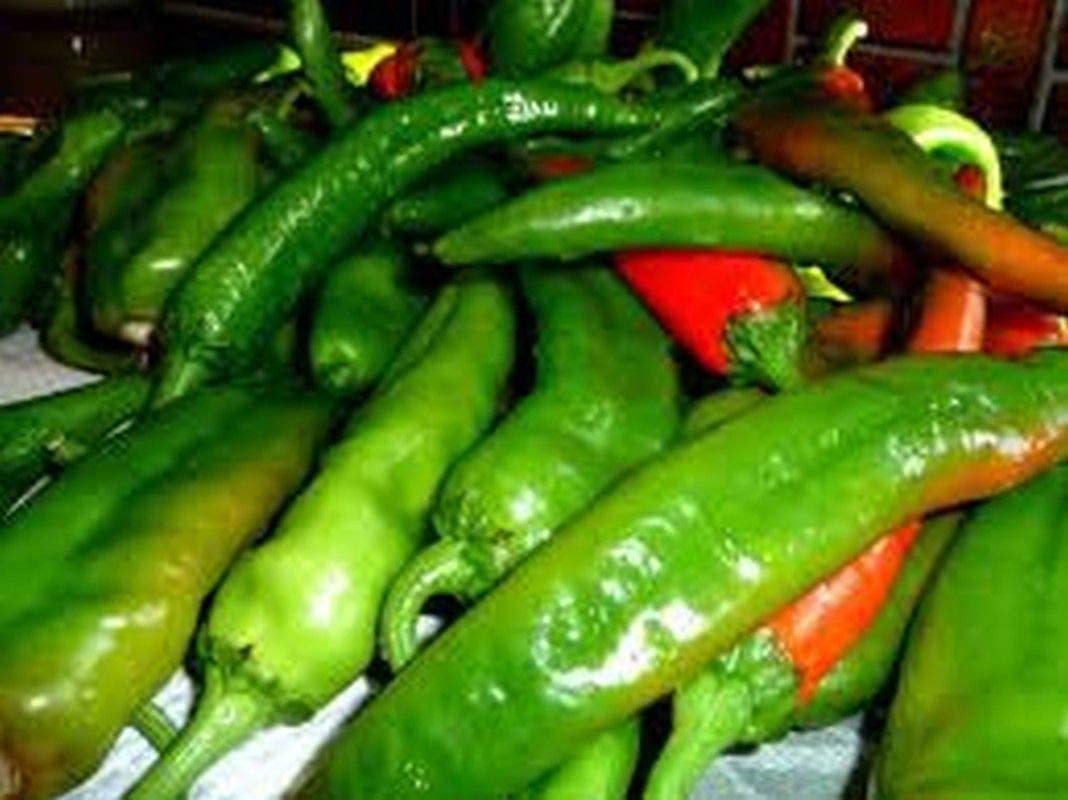
Chiles from Around Hatch, New Mexico

Today I had two meals that featured Hatch chiles. For breakfast, I scrambled three eggs with onion, garlic, and one green Hatch chile. At dinner time, I prepared a vegetarian chick pea curry with potatoes, spinach, sweet red pepper, and one Hatch chile turning from green to red. (You can get the recipe by clicking here.)

There was a time in the late 1980s when I had three consecutive vacations in New Mexico. Not only did I learn about Hatch chiles, but whenever I tent camped I would prepare a meal with rice, onions, and a Hatch chile. It was simple and always delicious.

What is so special about Hatch chiles? For one thing, they come from the area around Hatch, New Mexico, along the Rio Grande, roughly between Arrey to the north and Tonuco Mountain to the south. There’s something about the soil of this region which produces chile peppers that may or may not be spicy hot, but which always taste good.

In the late summer or early autumn, my local Ralphs Super Market carries the chiles either loose or bagged; and I always buy more than I end up using. (Martine does not tolerate spicy foods well.) The loose Hatch chiles are not always hot: I chopped one up with scrambled eggs last week that was no hotter than a regular green pepper, but even then was more flavorful.

I am always saddened when the fresh Hatch chiles are gone. If I were fanatical enough, I could order them frozen from a chile pepper supplier in New Mexico; but I will probably just go back to serranos, jalapeños, and California chiles. I actually like being surprised by the range of hotness in my fresh Hatch chiles. It is something worth looking forward to.


Escaping the Heat

Deep Shade, Ocean Breezes, and Boats

Burton W. Chace Park in Marina Del Rey is no longer a secret. Many people have discovered that, even when the rest of Los Angeles is searingly hot, there is always a cool breeze blowing on the peninsula that sticks out into the Marina. So I took the #16 Santa Monica bus (to avoid the stiff parking fees) to Lincoln and Mindanao Way and walked the half mile from the bus stop to the park. On the way is a handy Trader Joe store where I buy a healthy picnic lunch to take with me.

While there, I read Kaouther Adimi’s delightful book about an Algerian Bookshop that also served as Albert Camus’s first publisher. In the sun, the temperature easily reached the 90s, but in the shade I was comfortable. Martine stayed home resting.

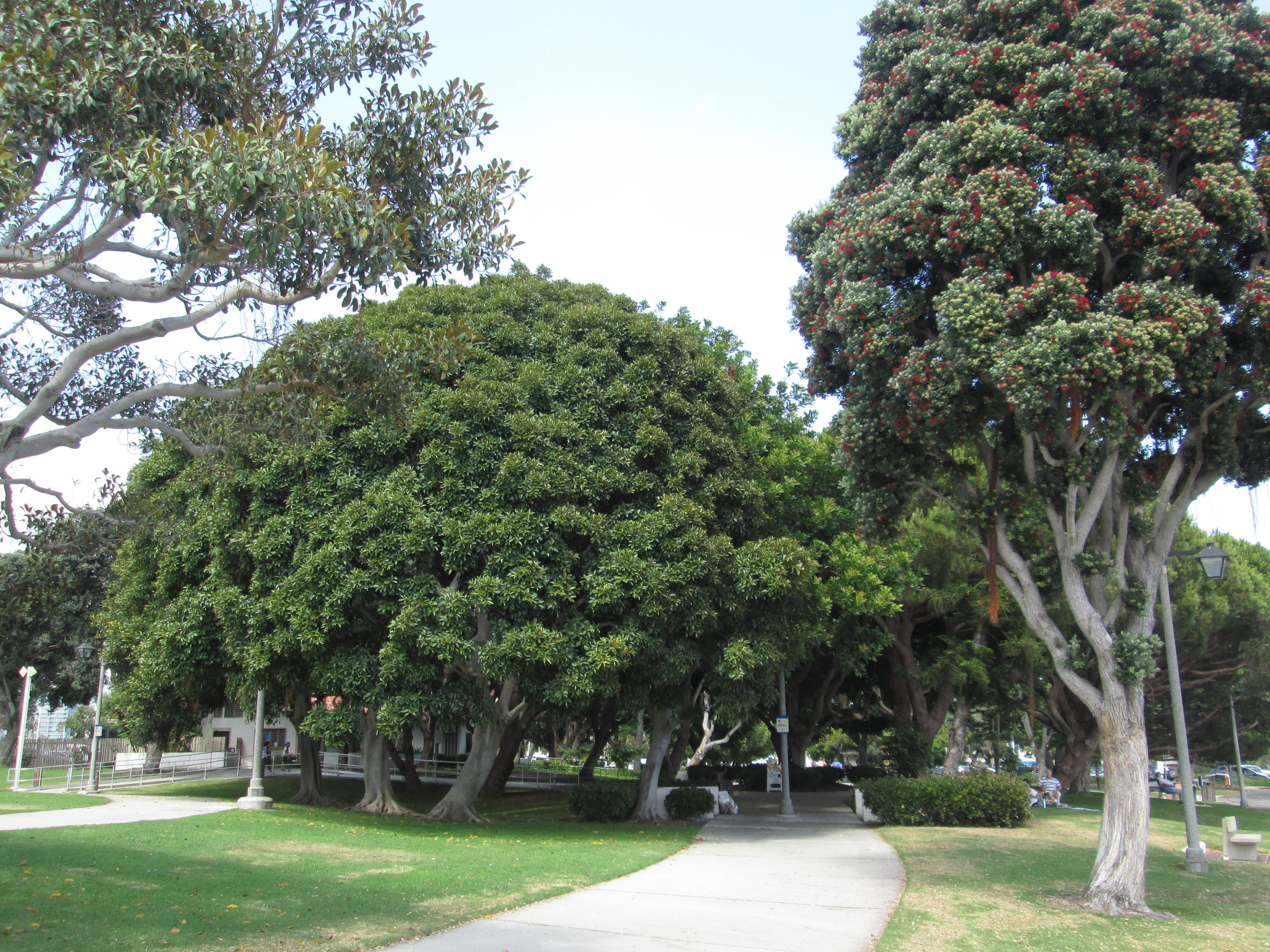
One of the Massive Shade Trees at the Park

The park is so excellent that I am surprised that Donald Trump has not tried to bulldoze it and turn it into a tasteless high rise hotel with gold plumbing fixtures.

Curiously, the predominant language of the park visitors is Russian. They seem to know how to enjoy themselves. Good!

At home, I prepared another vegetarian curry for myself made with potatoes, tomatoes, and peas with rice—and a combination of Serrano and Hatch chiles that challenged this chile-head. All the while, Martine, who is suffering from Irritable Bowel Syndrome looked on ruefully while I ate something that would have exploded her intestines. All she could eat was a banana and a can of Progresso Chicken and Wild Rice soup. She has been suffering with this condition for two weeks now. Tomorrow, I’ll drive her to see the doctor.


Black Beans and Rice

(Mostly) Vegetarian and Muy Picante

As time goes by, I become more vegetarian. Although I do all the cooking in our household, I can’t altogether dispense with meat. This is mostly because Martine seems to think that meat is the only good source of protein. So I alternate meat dishes with vegetarian dishes. At times, I can cook something that Martine is not interested in sampling, such as my black beans and rice.

Now black beans and rice is not normally a spicy dish—but the way I make it, it is. Here is a list of ingredients:

1 cup Basmati rice
1 chopped onion
2 minced Serrano chiles
Several dried chile pods
Several cloves of garlic, minced or crushed
1 15 oz can of black beans with liquid
2½ cups chicken or vegetable stock
Salt and pepper to taste
Garnish with parsley or cilantro

As a certified chile-head, I occasionally have to indulge my love of capsicum. (Don’t worry, I got something else for Martine, who hates chiles so much that she can’t be in the apartment when I cook with them.)

Years ago, I read a book by Frances Moore Lappé entitled Diet for a Small Planet. Her belief was that one could get all the protein one needs by using ingredients whose amino acids, when cooked together, form a complete protein. Beans and rice are two such complementary foods.

Although I tend to use chicken stock to cook the rice, I do not add pieces of meat. So, in fact, my way of preparing it with chicken stock is not technically vegetarian. If you want, you can use vegetable stock or even water.


Deadly Nightshade

So Many Foods I Love Are Related to Deadly Nightshade

On several occasions, I have been warned by good friends to beware of foods that are related to deadly nightshade (a.k.a. belladonna). Unfortunately, these include some of my favorites, including:

  • Potatoes
  • Tomatoes
  • Chile peppers
  • Bell peppers
  • Eggplant
  • Paprika

It is not unusual to find foods that have unsavory relatives. Perhaps most common of these is common table salt, which is made up of two poisonous elements, sodium and chlorine. Despite all the bad press that salt has received from many in the medical profession, it is indisputable that the human body cannot exist without it, especially in hot climates.

Despite what some of my more health-food conscious friends may say, I have no intention in cutting back on members of the family Solanaceae. In fact, I believe that the foods in the above list are positively good for me. If anything, I will eat more of them in future. For instance, I cannot imagine living my life without chile peppers.


To BZ or Not To BZ

Beach Scene at Caye Caulker, Belize

Normally, I am not really a beach person. As my planned vacation to Yucatán takes place, I am thinking of also including Caye Caulker in Belize as a little side trip, a sort of vacation from my vacation so to speak. Why on earth would I be interested in knocking around on a Caribbean island? Especially when there’s nothing of any archeological import to be found there. I don’t particularly like to swim, snorkel, or dive: Hell, I don’t even like wearing shorts.

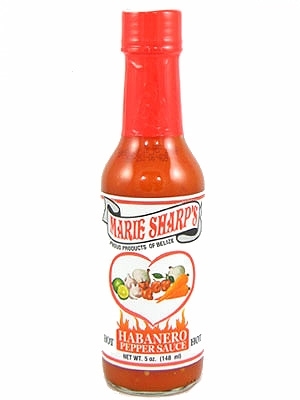
The answer goes back to my last trip. Throughout Eastern Guatemala, there was one condiment that was de rigeur on every restaurant table. It was a bottle of Marie Sharp’s Hot Habanero Pepper Sauce. Now I have always been partial to habañero (aka Scotch Bonnet) chiles, ever since my 1975 trip to Yucatán. Until I encountered those Marie Sharp’s sauces, with their motto “Proud Products of Belize,” I was contented with the El Yucateco Salsas de Chile Habañero, which came on hot and fierce, and maybe a little raw. What fascinated me about the Marie Sharp’s product was that it had the heat, but also the sweetness of carrots. How did she do it?

The Product in Question

Mind you, I still like El Yucateco, but Marie has won me over.

Now, how does that translate me wanting to spend a few days on an island off the coast of Belize? When I went to Guatemala, I was intrigued by the cultural mix at the port of Livingston: Maya, Garifuna, etc. I thought it would be fun after tromping through miles of Maya ruins in the jungle to sit under a palapa with a cool drink (perhaps a Belikin beer) and a good book. And available to me would be the best of Maya and Caribbean cooking. That sounds like a culinarily and culturally interesting diversion.

Marie Sharp’s manufacturing complex is actually by Stann’s Creek near Dangriga in Southern Belize, but that’s a tad too jungly for me.

From Chetumal in Mexico, I could take a quick boat ride to Caye (that’s pronounced KEY in Belize) Caulker and pass through customs at Ambergris Caye. So I might very well BZ happy there.


Chilehead

These Used To Be the Hottest Chiles on Record, But Things Have Changed

It was several years ago, when my brother was living in Paso Robles near California’s Central Coast. When I would go to visit him, we usually went shopping together at the farmers’ market at nearby Templeton. Once, one vendor selling olives stuffed with chile habaneros (see photo above) offered Dan and me the opportunity to taste one, all the while grinning as if he expected us to spit them out. We ate the proffered olives, smiled, and asked for more. The vendor looked at us as if we were from the hot side of Mercury.

My brother and I are bona fide chiliheads. It’s one of the things we enjoy most about getting together, because both of us are surrounded by people who blanch at the thought of biting into a sliver of jalapeño, and who carefully remove all pepperoncinis from their salads. We came by this through our mother, Sophie, who used to cook a Hungarian dish called lecso (pronounced LETCH-o), a kind of Hungarian adaptation of Spanish rice seasoned with hot Hungarian banana peppers. When I was growing up, I thought that lecso was altogether too spicy for me. Now I rather like it. (My father, however, did not: He was one of the digestively challenged.)

There is a means of measuring the hotness of chiles called the Scoville Heat Scale. Here is a summary of relative hotness of chiles:

Mexi-Bells, New Mexica, New Mexico, Anaheim, Big Jim, Peperonicini, Santa Fe Grande, El Paso, Cherry     1 100-1,000
Coronado, Mumex Big Jim, Sangria, Anaheim     2 1,000-1,500
Pasilla, Mulato, Ancho, Poblano, Espanola, Pulla     3 1,500-2,500
Hatch Green     4 2,000-5,000
Rocotillo     5 2,500-5,000
Yellow Wax, Serrano, Jalapeno, Guajillo, Mirasol     6 5,000-15,000
Hidalgo, Puya, Hot Wax, Chipotle     7 15,000-30,000
Chile De Arbol, Manzano     8 30,000-50,000
Santaka, Pequin, Super Chile, Santaka, Cayenne, Tobasco, Aji, Jaloro     9 50,000-100,000
Bohemian, Tabiche, Tepin, Haimen, Chiltepin, Thai, Yatsufusa    10 100,000-350,000
Red Savina Habanero, Chocolate Habanero, Indian Tezpur, Scotch Bonnet, Orange Habanero, Fatali, Devil Toung, Kumataka, Datili, Birds Eye, Jamaican Hot    11 350,000-855,000
Ghost Pepper (Bhut Jolokia, a.k.a. Naga Jolokia), Naga Viper, 7 Pot Primo, 7 Pot Douglah, Trinidad Moruga Scorpion, Carolina Reaper    12 855,000-2,200,000

I can eat chiles up to about half a million Scoville units, namely the habaneros or Scotch Bonnets. If I were to make a large pot of soup, I could put half a chopped habanero in the pot—but no more! As for the superhot chiles such as the Carolina Reaper or Ghost Chiles, they are really too hot for comfortable human consumption, even by chiliheads. I have had powdered ghost chiles on occasion, but only in m-o-d-e-r-a-t-i-o-n.