
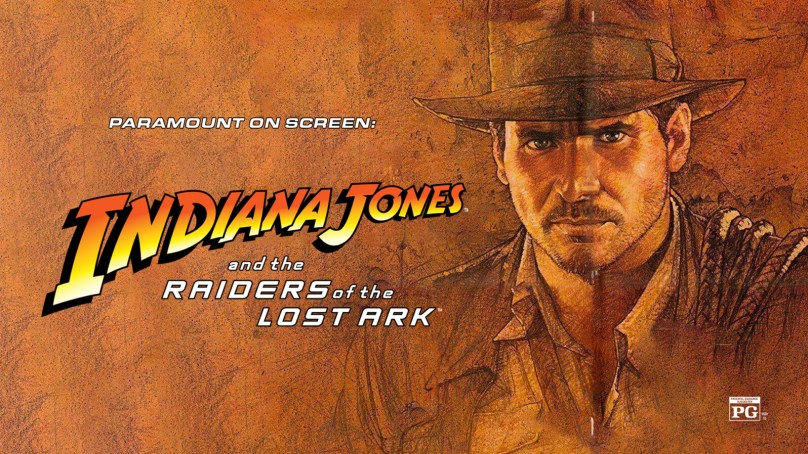
Indiana Jones “Discovers” Machu Picchu

Did You Know That Indy Was Based On Hiram Bingham III?

He had colonialism his his genes. The man who “discovered” Machu Picchu was the grandson of the New England Protestant missionary who forbade the Hawaiians to surf in the nude and who Christianized the islands. This same grandson trained to follow in his grandfather’s footsteps and make the peoples of Hawaii even more messed up than they already were.

Instead the younger Hiram decided to become an explorer and archeologist in Peru, where he was probably the first white man to visit Machu Picchu. He pretty much claimed the site as his life’s work, though he made a couple colossal error in judgment that tarnished his reputation: First, the site was not the same as Tampu Tocco, where the Incas under Manco Capac first emerged. And it certainly was not the same as Vilcabamba, where the Incas under Tupac Amaru fled for safety after Pizzaro’s Conquistadores laid waste to his kingdom. And it was not inhabited by the colorful “Virgins of the Sun.” Hiram liked the whole “lost cities” shtick and applied it everywhere his boots trod.
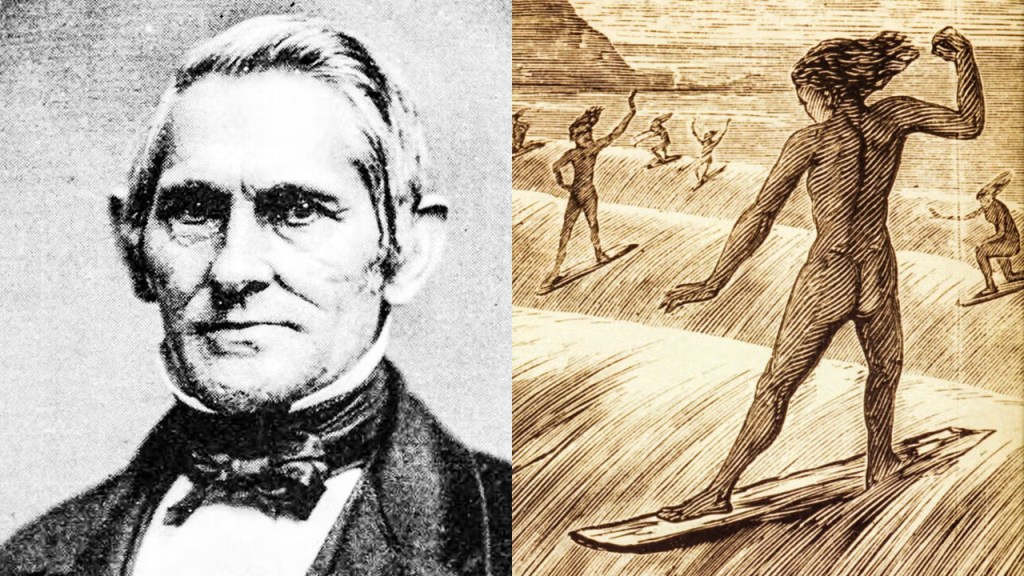
Missionary Grandpa Hiram Bingham I

That was only the beginning of Bingham’s trials and tribulations. Early on, the government of Peru decided they wanted control over what was dug up at their archeological sites. That is a reasonable request which is generally observed today; but back in the early days of 1911-1912, archeologists and their sponsoring stateside institutions wanted to do their own empire building. In Bingham’s case, he was bankrolled by Yale University and the National Geographic Society.

Bingham was a bit squirrely when it came to observing the Peruvian government’s reasonable restrictions and did his level best to sidestep them at every opportunity.

So the natural next step was for Hiram to go into politics, becoming in short order, lieutenant governor of Connecticut, governor of Connecticut, and Republican U.S. Senator.

“Accidental to the Truth”

The Flag of Venezuela

I have just finished reading V. S. Naipaul’s A Way in the World. No one can describe the sometimes barely visible gradations that make up racism and colonialism. At one point, his character Francisco Miranda—a fictional precursor to Simón Bolívar, José de San Martín, and the other liberators of South America from Spanish rule—discusses the difficulties inherent in unifying the newly freed peoples of Venezuela:

“In all your years of writing about Venezuela and South America, you simplified it, General. You talked about Incas and white people. You talked about people worthy of Plato’s republic. You always left out two of the colours. You left out the black and you left out the mulatto. Was that because you were far away?”

“No. I did it because it was easier for me intellectually. Most of my ideas about liberty came to me from conversation and reading when I was abroad. So the country I created in my mind became more and more like the countries I read about. There were no Negroes in Tom Paine or Rousseau. And when I tried to be like them I found it hard to fit in the Negroes. Of course, I knew they existed. But I thought of the m as accidental to the truth I was getting at. I felt when I came to write that I had to leave them out. Because of the way I have lived, always in other people’s countries, I have always been able to hold two or more different ideas in my head about the same thing. Two ideas about my country, two or three or four ideas about myself. I have paid a heavy price for this.”

As I read these lines, I suddenly thought about why Spain lost South America. The Spanish monarchy sent out mostly men, accompanied by very few Spanish women. Many of these men married native women, or black women, or mulattoes. Consequently, the thought arouse back on the Iberian peninsula that these Spaniards who “went native” probably did not have the best interests of the Spanish monarchy at heart. Consequently, they were almost never promoted to positions of authority. The rebels who defeated the Spanish armies were mostly these men, referred to as Creoles, who were not quite Spanish.