At Saint Sophia

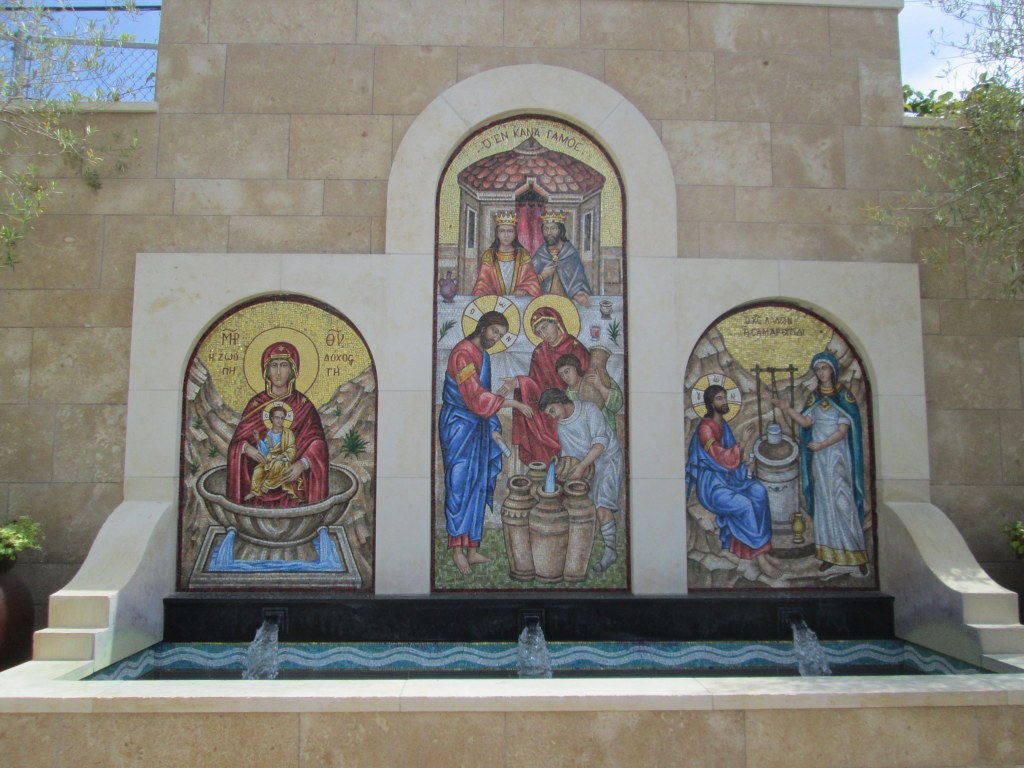
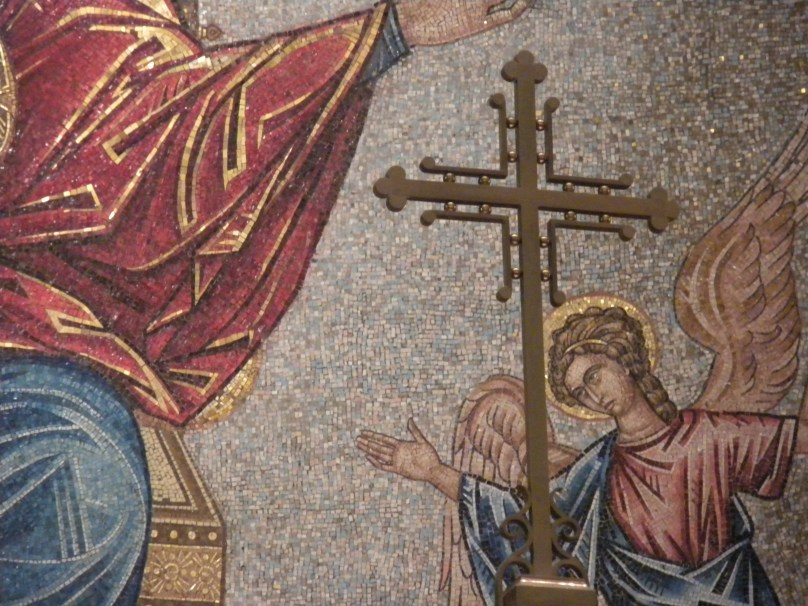
Details of Mosaic at Saint Sophia Greek Orthodox Cathedral

This was the second Greek Festival at Saint Sophia since the end of the Covid-19 lockdown. It wasn’t like it used to be before the epidemic hit. Nonetheless, Martine and I enjoyed ourselves with some excellent spanakopita (spinach and feta cheese in a pastry).

We spent an hour in what is the most beautiful church in Los Angeles, whose building was spearheaded by American movie executive Charles P. Skouras. During services, Skouras controlled the lighting in the church from his reserved pew in the left aisle. Never mind that he was a bit of a control freak, but his splendid church is worth visiting. It sits on Normandie one block south of Pico Boulevard.

As America turns from being a country that welcomed minorities to one that imprisons and deports them, it is inevitable that, as time passes, the celebrations will become less ethnic, the food less authentic, and the parishioners more English-speaking. Also, we miss Father John Bakas who served for twenty-seven years as Dean of the Cathedral, but who retired in 2023.

I’ll still try to show up at the festivals, even though I am Hungarian and Martine is French. We love Greek food and find Orthodox Christianity more genuinely welcoming.

Saint Sophia’s Greekfests used to be held during the summer. The temperature today was perfect (in the mid-seventies).

A Major Assumption

The Image of Christ Pantokrator at Assumption Greek Orthodox Church

The assumption of which I speak is that of the Blessed Virgin Mary Theotokos, or “God Bearer.” Today Martine and I drove to Long Beach to visit the Greek festival at Assumption of the Blessed Virgin Mary Greek Orthodox Church.

According to both the Catholic and Greek Orthodox churches, when the Blessed Virgin died, she was taken up body and soul to heaven. Her feast day is celebrated by both religions on August 15.

There was music, dancing, Greek food (including scrumptious cookies), and a tour of the colorful church. The Assumption of the BVM Church in Long Beach is particularly colorful: The walls have painted images of literally hundreds of saints in addition to Biblical scenes from both the Old and New Testaments.

One of the saints depicted was Peter the Aleut, surnamed Cungagnak, who was martyred in 1815 after being tortured and killed by the Spanish in California. There are some doubts as to whether Peter ever existed, as the Russian Orthodox ministers on Kodiak Island said the Jesuits were behind the martyrdom. There were no Jesuits in California at that time, just mostly Franciscans. But it’s a nice story anyway.

South Bay Greek Festival

Fountain at St. Katherine Greek Orthodox Church

Between Memorial Day Weekend and early October, there are several Greek festivals in Southern California. Typically, Martine and I visit the following Greek Orthodox churches during festival time:

  • St. Nicholas in the San Fernando Valley
  • St. Katherine in Redondo Beach
  • The Assumption of the Blessed Virgin Mary in Long Beach
  • Saint Sophia Cathedral near downtown L.A.

The best things about these festivals are the Greek food, usually cooked by very competent Greek housewives—accompanied by some excellent pastries. The other thing is that the clergy at these festivals do an excellent job of proselytizing the visiting crowds.

Today, for instance, the Protopresbyter of St, Katherine’s, Father Michael Courey, is an expert on icons and gave an excellent slide presentation entitled “Byzantine Iconography” in the church sanctuary.

Although I was brought up as a Roman Catholic, I find myself drawn to the Greek Orthodox church for a number of reasons, not least among which is the excellent food. I even used to attend the Greek cooking demonstrations at St. Katherine and Santa Sophia conducted by Pitsa Captain and the late Akrevoe Emmanouilides.

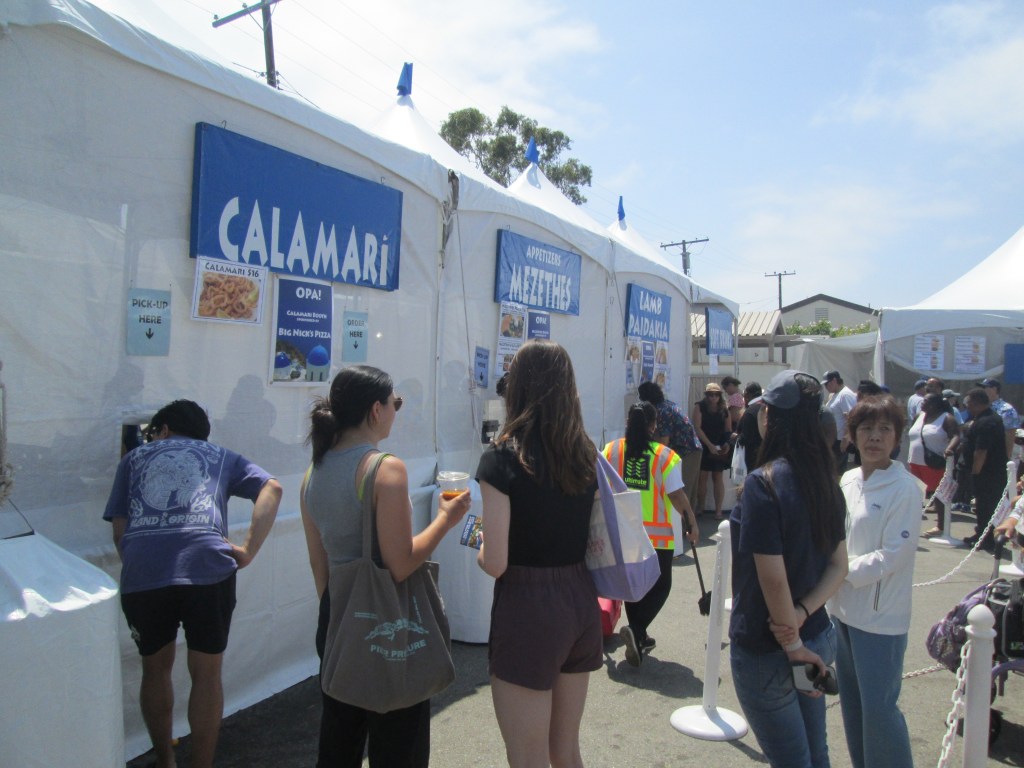
Waiting in Line for Greek Goodies

I know that ethnic-oriented churches have their difficulties staying afloat these days, but St. Katherine’s seems to have found the right formula: good food, interesting music and dance, and very competent marketing. It also helps that the Greek Orthodox church allows for married clergy (but, interestingly enough, only unmarried bishops).

It’s Greek To Me

The Iconostasis at Assumption of the BVM in Long Beach

On Saturday, Martine and I attended the annual festival at Assumption of the Blessed Virgin Mary Greek Orthodox Church in Long Beach. It was our third Greek festival of the year, and probably not the last. We like the food, the music, and the churches. The Long Beach church was perhaps a bit on the gaudy side, but it was all reverently done.

There remain two more Greek festivals over the next six weeks: St Anthony Greek Orthodox Church on September 20-22 and the big event at Saint Sophia Greek Orthodox Church on October 5-6. I am pretty sure that we’ll be at Saint Sophia. We’ve never been to St Anthony, but we’ll go if I could talk Martine into it.

I love ethnic festivals, particularly if they’re Hungarian. But these are becoming fewer in number as time goes on, and the Magyar population of Southern California becomes more acculturated and dispersed. The Greek festivals seem to be more of a going thing. I hope that it continues to be.

Bad Food

Want to Live a Short Life?

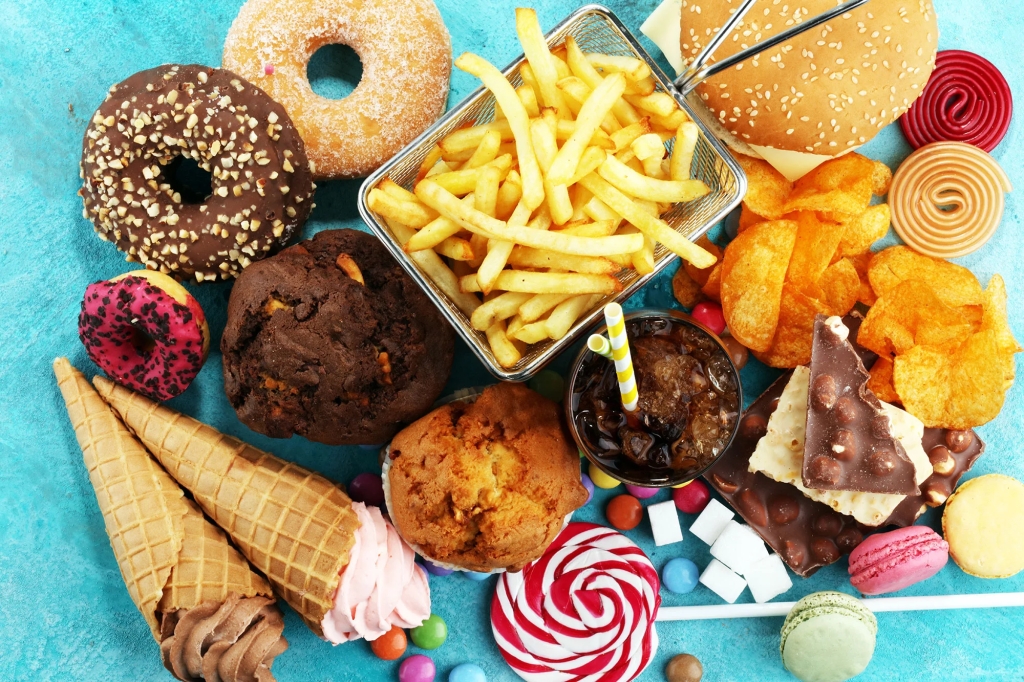
If one looks at what Americans eat, it’s easy to be pessimistic about their health. Scads of fatty fast foods kept on the edge of acceptability by strange petrochemicals, gallons of super-sweet brightly colored beverages, loads of sugar and salt in everything—it’s not a happy prospect.

On Memorial Day weekend, Martine and I went to a Greek festival in the San Fernando Valley. We were shocked to find that, within a short few years, the ability of the church kitchen volunteers to produce good Greek food has declined precipitately. I’ve always loved fried calamari, but what I got was super thin slices of calamari with heavy, slightly burnt breading.

Go to the supermarket, and you will find whole aisles of what purports to be food and is all to frequently of low or no nutritional value. And that is what tends to predominate in the shopping carts of the people in line in front of me. It appears that more and more people are buying prepared food and not bothering to put ingredients together in the kitchen and cook them.

I think that the Covid epidemic is partly responsible. Curiously, it had the opposite effect on me. I started cooking more—and enjoying it more! The only unfortunate thing is that Martine and I are heading in different directions insofar as food is concerned. No matter, I think it’s important to compromise so that, in the long haul, we both get what we want.

Gradually Becoming Attenuated

Prayer garden at Saint Katherine’s Greek Orthodox Church

It was Greek Festival time in Redondo Beach this weekend at Saint Katherine’s Greek Orthodox Church. Martine and I love attending Greek festivals, even though we realize that they are becoming less and less ethnic each year, as the families of Greek-Americans drift farther and farther away from the authenticity of the older generation.

We enjoyed ourselves nonetheless. Martine particularly loves spanakopita (Greek spinach pie with feta cheese), while I had pastitsio (a lasagna-like dish of baked pasta with béchamel sauce) and fasolakia (Greek green beans). The food was good, but not up to the level of previous years.

Missing were Akrevoe Emmanouilides and Pitsa Captain, whose cooking classes at the festival were a tasty highlight. Alas, Akrevoe is no more; and there are no more cooking classes at the festival..

One thing which did not change were the tours of the church, with a discussion with the priest about some particulars of the Greek Orthodox faith, toward which I have long had some leanings. I was raised in the Roman Catholic faith, but have drifted away due to some disagreements with dogma.

Although the Greek Festivals are becoming less authentically Greek, there were hundreds of people in attendance. The heavy crowds made it difficult to move about the grounds, and led to Martine and I leaving soon after we ate lunch and visited the church.

The Long Retreat

Middle School Greek Dancers at St Nicholas Greek Orthodox Church

I remember a time when most foreign-born Americans were of European ethnicity. My father, Elek Paris, was born in what is now the Republic of Slovakia; and my mother, who was actually born in Ohio, was taken to Hungary to be raised by her grandparents. For the first five or six years of my life, I thought that Hungarian was the language of the United States.

What inevitably happens has happened. The children of European-born immigrants see their parents’ culture, religion, and language as something quaint which they are being reluctantly marshaled into accepting. The three-year Covid-19 lockdown has brought this tendency into sharper focus.

Yesterday, Martine and I attended the annual Greek Festival at St Nicholas in Northridge for the first time since 2019. Sure enough, the tours of the church were more perfunctory; the calamari was more breading than squid; and there were fewer people able to do the traditional dance steps. I noticed much the same at the two Hungarian festivals we attended this month. Only the Grace Hungarian Reform Church in Reseda had anything like the same quality of food and entertainment as before the lockdown.

Our neighbors downstairs are refugees from Putin’s Ukrainian invasion. I notice that their two little daughters are addressing their mother in English instead of Ukrainian.

When I first came to Los Angeles, there were at least half a dozen Hungarian restaurants. Now there are none. If I want real Hungarian food, I’ll either have to cook it myself or visit my brother more often. (He’s a far better cook than I am.)

If Martine and I expect to find more authentic ethnic events, we will have to concentrate on the Asian and Latin American ethnic events, as they have arrived in this country more recently.

Fading Away

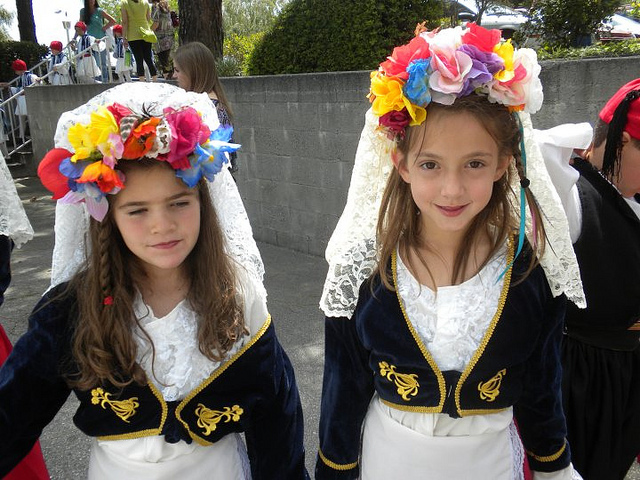
Little Girls in Greek Dance Costumes (2011)

In the time that Martine and I have been going to Greek church festivals in Los Angeles, we’ve noticed several trends:

  • The food is getting less authentic. Today, Martine ordered a spanakopita (spinach and cheese pie) that did not contain any cheese.
  • It seems that fewer of the parishioners speak Greek. Is it that the older generation is passing on?
  • The priests are less involved personally with the festivals, particularly in offering church tours to visitors.

This is less true of Saint Sophia Cathedral in downtown L.A. which draws crowds from a much larger area, and which is across the street from Papa Cristo’s, the most authentic Greek restaurant in town.

The same is true of the Hungarian festivals. At first, I felt abashed by my poor command of the Magyar language. Now my Hungarian seems to have gotten better, or again, are the old immigrants dying off and making my poor language skills look better by comparison?

I suppose this is a natural process. Many of the places we visit may not even be around in a few years. For instance, there do not seem to be any Hungarian restaurants left in our nation’s second largest city. Back when I first moved to L.A., there were a number of choices, especially the much lamented Hortobagy.

If you want a more authentic ethnic experience in Los Angeles, you have to look to Latin America and Asia. There is a bustling Thai and Korean scene; and numerous options involving Mexican, Central and South American culture. There are numerous places offering Oaxacan food. Culver City has an Indian restaurant offering the cuisine of Southern India’s State of Kerala.

As to the girls in the above photograph, I could have sworn that they were in a group of teenage girls who passed us on the way to our parked car. They were busy calling each other “chicken butt.”


It Eventually Had to Happen

My Right Front Headlight

I have been twenty-two years without an auto accident. It had to happen eventually, and fortunately no one was hurt.

On Saturday, Martine and I went to the Greek Festival at Santa Sophia Cathedral near downtown. It was a hot day with temperatures going up to 90° (32º Celsius) or more. We spent most of the time in their air-conditioned parish hall sampling the Greek goodies. When it was time to go, we went to our car, which was parked at Saint Ignatius High School’s parking lot and headed north on Dewey Street. Just as we approached Pico Boulevard, a driver in a parked car opened his door, which my Nissan slammed into, wedging his driver’s side door hard against my passenger side door. Martine was seated about three inches from the impact.

My Nissan Pathfinder is now having some body work done. It appears that I will have no blame in this particular incident, as my car was parallel to his when I hit his car door.

The driver was a Latino who didn’t quite understand how accidents are handled in the United States. I felt sorry for him. Luckily, he was insured. He wanted to call the police in. I encouraged him to and offered to wait. He was disappointed when, upon calling them a second time, they told him they weren’t coming out unless someone was injured. He shook his head and said he didn’t understand how this country worked. That’s OK: Neither do I. In the end, we wound up shaking hands. I didn’t turn out to be the Gringo pig he expected (at least I hope).

Damaged were to my front bumper, right headlight, a gash on the panel to the right of the engine, and my right rear-view mirror, which hangs on two thin wires.

Another Day, Another Nationality

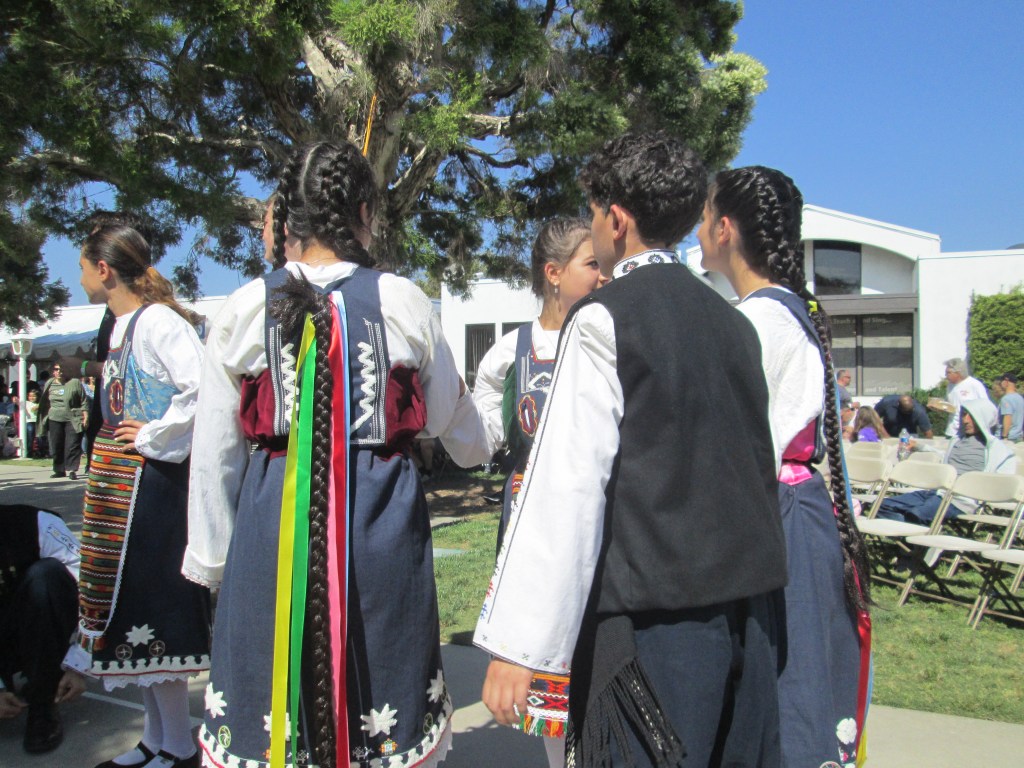
Costumed Children Waiting to Dance

Yesterday was Scottish, today was Greek. Every Memorial Day weekend, Saint Nicholas Greek Orthodox Church in North Hills puts on a three-day Greek festival with food, dancing, and vendors. It is one of three Southern California Greek festivals that Martine and I attend. For Martine, the main attraction is spanakopita, Greek spinach and cheese pie, the baked goods redolent of honey and nuts, and he beautifully decorated church.

My preference is to see the children dancing. As they go through their steps, members of their family step forward and shower the dancers with one-dollar bills, which are picked up after the performance. And, although I was raised as a Roman Catholic, I have always had a warm spot in my heart for the Greek Church.

I sometimes wonder what will happen in the years to come as the younger generation grows more detached from the values of their parents. Many of the older parishioners still speak to one another in demotic Greek, while the children are just American kids trying to make their own way in the world. When the girls in the above picture grow up, will the old ways matter to their own children? What about the Greek language? the cuisine? even the religion?

Are we seeing the last florescence of children trying to adhere to their parents’ folkways? Perhaps not. Trumpf to the contrary, America is still seeing waves of immigrants, mostly from Asia and Latin America. As a Hungarian, I am closer to the European ethnic ways; though the Central Americans and Koreans and Persians also have a lot to offer.