
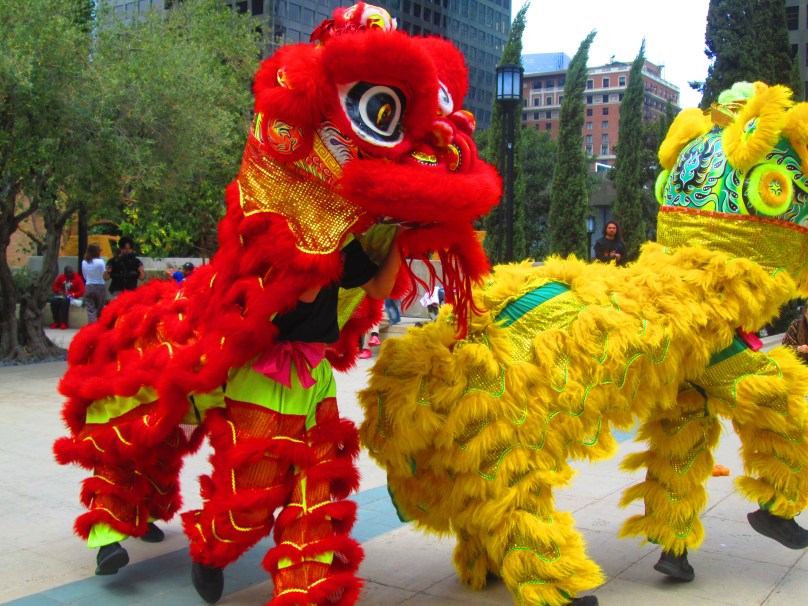
Colorful Lion Dancers from UCLA’s Jade Lotus Lion Dance Troupe
Martine and sat on a ledge in the Maguire Gardens by the west entrance to the Los Angeles Central Library. At 11 am two pairs of lion dancers entered and performed a vigorous dance to open this year’s AAPI Joy: Voices, Then & Now. This is a celebration by various local Asian and Pacific Islander groups of their cultural heritage and the experience of living in Southern California.
After the dancers left, I notices the inscription in Latin above the west entrance: ET QUASI CURSORES VITAI LAMPADA TRADUNT. After doing a little digging, I found the quote comes from Book 2 of the De Rerum Natura (The Nature of Things) by Lucretius and, translated, means “and like runners, they pass on the torch of life.” Very appropriate.
We had attended the AAPI Joy event last year and were happy to find there were even more events scattered across the library premises this year. We attended four of them:
- The lion dancers
- Book awards to Filipino-American authors receiving the Carlos Bulosan Book Club awards
- A Filipino dance troupe called Kayamanan Ng Lahi performing dances from Mindanao
- The Koto and Nihon Buyo group playing popular Japanese koto music accompanied by dancers
I like the special events put on by the Central Library. Over the last eight years, the library has become a major factor in my life—thanks largely to the opening of the Exposition Line (the E train) on L.A.’s Metro Rail. It has been an unfailing source of great books, an ever-present help to my psyche thanks to the Thursday Mindful Meditation sessions, and a provider of entertainment at their luxurious Mark Taper Auditorium.
My trips to the library downtown are now one of the highlights of my life.



You must be logged in to post a comment.