“A World Construed Out of Blood”

The Best American Novel I Have Read in Years

I have seldom been so impressed by an American novel—especially a recent one—as I was by Cormac McCarthy’s The Crossing. The young hero, Billy Parham, crosses back and forth three times between New Mexico and Old Mexico. Finding his parents killed and robbed of their livestock, he is not at home either in the United States or the mountains of Mexico.

McCarthy writes with an Old Testament intensity of the kindness and evil that Billy finds across the Rio Grande. At one point, he writes:

When the flames came up her eyes burned out there like gatelamps to another world. A world burning on the shore of an unknowable void. A world construed out of blood and blood’s alcahest and blood in its core and in its integument because it was that nothing save blood had power to resonate against that void which threatened hourly to destroy it.

After finding his family slain and dispersed, Billy manages to locate his younger brother, Boyd, and returns with him to Mexico looking for the horses stolen from his father. Boyd manages to impress the campesinos they meet, wins the nickname El Guërito, and is described by the author:

He looked fourteen going on some age that never was. He looked as if he’d been sitting there and God made the trees and rocks around him. He looked like his own reincarnation and then his own again. Above all else he looked to be filled with a terrible sadness. As if he harbored news of some horrendous loss that no one else had heard of yet. Some vast tragedy of the way the world was.

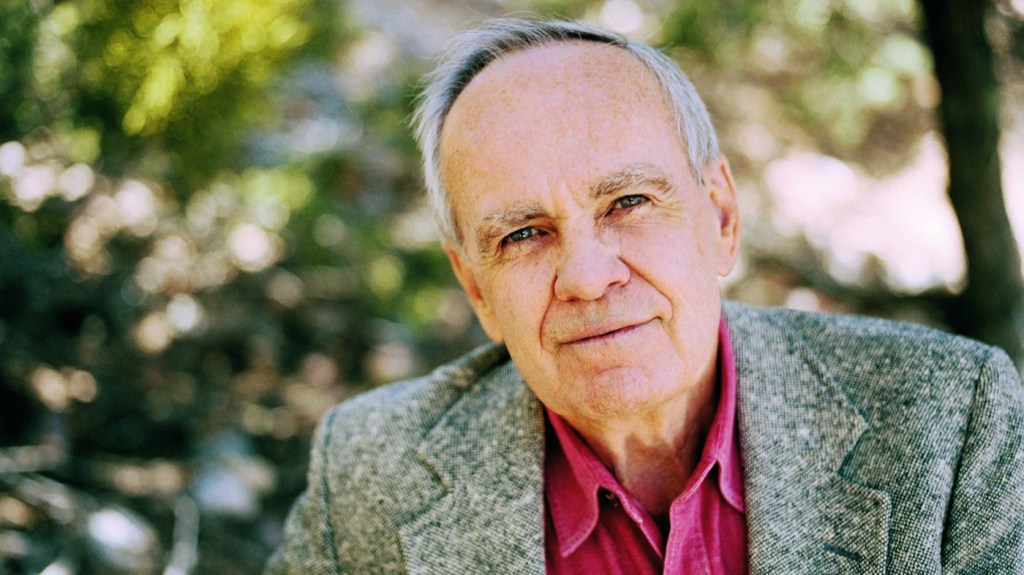
Author Cormac McCarthy

I have been impressed by McCarthy’s work before, when I read Blood Meridian, or The Evening Redness in the West (1985) and All the Pretty Horses (1992). So far, I have read the first two novels of McCarthy’s Border Trilogy, which consists of All the Pretty Horses, The Crossing (1994), and Cities of the Plain (1998). After reading the next novel in the trilogy, I will backtrack and read his first four novels, which are set in the South. Then I will move on to No Country for Old Men (2005) and The Road (2006).

One little note: I would not recommend that you read The Crossing unless you know some Spanish. Much of the dialog set in Mexico is in untranslated Spanish. I was able to get by pretty well, though I had my Cassell’s Spanish Dictionary at my side. But if you can tolerate the language factor, I think you will be mightily impressed by McCarthy’s work.

Unfinished Business Abroad

The East Fjords of Iceland

I still have places to see. Even though I have been to Iceland, Argentina, and the Yucatán Peninsula of Mexico several times each, I have missed a number of destinations. These are just some of them.

Iceland’s Far Northeast

I have been to Egilsstaðir where I had to change buses on my way to Höfn and Hornstrandir, but I have never seen Iceland’s wild northeast coast between Seydisfjorður and Borgarfjörður Eystri. As my brother once told me, I am drawn to wild and desolate places—probably because I have lived most of my life in the United States’s second largest city.

This is one trip for which I would have to rent a car, as public transit here is mostly potty. And I would have to be prepared for bad weather at any time of the year. But with a good four-wheel-drive vehicle, I think I can hack it.

Southeastern Campeche State

Look at All the Maya Ruins Along Route 186 in Campeche

Back in the heyday of the Maya from around AD 600-800, the southeast of the State of Campeche was where it was happening. Particularly important was Calakmul, which was a major competitor to Tikal in Guatemala’s Petén region. The only town of any size in the area is Xpuhil. Ruins include Balamkú, Chicanna, El Ramonal, La Muñeca, Hormiguero, Xpujil, and Rio Bec.

This is one trip where I would have to hire a guide with a car. The accommodations and dining are probably acceptable, but not great. And I would need to apply large amounts of DEET insect repellent, as this area is jungle and thinly inhabited now.

Argentina’s Patagonian Coast

The South South Atlantic

I am intrigued by this wild coast and would love to visit Rio Gallegos, Puerto San Julian, Puerto Deseado, and Comodoro Rivadavia, the port from which Argentina launched its attack on the Falkland Islands, or the Islas Malvinas, as they insist on calling it to this day.

The extreme South Atlantic coast of the provinces of Santa Cruz and Tierra del Fuego are very much unfinished business. In 2006 in broke my shoulder in Ushuaia, which forced me to cancel my ride via a TecniAustral bus to Rio Gallegos, from which I planned to work my way north back to Buenos Aires. But, as the pain was too much to bear, I had to fly back to the United States and get better.

In 2011, Martine and I flew from Ushuaia to El Calafate, and thereupon on to Trelew and Buenos Aires. I’d love to do it by bus, at least as far as Comodoro, from where I could fly the rest of the way.

Obviously, I still have places to go.

Confidenciales

Love Seats (Known as Confidenciales) on Mérida’s Plaza de la independencia

Mérida is a city full of little surprises. At first, one is conscious of the heat and humidity, followed by all that goes into making up a tropical city. Then, after a little while, one notices surprising little things that give the city its own charming uniqueness. Ever since the 17th century, the city’s parks have been dotted with concrete love seats called confidenciales. Rarely does one not encounter (during daylight hours anyhow) young Maya couples seated on them and whispering into each other’s ears.

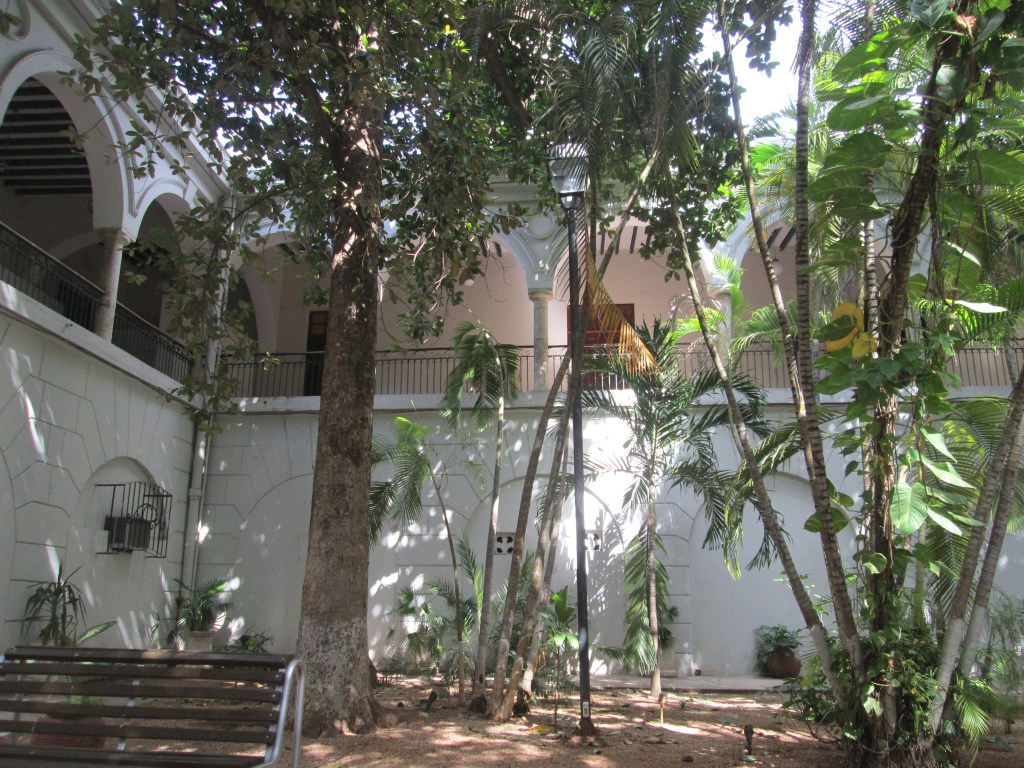
The Courtyard of the Macay Museum of Contemporary Art

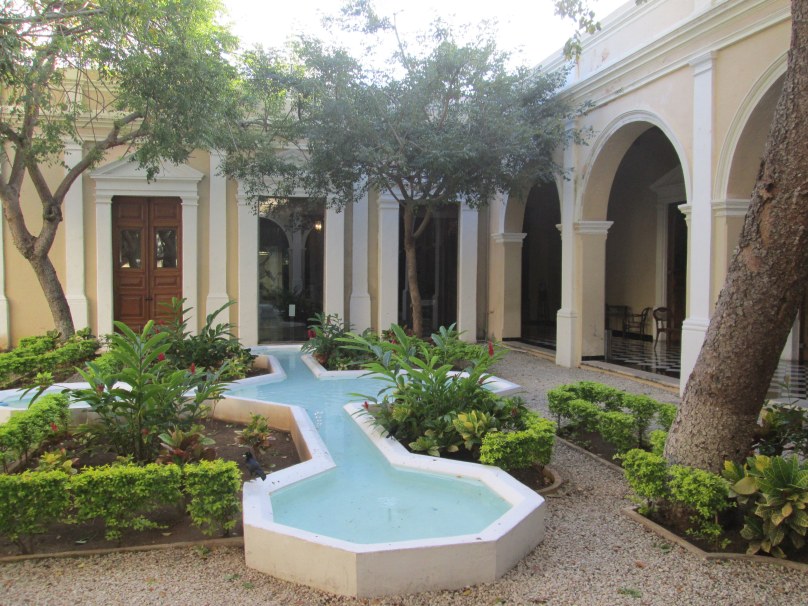
In a tropical climate, nothing is more welcome than cool shade. And it’s not too difficult to find it. When I visited the Macay Museum of Contemporary Art, I was so enthralled by the courtyard, that I sat down on a bench and meditated for upwards of an hour. The building that houses the museum used to be the Archbishop’s Palace.

If I owned a house, I would like one that presents nothing but a wall and a door to the street—with no front lawn requiring frequent maintenance. I’d much rather have a courtyard, invisible from the street with cozy benches and a fountain.

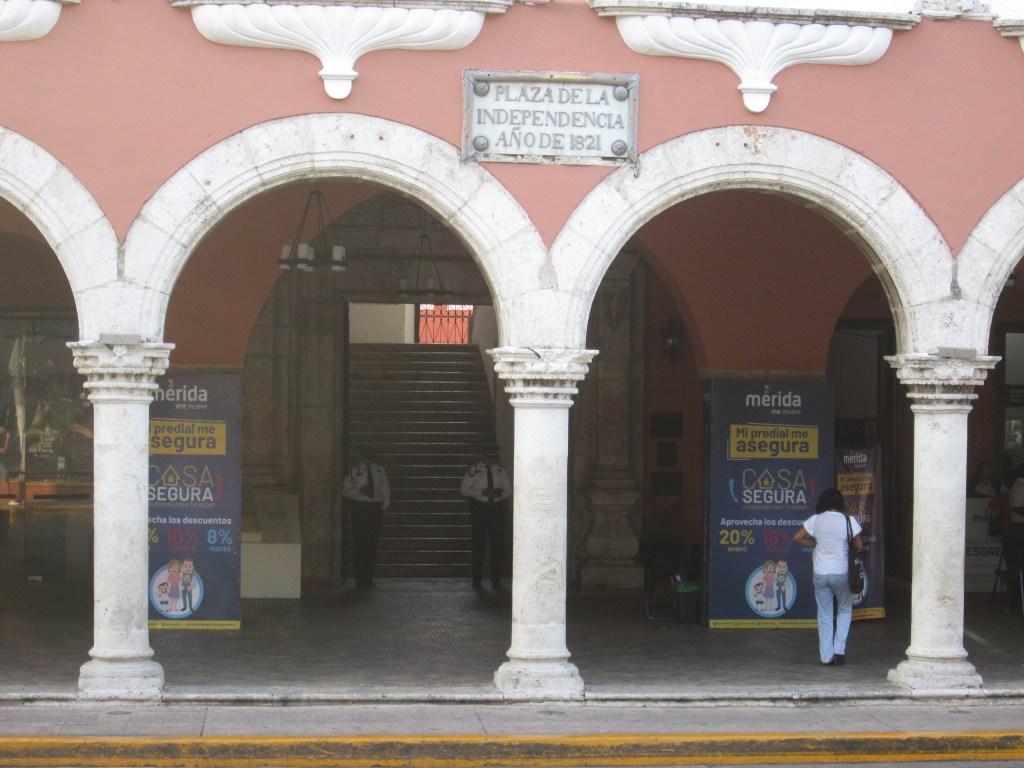
Colonnade by the Plaza de la Independencia, Built in 1821

Finally, I loved all the colonnades. like the one above which is two centuries old. It’s good to get out of the sun when it is hot, and there were always shops in the colonnade where you can get a cold beer or some tropical-fruit-flavored ice cream.

Perhaps all these things speak to me of comfort and relaxation, which is always a good thing when one is on vacation. Wherever I went, I found time to relax in the main plaza or a lovely courtyard or a welcoming colonnade. I always made sure that there was some relaxation time wherever I went. I saw a lot of wonderful places, and I had a good rest.

City of Bones

The Palace (Left) and the Temple of the Inscriptions at Palenque

One of the most beautiful Maya archeological sites is Palenque in the State of Chiapas. It sits at the edge of the jungle and just before the foothills of the Sierra Madre. My brother Dan and I spent several days there in December 1979. I would give anything to go again.

The name Palenque means “Palisade,” which was given by the Spanish, who saw the ruins as a fortress. By the time the Spanish conquered Mexico, the site had been uninhabited for over eight hundred years. It was around AD 800 that many of the major Maya ceremonial centers were abandoned due to various factors. These included drought, changes in religion and form of government, and other reasons.

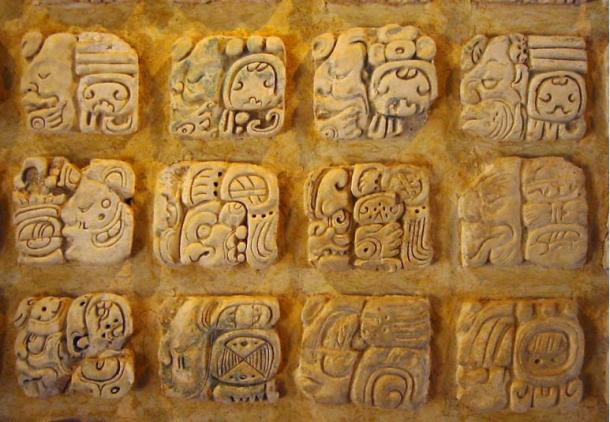
Maya Glyphs from Palenque

According to Maya glyphs that have been recently interpreted by scholars, the Maya name for Palenque is actually translated as “City of Bones.” As the great Mexican archeologist Alberto Ruz Lhuillier discovered, the Temple of the Inscriptions was the tomb of a powerful ruler named Kʼinich Janaab Pakal. In 1979, Dan and I were able not only to climb the pyramid, but snake our way through the tunnel that contained the site of Pakal’s burial chamber.

The ruins could only be described as beautiful. Only Uxmal in Yucatán could be described as its equal for siting and architecture.

Ruins in the Mist at Palenque

I was surprised that my brother seemed to enjoy Palenque as much as I did. It turns out that the region where the ruins are located is a famous coffee-growing region. So Dan, who is a major coffeeholic, found himself drinking endless cups of the stuff.

We were in town around the Christmas season, where we had the opportunity of seeing the posadas whenever we had dinner in the nearby town of Palenque. At one point, we were having dinner when a shoeshine boy came in and began circulating among the diners. When he approached Dan, my brother quietly slipped off his sandals and proffered a large foot clothed in a fuzzy red wool sock. The whole restaurant erupted in laughter.

The Perfect House

Courtyard of the Casa Montejo in Mérida, Yucatán

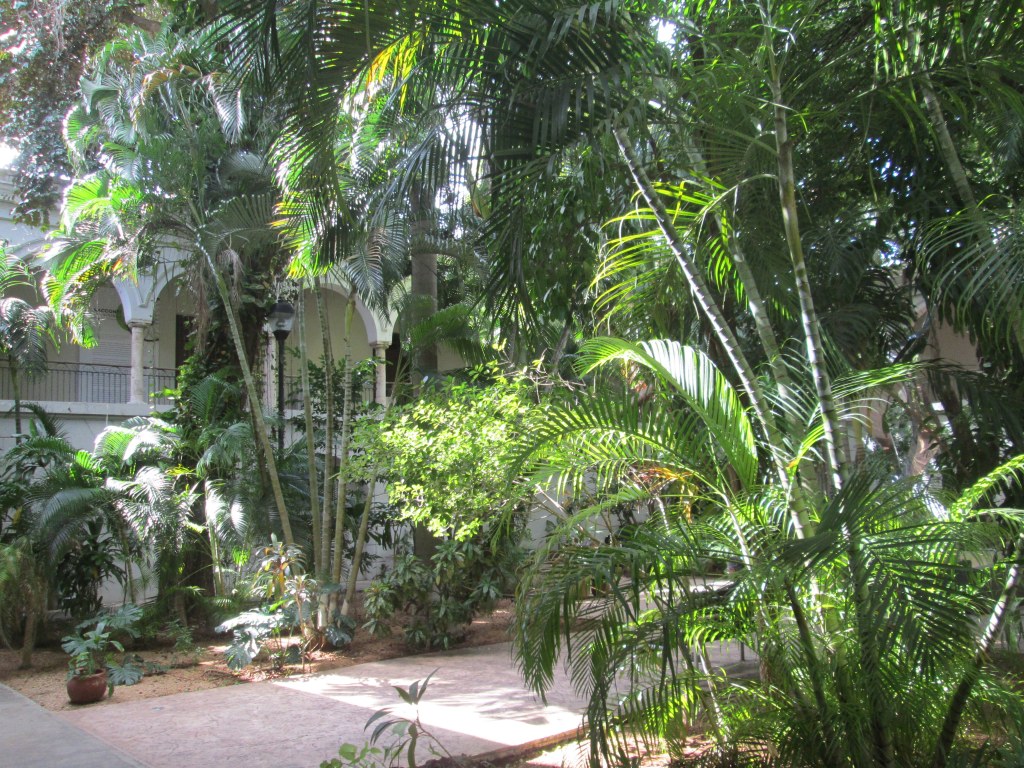
When most Americans think of the ideal house, they always see it as set back from an immaculately manicured front lawn. Perhaps owing to my hatred of mowing lawns, I much prefer the Mexican house, which presents a blank face to the street—no windows, one regular-sized door—and with a delightful courtyard which can’t be seen from the street.

I cannot for the life of me see myself doing anything on a front lawn other than working my butt off. But a courtyard, that is a different matter altogether. I could set out a chair and read there, or talk to my friends, or even have breakfast.

Courtyard of the Former Archbishop’s Palace in Mérida

In Latin America, you can live in a beautiful house—as seen from the inside—and not have to worry about what the neighbors think. When I think of sliding glass doors opening onto decks, I wonder if most American houses are secure from theft and home invasions.

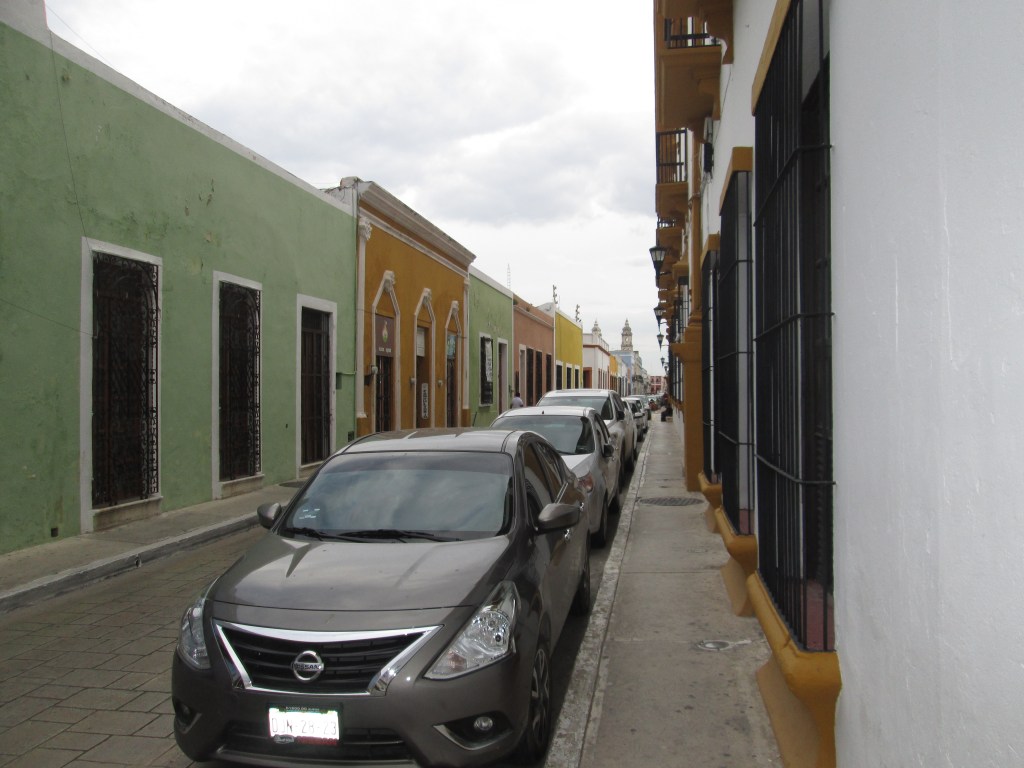
Street in Campeche: No Front Lawns Here

Above is a typical street in the center of Campeche. Some of the buildings are businesses; other, homes of the well-to-do. There isn’t much zoning in effect.

Truth to tell, unless I win the lottery, I cannot see myself as owning a house. And if I could somehow afford one, my idea of the perfect house would come into conflict with zoning regulations and local customs. I will probably continue to live in an apartment, where I don’t bother my head about perfection in any sense of the word.

A One-Man Renaissance

Francisco Toledo (1940-2019)

In his book On the Plain of Snakes: A Mexican Journey, Paul Theroux met with Francisco Toledo in Oaxaca shortly before the artist died. I was curious to see images of some of his works because his meeting with Theroux raised my interest.

A Zapotec Indian from Juchitán in the southeast corner of the State of Oaxaca (near the Isthmus of Tehuantepec), Francisco Benjamin López Toledo was a noted painter, sculptor, illustrator, and protestor. When McDonald’s wanted to plant the Golden Arches in the zócalo of Oaxaca, Toledo set up a table offering free tamalitos to passers-by explaining to them the damage that would be done to their culture.

Animal-Headed Woman

When Theroux asked him what he thought of Frida Kahlo, Toledo replied:

I started out hating her. Then later I began to see that she represented something. And outsiders were interested in her. Her life was so complex and painful. So she is something. But there are so many others.

Kahlo is well known to art critics outside of Mexico, along with a handful of other artists such as Orozco, Rivera, Tamayo, and Siqueiro; but Toledo is right that Mexico is fairly crawling with great art. This was brought home to me during my recent trip to Yucatán, when I made a point of visiting art and folk museums.

Illustration: Mythical Creature

To another American visitor, Toledo describes his work:

What I do is a mixture of things, but the pre-Hispanic world has been a source of inspiration. There are certain solutions that are decorative that come from pre-Hispanic art and at the same time there is much primitive art that is refined or simple but also very modern.

They described his work as employing innovative materials, such as sand and amate paper, which was used by pre-Columbian Indians, made with the crushed bark of the amate tree (Ficus insipida, a species of fig).

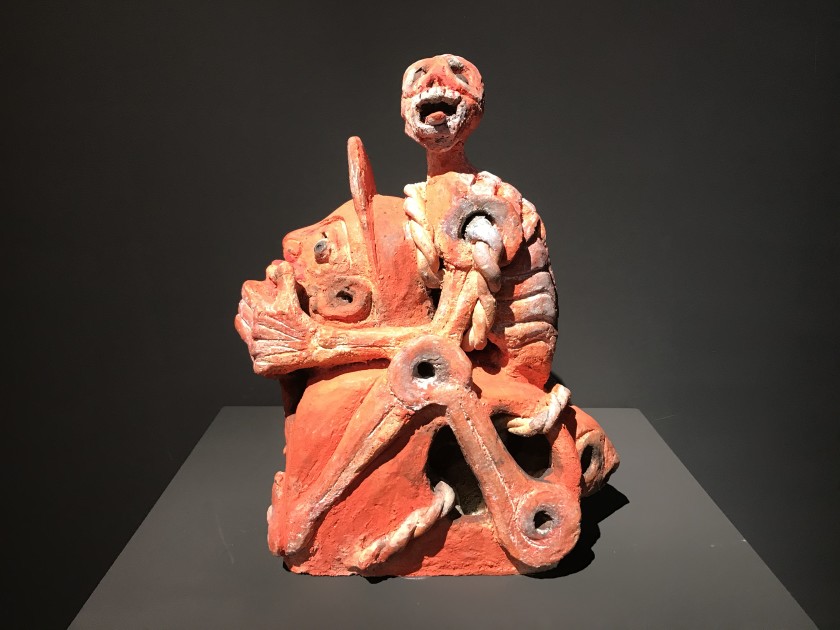
A Ceramic Sculpture Honoring the Disappeared of Mexico

I hope to present the work of other Mexican artists in posts to come.

Todos Somos Calaveras

Statue of Skeletal Woman at Mérida’s Hotel La Piazzetta

At some time in the 1980s—I disremember the year—I was on a long bus ride between Mazatlán and Durango over the mountains. It was November 2, the Day of the Dead, and the bus was crowded with men, women, and children headed toward distant cemeteries with baskets of food. A young mother with a baby and numerous packages sat down next to me taking the aisle seat. I helped her by holding the child or various packages for a while, until she disappeared at some small town to hold a picnic by the grave of one of her loved ones. Was it her husband? her mother? I never knew.

The following quote is from Elizabeth Sayers and Chloe Sayer’s book The Skeleton at the Feast. It throws some light on the feast day:

In Mexico—to quote Ms Sayer—the first and second of November belong to the dead. According to popular belief, the deceased have divine permission to visit friends and relatives on earth and to share the pleasures of the living. To an outsider the celebrations might seem macabre, but in Mexico death is considered a part of life. A familiar presence, it is portrayed with affection and humor by artists and crafts workers. For the Aztec, as for other ancient peoples, death signified not an end but a stage in a constant cycle. Worship of death involved worship of life, while the skull—the symbol of death—was a promise of resurrection…. The death of the individual was seen as a journey, for which numerous offerings were needed. Life is a fleeting moment—a dream—from which death awakens us.

It is all summarized in the Mexican saying “Todos somos calaveras”—“We are all skeletons.” The candy stores are full of confections shaped like skulls and skeletons. All the energy that we Gringos put into Halloween is directed toward La Dia de los Muertos. I suspect that, perhaps, the Mexican holiday is, all told, more healthy than our Halloween.

Ceviche

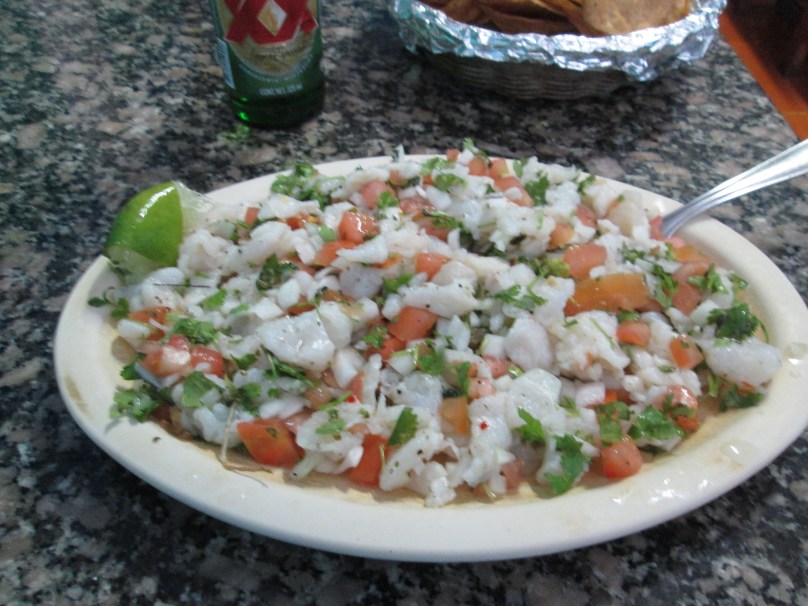
Ceviche de Pescado con Limon

My last meal in Mérida before returning to the U.S. was at a grungy little seafood dive on Calle 62 called the Blue Marlin (Marlin Azul). It was a raw fish dish called ceviche de pescado that is “cooked” with the addition of fresh lime juice. Also it contains cut-up tomatoes, chiles, and cilantro. It is served cold and is an ideal lunch dish.

In Progreso, a few days earlier, I had a ceviche de pulpo made with the same ingredients, except that octopus replaces the fish. I was in hog heaven.

Actually the seafood dish I ate the most in Yucatán this last trip was filete de pescado veracruzana. It was a grilled filet of fish in a tomato sauce with onions, olives, and capers. I never got tired of it, especially when I was near the sea and knew that the fish was super fresh.

During this awful coronavirus outbreak, I dream of traveling by bus between various seaport cities in Baja California and living on fish tacos and other local specialties.

Baja Style Fish Tacos

When I was growing up in Cleveland, I didn’t think much of fish. Lake Erie, the shallowest of the Great Lakes, was for all intents and purposes a body of water noted for dead fish floating on its surface. I have had some good seafood in Los Angeles, but avoid shrimp and lobster, as I seem to be allergic to them—possibly because of the pollution of the Pacific Ocean around the coast of Southern California.

Traveling to places like Iceland or Mexico where the seafood is so fresh and interesting makes me dream of travel again. Sigh.

House of Horrors

Mummified Corpses in Guanajuato’s Museo de las Momias

In this month of Halloween, I thought I would make mention of the most horrific museum I have ever visited, the Museo de las Momias (that is, Mummies) de Guanajuato.

Imagine to yourself a museum consisting of corpses dug up in a Mexican mining town that have been naturally mummified because of the mineral content of the soil. Many were interred during a cholera epidemic which filled the local cemetery to such an extent that the town had to charge a fee for the right to remain buried. According to Wikipedia:

The human bodies appear to have been disinterred between 1870 and 1958. During that time, a local tax was in place requiring a fee to be paid for “perpetual” burial. Some bodies for which the tax was not paid were disinterred, and some—apparently those in the best condition—were stored in a nearby building. The climate of Guanajuato provides an environment which can lead to a type of natural mummification, although scientific studies later revealed that some bodies had been at least partially embalmed. By the 1900s the mummies began attracting tourists. Cemetery workers began charging people a few pesos to enter the building where bones and mummies were stored.

When I visited Guanajuato in the late 1980s, my introduction to the museum was itself grim: A young father was carrying a child’s coffin on his shoulders to be buried, with no one else in the family following him.

Shades of Edgar Allan Poe: The Wikipedia entry continues with this grim fact:

One of the mummies who was buried alive was Ignacia Aguilar. She suffered from a strange sickness that made her heart appear to stop on several occasions. During one of these incidents, her heart appeared to stop for more than a day. Thinking she had died, her relatives decided to bury her. When her body was disinterred, it was noticed that she was facing down, biting her arm, and that there was a lot of blood in her mouth.

The only way I kept the contents of my stomach under control while I was in the museum was the extent to which I busied myself taking pictures. None of these are in this post, as they have yet to be converted to JPEG files from the Kodachrome slides I was then shooting.

Even a writer like Ray Bradbury had trouble seeing the displays of mummies in the museum:

The experience so wounded and terrified me, I could hardly wait to flee Mexico. I had nightmares about dying and having to remain in the halls of the dead with those propped and wired bodies. In order to purge my terror, instantly, I wrote ‘The Next in Line.’ One of the few times that an experience yielded results almost on the spot.

América Tropical

The Reconstruction of América Tropical in Downtown LA

In the 20th century, Mexico produced three great muralists: José Clemente Orozco, Diego Rivera, and David Alfaro Siqueiros. On other occasions, I have written about the influence on me of the Orozco frescoes at Dartmouth College. Sometimes, I think that my interest in Latin America began in the Reserve Room of Baker Library, where the frescoes were located.

Los Angeles has only a reconstruction of David Alfaro Siqueiros’s América Tropical, which was created in 1932 at its present location on Olvera Street. Unfortunately, Siqueiros’s revolutionary message angered LA business leaders, who had the mural painted over.

Reconstruction of Detail

Today, the fresco is restored—but, alas, only in black and white. Below is what the original looked like:

The Fresco As It Originally Appeared

It took a quarter century for the Getty Conservation Institute to restore the image which was obliterated by layers of white paint. You can read about it here. When the Covid-19 outbreak comes to an end, you can view the restoration in person.