Intihuatana

The Inca Had No Writing, Just Knots, Called Quipu

The Inca Had No Writing, Just Knots, Called Quipus

I spent many vacations between 1975 and 1992 visiting archaeological sites in Mexico. These included not only Mayan and Aztec, but also Totonac, Toltec, Zapotec, Mixtec, Olmec, and whatever peoples built the ruins at Teotihuacán. As a result, I developed a feeling for the strengths and weaknesses of these Meso-American peoples. This year I plan to visit Peru and acquaint myself with the Incas and the various peoples who preceded them in the Andes.

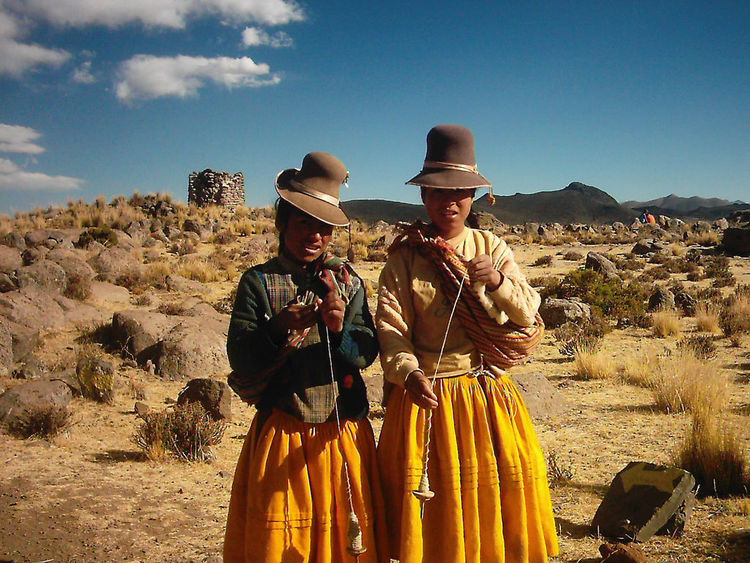
So far my researches have turned up some interesting results. First of all, the Incas had no writing—as such. Instead, they used colored threads of llama, alpaca, or cotton with knots tied into the various strands called quipus. We know which knots stood for the various digits in their base-10 numbering system, but have no idea how they managed to convey any kind of qualitative content, such as “Look out for that Lord Manco: He’s trying to pull a fast one on you.”

In contrast, the Mayans had a hieroglyphic language which is just now being understood, as well as a vigesimal (base-20) numbering system which is relatively easy to understand.

Whereas the peoples of Mexico had no animals they could use to either ride or carry or pull weights—remember: they did not have the wheel!—the Incas developed their own draft animals by breeding guanacos into llamas, alpacas, and vicuñas. Llamas could not bear human riders, but they could bear up to one hundred pounds of weight on their backs; and, unlike horses, they were comfortable about climbing stairs at high altitude. When fighting the conquistadores, the Inca learned to set up ambushes at places where one of their mountain roads turned into stairs. As the horses bunched up afraid to take the stairs, the Incas atop the ridge line would tumble huge rocks down upon their enemy.

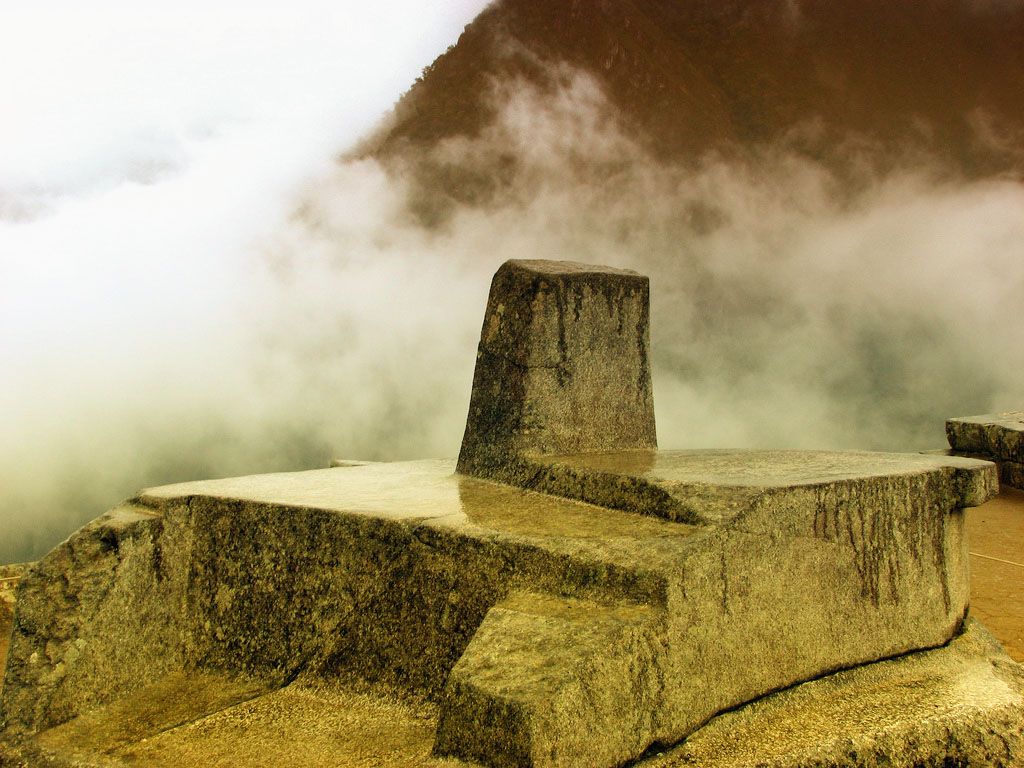
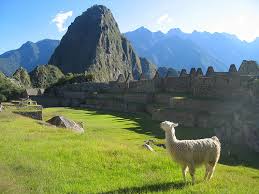
An Intihuatana, or “Hitching Post of the Sun” at Machu Picchu

An Intihuatana, or “Hitching Post of the Sun” at Machu Picchu

Who were more advanced, the Incas or the Pre-Columbian peoples of Mexico? My feeling is that they were both remarkable. Where the Mayans excelled in writing, the Incas were great architects and built thousands of miles of roads—many of which exist to this day despite all the earthquakes that have occurred since they were built.

A good example of Inca ingenuity are the Intihuatanas, or “Hitching Posts of the Sun,” that are found at various sites, such as at Pisac and Machu Picchu. An Intihuatana was a stone that was carefully cut so that the Inca savants could note when the sun was approaching a solstice. An excellent discussion of the stone at Machu Picchu, together with angles and measurements, appears in a scholarly article by Dieter B. Hermann, which was translated into English and appears on the net as an Acrobat PDF file. The stone at Pisac was heavily damaged when a camera crane fell on it during the filming of a beer commercial in 2000. The Inca ruins can survive earthquakes, frosts, and thaws for whole centuries … but apparently not wayward humans.


The Indigenous Eye

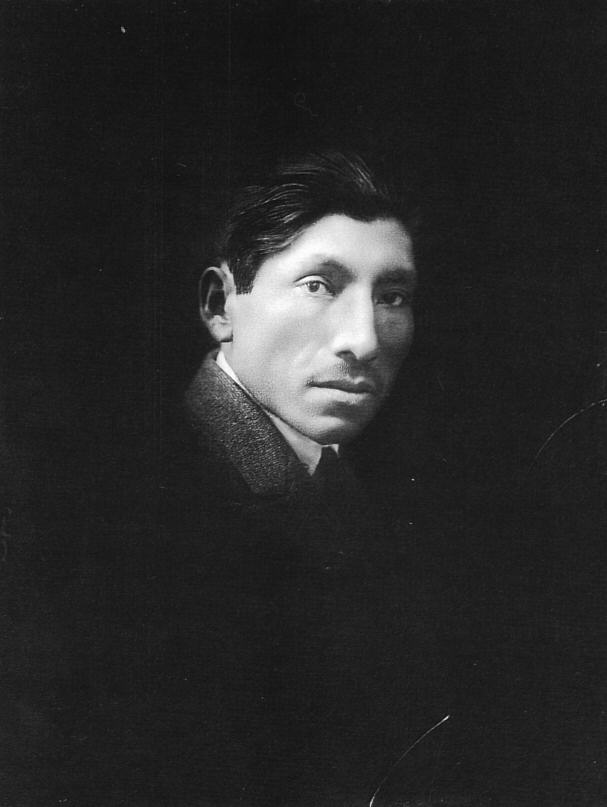
Inca Photographer Martín Chambi Jiménez

Inca Photographer Martín Chambi Jiménez

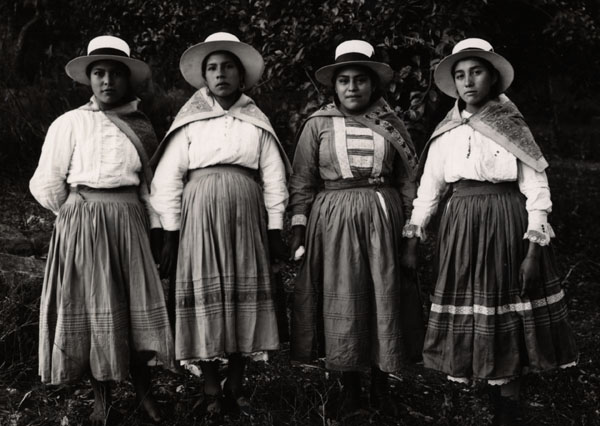
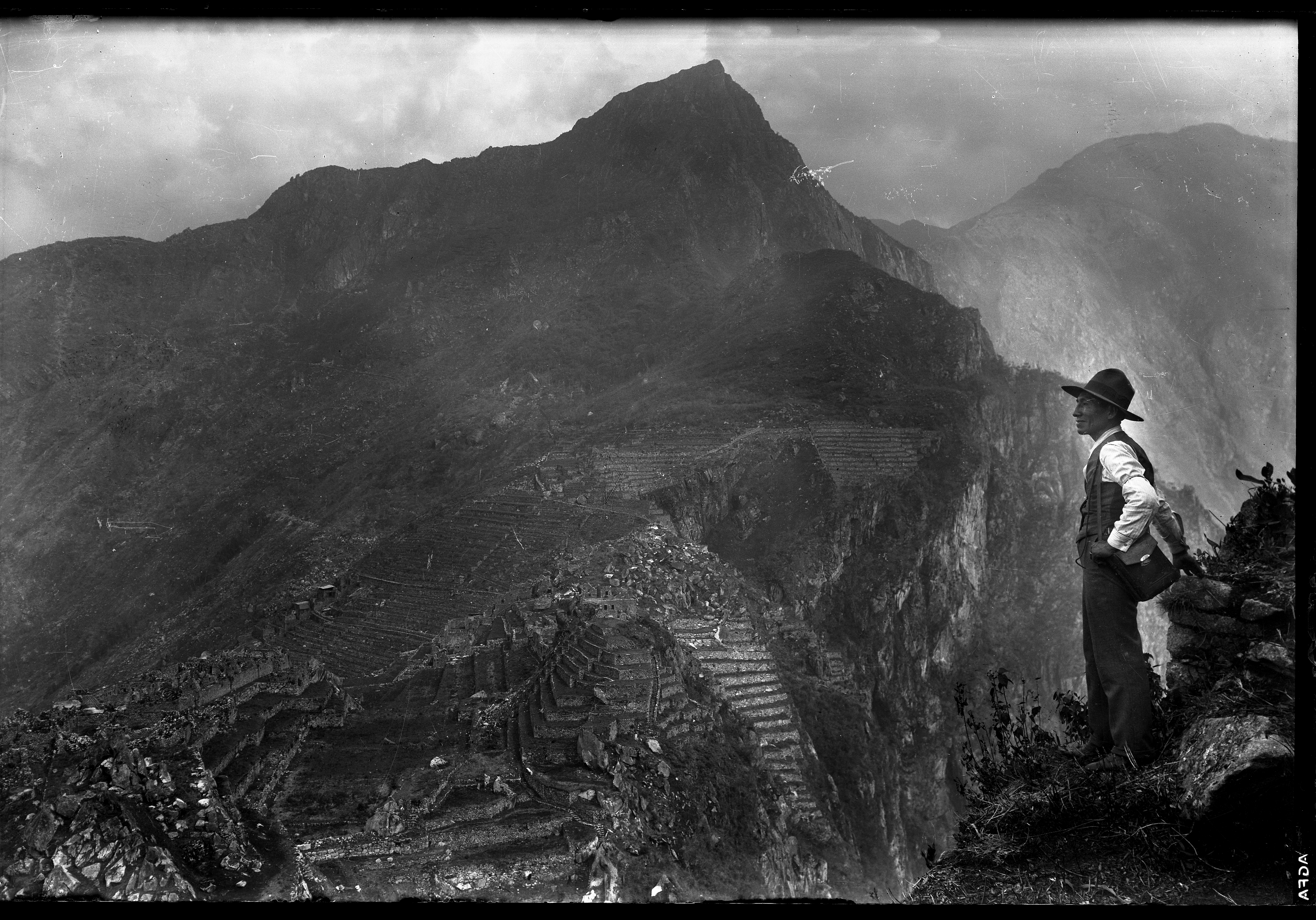
One of the problems with photography as an art form is that the viewpoint is usually that of a European or North American. It would have been wonderful to have photographs taken by native Navaho or Tibetan or Zulu photographers so that we could see the world from their unique perspective. One rare exception is the work of a native of Cusco, Peru, the indigenous Inca Martín Chambi Jiménez (1891-1973). Through his eyes, we see the locals of Cusco, the ruins of Machu Picchu, the back country natives, and whatever caught his eye. Below, for instance, is portrait of four young Quechuan campesinas:

Peruvian Campesinas

Peruvian Campesinas

And here is an eagle’s eye view of the ruins at Machu Picchu:

Overlooking the Ruins

Overlooking the Ruins

If you would like to see a collection of his photographs, you can find some interesting examples on Google Image.


Destroying the Amazon for Cash

Illegal Mining Machinery To Be Wrecked by the Peruvians

Illegal Mining Machinery To Be Wrecked by the Peruvians

When we think of the Amazon being destroyed by greedy miners, we usually point the finger of blame at the governments involved. What I was surprised to hear is that illegal mining is a major problem in the jungles of Colombia, Ecuador, and Peru—to the extent that the three countries have met for a conference in Quito, Ecuador, to deal with the problem. Just to give you an idea of the extent of the problem, Peru This Week has come out strong against the practice:

Illegal mining and has proven itself to be one of the dirtiest businesses in Peru. It is estimated to have bigger earning than drug-dealing, placing itself as the biggest illegal trade in the country. For some, it is the only available means of survival, but for others it is only about the money. Exploitation of natural resources are rapidly increasing in the Amazon rainforest and Andean highlands; government officials have not done much to stop the extraction of these minerals, and local authorities are not doing enough to stop the people who now rule these resourceful lands. Special military squads have now started to confiscate mining equipment. The miners have responded with force.

During the last months there have been protests, conducted by the illegal miners, towards the government. The miners are asking the government to stop forces from confiscating their illegal mining camps. Protesters have violently targeted police forces in large protests all around the country’s main cities. Many police officers have been severely injured yet the violence hasn’t stopped.

How is this possible? Illegal mining in many cases is run by organized crime. This means that there are powerful people behind the miners making big profits. The Presidency of the Council of Ministers representative, Daniel Uresti, states that this business moves over 1 billion dollars per year, and that illegal mining is bonded with organized crime. With this amount of money at risk, illegal miners are going to do whatever it takes stop the government from taking down mining camps, even if that includes violence like the one seen on the protests. Analysts say that long term consequences for illegal mining can reach lead to the union of the two most feared organizations in Peru, the deadly drug cartel and the growing terrorist groups. If Peru lets illegal mining grow, it will only be time until an escalation of events leads the country into more conflict.

When the illegal miners are strong enough to protest openly against the government they are robbing, it’s clearly time to shut them down. In Peru, a nationwide ban against illegal mining has been in effect since April 19, and the Peruvian army is now moving to confiscate and wreck the equipment that is being used.

We all breathe the air that comes from the headwaters of the Amazon. My feeling is that the United Nations should also get involved.

Volcán Ubinas

A Volcanic Eruption Once Again Threatens My Vacation

A Volcanic Eruption Once Again Threatens My Vacation

Three of my last four vacations have been affected to some degree or other by volcanic eruptions. In 2011, it was Chile’s Puyehue-Cordón Caulle which covered San Carlos Bariloche in Argentina with ash and shut down the railroad from Viedma that I was hoping to take with Martine. In 2012, we went to Northern New England and the Canadian Maritime Provinces, which have not been volcanic for some thousands of years. In 2013, I was in Iceland’s Westmann Islands and Hvóllsvöllur when Hekla threatened to blow. (It didn’t, fortunately.)

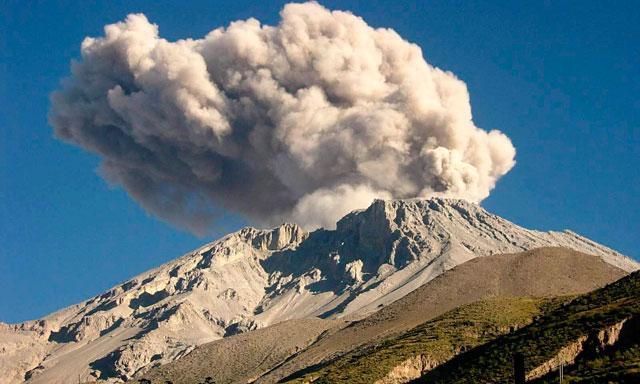
Now, it looks like the stratovolcano Ubinas in Peru’s State of Arequipa which is smoking and causing evacuations of nearby villages located near its base. Ubinas is Peru’s busiest volcano, with historical eruptions dating back to 1550 and as recently as 2006.

Ubinas Seen from Above

Ubinas Seen from Above

I am scheduled to spend four or five days in the State of Arequipa, visiting the City of Arequipa itself as well as Colca Canyon. The latter is twice the depth of Arizona’s Grand Canyon, and should be quite a view—providing, of course, that I am not engulfed by massive amounts of lava and volcanic ash.

My fingers are crossed.

Dreams at High Altitude

A City Surrounded by Mountains

A City Surrounded by Mountains

The other night I dreamed of Bolivia. I was in La Paz, one of the country’s two capitals—the other is Sucré in the South. I was trying to navigate between two locations within the city, but all I had was a two-dimensional street map that didn’t give me any idea whether I had to go uphill or downhill. The Lonely Planet guide to Bolivia lists the altitude of La Paz at 12,007 feet (3,660 meters), but isn’t that just an average? Even higher than La Paz is the erstwhile suburb of El Alto, which is, at 13, 620 feet, not only the highest major metropolis in the world with a million people, most of them Aymara, but also is home to the La Paz’s international airport,the world’s highest.

I am obsessing about La Paz: It is a city that pops up in my dreams because it is set in a huge bowl under several conical volcanoes, the most spectacular of which is Illimani at 16,350 feet. I keep thinking of traveling up and down the city by taxi and on foot, gasping all the while because of the high altitude.

Currently, I am thinking of starting my vacation in Lima and traveling through southern Peru to Lake Titicaca and then on to La Paz. From there, I plan to fly “open jaws” back to Los Angeles. That saves me time and money from having to deadhead back to Lima.

The big question is my susceptibility to Soroche, or altitude sickness. If, upon arriving in Cusco, I appear to have the beginnings of either HAPE (high altitude pulmonary edema) or HACE (high altitude cerebral edema), I will turn around and return to Arequipa, going on to Tacna (in Peru) and Arica (in Chile), possibly as far as Antofagasta. In that case, I would deadhead back to Lima and fly home from there.

So if that alternate scenario takes place, I would have to have a flight from La Paz to Los Angeles that I can cancel if necessary. Is that possible? It remains to be seen.

Addendum: These two quotes from Christopher Isherwood’s South American diary, The Condor and the Cows, add an eyewitness’s observations to the city :

Sixty miles from the lake [Titicaca] the plain suddenly ends. You look over its edge into a deep horse-shoe valley and there is La Paz, fourteen hundred feet below. The view makes you gasp, for it is backed by the enormous snow-peak of Illimani, which fills the sky to the south. Illimani is rather higher than Mount Pelion would be if it were piled not on Ossa but upon Mont Blanc.

Believe it or not, I actually had the following scene in my dream:

Many of the side streets are so steep that you could scarcely hold your footing on the worn pavement. The Paceños have learned to slither down it in long strides, like skaters. What with the altitude, the gradients, the scarcity of elevators and the shortage of taxis, you spend most of the day painfully out of breath, and envy the Indians, whose enormous lungs enable them to trot uphill without the least sign of strain.


 

Re-Orienting Myself to Peru

Spanish Colonial Architecture in Peru

Spanish Colonial Architecture in Lima, Peru

Because I place such a high value on traveling with Martine, I thought nothing last December of ditching my plans in an instant to visit Peru so that we could go to France and Italy. At that point, nothing was firm yet—I planned to go in September or October. (I frequently plan in advance by so many months that all my friends think that I have already gone and returned.) But continuing problems with her back, especially where soft beds are concerned, induced her to cancel the European trip.

There is never any guarantee when staying at strange hotels that your bed will be firm or mushy. Fortunately, I can tolerate a fairly wide range; but Martine’s range of acceptability is much narrower. It’s a pity, because her half-sister Madeleine in St-Lô (near the D-Day Beaches of Normandie)  is ailing and cannot travel herself.

In the meantime, I am resuming my Peru reading program, which consists primarily of:

  • Novels by Mario Vargas Llosa, Peru’s only Nobel Prize winner in literature
  • Novels and poems by other Peruvian literary notables, such as César Vallejo
  • Histories of the Spanish conquest of the Incas
  • Other Peruvian histories on subjects including the War of the Pacific, which Peru lost to Chile in the late 19th century
  • A biography of Simon Bolivar and possibly José de San Martín, the two principal liberators of South America

I don’t know how much I can read before the departure date, which has not  been set yet, but I will do my best.

All this preparation is, for me, a kind of courtesy. I do not believe in visiting another country without knowing enough of its language, culture and history to be conversant with the locals. That has helped me considerably in Argentina and Iceland. Plus, it is a pure pleasure for me to prepare a trip far enough in advance—especially during tax season, when there is little else to forward to. I have little truck with those travelers who believe in being “spontaneous” at the cost of making their fellow Americans look like dunces.

Traveling Alone

It Looks As If I’ll Be on My Own

It Looks As If I’ll Be on My Own

Martine and I had decided that, if she felt well enough to travel, we’d go together to France and Italy. If she felt unable to travel, I would go by myself to Peru and possibly Bolivia. At the end of January, we took a little test trip to the Anza-Borrego Desert in San Diego County. Although we had a firm bed, it wasn’t firm enough for Martine’s back. Fortunately, we had an air mattress that was firmer, so Martine slept on the floor. This option would not work as well for overseas travel, as both of us travel light.

On the plus side, Martine is getting better slowly; but she still depends heavily on a super firm couch and a super firm mattress for her comfort. Without these, she would be awake most of the night for all the days of our trip. Understandably, under those circumstances she would prefer to remain behind in Los Angeles.

I, on the other hand, have this great yearning for travel. The pity of it is, I will be deprived of my favorite traveling companion. I am used to this, as I have been alone in Iceland twice (2001 and 2013) and in Argentina once (2006). We will probably travel together to Southern Arizona by car—with the firm air mattress—so that Martine doesn’t get a case of cabin fever.

In the meantime, I am continuing my Peru reading program in preparation for a three week vacation there in September and October. As Rudyard Kipling wrote in his poem, “The Winners”:

Down to Gehenna or up to the Throne,
He travels the fastest who travels alone.

Most memorably, in Josef von Sternberg’s film Morocco (1930), Marlene Dietrich, writes these lines with her lipstick on a hotel room mirror before ditching Adolphe Menjou.

So I will travel faster, but I’d rather not be alone.


He Died in Paris After All

Peruvian Poet César Vallejo

Peruvian Poet César Vallejo

Since I’ve been reading so much about Peru, I felt bad that I had not read any Peruvian poetry. According to what I’ve read, the national poet of that land was César Vallejo (1892-1938). I took a fancy to the following poem, which I present in both English and Spanish:

Black Stone on Top of a White Stone

I shall die in Paris, in a rainstorm,
On a day I already remember.
I shall die in Paris—it does not bother me—
Doubtless on a Thursday, like today, in autumn.

It shall be a Thursday, because today, Thursday
As I put down these lines, I have set my shoulders
To the evil. Never like today have I turned,
And headed my whole journey to the ways where I am alone.

César Vallejo is dead. They struck him,
All of them, though he did nothing to them,
They hit him hard with a stick and hard also
With the end of a rope. Witnesses are: the Thursdays,
The shoulder bones, the loneliness, the rain, and the roads…

Here is the original Spanish:

Piedra Negra Sobre Piedra Blanca

Me moriré en París con aguacero,
un día del cual tengo ya el recuerdo.
Me moriré en París—y no me corro—
tal vez un jueves, como es hoy, de otoño.

Jueves será, porque hoy, jueves, que proso
estos versos, los húmeros me he puesto
a la mala y, jamás como hoy, me he vuelto,
con todo mi camino, a verme solo.

César Vallejo ha muerto, le pegaban
todos sin que él les haga nada;
le daban duro con un palo y duro

también con una soga; son testigos
los días jueves y los huesos húmeros,
la soledad, la lluvia, los caminos…

It’s a rather somber poem about a man who dies alone in exile, after having been beaten with a stick and the end of a rope. And who are his witnesses? Thursdays, shoulder bones, loneliness, rain, and the streets. I would like to know more about the poet’s life, but I’ll just have to content myself for now with his lonely death on the streets of Paris.

The Peruvian Military Academy

The Colegio Militar Leoncio Prado Near Lima

The Colegio Militar Leoncio Prado Near Lima

I have just finished reading the first novel by the Nobel Prize winning Peruvian author Mario Vargas Llosa, The Time of the Hero (1963). The originally published title, The City and the Dogs (La Ciudad y los Perros) is probably more appropriate, given the subject matter. As in the United States, military schools are primarily for children of good families from broken homes in which one of the parents (usually the father) wants to “make a man” out of an unruly son. I read over half the book before realizing that the Colegio Militar Leoncio Prado (CMLP) is a real institution in the La Perla district of Lima. It is named after a colonel who was executed by the Chileans after being captured at the Battle of Huamachuco (1883) during the “War of the Pacific” between Bolivia and Peru against Chile. (It was during that war that Bolivia lost its only access to the Pacific by way of the port of Antofagasta.)

Vargas Llosa’s CMLP is full of brutal young scamps who break all the rules, haze one another almost beyond endurance, and in general make a mockery of all attempts to civilize them. The author spent several years here from the age of fourteen. Instead of going for a commission in the military, he left the Academy and went on to become a writer and journalist in the northern city of Piura. His book seemed so uncomplimentary to the CMLP that, at first, it bought up copies of the book and had them burned, thinking they were a propaganda tool of the Ecuadorians. Now they are proud of the exposure the novel gave them.

The book centers on Alberto Fernández Temple, a teen from a broken family, and his relations to The Circle, a group of determined cadets who defend themselves and their interests from the officers and the other classes. He befriends Ricardo Arana, nicknamed the Slave, who tries to follow the rules but pays the ultimate price. When Arana informs on a fellow cadet in The Circle who steals a copy of a chemistry exam, he is shot in the head during military maneuvers. This sets Alberto off and he goes up against all his classmates, especially the Jaguar, who is their ringleader. This roils not only the students, but the staff, who are less interested in justice than in smoothing over the crisis.

The Time of the Hero is not a book that holds out much hope for its characters, but it is nonetheless an interesting first effort by Vargas Llosa, who is obviously attempting to exorcise some of the baneful effects of his tenure at the Academy.

If you are interested, you can check out the website of the CMLP and particularly this YouTube video of goose-stepping cadets who are singing as they march.

A Two-Tiered Highway System

Bus Accident in the Andes

Bus Accident in the Andes

Peru is a major destination for international tourism. It can also be a deadly one. While the nation has improved the highway system connecting such tourist magnets as Lima, Arequipa, Nazca, Cusco, and Arequipa, many large towns in the Andes are linked by roads that are unsafe. This is compounded by the fact that not only the highways, but also the long-distance bus lines, are also two-tiered. A point-to-point Cruz del Sur, Oltursa, or Ormeño bus will generally get you to your destination safely; but a second class bus plying the roads between such cities as Huancayo and Ayacucho takes much longer, picks up and drops off passengers whenever requested, and is likely to have an overtired driver who has been at the job for over twelve hours. When that is combined with night driving, inclement weather, and bad roads, the result can be a fatal accident such as the one illustrated above.

According to the Peru This Week website:

Congresswoman [Veronika] Mendoza has highlighted the inequality inherent in the consistent state of disrepair of roads in rural Peru. “It absolutely cannot be that only roads on tourist routes are in a good condition while the internal transport highways that Cusquenos use aren’t being cared for in the same way,” Mendoza stated, later adding that “We also have to consider the additional difficulty for transportation that the arrival of the rainy season will bring.”

Statistics released by Sutran, Peru’s national government land transport authority, reveal that road deaths have risen dramatically in the past year. According to El Comercio, deaths caused by road accidents from January to August 2013 have risen 36.5% compared with the same period last year.

Many American tourists are interested in following the line of the Andes and visiting the highland cities with their spectacular mountain views and native arts and crafts. While this is not impossible, there is considerable risk attached to such an itinerary.

Photo of Serrano Boy

Photo of Serrano Boy

Part of the problem is that, as in other countries that are racially divided, Peru suffers from racism against serranos and cholos, descendants of the Incas and other peoples inhabiting the Andes. We tend to think of the Andean tribal peoples as being the majority in Peru, but that is not the case: The narrow coastal desert zone holds the majority of the population as well as the economical and political power. The result is that the rural Andes are underserved by good roads and public transportation.

If and when my planned trip to Peru takes place, I will be careful to take the first class buses to major tourist destinations—at least until I have been able to scope out the situation myself.