¡Adios Muchachos!

See You All in February!

In the wee hours of tomorrow morning, my flight leaves for Guadalajara, where I will putter around for three hours, and then take another Volaris flight to Mérida. I will drive to the airport with Martine, and Martine will drive back by herself. (She’s not coming with me because she is allergic to anti-malaria medications.)

During my absence, I will not blog. Instead I will go into experiential mode to get something to write about when I return in February.

Incidentally, today is my 75th birthday, which is a milestone for me. My father died at the age of 74, so I had always wondered whether I would outlive his span of years. It appears that I already have, so that is one less morbid imagining. To spend the time after my birthday in a place I love (Yucatán) can only lengthen my life, no?


Autobuses de Oriente (ADO)

The Service Area of ADO First Class Buses

There have been many changes since I last visited Southeast Mexico. Among other things, Autobuses de Oriente (ADO) has merged with Ómnibus Cristóbal Colón (OCC) to pretty much monopolize first class bus service in Yucatán. I remember the days when I had to ride the rackety old Unión de Camionéros de Yucatán (UCY) second class buses with their broken seats and cracked windows. There are still a number of second class carriers, but UCY is no more.

Before going any further, allow me to clarify what first class and second class mean. First class buses directly connect larger cities and do not allow passengers to board or alight from a bus between its origin and its destination, unless the city is of a certain size. A bus from Mérida to Mexico City would typically be first class, stopping only in larger cities en route such as Campeche, Ciudad del Carmen, or Coatzacoalcos.

Second class buses connect small towns with larger cities, or with other small towns. When I go from Mérida to Izamal or Uxmal to Campeche, I will have to take a second class bus. The fare will be less per mile, the passengers poorer, and the bus less deluxe. Most importantly, the trip will take longer because passangers can board or exit anywhere they want.

There is also another class of bus usually referred to as combis. These are multi-row vans connecting even smaller cities. Typically, they do not leave until they are full.

ADO Bus at Station Platform

Instead of renting a car, I will travel around Yucatán and Campeche states almost entirely by bus. In some cases, I may join a tour organized by a local travel agency, but only to visit some ruins that are harder to get to via public transportation. When I return from Mexico, I will hopefully have some stories about bus travel in the Sureste region, as well as scads of my own photos.


Haibun: The Norte

A Norte Storm Lashes the Gulf Coast of Yucatán

A Haibun is a uniquely Japanese medium in which prose and haiku poetry are interspersed. I will attempt to memorialize some of my travel experiences using the Haibun genre from time to time. My intent is to follow the style of Matsuo Bashō:

November norte
White-clad Maya point and laugh
Paper boats bobbing in the street.

It was November 1992. I was in Yucatán with Martine and three friends from work: George Hoole and Jin and Christine Han. On the last day but one of our trip, the peninsula suffered a storm called a norte, because it originated in the United States and gathered strength as it crossed the Gulf of Mexico. The streets of Mérida were flooded: There was no walking without wet stains halfway up the leg. We were staying at the Posada Toledo, an old mansion turned hotel, near the center, worried whether our return flight the next day would be able to take off. Jin Han lightened the mood by carefully folding paper boats and setting them adrift in the street. They aroused considerable hilarity among the passersby.


Traveling with Bashō

Matsuo Bashō (1644-1694) in a Print by Hokusai

I cannot help but see myself in this haiku by the great Japanese poet Matsuo Bashō:

Another year is gone—
A travel hat on my head,
Straw sandals on my feet.

Two weeks from today, I will be in Mérida, Yucatán, reacquainting myself with the world of the Maya. In many ways, Matsuo Bashō is the poet of travel. His book, The Narrow Road to the Deep North, is the ultimate vade mecum for a traveler. The record of a 1,500-mile journey through the main Japanese island of Honshu, it captures with great beauty and subtlety the joys and sorrows of a life on the road.

The sound of a water jar
Cracking on this icy night
As I lie awake.

The extreme conciseness of the haiku form can lead to poetry that is brilliant—or banal. One has to somehow put two ideas together (as the ice and the sleepless traveler) with an absolute minimum of embellishment. Ah, but when it succeeds!

On the withered grass
Shimmering heat waves rise
One or two inches high.

I will, as usual, travel with a blank notebook. I would love to compose haiku relating to my upcoming journey to Mexico. It’s possible, but, alas, not likely. Even though I don’t usually go out evenings (except in Mérida), I will probably find myself too busy reading from my Amazon Kindle, which is fully loaded with hundreds of works of literature and history.


Reservations

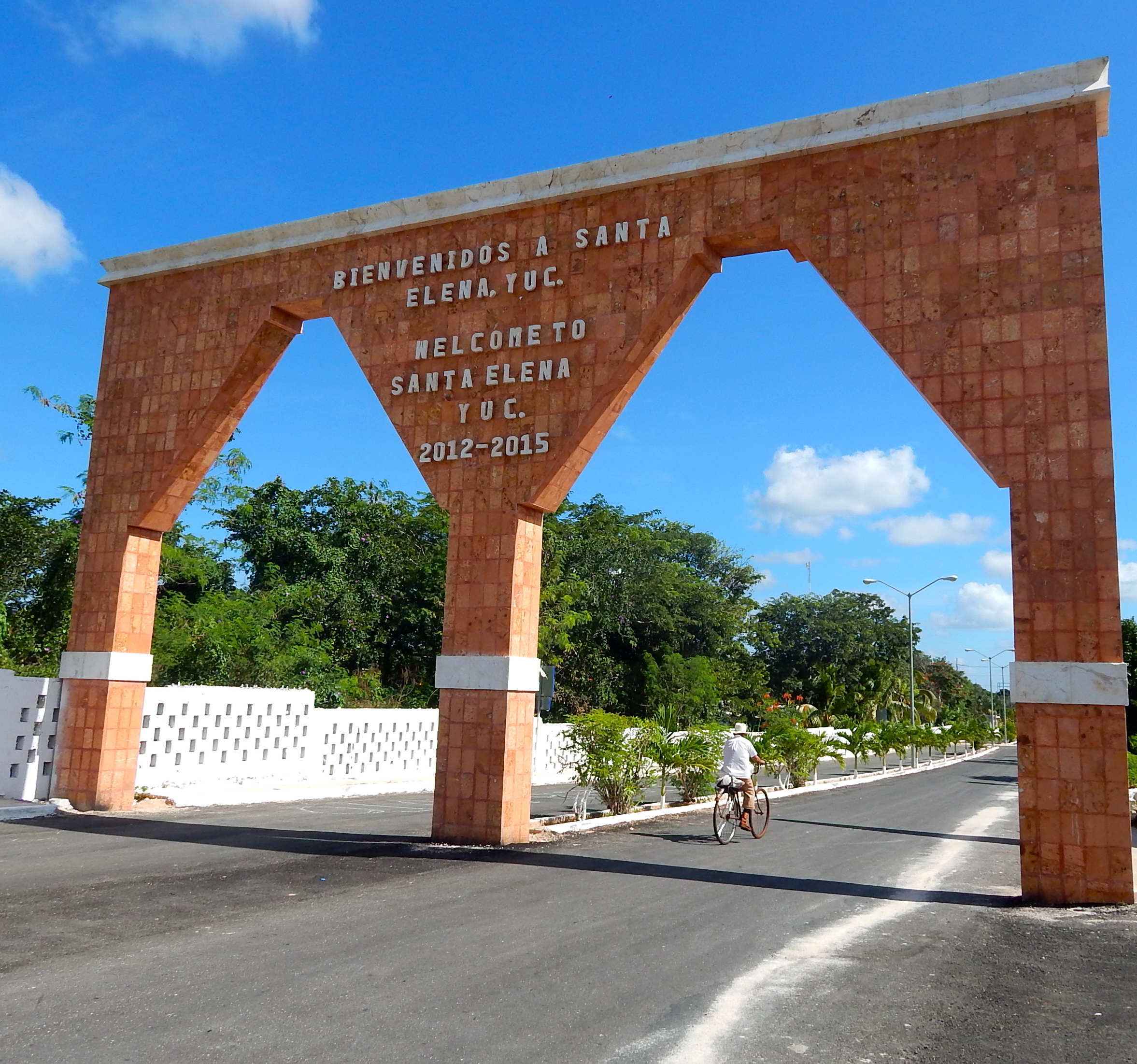
Archway at Entrance to Santa Elena, Yucatán

I am frantically trying to get reservations to hotels in Yucatán—much later than I usually would. It is all due to the problem with my left knee. I wanted some assurance that it was not the beginning of a condition that might rapidly get worse. As a result, I am making reservations a month or so later than I usually would. Unfortunately, a lot of the places I wanted to stay have already been booked, even for such a small town as Santa Elena, which is midway between the ruins of Uxmal and Kabah. I may have to spend big money to stay at the Hacienda Uxmal at the ruins, where I stayed twice before in 1975 and 1992—that is, if I can.

No doubt I will find something. It’s just a little more work than usual.

The Luxurious Hacienda Uxmal Across the Street from the Ruins


Uxmal

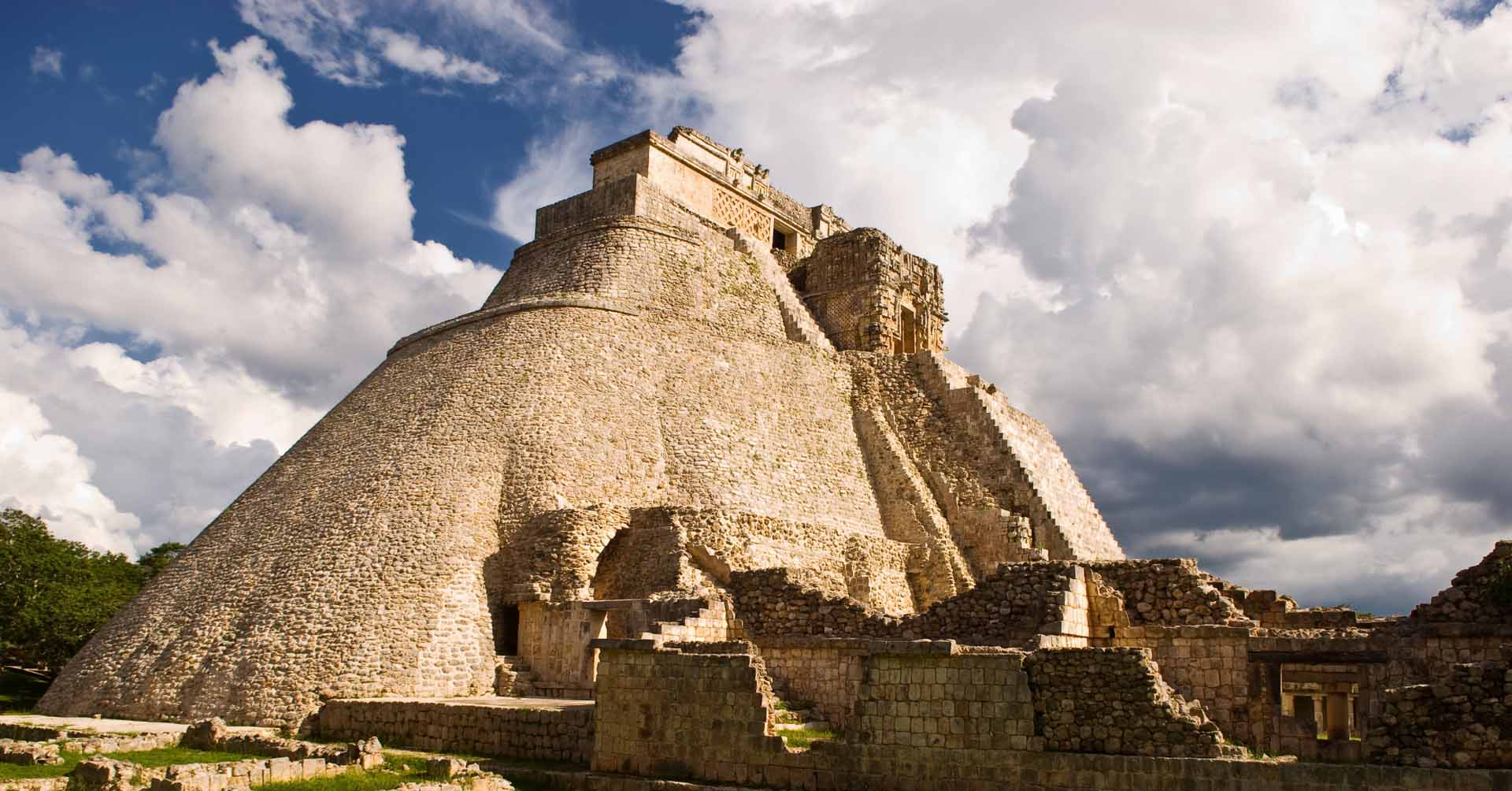
The Pyramid of the Magician at Uxmal in Yucatán

I may have to delay my trip to Mexico until I know what’s happening with the pain in my knee. To refresh your memory, there is some sort of muscular pain in the crook of my left knee, initially diagnosed to be a Baker’s Cyst or some sort of tendonitis. With luck, I will be able to go at some point in January, unless the condition requires surgery.

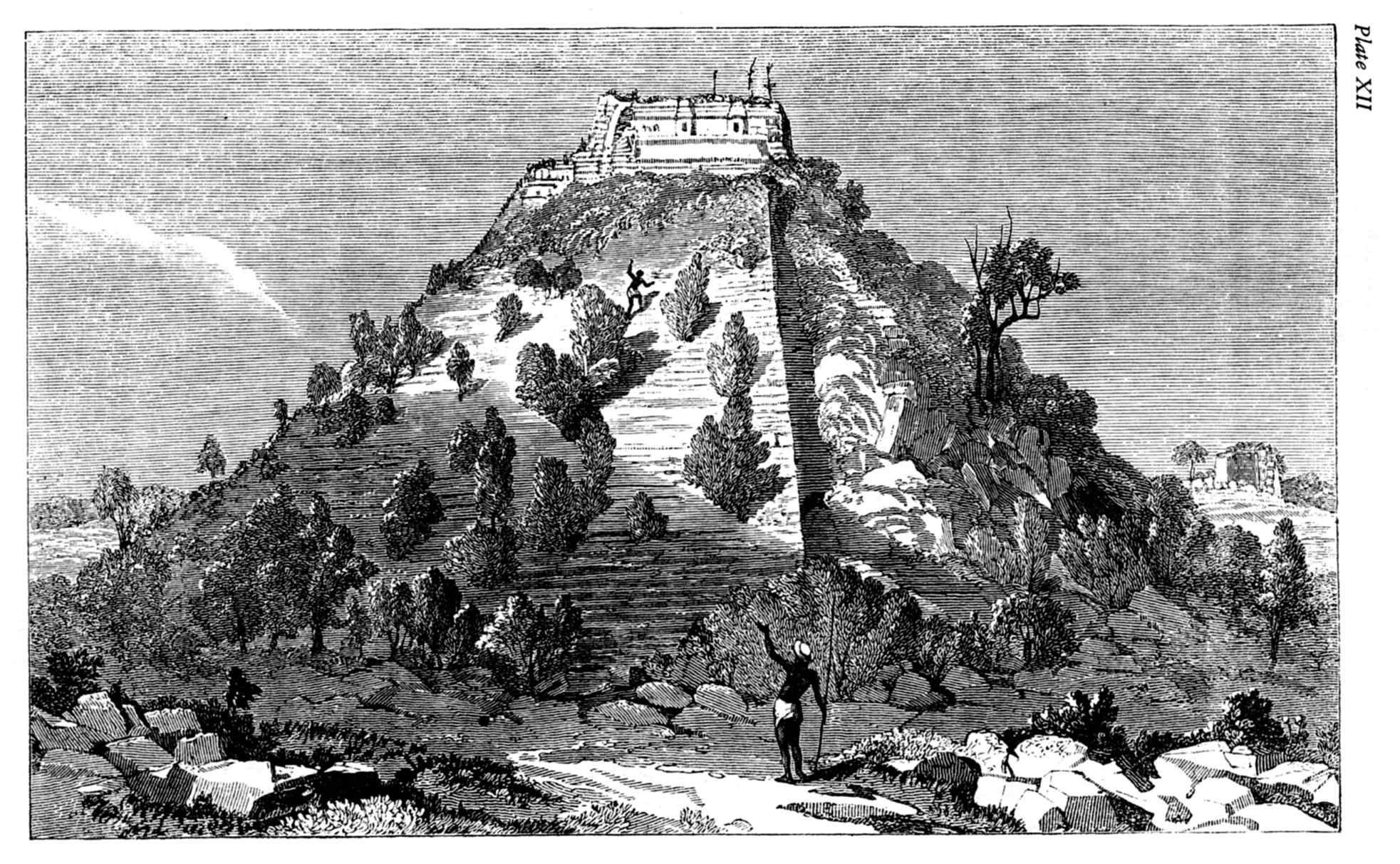
In all, I have been to Uxmal twice, in 1975 and 1992. Both times, I have been impressed that it is the most beautiful of Maya ruins. It is built in the classical Puuc (named after the range of hills where it is located), with smooth rectangular limestone blocks interspersed with images of various Maya deities. It looks even better today, after archeologists have cleared away much of the foliage. Below is an image of the same structure around 1840 when Frederick Catherwood drew it:

Frederick Catherwood’s Illustration of the Pyramid

The city of Uxmal was occupied only up to some point in the 9th century AD, when it is speculated that drought made the ruins in the Puuc Hills uninhabitable. There are no above ground rivers in the limestone peninsula that is Yucatán, and the underground rivers would have required digging through hundreds of feet of rock. Instead, rain water was collected in chultunes, underground storage chambers that circled the ruins.

I was sold on Uxmal from the very start. The van that took me there stopped close by the Pyramid of the Magician. The driver bowed his head and did the sign of the cross upon setting eyes on the pyramid. It is still considered a sacred site by the Maya, even though they have not inhabited it for over a thousand years.


The White City

Mérida at Night

There are a handful of cities with which I have fallen in love over the years. They include Edinburgh, Scotland; Paris, France; Budapest, Hungary; Lima, Peru; and Mérida, Yucatán in Mexico. Mérida is widely known as the White City for the whitewashed look of its buildings. I don’t know if they have any “glass box” high-rises that have been built since 1992 (when I was there last), but I am willing to bet there are none.

I vividly remember arriving there for the first time in November 1975. The taxi ride from Manuel Crescencio Rejón Airport to the Hotel Mérida on Calle 60 was an entirely new experience for me. We passed a huge Coca Cola bottling plant on the road to the airport and a large number of single-story homes that seemed to be open to the street. I saw families sitting at their dinner table as if there were no fourth wall.

It was warm and humid: We were in the tropics. Everything looked so different. Then as we passed the Zócalo, I saw the scruffy looking old cathedral of San Ildefonso, and the large central square with its confidenciales (S-shaped love seat benches).

Confidenciales: Love Seat Benches in Mérida’s Parks

The next few days were an education for me. I decided to take a few tours, but I was up to the challenge of trying my Spanish. I went through a Spanish-only travel agency called Turistica Yucateca and spent two days traveling to such obscure Maya sites as Acanceh, Dzibilchaltún, and Mayapan with an English speaking guide named Manuel Quinones Moreno, who had his own automobile. I played chess with him at the ruins of Dzibilchaltún, losing all my games. We even visited an old henequén hacienda where rope was manufactured. You may recall that there used to be a kind of rope called sisal, named after the Port of Sisal in Yucatán from where the rope was shipped across the world.

I have nothing but happy memories of Mérida, and I look forward to renewing my acquaintance with the White City.

The Day Life on Earth Almost Died

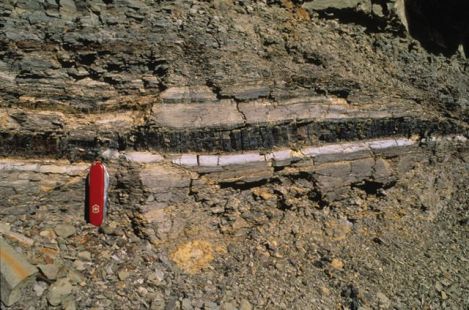
A Piece of the KT Boundary

Around the end of July, I wrote a post entitled Revisiting the Cretaceous Extinction. This week, I read a fascinating story entitled “The Day the Earth Died” in the April 8, 2019 issue of The New Yorker. The asteroid that collided with Earth around 65 million years ago was at least six miles wide and gouged a crater about eighteen miles deep and launched 25 trillion metric tons of debris into the atmosphere. The article goes on:

The damage had only begun. Scientists still debate many of the details, which are derived from the computer models, and from field studies of the debris layer, knowledge of extinction rates, fossils and microfossils, and many other clues. But the over-all view is consistently grim. The dust and soot from the impact and the conflagrations prevented all sunlight from reaching the planet’s surface for months. Photosynthesis all but stopped, killing most of the plant life, extinguishing the phyto-plankton in the oceans, and causing the amount of oxygen in the atmosphere to plummet. After the fires died down, Earth plunged into a period of cold, perhaps even a deep freeze. Earth’s two essential food chains, in the sea and on land, collapsed. About seventy-five per cent of all species went extinct. More than 99.9999% of all living organisms on Earth died, and the carbon cycle came to a halt.

This massive disaster left a signature layer across the entire surface of the planet referred to as the KT boundary, short for Cretaceous-Tertiary. (It is also referred to as the KPg boundary after the Tertiary was renamed the Paleogene by geologists.) This boundary layer is high in the rare element Iridium, which is most often found in meteorites and asteroids.

It is a sobering thought that an object from space only six miles across (10 km) could strike the Earth, which is eight thousand miles across (12,900 km) and end up killing virtually all life, and certainly annihilating the human race.

The asteroid collided with the Earth around Chicxulub on the Yucatán peninsula, which I plan to visit, hopefully with a geologist, early next year.

The Talking Stones of Yaxuna

The Mayan Glyph Stairway at Copán

The Maya believe that certain inanimate objects, such as stone glyphs and statues had souls. The following excerpt, entitled “The Talking Stones,” comes from Maya Cosmos: Three Thousand Years on the Shaman’s Path by archeologists David Freidel, Linda Schele, and Joy Parker:

When I read Paul Sullivan’s book [Unfinished Conversations: Mayas and Foreigners Between Two Wars] it helped me understand something I had witnessed among the village people of Yaxuna who worked with me on the nearby ancient city. When excavation first began, the villagers were deeply concerned that we might try to remove stones, especially carved stones, from the ruins. I had difficulty understanding their anxiety. I explained to them that sometimes artifacts had to be removed for analysis, but that they would be returned faithfully when safe storage could be built for them. The matter was of such importance to the villagers that finally Don Pablo, the local shaman, took it personally  upon himself to ensure that no carved stones be removed from the site. There were some strained moments when the archeologists of the Mexican government insisted that carved stones be taken to safekeeping and the Yaxuna people insisted that they stay; but the tensions were finally resolved. The stones of Yaxuna are still there, under the watchful eyes of the villagers, and now I know why the matter loomed so large: such stones are likely k’an che’, seats of supernaturals.

I had one other encounter with Don Pablo and talking stones. One day in the summer of 1989, after he had done some work on the camp kitchen, I found a clear glass marble in the area. Thinking it belonged to Don Pablo and was one of his saso’ob, the “lights” he used when focusing spiritual forces, I took it next door to him that evening. He took the marble and inspected it carefully.

“Yes,” he said finally, “this is a stone of light.”

Then he smiled, “However, it won’t speak until it has been soaked in maize gruel, sak-a’, and then it will speak only Maya.”

Revisiting the Cretaceous Extinction

This Yucatán Fishing Village Along the Gulf of Mexico Hides a Secret

A few miles from Progreso, Yucatán, is the fishing village of Chicxulub (CHEEK-shoe-lube) which was the site of one of the great catastrophes in the life of the earth. Some 65 million years ago, an asteroid that was nine miles (fifteen kilometers) across slammed into Chicxulub at the speed of 44,640 mph (or 20 km/second) and destroyed some three quarters of all the life on earth, including all the dinosaurs. The impact was equivalent to a million times larger than the largest hydrogen bomb explosion and created a crater that was sixty miles (100 km) across and eighteen miles (30 km) deep.

Of course, that was millions of years ago, and the geology of the area has changed significantly.

Where the Asteroid Impacted


Signs of the Impact Today: A Ring of Cenotes

Today, the Yucatán Peninsula is a large limestone chunk that has been raised up, but with numerous underground rivers and caves admitting access to the water beneath. What you will not find there a river. This did not make it easy for the ancient Maya to grow crops—except in their areas where cenotes prevail. The dark green aresa beneath the ring of cenotes is where the Puuc Hills are located, which rise to an elevation of several hundred feet. There, the Maya dug cisterns, called chultunes, which frequently run dry during periods of drought.

I hope to visit Chicxulub Puerto when I stay in Merida or Progreso.