The First Step Is Taken

Icelandic Scenery

Icelandic Scenery

Today I finally booked my flight to Iceland. Note that I said my rather than our. Unfortunately, Martine will not be able to come with me. Ever since the beginning of the year, she has been suffering from what I think is fibromyalgia, characterized by neuromuscular pains in the neck, shoulder, and back and a difficulty with sleeping. She is currently working with a physical therapist to alleviate her symptoms. But, as things stand now, she is unable not only to carry her luggage, but to wear a purse on her shoulder. It will be a beautiful but lonely trip.

My plans are to leave in the middle of June and return early in July. I hope to see, in addition to the capital Reykjavik, the island of Heimaey, the Njals Saga country around Hvolsvöllur, the Egil’s Saga country around Borgarnes and Reykholt, the Snaefellsness Peninsula around Stykkishólmur, and the Westfjords from Isafjörður to the bird cliffs of Látrabjarg. Perhaps, if there is time, I could also visit Akureyri and the falls at Goðafoss.

My Kindle is already loaded with Icelandic Sagas, and before I leave for Reykjavik, I expect to read another half a dozen.

I could have taken the cheapest flight, but I hate being rushed from one gate to the other at a large airport, so I arranged to have four-hour stopovers in Toronto on the way out and Boston and the way back.

Iceland is beautiful, but I will miss Martine.
Syria’s Hezbollah Connection

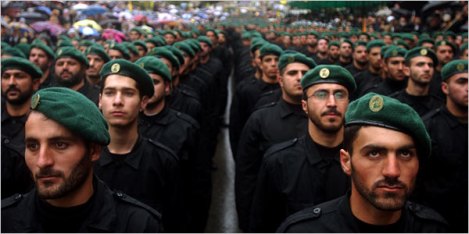
Hezbollah Fighters

Hezbollah Fighters

You may recall that, when Israel last invaded Lebanon in 2006, they got a bit of a surprise: the fighters of Hezbollah, “the Party of Allah,” fought them to a standstill. Long used to winning all their armed conflicts with the Islamic world, Israel found itself flummoxed at every turn by a well prepared military force based in undetectable underground bunkers all along the border.

Hezbollah is a Shia paramilitary group, founded and bankrolled by Iran, operating in several states in the Arab world that are mostly Sunni. To ensure their survival amid changing conditions, the Hezbollah made a devil’s bargain with Bashar al-Assad in Syria to help them against the anti-régime rebels. If Syria loses its conflict, Hezbollah fears it will lose its influence to a new Syria in which the political power will rest with the Sunni.

As a step to maintaining its power in Lebanon, Hezbollah has done something it never wanted to do: It became a political party. When you’re predominately an insurgent group, it’s difficult to take care of issues like healthcare, education, and sanitation. The Hezbollah legislators are a quietly sullen group doing what they feel they have to do to survive.

What could happen is that Hezbollah might find that politics are to its liking. And then they will become just another terrorist group (like Kenya’s Mau-Mau and South Africa’s African National Congress) that became legit.

White Heroes and Dark Heroes

Egil Skallagrimsson (d. A.D. 990)

Egil Skallagrimsson (d. A.D. 990)

As my need to escape the horrors of tax season grows apace, I am increasingly burying myself in the world of medieval Icelandic sagas. A few days ago, one of my favorite writers for The Iceland Review, Jóhannes Benediktsson, wrote the following in the “Daily Life” column:

I was taught in junior college, that there were two types of heroes in the Icelandic Sagas: White heroes and dark heroes. Mickey Mouse is an example of a white hero. Donald Duck is very dark.

In Njáls Saga, we have a good example of a white hero: Gunnar of Hlíðarendi.

Gunnar is described as being close to perfect. He’s exceptionally athletic and breathtakingly good looking. He’s an honorable man and very popular. Seemingly to me, he has only one flaw: He’s a bit shallow—a common trait found in people that go through life without experiencing any real adversity.

Skarphéðinn Njálsson is a dark hero from Njáls Saga. Like Gunnar, he’s very strong. But his appearance is not as light. His mood is heavy and he often grins when he hears about warfare that may be brewing.

Another good example of a dark hero is Egill Skallagrímsson, from The Saga of Egill. He’s described as being very ugly, but stronger than most men. He’s greedy and can be unfair. Some of his most heroic moments happened when he was the sole witness.  I think that is no coincidence.

These guys are not flawless. They are very complicated and have some serious issues. I have no idea what they’ll do next, and that makes me very excited.

Last night I just finished reading what Jóhannes calls The Saga of Egill, and which British and American publishers call Egil’s Saga. Over a space of about 250 pages, we see him carrying on a brutal war of vengeance against everyone he feels done him wrong, including two Norwegian kings, Harald Fine-Hair and Eirik Blood-Axe.

At the same time he was a redoubtable warrior, Egil Skallagrimsson was also a poet of some distinction, and he went back and forth between composing poems and planting axes in the heads and bodies of his enemies.

Jesse L. Byock, perhaps one of the world’s greatest scholars of Icelandic history during the saga era, wrote an article for The Scientific American in January 1995 about his personal search for Egil’s bones. It appears that Egil may have suffered from an ailment known as Paget’s disease, which may be partly responsible for his fearsome appearance. If you’re interested in the sagas, you should read Byock’s article. And, while you’re at it, you may want to hunt up a copy of his book Viking Age Iceland.

My Lack of Civic Spirit

The L.A. Marathon Is Good Mainly for Screwing Up L.SA. Traffic

The L.A. Marathon Is Good Mainly for Screwing Up L.A. Traffic

Every year around this time, the Los Angeles Marathon is run; and, every year, it’s run on a Sunday morning and afternoon during the most brutal part of tax season. Those of us who have to go to work on this day are frequently re-routed in a way that makes us feel tired before we even get to work.

Here is the problem in a nutshell: I live south of the usual L.A. Marathon route, and I work north of the route. That means I have to take the freeway to work … But wait, CalTrans is still working on the exit I have to take. So I would have to go miles out of my way to get to and from work.

The other option is Wilshire Boulevard. Fortunately, the boys and girls in their floppy shorts go under the road through the Veterans’ Administration campus on Bonsall. That works fine in the morning, but in the afternoon, for the return trip, all the left turn lanes are a mile long. So I had to take Veteran Drive to Montana to Sepulveda and take a right on Wilshire. That was a five-mile detour.

If it were me to re-route the Marathon, I would have them run straight up the San Gabriel Mountains. That’ll show how much heart they have!


The Thirty Plus Years’ Quest

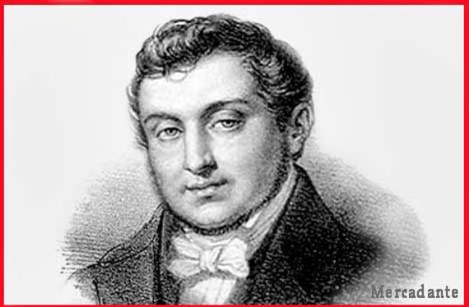
Saverio Mercadante (1795-1870)

Saverio Mercadante (1795-1870)

It was over a third of a century ago. I was preparing to go to work at Urban Decision Systems and listening to a classical music station on the radio, probably KUSC-FM. Suddenly, a piece of music came on called “Variations on a Theme on Stabat Mater by Rossini” by the Neapolitan composer Saverio Mercadante.

I have been looking for that piece of music at record stores (when there used to be such things), eBay, even iTunes—without a shred of luck. Then today I just happened to Google “Mercadante Rossini Stabat Mater” and got two hits on YouTube. Needless to say, I played both clips. One was an Italian recording entitled Sinfonia Sopri i Motivi dello Stabat Mater de Rossini, and the other was a recording conducted by Claudio Scimone with the L’Orchèstre National de l’Opéra de Monte Carlo and entitled Sinfonia sur des thèmes du Stabat Mater du célèbre Rossini (1843).

The musical phrase I loved came in at around the 7:50-minute mark on both recordings and lasted for a little over a minute.

It was nice, but it didn’t impress me as much as it did back in the 1970s or 1980s. Perhaps what I heard on the radio was a better recording. I just don’t know. Or perhaps my taste in music has changed. I am no longer like Swann and Odette de Crécy at the Verdurins oohing and aahing over that little phrase of Vinteuil’s.

What amazed me is that so many things that were impossible to find just twenty years ago can now be Googled and brought up in mere seconds. Technology is wonderful. Sometimes.


“Relevance”

The Importance of History

The Importance of History

Contemporary ideas need to be weighed not against others of the same period but against those of the past, and it is here that the average, modern student is defenceless. His interests and leisure reading are confined to an alarming extent to contemporary writers and thinkers who, despite their apparent individualism, are all really working in the same direction. It is ironic that the current demand at universities is for more relevance (that is to say, contemporaneity) in the curriculum. If acceded to, this will result in a still larger degree of temporal provincialism and an even more profound ignorance of the history of ideas than now prevails.—Duncan Williams, Trousered Apes

Mind, Matter and the Great Unknown

Sometimes Philosophy Ignores the Most Important Subjects

Sometimes Philosophy Ignores the Most Important Subjects

Sometime around a hundred years ago, philosophers decided not to talk about anything that they couldn’t prove. Over the decades, biology was reduced to chemistry, which in turn was reduced to physics, which in turn was reduced to mathematical formulas.

In the meantime, what was ignored was the whole subject of mind.

It reminds me of an old joke:

“What is mind?”

“It doesn’t matter.”

“What is matter?”

“Never mind!”

And yet, mind exists. There is this thing we have called consciousness. It is that consciousness which, from time immemorial, prompted talk about the human soul. Whether the soul exists apart from consciousness, I don’t know. Whether consciousness can exist unhooked from the whole material superstructure that is the human body, I do not know.

I tend to think that because of my sense of my own consciousness—the thing that makes me who I am—that I say I believe in God. Certainly I am not beholden to any organized religion for my belief: I think that all the scriptures are merely metaphorical attempts to create a myth around a belief in the deity.

In his recent book Mind and Cosmos: Why the Materialist Neo-Darwinian Conception of Nature Is Almost Certainly False, Thomas Nagel writes:

I would like to defend the untutored reaction of incredulity to the reductionist neo-Darwinian account of the origin and evolution of life. It is prima facie highly implausible that life as we know it is the result of a sequence of physical accidents together with the mechanism of natural selection. We are expected to abandon this naive response, not in favor of a fully worked out physical/chemical explanation but in favor of an alternative that is really a schema for explanation, supported by some examples. What is lacking, to my knowledge, is a credible argument that the story has a non-negligible probability of being true. There are two questions. First, given what is known about the chemical basis of biology and genetics, what is the likelihood that self-reproducing life forms should have come into existence spontaneously on the early earth, solely through the operation of the laws of physics and chemistry? The second question is about the sources of variation in the evolutionary process that was set in motion once life began: In the available geological time since the first life forms appeared on earth, what is the likelihood that, as the result of a physical accident, a sequence of viable genetic mutations should have occurred that was sufficient to permit natural selection to produce the organisms that actually exist?

Nagel does not provide the answers, but he asks the right questions. Is my consciousness of myself an accident? And why is my consciousness of myself so different from everyone else’s consciousness of themselves?

What has dictated that mind across so many billions of instances should be so rich, so incredibly diversified, so beautiful (and sometimes so heinous)?

The answer, my friend, is blowing in the wind.


A Jesuit Paradise?

Stamps Commemorating the Jesuit Missions of Paraguay

Stamps Commemorating the Jesuit Missions of Paraguay

It is interesting to me that, for the first time in its history, the papacy is in the hands of a Jesuit, from South America no less. In southeastern Paraguay and in the Argentinean state of Misiones, there are numerous ruins attesting to the 17th and 18th century Jesuit missions—missions that were so powerful that they were, in effect, in control of the Guarani Indians of the area. If you ever saw Roland Joffe’s 1986 movie, The Mission, with Robert DeNiro, Liam Neeson, and Jeremy Irons, you have some idea of what the Jesuit government of Paraguay was like.

You can find out even more by reading the forgotten classic history by R. B. Cunninghame Graham entitled A Vanished Arcadia: Being Some Account of the Jesuits in Paraguay 1607 to 1767.

It even finds its way into Voltaire’s Candide, but its author being such an anticlerical cuss, he has his hero kill the Jesuit commandant of one of the missions. Yet he writes in Histoire Politique et Philosophique des Indes:

When in 1768 the missions of Paraguay left the hands of the Jesuits, they had arrived at perhaps the highest degree of civilization to which it is possible to conduct a young people, and certainly at a far superior state than that which existed in the rest of the new hemisphere. The laws were respected there, morals were pure, a happy brotherhood united every heart, all the useful arts were in a flourishing state, and even some of the more agreeable sciences: plenty was universal.

I have long thought that, if my thoughts had ever taken a turn toward the Catholic priesthood, I would have become a Jesuit. My teachers at St. Peter Chanel in Bedford, Ohio, wanted me to become one of them, a Marist. But, in the end, I became neither.

So now Pope Francis is a Jesuit from Argentina. He, I am sure, is quite aware of the history of the Jesuits in the southern cone of South America. It would be nice if he did for the Catholic Church what the Jesuits did for the Guarani in Paraguay and Argentina. Benedict XVI was a good man, but not strong enough for the task of making his faith relevant to a world that is falling away from the Church.


Habemus Puellam

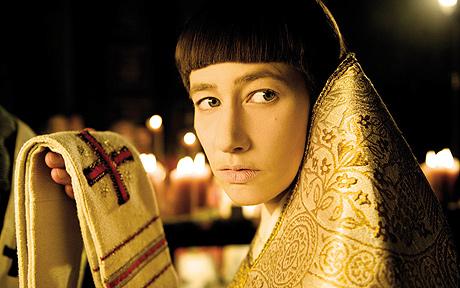
Pope Marigold I

Pope Marigold I

At first, the pink smoke pouring from the chimney set up over the Sistine Chapel stunned the thousands of faithful, as well as an equal number of reporters, as to what it meant.

In the end, it was inevitable that the One, Holy, Catholic, and Apostolic Church would eventually elect a female pope. Tradition was overturned in other ways as well: the new pope is not an ordained Catholic priest. (Nor can she be one according to canon law, to which she replies, “We’ll fix that!”.) And she is a lesbian, complete with tattoos and piercings.

Marigold I, originally Marigold Lilibeth Rathbun of Pepper Pike, Ohio, is also the first pope in several hundred years to still be in her twenties. “Yeah!” she comments; “That means I’ll be around for a while, so you all had better be good.”

Naturally, Pope Marigold’s election was not quite unanimous. Silvestro Silvestrini, Cardinal Archbishop of Ercolano, thinks there were some voting irregularities. “Something is fishy around here.” At least, he admits that she is certifiably free of any accusations regarding the molestation of underage altar boys. His colleague, Grandissimo Pipi, Cardinal Archbishop of Gomorrah, chimed in with his broken English: “I resemble that!”

Of one thing we can be sure, Holy Mother the Church is taking a slightly different course. She reminds us, “And remember, youse guys, I’m the pope; and that means I’m inflammable!”


Bad Times Are Gonna Come

Our Lives Are All Subject to Reverses

Our Lives Are All Subject to Reverses

I remember a story that one film industry friend told me several years ago. A family was so solicitous about the health of their son that they raised him on an organic and vegetarian diet. When he grew up, he wanted to go into the movies as a technician like his Dad. That first day on the job, he ate a McDonald’s hamburger and became deathly ill. He had to be hospitalized for weeks.

You can’t stay entirely out of the way of troubles that are sure to come. One of your loved ones could sicken and die, your health could take a turn for the worse, you could be forced out of your home, your investments could disappear as a result of fraud, your best friend could turn on you, your lover could prove unfaithful to you … the list is endless. How are you going to avoid all of those pitfalls, plus the ones not mentioned? Are you going to be like the vegetarian child for whom the world is toxic?

I would like to think that encountering troubles is a powerful inducement for having greater sympathy for your fellow man. It is not easy when your fellow man cuts you off on the street and leaves you with an upraised middle finger and the exhaust from his BMW; but if your response is nothing but rage, you will only hurt yourself.

Look around you. The world is full of people who need a little help. Even when their gratitude is not what you would hope for, you will feel better about yourself.