A Modest Proposal

Does the IRS Want to Make More Money? Try This!

Does the IRS Want to Make More Money? Try This!

We all know that corporations are taxed based on their annual profit. Yet this profit can be endlessly manipulated using depreciation and a whole plethora of loopholes. As one who has been in the accounting profession for a few years, I have a modest proposal that could at one and the same time:

  • Increase corporate taxes and
  • Limit the pay of ravenous CEOs and other management

It’s really quite simple: No company can pay a tax that is lower than the amount of compensation (in cash or stock options) paid to its management. The management positions which trigger this tax policy can (and will) be negotiated endlessly, but the upshot will be higher corporate taxes and less outrageous sums going to overpaid CEOs and their henchmen.

Why should corporate rights be so much more generous than the rights of American workers?


American Muse

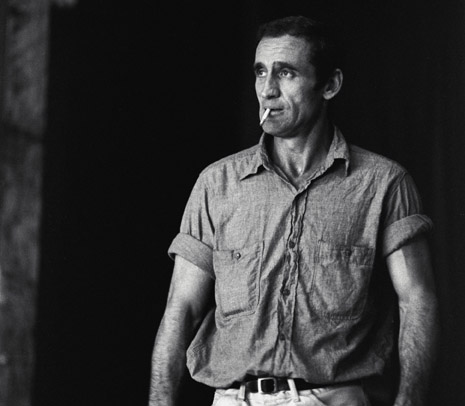
Neal Cassady, “American Muse and Holy Fool”

Neal Cassady, “American Muse and Holy Fool”

He was the real hero of the Beat Generation. Variously called Dean Moriarty and Cody Pomeray by Jack Kerouac, Hart Kennedy by John Clellon Holmes, and in Allen Ginsberg’s “Howl” (1955), “N.C, secret hero of these poems.” It is almost as if the whole Beat moment were mainly about Neal Cassady (1926-1968), a petty criminal who served time in prison for car theft, shoplifting, and fencing of stolen goods. Although he never published a word during his lifetime, it was Neal who acted as a catalyst for his friends. As Jack Kerouac wrote in On The Road:

He was simply a youth tremendously excited with life, and though he was a con-man, he was only conning because he wanted so much to live and to get involved with people who would otherwise pay no attention to him…. Somewhere along the line, I knew there’d be girls, visions, everything; somewhere along the line, the pearl would be handed to me.

Kerouac described his friend’s influence on his writing style “as in a rush of mad ecstasy, without self-consciousness or mental hesitation.” You can see some of this in this YouTube interview at the City Lights Bookstore in San Francisco between Cassady and Allen Ginsberg:

In a 1953 letter to his friend Jack, he wrote:

Well it’s about time you wrote, I was fearing you farted out on top that mean mountain or slid under while pissing in Pismo, beach of flowers, food and foolishness, but I knew the fear was ill-founded for balancing it in my thoughts of you, much stronger and valid if you weren’t dead, was a realization of the experiences you would be having down there, rail, home, and the most important, climate, by a remembrance of my own feelings and thoughts (former low, or more exactly, nostalgic and unreal; latter hi) as, for example, I too seemed to spend time looking out upper floor windows at sparse, especially nighttimes, traffic in females—old or young.

It is not so much a well-constructed unit of thought as an onrush, barely keeping on the rails.

And, in the end, it was the rails that did him in. He was in San Miguel Allende in Mexico in 1968 when he drank too much alcohol and took Seconal, then went walking along the rails on his way to the next town. That’s where he was found, unresponsive, dying in the local hospital. He could have died of an overdose or of renal failure or of “exposure.”

Beat

It All Started as Friendship...

It All Started as a Friendship…

The so-called beat generation actually started as a bunch of friends who liked to get together to talk, drink, smoke marijuana, and—perhaps—even have some casual sex along the way. The only difference between Jack Kerouac, Allen Ginsberg, John Clellon Holmes, and millions of other groups of rambunctious youngsters was that some of them had talent.

Last month, I read Kerouac’s Big Sur; and I am now reading John Clellon Holmes’s Go. The original beats would probably think of me as some sort of stick-in-the-mud, but I admire their all-out pursuit of freedom, even when it leads—as it did for many of them—to disorder and early sorrow. In Big Sur, Kerouac turns to drink the way that most people turn to inhaling oxygen. In Go, the action is frenetic and endless, especially once Hart Kennedy [Neal Cassady] joins them:

Ben’s connection had not showed; the sweet cologne fragrance of benzedrine about him and the discoloration of his lips suggested that there may have been no marijuana connection at all, but somehow that did not matter. Continuance was what concerned them, and where to go next. After a number of improbable ideas (places that would not be open, people who would not be up), they settled on a friend of Ben’s, who lived on One Hundred and Twenty-third Street and Amsterdam Avenue, who would “surely have liquor.” Although at another moment this would have seemed unlikely to them all, now they believed it with bland innocence as though all discord in the universe had been resolved by their harmony, which, in any case, did not depend on such details.

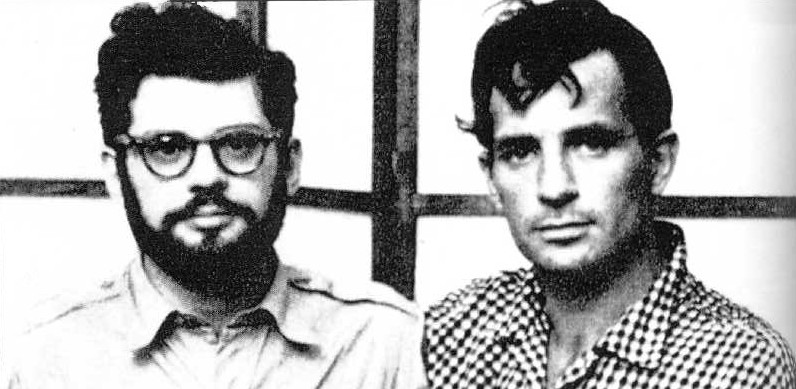
Below is a photo of Jack Kerouac with Allen Ginsberg, who was probably the most talented writer of the lot:

Allen Ginsberg and Jack Kerouac

Allen Ginsberg and Jack Kerouac

In the months to come, I plan to read more works by this unique “band of brothers” who had an outsize influence on the middle of the Twentieth Century, even if, as the movies and lurid paperbacks above show, it was mostly misinterpreted.

Is This a Valuable Talent?

This Makes Zero Sense to Me

This Makes Zero Sense to Me

Among the children of my friends, I am famous for being totally uninterested in computer gaming.Today, while driving home from work, I heard a news story on NPR that almost made me rear-end an Acura. Robert Morris University in Chicago is offering a full athletic scholarship in the video game League of Legends. If your child has wasted hundreds of hours exercising his thumbs (but not his brains) on a fantasy computer game, he is entitled to a scholarship that will pay 50% of tuition and 50% of room and board. (Excuse the pronouns: Women also are eligible for the award.)

What the university is doing is making a computer game equivalent to a sport. Not that I have any particular love of college athletics (I was in the band), but I am wondering why an accredited university should be encouraging an activity that will most likely be considered out of date in about three weeks. At least football, track, and maybe even baseball will continue to exist, I do not expect the same of any computer gaming product now on the market. (Well, maybe chess….)

I see this as opening scholarship chances for skateboarding (that’s been around for half a century), in-line skating, Razor-Scootering, pogo sticks, and other forms of “physical” activity indulged in by youthful slackers. We could make awards based on smart phone handling while crossing a busy intersection or texting and vaping while driving in reverse. The possibilities are limitless.

Now that Robert Morris University got its name in the news media by this stunt, I wonder what could be next.


Griifith Park Circa 1955

Former Site of the L.A. Zoo (Until 1965)

Former Site of the L.A. Zoo (Until 1965)

Today Martine and I spent a few hours in Griffith Park just northwest of Downtown L.A. First I showed her the site of the old Los Angeles Zoo before it was abandoned and moved to a larger site a little more than a mile north. The rockwork was done by the WPA during the 1930s and looked fairly artistic—probably more so than the current zoo, which we don’t like visiting because of the endless construction and consequent poor pedestrian traffic management.

The old zoo site is surrounded by pleasant picnic tables unknown to the mass of visitors. Unfortunately, they are known to the legions of yellowjackets that inhabit the canyon.

Afterwards, we went to the Travel Town Museum up the road about three miles. An open-air transport museum first opened in 1952, Travel Town features an extensive display of old locomotives, passenger and freight cars, cabooses, and related railroading equipment. There is even a little passenger train that runs around the park.

Steam Locomotive with Peeling Paint

Steam Locomotive with Peeling Paint

Although most of the rolling stock is in sad repair (see the peeling paint on the steam locomotive above), the park is popular with parents who want someplace to take their kids without spending a fortune. Sometimes I wonder how long a place like Travel Town can continue to exist without a massive infusion of cash, which is very unlikely to ever happen. It would be a pity, because the place was full of little reserved areas for children’s birthday parties, both outfoors and in some of the passenger cars.

In any case, Martine and I enjoyed ourselves.


Catholic Peru

Statue of Saint in Lima’s Cathedral

Statue of Saint in Lima’s Cathedral

Peru was without a doubt the most Catholic country I have ever visited. Whenever I wanted to rest, especially when I was at high altitude, I frequently stopped at a church, looked around, and took a pew. Never before had I seen so much ornateness and wealth lavished on any religion. Although I have not been a practicing Catholic for almost fifty years, I did not feel out of place in this whole pre-Vatican II religious environment: The altars may have been turned around to face the congregation, but otherwise I was in the 16th and 17th centuries, where the Churrigueresque ruled. And I spent the first seventeen years of my life in a Catholic environment.

When I was in Puno fighting for my breath at an altitude of 12,500 feet, I sometimes attended Mass twice in one day, once at the Cathedral and once at the parish church of San Juan Bautista at Parque Pino. I could not follow the service as my Spanish is highly rudimentary.

The Main Staircase of the Archbishop’s Palace in Lima

The Main Staircase of the Archbishop’s Palace in Lima

I had no inkling that this would happen to me, but I probably spent more time visiting churches and related religious museums in Peru than I did Inca-related archaeological sites. The Inca locations were what I had been led to expect, but the power and majesty of the Catholic Church in Peru came as a surprise to me.

It was from the Audiencia of Peru that the Spanish ruled South America. The gold and silver from the mines of Peru and Bolivia were transshipped from Lima to Panama, where they were carried overland to the Caribbean ports of  Nombre de Dios and Porto Bello and put on treasure galleons to Spain. Even though some 20% of all treasure was for the Spanish Crown, I suspect twice as much or more eventually found its way into the hands of the Church.

In future postings, I hope to show you some of the churches I saw.


“The Burning of the World”

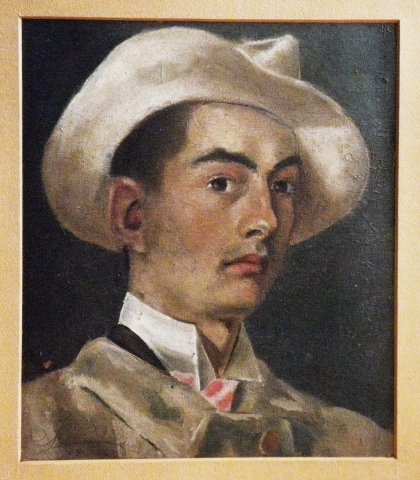
Béla Zombory-Moldován in His Early Twenties

Béla Zombory-Moldován in His Early Twenties

Two days ago, I posted a blog entitled A Hungarian Artist Goes to War about the experiences of a young Magyar officer who was called up for the First World War on the Galician Front. In that post, I concentrated on Béla Zombory-Moldován’s paintings. Today, I would like to reprint a review of his memoirs about fighting the Russians in 1915. Entitled The Burning of the World: A Memoir of 1914, his book was translated by his grandson Peter and released by the New York Review of Books. Here is an edited text of my review from Goodreads.Com:

When the wounded Béla Zombory-Moldován went by train through Eperjes (now Presov) early in 1915, my father was nearby, a toddler at the age of three. I cannot help but wonder if he heard the train go by, carrying the wounded officers and men of the Royal Hungarian Army after its defeat to the Russians at Rava-Ruska.

BZM, as I shall call him, managed to survive and, in fact, managed to live for another half century, becoming one of Hungary’s most beloved artists. But in The Burning of the World: A Memoir of 1914, we see only a tiny slice of that life. Would that it were more! Supposedly the remainder of his autobiography was hidden or destroyed by a relative for personal reasons.

Hungarian Soldiers at the Front

Hungarian Soldiers at the Front

We tend not to know much about the Galician Front in 1914-1915, except that the casualty rates for the monarchy’s forces were horrifying. In the first two weeks of fighting alone, the Austro-Hungarian forces lost some 400,000 killed, wounded or captured. The “butcher’s bill” rose to 850,000 by the end of 1914 and to 1,600,000 by March.

We meet young Béla at a seaside resort in Croatia (then part of Hungary) the day that war is declared. Then we follow him to Veszprém, where he is called up to report, and from there to Galicia, where he engages in the battles at Rava-Ruska and Magierov. Wounded, he returns to Budapest where he has a month to recuperate before returning to duty. During that month, he visits a village priest relative in the north of Hungary, and then returns for a while to the Croatian Adriatic.

During this time, BZM came to a realization:

Nature slumbered, seemingly indifferent. Everything moved forward in accordance with unchanging laws; sleeping or waking, every struggle, in accordance with its slow, gradual, hidden evolutionary laws. Nature flowed on its course, impervious to the absurd behavior of men, their mutual slaughter and assorted acts of wickedness. The whole world was manifestly indifferent in the face of the life-and-death struggles of men: it neither took their side nor opposed them, but simply paid no attention. Let them get on with it. Let them reap what they sow.

Beware of the Passionate Idealist

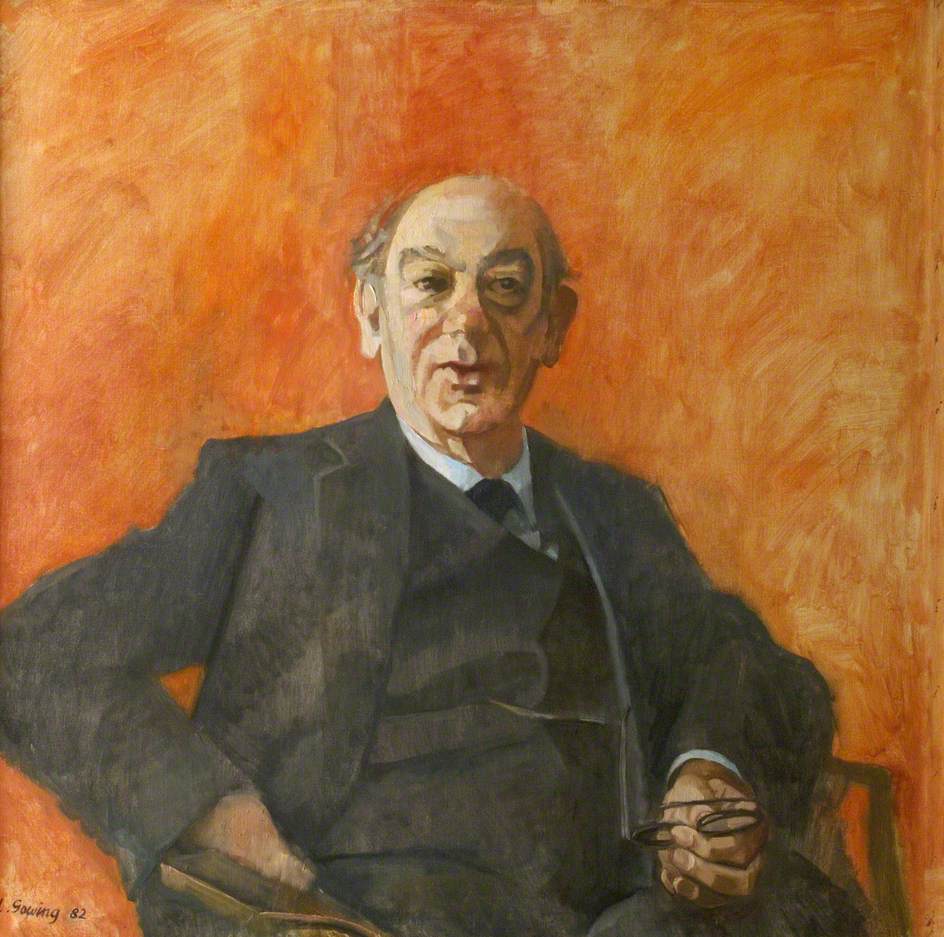
Philosopher Isaiah Berlin (1909-1997)

Philosopher Isaiah Berlin (1909-1997)

We don’t read philosophers much any more. That’s a pity. Even though their works can be difficult, there is a payoff. I am thinking, for instance, of the late Isaiah Berlin, who died in 1997. Years from now, people will be referring to him as the greatest 20th Century thinker about human liberty.

Twenty years ago, on November 25, 1994, he accepted an honorary degree of Doctor of Laws from the University of Toronto. On that occasion, he pleaded with people not to give way to a passionate idealism that violates individual freedoms:

I am afraid I have no dramatic answer to offer: only that if these ultimate human values by which we live are to be pursued, then compromises, trade-offs, arrangements have to be made if the worst is not to happen. So much liberty for so much equality, so much individual self-expression for so much security, so much justice for so much compassion. My point is that some values clash: the ends pursued by human beings are all generated by our common nature, but their pursuit has to be to some degree controlled—liberty and the pursuit of happiness, I repeat, may not be fully compatible with each other, nor are liberty, equality, and fraternity.

That Business of Making Omelets

That Business of Making Omelettes

That is one of the reasons I so distrust conservative ideologues such as Ted Cruz and Paul Ryan: For the sake of their ideological purity, they are willing to deprive us, if necessary, of our liberties. (By the way, I feel the same about liberal ideologues, even though they have not been much in evidence lately.) Berlin goes on:

We must weigh and measure, bargain, compromise, and prevent the crushing of one form of life by its rivals. I know only too well that this is not a flag under which idealistic and enthusiastic young men and women may wish to march—it seems too tame, too reasonable, too bourgeois, it does not engage the generous emotions. But you must believe me, one cannot have everything one wants—not only in practice, but even in theory. The denial of this, the search for a single, overarching ideal because it is the one and only true one for humanity, invariably leads to coercion. And then to destruction, blood—eggs are broken, but the omelette is not in sight, there is only an infinite number of eggs, human lives, ready for the breaking. And in the end the passionate idealists forget the omelette, and just go on breaking eggs.

For Nazism in Germany, the original goal was to unite the rich and poor in a common national project (“Volksgemeinschaft” or people’s community) and “promoted the subordination of individuals and groups to the needs of the nation, state and leader” (Wikipedia)  Of course, it was not for all. Jews, Communists, Gypsies, Slavs, and other non-Aryans were rounded up and eliminated.

In Russia, everything was subordinated to the Dictatorship of the Proletariat, which never quite happened.

As for the United States in the 21st Century, I conclude with Yeats in his poem “The Second Coming”:

The best lack all conviction, while the worst
Are full of passionate intensity.

Does that make me wishy-washy? To some, perhaps, but I would rather lack all conviction than be full of a passionate intensity that deprives anybody of the right to life, liberty, and the pursuit of happiness.

If you’d like to see the complete text of Berlin’s address, you will find it on Page 37 of the October 23, 2014 issue of The New York Review of Books under the title “A Message to the 21st Century.”


A Hungarian Artist Goes to War

Painting by Béla Zombory-Moldován

Painting by Béla Zombory-Moldován

He was a twenty-nine-year-old artist who was taking a vacation at Novi Vinodolski on the Croatian Coast of the Adriatic Sea when the world suddenly erupted. He, and all the other young Hungarian men, were called to report to duty. It was almost a hundred years later that Béla Zombory-Moldován’s The Burning of the World: A Memoir of 1914 was translated by his son Peter and published by the New York Review of Books.

Reading of the horrible confusion on Eastern Front in Galicia, where the 31st Royal Hungarian Regiment was battling the Russians in Galicia, I decided to look for some of the painter’s work. Below is a still life from the 1950s:

A Still Life

A Still Life

Perhaps when I have finished Zombory-Moldován’s book, I will write about the young ensign’s experiences in the war. Like the Eastern Front in a later war, it was a campaign marked by confusion and carnage.

The Man Who Wanted to Change the World

Aldous Huxley Pictured on Cover of One of My Books

Aldous Huxley Pictured on Cover of One of My Books

When I was a young man in my twenties and thirties, I regarded Aldous Huxley as one of my gurus. I read his novels and essays and treasured quotes from him, such as “I wanted to change the world. But I found that the only thing one can be sure of changing is oneself.” Then there was this one: “A child-like man is not a man whose development has been arrested; on the contrary, he is a man who has given himself a chance of continuing to develop long after most adults have muffled themselves in the cocoon of middle-aged habit and convention.”

In time, I found that Huxley was a very good novelist and an even better essayist. But he was a human being like all of us and, as much as he tried, turned out not to be the universal guru. One of the fun things about going back and re-reading his works is encountering my young self when I was most vulnerable: after my brain surgery in 1966 and in the twenty years that followed.

Last night, I finished reading Huxley’s short novel The Genius and the Goddess, about a young man, himself a scientist, who joins the household of a Nobel prizewinner, as I described in my Goodreads.Com review:

John Rivers is a young scientist who idolizes Nobel-Prize-winning scientist Dr. Henry Maartens, and jumps at the chance to not only work with him, but to join his household, including his Goddess-like wife Katy and children Tim and Ruth. Rivers puts Katy on a pedestal, but circumstances bring her to his bed when Maartens is ailing and the children are staying with a relative. Alternately crushed and ecstatic, Rivers finally comes out of his funk; and circumstances take an odd turn, leaving him to wonder at this early encounter late in his life.

I concluded my review:

I will continue to read Huxley and like him, but he is no longer the guru I once thought of him as being when I myself was equally torn and conflicted about love, wondering whether it would ever “happen” to me. It did, and continues to do so; but the experience is much more complex and mixed than I would ever have predicted.

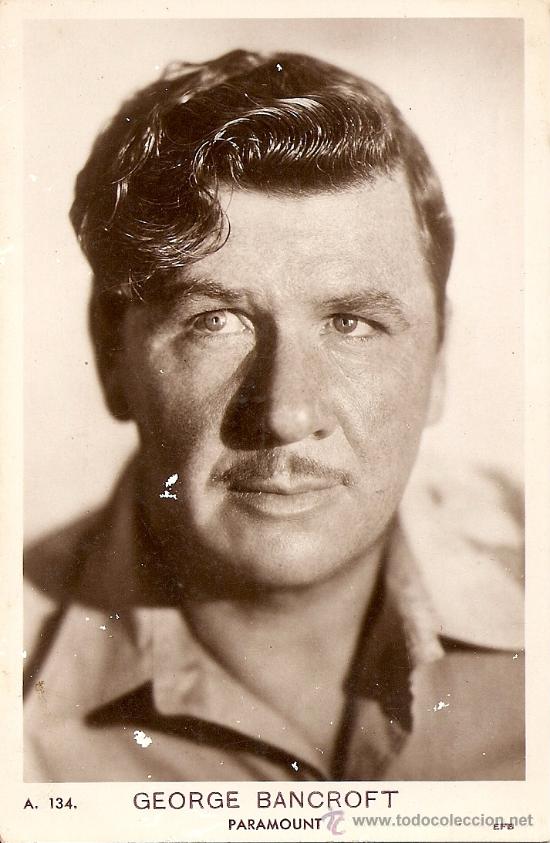
On an entirely different note, I noticed a strange “separated at birth” coincidence based on the photo above. In it, Huxley looks almost exactly like George Bancroft, who played Marshal Curly Wilcox in John Ford’s masterpiece Stagecoach (1939):

George Bancroft

George Bancroft

The only difference is that Huxley was a bit thinner, but the faces are amazingly close.