The Chiltern Hundreds

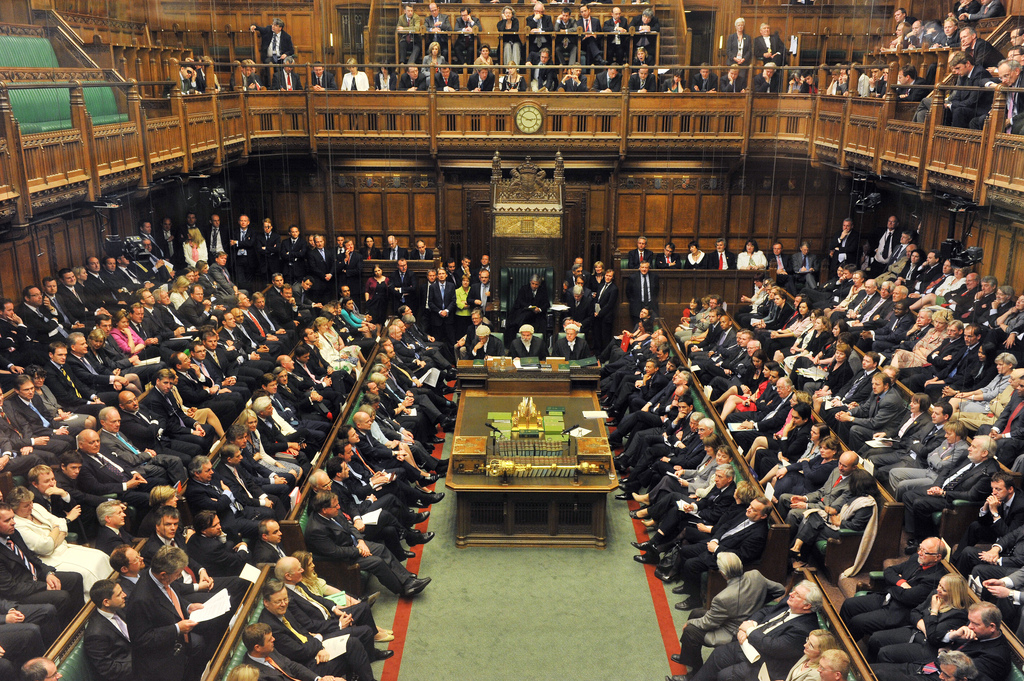
The House of Commons in Session

The House of Commons in Session

Let us say that you were a member of Britain’s House of Commons and wanted to quit your job. If it were anyplace other than the United Kingdom, it would probably be a no-brainer. But in Britain, you have to apply to quit, whereupon you are assigned to a royal stewardship from which you can ease out of office. The two stewardships available for this purpose are:

  • Crown Steward and Bailiff of the Three Chiltern Hundreds of Stoke, Desborough, and Burnham—located in Buckinghamshire.
  • Crown Steward and Bailiff of the Manor of Northstead—located in North Yorkshire.

The Chiltern Hundreds figure in two novels by Anthony Trollope, Phineas Finn and The Three Clerks.

In 1624, the House of Commons passed a measure making it illegal for an Member of Parliament to quit or willfully give up his seat. The Act of Settlement of 1701, amended by subsequent legislation, MPs were excepted who accepted an office of profit under the crown. (Originally, MPs were not paid.)

Over the years, there have been several other crown offices which served the same purposes, but only the Chiltern Hundreds and Northstead remain.


Serendipity: In Praise of the Short Biography

F. L. Lucas (1894-1967)

F. L. Lucas (1894-1967)

I had forgotten classical scholar F. L. Lucas entirely. In high school, I had read his most famous book, Style (1955), and loved it. Today, I was searching the stacks of the Los Angeles Central Library and ran into his The Search for Good Sense: Four Eighteenth Century Characters—Johnson, Chesterfield, Boswell, Goldsmith (1958). It was there I read the following:

On all these men there already exist many books—many of them big. One feels embarrassed at adding to the number. Nothing can be a substitute for Boswell’s Johnson; or for those works on an American scale of magnificence, the Boswell Papers and the fifty volume edition of Walpole’s letters. But, given the brevity and busyness of life, many have not time time to read these large works, or a series of full-scale biographies; still less, to re-read them. There is a need for both long and short biographies, as for large-scale and small-scale maps. And it is not only a question of time. One reads such things not only for the amusement of reading, but also to remember. For this, I feel, biographies tend to grow too long. Just because one is told far more than one really needs, one remembers far less. The impression is blurred by multitudinousness; just as one could not, says Aristotle (with a flash of imagination rare in his austere pages) grasp as a unity a creature ten thousand furlongs in length.

I love to rediscover authors whose existence I had forgotten. Unfortunately, it seems that Lucas has also been forgotten by others as well. I had a hell of a time finding a decent photograph of him on the Internet.

Well, I for one plan to search out more of his books, and the L.A. Central Library is the perfect place for it.  I love his writing style. After all, he influenced mine when I was a teenager in Cleveland. I can only hope that I’ve lived up to his teachings.

Rats!

They Look Enticing ... But Not Just to Humans

They Look Enticing … But Not Just to Humans

Palm trees are a part of the scenery of Southern California that draws admiring comments from Easterners and Midwesterners. Unfortunately, those stately palms can also be a home for roof rats, and often act as an invasion path to your house or apartment.

According to Los Angeles County’s Department of Public Health, the following steps should be taken by homeowners who have palm trees:

  1. Remove all dead palm fronds. (After a high wind, you will find lots of them.)
  2. Trim tree limbs and tall plants six feet away from roof, attic vents, eaves, and utility lines. Thin ivy and
    other thick vegetation, and leave clearance beneath bushes to prevent harborage for rodents.

There are other precautions mentioned in the 4-page document (for which you will need Adobe Acrobat ro read).

One thing that many people do not realize is that the dense foliage of such beautifully landscaped houses such as those in Beverly Hills are effective at attracting rats. According to the New York Times:

“Beverly Hills is a nice place to be a rat,” Ray Honda explained, admiring the cool, verdant landscape of the moneyed class, with its fruit trees, bird feeders, swimming pools and dog-food bowls. “It’s a very good address.”

Mr. Honda, a Los Angeles County health inspector whose speech and demeanor bring Peter Lorre to mind, was quick to append, “the four-legged kind,” adding: “More rats than people, probably. And when they get really bad you can smell them.”

Across Beverly Hills and the other lush corridors of Los Angeles, rats —yellow-bellied, pink-tailed, flea-bitten rats —are wriggling through the woodwork and rooftops. They have come down from the trees and in from the fields, forced into neighborhoods by a strangling drought that has gripped the region. They are eating from dog bowls and drinking from swimming pools and acting in surly ways not normal to the genus.

The article does not mention two-legged rats, but Beverly Hills has always had a large population of those as well.

As much as I like Southern California, I have to admit that we have some unique problems of our own.


The Man Who Destroyed Yugoslavia

Slobodan Milošević

Slobodan Milošević

He was the 3rd President of the Federal Republic of Yugoslavia (1997-2000), 1st President of Serbia (1991-1997), and the 14th President of the Presidency of the Socialist Republic of Serbia (1989-1991). I am referring to Slobodan Milošević, the leader who took his country down a rat hole, was responsible for thousands of deaths by genocide (which he called “ethnic cleansing”), and died while awaiting trial at the International Criminal Tribunal at the Hague.

Although he initially ruled a nation of Serbs, Croatians, Slovenians, Albanians, Macedonians, Muslim Bosnians, and Hungarians, in the end he was only interested in changing diverse Yugoslavia into a Greater Serbia. Most of his crimes involved his preferential treatment of his fellow Serbs, mostly in the Yugoslavian Republics of Croatia, Bosnia, and Kosovo, where forces under him or allied to him committed devastating massacres of men, women, and children, including large scale rape and torture.

I am currently reading Yugoslavia: Death of a Nation by Laura Silber and Allan Little (New York: Penguin, 1997). Although twenty years have passed since the first edition came out in 1996, the book still reads like today’s headlines.

It shows what can happen when the elected leader of a democracy decides to take sides on behalf of a particular population and, at the same time, act prejudicially against others. (That’s one of the reasons I am so against a political party being responsive only to, say, angry white males.)

The United States is a diverse country very like the old Yugoslavia. It wouldn’t take much effort to break the country into warring fragments. That’s what happened in Cambodia when the Khmer Rouge under Pol Pot decided to persecute or kill city dwellers. Also Hitler’s Germany with its antisemitism and the Ayatollah Khomeini’s persecution of Christians and Baha’i. And, needless to say, ISIS/ISIL/Daesh’s attacks on Christians, Yezidis, and non-Sunni Muslims of the approved flavor.


Things I Don’t Really Want to Write About

Subject A

Subject A

It is difficult for me not to write about certain subjects, especially when I am so upset about them. But then, I have to think about you, my readers. However strong I feel about certain things, what if I really don’t have anything to add about what has already been said?

Anyhow, on to the list, in no particular ordure [SIC]:

  1. Presidential Elections. Let’s face it: Even the pundits whose job it is to opine on the political scene either have nothing new to say, or else they are in the business of influencing opinions.
  2. Donald Trump. You know what I think about the Cheeto-haired beast. ’Nuff said!
  3. Awards. Whether it’s the Oscars or the Nobel Prize for Literature, it’s all about politics, usually who hates whom.
  4. American Conservatism. It seems to be segueing into National Socialism (Nazism).
  5. Police Violence. Black lives do matter! All Americans matter!
  6. Terrorism. Everything we do emboldens the terrorists, so let’s just get on with our lives.
  7. Guns. Since when does a “well-regulated Militia” mean that crazy people get to play with Bushmasters?
  8. Ecology. Even if the Earth is on the point of being irretrievably poisoned, we gotta dig coal and chop down trees, no?

There are probably a handful of other subjects which aren’t worth ranting about, mostly because of the seemingly irresolvable split between the Union and the Confederacy. Occasionally, I will still blab out a post when I know I should keep my mouth shut. Please forgive me in advance!