Flateyri Will Get You Nowhere

The Town of Flateyri in Iceland’s Westfjords

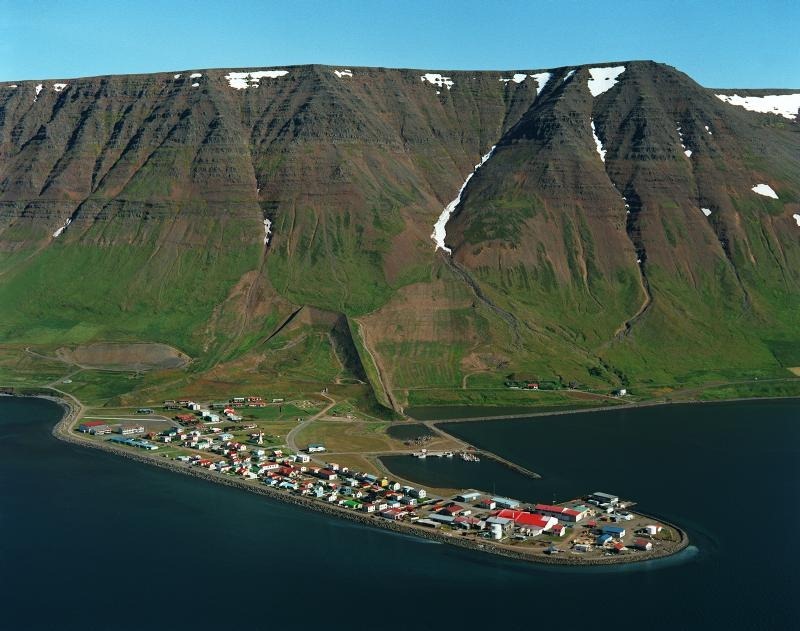
One of the most picturesque parts of Iceland is its northwest, usually called the Westfjords. Here the mountains come close to the coast, and distances between towns are magnified by roads that laboriously travel around the shores of the long fjords that characterize the region. One town I went through in 2013 was Flateyri on the shores of Önundarfjördur, scene of a disastrous avalanche in October 1995. The town had a small population to begin with; and, after twenty people died in the avalanche, many of the survivors pulled up stakes and moved to other parts of Iceland which were not as susceptible to avalanches.

There is still an active fish processing industry in Flateyri, so guest workers from Poland and the Philippines were invited to take up the slack. This caused some problems, as the town fractured on cultural fault lines, with the native Icelanders not mixing well with the Poles and Filipinos, and the latter not making much of an effort to mix with the natives. You can read about this in a 2006 article from the Reykjavík Grapevine. I imagine that, over the last eleven years, the situation as changed for the better. For one thing, there is now a tunnel connecting Önundarfjördur with Isafjördur, the largest town in the Westfjords, taking hours off the trip by highway. I took this tunnel, called the Bolungarvíkurgöng, and it is quite an achievement—17,717 feet in length,

To protect against future avalanches, the Icelanders built a retaining wall (visible in the above photo, shaped like an upside-down “v”). The local restaurant, Vagninn, has re-opened; and a cultural center has been built.

Small towns in Iceland have had a difficult time surviving, especially when there are no large local projects such as aluminum smelters to act as an employment draw. Meanwhile Reykjavík continues to grow at the expense of rural Iceland. One possibility is that global warming will benefit rural Iceland, with more cash crops being grown outside of greenhouses.


Near Is Far and Far Is Near

Patrick Hughes and One of His Reverspectives

I have always loved optical illusions. There is one British painter named Patrick Hughes whose entire work concentrates on what he calls Reverspectives. These are paintings that when viewed by still photography are flat, but are not originally created so. (See the above illustration, and then the one below.) I suggest you take a look at the artist’s own website or this Futility Closet posting.

A Still Photograph View of a Similar Painting

It never fails to amuse me how something so simple as perspective could be put on its end and played with. Take a look at his work and let me know what you think.

Where Are Our Courageous Reporters?

Norman Mailer (1923-2007)

The late 1960s were a bad time for the United States. We were in a fiercely unpopular war in Viet Nam. I had gotten radicalized and joined the Resistance, which not only protested the war but attempted to interfere with the draft induction process. I returned by draft card to the Selective Service System in Cleveland and told them politely what they could do with it. Running for president that year was Richard Nixon for the Republicans, with Democratic candidates to be chosen later in Chicago.

Reporting on that convention was Norman Mailer, who within a short time became like a god to me. (So he went off the rails a bit later: He was human after all.) Mailer had come out with a number of nonfiction books that I read and re-read religiously. They included:

  • Advertisements for Myself (1959)
  • The Presidential Papers (1963)
  • Cannibals and Christians (1966)
  • Armies of the Night (1968)
  • Miami and the Siege of Chicago (1968)

I just finished re-reading Miami and the Siege of Chicago, which made me shake my head sadly that there was no such quality reportage during the ongoing train wreck that is Trumpf. Mailer died ten years ago, and the only other candidate—Hunter S. Thompson—blew out his brains two years earlier. There are thousands of voices raised against Trumpf, but they seem tinny in comparison to what Mailer and Thompson were capable of.

Take this prophetic quote from Mailer’s description of Nixon’s convention win in Miami:

Of course, Republicans might yet prove frightening, and were much, if not three-quarters, to blame for every ill in sight, they did not deserve the Presidency, never, and yet if democracy was the free and fair play of human forces then perhaps the Wasp must now hold the game in his direction for a time. The Left was not ready, the Left was years away from a vision sufficiently complex to give life to the land, the Left had not yet learned to talk across the rugged individualism of the more Rugged in America, the Left was still too full of kicks and pot and the freakings of sodium amytol and orgy, the howl of electronics and LSD. The Left could also find room to grow up. If the Left had to live through a species of political exile for four or eight or twelve good years [try 50!], it might even be right. They might be forced to study what was alive in the conservative dream. For certain the world could not be saved by technology or government or genetics, and much of the Left had that still to learn.

Perhaps the biggest lesson they had to learn was unity. The Left is known today as a circular firing squad, wounding itself repeatedly over minor issues and leaving the major ones to the Right.

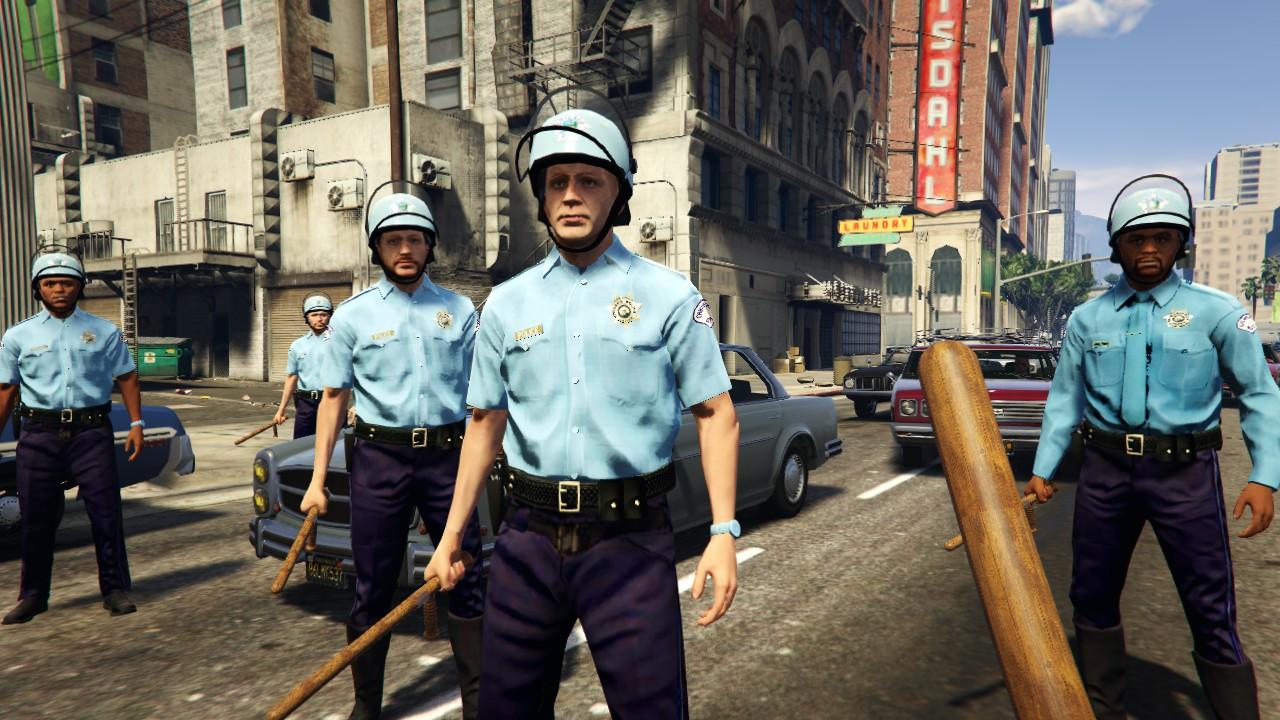
Chicago Riot Police 1968

The conservatives of 1968 were nothing compared to the Alt-Right, the Ku Klux Lan, and the other fascist forces brought into prominence by Trumpf’s 2016 victory. I will write what I can, when I can, but I am far from being either a Mailer or a Thompson.

And in this, our time of maximum danger, the media have failed America by bowing instead to the wishes of their corporate overlords.


Billy the Kid and the Lincoln County War

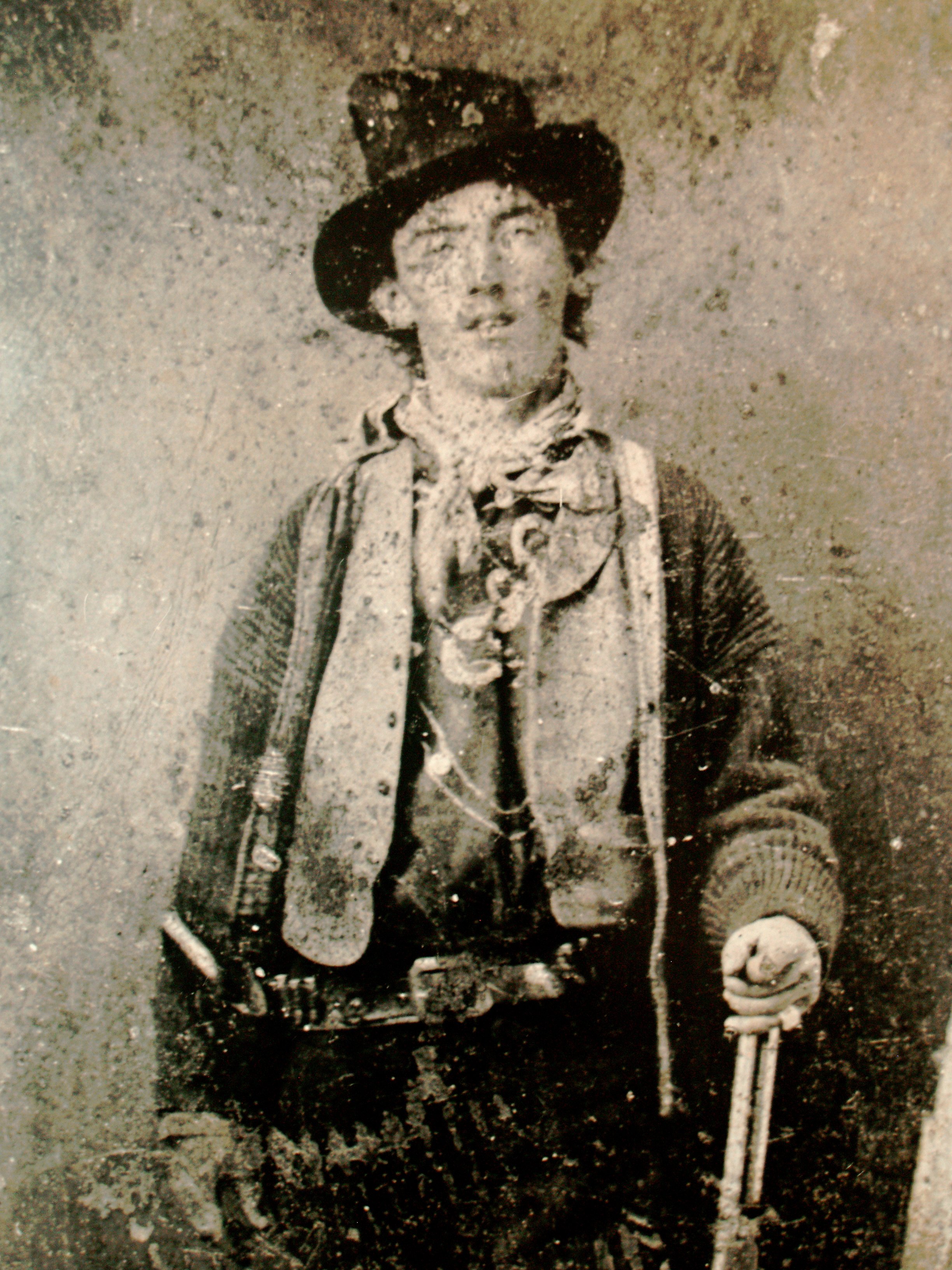
Billy the Kid

The town of Lincoln, New Mexico, looks very much today the way it did in 1876 when the Lincoln County War flared up. On one hand were Dolan and Murphy, who ran a store on the main drag, when another store operated by Tunstall and McSween opened up down the street. One of the key figures in the conflict between the two sides was a young man who has come to be known as Billy the Kid. He was known to be handy with a gun and was blamed for several murders.

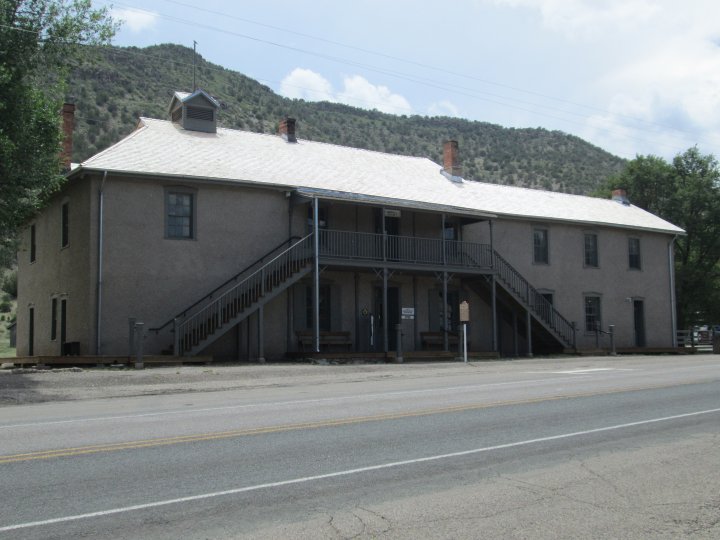
He tried to exonerate himself, but the governor of the territory at the time, General Lew Wallace (author of Ben-Hur), weaseled out of his promise to support him. Billy was holed up in the courthouse which had been the Dolan store and held for trial.

The Lincoln Courthouse, Formerly the Dolan Store

Billy managed to get a gun and shoot the two deputies who were guarding him, J. W. Bell and Bob Ollinger. He managed to escape from Lincoln, but was finally gunned down in Fort Sumner by Sheriff Pat Garrett. (We didn’t make it to Fort Sumner, but I’m saving it for a future trip.)

Below is a bullet hole supposedly from Billy’s gun while he was trying to escape from the Lincoln Courthouse.

A Bullet Hole from Billy’s Gun?

Martine and I enjoyed Lincoln. The whole town is more or less devoted to the legend of Billy the Kid and the Lincoln County War.

Kilroy Was Here

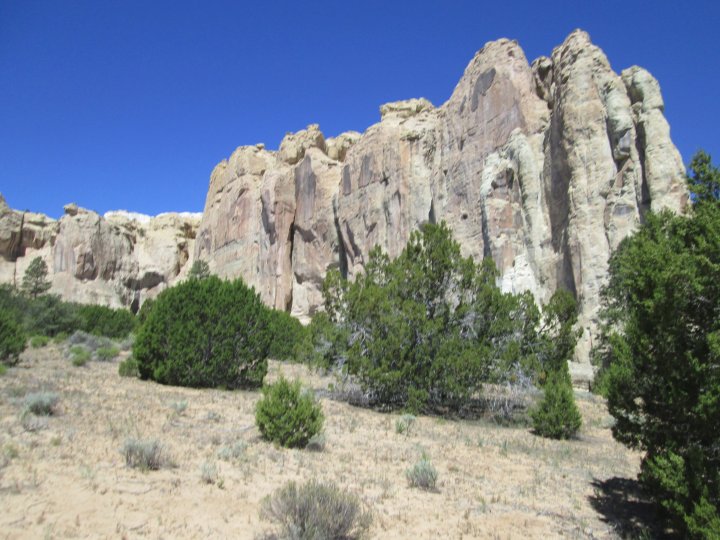
El Morro National Monument in Ramah, NM

One place I have visited several times in my travels through New Mexico is El Morro National Monument, known for bearing “graffiti” from the Anasazi, the Spanish Conquistadores with Oñate and Coronado, and American scouting parties of the 1850s. There they all are, along the east bluff of the butte. And if that’s not enough, you could climb to the top (only a couple hundred feet) to see the ruins of Atsinna, the ruins of a well defended Anasazi pueblo with long views in every direction.

The day we went, there was an interesting ranger presentation on the United States Camel Corps, which came into existence at the behest of Secretary of War Jefferson Davis in 1853. Many of the names signed on the wall of El Morro was from members of this short-lived army unit. Eventually, the idea was abandoned; and many of the camels were sold into zoos, and some even ended up at Fort Tejon on the Grapevine between Los Angeles and Bakersfield.

Anasazi Petroglyphs at El Morro

El Morro is just one of the many attractions along New Mexico Highway 53, which runs through the Zuñi Reservation, near Ramah’s Wild Spirit Wolf Sanctuary, El Morro, and El Malpais National Monument ending up at Grants and I-40. If you are traveling between Gallup and Grants, it is far better to go out of your way and spend some time along this fascinating route.


The Anasazi Moment

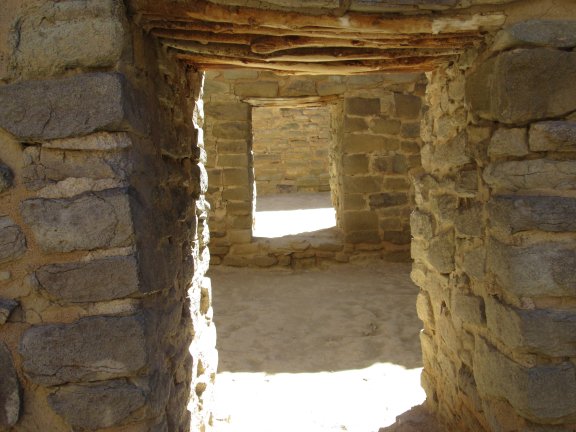
Doorway in Aztec Ruins

The ruins don’t have anything to do with the Aztecs. It was a common 19th century misconception, like the one about the Egyptians building the Mayan pyramids because, somehow, the Mayans weren’t smart enough to build piles of rubble and put a smooth face on them. No, the ruins at Aztec, New Mexico, are one of the settlements of the Anasazi Indians, as they made their way through the Four Corners region some nine hundred years ago.

Chaco Canyon holds the most spectacular ruins, but there are numerous outliers, such as the ruins at Aztec, Salmon, Chimney Rock, Pueblo Pintado, and elsewhere. It looks as if the area went through a period of protracted drought, sending the Anasazi southeast to the valley of the Rio Grande River, to the Hopi Mesas in Arizona, and to Zuñi. There they became the twenty-odd Pueblo Indian tribes, which still exist today.

They entered history abruptly in 1680, when they forcibly expelled the Spanish from New Mexico under a leader called Popé—the only North American peoples to successfully revolt—though they were reconquered some twelve years later. After that, when the United States marched in, they became more docile and did not require any army forts to keep them in line.

The ruins at Aztec are quite spectacular. A large kiva has been restored and even today looks very church-like in a Protestant sort of way. The Pueblo tribes still visit the ruins as they think of the paths their various peoples took to find a place where they could thrive.

Restored Kiva at Aztec Ruins National Monument

Some day I would like to return to New Mexico and spend more time at Chaco Canyon, which at one time supported a large population before the waters dried up. In the meantime, it was interesting to see Aztec Ruins National Monument and nearby Salmon Ruins just outside of Bloomfield.