
Serendipity: Soviet High Society

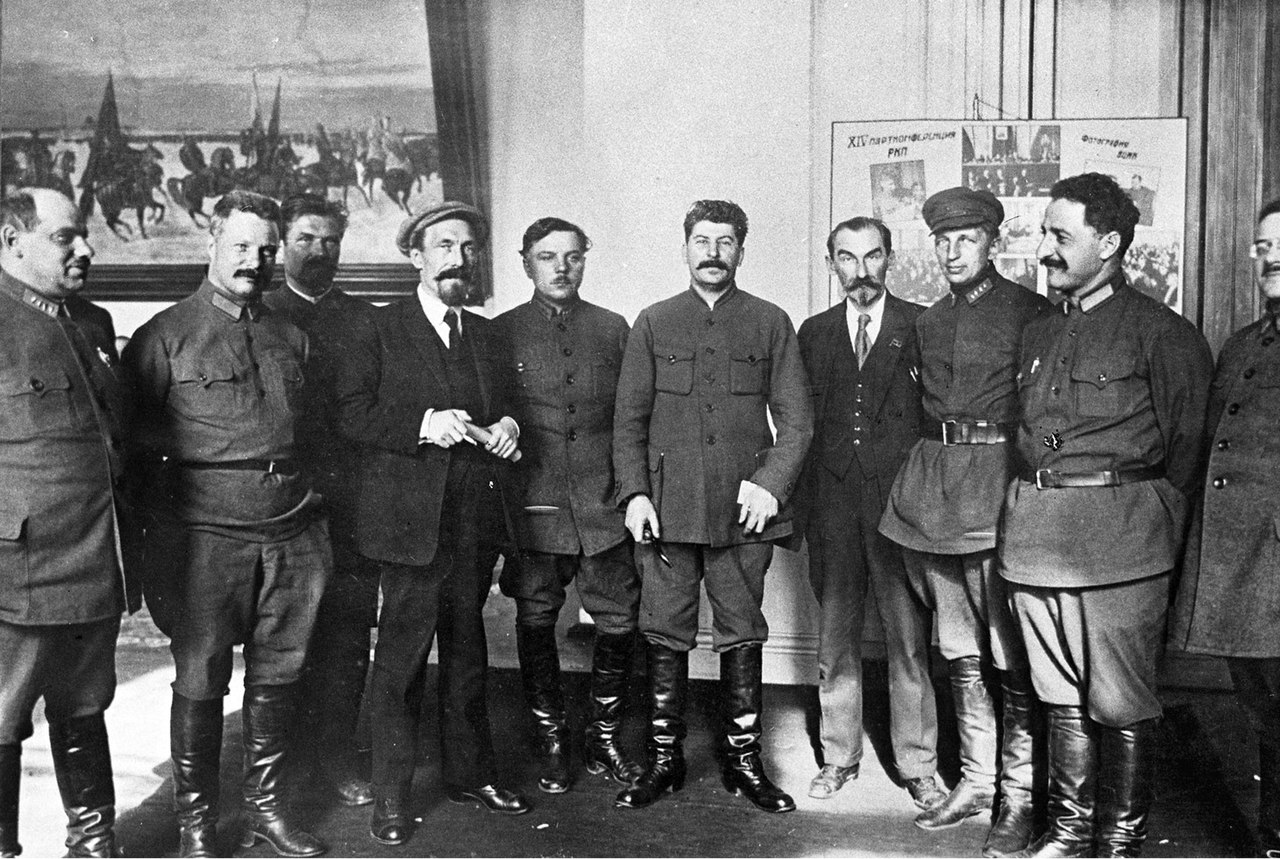
Stalin and Members of the Politburo 1925

I have just finished reading Italian writer Curzio Malaparte’s The Kremlin Ball (Material for a Novel), a book that attempts to cover the high society of the Soviet Union as if it were Marcel Proust’s fin de siècle Paris. It is a strange book, probably because Malaparte was never able to finish it after numerous visits to Russia up to 1957, when he died. It makes it a tricky read, as one is never sure exactly what period the author is talking about in a particular chapter. Still, I loved the following picture of all those figures whose lives depended on the whim of Joseph Stalin.

Of that era’s Soviet high society, corrupt, always thirsty for pleasure, greedy for money, glory, and power, proud and snobbish, capable of any infamy in order to maintain their ephemeral power, ready to betray the people, the Revolution, communism, Russia, to deny their own revolutionary past, in order not to have to renounce the honors and privileges of their position, of that Soviet nobility corrupted by Trotskyism and Bonapartism, almost no one was still alive. L’ancien régime of the Communist Revolution, the new nobility that had emerged from the communism of the war and NEP [the New Economic Plan], made up of men who believed themselves to be Marxists and were actually nothing but krasni burjui, red bourgeois, who believed that they were the guardians of Marxist and Leninist theory but were instead Bonapartists, who believed they were leaders of the proletariat but were really leaders of the Trotskyite counterrevolution, had by then given up their positions to the élites of the Stakhanovites and the Udarniks [shock workers], and to the Stalinist élites who were tough and lean but nevertheless more human and born of the Five Year Plans. Of all the merveilleuses of the communist ancien régime, of all those men corrupted by ambition, hatred, jealousy, comfort, pleasures, and privileges, all that remains is memory: the “snapshots” firing squads caught of them in their supreme, ultimate moment, their pale faces turned toward the rifle barrels, their hands clenched in fists, their eyes widened, their brows enraged, the great wind of death unobstructed in the cold, squalid, magnesium light of the camera flashes that lit up, from some invisible height, the scenes of execution in modern Europe.

NKVD Firing Squad
Ice Storm

It Was a Very Slippery Celebration

My sixtieth birthday fell on January 13, 2005. My brother Dan decided to help me celebrate the date by flying up to Portland, Oregon, with me and taking me for a $100 shopping spree at Powell’s Books, which touts itself as the world’s largest independent bookstore.

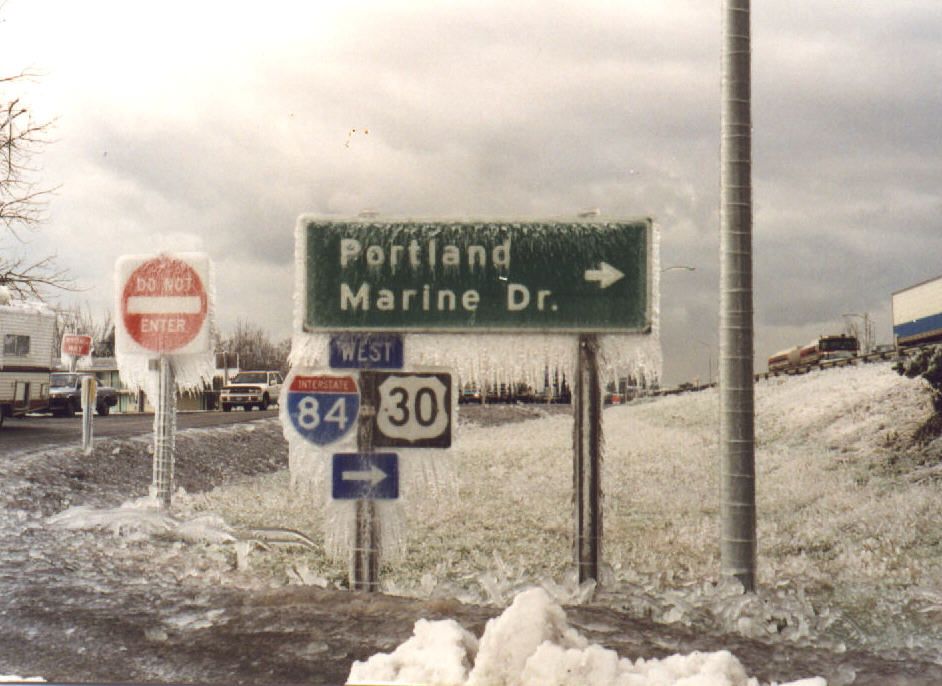
We landed at Portland International Airport on my birthday and took a Portland Streetcar from PDX to our hotel, which was located in the center of town (I forget the name of it). Unfortunately, with our arrival there was a giant ice storm which crippled vehicular traffic and made walking on the sidewalk without crampons and ice axe quite iffy. We saw the cars swirling around in the streets, and we were lucky in not breaking any bones on the icy sidewalks.

Yet we managed to get around on foot … slowly.

Powell’s Books was fabulous. The last time I had visited a multi-story bookstore was Foyles on Charing Cross Road in London in 1977, on my way back from visiting Hungary and Czechoslovakia. I could have spent days—and a fortune in purchases—at Powell’s, but I managed to stay within a $100 limit, buying such books as Michael Cunningham’s The Hours, a book about the Middle East by Freya Stark, and three or four other titles.

My only regret was that when my brother turned sixty, I was unable to return the favor in a timely way. I was working in an accounting firm, and April 5 (his birthday) comes during tax  crunch time, when I had to work seven days a week to meet the April 15 deadline. Now that I am retired, I would like to find some way to return the favor, because what he did meant a lot to me.


The Cancer Deal with the Venusians

Downtown Dallas Skyline

It is the opening of William Burroughs’s Nova Express:

“Listen to my last words anywhere. Listen to my last words any world. Listen all you boards syndicates and governments of the earth. And you powers behind what filth consummated in what lavatory to take what is not yours. To sell the ground from unborn feet forever—

“Don’t let them see us. Don’t tell them what we are doing—

“Are these the words of the all-powerful boards and syndicates of the earth?”

“For God’s sake don’t let that Coca-Cola thing out—”

“Not The Cancer Deal with The Venusians—”

“Not The Green Deal – Don’t show them that—”

“Not The Orgasm Death—”

“Not the ovens—”

Whenever I think of these lines, I think that Burroughs, in his own way, saw the cancerous growth of modern civilization. I have already written of the crazed commercial and residential real estate construction during the coronavirus epidemic.

Almost two hundred years ago, Henry David Thoreau writing in Walden saw where it would all lead, even before the first skyscraper was ever erected (or did the Tower of Babel not count?):

Men have an indistinct notion that if they keep up this activity of joint stocks and spades long enough all will at length ride somewhere, in next to no time, and for nothing; but though a crowd rushes to the depot, and the conductor shouts “All aboard!” when the smoke is blown away and the vapor condensed, it will be perceived that a few are riding, but the rest are run over,—and it will be called, and will be, “A melancholy accident.”

I saw this quote from Thoreau at the end of Joseph Wood Krutch’s The Forgotten Peninsula: A Naturalist in Baja California written in 1961. This was almost sixty years before the massive development of Los Cabos and La Paz changed the state of Baja California Sur forever.