Dummheit

’Rona Isn’t the Only Outbreak We Are Experiencing

The following quote is from Sarah Bakewell’s excellent book At the Existentialist Café: Freedom, Being, and Apricot Cocktails. It describes a conversation between a French reporter and the Nazi-leaning philosopher Martin Heidegger:

When, also in 1945, the French writer Frédéric de Towarnicki weakened Heidegger’s defences with a bottle of good wine before asking him ‘why?’, Heidegger responded by leaning forward and saying, in the tone of someone solemnly confiding a secret, ‘Dummheit.’ He repeated the word again, with emphasis, ‘Dummheit.’ Stupidity.

As I with great reluctance view the day’s news, I am appalled by what appears to be the rank stupidity of around half the American population. It has gotten so bad that, when I meet someone new, I become less forthcoming in my responses because there is a 50% chance that the person is an idiot.

It Certainly Seems So

In fact, I am beginning to dislike Americans, barring any specific reason not to. I was born in this country, but it was a very different country at that time. It was not full of tattooed monkeys with scraggly beards who think that living in the streets and taking Oxycontin, Heroin, or Crystal Meth is better than a job. There weren’t quite so many of the “I Got Mine!” types who think that anyone not a member of their country club should be deported.

There is an epidemic of stupidity which looks to be growing. In November, we can vote Trump out of office—and he might even leave the White House. But we can’t do anything to the people who form his “Base.” Those red MAGA hats must have a side-effect of shriveling their brains. (They are, after all, manufactured in China.)

I ask you: Am I being too harsh?


The Center of the Anasazi World

Anasazi Pictographs at Chaco Canyon

I remember writing in yesterday’s post that I spent three consecutive vacations in New Mexico, where I just happened to fall in love with Hatch chiles. But what did I go to New Mexico to see? The answer could be expressed in two words: Chaco Canyon.

Insofar as I am concerned, the most incredible archaeological site in the United States could be found in Northwest New Mexico at the Chaco Canyon National Historical Park. At one point—between AD 900 and 1150—Chaco Canyon was like the Rome and the Vatican City of the Anasazi world. Within the park, there are literally hundreds of ruins, pictographs, and ceremonial roads within a relatively small area. One could approach it from U.S. 550 between Espanola and Farmington by turning onto a washboarded dirt road around the site of the former Nagheezi Trading Post, or via New Mexico 371 from Thoreau to Crownpoint, and then on New Mexico 9, once again getting on a washboarded dirt road.

The Largest and Most Spectacular Ruin: Pueblo Bonito

For three consecutive years, I camped at Gallo Wash with a large ice chest full of Hatch chiles and other edibles, getting my water from the only source in the park: The National Park Service Visitor Center.

There are other Anasazi ruins in the Southwest: I have been to Mesa Verde, Hovenweep, Navajo National Monument (Betatakin), Aztec, Salmon, Bandelier, and Canyon de Chelly. But it was only at Chaco that there seemed to be a large population, with multiple ruins in easy walking distance of one another. I even climbed the butte above Pueblo Bonito, running into a coiled rattlesnake that was a little discomfited at encountering me. Trust me, the discomfiture was mutual, but both of us managed to avoid harm.

Fajada Butte, Location of the Famed Sun Dagger

Entering the park from the Nagheezi Road, one encounters Fajada Butte (shown above), atop which there is a rock meant to project a downward-pointing dagger at sunrise during the Spring Equinox. I did not venture to climb the butte, as it is probably forbidden anyhow (and dangerous). Nearby to the right is Gallo Wash, where I camped.

If there is one place in the Southwest that I can recommend to tourists interested in archaeology, it would have to be Chaco Canyon.


Down the Hatch!

Chiles from Around Hatch, New Mexico

Today I had two meals that featured Hatch chiles. For breakfast, I scrambled three eggs with onion, garlic, and one green Hatch chile. At dinner time, I prepared a vegetarian chick pea curry with potatoes, spinach, sweet red pepper, and one Hatch chile turning from green to red. (You can get the recipe by clicking here.)

There was a time in the late 1980s when I had three consecutive vacations in New Mexico. Not only did I learn about Hatch chiles, but whenever I tent camped I would prepare a meal with rice, onions, and a Hatch chile. It was simple and always delicious.

What is so special about Hatch chiles? For one thing, they come from the area around Hatch, New Mexico, along the Rio Grande, roughly between Arrey to the north and Tonuco Mountain to the south. There’s something about the soil of this region which produces chile peppers that may or may not be spicy hot, but which always taste good.

In the late summer or early autumn, my local Ralphs Super Market carries the chiles either loose or bagged; and I always buy more than I end up using. (Martine does not tolerate spicy foods well.) The loose Hatch chiles are not always hot: I chopped one up with scrambled eggs last week that was no hotter than a regular green pepper, but even then was more flavorful.

I am always saddened when the fresh Hatch chiles are gone. If I were fanatical enough, I could order them frozen from a chile pepper supplier in New Mexico; but I will probably just go back to serranos, jalapeños, and California chiles. I actually like being surprised by the range of hotness in my fresh Hatch chiles. It is something worth looking forward to.


Radar Men from the Moon

Not a Moon Monster: It’s the Hero, Commando Cody

Thanks to the ’rona quarantine, I have been seeing a lot of movies on television and on my computer. Today, I tipped the scales toward schmaltz by viewing all twelve episodes of a 1952 Republic Studios serial entitled Radar Men from the Moon. It starred George Wallace as the hero, Commando Cody. (It appears that Commando is his first name, not his title, as he is addressed by characters several times as “Commando.”) For me, however, the most interesting character is Clayton Moore, who both before, during, and after the serial played the Lone Ranger on TV with Jay Silverheels as Tonto.

Like the last film I recommended here (Carnival of Souls), Radar Men from the Moon is now in the public domain, so you can find it cheap or free.

Re-Release Poster for Radar Men from the Moon

The funny thing about the serial is that just about everything the would-be moon invaders try is nipped in the bud by Commando Cody. The two failed villains are Clayton Moore as Graber and Bob Stevenson as Daly. None of the Luna-tics seem to be directly involved in anything but giving Graber and Daly new orders, which they invariably fail at.

The moon forces have some spiffy ray guns made with a better-than-uranium element called lunarium (of course) which they use to blow up trains and cause general havoc, mostly in the first episode.

If you watch this serial, you might not want to watch all twelve episodes at once, unless you are very high on something. Better to break it up into multiple sessions as it was originally intended to be seen.

Cooking With Manjula

Manjula Jain, Master Chef and YouTube Luminary

During this hyperextended coronavirus quarantine period, I have picked up a few good habits. Perhaps the best of them is taking authenticity more seriously in my cooking. I have been making Indian vegetarian dishes for over thirty years, but now, thanks to YouTube, I am more serious about trying to cook them approximately the way a resident of India would.

For one thing, that involves a more serious attention to the spices used in Indian cooking. Fortunately, there are a number of Indian groceries in Culver City along Venice Boulevard, my favorite being India Sweets & Spices. Just to give you an example, here is a list of spices for Chickpea Pulav, which I will be preparing later this week:

  • Cumin seeds (jeera)
  • Asafetida (hing)
  • Bay leaves (tajpat)
  • Ginger (I use a bottled ginger/garlic paste from Laxmi)
  • Turmeric (haldi)
  • Mango powder (amchoor)
  • Garam Masala (which is mostly cardamom)

In addition, I will also be adding a few additional spices not called for in the recipe, including powdered red chile, cumin powder, cilantro, and coriander powder.

If you are interested in Indian vegetarian cooking, I highly recommend Manjula Jain’s Cooking with Manjula, 2nd Edition, which can be obtained for $5.00 in a downloadable format. (In my case, it turned out to be Microsoft Edge PDF, which took me a little while to learn how to print so that it doesn’t stretch off the page.) There are approximately 150 pages of recipes, which make it a good deal for the cost involved.

I highly recommend you try the Chickpea Pulav first, which Manjula calls a “Spicy Rice with Chickpeas.” I am going to be busy trying her other recipes, which you can also find on the web and YouTube. Here’s the YouTube recipe for the Chickpea Pulav: Click here.


More “Spooky Action at a Distance”

The Theory Has Been in Play for More Than a Century

Mention Quantum Theory to a non-scientist, and what you frequently get in response is a look of profound puzzlement. Even Einstein has weighed in against many of its premises by calling it “spooky action at a distance.” Elsewhere, he asserted that “God does not play dice.” I mean, if Einstein wasn’t on board with this, how could it be true?

Close to the center of the theory is what is called the Copenhagen Interpretation, proposed by Niels Bohr and Werner Heisenberg around 1925-1927. According to it, in the world of micro particles, there are no equivalent certainties to the world of big objects like stones, trees, or even planets. If you set up an experiment such as the one illustrated below in which a photon is fired at an opaque object in which two slits are cut, the end result on a receiving surface is not nice and predictable. At times, it will seem that a single photon will go through both slits simultaneously, which would seem to be impossible. At times, when light is shone through the slits, it will seem that the light will act as if it were a particle; other times, it will act as if it were a wave.

The Two Slit Experiment Presents a Multiplicity of Results

Every few years, I read another book on quantum theory to see what physicists are doing with it. Currently, I am reading Through Two Doors at Once: The Elegant Experiment That Captures the Enigma of Our Quantum Reality by Anil Ananthaswamy. Like most books on the subject, there is a heavy reliance on the history of the theory over the last hundred years or so, ending with experiments currently in play.

It’s hard to believe that such a simple experiment could flummox so many incredibly smart people, but it does. And it even still flummoxes me.


Favorite Films: Carnival of Souls

A Strange Film That Appears To Be in the Public Domain

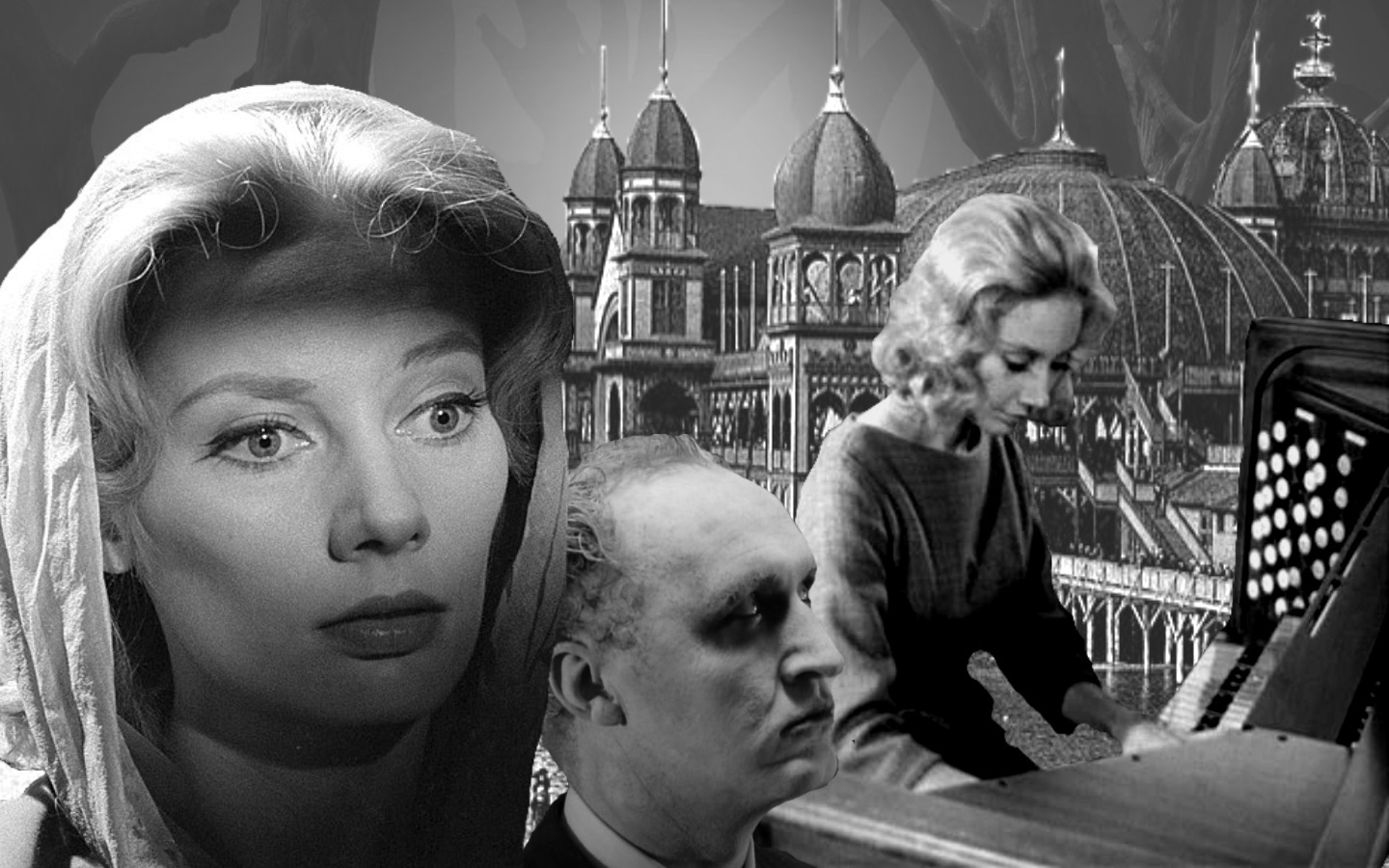
Let’s face it: There are precious few independent feature films shot in Lawrence, Kansas (oh, yes, with some scenes shot in Utah), that are worth seeing. I think I can venture to say that Carnival of Souls (1962) is an exception. The director, Herk Harvey, did not make any other feature films; and the radiant star, Candace Hilligoss, was only in a few other unmemorable productions.

If you have ever read Ambrose Bierce’s dreamlike short story “An Occurrence at Owl Creek Bridge,” you will find that Carnival of Souls is oddly familiar in its own way. It begins and ends with a fatal auto accident with the implication that the whole story is a kind of fantastic dream.

Mary Henry (Candace Hilligoss) is the sole survivor of an auto accident in which a car goes off a bridge into the river, killing two of the three riders within. Having no memory of what happened, she checks in at a Salt Lake City Hotel where she runs into a number of strange individuals who are attracted to her. One of them is played by the director (Herk Harvey) as a kind of zombie figure. She is drawn to an old abandoned pavilion, shown in the photo below.

The Saltair Pavilion in Utah

The film ends as she runs away from the pavilion, pursued by shadowy figures. Her footprints suddenly disappear. Cut to the auto accident, in which there are now three fatalities, including Mary Henry.

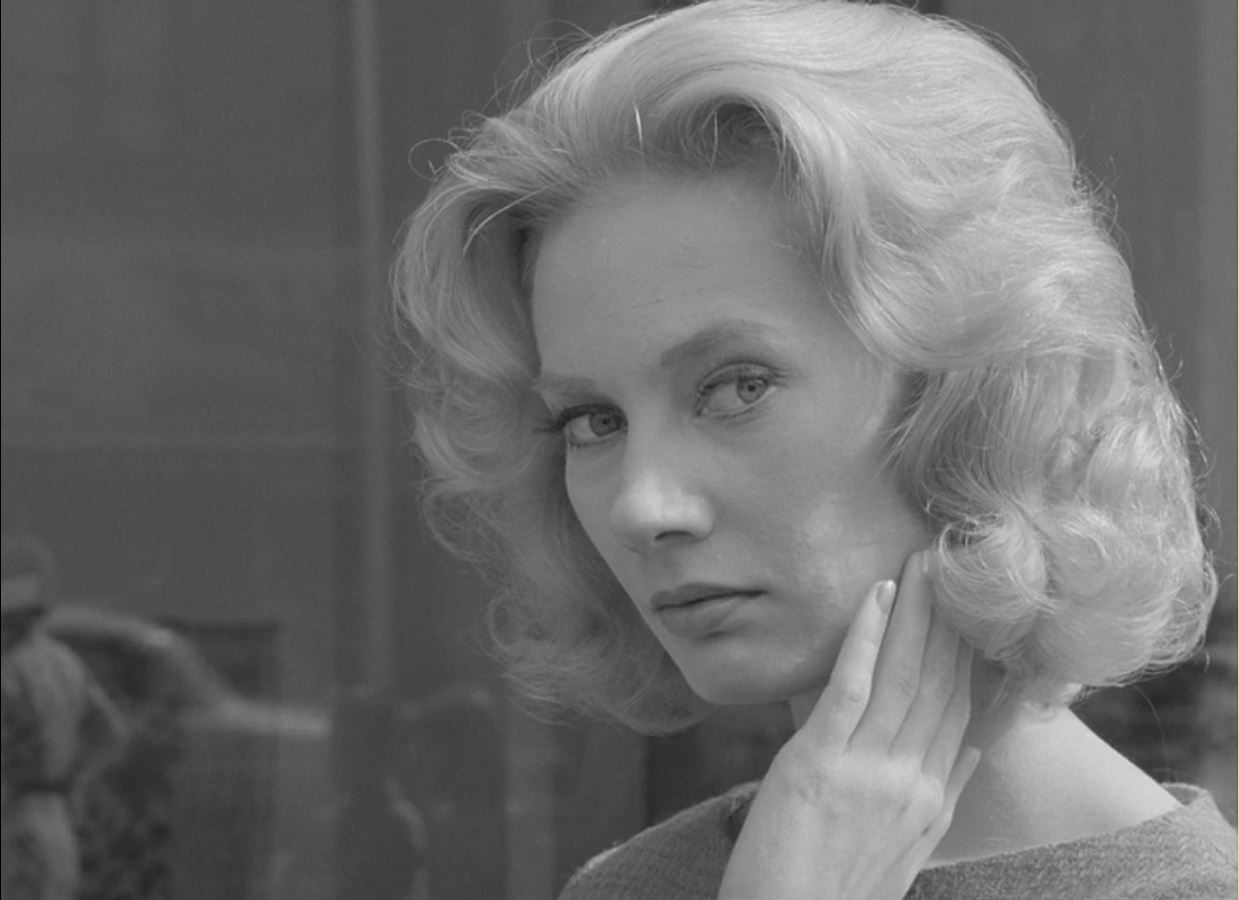
It’s fairly cheap and easy to obtain a DVD of Carnival of Souls, as it appears to be in the public domain. Also, it is available free at present to members of Amazon Prime. I think it’s worth seeing if only to see the beautiful Candace Hilligoss, with her high cheekbones. the sole contribution of Huron, South Dakota to the art of film.

Candace Hilligoss


Islandia

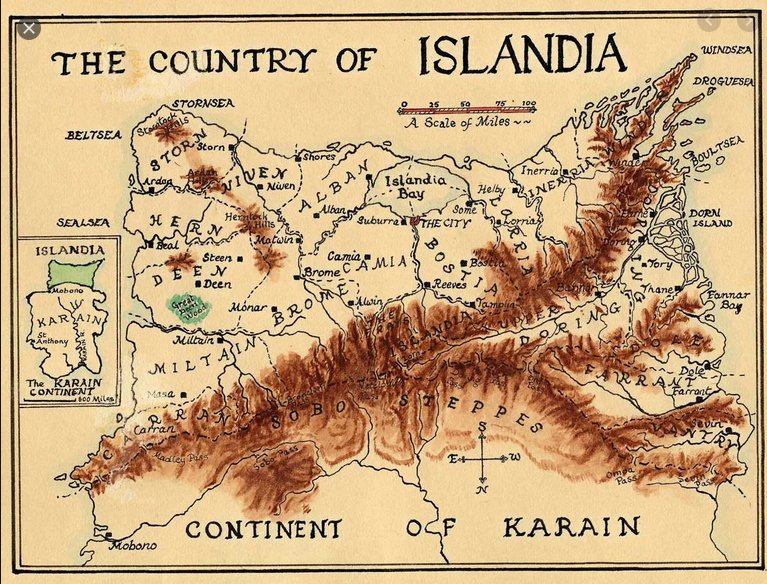
Map of Austin Tappan Wright’s Invented Country

It’s not often that I will undertake to read a thousand plus page novel. Most of the time, it’s just not worth it. There are some rare exceptions: One of them in Austin Tappan Wright’s Islandia, published in 1942, more than ten years after its author died in a New Mexico auto accident. During the interval, the author’s two thousand pages of text were edited and submitted for publication. Fortunately for us, they were accepted. The result is a one-of-a-kind classic that will probably remain in print as long as there are literate readers.

Mind you, Wright is no master stylist. What makes Islandia such a great novel is the author’s incredible imagination in creating an imaginary country with its own culture, language, and mores. Add to that what I regard as the most acute study of love in the Western World with some of the most brilliantly drawn female characters, particularly Dorna, Nattana, Stellina, and Gladys Hunter.

The 2001 Edition That I Read

The story tells of an American named John Lang who is appointed as consul to the isolated nation of Islandia (which is actually not an island), where no more than 100 non-consular foreigners are allowed to live at one time. He falls in love with two Islandian women, is reluctantly rejected by both of them, and eventually marries a fellow American named Gladys Hunter, whom he brings to Islandia to live on a farm with him.

When John and Gladys come together in Islandia, there is none of that “and they lived happily ever after” claptrap that destroys so many stories: Gladys does not immediately take to her new adopted country, and John must patiently ensure that her needs are being met before she is wholly at ease in her new situation. This type of extended dénouement is rare in fiction, so I was greatly surprised to find it here.

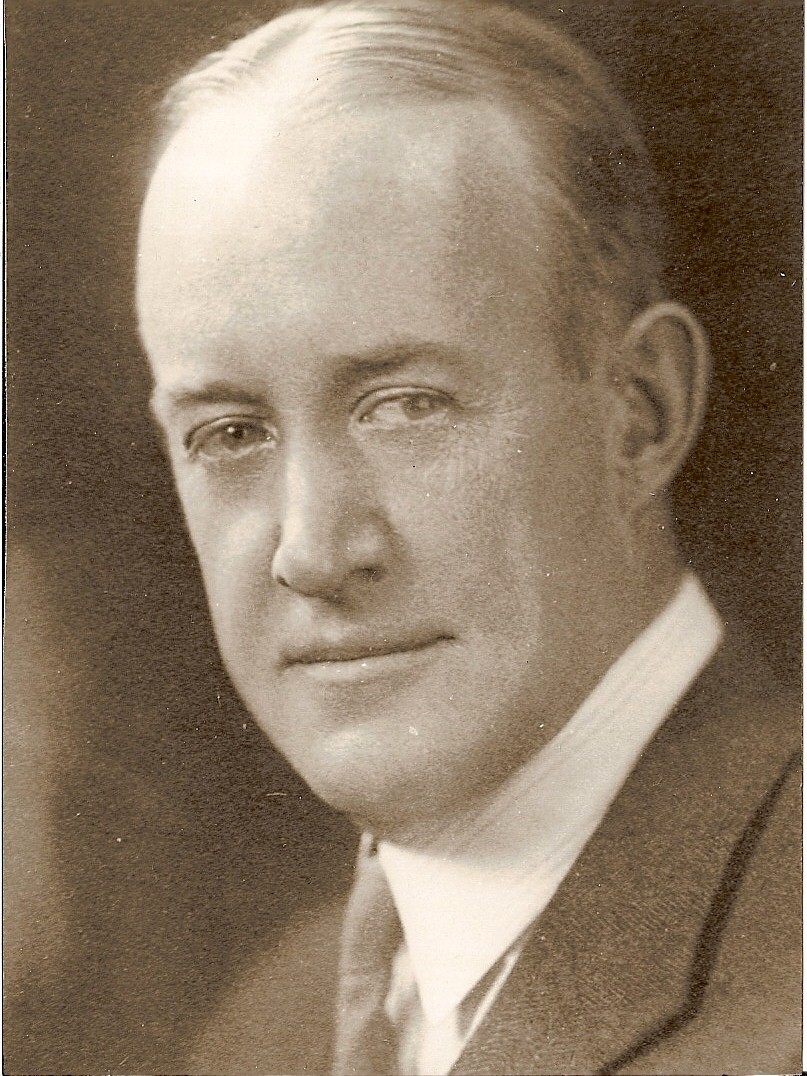
The Author: Austin Tappan Wright (1883-1931)


I loved this book deeply, and I hope to be able to read it again some day. It made me feel good about my fellow humans, an emotion I do not readily feel during this election year of 2020.

Cleveland 28, Ohio

The ’Burbs 1951-1962 (The Red Arrow Was Our Home)

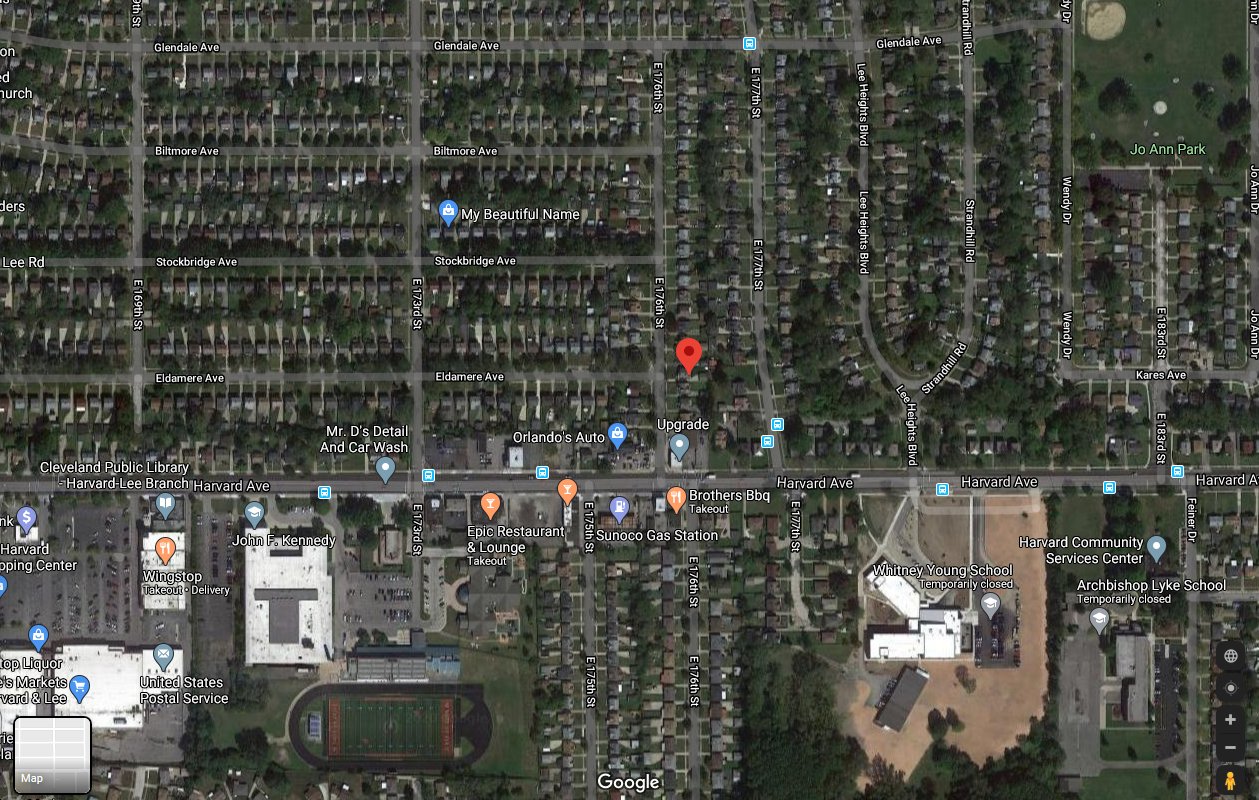
In 1951, we moved to the Harvard-Lee area of Cleveland, the extreme southeast corner of the city. Buckeye Road was only a few miles north and west of us and easily reachable by way of the Shaker Rapid light rail line. The next stage of my life was to consist of seven years attending Saint Henry School (which is no more) and the next four attending Chanel High School (which was just demolished this summer).

Several things were different in the suburbs. For one thing, there were a lot of bullies around, including our neighbors Jimmy and Joey Fordosi and Jack Rulison, three doors south of us. I guess that was because I reached the age when bullies magically appear; and it didn’t help that I was very young-looking for my age. Could it be that my pituitary tumor had already begun, stunting my growth? Throughout my years at Saint Henry, I was either the shortest or second shortest kid in class, including both boys and girls.

Chanel High School as It Was 1958-1962

When I “graduated” from eighth grade (there was no real ceremony), I was surprised to find that I had won a scholarship to Chanel High School in nearby Bedford, Ohio. In fact, my parents never had to pay a penny for tuition, because in each of my four years at Chanel, I received the highest grades in the elite, or “A” section. I had outgrown my slowness in the English language and in fact proceeded to make the language my own.

I was helped in this by four successive English teachers who were so good that I decided, when I graduated, to work at becoming an English professor. There was Father Gerard Hageman SM (Society of Mary “Marist”) in 9th grade; Father Raymond Healey SM in 10th grade; Father William Parker SM in 11th grade; and Father James Murray SM in 12th grade. These four priests provided an incredible education in literature and language—one for which I will be eternally grateful.

My graduation from Chanel was a much more formal event. Not only was I the class valedictorian, but I had won the Mr. Chanel award for all-around academic and extracurricular achievement. And I was going to an Ivy League college with a full scholarship. Those were my glory days.


Buckeye Road

Cleveland’s Terminal Tower, Once the Tallest Building West of NYC

In my youth, there were two Clevelands. First there was Buckeye Road, which was my world between the ages of one and six. (There had been a brief interlude in Florida, which I will describe in a later post.) Then, when I was sent home from kindergarten with a note from my teacher pinned to my shirt asking what language I was speaking (it was, of course, Hungarian), my parents planned for a move to the suburbs. That happened in 1951, shortly after my brother Dan was born. I will describe the Harvard-Lee Area tomorrow.

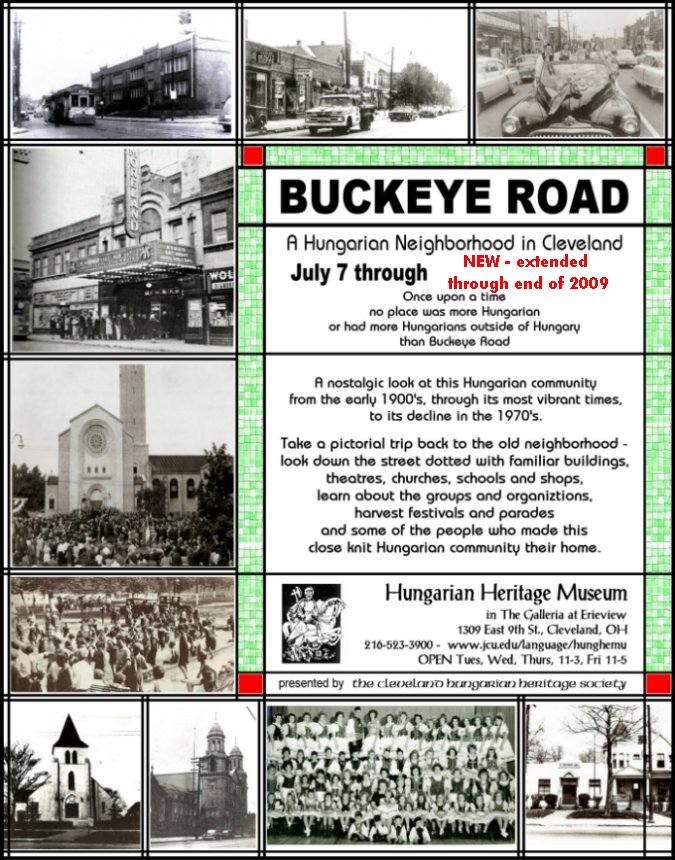
Buckeye Road was after World War Two the most vital Hungarian neighborhood in the United States. I have never been able to figure out why, unless my people had an affinity for hot, humid summers and dark, icy winters.

An Exhibit About Buckeye Road at Cleveland’s Hungarian Heritage Museum

We lived at 2814 East 120th Street, a short block from the main drag and only a short walk from ritzy Shaker Square—not for us penny-pinching Hunkies. There were two movie theaters within walking distance: the Moreland and the Regent. On nearby East 116th Street were Harvey Rice School, where I was to be a problem to the non-Hungarian teachers; the local library, the College Inn, whose French Fries I adored; the Boulevard Lanes where my Dad bowled (he was pretty good); and a very tasty doughnut shop not far from St. Luke’s Hospital. The residential streets were filled with two-story duplexes, on the second floor of one of which we lived.

Just before we moved out to the ’burbs, the city built a nice playground on nearby Williams Avenue, which I had just begun to enjoy.

There was a Hungarian Reformed Church on Buckeye, where the Reverend Alex Csutoros preached. His services were broadcast—in Hungarian—each Sunday on a local radio station to which my Mom listened. Dad didn’t, because he was a Catholic, like his two sons. The deal was that any girls born into the family would be Protestant; the boys, Roman Catholic.

My earliest memory was listen to my parents argue about money, while I lay anxiously in my crib. Both Dad and Mom worked, and my great grandmother Lidia Toth took care of us during the day. She spoke not a word of English her whole life long.

Still, my memories of Buckeye Road are probably seen mostly through rose-tinted glasses. There were hard times, but they didn’t leave me with many bad memories.