Baby Steps

Los Angeles Central Library at 5th and Flower Streets

Today I took the train in to Downtown Los Angeles (or DTLA, as it is also known) to return some library books and pick up the next batch. For the first time in almost a year and a quarter, I was able to enter the library, hand my returns to a human being, and pick up the next batch. The last time, I had to call on my cell phone and have a librarian come out with the bagged books I had put on hold.

Now the ground floor of the library is open. This includes the book check-in and check-out and the international languages department—oh, and the restrooms. For any other books, I still have to put them on hold using the library’s website.

With my books in hand, I took the Dash Bus B to Chinatown and looked for a promising Chinese restaurant that was open to indoor dining. My old standby, the Hong Kong Barbecue, was still take-out only; but I found a good option in the Hop Woo Chinese Seafood Restaurant, just a few doors down, where I had rock cod in black bean sauce.

On the way back to Union Station, I bought my usual small bag of limes from an elderly woman (only $1 for about eight limes). As the weather grows warmer, I am addicted to fresh-squeezed lime juice with a slight splash of tequila.

I still had to wear a face mask on the train and the bus, resulting in fogged-up glasses, but I am encouraged that sometime soon we will be able to dispense with them. My second Pfizer Covid-19 vaccination was two months ago, so I am hopeful that the worst is past.
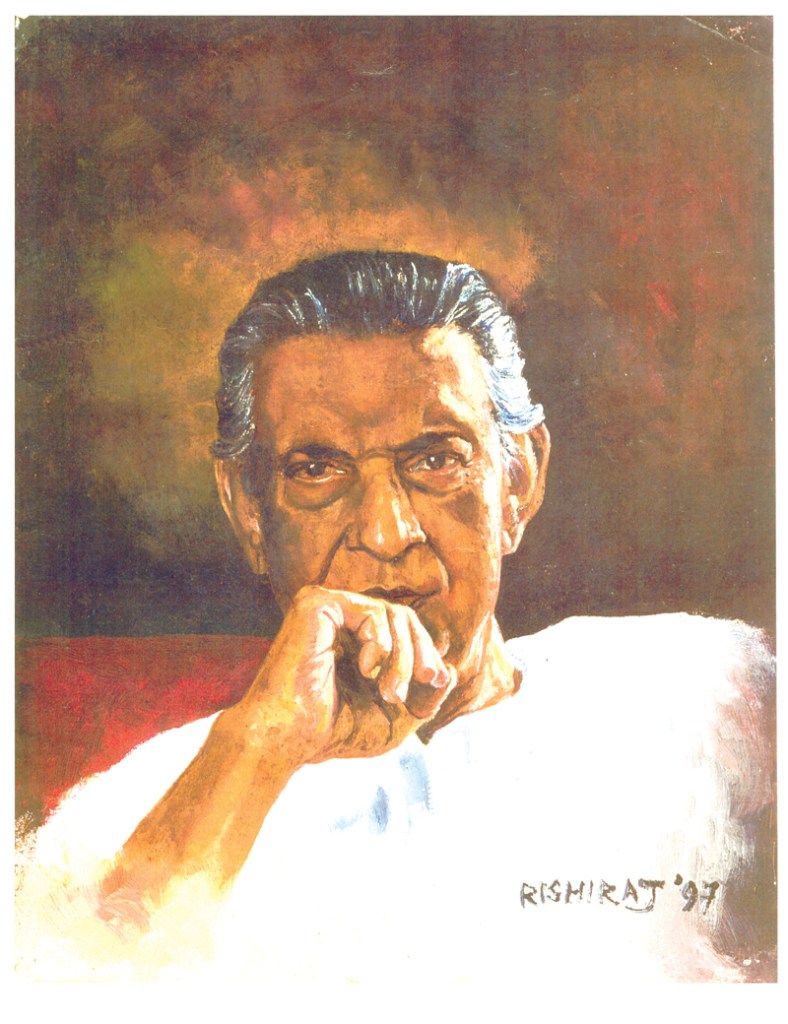

A Ray of Hope

Portrait of Bengali Filmmaker Satyajit Ray (1921-1992)

I always thought that I was pretty good about seeing a goodly number of great films from around the world. Thanks to Turner Classic Movies (TCM), I found that I had somehow missed out on the films of Satyajit Ray of Kolkata (formerly Calcutta). I had seen a number of Merchant-Ivory productions, but not a single film by India’s greatest filmmaker.

TCM decided to celebrate the Centennial of Ray’s birth by presenting a number of his films. I plan to see a number more of them in the weeks to come, but over the last week, I have seen the following:

  • Pather Panchali (1955), the first film in the Apu trilogy and my favorite
  • Aparajito (1957), the second film of the Apu trilogy
  • The World of Apu (1959), the final film of the Apu trilogy
  • The Big City (1969)

Poster for Ray’s The Apu Trilogy

What I love about the Ray films I have seen is not only the poetic realism, but perhaps the most sophisticated and understanding portrait of human relationships I had ever seen on the big screen. In the three Apu films, we see the growth of the boy Apu after having successively lost his sister, father, and mother to early deaths. In The World of Apu and The Big City, Ray has shown us two marriages that seem to thrive even in the face of hardship. When the wife dies in childbirth in The World of Apu, I actually felt bereft, even as Apu himself did.

In fact, I have never seen marriage portrayed more positively, yet realistically, than in Ray’s films. There is nothing in these films of a standard American heartthrob product. His films do not shy away from death, disease, and dire poverty; yet they are almost religiously positive.

When I finish seeing the ten Ray films that TCM showed, I will post more about him and his work.

“This Tumult in the Clouds”

William Butler Yeats (1865-1939)

Below is one of my favorite poems by William Butler Yeats, who, to my mind, is the greatest poet writing in English in the 20th Century.

An Irish Airman Foresees His Death
by William Butler Yeats
I know that I shall meet my fate
Somewhere among the clouds above;
Those that I fight I do not hate,
Those that I guard I do not love;
My country is Kiltartan Cross,
My countrymen Kiltartan’s poor,
No likely end could bring them loss
Or leave them happier than before.
Nor law, nor duty bade me fight,
Nor public men, nor cheering crowds,
A lonely impulse of delight
Drove to this tumult in the clouds;
I balanced all, brought all to mind,
The years to come seemed waste of breath,
A waste of breath the years behind
In balance with this life, this death.

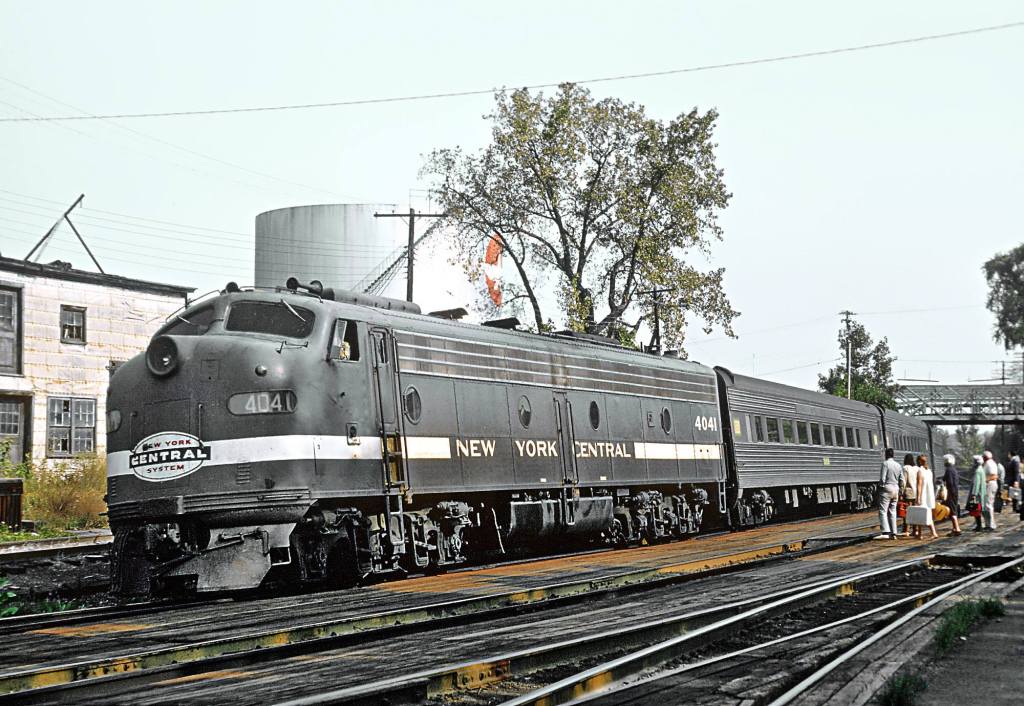
The Cleveland Limited

New York Central Passenger Train

I have been set musing by watching Satyajit Ray’s film Aparajito, with its hero Apu who goes off to school in Calcutta, leaving his widowed mother alone with a relative in rural Bengal. When I left home to go away to college, it was because my parents’ marriage appeared to be heading for the rocks; and I didn’t want to have to be in the middle of it. Plus, of course, I was proud to have a full scholarship to an Ivy League school.

When school started in the fall, my parents drove me to Dartmouth College and would stay for several days at the Chieftain Motel which was situated north of Hanover on the banks of the Connecticut River. But for the most part, I took public transportation to and from Hanover, New Hampshire, where my college was located.

There were three legs to the journey:

  • Between Cleveland and Albany, New York, I took a New York Central train called the Cleveland Limited Train #57 (Westbound) and #58 (Eastbound), which was all coach.
  • Between Albany and Rutland, Vermont, I took a Vermont Transit bus that originated in New York or Burlington, Vermont.
  • Between Rutland and Hanover, I took two White River Coaches, one to White River Junction, Vermont, and the other to Hanover, a scant five miles farther on.

In both directions, the Cleveland Limited was an overnighter. It was fiercely uncomfortable, especially in the winter when the same coach could be blisteringly hot and freezingly cold on the same trip. It was impossible to get a good night’s rest, because of the lights and noise whenever the train stopped at Utica, Rochester, Syracuse, Buffalo, and wherever else it stopped.

In Albany, I had to wait (in both directions) for several hours at the once grandiose Union Station. I remember writing a poem in which I called it “oldgold in decrepitude.” There was no place to get a meal at the station, so I had to munch on candy bars and drink sodas.

The Vermont Transit bus was a nice ride, except for its passage through Troy, New York, which I then thought was the ugliest city I had ever seen. And that from a resident of Cleveland!

There was a much better connection at Rutland to the White River Coach, which went along the banks of the Ottauqueechee River to White River Junction and with a quick transfer to Hanover.

I would travel both ways during my Christmas vacation (which lasted 2½-3 weeks) and the spring break (about 1½ weeks). If I was lucky, we would see the sun in Cleveland for upwards of twenty minutes during the whole vacation.

The ’Burbs

I Have This Problem with the Suburbs

There are several ways we went wrong after the Second World War. The main thing was our hubris. We thought that everything we did was right—because we were the only major country not in ruins. The government decided to help returning GIs buy little ticky-tack houses on the fringes of our major cities, and let the cities themselves go to hell. Oh, there were half-hearted attempts to build urban housing projects that quickly became dangerous slums.

And the suburbs? They were a refuge from the big cities. There was one little problem: We brought our children along to live in those ticky-tack houses, even when they didn’t buy into the dream. Being our kids, they had their own dreams, and they didn’t include barbecues and mowing the front lawn.

Interestingly, the suburbs are in some cases politically liberal, and in others utterly racist and fascistic. Even within Southern California, one can find examples of both. Take Sherman Oaks on one hand, and Moreno Valley on the other. Sometimes, suburbs start up hopeful and end up mean, such as Palmdale and Lancaster in L.A.’s Antelope Valley. At one time, the city was thinking of moving L.A. International Airport to Palmdale, which would have been a major disaster. Aside from the bad neighborhood, it’s at least a one hour drive, and usually more, from the more populated parts of the county.

One of the things about living in the city is that you have to get along with people. Across the street from me are a number of bums living in tents amid piles of assorted malodorous garbage. While I don’t ever give money to panhandlers, I don’t do anything to make their lives any more difficult. That’s not because I’m a nice guy, but because these mental cases, alcoholics, and druggies happen to be my neighbors. I maintain my distance from them, and although I casually wish their encampments were fire-bombed, I myself wouldn’t light the match.

As a city dweller, I frequently use public transportation because (1) it is cheap for me as a senior citizen and because (2) parking fees are getting out of hand. I have no problem with driving two or three times a week during the coronavirus quarantine and leaving my car parked in the rear carport. Suburbanites, on the other hand, would rather put their arms in a meat grinder rather than board a bus or light rail.

The FODMAP Follies

Big No-Nos on the FODMAP Regimen

With the very best intentions in mind, I tried to prepare a beef and vegetable stir-fry for Martine as a first attempt at creating a FODMAP-free dish. It consisted of shredded beef, eggplant, zucchini, tomatoes, and a yam. But no onions, garlic, or chiles to give it flavor.

Never before had I cooked a dish that I didn’t want to taste. For myself, I just had buttered corn on the cob, while Martine bravely confronted the tasteless muck I prepared for her. I called it FODMAP Stew. I will never make it again.

I realize now that seasonings are important in a dish with multiple ingredients, and that the best seasonings are expressly forbidden.

I think that in future, when Martine needs to adhere to this regimen, she should have a piece of meat (most are OK) plus a steamed vegetable, such as carrots, squash, and some rare Himalayan herb that can only be found on the northern slope of Mount Everest.

If you haven’t read yesterday’s post, which explains what this is all about, I urge you to click here.

FODMAP

Foods To Be Avoided If You Have IBS (Irritable Bowel Syndrome)

Martine has suffered for years with a digestive disorder known as Irritable Bowel Syndrome (IBS ). According to the Mayo Clinic’s website:

Irritable bowel syndrome (IBS) is a common disorder that affects the large intestine. Signs and symptoms include cramping, abdominal pain, bloating, gas, and diarrhea or constipation, or both. IBS is a chronic condition that you’ll need to manage long term.

Part of that long-term management is a special diet known by the abbreviation FODMAP. It stands for fermentable oligo-, di-, mono-saccharides and polyols. (That doesn’t exactly flow trippingly off the tongue, does it?)

Unofficially, as the person who does the cooking in the household, I define FODMAPs as foods that don’t have any vowels in their names.

As you can see from the above list, there are some very basic foods that a person with IBS is urged to avoid. This includes any onion or garlic, which of itself cuts my cooking choices by more than half. Other no-nos include wheat, milk (except lactose-free), all cheeses except cheddar and colby, most pastas, beans, and about half of all fruits and vegetables.

If you are interested in learning more about this condition and how to combat it, I urge you to check out this Healthline website entitled FODMAP 101: A Detailed Beginner’s Guide.

This method of controlling the bloating and diarrhea of IBS was largely discovered by researchers at Monash University located near Melbourne, Australia.

The upshot is that I will probably have to cook separately for Martine, which, as I am retired, I can do now.

Confidenciales

Love Seats (Known as Confidenciales) on Mérida’s Plaza de la independencia

Mérida is a city full of little surprises. At first, one is conscious of the heat and humidity, followed by all that goes into making up a tropical city. Then, after a little while, one notices surprising little things that give the city its own charming uniqueness. Ever since the 17th century, the city’s parks have been dotted with concrete love seats called confidenciales. Rarely does one not encounter (during daylight hours anyhow) young Maya couples seated on them and whispering into each other’s ears.

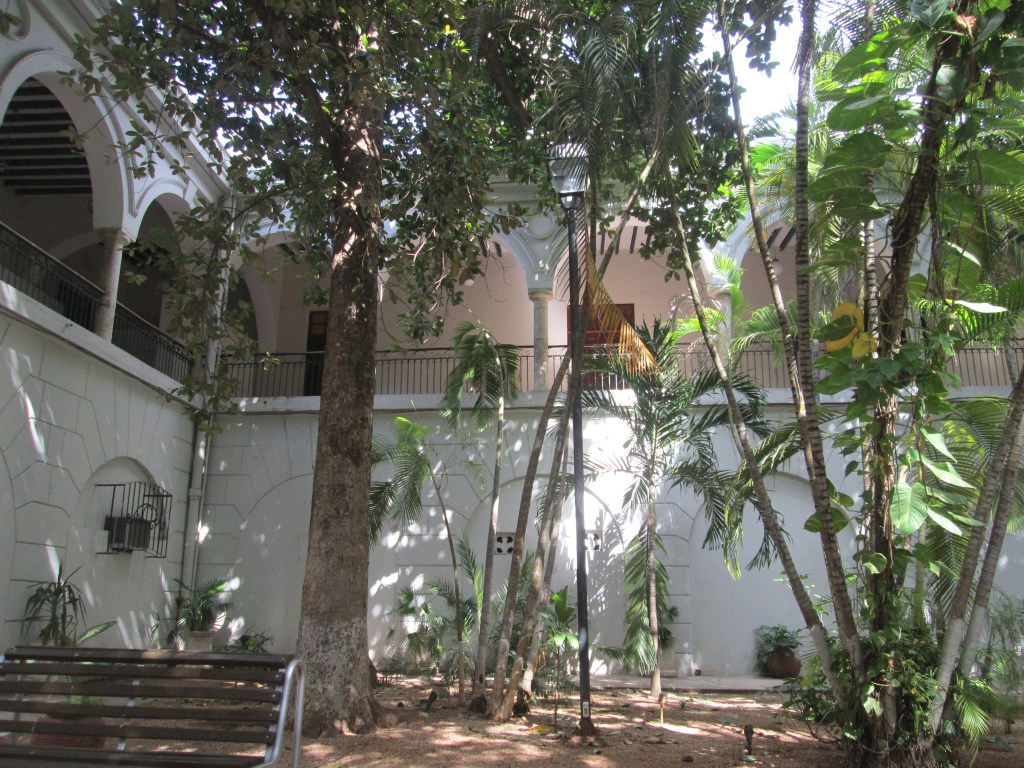
The Courtyard of the Macay Museum of Contemporary Art

In a tropical climate, nothing is more welcome than cool shade. And it’s not too difficult to find it. When I visited the Macay Museum of Contemporary Art, I was so enthralled by the courtyard, that I sat down on a bench and meditated for upwards of an hour. The building that houses the museum used to be the Archbishop’s Palace.

If I owned a house, I would like one that presents nothing but a wall and a door to the street—with no front lawn requiring frequent maintenance. I’d much rather have a courtyard, invisible from the street with cozy benches and a fountain.

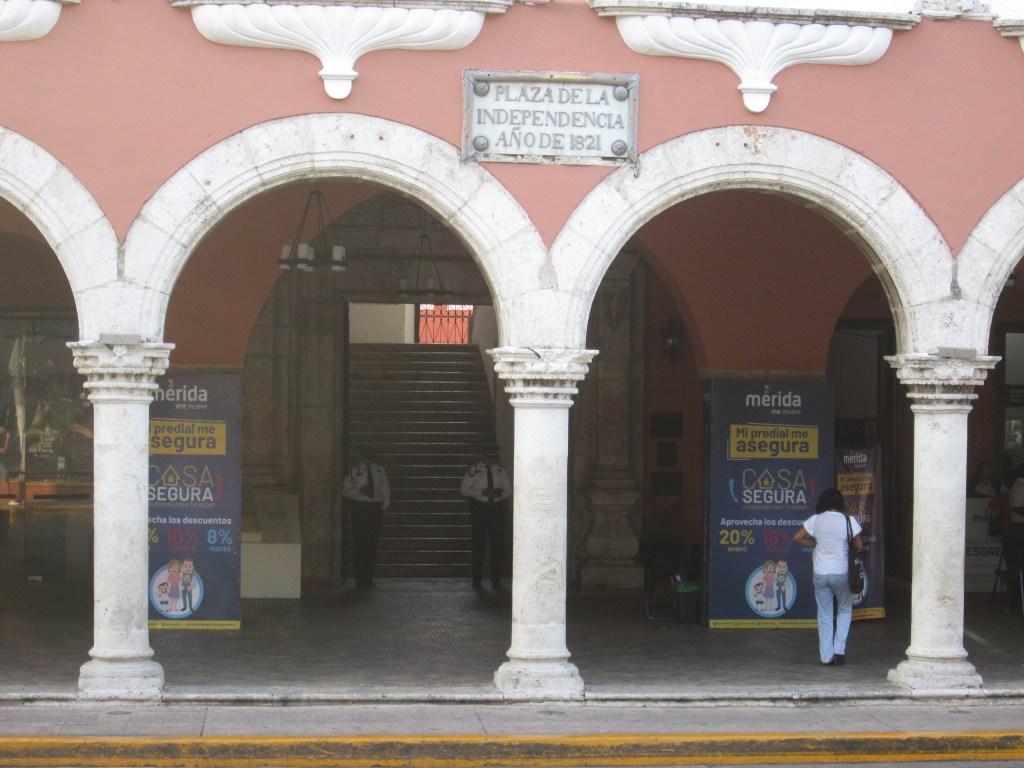
Colonnade by the Plaza de la Independencia, Built in 1821

Finally, I loved all the colonnades. like the one above which is two centuries old. It’s good to get out of the sun when it is hot, and there were always shops in the colonnade where you can get a cold beer or some tropical-fruit-flavored ice cream.

Perhaps all these things speak to me of comfort and relaxation, which is always a good thing when one is on vacation. Wherever I went, I found time to relax in the main plaza or a lovely courtyard or a welcoming colonnade. I always made sure that there was some relaxation time wherever I went. I saw a lot of wonderful places, and I had a good rest.

All the Babes Are Leaving

Tawny Kitaen (1961-2021)

One way to tell you’re getting old is to see what happened to all the babes of the 1960s and 1970s. I was surprised to hear that Tawny Kitaen had passed away. Not that I was a big an of hers, but never was there such a moniker that screamed B-A-B-E in Neon All-Caps. She was one of a troupe that included actresses like Joey Heatherton and Ann-Margret and “celebrities” such as Prince Andrew’s main squeeze Koo Stark and Profumo Affair bad girls Christine Keeler and Mandy Rice-Davies.

I suppose it is inevitable if you live long enough. I still think of Sônia Braga, Jenny Agutter, Françoise Dorléac, Dominique Sanda, and Maria Schneider. They were beautiful, and they populated my dreams as a young man. Now that I am no longer a young man, I can see that all of us are on the same journey through life.

RIP Sujatha and Little Mac

Sujatha and Little Mac Together (Which Is Which?) in 2013

In yesterday’s post, I wondered what happened to the elephants at the Santa Barbara Zoo. When we got home yesterday, I looked them up on Google and found that both had died, Sujatha in 2018 and Little Mac in 2019. Although I have no pets, I have felt a sense of loss for these two Indian elephants who had been together at the zoo since 1972. You can read more about them in this article from Radio Station KSBY’s website.

Apparently, despite their size, Indian elephants do not normally live as long as humans. In fact, after 40 years they are considered to be due for geriatric care. Little Mac had to be euthanized at the age of 48.

My relationship with the animals at the Santa Barbara Zoo surprises even me. It is a small zoo, walkable in a couple of scant hours, but I feel more strongly about the birds and animals there. Why?

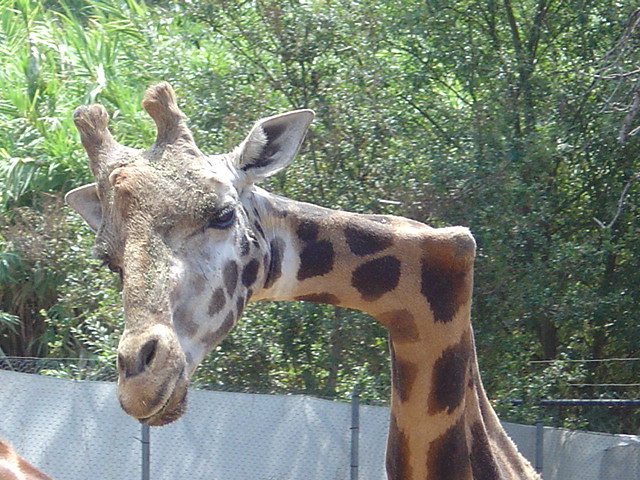
Gemina, the Giraffe with the Deformed Neck

I had become enamored of a giraffe named Gemina who died of natural causes in 2008 despite a neck that went off at a ninety degree angle. Despite her neck, Gemina lived a greater than normal lifespan (by six years) and had normal offspring. When I heard that Gemina had passed on, I was disturbed, hoping that she did not die in inordinate pain occasioned by her disability. Apparently she didn’t. She received excellent care at the zoo and was widely mourned.

So now that the elephants are gone, their home will be turned into the “Australian Walkabout” some time this summer. I will continue to return to the zoo whenever I can so that I can see my other friends there.