Buckeye Days

Szent Erzsébet (Saint Elizabeth) Church, Where I Was Baptized

I have written before about my formative years living in Cleveland’s Buckeye Road Hungarian neighborhood. (See the links below.) For some reason, Cleveland was for many years—and still might be, for all I know—the most Hungarian city in America. Well before the Second World War, it became a magnet for Magyar immigrants. On Buckeye Road, there were Hungarian churches, butcher shops, bakeries, bars (Oroszláni’s tavern was at our corner of East 120th and Buckeye), and restaurants. The ,most famous was the Gypsy Cellar, which I never went to because it didn’t cater to children, followed by Settlers’, which I saw only years after I had left Cleveland for good.
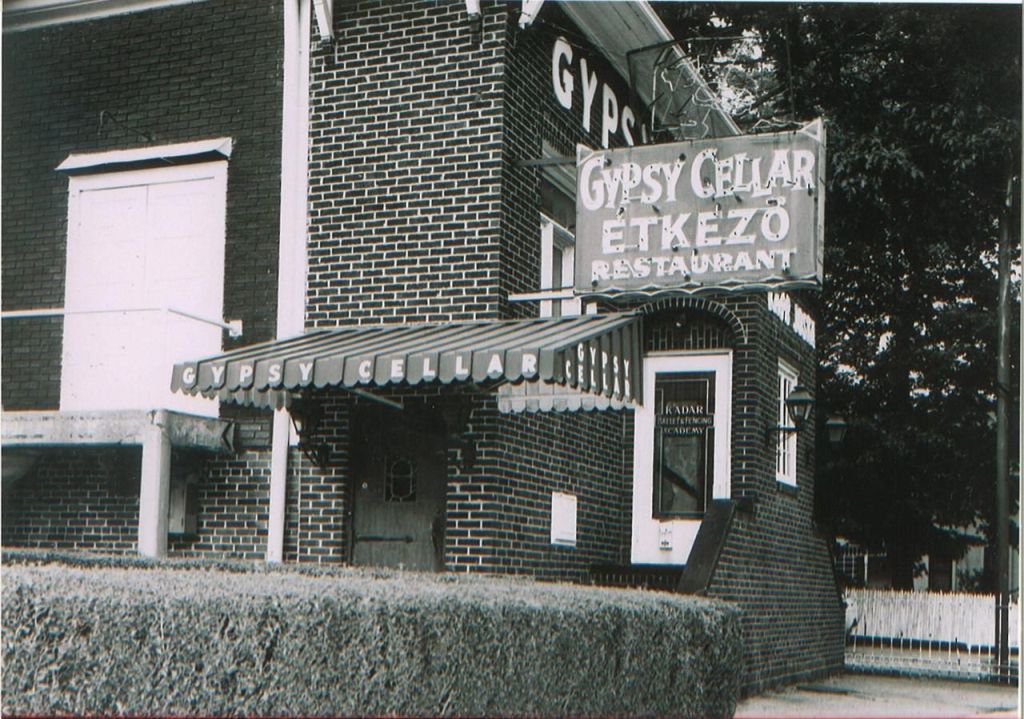
The Gypsy Cellar Restaurant on Buckeye Road

In the late 1940s-early 1950s, Buckeye Road was a safe neighborhood and remained so until it was “blockbusted” by unscrupulous realtors in the 1960s trying to precipitate white flight by selling properties to black families. Today, it is a largely black neighborhood. When I visited with my father in the 1960s, a big Irish cop warned us to leave the area before the “niggers started waving their spears.”

We moved out in 1951, the year my brother was born. I had been having trouble in school, because it seems I didn’t understand English very well and caused a ruckus with my friend András by kicking our kindergarten teacher, Mrs. Idell in the ankles. By that time, my Dad felt more financially secure, so he bought a bungalow on East 176th Street in the Lee-Harvard area, just one block away from his twin brother.

I’ve always been afraid to go back to Buckeye Road because I never really finished first grade at Harvey Rice School. I was pulled out after one semester and immediately started Catholic school at Saint Henry’s in second grade. I paid a price for that, being considered something of a dunce and troublemaker until I made it to fourth grade.
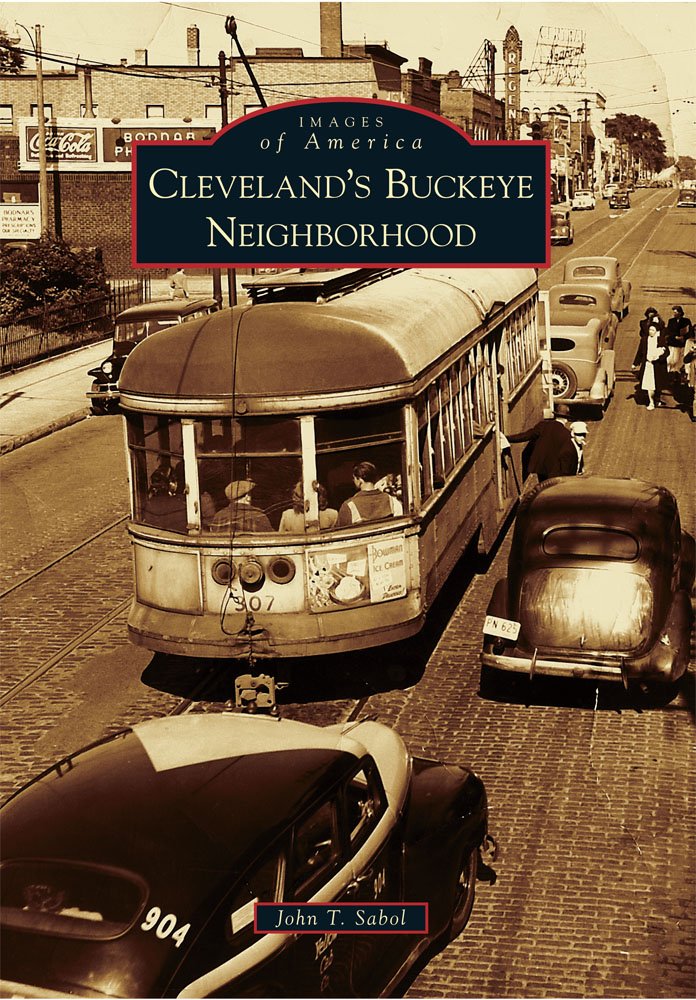
This Is a Book I Need to Find

In the above photo, you can see the Regent Theater, where I was taken by my parents to see movies. Actually, I just ran up and down the aisles and messed around with the soda machine. At my age, there I was no way I could sit through an entire movie. That was a few years in the future.

Back Online

My Internet Connection Has Been Restored!

For the last ten days or so, my Internet connection has been nonexistent. I called up Spectrum Cable (my Internet Service Provider) and scheduled a visit. Wouldn’t you know it? “Because of Covid-19” they weren’t able to send anyone out until this morning. Fortunately, the two techs who came out were extremely competent (the older one was mentoring the younger one), and my connection was quickly restored after a kink in the line was discovered. In the process, I got a new router and modem—which is all to the good as the old Arris unit was outdated.

So, I’m back … and I’m bad!

The French Have a Phrase for It

The Paris Metro at the Stalingrad Stop

You know the colloquial expression for it: Work, work, work! (and several variants thereof). But the French have a more picturesque phrase to describe the thankless boredom of life under the Coronavirus outbreak:

Métro, Boulot, Dodo

According to the Thought.Co website from 2019, the term is explained as follows:

The informal French expression métro, boulot, dodo (pronounced [may tro boo lo do do]) is a wonderfully succinct way of saying you live to work. Métro refers to a subway commute, boulot is an informal word for work, and dodo is baby talk for sleeping.

The English equivalents—the rat race, the same old routine, work work work—don’t quite capture the same sense of constant movement, and a more literal English translation, “commute, work, sleep,” isn’t as poetic as the French.

Boswell’s Clap

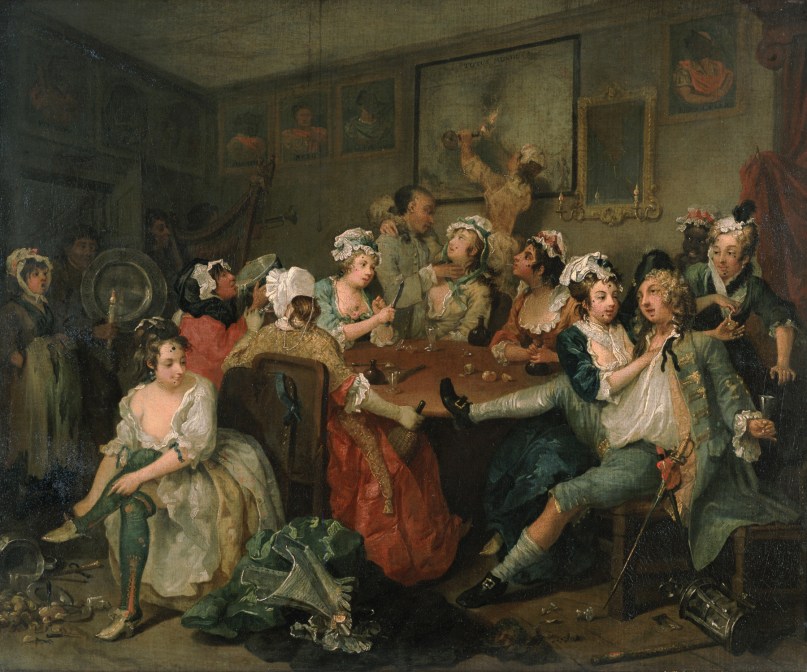
A Scene from William Hogarth’s The Rake’s Progress

I have been reading James Boswell’s London Journal 1762-1763. Inasmuch as I thought Boswell’s Life of Samuel Johnson LLD was one of the greatest books ever written, I thought it a shame that I had not read more of the great biographer.

At the time, Boswell was in his early twenties. His father, Lord Auchinlech (pronounced Affleck), had insisted that his son become a lawyer or merchant. Instead, James wanted to become an officer of the Guards, stationed in London. I am currently halfway through the book. Boswell spent many an anxious hour trying to win the patronage of powerful Scottish lords of the King’s party currying favor to this end. But, alas, no one went out of his way to help him.

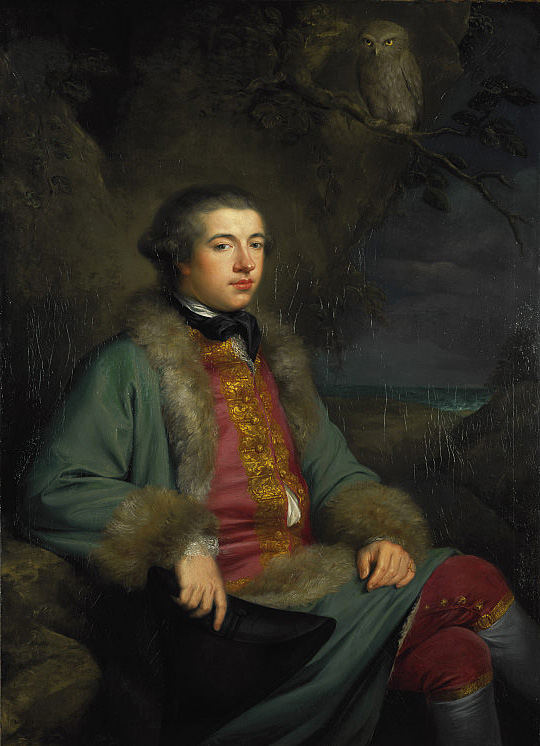
James Boswell (1740-1795)

What the young Scot found was a stubborn case of gonorrhea contracted from a pretty young actress whom he code-named Louisa. He built up to the affair with many weeks of visitations and gifts, only to come down with the clap for the third time in his life.

When he discovered he had been infected, Boswell mused about the effect his cure would have on his daily journal:

What will now become of my journal for some time? It must be a barren desert, a mere blank. To relate gravely that I rose, made water, took drugs, sat quiet, read a book, saw a friend or two day after day, must be exceedingly poor and tedious. My journal must therefore, like the newspapers, yield to the times.

Sounds like the coronavirus quarantine, doesn’t it?

Boswell’s journal makes for excellent reading. It shows its author to be an ambitious and randy young man who delights in conversation, especially with his fellow Scots. I can see myself making several more posts based on or inspired by this excellent book.

The Good, the Bad, and the Ugly

Kate Harris and Melissa Yule Atop India’s Nun-Kun Massif

I was a good boy during the month of January: I read all of the books I had planned to read during this year’s Januarius Project and then some. Here is the final list, in the order I read them with a short evaluation for each:

  • George Washington Cable, The Grandissimes. A pleasant surprise. ****
  • Ivy Compton-Burnett, Bullivant and the Lambs. Abandoned. Couldn’t abide it. *
  • Fredrik Backman, A Man Called Öve. Delightful Swedish novel. ****
  • Georges Lefebvre, The Coming of the French Revolution. Scholarly and interesting. ****
  • Trygve Gulbranssen, Beyond Sing the Woods. Interesting Norwegian tale. ****
  • Robert Goolrick, A Reliable Wife. Married life in Wisconsin in the 1800s. ****
  • Anne Brontë, Agnes Grey. Children are not always nice. ****
  • Kate Harris, Lands of Lost Borders: A Silk Road Journey. Great travel book. ****
  • Ragnar Jónasson, Nightblind. Icelandic police procedural. ***
  • Su Tong, Rice. A nasty character in 1930s China. ****
  • E R Eddison, The Worm Ourobouros. A fantasy novel that I abandoned, too wormy. *
  • Dzongsar Jamyang Khyentse, What Makes You NOT a Buddhist. A great intro. ****
  • Rachel Kushner, The Flamethrowers. The 1970s in New York and Italy. *****
  • Olga Grushin, The Dream Life of Sukhanov. Life is tough as the USSR comes unglued. *****
  • Ma Jian, Red Dust. A dissident travels around China in the 1980s. Great. *****

Chinese Dissident Ma Jian

That’s 15 books in all, not including F E Sillanpää’s Meek Heritage, which I finished on the last day of December 2020 ****.

With the exception of the two turkeys I abandoned (by Eddison and Compton-Burnett), I would have to say that this year’s Januarius Project was a smashing success. So successful, in fact, that I am planning a similar project for March, namely: reading only women authors. More about this as the month progresses.

The Quarantine Makes Us Boring

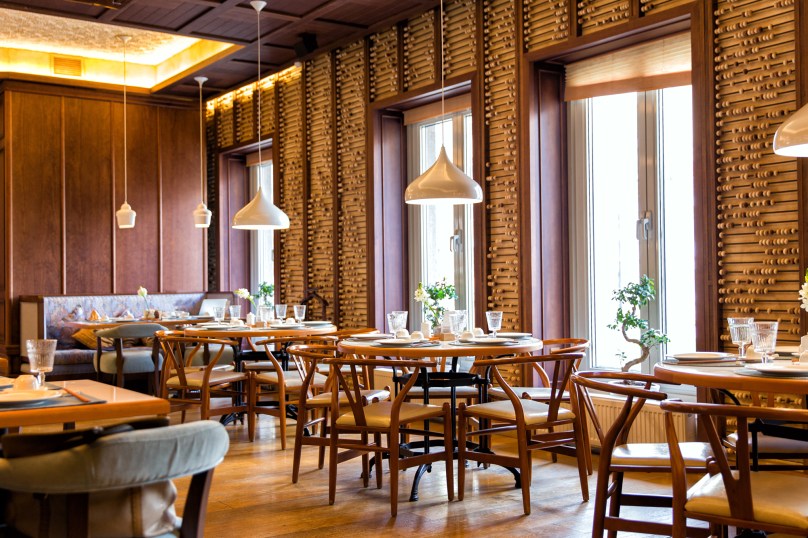
An Empty Restaurant

Things being as they are, I have a hard time thinking of interesting things to write. During the quarantine, I am involved primarily in four activities: food shopping, cooking, reading, and film viewing. There isn’t much I can write about food shopping and cooking, primarily because of Martine’s irritable bowel syndrome (IBS), most of what I cook is pretty bland. When I cook a dish for myself, I tend to go crazy with spices and chiles—because I can!

I would love to write more about places that I have visited recently. Except I have not visited many places recently. There are two reasons for this:

  1. Restaurants are usually closed, and the weather does not encourage picnicking.
  2. If you have to go to the bathroom, you pretty much have to buy gasoline.

I’d love to go driving in the local deserts, but I am uncertain as to filling these two basic needs which all travelers have. Let’s say I want to go to Boron, California, home of the Twenty-Mule-Team Museum. Not only is the museum closed, but I have no idea where I can get food locally, and whether the local restaurants are serving diners outdoors. There is just too much uncertainty.

Sometime this February, I will pay another visit to my brother in Palm Desert. My last visit there was at the end of October. There are some places we can go, and he knows which local restaurants are serving food. (Though the best food there is likely to be cooked by my brother.) To be sure, I will take my camera and try to find some places I can write about.

Until then, you will hear more about my reading and film viewing.

A Portuguese Plague Diary

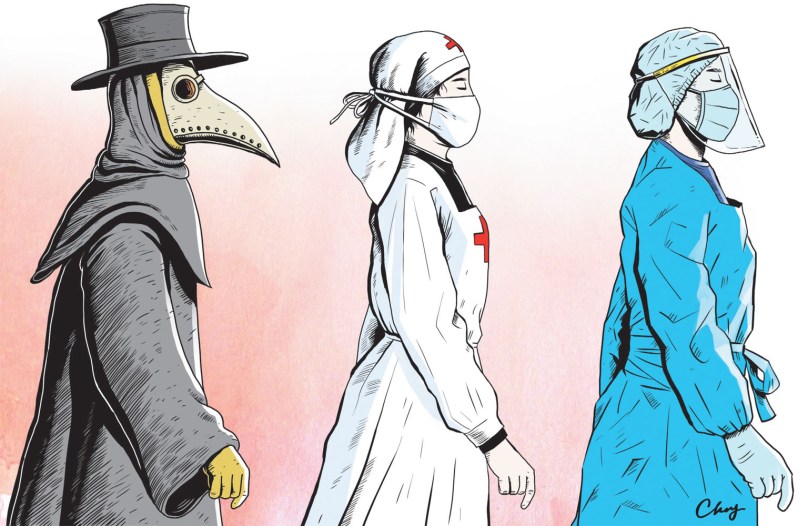
The Costumes Might Be Different, But It’s the Same Thing

The following are quoted from Gonçalo M. Tavares’s “My Plague Diary,” excerpts of which were published in the June 5, 2020 issue of the Times Literary Supplement:

For days, a violent poster campaign on the streets of the capital: if you are reading this, our condolences. You don’t want to be shut up at home, but in a coffin instead.

This poster worries more about your family than you do.

If you go out, you kill. If you go out, you die. If you go out and get sick, don’t complain. In any case, you won’t be able to complain.

If you have just gone out to visit your family, say goodbye to them.

At the entrance to the Metro: here’s hoping you don’t read me, here’s hoping you don’t die.

A lot of Brazilian prisoners are writing goodbye letters to their families. They say they’re getting sick. Coughing, fever, cries for help in a number of cells.

A picture from two weeks ago, jackals in the streets of Tel Aviv. They are hungry and they’ve lost their fear. Because they are hungry they’ve lost their fear. They need to go back to having fear or food, somebody says.

A friend from Brazil writes to me: “I wish I had a loudspeaker, like this guy in Ipanema.” They say he’s on the tenth floor, opposite the beach, and he’s set his speaker up on the balcony. And from all the way up there he was issuing warnings through his loudspeaker: Hey, lad in the blue shirt, the one on the bike, yeah, you! You’re going to get coronavirus, you know. Hey, lady in the flowery swimsuit, with your hair done and the red lipstick, yes you! You’re going to get coronavirus, you know…! She lives in Rio. She’s terrified.

Unemployment reaches 1929 Great Depression levels in the USA, and in Guatemala, women on the side of the road are holding a white flag. They wave the white flag when a car or a motorbike passes. They are unemployed, they ask anyone who stops for food.

Maria Branyas, aged 113, is now the oldest person to beat the novel coronavirus.

Dizziness, I’ve got to check this out. Too many days like this. Lying down, I’m fine, but sometimes it’s good to be on two feet. They don’t seem like days—but days in the middle of something. As if the day even when it is finished were not complete. It is always between one thing and another. These days are always the middle sibling. A need for lightness; feeding the dogs organizes my time; without their hunger I would surely be having more dizzy spells.

Two actions of resistance. You must wait or clean. How long does evil remain on a surface? Think about evil that can be eliminated by cleaning.

Doesn’t matter what you think, what matters is what you do.

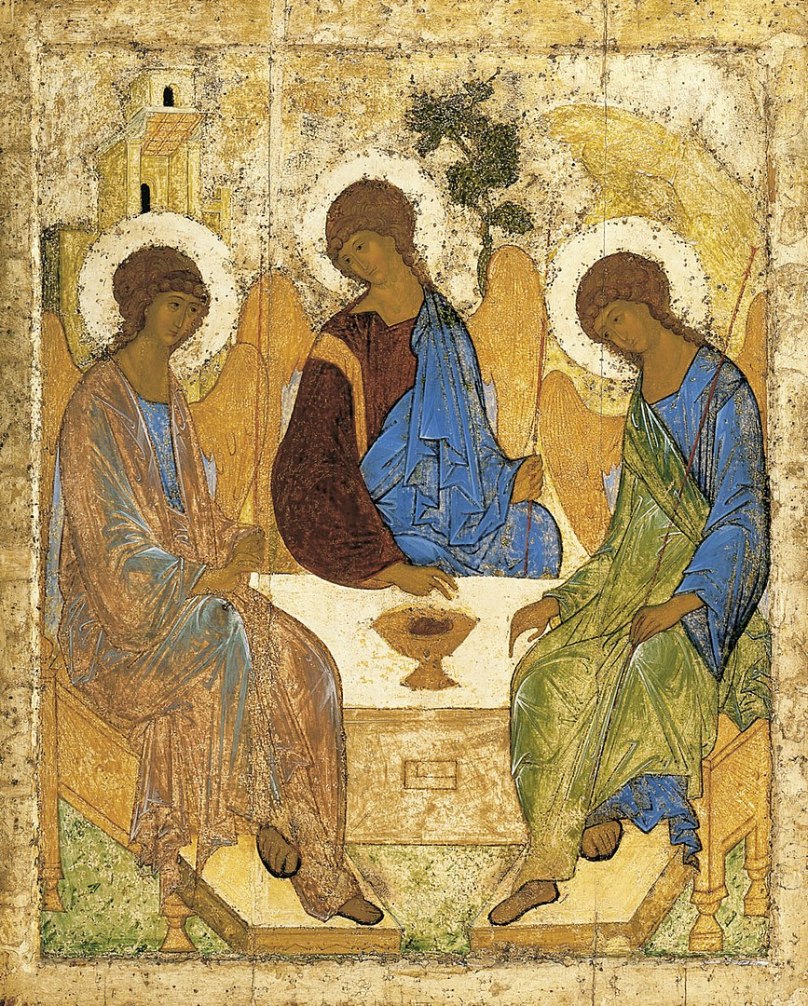
Andrei Rublev

Holy Trinity Icon (ca AD 1400)

I have always been fascinated by Eastern Orthodox icons, beginning around the time Martine and I began visiting Greek festivals in the Los Angeles area. Perhaps the greatest master of the icon was the Russian Andrei Rublev (Андрей Рублёв), born sometime between 1360 and 1370 and died sometime between 1427 and 1430. Not much is known about his life, but his work continues to inspire. In fact, I have seen a number of copies of his icons at different Greek Orthodox churches.

To the untutored eye, there is something rigid about the typical icon, with its gold-leaf background and its lack of attention to perspective and even realism. Most subjects are of God, the Blessed Virgin, and various saints. We are not privy to the mind of God and must therefore be respectful of any representation of Him or the saints. These icons are objects of worship which are venerated by the faithful as they enter the narthex of an Orthodox church.

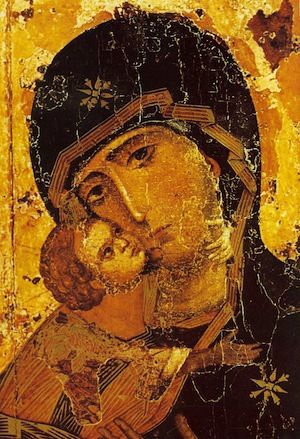
Rublev’s Icon of Our Lady of Vladimir (ca 1406)

However rigid the style may be, the facial expressions of the Blessed Virgin and the Infant Christ are incredible: On one hand, Mary seems to see the condemnation and crucifixion to come, while Christ seems to be staring at her with a look of purpose and strength.

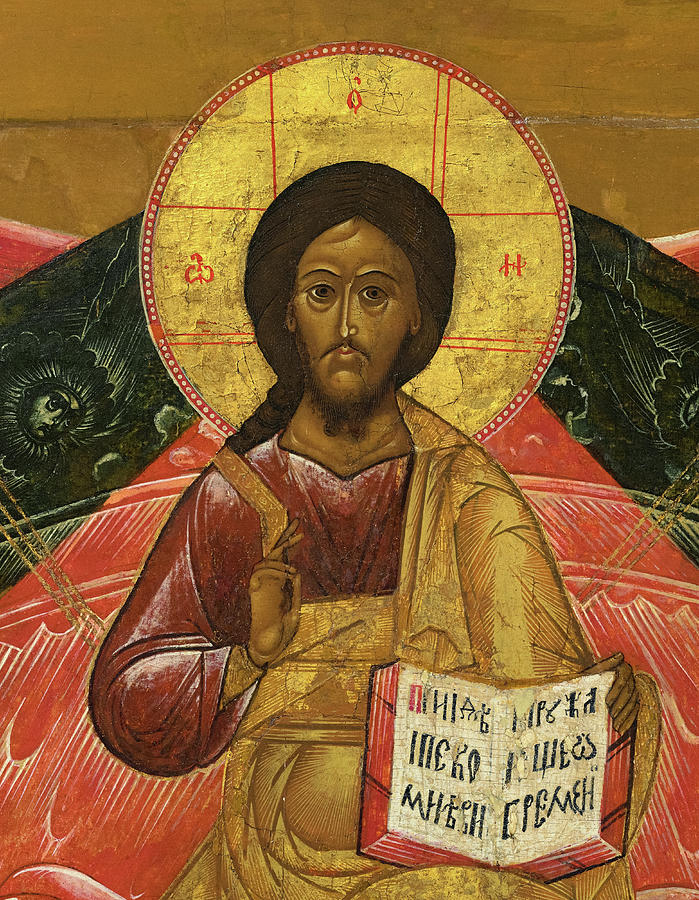
Icon of Christ Pantocrator (Detail)

According to a famed dealer in Russian icons:

The iconographic type of Pantocrator (Almighty or Omnipotent in Greek) shows Christ as the Lord of the Universe, co-equal and co-eternal to the Father. The iconography originates in Byzantine art and is known since the sixth century. The earliest known surviving example is the icon of Pantocrator from Saint Catherine’s Monastery in Sinai. Later on, gigantic images of the Pantocrator, represented half-length with a book of Gospels in his hand, can be seen on the mosaics and frescoes of Byzantine cupolas. In Russia, this iconography usually appeared in the Deisis Tier, the main part of the iconostasis, but could also be used for independent devotional images.

In Greek Orthodox churches, the image of Christ Pantocrator usually appears in the cupola above the nave.

Over the years I feel I have come to appreciate the artistry of these icons. If you are interested in learning more, I recommend you see Andrei Tarkovsky’s great film Andrei Rublev (1966), which is available in DVD from the Criterion Collection. It is a hagiography of sorts, and rightly so as the Russian Orthodox church has declared Rublev to be a saint in 1988.

Women Writers

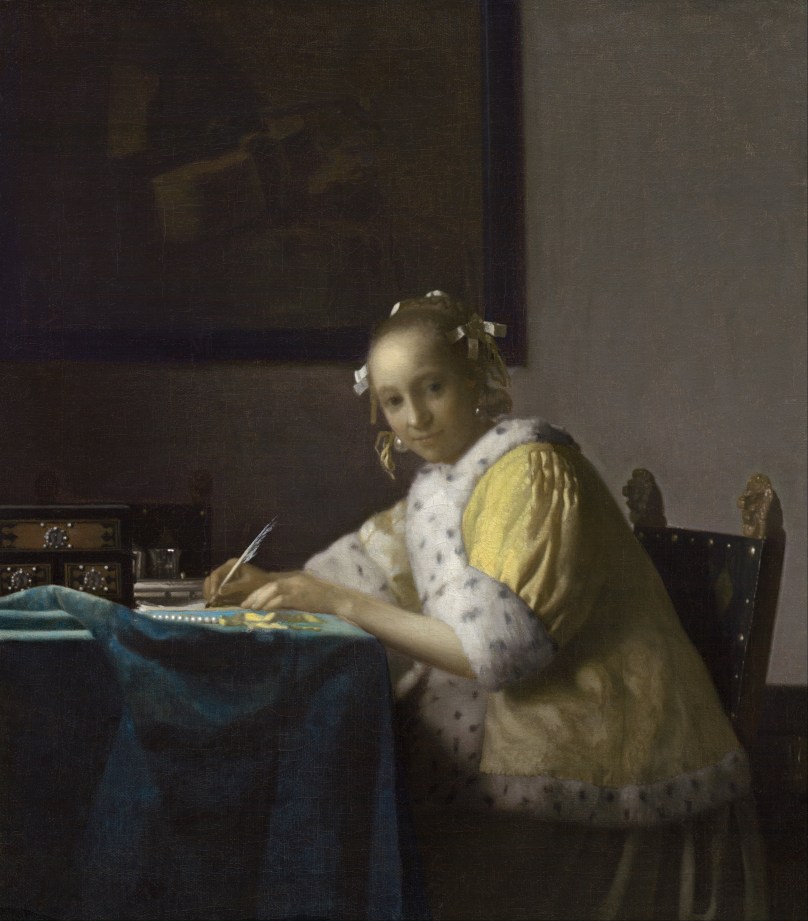
Vermeer’s Portrait of a Lady Writing

With a title like “Women Writers,” one might expect some heavy duty mansplaining about how women don’t really understand what life is about. Well, you won’t find it here. Even though, in the past, I have complained about fiction written by women being too “relationshippy,” I am beginning to appreciate the vision of the better women writers. Oh, there are plenty of distaff hacks, but I’m not talking about them here.

I have over the last few months read several novels written by women that managed to rock my world. They include:

  • Olga Grushin, The Dream Life of Sukhanov
  • Rachel Kushner, The Flamethrowers
  • Anne Bronte, Agnes Grey
  • Virginia Woolf, Orlando
  • Marie NDiaye, La Cheffe and My Heart Hemmed In
  • Tara Westover, Educated

Consequently, what I have decided to do is devote the entire month of March to reading about a dozen books by women authors, half by authors I have never read before, the other half by old favorites such as Ursula K. Le Guin, Joyce Carol Oates, Charlotte Bronte, and Patricia Highsmith. I haven’t decided which books yet, but there’s time to put the list together and let you know.

Currently, I am working my way through Olga Grushin’s The Dream Life of Sukhanov, a novel written in English by a Russian writer about a Soviet art magazine editor in the mid-1980s whose life comes unglued because of all the changes that are taking place just before the collapse of the Communist Party. At one point, the main character, Anatoly Pavlovich Sukhanov, muses to himself: “No, never again would he dare to accept any certainty with that bovine sense of simply receiving his due….”

Similarly, I plan to reject that similar “bovine sense” of underestimating women writers as a matter of course.

Wanna Ride, Babe?

Cool Bulldog at the Automobile Driving Museum in El Segundo

Martine misses the car shows at El Segundo’s Automobile Driving Museum, which is temporarily closed during the Covid-19 quarantine. Before the dread coronavirus made its way around the world, we would go places—especially on the weekends—and I would post blogs about the places we visited.

There are several things about the Automobile Driving Museum (ADM) which make it particularly welcome to us. For one thing, Martine loves the classic American cars, particularly the Corvettes. Unlike most auto museums, the ADM allows you to sit behind the wheel and fantasize you are driving a classic.

Also, El Segundo is the home of the Old Town Music Hall with its Wurlitzer Organ and program of old films. It, too, is closed during the quarantine.

Finally, Martine loves In-N-Out Burgers on Sepulveda Boulevard. Although we can’t eat inside at present—Guess Why?—the restaurant is open for take-out. Fortunately, In-N-Out knows how to do take-out and always has.