Why Latin America?

There Is a Reason Why I Keep Going Back There

My first vacation on my own—at the age of thirty—was to Yucatán. In the intervening years, more than two-thirds of my international vacations have been to Mexico, Central or South America. Originally, my interest was in Pre-Columbian archeology. I still am, but I’ve added post-Columbian (i.e., Christian) archeology to my interests. The two exist side by side in fascinating ways.

Many Latin-American towns have museums of religious statuary and paintings that used to be in churches that are no longer in service. Lima, Peru, for instance has a fascinating museum in the former Archbishop’s palace adjoining the cathedral.

Sacramental Vessels from Lima’s Archbishop’s Palace

American tourists usually go in for all the pre-Columbian sites, but are totally uninterested in the ruins of Catholicism that are evident all over the place. In places like Buenos Aires; Cuenca, Ecuador; Mérida, Mexico; and Antigua, Guatemala there are old churches that are no longer in use, but there are thousands of items of religious art that are fascinating to me. One of the most incredible is the huge monastery of Santa Catalina in Arequipa, Peru, which is like a walled city in its own right.

The Monastery of Santa Catalina in Arequipa, Peru

In the morning that I visited Santa Catalina, I took the two-hour morning tour. Then I went to lunch and had some rocoto relleno (spicy stuffed Peruvian green pepper) in a restaurant behind the cathedral. Then I went back and spent the whole afternoon actually trying to get lost as I wandered through the narrow streets and saw the chapels, nuns’ cells, gardens, kitchens, laundries, and other services that made up the monastery.

Looking back, I think I’d rather see Santa Catalina again than Machu Picchu. In my mind, they are of equivalent interest, but Santa Catalina is much nicer.
 

Spilimbergo

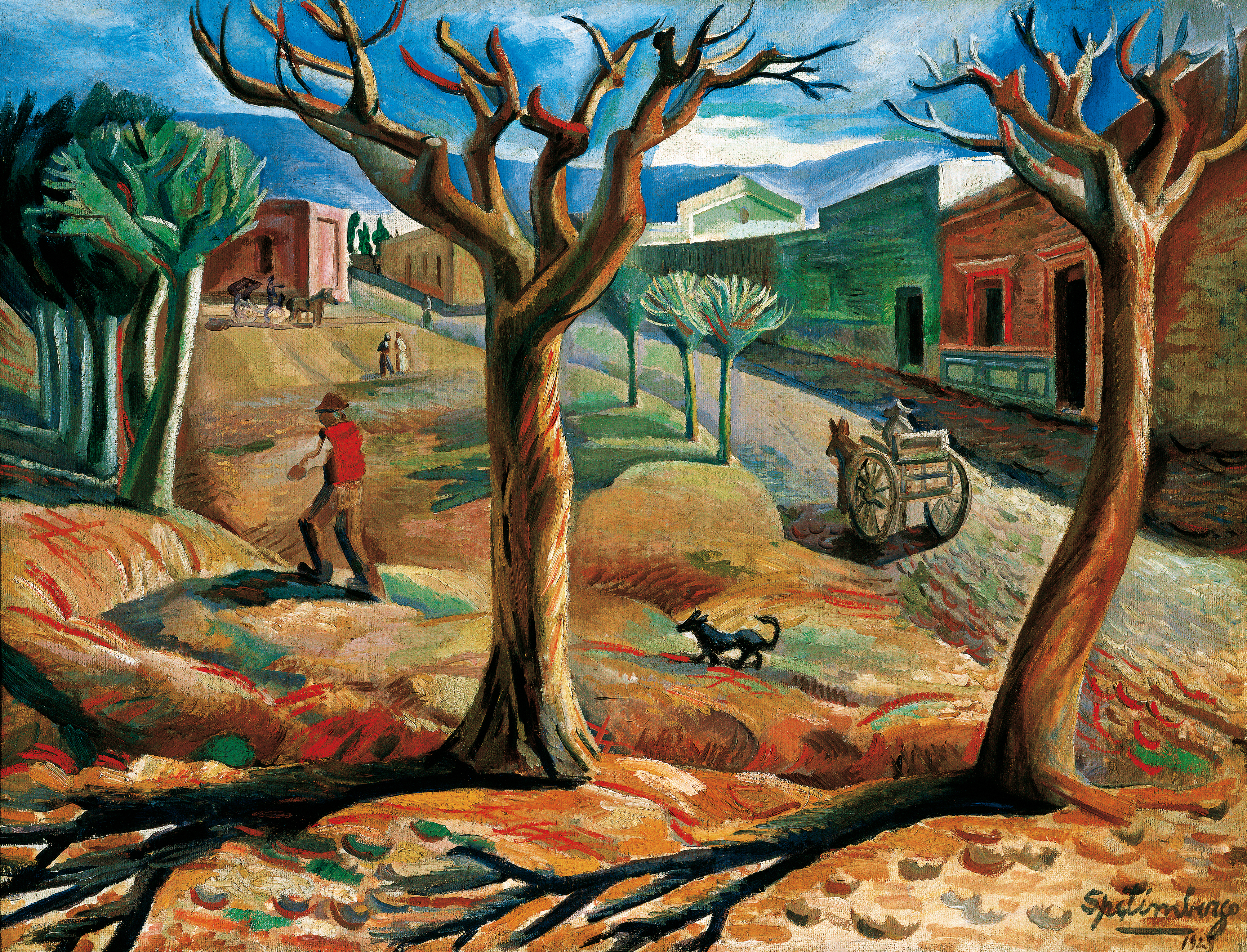
Landscape by Lino Enea Spilimbergo (1896-1964)

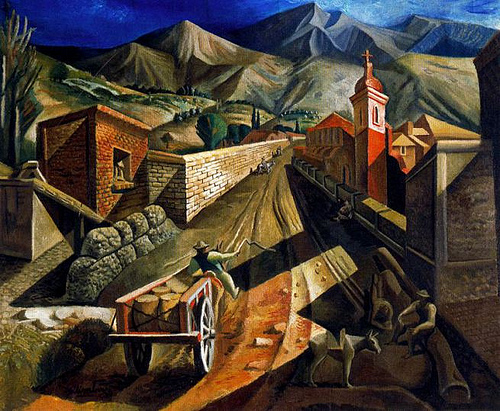
I have always thought that the world has never sufficiently appreciated the artists and writers of Argentina. Having paid three visits to that distant country, I have begun to appreciate the artistic vision of its people. This post honors the work of Lino Enea Spilimbergo, the son of Italian immigrants, who was born in the Palermo neighborhood of Buenos Aires, but for health reasons relocated to the drier province of San Juan in the center of the country.

“Pasaje de San Juan” by the Painter

What draws me to Spilimbergo’s work is that his eye seems to capture much of the wonder that is the Argentine landscape. Though the artists work was by no means limited to landscapes:

“Mujer Sobre Paisaje”

The above picture has both surrealistic and straight landscape elements, incorporating the jungles of northern Argentina with a female nude. Unfortunately, relatively little is written about Spilimbergo’s art on the Internet in English, though I think his work deserves serious study.


At the Fish Market

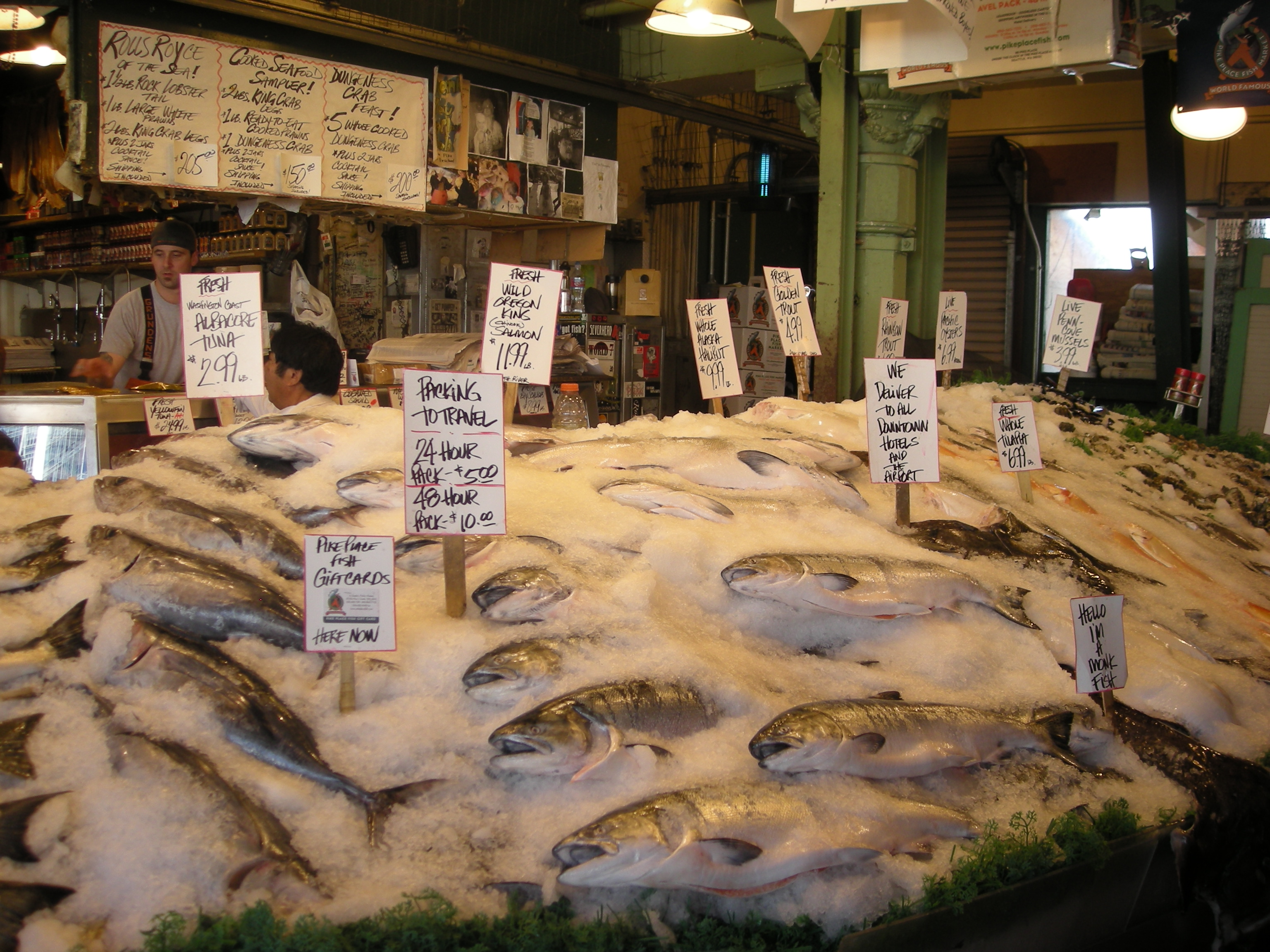
The Fish Market at Pike Place in Seattle (2009)

Sometimes I think a new anti-social Me is coming into existence. Not really so much anti-social as unfriendly to strangers. Martine and I had visited a historical site in Long Beach called the Rancho Los Cerritos National Historical Site. On the return trip to West L.A., we stopped at Captain Kidd’s Fish Market and Restaurant in Redondo Beach where we indulged our love of fresh seafood.

As we checked out the raw fish on ice, a stranger wearing khaki shorts, a T-shirt, sneakers, and those unambitious socks that never quite make it up to one’s ankles, started talking to me about the salmon in the case.

I looked at him. “Are you talking to me?” I asked.

“Yes,” he answered.

With what must have been a puzzled look on my face, I asked, “What on earth for?”

And that shut him up.

This is the type of situation when I normally switch to Hungarian. I couldn’t well do that here because I had to order two fish dinners in English within the next couple of minutes.

What a snarky character I am turning out to be!


No More Library of Alexandria

Scenes from My Library Circa 2002

I’m showing you this 17-year-old picture of my library because now it’s much worse. The center of the room has large piles of books and boxes full of more books. Was I trying to build my own Library of Alexandria? Apparently. I used to love going to bookstores and buying lots of books, supplemented by the books I bought from Amazon, eBay, and the Advanced Book Exchange (ABE). I used to spend upwards of several hundred dollars a month picking up titles which I thought that, some day, I would sit down and read.

It’s not that I don’t read that much. According to my records, I still devour some 150 books a year. Look me up on Goodreads.Com, and you will find my reviews of all the books I read. It’s just that, now that I’m retired and on a fixed income, and now that bookstores have almost ceased to exist, I read more library books. And I also read many of the books I have downloaded on Kindle, which cost a whole lot less than new paperbacks.

So for the last year or so, I have been donating hundreds of books to libraries—most specifically the Mar Vista Branch of the Los Angeles Public Library—and in some case selling or trading books to the few booksellers still in the business. Each week, I donate an average of two boxes of books to the library. I will continue until my total book collection shrinks by some two to three thousand books.

That still leaves me with plenty of books. Being an insatiable bookworm, I will never lack for something to read.


On the Bus

The MTA Santa Monica Blvd, #704 Express

Since I am now on a fixed income, I avoid expensive parking lot charges. For some of the places I hang out, I take the bus: It only costs 35¢ a ride rather than, say, the $25.00 or more it would cost to park downtown or $10.00 it would cost at the Fairfax Farmers Market. Today, I had to endure the abusive chatter of a Tourette’s Syndrome bum who was serially abusing all the passengers on the bus. Fortunately, he disembarked in Beverly Hills, where—no doubt—he started abusing the tourists who congregate there.

The Many Aspects of Tourette’s Syndrome, On the Surface and Below

I have found that Los Angeles has a fair number of angry African-American homeless persons who are angry and verbally abusive. Several months ago, on the same bus line, a bum started shouting at me. Angrily, in Hungarian, I told him I hoped he would be f*cked in the ass by a horse. Not hearing me right, he thought I was using the N-word at him, which is something I would never do. That ended with the police being called by the driver and the bum being evicted from the bus.

This time, I saw this bum approaching from a hundred feet away, enraged at the world and various unspecified rednecks. I knew he was going to be trouble. Fortunately, this particular bozo did not pick on me in particular; so I was able to maintain a neutral pose.

When I read the papers about the growing number of homeless in Los Angeles, I rarely see anything about mental illness and drug abuse. And yet those are the dominant characteristics of most homeless. It is not shelters they want (that would impinge on their freedom, such as it is), but either mental healthcare or drug treatment—that is, if they would submit to treatment at all.


The Devil’s Postpile

The Columnar Basalt Formation at Devil’s Postpile National Monument

The last of the three major destinations of our recent Eastern Sierra road trip was the Devil’s Postpile National Monument near Mammoth Lakes. There are a number of locations around the world where thick lava formations, in cooling, form cliff faces of hexagonal columns. Probably the most famous are the Giant’s Causeway in Northern Ireland and the Isle of Staffa in the Scottish Hebrides.

The nearest such formation to me is the Devil’s Postpile. The Monument can be reached primarily by taking a shuttle bus from the Mammoth Mountain ski area to Stop #6, from which there is an easy half-mile hike to the cliff face. The top of the columns looks like this:

What the Columns Look Like from Up Top

We didn’t actually take the hike to the top of the columns, but only because we didn’t want to push ourselves too hard at high altitude.

The hike to the basalt columns follows the San Joaquin River through a pine and juniper forest of surpassing loveliness. In fact we liked the surroundings so much that the columnar basalt formation was almost a letdown considering the lead up to it.

I would like to return in future and extend the hike to Rainbow Falls, which is also in the Monument.


Three Graces

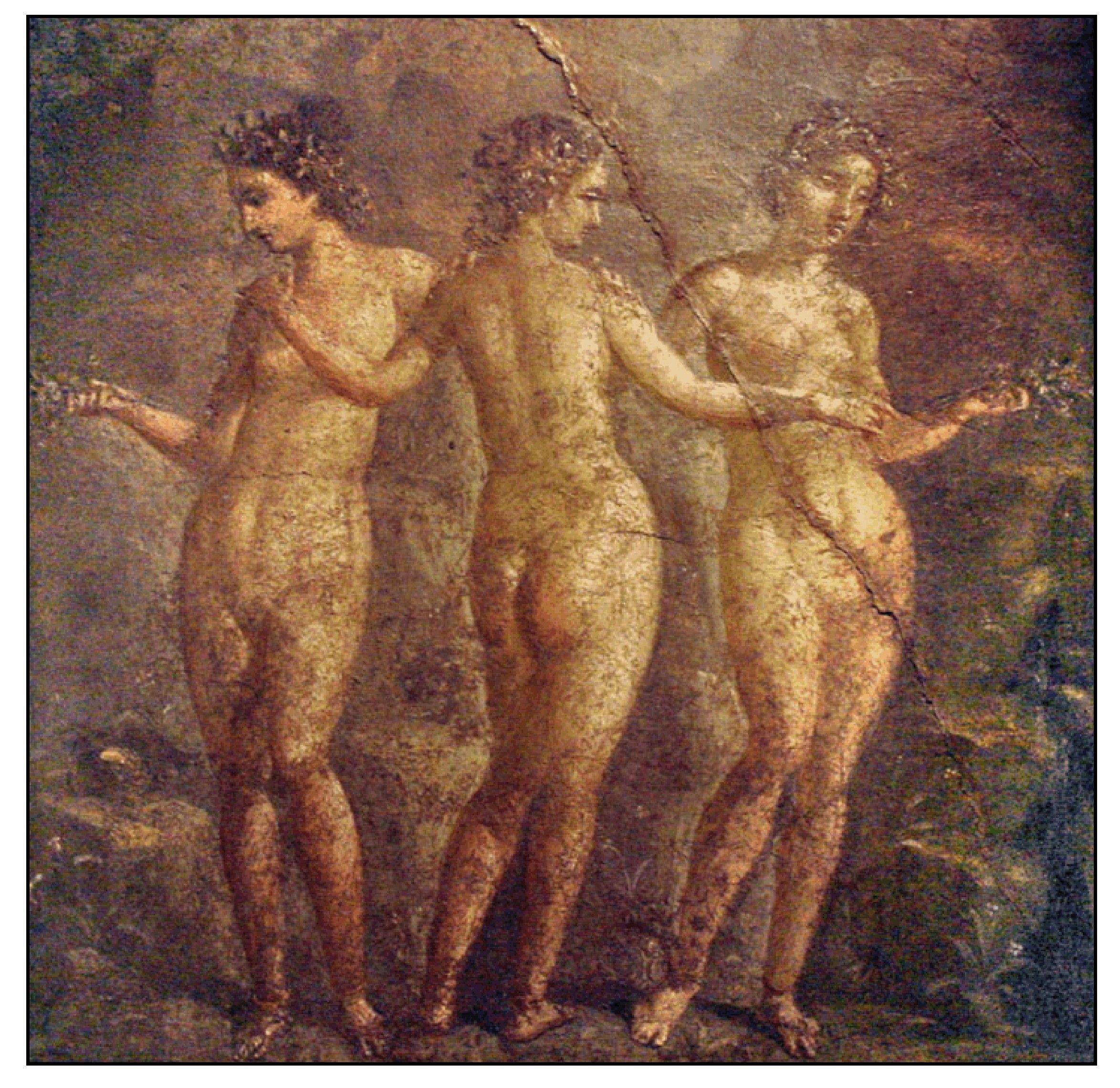
Roman Fresco from Pompeii of the Three Graces

In many ways, our culture has descended from the Greeks and the Romans. And yet, I think that we are so far removed from them that we no longer react the way that ancient audiences did.

According to the Greeks, the Graces were the daughters of Zeus and Eurynome. They were Aglaea (“Splendor”), Euphrosyne (“Good Cheer”), and Thalia (“Festivity”), though there were many name variations.

What surprises me most of the above depiction from first century Pompeii is its matter-of-factness. Three young unclothed women, realistically painted, who do not inspire lust but merely exist on their own terms. If you look at Renaissance or later images of the Graces, you will notice they are more beautiful and appealing. I do not think the Roman artist failed in his depiction, but that he rendered them on a different plane altogether.

It is as if they are saying, “It does not matter to us whether or not you find us appealing. We are immortal goddesses, and you are mortal men.”


Curse Tablets

The Ancients Had Some Interesting Practices

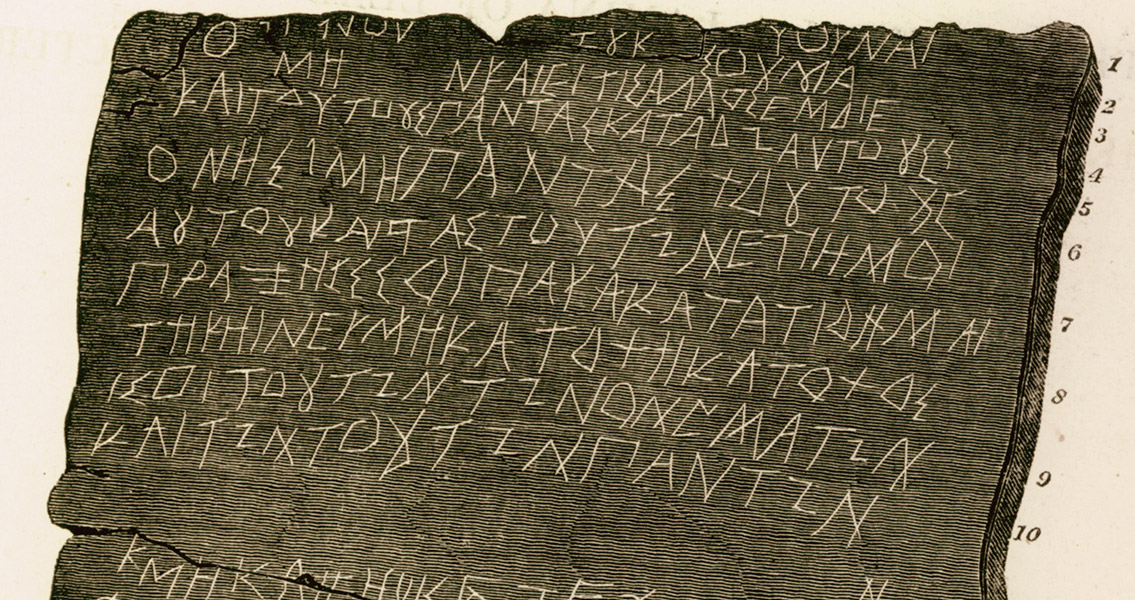
According to a Dutch scholar named H. S. Versnel, the ancient Greeks had a practice involving the creation of “curse tablets.” In Memphis in the fourth century BC, the following curse was left etched into a tablet at the Temple of Oserapis:

O Lord Oserapis and you gods who sit enthroned together with Oserapis, to you I direct a prayer, I, Artemisia … against the father of my daughter, who robbed her of her death gifts (?) and of her coffin … Exactly in the way that he did injustice to me and my children, in that way Oserapis and the gods should bring it about that he be not buried by his children and that he himself not be able to bury his parents. As long as my accusation against him lies here, may he perish miserably, on land or sea….

Now these curse tablets were typically made of lead with the curse scratched onto their surface. Although I cannot wish death to the man I most ardently hate (whose visage is caricatured below) there are certain things I can say without bringing the Secret Service to my doorstep.

The Object of My Own Curse Tablet

May his bucket of chicken contain gristle that rots his fundament. May his fingers that would fly over his cellphone in a Twitter fury come out as utterly incomprehensible covfefe—at all times. May his followers discard their red MAGA hats out of shame, and may he be buried with a large streamer of toilet paper adhering to his shoes. May his real estate investments come to naught and his billions all turn out to have been illusory. May he be laughingly turned down by women he does not regard as beautiful and forget what his original urge was all about.


“To a Cat”

Panther in the Wild

If you look hard at my life, you will see that it is like a marginal gloss to the poems, essays, and stories of the Argentinian Jorge Luis Borges. Ever since I first came across his work around 1970, I have returned to it again and again as to an ineffable guide. Here is one of his poems, called “To a Cat.” I have visited the zoo in the Palermo district of Buenos Aires where Borges probably got the inspiration for this poem.

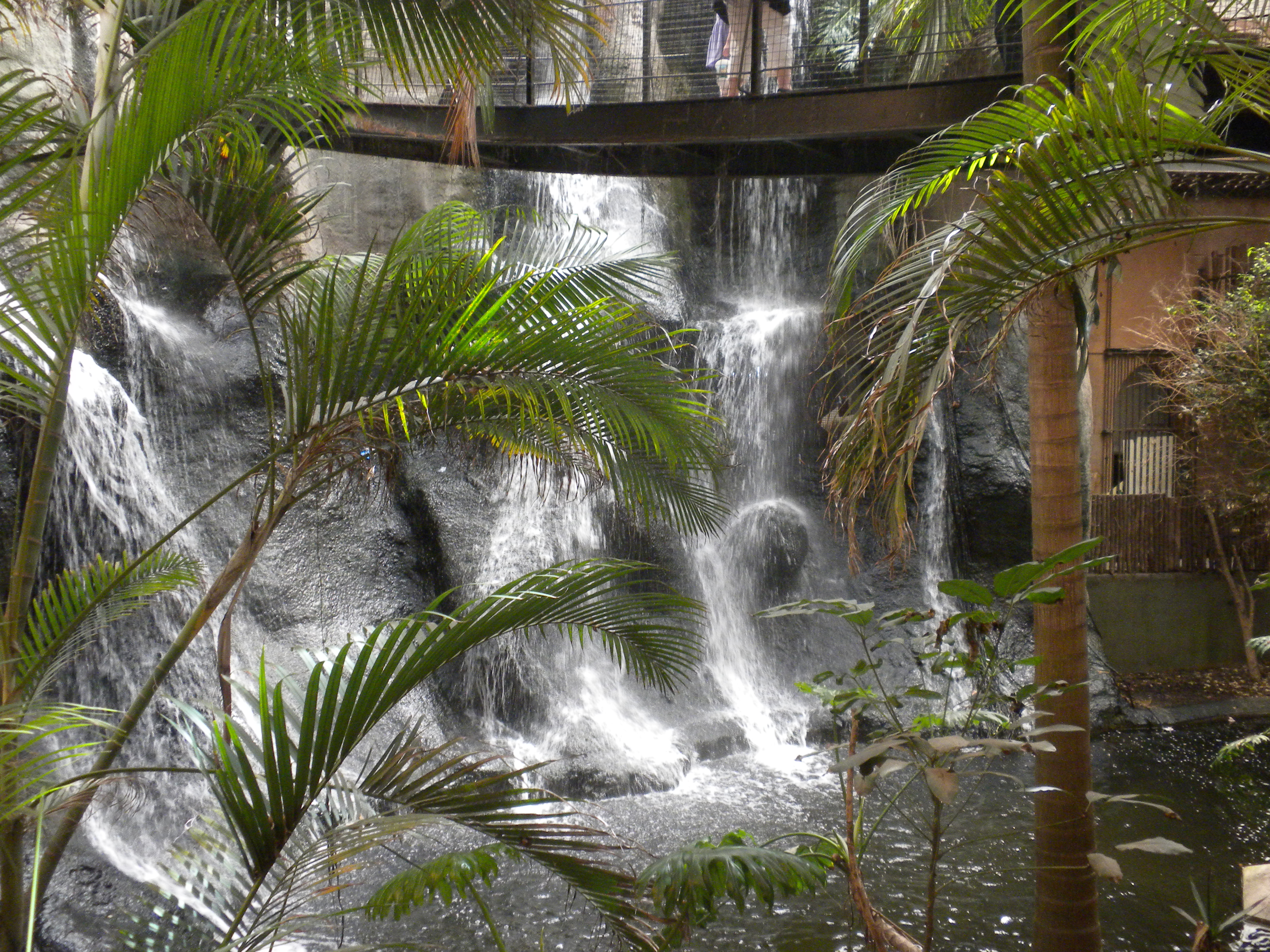
Jungle Waterfalls at Buenos Aires Zoo (2011)

To a Cat

Mirrors are not more silent
nor the creeping dawn more secretive;
in the moonlight, you are that panther
we catch sight of from afar.
By the inexplicable workings of a divine law,
we look for you in vain;
More remote, even, than the Ganges or the setting sun,
yours is the solitude, yours the secret.
Your haunch allows the lingering
caress of my hand. You have accepted,
since that long forgotten past,
the love of the distrustful hand.
You belong to another time. You are lord
of a place bounded like a dream.


Towers of Tufa

Mono Lake and Tufa Towers

On our way down the mountain from the ghost town of Bodie, we stopped at the Mono Lake Tufa State Natural Reserve and took a little hike. Mono Lake has numerous towers formed of pure calcium carbonate when the calcium of the underground water met the heavy carbonate content of the saline lake water. As the volume of the lake fell due to being siphoned off by the Los Angeles Department of Water and Power (DWP), the towers, which were formerly underwater features, now appeared as pinnacles looming along the south shore of the lake.

The Yellow Water is Composed of Trillions of Brine Shrimp

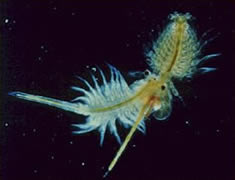
Mono Lake is teeming with life, beginning with the brine shrimp which teem in the waters, along with the alkali flies that feed on them and the birds that feed on the insects and the brine shrimp. As one walks along the shore of the lake, one sees billions of bobbing alkali flies, visible in the photograph directly above.

Brine Shrimp

Because of a 1990s court decision that went against the DWP, an attempt will be made to allow Mono Lake to refill—up to a point. The intention is not to submerge all the tufa towers, but to encourage the life forms that dominate the lake.