What’s That Again?

Did Anyone Hear That Announcement?

Did Anyone Hear That Announcement?

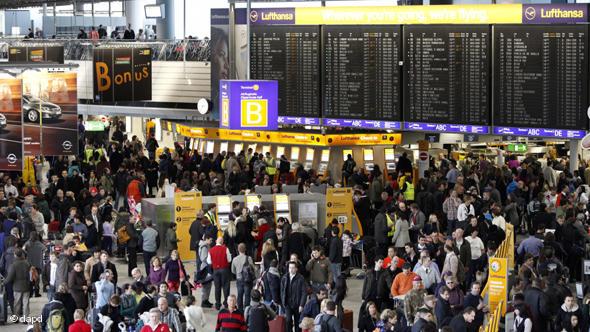
Like all inventions, it was well intentioned—originally. Then, like most inventions, things got out of hand. I am referring to public address systems, which work well enough in certain controlled environments, such as schools, but are all but useless in crowded situations such as airports and railway stations.

Yesterday, for example, I took the new Expo light rail from Santa Monica to Downtown L.A. and back again. Admittedly, it was only the fourth day of operation of the extended Expo line, but all was confusion at the 7th Street Metro Station. A train had pulled in whose destination was Willowbrook on the Blue Line. There was a scratchy P.A. announcement saying something or other in which the words “Santa Monica” were mentioned, after which half the people in the train got off. Thereupon, the train was marked “Not in Service” and left the station with several hundred people bound for either Willowbrook or Santa Monica or the rail maintenance yard.

This is a typical occurrence. Most public address announcements are innately confusing. There could be technical reasons for this, or the announcer could have a voice that is not appropriate for the medium.

At airports, I have gotten used to ignoring all announcements and looking carefully at the status board. That’s what I wound up doing at the 7th Street Metro Station yesterday: I just waited for a train whose destination was clearly marked as Santa Monica.

In 1979, my brother and I were flying to Villahermosa by way of Mexico City. We were told by announcement that our flight was canceled. That’s when my term “flying by Mexican rules” was born. Dan and I hunkered down and kept our eyes and ears open. Sure enough, there was a scratchy announcement that mentioned Villahermosa, and we found that the plane was in fact being boarded. Only at the last minute did that status appear on the electronic signage.

The Bradbury

The Replicant Pris in Blade Runner

The Replicant Pris in Blade Runner

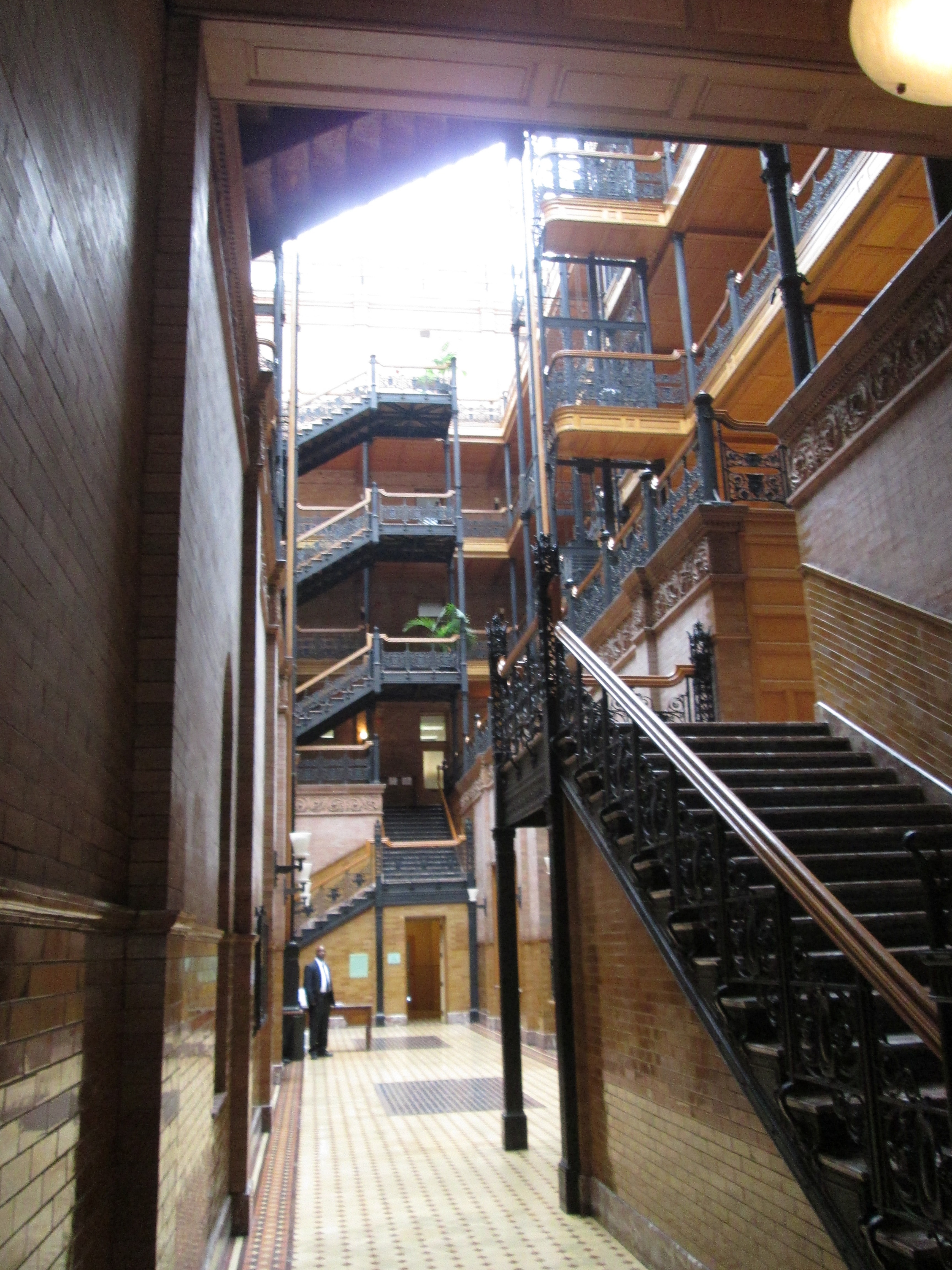
The Bradbury Building at 304 South Broadway has a list of Hollywood credits that would do any shooting location proud:

  • Blade Runner (1982) is the most famous, where it serves as J. F. Sebastian’s apartment where the replicant Pris catches up with him.
  • Shockproof (1949)
  • D.O.A. (1950)
  • I, the Jury (1953)
  • M (the American remake, 1951)
  • Good Neighbor Sam (1964)
  • Marlowe (1969)
  • Chinatown (1974)

That’s just to name a few of the movies shot there. There were also numerous made for TV movies and television programs set there.

Interior of the Bradbury Building

Interior of the Bradbury Building

Last Thursday, Martine and I stopped in to visit the 1893 office building, which is still filled with business tenants. Because of that, tourists are limited to the ground floor atrium and the first landing on the stairs leading to the upper floors. No matter: It took no time at all to see that the Bradbury is one of Los Angeles’s architectural treasures.


Grand Central Market

Lunch at L.A.’s Grand Central Market

Lunch at L.A.’s Grand Central Market

The description below is from Eve Babitz’s Eve’s Hollywood:

At the bottom of Angel’s Flight [a funicular that no longer exists], you turned right and went a block and came to Central Market. This market covered an entire city block and had entrances on two streets at either end, Hill and Broadway, I think. In Central Market there are about 50 stalls. Unlike the Farmers Market [at 3rd and Fairfax], where tourists and Angelenos get cheerfully gypped daily, Central Market sells fresh produce and fresh fish and every kind of edible that could appeal to any faction of population minority that is in L.A., cheap. It’s like Baghdad [without the improvised explosive devices (IEDs)].

That was written more than forty years ago. Now there’s a heavy Mexican food presence, which is AOK with me.


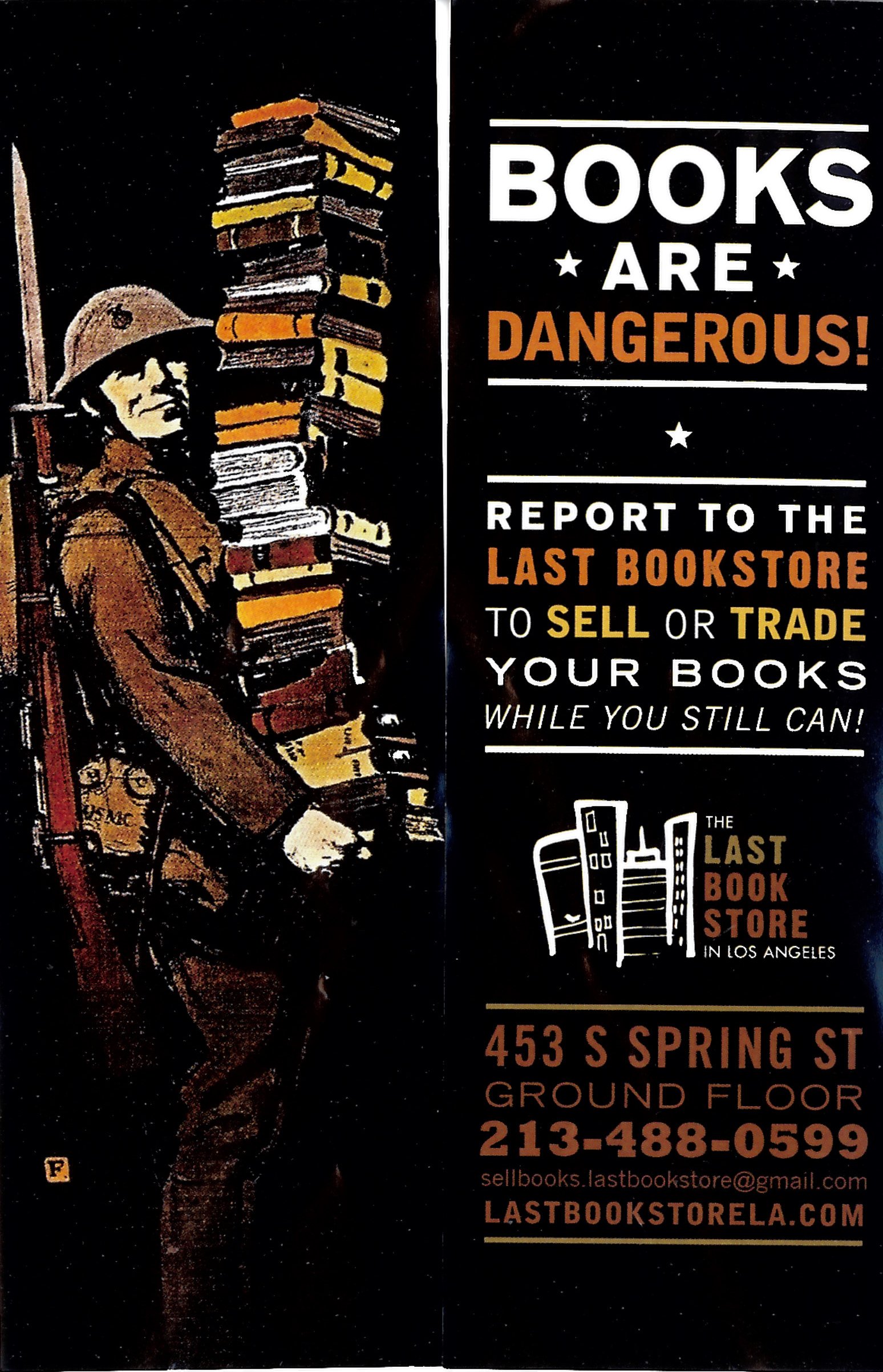
Books Are Dangerous

Bookmarks from The Last Bookstore

Bookmarks from The Last Bookstore

The wording is ominous:

Books are dangerous!
Report to The Last Bookstore
To sell or trade your books
While you still can!

Founded in 2005, The Last Bookstore claims to be California’s largest bookstore, and it may very well be. “What are you waiting for?” its website asks. “We won’t be here forever.”

This is what I call a Filboid Studge marketing campaign, based on the Saki short story entitled “Filboid Studge: The Story of a Mouse That Helped.” I’ve included a link because the story is very short and outrageously hilarious.

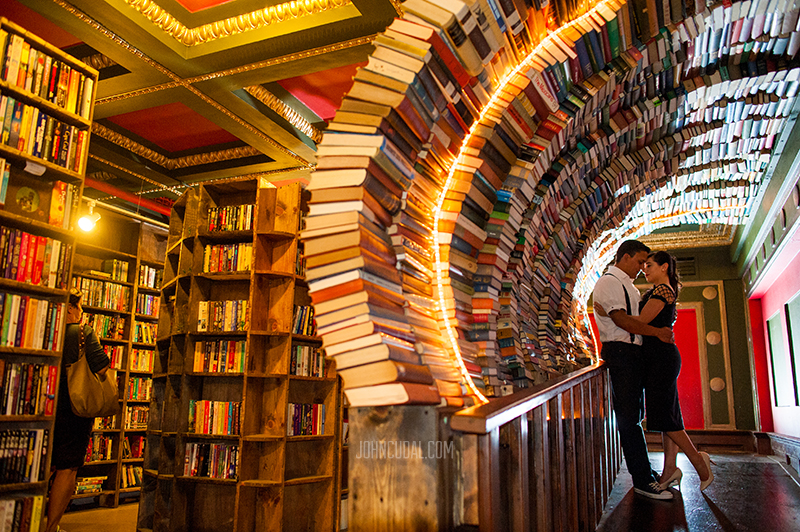
The bookstore at the corner of West 5th and Spring Streets in Downtown Los Angeles was one of the highlights of yesterday’s safari by Martine and me. I took eleven books to donate to the store and wound up buying four titles, including Eve Babitz’s Eve’s Hollywood, which I am currently reading with great excitement.

Interior of The Last Bookstore (2nd Floor)

Interior of The Last Bookstore (2nd Floor)

I have been in Los Angeles for half a century now, and I look back at my time here with all the pleasurable hours I spent in bookstores that, for the most part, are no more. There was Papa Bach’s at Santa Monica and Sawtelle; the Westwood Book Company, Butler Gabriel, Campbell’s, Brentano’s, and Borders—all in Westwood; Martindale’s in Santa Monica; Zeitlin & Verbrugge on the West Side; Acres of Books in Long Beach; Brand Books in Glendale; and Pickwick in Hollywood.

They are all gone now. People stare intently at their smart phones and pretend to communicate—but really don’t. They say they could read books on their devices, but never seem to. Perhaps the whole idea of the book is dying while a new generation willfully enslaves itself to a handheld electronic device.

So kudos to The Last Bookstore. Be defiant! Be a dinosaur! Wave your standard proudly!


O Brave New World!

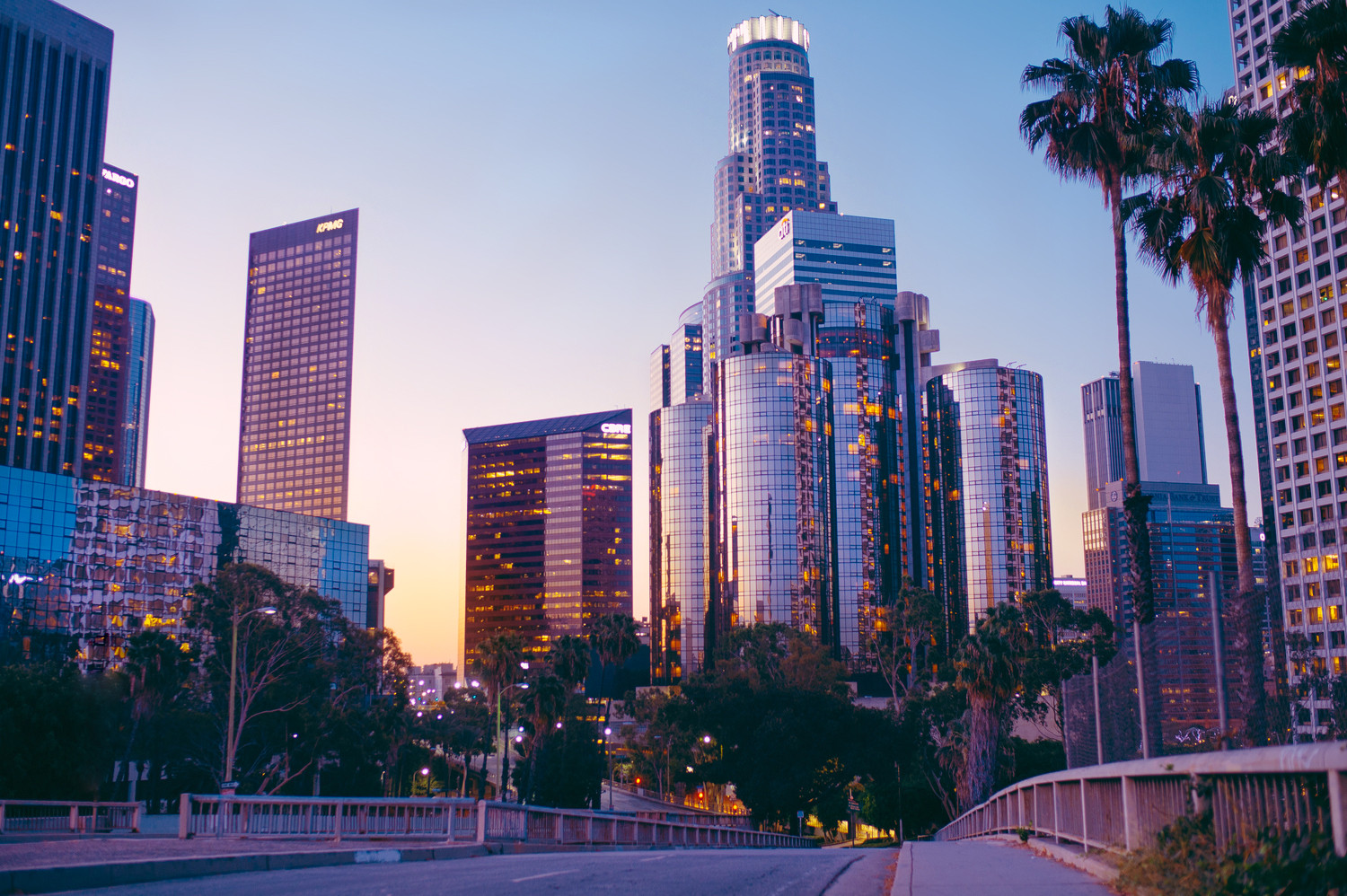
Downtown L.A. Financial District

Downtown L.A. Financial District

Don’t let anyone tell you he or she knows Los Angeles. Why? Because there’s too much for one person to know. There are broad swaths of the county which I have never seen, mostly to the Southwest, all those weird little communities along Interstate 5 like Hawaiian Gardens, Downey, Lynwood, Paramount, Bell Gardens, and Santa Fe Springs.

But thanks to today’s little safari, Martine and I know a little more about the area immediately to the Northeast of Pershing Square. We had three destinations and hit them all:

  • The tantalizingly named The Last Bookstore at West 5th & Spring with its grim motto: “What are you waiting for? We won’t be here forever.
  • The Grand Central Market at West 3rd & Broadway, which I’ve always wanted to visit but never got the chance to.
  • Across the street from the GCM is The Bradbury Building, built in 1893 and the location for scores of Hollywood movies, most notably Blade Runner (1982).

The big surprise was Union Station, where I arrived in Los Angeles on December 28, 1966, on the Santa Fe Railroad’s El Capitan train service. For decades, the station fell into disrepair and disuse as Amtrak hit the skids. But then the city decided to add a substantial suburban rail system called Metrolink, a growing network of subways and light rail lines, and a bus hub. Now its a busy place with new shops opening and crowds of people on the way to and from somewhere.

Tomorrow, the Expo Line will link Santa Monica to downtown L.A. with the nearest stop being a few blocks south of me at Bundy just south of Olympic.

It’s nice to know that, in this day and age, I can find something positive to write about without having to grit my teeth.


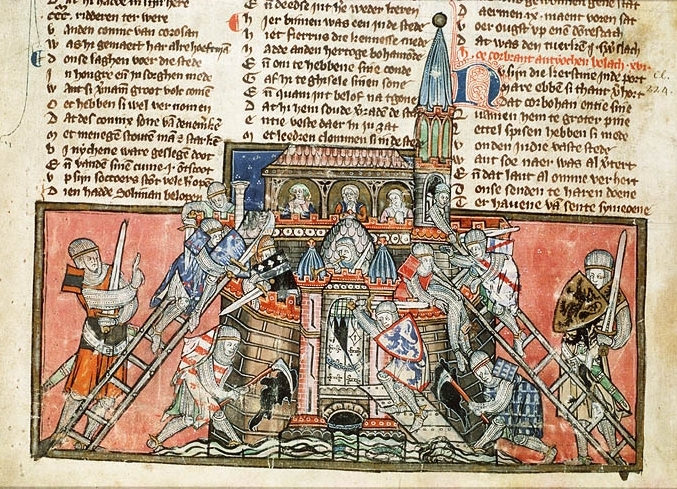
Antioch 1097-1098

One of the Most Horrendous Battles in History

One of the Most Horrendous Battles in History

It is generally known that the First Crusade attained its goal, the capture of Jerusalem. But what happened along the way left a taste of ashes in the mouths of its survivors. I have just finished reading Thomas Asbridge’s The First Crusade: A New History. What stuck in my mind was what happened along the way to Jerusalem, at Antioch.

Antioch was one of the great cities of Jerusalem, but it was under the firm control of the Turks. It was a huge city, well fortified, and incorporating portions of two mountains and a powerful citadel. The Crusaders set up for a protracted siege, and protracted it certainly was: It lasted for a year and a half. It was only when Bohemond of Taranto managed to persuade a traitor to let the Latins into the city that the first stage of the siege was ended.

Yes, there was a second stage. After the Crusaders were ensconced within the walls, they were in turn besieged by the huge army of Kerbogha, the Atabeg of Mosul (the same Mosul that is now under the control of ISIS/ISIL/Daesh). Asbridge thinks that he commanded some 35,000 fighters (some said as many as 300,000, which is unlikely), which at that time far exceeded the diminished ranks of the Crusaders.

However greedy and petty the Crusade leaders may have been, they did not lack for bravery. There was some mummery about the lance with which the Roman centurion Longinus had pierced the side of the crucified Christ being found buried in a church. The discovery of this relic raised the spirits of the besieged, such that they sallied forth from the walls of Antioch and routed the Turks, raising the second siege and clearing the way to Jerusalem.

We don’t think much about the Crusades, but the memory of them has not faded from the Muslim man in the street. Are we destined forever to be Crusaders in the Middle East?


The Crown Prince of Grade Z Films

Masque of the Red Death (1964)

The Masque of the Red Death (1964)

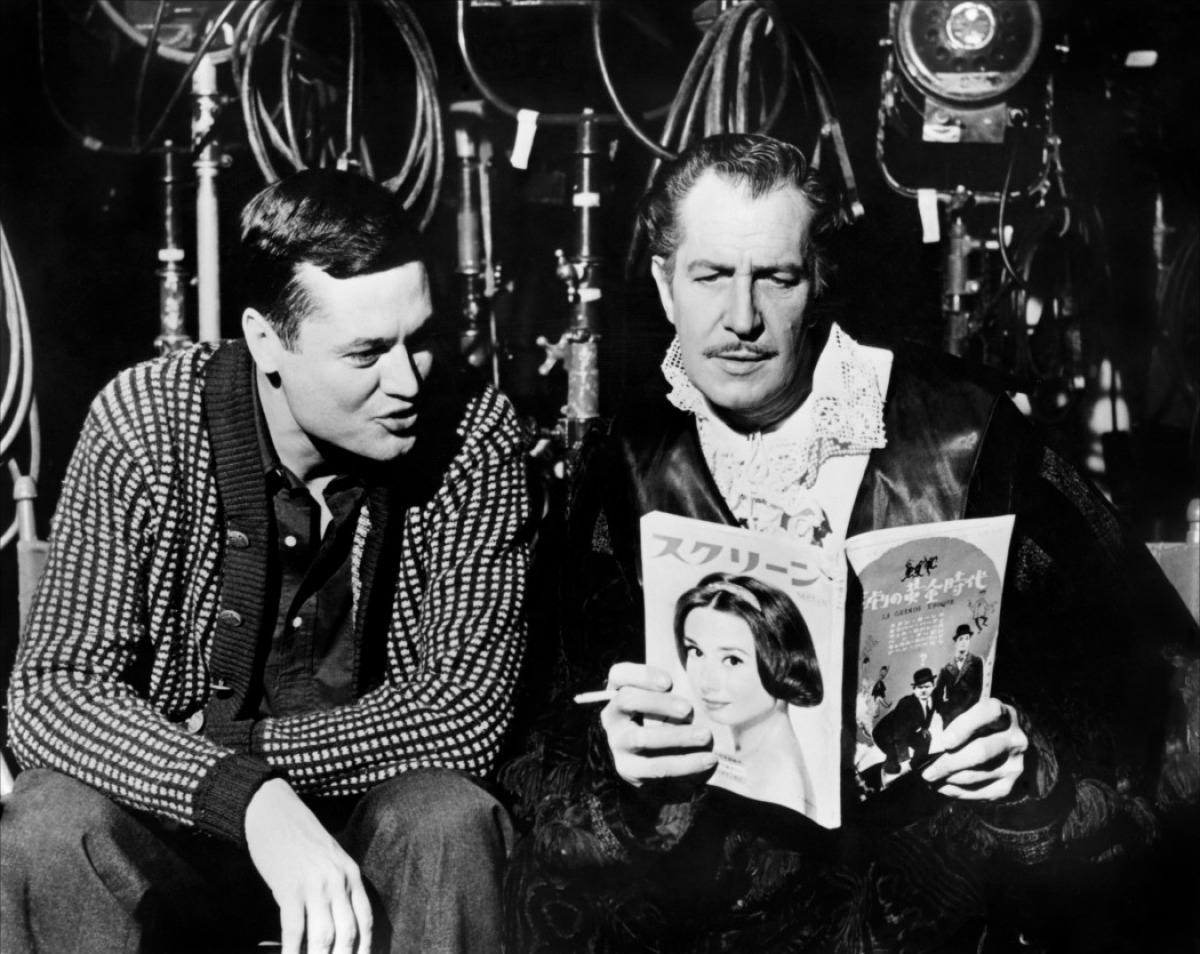
The first time I ever heard of him was when I was a student at Dartmouth. At that time (the mid 1960s) I subscribed to Films and Filming. One issue contained an article entitled “The Crown Prince of Z Films,” referring, of course, to Roger Corman. I was intrigued by what I was hearing of the cheapster director who made so many interesting films for American International Pictures. What I liked most were the Edgar Allan Poe adaptations, usually starring Vincent Price.

Perhaps my favorite was The Masque of the Red Death (1964), about the attempt by a group of dissipated nobles to escape the plague. There were others in the series, including House of Usher (1960), The Pit and the Pendulum (1961), Premature Burial (1962), The Raven (1963), and The Tomb of Ligeia (1964).

A Young Roger Corman (Left) with Vincent Price

A Young Roger Corman (Left) with Vincent Price

When I first met Martine in the late 1980s, I discovered that she was a hard-core Corman addict, liking such films as Attack of the Crab Monsters (1957) and the original The Little Shop of Horrors (1960), which was shot in under a week on a shoestring budget. There are in all about a dozen films he directed that are worth seeing and hold up well over the years. (He also made not a few clinkers, but that’s showbiz!) After he stopped directing around 1970 he continued to produce films and was responsible for some 300+ films over his half century career.

Other than the Poe features, I also enjoyed I, Mobster (1958), A Bucket of Blood (1959), The Intruder (1962) starring William Shatner, Tales of Terror (1962), X: The Man with the X-Ray Eyes (1963) starring Ray Milland, The Wild Angels (1966), The Trip (1967), and Bloody Mama (1970).

Corman introduced us to Jack Nicholson, Peter Fonda, Dennis Hopper, and Bruce Dern, to name just a few. In his films were such stars as Boris Karloff and Peter Lorre.

Perhaps I had a misspent youth, but I sure enjoyed it—and continue to do so….

Adjustments

Fountain in the East Court at the Getty Villa

Fountain in the East Court at the Getty Villa

Now that I am working only two days a week, I decided to take advantage of the extra time to see parts of Los Angeles with which I am relatively unfamiliar. Today, I discussed with my friends Michael and Julie the idea of taking the new Expo Line downtown to visit the Grand Central Market and the Bradbury Building, both of which I have never seen.

Beginning on Friday, May 20, there will be a light rail line connecting Santa Monica and West Los Angeles with downtown—for the first time in sixty years, when the old Red Line Cars were abandoned, as Roger Rabbit claimed, so that L.A. could become the traffic nightmare it is today. Connections could be made to lines that stretch to Long Beach, the San Fernando Valley, Pasadena and Azusa, and even El Segundo.

On Wednesday, I plan to visit the airport early in the morning and sign up for the TSA’s Pre Check program. For a fee of $85.00, I can fly for five years without removing my belt and shoes. No longer will I have to hold up my pants with my right hand while waddling shoeless to reclaim my personal belongings.

Afterwards, I plan to drive to a Metro information center and get cards enabling me and Martine to take a combination of light rail and bus lines virtually anywhere in the area. I’ll also pick up a day pass so that I can take an all-day light rail safari to downtown, Long Beach, and possibly Pasadena.


Ghost Train to Anywhere

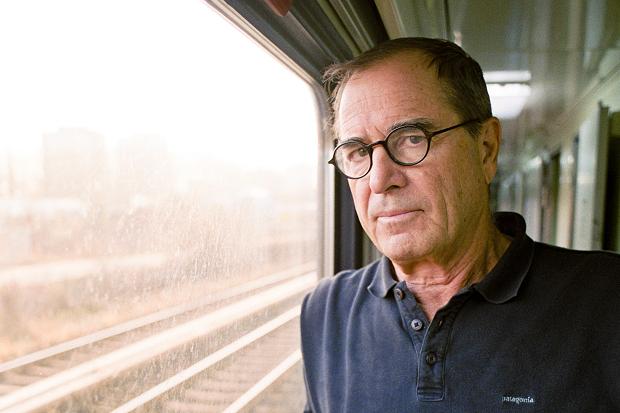
Paul Theroux on One of His Mythical Train Rides

Paul Theroux on One of His Mythical Train Rides

For almost forty years, I have been traveling around the world with Paul Theroux—starting with his train ride books The Great Railway Bazaar (1975) and The Old Patagonian Express (1979) to whatever I could get my hands on. Even when I said to myself, “This guy is altogether too snarky,” I followed his adventures with an interest bordering on zeal.

Only now do I realize he is one of the great influences on my life. It was not until November 1975 that I began my own travels (other than back and forth between Los Angeles and Cleveland). My visit to Yucatán opened my eyes and was followed by trips to Britain, Hungary, Czechoslovakia, and a lot more of Mexico. It was as if the floodgates were open, and my eyes were focussed on the world at large, and not just at whatever place I was living at the time.

I have glorious memories of my trips, even the first one to Argentina, when I broke my right shoulder in a blizzard in Tierra del Fuego. I was hooked, and have been ever since.

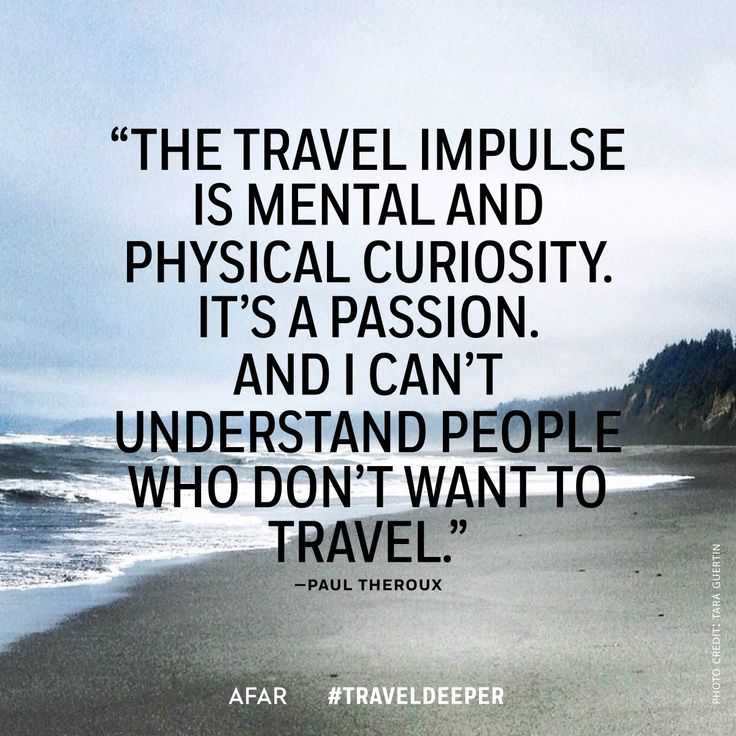
Yeah, I Second the Motion!

Yeah, I Second the Motion!

A few days ago, I finished reading Theroux’s Ghost Train to the Eastern Star (2008) in which I found the following quotes which resonated with me:

Often on a trip, I seem to be alive in a hallucinatory vision of difference, the highly colored unreality of foreignness, where I am vividly aware (as in most dreams) that I don’t belong; yet I am floating, an idle anonymous visitor among busy people, an utter stranger. When you’re strange, as the song goes, no one remembers your name.

Also, it doesn’t matter any more who’s topping the charts. Taylor Swift doesn’t mean anything to me; and if Kim Kardashian’s ass were offered to me on a silver platter, I would not too politely refuse. I have climbed the Mayan pyramids at Uxmal and Chichén Itzá. I have taken a fall at Magallanes and Rivadavia in Ushuaiah and injured myself. I have visited two Communist Eastern European countries before 1989. I have seen things most people have not seen, and it has changed me forever.

It seemed to me that this was the whole point of traveling—to arrive alone, like a specter, in a strange country at nightfall, not in the brightly lit capital but by the back door, i9n the wooded countryside, hundreds of miles from the metropolis where typically people didn’t see many strangers and were hospitable and did not instantly think of me as money on two legs.

Being a traveler is being something of a loner. I am certainly that. But I wouldn’t have it any other way. I will travel as long as I can.


Serendipity: On Dealing With Disappointment

It’s Not Always a Bad Thing

It’s Not Always a Bad Thing

The following insight comes from Tibetan Buddhist teacher Chögyam Trungpa Rinpoche in his book Cutting Through Spiritual Materialism:

We must surrender our hopes and expectations, as well as our fears, and march directly into disappointment, work with disappointment, go into it and make it our way of life…. If we can open, then we suddenly begin to see that our expectations are irrelevant compared with the reality of the situations we are facing. This automatically brings disappointment. Disappointment is the best chariot to use on the path of the dharma. It does not confirm the existence of our ego and its dreams.

This, along with hundreds of other interesting quotes from Tibetan Buddhist teachers, can be found in Reginald A. Ray’s The Pocket Tibetan Buddhism Reader, a shirt-pocket-sized paperback from Shambala.