Huggable Death

“Teddy Bear” Cholla Cactus

“Teddy Bear” Cholla Cactus

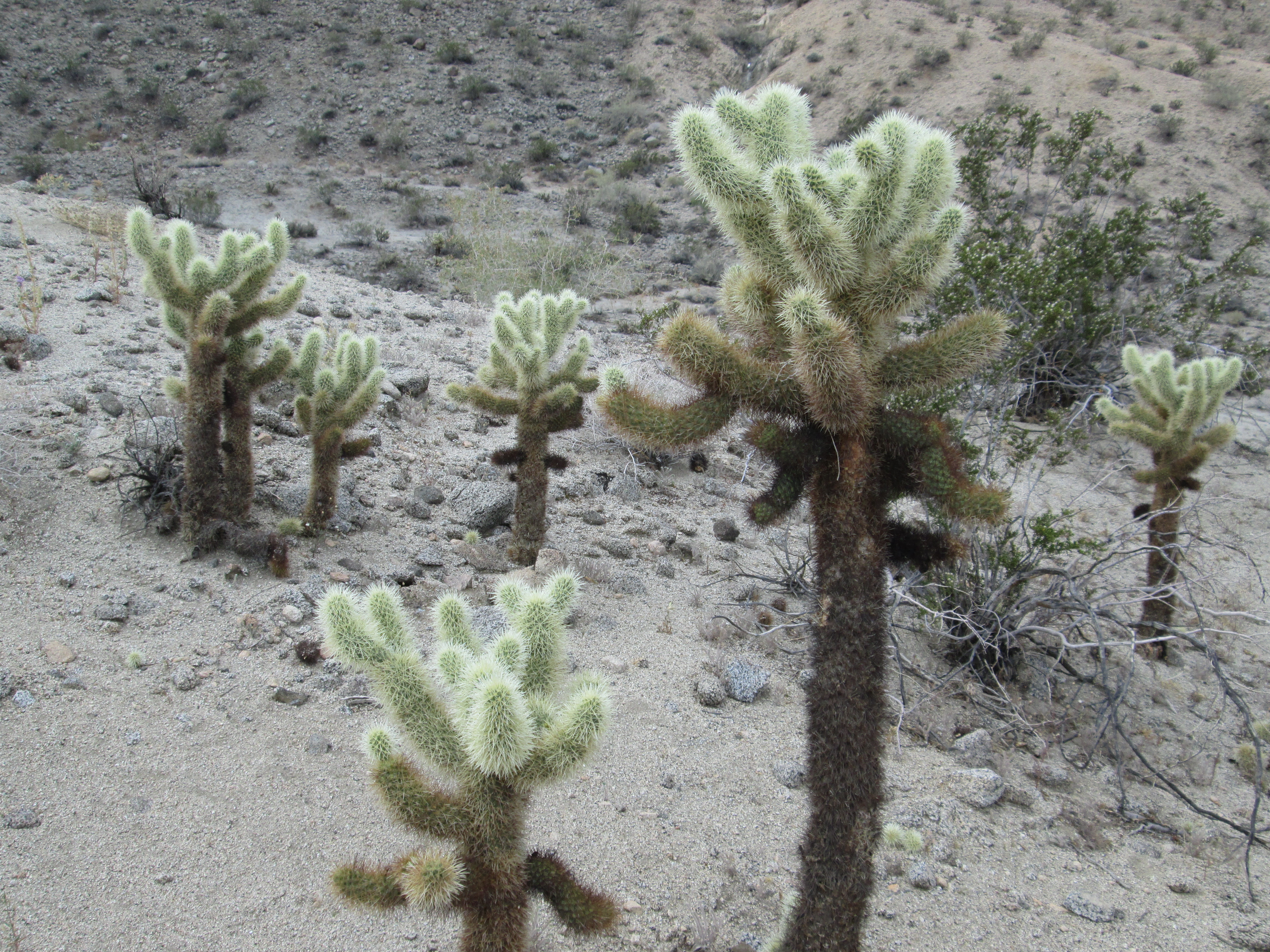
Their scientific name is Cylindropuntia, and they are beautiful but deadly. I am referring to what are commonly called cholla cactus (pronounced CHO-yah). One finds them all over the deserts of the Southwest, particularly in California, and in parts of Mexico’s Sonora desert.

On one hand, chollas can be astonishingly beautiful. Even on a cloudy day, their silvery green spines shine as if from an inner light. One almost wants to hug them. Beware: The spines are barbed. In no time at all, the desert neophyte can sport almost as many spines as the cactus.

There are many varieties of cholla: The above looks like the notorious Teddy Bear or Jumping Cholla (based on the false perception that the spines jump onto their victim even if the victim does not quite brush against them.)

They make wonderful photographic subject—just so long as you remember to keep your distance.

Back from the Desert

Me on the Randall Henderson Trail in Palm Desert

Me on the Randall Henderson Trail in Palm Desert

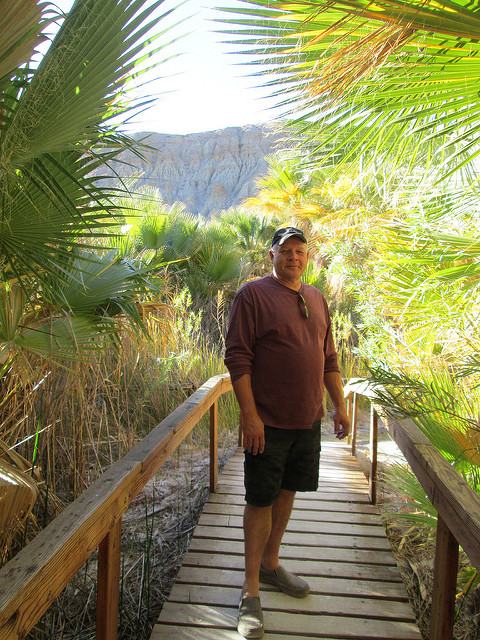
I had a great time in Palm Desert with my brother and sister-in-law. While Lori worked on Saturday, Dan and I hiked the Randall Henderson Trail off Highway 74 in Palm Desert. My brother took the picture with his cell phone.

Fortunately, my legs were in the picture. As my Dad always used to say, if you don’t include the legs in the picture, people will think that I have no legs. Well, now you know…. And my Dad, looking down on us from the heavens, will be gratified.

In my right hand, I am holding my own digital camera against the belt holster I use for carrying it.

After the hike, Dan took me to a great Mexican place on Date Palm Drive in Cathedral City. It had the best tacos el pastor that I have ever tasted. I loaded it down with pickled jalapeño chiles and a hot green salsa. The burning stopped only when I took a sip from a giant cup of horchata. If you are in the area and want to try it, look up El Tarasco at 34481 Date Palm Drive. It’s a bit of a dive, and you are not likely to run into any gringos there. Be sure to order the tacos al pastor.

A Weekend With Dan

My Brother Dan in the Thousand Palms Oasis

My Brother Dan at the Thousand Palms Oasis

I will be taking the next three days off from posting on this website. Tomorrow morning, I will pick up a rental car and start heading for Palm Desert to spend some time with my brother and sister-in-law. Among other things, I need to coordinate with Dan about our upcoming trip to Ecuador.

Unfortunately, Martine will not be coming with me—at her request. Not only does she hate the desert after spending two years working at the Twentynine Palms Marine Combat Center, but she is now on a super-strict diet regimen called FODMAP.  That’s short for Fermentable Oligo-Di-Monosaccharides and Polyols. (You’ll need Adobe Acrobat to be able to read this file.)

Two weeks ago, she finally saw a gastroenterologist at Cedars-Sinai Medical Center and was told to avoid onions, garlic, and virtually all foods that have vowels in their names. She has done a fair job of adhering to it, and she has been free of abdominal pain and irritable bowel syndrome (IBS) during that time. I wish her luck, and I very much want one day to travel with her again.

If I have the time, I hope to have some new desert photos to share with you.


How To Explain a Disaster

Why Can’t Our News Media Do Such a Good Job?

Why Can’t Our News Media Do Such a Good Job?

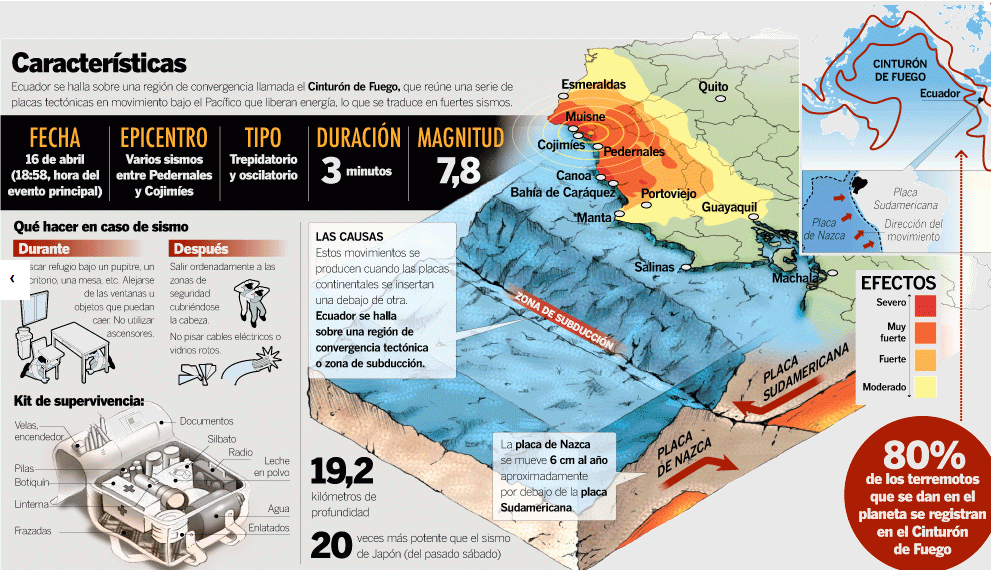
At regular intervals I read the Ecuador Times website for news of my next vacation destination. Their English is execrable (“Weekly addresses will continue to be broadcast despite President Correa’s offering”), but they have access to some graphic genius who can, in a small space, explain something as complicated as the 7.8 earthquake that hit the Manabi region of that country.

Even though the above illustration is in Spanish, it is 99% clear to me. It even describes a family earthquake kit and what measures to take when the earth begins to shake.

I could only wish the Los Angeles Times would hire their graphic artist so that maybe I will be able to understand why people would vote for Donald Trump and why the culprits of the 2008 Recession are not in prison.

The Highest Peak in the World

No, It’s Not Mount Everest

No, It’s Not Mount Everest

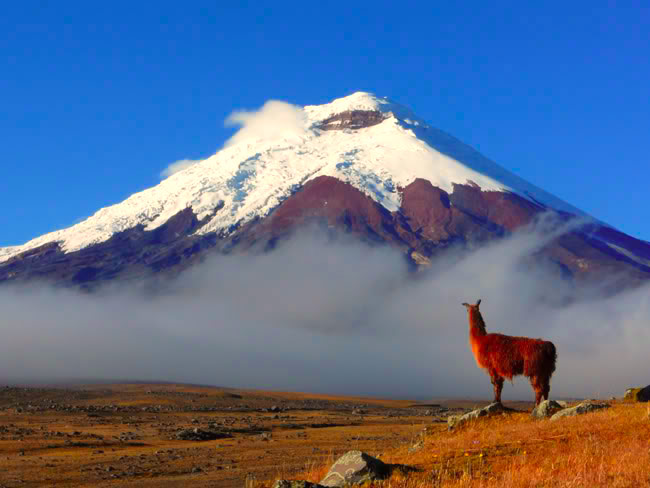
There are some thirty-six mountain peaks in the Andes alone whose altitude is greater than Ecuador’s Mount Chimborazo. Yet, Chimborazo is demonstrably the highest peak in the world. It all depends on how you measure it.

If the earth were perfectly round, there is no question that Mount Everest takes the prize. But the earth, far from being perfectly round, is an oblate ellipsoid.  Around the equator, there is a bulge that is significant enough that—if you measure altitude from the center of the earth rather than sea level—Chimborazo is taller.

According to Ken Jennings of Condé-Nast Traveler:

This bulge isn’t huge—a deviation of about one part in 300 from a perfect sphere—but it’s enough to mess with cartography. Chimborazo tops out at 20,702 feet, almost two miles lower than Everest. But that’s only compared to sea level. If we take the equatorial bulge into account—in other words, if we measure what peak is farthest from the center of the Earth—Chimborazo sticks more than 7,000 feet farther into space than any of the Himalayas do, since they’re located thousands of miles north of the Equator. So, to quote Obi-Wan Kenobi, “what I told you was true—from a certain point of view.”

So if you climbed to the top of Chimborazo, you would be standing a mile and a half farther into space than the poor souls who brave the Himalayan peaks.

No, I have to plans to climb any mountain peaks. I will stand and stare in silent awe from the base of the peak, which is visible from the port of Guayaquil, ninety miles to the west.


Meeting Marcel

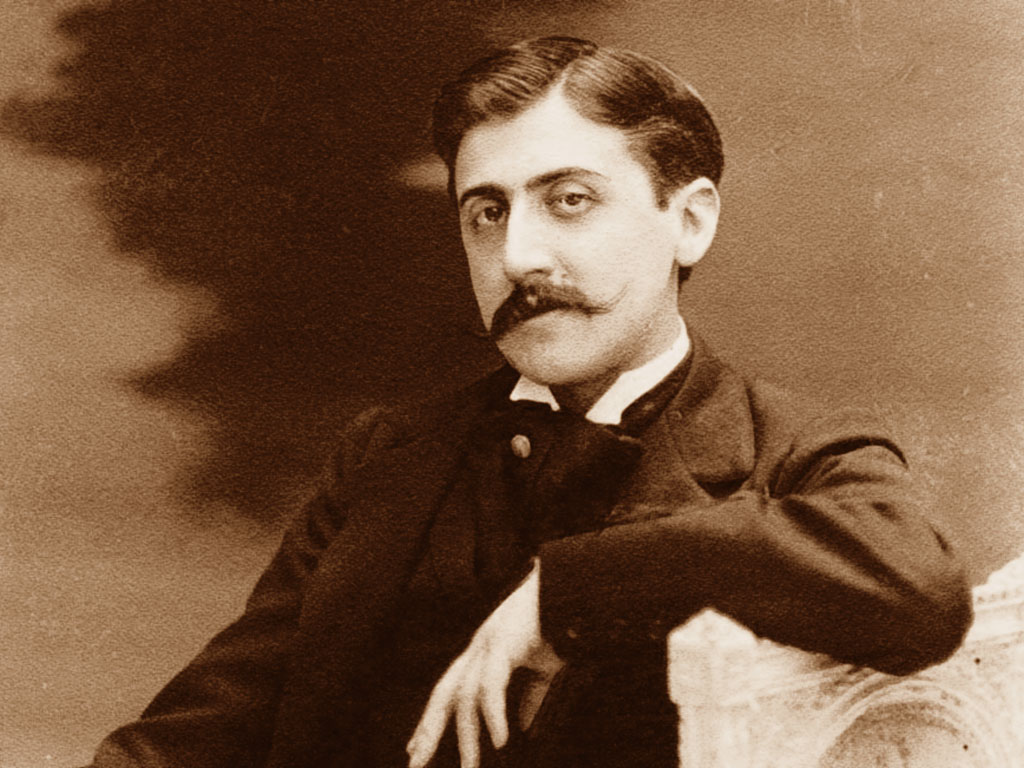
Marcel Proust

Marcel Proust

It is always interesting to read one great writer’s judgment on another. Such was François Mauriac about his meeting in February 1918 with Marcel Proust:

He seemed rather small to me, stoopshouldered in his tight-fitting jacket, his thick black hair shadowing his pupils, dilated, it appears, by drugs. Stuffed into a very high collar, his starched shirtfront bulging like a breastbone, he cast on me a nocturnal eye whose intensity intimidated me.

At the end of the great first chapter in his book Proust’s Way, Mauriac pays homage to the brilliance of his colleague:

The integral history of a young life, of its loves, its friendships, its weaknesses, its intellectual or religious crises, offers the vast proportions of the history of the ideas and customs at a certain epoch as they are reflected in a single spirit. And a long old age would not be enough to complete the account or to exhaust its drama.

As I slowly wend my way through A la recherche du temps perdu—for the third time—I can vouch for that. I will never be finished with his intense vision of the life of one particular individual and his milieu some century and a quarter ago in a distant European country.


Once When Things Were Different ….

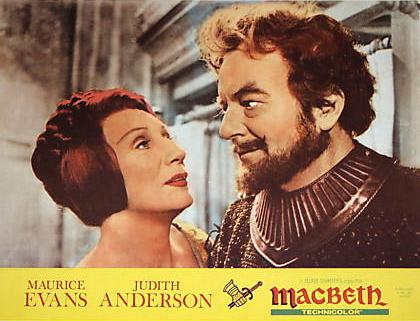
Maurice Evans as MacBeth and Judith Anderson as Lady MacBeth

Maurice Evans as Macbeth and Judith Anderson as Lady Macbeth

There was a time when there were only a few television channels, and one could see wonderful material that presupposed a literate audience. In honor of Shakespeare’s birthday on April 23, the Paley Center for Media put on screenings of six of Shakespeare’s plays on Saturday and Sunday of this weekend. It was my good fortune to see two of the plays.

The better of the two was a Hallmark Hall of Fame production of Macbeth fist aired on November 20, 1960. It was directed by George Schaefer and starred Maurice Evans as Macbeth, Judith Anderson as Lady Macbeth, Michael Hordern as Banquo, and Ian Bannen as Macduff. It was shot in technicolor on location in Scotland.

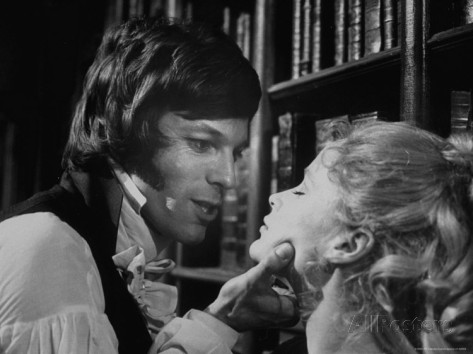
Richard Chamberlain as Hamlet and Ciaran Madden as Ophelia

Richard Chamberlain as Hamlet and Ciaran Madden as Ophelia

Also produced for the Hallmark Hall of Fame was a 1970 Hamlet directed by Peter Wood and starring Richard Chamberlain as Hamlet, Michael Redgrave as Polonius, Margaret Leighton as Gertrude, and Richard Johnson as Claudius. John Gielgud had a walk-on role as the Ghost.

Both productions were highly professional. So professional that I was stunned seeing the two great tragedies one after the other. I thought to myself, “What would it take to have something like this on cable television today?” I would say close to zilch. Perhaps if Ophelia were in the nude and we saw a slo-mo close-up of Banquo being knifed in the head, but otherwise, no.

I think we may have to assume that the audience for these two great 1960 and 1970 productions no longer exists, or else they don’t allow patients in nursing homes to watch anything quite so exciting. Not when Lawrence Welk and Matlock reruns are available.

It’s strange that I have to drive to the Paley Center in Beverly Hills to see what television can do. As for my own television, I’d rather read a good book.


A City Named After a Raven?

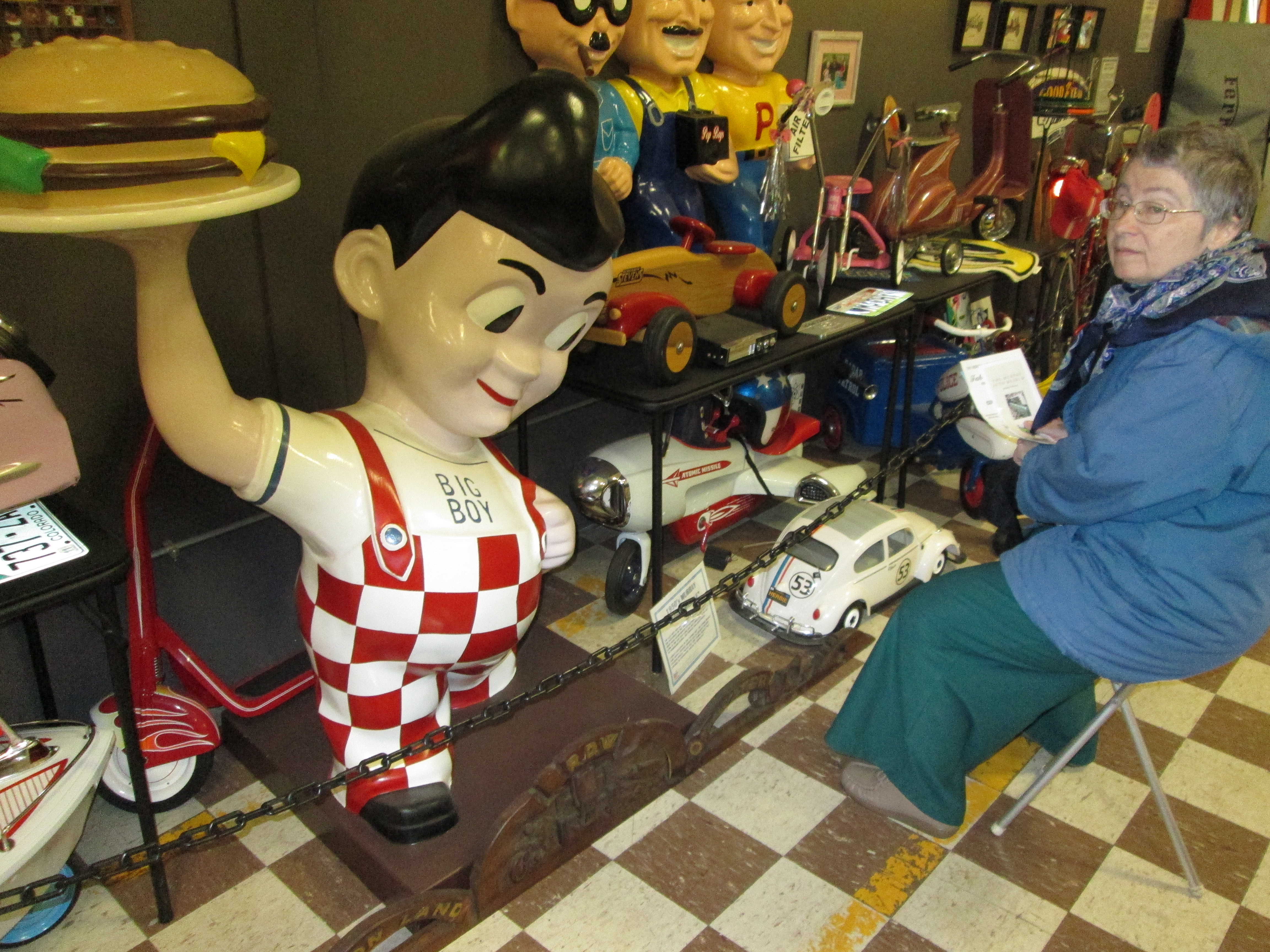
Martine Communing with Bob’s Big Boy

Martine Communing with Bob’s Big Boy

For those of us who grew up in Cleveland, Oxnard is the name of TV Host Ghoulardi’s pet raven. For residents of Southern California, it is also a nondescript agrarian city in nearby Ventura County famous for its strawberries, and home to the Murphy Auto Museum.

Now that tax season is over, Martine and I decided to take a road trip to Oxnard, driving along the coast through Malibu past Point Mugu until we reached distant Oxnard. There, we located the Murphy Auto Museum near the corner of Statham and Oxnard and spent three hours looking at the old cars, exhibits of nostalgic memorabilia, and a huge HO model railroad setup that made me green with envy. (Of course, if I had a model railroad setup in my apartment, I would have to construct tunnels consisting of books.)

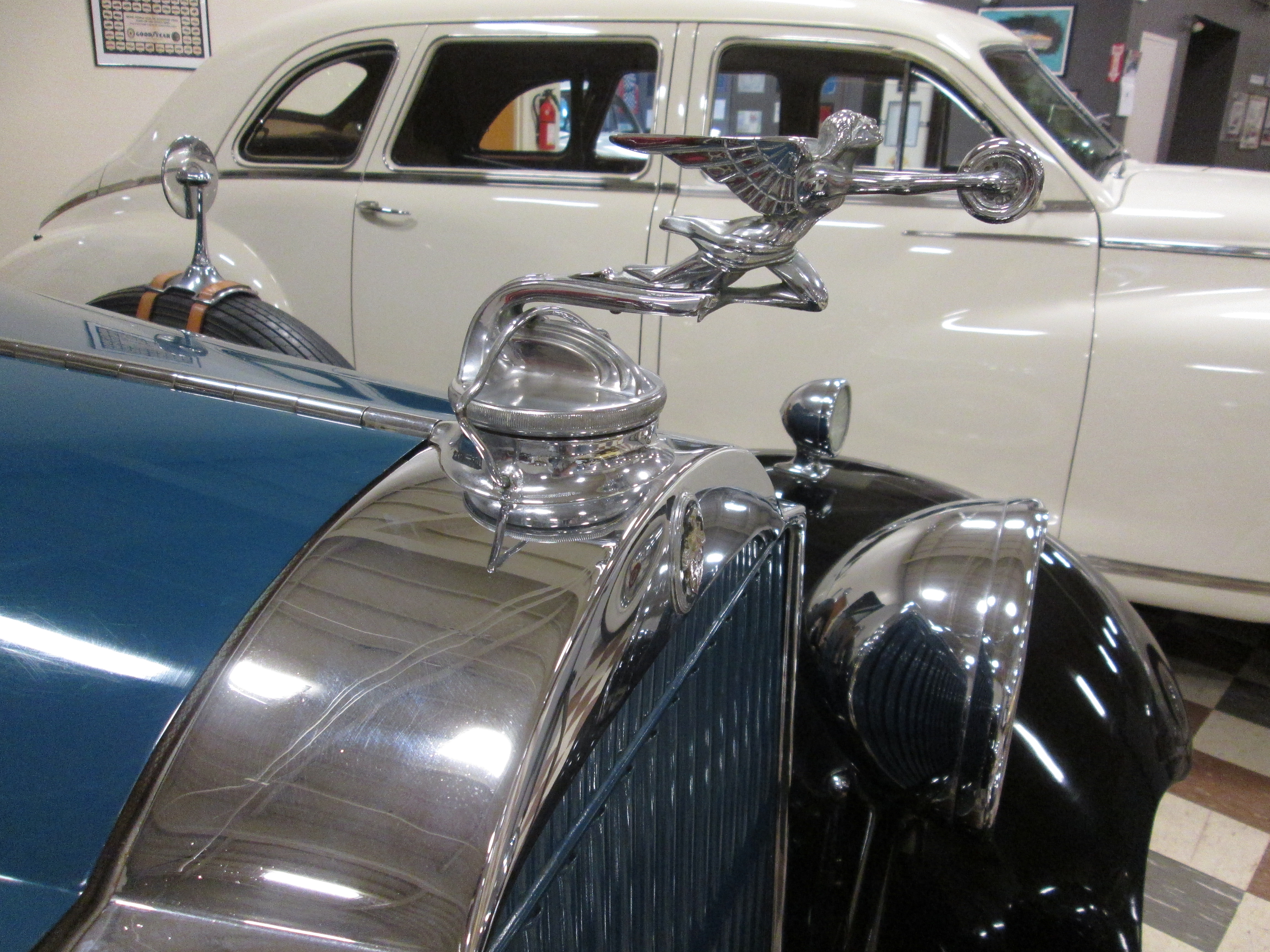
1930s Packard Hood Ornament

1930s Packard Hood Ornament

Unlike the Nethercutt Collection in Sylmar and the Petersen Automotive Museum in L.A., the Murphy has cars that are more likely to have been driven: There is no “Mint in Box” feeling about the displays. There is no plethora of Rolls Royces, Talbot Lagos, Duesenbergs, Bugattis, and Bentleys—but there are lots of great American cars from the 1920s onward, plus specialty items such as early camping trailers and an intriguing collection of Volkswagens.

My guess is that we’ll probably be back later this year. I guess we were swayed by the charms of Oxnard.

In Search of the Panama Hat

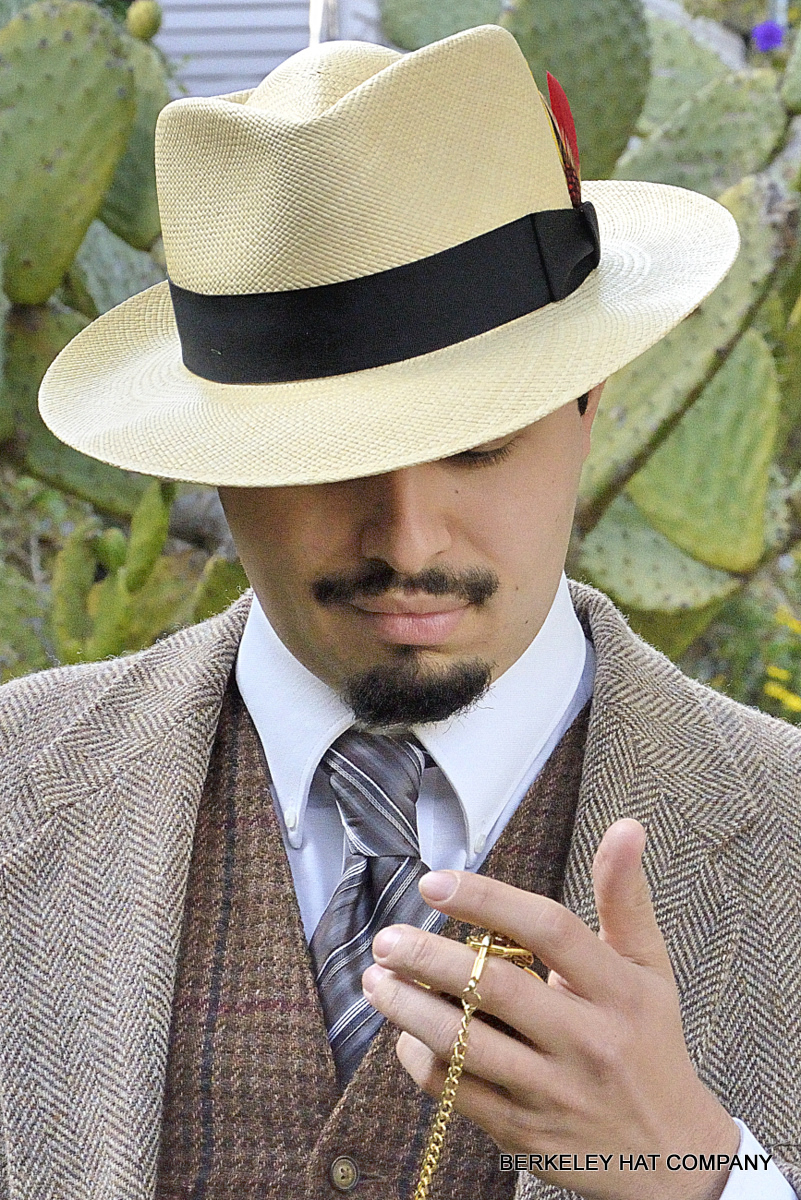
It Looks Incredibly Cool, Doesn’t It?

It Looks Incredibly Cool, Doesn’t It?

When I first traveled to Yucatán in 1975, I read in the guidebooks that the peninsula was the home of the famed panama straw hat. In fact, I bought one at the municipal market in Mérida. It was okay, but it didn’t make me look like a sex object such as the guy in the above picture.

The straw hats in Yucatán were called jipijapas. That is very curious because Jipijapa is one of the two towns in Ecuador that is the source of the paja toquilla from which Panamas are manufactured around Cuenca, which is also in Ecuador. (The other town, better known, is Montecristi.) The straw hats of Yucatán are nice, but they are made in Becal in the State of Campeche; and they don’t compare with the expensive productions of the master Ecuadorian hatmakers.

Fortunately, the Ecuadorians are no longer getting the short end of the stick—at least insofar as straw hats are concerned. The hats were called Panamas because the construction workers on the Panama Canal insisted on wearing them for their protection against the tropical sun.

You can find the whole story in Tom Miller’s excellent book, The Panama Hat Trail. He manages the not inconsiderable feat of studying an entire culture from one not particularly major export. In addition to the areas involved in the manufacture of the hats, he takes us to Quito and the Oriente (near the Amazon) so that he doesn’t leave us with a too fragmented picture of the South American nation.

Will I buy a Panama hat when I go to Ecuador? Maybe, but I know it will just make me look like Sydney Greenstreet.

One-Trick Ponies

Many Countries Are Too Small or Obscure for More Than One Great Writer

Many Countries Are Too Small or Obscure for More Than One Great Writer

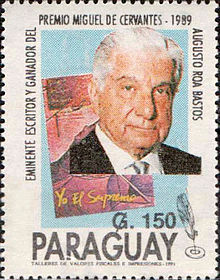
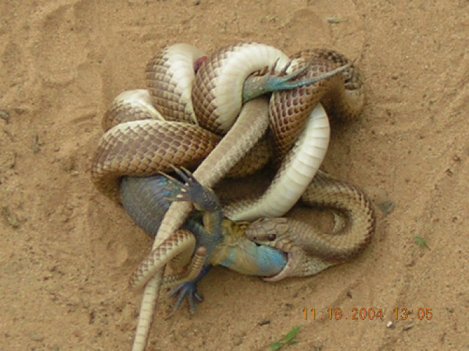
The photo above is of a snake devouring a lizard in Paraguay’s Gran Chaco, one of the most desolate areas on earth. And yet Paraguay gave birth to Augusto Roa Bastos (1917-2005), author of  The Son of Man and I the Supreme, two works that would be better known if their author were not from Paraguay.

Iceland’s claim to fame is the Nobel-Prize-winning novelist Halldór Kiljan Laxness (1902-1998), who wrote many novels that were translated into English, the most famous of which is Independent People. And yet his name is frequently mentioned by people who are carping about the Nobel Prize Committee’s penchant for obscure works. In this case, however, they were dead wrong; and the critics have some learning to do.

Talk about obscure, what about Bosnia? That little country’s literary star is Ivo Andrić  (1892-1975), whose most famous work is The Bridge on the Drina, a work which I think is necessary if you want to understand the tragic and horribly snarled history of the Balkans.

Augusto Roa Bastos

Augusto Roa Bastos

The doyen of South African literature is J. M. Coetzee (1940-Present), author of Waiting for the Barbarians and other excellent novels, plus several penetrating collections of literary essays.

Peru’s most famous author is Mario Vargas Llosa (1936-Present) who is his country’s only Nobelist, and who is also famous for having beaten up Colombia’s most famous author Gabriel García Márquez (1927-2014) in an argument over a woman’s honor. Gave him quite a shiner, in fact!

I guess the point I am trying to make is that it’s worth the effort to go farther afield than those well-traveled paths through the United States, England, and France. I made made many literary discoveries in strange places—a practice which I definitely intend to continue.

A corollary to this: There are many small countries which have rich literatures. Hungary and Portugal immediately come to mind. But there is also Australia, which I am finding is quite the treasure trove.