Seeing the Stooges at the Alex

Curly, Larry, and Moe—The Original Three Stooges

You wouldn’t think that Martine is a big fan of the Three Stooges, but she is. She has seen every one of their shorts innumerable times. For the last twelve years or so, we have trekked to Glendale’s Alex Theatre see see their annual big screen event, usually on the Saturday after Thanksgiving. Today was the 21st annual Stooges show at the Alex.

The theme this year was a title with the number three in it. Consequently, the program included:

  • “Three Little Beers” (1935)
  • “3 Dumb Clucks” (1937)
  • “Three Missing Links” (1938)
  • “Three Little Pirates” (1946)
  • “Three Hams on Rye” (1950)
  • “Three Sappy People” (1939)

I am not about to claim that watching Stooge shorts is a sophisticated intellectual experience, but it is uproariously funny. There is something about watching same with a large appreciative audience that makes it funnier still.

The Alex Theatre on Brand in Glendale

The Alex Theatre is on the National Register of Historic Places. Founded in the 1920s, it has become a venue for not only films, but occasional concerts. Two of the upcoming film programs include the Nutcracker Ballet with the Los Angeles Ballet (several dates in December) and “The Greatest Cartoons Ever” on December 26.

One of the reasons that incline Martine toward events in Glendale is that she truly loves the way Armenians prepare chicken. (The City of Glendale is the largest Armenian city outside of Asia.) Glendale is the home to Sevan Chicken at Kenilworth and Glenoaks and Elena’s Greek and Armenian Restaurant at 1000 Glendale Boulevard.

What Flows Through My Veins

No, It’s Not Coffee … Ever!

With most Americans, I would wager that what flows in their veins is either coffee or Coca-Cola. With me, it’s tea—either hot or iced. And my tea is occasionally made with tea bags, but most of the time with tea leaves which I store in bulk. Although I also drink Chinese and Japanese green teas with my Chinese or Japanese food, my tea of choice for my own cooking is Indian black tea. Darjeeling is by far the best, but the better grades can be fiendishly expensive. So I usually blend it with Ceylon or Assam depending on the time of year.

When it gets cooler, as it is now, I like to mix the Darjeeling with a “wake-me-up” Assam like Baruti or Ghalami. I -purchase the tea in bulk either from an Indian or Persian grocery store. One pound of any loose black tea will last me the better part of a year.

I have a cheap Japanese metal pot with a removable insert so that I don’t need a strainer to remove the infused tea leaves from my cup. After making a couple of cups of hot tea for breakfast, I save the rest of the tea in the pot for iced tea, adding two or three ice cubes per glass. During the summer, I usually drink iced tea all the time, including for breakfast.

My iced tea is usually unsweetened. For hot tea, I like to add mesquite honey and a squeeze of fresh lime.

Sometimes I don’t even think of myself as an American because I’m not hooked on coffee and Coke. Although I will occasionally drink a Coke when the only alternative is iced tea adulterated with passion fruit, raspberries, or kumquats. Adulterated iced tea is an abomination and to be avoided at all costs.


Chilehead

These Used To Be the Hottest Chiles on Record, But Things Have Changed

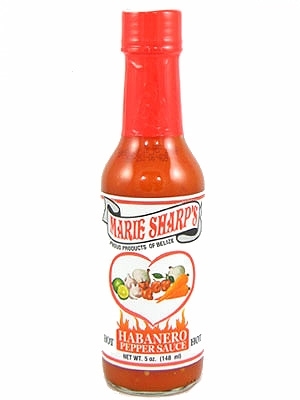
It was several years ago, when my brother was living in Paso Robles near California’s Central Coast. When I would go to visit him, we usually went shopping together at the farmers’ market at nearby Templeton. Once, one vendor selling olives stuffed with chile habaneros (see photo above) offered Dan and me the opportunity to taste one, all the while grinning as if he expected us to spit them out. We ate the proffered olives, smiled, and asked for more. The vendor looked at us as if we were from the hot side of Mercury.

My brother and I are bona fide chiliheads. It’s one of the things we enjoy most about getting together, because both of us are surrounded by people who blanch at the thought of biting into a sliver of jalapeño, and who carefully remove all pepperoncinis from their salads. We came by this through our mother, Sophie, who used to cook a Hungarian dish called lecso (pronounced LETCH-o), a kind of Hungarian adaptation of Spanish rice seasoned with hot Hungarian banana peppers. When I was growing up, I thought that lecso was altogether too spicy for me. Now I rather like it. (My father, however, did not: He was one of the digestively challenged.)

There is a means of measuring the hotness of chiles called the Scoville Heat Scale. Here is a summary of relative hotness of chiles:

Mexi-Bells, New Mexica, New Mexico, Anaheim, Big Jim, Peperonicini, Santa Fe Grande, El Paso, Cherry     1 100-1,000
Coronado, Mumex Big Jim, Sangria, Anaheim     2 1,000-1,500
Pasilla, Mulato, Ancho, Poblano, Espanola, Pulla     3 1,500-2,500
Hatch Green     4 2,000-5,000
Rocotillo     5 2,500-5,000
Yellow Wax, Serrano, Jalapeno, Guajillo, Mirasol     6 5,000-15,000
Hidalgo, Puya, Hot Wax, Chipotle     7 15,000-30,000
Chile De Arbol, Manzano     8 30,000-50,000
Santaka, Pequin, Super Chile, Santaka, Cayenne, Tobasco, Aji, Jaloro     9 50,000-100,000
Bohemian, Tabiche, Tepin, Haimen, Chiltepin, Thai, Yatsufusa    10 100,000-350,000
Red Savina Habanero, Chocolate Habanero, Indian Tezpur, Scotch Bonnet, Orange Habanero, Fatali, Devil Toung, Kumataka, Datili, Birds Eye, Jamaican Hot    11 350,000-855,000
Ghost Pepper (Bhut Jolokia, a.k.a. Naga Jolokia), Naga Viper, 7 Pot Primo, 7 Pot Douglah, Trinidad Moruga Scorpion, Carolina Reaper    12 855,000-2,200,000

I can eat chiles up to about half a million Scoville units, namely the habaneros or Scotch Bonnets. If I were to make a large pot of soup, I could put half a chopped habanero in the pot—but no more! As for the superhot chiles such as the Carolina Reaper or Ghost Chiles, they are really too hot for comfortable human consumption, even by chiliheads. I have had powdered ghost chiles on occasion, but only in m-o-d-e-r-a-t-i-o-n.


Tuna (Not the Fish)

In Spanish, Tuna Refers to the Fruit of the Prickly Pear Cactus

Although the prickly pear cactus grows in all fifty states of the United States, I believe that only in the Southwest does it bring forth an edible fruit. In Spanish, that fruit is called Tuna. It is full of seeds which are easy to spit out, and is not excessively sweet the way some fruits are. In Mexico, it is cheap and readily available. I remember once in the 1980s buying a whole bag for fifty cents, more than I could finish in a month.If you ever visit the Southwest, you should give it a try, as it is not only tasty but incredibly nutritious.

But if you go to Mexico, be careful about ordering a tuna sandwich. The word for tuna (the fish) in Spanish is atun.


American Cuisine? No Thanks!

Burger and Fries … and Fries and Burgers

As I grow older, I realize more and more how different I am from most Americans. Politically, I have re-defined myself as independent of the two major political parties, and totally uninterested in the minor ones. Racially, I no longer consider myself to be white—ever since I have become so disgusted with misbehaving whites in the Trumpf era. (As a Hungarian, I consider myself to be of Other Race, namely Finno-Ugric, the language family to which the Hungarian language belongs, originating in the borderlands between Europe and Asia.) Now I find myself disliking most American food. At those times I am forced to eat at an American restaurant, I am usually lucky if I can finish 30% of my meal.

I make an exception in the case of the foods of the American South and Southwest. And I like Italian, Latin American, Asian, African, and Middle Eastern foods. And I still love Hungarian food, if I can find any! But don’t offer me a burger and fries. Been there. Done that. Am finished with it once and for all.

That has led to some problems with Martine. Most of the time, she likes to eat stuff I don’t like, such as burgers, pot roast, fried chicken, and mashed potatoes. I will indulge her on weekends when we go out to eat, but I don’t make much of a dent in what is served to me. And no Cokes or Pepsis, please, just iced black tea without chemical additives. In the end, I make sure she gets what she wants, but she is frightened that I am becoming a vegetarian of the Indian Subcontinent variety.

During the last six weeks, Martine has had major digestive issues, so that I have concentrated on improving my vegetarian curries. And I have done so substantially, to an extent that alarms my little French girl. I suspect that we shall come to some sort of agreement in the end, even if I have to cook some foods I am not interested in tasting.

Lemons and Limes

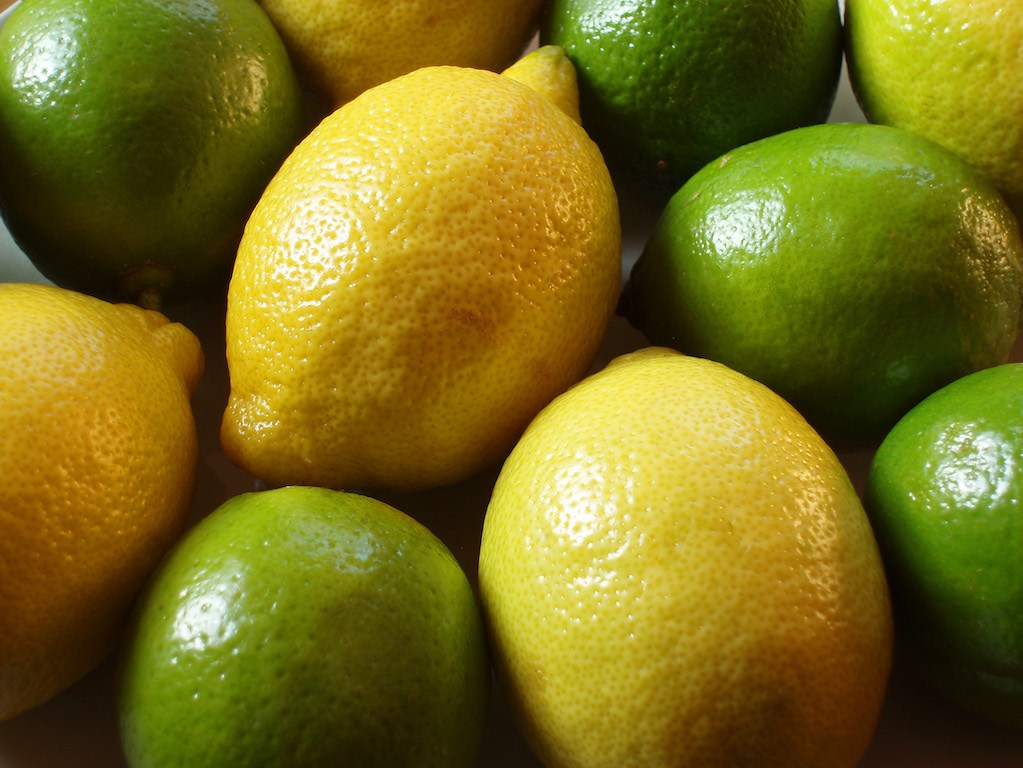
A Bowl of Lemons and Limes

This is a story that begins almost sixty years ago. As a student at Chanel High School, I occasionally took college-level courses in English at Western Reserve University during the summers. I would take two buses to East 105th Street and Euclid Avenue. At the southwest corner, there used to be a drug store that has a soda fountain. I became addicted to a menu item that they called a “fresh lime rickey,” except that this version contained sugar and had no gin, bourbon, or other liquors. It was delicious.

Some ten years plus pass. I assert my independence from my parents by taking trips to Mexico. I note that, unlike on our side of the Rio Grande, there are virtually no lemons available—but lots of limes. When one asks for limones in Mexico, one gets limes.

Another twenty years pass. During cool weather in Los Angeles, I always take my hot tea with a squeeze of lime.

I could not help noticing that Mexican fruit vendors have a little plastic device they use to squeeze out all the juice from halved limes onto the fruit salads they sell. My mind, which had been working extraordinarily sluggishly suddenly flashed a bright “Aha!” I found one of these squeezie devices at the supermarket. Limes, which run for half a dollar each at Gringo supermarkets can be obtained for a dollar a bag from a little old Chinese woman who sells them on the streets of Chinatown. And there is a Mexican market just a couple blocks from me, the Eden Mercado, that sells them for a reasonable price.

The result: I have rediscovered lime rickeys, though made slightly differently because of my diabetes. I press out the juice from a lime half into a glass, add water, ice, and artificial sweetener, and I have a delicious drink that is much better by far than lemonade.

Fish in My Life

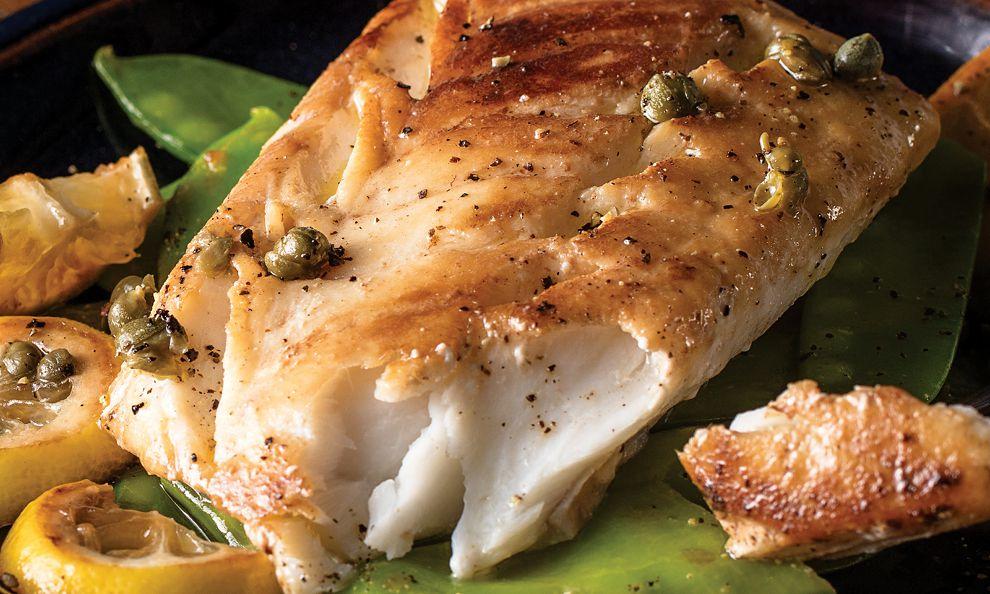
Icelandic Cod, One of My Favorites

Here I am, talking about food again. Today for lunch, Martine and I went to Captain Kidd’s Seafood Restaurant in Redondo Beach for a delicious fish feast. Martine had sautéed Alaskan cod while I had fish tacos.

When I was young, I wouldn’t eat any seafood. Don’t forget: I was raised near Lake Erie, the shallowest of the Great Lakes, which was badly polluted until recently. When I saw fish in their natural element, they were mostly floating in a state of advanced decay on the surface of the lake. The only other place I saw them was at church fish fries. I occasionally attended, under duress, but did not like the fish: I merely nibbled on the French Fries. (That was before I discovered what malt vinegar does to improve fried fish and potatoes.) We never had fish at home.

It was not until I came to California that I began to eat fish. I ascribe this to (1) being distantly removed from family pressures and (2) the influence of my co-workers when I began working in the computer software industry. And from eating cooked fish, it was only a small stutter-step to eating sushi. My sushi-eating reached its peak in the 1980s and 1990s, when it was most fashionable in Southern California. Now I find it too expensive, and I find that really good places with trained Japanese sushi chefs are now few and far between.

I even eat shellfish from time to time, but I find I have a curious allergy to shrimp and lobster caught in warm waters. The symptoms are like a sudden onset of strep throat pain lasting for up to two hours. When I go to cold-water places like Canada and Iceland, I have no trouble with either; and I positively love good lobster.

This past week, I’ve had fresh fish three times. Twice it was in the form of spicy fish fillet in black bean sauce at local Chinese restaurants. The Hong Kong Barbecue on Broadway in Chinatown makes a particularly tasty version.


Food Scraps

What Ever Happened to Good Plain Food?

I open this post by splitting a couple of hairs. First of all, this has nothing to do with Anthony Bourdain’s unfortunate demise. I am not familiar either with his work as chef or his book(s) or his television program. Secondly, I am writing this at Martine’s behest. Anyone who knows me well knows that I like ethnic food best. It is Martine whose digestive system shies away from any attempt at fanciness, which she associates with things like raw onions or strong spices. Going to an unfamiliar restaurant is something she associates with an assault on her Irritable Bowel Syndrome (IBS).

As the cook in our little household, I try my best to prepare simple dishes without too many exotic ingredients but with a good, clean taste. At times, I am tempted to add hot chilis, as I am a notorious chili-head. But I resist the temptation, or my little girl goes hungry. Restaurants are even more difficult: Martine aims for the tried and true places, like Sevan Chicken and Elena’s Greek and Armenian Restaurant in Glendale; All India Cafe, the Rosemary Grill,  and Darya Persian Restaurant in my neighborhood; Label’s Table and Canter’s Deli East of here; and The Main Course in Rancho Park. At each of those places, she will typically order the same dish every time, while I typically skip around the menu. If that one dish doesn’t satisfy, she writes the restaurant off her list as a lost cause.

Several years ago, I wrote a post entitled “Don’t Toque to Me About Chefs!” in which I lambasted the profession for trying too hard to be creative without necessarily serving good food. It almost seems as if many chefs were trying too hard to be original. There used to be a great Hungarian restaurant in the San Fernando Valley called the Hórtobágy owned by a chef called Lászlo. Apparently, the genius in the kitchen at his restaurant was an elderly lady who cooked delicious Hungarian meals that reminded me of my childhood. Then Lászlo opened another restaurant nearby called Maximilian’s at which he was the chef. Every dish was smothered with raw onions. Yeccch!


Serendipity: Are Oranges Always Orange?

What the Best Oranges Look Like

What we usually think oranges should look like are bright orange throughout. We are unlikely to accept oranges that are green with some orange on their rinds. But the best oranges I have eaten, whether in solid form or juiced, are much too ugly to sell in an American supermarket. In his book Beyond the Mexique Bay (1934), Aldous Huxley describes his own discovery along these lines when he visited Trinidad:

The oranges that grow in these tropical islands are particularly juicy and aromatic; but they never appear on any European or North American market. As with so many of us, their faces are their misfortune; they have a complexion which nature has made, not orange, but bright green, irregularly marbled with yellow. Nobody, therefore, outside their countries of origin, will buy them. For fruit, strangely enough, is sold on the strength of its appearance, not of its taste. Every grower knows that his product must appeal first to the eye and only secondarily to the palate. Immense pains have been taken to embellish the skin, but how little does anyone ever trouble to improve the flavour, of our dessert! …

But this is not the whole story. Man looks out on reality through an intervening and only partially transparent medium—his language. He sees real things overlaid by their verbal symbols. Thus, when he looks at oranges, it is as though he looked at them through a stained-glass window representing oranges. If the real oranges correspond with the beau idéal of oranges painted on the window, he feels that everything is all right. But if they don’t correspond, then he becomes suspicious; something must be wrong.


Old Man Crazy About Fish Tacos

Is It Now My Favorite Meal? Could Be….

My first acquaintance with fish tacos was in Yucatán in 1975. I tasted not only regular fish tacos, but also tacos with pan de cazón, or shark. I liked it then, but over the decades the taste has begun to grow on me. There’s something about grilled fish with raw shredded cabbage, a squeeze of lime, and even avocado slices that is capable of sending me into transports of ecstasy.

Today, Martine and I went to Gilbert’s El Indio Mexican Restaurant in Santa Monica. I had heard they had good tacos, but their fish tacos, which I tried for the first time today, were nothing less than superb. Each was wrapped in two warm corn tortillas and served with wedges of lime and pico de gallo.

In Southern California, there are fish taco chains, such as Wahoo’s, but I care not for their product. Maybe because they slather on some white sauce that tastes like sugared mayonnaise. No, I want to control the flavor of my fish taco, and do not want any weird sauces to wreck my flavoring the taco as I wish.

I have lived in Los Angeles now for upwards of half a century, and I find that I like the cuisine of Southern California, which is really Mexican. I love pork tamales with hot sauce, salads with marinated nopalitos (prickly pear cactus pads), and aguas frescas made with tunas (cactus fruit, not fish). I love hot chiles, when Martine lets me cook with them (they irritate her eyes). Freshly heated corn tortillas are still magical to me.

Although I was raised as a Hungarian—and I still like Hungarian food, when I can find it—I must have been kidnapped by Mexican bandidos when I got off the train at Union Station in 1966.

By the way, the first taco I ever ate was at the Mexican Pavilion of the New York World’s Fair in 1965.