Historical Shoe Shine

Paris 1838: Do You See the Man at the Lower Left?

Paris 1838: Do You See the Man at the Lower Left?

This is one of my favorite firsts: In 1838, Louis Daguerre photographed a man getting a shoeshine on the Boulevard du Temple. Is it strange that no one else is around? Actually, the street is crowded with vehicles and pedestrians; but because they’re all in motion, the long exposure time (ten minutes) required for the first daguerrotypes didn’t pick them up. The man at the lower left getting a shoeshine, on the other hand, is standing still. Because the shoe shiner’s arms are in motion, they don’t show up in the image, making him look armless, like a fire hydrant. Neither person has ever been identified.

Below is a close-up of the man getting his shoeshine:

The Red Arrow is Pointing at the First Man Photographed

The Red Arrow is Pointing at the First Human Being Ever To Be Photographed

See PetaPixel, my source for this posting.

Tarnmoor’s ABCs: Kennedy

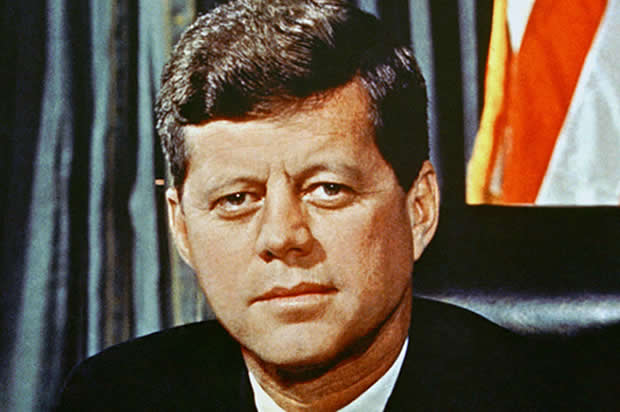
President John F. Kennedy

President John F. Kennedy

I was so very impressed by Czeslaw Milosz’s book Milosz’s ABC’s. There, in the form of a brief and alphabetically-ordered personal encyclopedia, was the story of the life of a Nobel Prize winning poet, of the people, places, and things that meant the most to him. Because his origins were so far away (Lithuania and Poland) and so long ago (1920s and 1930s), there were relatively few entries that resonated personally with me. Except it was sad to see so many fascinating people who, unknown today, died during the war under unknown circumstances.

My own ABCs consist of places I have loved (Iceland), things I feared (Earthquakes), writers I have admired (Chesterton, Balzac, and Borges); things associated with my past life (Cleveland and Dartmouth College), and things I love to do (Automobiles and Books). This blog entry is my own humble attempt to imitate a writer whom I have read on and off for thirty years without having sated my curiosity. Consequently, over the months to come, you will see a number of postings under the heading “Tarnmoor’s ABCs” that will attempt to do for my life what Milosz accomplished for his. To see my other entries under this category, hit the tag below marked “ABCs”. I don’t guarantee that I will use up all 26 letters of the alphabet, but I’ll do my best. Today, we’re at the letter “K,” for President John F. Kennedy.

I was a high school junior in a Catholic High School during the 1960 U.S. presidential election. The fact that a Catholic was daring to run again for the highest office in the land after the pasting that Al Smith had received in 1928 was wonderful to me. Richard Nixon with his dark jowls looked like a criminal; and people were saying that a Catholic president would become a mere catspaw to the Pope. (Since the pope at that time was John XXIII, that didn’t strike me as a bad thing.)

There was so much hope placed in John Kennedy: He was the best, the brightest of his generation. When he was shot in Dallas on November 22, 1963, something died within me. Lyndon Johnson was in many ways a good president, but the war in Viet Nam grew bigger, uglier, and ever more unwinnable. And then after him came the beginnings of that horrible conservative anschluss that is still affecting us today.

After John was killed, I placed my hope in Bobby Kennedy. He wasn’t, to my mind, the shining beacon of his older brother, but he was good. I remember being woken up by a phone call on June 6, 1968 by my friend Peter. He had been filming at the Ambassador Hotel in Los Angeles when Sirhan Sirhan shot Bobby. The FBI collected Peter’s film (which, in any case, didn’t capture the shooting) and never returned it. I was never a supporter of Ted Kennedy for president, though I think he was a great senator. I think we all had had too much heartbreak with the Kennedy family.

Barack Obama ran in 2008 under the motto HOPE. That was my feeling about the Kennedys. Alas, that hope was dashed on the rocks of American politics.

Curiously, John Kennedy and I were similar in one odd respect: He had Addison’s Disease, an adrenal insufficiency that is part of my own panhypopituitarism.


Indiana Jones in the Flesh

Hiram Bingham III and Indiana Jones

Hiram Bingham III and Indiana Jones

Yes, Virginia, there was a real Indiana Jones. He was the son of a Protestant missionary in Hawaii, who was in turn the son of a Protestant missionary in Hawaii. In fact, if you’ve read James Michener’s Hawaii, his grandpappy was Abner Hale. Hiram Bingham III (1875-1956) had too much of the spirit of wanderlust to be tied down to a clerical life. He was an explorer, aviator, and eventually Governor of Connecticut and U.S. Senator from Connecticut during his long and active life.

He came to my attention as the self-proclaimed discoverer of the ruins of Machu Picchu in Peru, which I hope to visit later this year. He came upon the ruins in 1911, thinking he was the first—even though they appeared on an 1874 map. No matter. Even if he was wrong, Bingham did a great job publicizing the ruins using his association with Yale University and the National Geographic Society. Among other things, he wrote an excellent book entitled Lost City of the Incas: The Story of Machu Picchu and Its Builders in 1948. (He also wrote several other books, including Inca Land: Explorations in the Highlands of Peru and The Ruins of Choqquequirau, among others.)

If he weren’t such a good writer, I might not have forgiven Bingham for being so wrong. Not only was he the first white man at Machu Picchu: He thought he had discovered Old Vilcabamba, the last hideout of the Incas as they fled the Conquistadores. In reality, the last four Inca rulers were based in the jungle at a place called Espiritu Pampa. Curiously, Bingham had been there (see photo below), but thought the place was far too tropical for his beloved Incas.

Bingham (Upper Right) and Peruvian Assistant at Espiritu Pampa (1911)

Bingham (Upper Right) and Peruvian Assistant at Espiritu Pampa (1911)

It is almost pathetic to read Bingham’s forcing the issue regarding his misidentification. He practically ordered furnishings for the rooms from Macy’s to prove his point:

One day we located the burial place of the High Priestess or Mama-cuna, the Lady Superior of the convent, the person chiefly responsible for the training of the Chosen Women. It was a very sightly location on a rock-sheltered terrace on the slopes of Machu Picchu Mountain, about a thousand feet above the highest part of the ruins. The terrace was about forty feet long above some agricultural terraces and connected with the highest by two flights of stairs. It was almost completely overhung by an immense bowlder which looked like a peaked crag of the grey granite mountain. The flat-faced projecting portion of the bowlder was at least fifty feet high. The terrace was constructed largely of rock and gravel. Sheltered from the fierce noonday heat of the sun, it offered an ideal resting place for the Mother Superior.

Yes, but what kind of tea did she drink?

I might be a little hard on the guy, with all his palaver about Chosen Women and Virgins of the Sun. Remember, the Incas had no writing, so Bingham filled his discovery from his own imagination. Mother Superior my Aunt Fanny!


A Forgotten War

Chinese Troops in the Sino-Vietnamese War of 1979

Chinese Troops in the Sino-Vietnamese War of 1979

Once the U.S. abandoned Saigon to the Viet Cong in 1975, we seem to have lost all interest in Southeast Asia. There was, however, a lot happening. The Pol Pot regime in Cambodia, which was supported by the Chinese, was engaged in genocide on a massive scale. Also, we must not forget at that time that the Sino-Soviet conflict was at its height: The Russian-Chinese border fairly bristled with guns and military units. At the time, the Hanoi government had a military alliance with the Soviet Union. When Vietnam invaded Cambodia and deposed the Khmer Rouge, China decided to punish its neighbor to the south.

On February 17, 1979, somewhere between 200,000 and 600,000 troops of the Peoples’ Liberation Army (PLA) invaded North Vietnam and occupied the all territory for approximately twenty miles south of the border. It appears that China either wanted to test the alliance with Russia or divert the crack Viet military units engaged in Cambodia—or both, or neither. A number of reasons have been adduced for this incursion, and China wasn’t owning up to its motivation for so doing. Vietnam met the attack by the 1st and 2nd military regions—essentially militia—under the command of Dam Quang Trung and Vu Lap. The number engaged of the Vietnamese forces was a fraction of the Chinese force, but it inflicted heavy casualties on the PLA, and suffered heavy casualties in return. (The numbers vary depending on whether one is following Chinese or Vietnamese statistics.)

Newsweek Cover in Feb 1979

Newsweek Cover on March 5, 1979

When I heard that, after thirty-five years of relative peace, the Chinese are once again testing the resolve of the Vietnamese by drilling an oil well off the Paracel Islands in the South China Sea, which are claimed by both nations, my antennae started to tingle. Tiny uninhabited islands are big news these days, mainly because they extend the territories claimed by adjoining land powers. Claiming a tiny rock can extend one’s territorial waters by literally thousands of square miles. And both China and Vietnam need all the oil they can get.

The Vietnamese responded by rioting and attacking Chinese within their borders, along with the businesses they ran. China has been chartering flights to evacuate its nationals from Vietnam.

Although the PLA is huge, it is largely untested in battle. The Sino-Vietnamese War of 1979 was probably the largest military conflict it faced in the last half century—and it did not fare too well faced with a smaller number of Vietnamese militia. At that time, one must remember that the Vietnamese had been at war ever since the end of World War Two and, as a people, were probably as battle-hardened as one could be.

It would be interesting to see whether China is willing, once again, to test Vietnam’s resolve.


The Man in the High Castle

Prague Castle, Seat of the Czech Government

Prague Castle, Seat of the Czech Government

No, this isn’t about the Philip K. Dick novel of that name, but about a nation’s president who came to the world’s notice after many years as a jailed dissident and as a playwright of international renown. I am referring to Václav Havel, the last president of Czechoslovakia and (after Slovakia decided to go its own way) the first president of the Czech Republic.

I have just finished reading his informal memoir, To the Castle and Back: Reflections on My Strange Life as a Fairy Tale Hero. Written after he left office in 2003, this book consists of three interleaved sequences:

  1. Reflections written mostly in 2005 during a protracted visit to the United States
  2. A series of memos to his staff dating from 1993-2003 that he found on his computer
  3. An ongoing interview with Czech writer Karel Hvizd’ala about his experiences running a country that had suddenly cast off the yoke of Communism

It also shows some of the small issues that endlessly plagued him, such as the following:

In the closet where the vacuum cleaner is kept, there also lives a bat. How to get rid of it? The lightbulb has been unscrewed so as not to wake it up and upset it.

At other times, Havel had to complain to his staff about the ugliest old telephones being in the most prominent places, about the length of the watering hose used in the gardens, and why the good silverware was not being used for state dinners.

I was curious to discover that Havel, despite being a well-known writer, was petrified whenever he had to begin writing anything. And he appears to have written all his own speeches! (And well, too.)

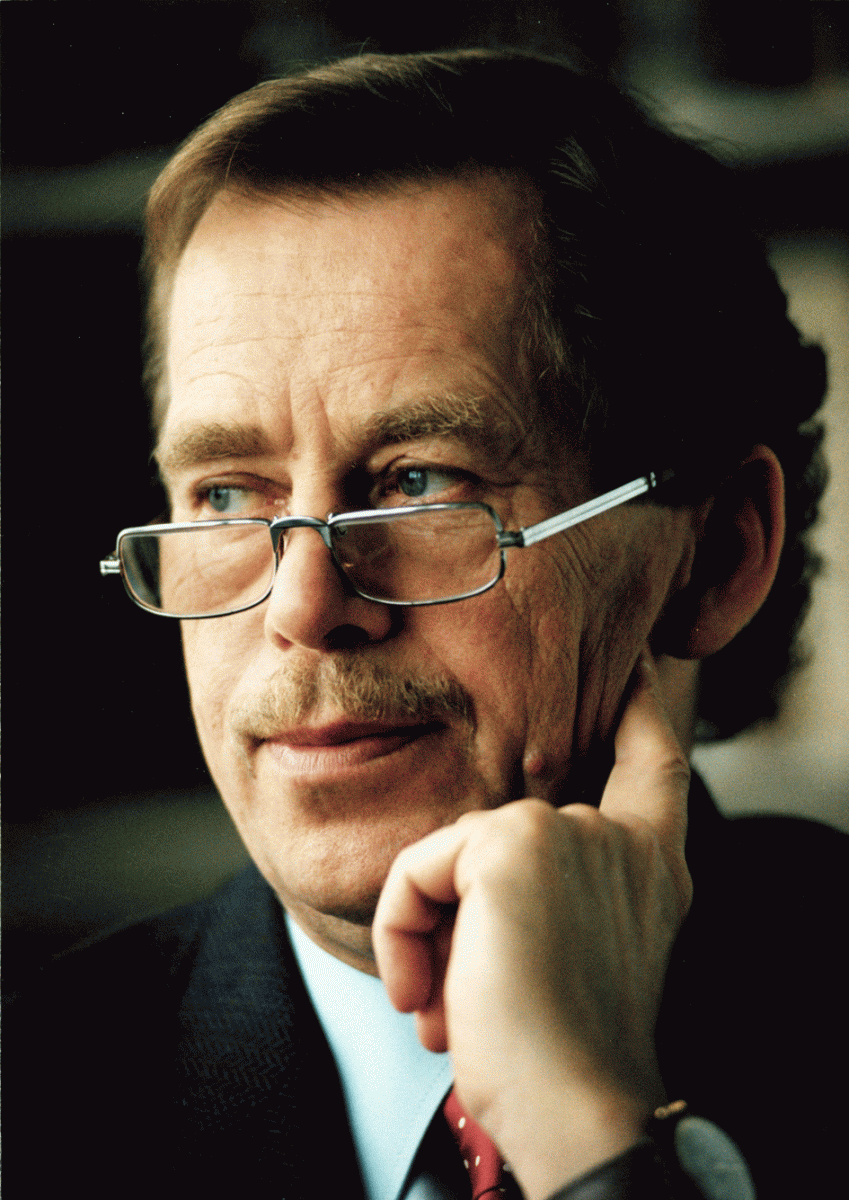
Czech President Václav Havel

Czech President Václav Havel

Particularly impressive was Havel’s answer as to Hvizd’ala as to what his credo was as the President of the Republic:

I think that the moral order stands above the legal, political, and economic orders, and that these latter orders should derive from the former, and not be techniques for getting around its imperatives. And I believe this moral order has a metaphysical anchoring in the infinite and the eternal.

Can you imagine any of our own leaders being so candid, to the point, and right at the same time?

Despite the book’s informality, I find it that To the Castle and Back gives probably the best picture of what the transition from Communism to Capitalism was like in one country, and the perils of what Havel calls “postcommunism,” in which the former Communist leaders, being still in a position of power and with all the right connections, loot the country.


An Embarrassment to the Russians

Cardinal Jószef Mindszenty

Cardinal Jószef Mindszenty

I have just finished reading Victor Sebestyen’s excellent Twelve Days: The Story of the 1956 Hungarian Revolution. As a Hungarian-American I was acutely conscious of the events of that Fall. I never forgave President Eisenhower, Secretary of State John Foster Dulles, or Secretary-General Dag Hammarskjöld of the United Nations for what I felt was their craven refusal to confront a very sticky issue. Did I say confront? They essentially ignored it—even while Radio Free Europe was broadcasting military advice and promises of American and U.S. military aid. Aid that never came. All that came was a mass invasion of Russian troops and armor that crushed the rebellion definitively.

As a kid in Cleveland in 1956, and as a student at St. Henry’s Catholic School, I had always thought that one of the heroes of the Revolution was Jószef Cardinal Mindszenty, Prince Primate, Archbishop of Esztergom, and leader of the Catholic Church in Hungary from the last year of World War II to his death in the 1970s. Poor Mindszenty had been imprisoned by the Hungarian Communist leadership until the beginning of the Revolution, in which he actually played no real part. Just days after he was released from prison, he sought asylum of the American legation in Budapest, where he stayed for the next fifteen years.

As a Catholic school kid, we were urged to sell the Diocese of Cleveland’s Catholic Universe Bulletin from door to door in our neighborhoods. According to the Universe Bulletin, Mindszenty was the hero of the Hungarian Revolution, whereas actually he played pretty much a walk-on, walk-off role. But I was just a kid and I believed all that pap.

In the end, Mindszenty proved an embarrassment to the Russians because it kept the memory of the uprising alive in peoples’ minds, even if he himself was a non-player. In the end, Pope Paul VI ordered Mindszenty to leave Hungary, and the Kádár government allowed him to go. His continued existence in the American legation made it difficult for the Catholic Church to come to any accommodation with the Kádár régime.

Mindszenty was just a minor embarrassment to the Russians. It was the Hungarian Revolution itself that proved to be a much greater embarrassment. After 1956, the Communist parties of Western Europe felt that Russia had behaved brutally. Never again were the Communist parties of France, Italy, Britain, and other countries bring any serious political influence to bear. From 1956, it was a mere 31 years before Soviet Communism itself crumbled.


Caudillismo

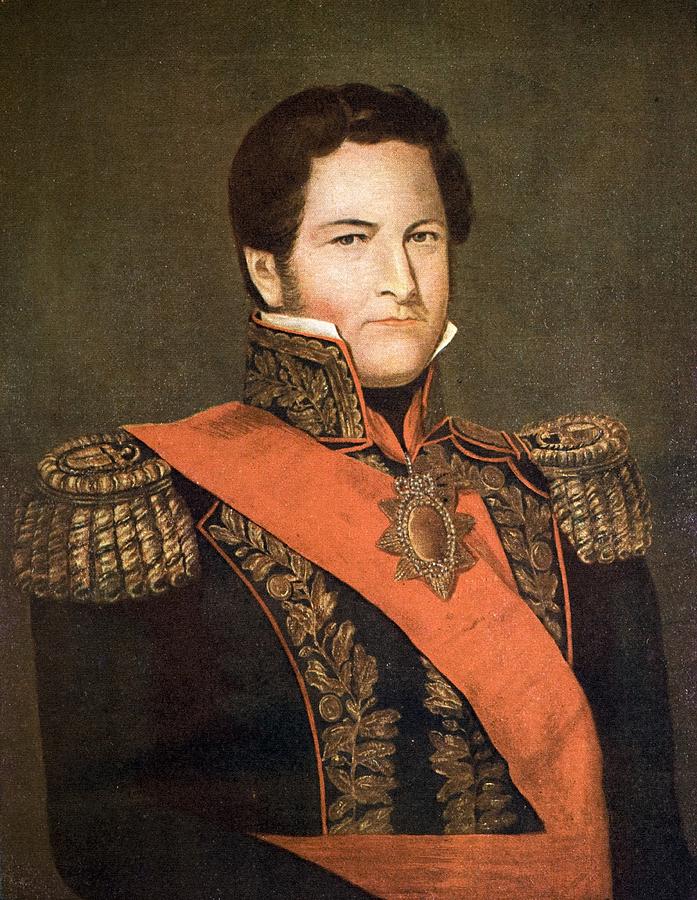
Juan Manuel de Rosas Ruled Argentina 1929 to 1952

Juan Manuel de Rosas Ruled Argentina 1929 to 1952

When we think of South America, we usually think of the military dictators, or caudillos, who seemed to rule most of the time. Why is it that the continent has had so much difficulty transitioning to a democratic form of government? I think the reason goes all the way back to the expulsion of Spain from her colonies. The Spanish forces were sent back, but the criollos were still very much in charge. They were mostly white, with rarely some Indian admixture, but they held the reins of power. Simón Bolívar, José de San Martín, and Bernardo O’Higgins were all criollos. All the big landowners, almost without exception, were criollos. Only rarely did an Indian come into power, and then usually only for a short time.

The armies of the South American countries were, until late in the Twentieth Century, pretty much in charge. They acted as a kind of Praetorian Guard to their favorites, who were usually the caudillos. God help them, however, when the favorites were no longer favored. Eric Lawlor in his excellent book In Bolivia enumerates the country’s heads of state who met violent ends:

The list of presidents and former presidents to die violently is extensive. Pedro Blanco was assassinated in 1829; Sucre in 1830; Jorge Córdova in 1861; Belzú in 1866; Melgarejo in 1871; Augustín Morales in 1872; Hilarión Daza in 1894; and José Manuel Pando in 1917. Nor did the tradition end in 1946: President René Barrientos died in a highly suspicious helicopter crash in 1969, and former President Torres was gunned down in Buenos Aires in 1972. Becoming chief of state in this country often amounts to signing one’s death warrant.

Actually, the most spectacular Bolivian President’s demise was that of Gualberto Villaroel, who was hanged by a mob on a lamp post across the street from the Presidential Palace in 1946. As Lawlor write, “A sobering sight for incumbent presidents, it [the lamp post, which still exists] may explain why so many Bolivian communities are still without streetlights.”

Bolivia might be the most spectacular bad example of misgovernment, but virtually every South American country has its own bad examples, from Juan Manuel de Rosas of Argentina, who set some type of caudillo longevity record; to General Augusto Pinochet Ugarte of Chile; to Ramón Castilla y Marquesado of Peru; to José Antonio Páez of Venezuela; to José Artigas of Uruguay. Of the independent countries, Chile and Brazil had the fewest; and probably Bolivia had the most.

There is a nice PDF file on “The Rise of the Caudillos,” which deals with the issue in outline format.


The Bolivians Attack

Hilarion Daza

Hilarion Daza

Were the consequences not so tragic, [Bolivian President Hilarion] Daza’s trek through Tarapacá’s hinterland might provoke coarse laughter. From the onset of his campaign, the general demonstrated an almost monumental incompetence: he refused to hire guides to lead his forces through the unforgiving and unknown wasteland. Rather than travel at night, and thus spare his men from the searing desert sun, Daza instead advanced during the day. (Apparently he feared, with good reason, that his troops might desert under the cover of darkness.) The Bolivian general rejected a Peruvian offer of ambulances, and he ordered his artillery to remain in Arica [to the rear]. Perhaps one of Daza’s most criminally negligent acts was that [of] his refusal to bring sufficient water with him. Worse, he permitted his men to fill their canteens with wine or raw spirits, a disastrous mistake given the fact that the nearest supply of water was a substantial distance away from Arica. Col. Narciso Tablares, alerted by a commissary official that Daza’s expedition would carry only eleven water skins, warned the general that his men might run out of water. When Daza haughtily dismissed these fears with the words “You do what you are told,” Tablares had little choice but to obey.—William F. Sater, Andean Tragedy: Fighting the War of the Pacific, 1879-1884

Bloody Wars of the Americas


Political Cartoon Regarding the Chaco War

Political Cartoon Regarding the Chaco War

This post is about three wars fought in South America between1864 and 1935—wars that most people in the United States have never heard of. Yet withal they were extremely bloody, involved transfers of large amounts of territory between the combatants, and set some of the participants back for decades.

The War of the Triple Alliance

Here’s one that’s difficult to even imagine, considering the unevenness of the sides. Arrayed on one side was Paraguay under dictator Francisco Solano López, one of the more imbecilic caudillos in South America’s bloody history. Arrayed against it was Brazil. But wait, there’s more. Argentina and Uruguay jumped in on the side of Brazil. This is also referred to as the Paraguayan War. Before López and 1.2 million Paraguayans, or 90% of the pre-war population, was killed. You can read about it in John Gimlette’s wonderful book about Paraguay called At the Tomb of the Inflatable Pig. After this war, Paraguay pretty much disappeared from the world scene—until it was time for the next war it fought.

The War of the Pacific

We move ahead to period 1879-1884. Bolivia actually had a seacoast with seaports back then, and its lands in the Atacama Desert were a rich source of nitrates. These were mined by a Chilean company called the Antofagasta Nitrate & Railway Company. The adjacent parts of Peru around Tacna and Arica were also being mined for nitre, which was at the time the number one export of Pacific South America. But then Hilarion Daza, the idiot caudillo of Bolivia, decided to levy a tax against the Chileans, and the nitre hit the fan. Chile invaded the Bolivian. Unfortunately for Peru, it had a mutual defense alliance with Bolivia, so it joined the fray.

Although the armies of Peru and Bolivia greatly outnumbered the Chileans, the Chileans were better officered. As William F. Sater wrote in his excellent Fighting the War of the Pacific, 1879-1884:

Peruvian intellectual Ricardo Palma said of the officer corps that “for every ten punctilious and worthy officers, you have ninety rogues, for whom duty and motherland are empty words. To form an army, you have to shoot at least half the military.”

In addition, there was one commissioned officer and one non-commissioned officer for every three privates. That’s not a terribly good ratio.

Anyhow, Bolivia and Peru lost the war and huge amounts of territory, and Bolivia became a landlocked country.

The Chaco War

This one is between the only two landlocked countries in South America, Bolivia and Paraguay—two losers if there ever were any. It was fought over the Gran Chaco, an area that was thought to harbor vast oil reserves. Typically, Royal Dutch Shell supported Paraguay; and Standard Oil backed Bolivia. This war is also called La Guerra de la Sed, or “The War of Thirst,” because so many of the combatants died of thirst fighting among the cacti of the arid region.

Between 1932 and 1935, the Chaco War led to lots of casualties, and a gain for Paraguay, which surprisingly won the war:

By the time a ceasefire was negotiated for noon June 10, 1935, Paraguay controlled most of the region. In the last half-hour there was a senseless shootout between the armies. This was recognized in a 1938 truce, signed in Buenos Aires in Argentina and approved in a referendum in Paraguay, by which Paraguay was awarded three-quarters of the Chaco Boreal, 20,000 square miles (52,000 sq km). Two Paraguayans and three Bolivians died for every square mile. Bolivia did get the remaining territory that bordered Paraguay’s River, Puerto Busch.

Over the succeeding 77 years, no commercial amounts of oil or gas were discovered in the portion of the Chaco awarded to Paraguay, until 26 November 2012, when Paraguayan President Federico Franco announced the discovery of oil reserves in the area of the Pirity river….  The President claimed that “in the name of the 30,000 Paraguayans who died in the war” the Chaco will become the richest oil-bearing region in South America. Oil and gas resources extend also from the Villa Montes area and the portion of the Chaco awarded to Bolivia northward along the foothills of the Andes. Today these fields give Bolivia the second largest resources of natural gas in South America after Venezuela. (Wikipedia)

Again, Gimlette’s At the Tomb of the Inflatable Pig is a good source of the only war that Paraguay could be said to have won, though it was only a booby prize for decades.

The cartoon above is taken from Poliical Cartoon Gallery by Derso and Kelen, which is well worth a look.

Revisiting: Anna Politkovskaya

Anna Politkovskaya: Read Her Books to Understand Today’s Russia

Anna Politkovskaya: Read Her Books to Understand Today’s Russia

This is an article I wrote for the old Yahoo! 360 back in 2008. Currently, I am reading Is Journalism Worth Dying For? Final Dispatches.

I have just had a harrowing experience, having finished reading Anna Politkovskaya’s A Dirty War: A Russian Reporter in Chechnya. We don’t hear much about Chechnya these days: Vladimir Putin has succeeded in muddying the waters by getting us all to regard the entire civilian population of the province as Muslim terrorists. Based on Politkovskaya’s reportage, there are actually four groups of terrorists in Chechnya:

  1. The actual terrorist bands themselves, highly mobile groups widely dispersed in the mountains of Chechnya, Ingushetia, and Daghestan.
  2. The Chechen civilian government under the Russians, which cynically exploits the suffering of the local population for financial gain.
  3. Contract soldiers, the Russian equivalent of Blackwater, which is a force on its own. They maintain pseudo-checkpoints which are simply an excuse for mayhem.
  4. The Russian Army itself, which authorizes local “cleansing” operations, consisting of robbery, torture, rape, and murder without being held responsible to anyone. Also, Russian soldiers themselves are frequently the victims of other units which have a bone to pick with them.

Running through the book are a series of stories about the Grozny Old Peoples’ Home. Most of the sick, elderly tenants are Russians, not Chechens; Russian Orthodox, not Islamic. Yet the residents are treated by all parties as the enemy. Politkovskaya (photograph above) wrote several articles explaining their plight, checking back with them every few months. They had no food or medical care, and were afraid to venture outside for fear of running afoul of armed parties of any description.

The only hospital in bombed-out Grozny had a few volunteer doctors, but no medicines. Such medications as were sent from Moscow were intercepted by the Chechen [pro-Russian] civilian government and sold on the black market.

When there were too many casualties in a Russian army operation, it was not unusual for the wounded to be taken not to a nearby military hospital, but to a more distant civilian hospital where there was no electricity, no medications, and only a skeleton staff. Whether they live or die, they are considered as deserters and therefore do not adversely affect any Russian officer’s military reputation. Many of the wounded soldiers die without identification, leading their families to spend years and a small fortune trying to find out what happened to their sons. (I wonder if this sort of thing was also going on [during the Soviet occupation of] Afghanistan.)

If you leave your apartment in Grozny, be very careful. You might find well-hidden anti-personnel mines at your doorstep or even within the apartment. This is a common cause of death throughout Chechnya.

When Politkovskaya encountered particularly obnoxious politicians or generals, she would publish their cell phone numbers in the Novaya Gazeta, for whom she worked at that time, and urge people to say to their face what they thought of them.

As one could expect, a woman like this makes lots of powerful enemies. On October 7, 2006, the crusading journalist was shot to death in the elevator on the way to her apartment in Moscow. After an “investigation” of sorts, no guilty party was found. Vladimir Putin, who most likely ordered the assassination, points the finger at some unnamed gunman from the West. After all, he says, she had no influence in Russia: Her audience were mostly liberals in Europe and America.

Politkovskaya was a singularly brave journalist and paid the ultimate price for it. Compare them to American journalists who were supinely complicit in the atrocities of the Bush-Cheney administration. No awards for courage there.