“An Appalling Record of Death and Destruction”

The Disastrous Flood Caused by the Saint Francis Dam Break in 1928

The worst disaster in recent California history is the San Francisco Earthquake of 1906. Over three thousand people lost their lives in the quake and the ensuing fires. Today, while Martine and I were visiting the Santa Clarita Valley Historical Society in Newhall, we were forcibly reminded of the second worst disaster in recent California history: the collapse of the St. Francis Dam in March 1928 and the resulting wall of water that swept some fifty-four miles until it found its way to the Pacific Ocean at Ventura. Almost five hundred people lost their lives, decimating much of the then sparsely populated northern communities of Los Angeles, as well as many in nearby Ventura County.

If you have seen the movie Chinatown (1974), you know something about William Mulholland, the engineer behind the Los Angeles Aqueduct that brought water to L.A. from the distant Owens Valley along the eastern edge of the Sierra Nevadas. Almost singlehandedly, he made Los Angeles a viable city that could sustain its amazing record of growth. It was the same man who took responsibility for the dam failure that was to end his brilliant career, referring in a speech to the disaster’s “appalling record of death and destruction.”

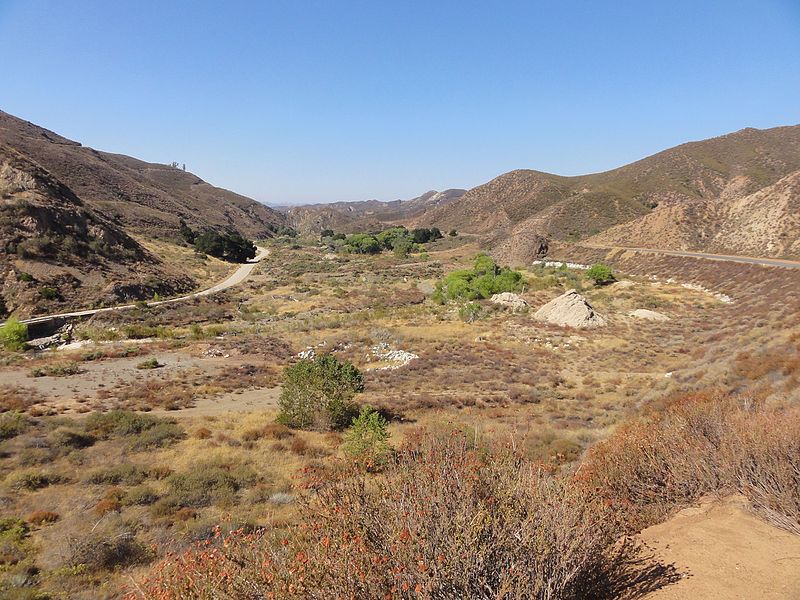
The St. Francis Dam Site in San Francisquito Canyon in 2012 (The Dam Itself No Longer Exists)

According to the Santa Clarita Valley Historical Society:

To this day, the exact number of victims remains unknown. The official death toll in August 1928 was 385, but the remains of victims continued to be discovered every few years until the mid-1950s. Many victims were swept out to sea when the flood reached the Pacific Ocean and were never recovered, while others were washed ashore, some as far south as the Mexican border. The remains of a victim were found deep underground near Newhall in 1992, and other bodies, believed to be victims of the disaster, were found in the late 1970s and 1994. The current death toll is estimated to be at least 431.

The War Between the Archaeologists

The Hieroglyphic Stairs at Copán

When I first started visiting the Maya ruins in Yucatán and Chiapas, I had picked the losing horse in the race to interpret the glyphs that were to be found at so many of the ruins. The archaeologist I followed was John Eric Sidney Thompson, better known as J. Eric S. Thompson. In the late 1970s and throughout the 1980s, he had a number of books in print that I studiously pored over, including Maya Hieroglyphic Writing, Maya Archaeologist, Maya History and Religion, and The Rise and Fall of Maya Civilization.

Essentially, Thompson believed that, beyond significant calendar dates, the glyphs didn’t mean anything. It wasn’t until after Thompson died in 1975 that such pioneers as Linda Schele, Michael D. Coe, and David Stuart suddenly discovered that the glyphs at Palenque not only had calendar dates, but also the names of rulers and a description of events being commemorated. Quite suddenly, the Maya had a history. And what worked at Palenque also worked at scores of other Maya sites in Yucatán and the jungles of the Petén.

Maya Archaeologist J. Eric S. Thompson

The problem was that Thompson was not only uninterested in languages (he never learned Mayan), but he stood like a watchdog to make sure that no one who had the right background would not endanger his conclusions.

When last I went to the Maya archaeological zone, the Maya lacked a history. Thanks to the pioneering work of two Russian researchers—Tatiana Proskouriakoff and Yuri Valentinovich Knorozov—the Mayans of the Classical Period now have not only a history, but a rich one as well.


Star Wars and Axe Wars

Fresco at Maya Site at Bonampak in Chiapas

I have just finished reading Peter D. Harrison’s The Lords of Tikal: Rulers of an Ancient Maya City. During the reign of the kalomtes, or divine kings of the Classic period of Maya history, wars were almost constant. They were of two kinds:

  • “Star Wars” are wars whose timing is mandated by the positions of the planets, especially Venus. These do not usually involve massive destruction or conquest.
  • “Axe Wars” are wars of conquest or revenge.

In all my postings on the Maya, I have neglected to note one important fact: the Maya were never an empire of diverse peoples, such as the Aztecs in Northern Mexico and the Inca in the Andes. Instead, there were powerful city/states that rose into prominence and just as often fell to other Maya city/states. Tikal in Guatemala was probably the largest; but at different times such cities as Palenque, Calakmul, Chichen Itza, and Cobá in Mexico; Copán in Honduras; Caracol in Belize; and El Mirador, Dos Pilas, and Quirigua in Guatemala were first among equals.

With so many hundreds of Maya cities spread across Southern Mexico and Central America, the number of possible wars numbers in the hundreds or even thousands. When I think on this, I realize that the Maya were probably pretty happy to get rid of their kings and concentrate on survival rather than fighting in astrologically dictated conflicts or axe wars against powerful entities like Calakmul.

Then, too, it was hard work building all those temples and pyramids when none of the people of the Americas had the use of the wheel. Stones had to be shaped and carried long distances by men. There was probably a massive sigh of relief throughout the Maya world when all this war and labor was mostly behind them.


The Thunder Horse

What Happened When Cortés Left a Horse Behind at Tayasal

In 1525, Hernan Cortés visited Tayasal in Guatemala—where some 172 years later, the last Mayan were conquered by the Spanish—he left behind a horse that became, for a while, a god in the Maya pantheon. Here is how Robert J. Sharer tells it in The Ancient Maya: Sixth Edition:

[In 1618, Fathers Bartolomé de Fuensalida and Juan de Orbita] were shown a large idol in the form of a horse, called Tizimin Chak, the “yhunder horse.” When Cortés had visited Tayasal in 1525 he had left behind a lame horse with the Kan Ek’ of that day, promising to return for it himself or to send for it. After Cortés’s departure, the Itza treated the horse as a god, offering it fowl, other meats, and flowers, but the horse soon died. The Itza later made a stone idol of the horse. When Father Orbita saw this image, the idolatry so enraged him that he smashed the image to bits. The Itza, outraged at this sacrilege, tried to kill the missionaries, but Father Fuensalida seized the occasion to preach a sermon of such eloquence that the tumult subsided and the missionaries’ lives were spared.

On the island of Flores in Lago de Petén, the site once occupied by Tayasal, there is today a stone statue of a horse commemorating the poor thunder horse.


Handsome Devil

Pedro de Alvarado (1485-1541), One of the Cruelest of Cortés’s Lieutenants

Even his enemies were impressed with him. The Indians of New Spain (Mexico and Guatemala) called him, in Nahuatl, “Toniatuh,” meaning “sun.” In Robert J. Sharer and Loa P. Traxler’s scholarly study, The Ancient Maya: Sixth Edition describes the depredations wrought by this cruelest of conquistadores:

[Fray Bartolomé] Las Casas goes on to itemize the atrocities committed by Alvarado during the conquest of what became known as Guatemala. There is no reason to reject Las Casas’s account, for Alvarado’s own letters, which provide the best history of the conquest of Guatemala, allude to the terror tactics he employed against the defenseless populace.

About his campaign in the Valley of Quetzaltenango, Alvarado writes:

We commenced to crush them and scattered them in all directions and followed them in pursuit for two leagues and a half until all of them were routed and nobody was left in front of us. Later we returned against them, and our friends [the Mexican allies] and the infantry made the greatest destruction in the world at a river. We surrounded a bare mountain where they had taken refuge, and pursued them to the top, and took all that had gone up there. That day we killed and imprisoned many people, many of whom were captains and chiefs and people of importance.

One of the victims was Tecun Uman, a K’iche commander, now considered a hero to the Maya people, and after whom a city bordering Mexico has been named.

Monument to Tecun Uman, One of Alvarado’s Victims

There was no way the Maya could withstand the force of firearms, horses (which the Maya had never before encountered), and the ruthless military intelligence of Pedro de Alvarado.

Below is a mask of Alvarado used in Highland Maya processions and ceremonies in Guatemala to commemorate the losses sustained by the Maya:

Guatemalan Dance Mask of Pedro de Alvarado Used in Maya Ceremonies


Optimates and Populares

The Roman Senate with Cicero Accusing Catiline (Seated by Himself at Right)

Over the last couple of days, I have been reading Mary Beard’s SPQR: A History of Ancient Rome. We think of the Roman Republic in very decorous terms, with all those dignified men in togas. We don’t see many representations of Roman plebeians, who were not permitted to wear the toga—let alone the thousands of slaves living in the city.

It was actually a far from decorous time, with over a hundred years of violent conflict between the optimates (wealthy upper classes) and the populares (common people). This century included the Brothers Gracchi, who were murdered; the brutal dictator Sulla; the victorious general Marius; and ended with the war between Julius Caesar and Pompey the Great. In many ways, it was reminiscent of our own times—a time when we are envisioning the end of our own Republic from the repeated assaults of the Dictator Trump.

Among the optimates, there were the senate, the consuls, the priesthood, all the Republican offices (Quaestor, Praetor, Aedile, etc.), as well as the class of equites, or knights. For most of its existence, these are the people who ruled the Republic. The populares, or plebeians, were everyone else (always excepting the slaves, who had no one to speak for them). The optimates did everything in their power to aggrandize their power at the expense of the populares. In fact, one of the reasons Julius Caesar was assassinated in the Senate in 44 BC was his policy of sharing power with the populares. The men who stabbed him were all Senators.

I am tempted to equate the optimates with Republicans, and the populares with Democrats. In fact, the situation was complicated by the inhabitants of the various provinces of the Republic—and these provinces began right outside the Rome city limits.


La Guerra de la Sed

Translation: “The War of Thirst”

Paraguay has given the world two horrendous wars over the last two centuries. Yesterday, I posted about the War of the Triple Alliance. Today, we will see one of the most horrendous wars of the Twentieth Century: The Chaco War of 1932-1935 between Paraguay and Bolivia. The Grand Chaco is a desert area comprising most of Paraguay’s territory (in an area the size of Poland) but with only 3% of the population. In its earlier war, Paraguay lost big. The Chaco War was actually fought to a draw, with heavy casualties on both sides.

The Bolivians were hampered by the fact that their supply line was so much longer, and most of their troops were from the altiplano and were not used to lowland deserts, especially truly horrible ones like the Chaco. Here there were few water holes, cockroaches that ate human hair, poisonous snakes, jaguars, giant lizards, vampire bats, and a wilderness of thorns and sharp spines. Also, Paraguayans could intercept messages in Spanish meant for the Bolivians, while the Paraguayans communicated over radio lines in Guaraní, the other official language of the country.

In his book At the Tomb of the Inflatable Pig: Travels Through Paraguay, John Gimlette wrote:

A pattern emerged. The Bolivians would be separated from their water and then the Guaranís would cut round the back to offer them dehydration or surrender. Behind these moves was a man with chilly blue eyes who played the war like chess, not theatre. General Estigarribia is often credit with genius, and later he would stand for [the] presidency. Had his propeller not come off over Altos, he might have spared Paraguay the Stronato [the nickname for the long presidency of dictator General Alfredo Stroessner] and the uncomfortable years ahead….

Bolivian morale slithered. The myth of Paraguayan invincibility took shape: the Guaranís lived on palm hearts and thin air, fought like wilcats and were everywhere.

PARAGUAY: a Stamp Printed in Paraguay shows Heroes of the Chaco War


When the war was over, the general thinking was that the war was fought for oil instead of a useless chunk of desert. In fact, there was no oil in the Chaco. The war was fought over a desolate area of no major import to either of the war’s participants.

Curupayty

The Only Battle the Paraguayans Won

Here is a trick question for you: What was the most deadly war fought in the Western Hemisphere? What, the American Civil War? Not even close. Just as we were fighting our Civil War (which I don’t think is quite over yet), the tiny country of Paraguay decided to invade Brazil. Soon, Argentina and Uruguay joined in against Paraguay, in what is called the War of the Triple Alliance. By itself, Brazil had the resources and the manpower to crush Paraguay. But the war went on from 1865 to 1870, during which 80% of the total population of the little inland country lost their lives.

The man behind the war was dictator Francisco Solano López (shown below), better known for his obesity and rotten teeth than for his military prowess. Oddly, this was a war on which there were heavy casualties on both sides. Who knew that the starving Paraguayans fought like the devil and wouldn’t just play dead. They also had one self-trained military genius, a young railway engineer named George Thompson. He designed the Paraguayan fortifications at Curupayty to take his adopted country’s weaknesses and turn them into strengths.

The Fomentor of the War

I am re-reading one of the best travel books I have ever encountered, John Gimlette’s At the Tomb of the Inflatable Pig: Travels Through Paraguay. Here is Gimlette describing the aftermath of an abortive allied attack on the positions so skillfully designed by Thompson:

The Allies took Curupayti as a terrible blow. Argentina lost any remaining enthusiasm for the war, and the greater share of the fighting now fell to the Brazilians. Allied strength was built up to 80,000, but even the Brazilians struggled to find the numbers. Brazilian rural life was fractured by violent recruiting gangs, and eventually the plantation slaves of Bahía were drummed into the ranks on the promise of freedom and land. The cost was debilitating at £14,500,000 a year, of which £2,000,000 went on maintaining the horses of the imperial cavalry. All sides were now desperate for a conclusion.

Curupayty held out for another year. At first the Allies were paralyzed with shock, and then the ranks of both armies were liquefied by cholera. López was so terrified by the disease that he forbade anyone to mention it by name, and it was only known simply as “the Chain.” It claimed fifty men a day for six months…..

When Curupayty was finally abandoned, Thompson mounted the earthworks with one last, sullen garrison. The wary Allies shelled them for three days before mustering the courage to advance. They were in for a bitter surprise.

The last defenders of Curupayty were merely scarecrows, stuffed with straw.

I highly recommend Gimlette’s book for anyone interested in learning about events that are unknown to 99.9% of Americans. When the War of the Triple Alliance finally sputtered to an end, there were ten Paraguayan women to one man. The war continued on to levels of craziness not often seen in battle:

Meanwhile, the Allies poured fire down on to the defenders. The Paraguayans responded with all they had left, often just blowing their túrútútús—or trumpets—and infuriating the Allies with their stoicism. They dug themselves fox-holes with names like the Hotel Français, de Bordeaux and Garibaldi fed their gallows humour.

“If a Paraguayan in the midst of his comrades was blown to pieces by a shell,” wrote Thompson, “they would yell with delight, thinking it a capital joke, in which they would have been joined by the victim himself had he been capable.”

Do you wonder why I want to visit Paraguay?


A Vanished Arcadia

Historical site of Encarnacion and Jesuit ruins in Paraguay, South America

The following is a lightly edited repeat of a post I made back in March 2013.

It is interesting to me that, for the first time in its history, the papacy is in the hands of a Jesuit, from South America no less. In southeastern Paraguay and in the Argentinean state of Misiones, there are numerous ruins attesting to the 17th and 18th century Jesuit missions—missions that were so powerful that they were, in effect, the government of Paraguay. If you ever saw Roland Joffe’s 1986 movie, The Mission, with Robert DeNiro, Liam Neeson, and Jeremy Irons, you have some idea of what this Jesuit government was like.

You can find out even more by reading the forgotten classic history by R. B. Cunninghame Graham entitled A Vanished Arcadia: Being Some Account of the Jesuits in Paraguay 1607 to 1767.

It even finds its way into Voltaire’s Candide, but its author being such an anticlerical cuss, he has his hero kill the Jesuit commandant of one of the missions. Yet he writes in Histoire Politique et Philosophique des Indes:

When in 1768 the missions of Paraguay left the hands of the Jesuits, they had arrived at perhaps the highest degree of civilization to which it is possible to conduct a young people, and certainly at a far superior state than that which existed in the rest of the new hemisphere. The laws were respected there, morals were pure, a happy brotherhood united every heart, all the useful arts were in a flourishing state, and even some of the more agreeable sciences: plenty was universal.

Poster for Roland Joffe’s Film The Mission (1986)

I have long thought that, if my thoughts had ever taken a turn toward the Catholic priesthood, I would have become a Jesuit. My teachers at St. Peter Chanel in Bedford, Ohio, wanted me to become one of them, a Marist. But, in the end, I became neither.

So now Pope Francis is a Jesuit from Argentina. He, I am sure, is quite aware of the history of the Jesuits in the southern cone of South America. It would be nice if he did for the Catholic Church what the Jesuits did for the Guarani in Paraguay and Argentina. Benedict XVI was a good man, but not strong enough for the task of making his faith relevant to a world that is falling away from the Church.

Serendipity: African Laughter

A Laughing Epidemic Swept Tanzania in 1961

Between 1962 and 1964, there was a laughter epidemic in Tanzania that started in one girls’ school and spread like wildfire around the country. The following is from the How Stuff Works website.

At a small girls’ boarding school in Tanganyika (now Tanzania), three students started to giggle. Starting and stopping abruptly, their fits would last anywhere from a minute or two to several hours. This “laughter” proved contagious — soon other girls were doing the same thing. No one could concentrate on their schoolwork, and restraining the laughing students proved ineffective. Six weeks later, more than half of the school’s middle and high schoolers had caught the laughing bug.

School officials shut the place down. But when they reopened it two months later, the laughing plague immediately restarted and the school was once again shuttered. The laughing epidemic spread to other schools and lasted somewhere between six and 18 months.

So what caused this? “The bad news is, it had nothing to do with humor. There was no merriment. Laughter was one of many symptoms,” said linguist Christian F. Hempelmann, who researched the incident. He noted that the students also had fits of pain, fainting, crying and rashes.

He blamed excessive stress for the uncontrollable giggles. The boarding school where the laughter began was a very strict one. Plus the country had just gained its independence, and people were anxious about the future. With all of the terrorism in the world today, experts say another laughing epidemic wouldn’t be surprising.

Check out this video regarding the incident: