Itchy Eyelids of Death

It’s A Horrible Feeling!

It’s A Horrible Feeling!

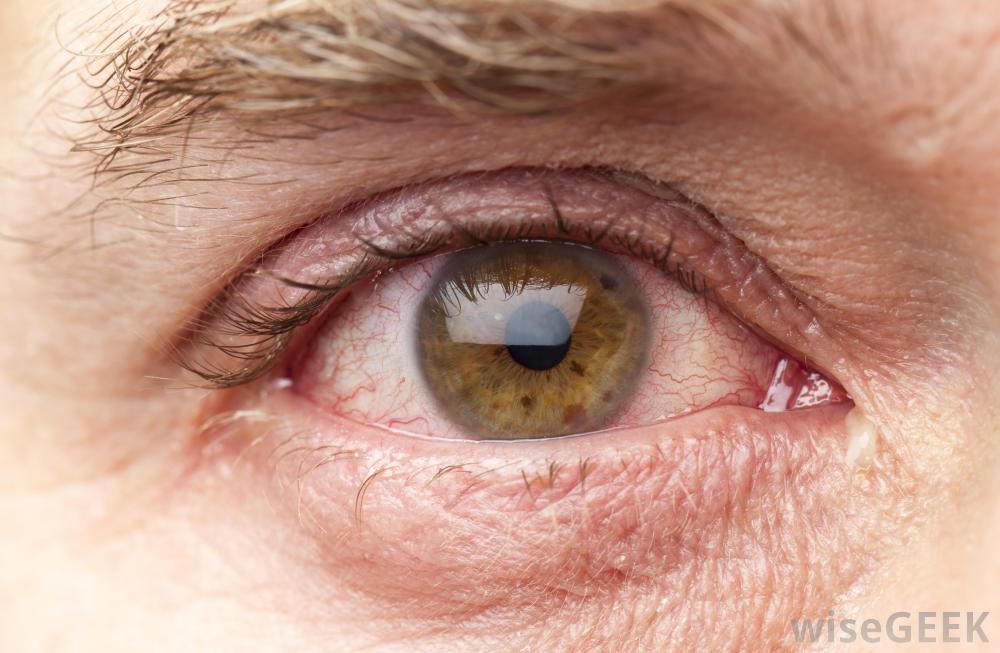
Every once in a while, I get this allergic condition where my eyelids get inflamed and itch like the devil. The temptation is to rub them. That’s works for a few nanoseconds, but the itching and tearing come back with redoubled force. The only thing that seems to work is a prescription drug called Pred-Forte, which is a steroid that my ophthalmologist is reluctant to prescribe to me because … because … well I practically live on steroids.

I have no pituitary gland (I’ll tell you more about that some day), and therefore I must take all my hormones—which are normally controlled by the pituitary—externally. And, well, taking too many steroids long term has numerous baleful effects, some of which I’ve already experienced: osteoarthritis leading to a hip replacement, cataracts, and thinning of the skin—to name just a few.

Today, I went to the free weekly Mindful Meditation session at the Los Angeles Central Library. What I concentrated on was my eyelids. That worked for a while, then on the way back from downtown, in a moment of forgetfulness, I rubbed my eyes. Damn!

During these sieges, I wake up with my eyelids stuck together; and I have to pry them open with the help of my fingers.

This condition has a lot to do with the frequent atmospheric changes caused by the series of rainstorms we have had over the past few months. It won’t last forever, but while it lasts it will be a major annoyance.


“A Hundred Windows Opened on All Sides of the Head”

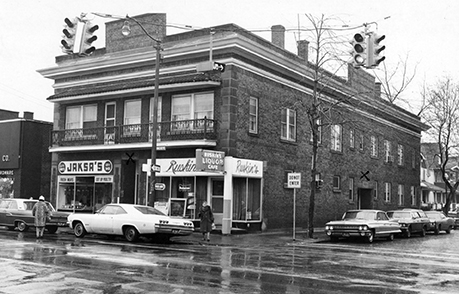
Old Building on Buckeye Road

Old Building on Buckeye Road

This morning, I started reading G. K. Chesterton’s Autobiography, and it set me to thinking. I thought it would be fun to put all my earliest memories in one place, lest I forget. Chesterton had it right:

What was wonderful about childhood is that anything in it was a wonder. It was not merely a world full of miracles; it was a miraculous world. What gives me this shock is almost anything I really recall; not the things I should think most worth recalling. This is where it differs from the other great thrill of the past, all that is connected with first love and the romantic passion; for that, though equally poignant, comes always to a point; and it is narrow like a rapier piercing the heart, whereas the other was more like a hundred windows opened on all sides of the head.

I was born in a house on East 177th Street, a few houses north of Glendale. Because we moved shortly after I was born, all my earliest memories are tied up with 2814 East 120th Street, just off Buckeye Road. We lived on the second floor of a duplex. I remember lying in my crib. One of my first memories was of an argument between my mother and father about money. Both were working, my father at Lees Bradner & Company, my mother at the Cleveland Woolen Mill.

Like most toddlers, I was fairly rambunctious. Mrs. Nebehaj kept shouting from her first floor rooms, “Missus, the ceiling is coming down!”

From a very early age, I was cared for by my great grandmother Lidia and great grandfather Daniel. As Daniel died when I was one, I do not remember him. I was always told he wanted to live long enough for me to buy pipe tobacco for him at the grocery store on Buckeye Road. It was not to be.

My oldest friend was Joyce. Now for the sex: I was fixated on the crook of her knees, which to me was smooth and lovely. There wasn’t too much I could do about it, but I remembered it nonetheless. Once, when I was playing with her, I lost control of my bladder, and the pee ran down my leg. My landlord saw me and asked why I was dripping. I said I stepped in a bucket of water, and it was running down my leg. Was that my first lie?

On Buckeye Road, near East 120th, there was a ramshackle old building that sold furnace pipes and such like. I remember playing in the small yard that fronted the building. There were a number of tree stumps on which I could play with my toy soldiers.

Of course, everybody spoke Hungarian. So did I. It was almost a 100% Hungarian neighborhood, and we didn’t have a television set until 1949. Broadcasting would begin around 4:00 PM with the Kate Smith Hour, followed by the Howdy Doody Show, which I watched religiously.

Once, I remember going with my father to pick up Mom at the Woolen Mill, and there was a big fire in a nearby building.

My life changed when I attended kindergarten beginning in January 1950. Trouble emerged at once when my teacher, Mrs. Idell, refused to understand my Hungarian. My friend András, who was similarly afflicted, and I began kicking her shins. Also, my brother was born in April 1951. It was time to move, and that signaled a new epoch in my life.

A Hopeful Holiday

Christmas Decorations from the Grier-Musser Museum

Christmas Decorations from the Grier-Musser Museum

Here I sit with my fingers crossed, afraid to check the news and seeing what our new elected Fuehrer has to astonish and dismay the world. I could really work myself into a state about this turkey, but I have decided to concentrate this Christmas on the people I love. There is nothing I can do to buck the Electoral College majority for the Cheetoh-headed moron, so I will leave him to the scorn of history. (That will not prevent me from opposing him in a more substantial way if the opportunity arises.)

What is Christmas really all about? I think the operative word is “love.” According to John 3:16 in the King James Bible, “For God so loved the world, that he gave his only begotten Son, that whosoever believeth in him should not perish, but have everlasting life.” Christian doctrine says it was all an act of forgiveness to cancel out the “original sin” of Adam and Eve for eating the fruit of the forbidden tree of knowledge. God the Son incarnated as a human being and died a horrible death by crucifixion just so we’d all stand a chance. In this light, Christmas is a feast of divine love.

But not everyone believes this, and I myself tend to cherry-pick Christianity, adopting what I like and brushing the rest aside. I like the idea of giving gifts to the people who mean the most to me; and I like using this time of year to cement my closest relationships, whether with Martine, my family, or my closest friends.

Unfortunately, Christmas has been weighted down with a whole lot of paraphernalia. There are stores open twenty-four hours a day for last-minute shopping. (My shopping is all done—and I would never visit a retail store at this time of year because of the crowds.) I have no twinkling lights about my apartment: I don’t even have a Christmas tree or a wreath on the door. I don’t wear any ugly Christmas sweaters. Unlike most male Americans, I don’t watch any bowl games—or, in fact, any sports at all. Instead, I look forward to a nice Christmas dinner and an exchange of gifts with my oldest friends. Martine and I will watch the 1951 Alastair Sim version of The Christmas Carol, and maybe even A Christmas Story (1983) if I can. And I will read one of Charles Dickens’s lesser-known holiday works, such as “The Chimes” or “The Cricket on the Hearth.”

Use the real meaning of Christmas to become stronger in your emotions. Perhaps what the 2016 election really means is for us to look after ourselves, because most assuredly no one will look after us.

Disorder and Early Sorrow

Formerly St. Henry, Now Bishop Lyke School

Formerly St. Henry School, Now Bishop Lyke School

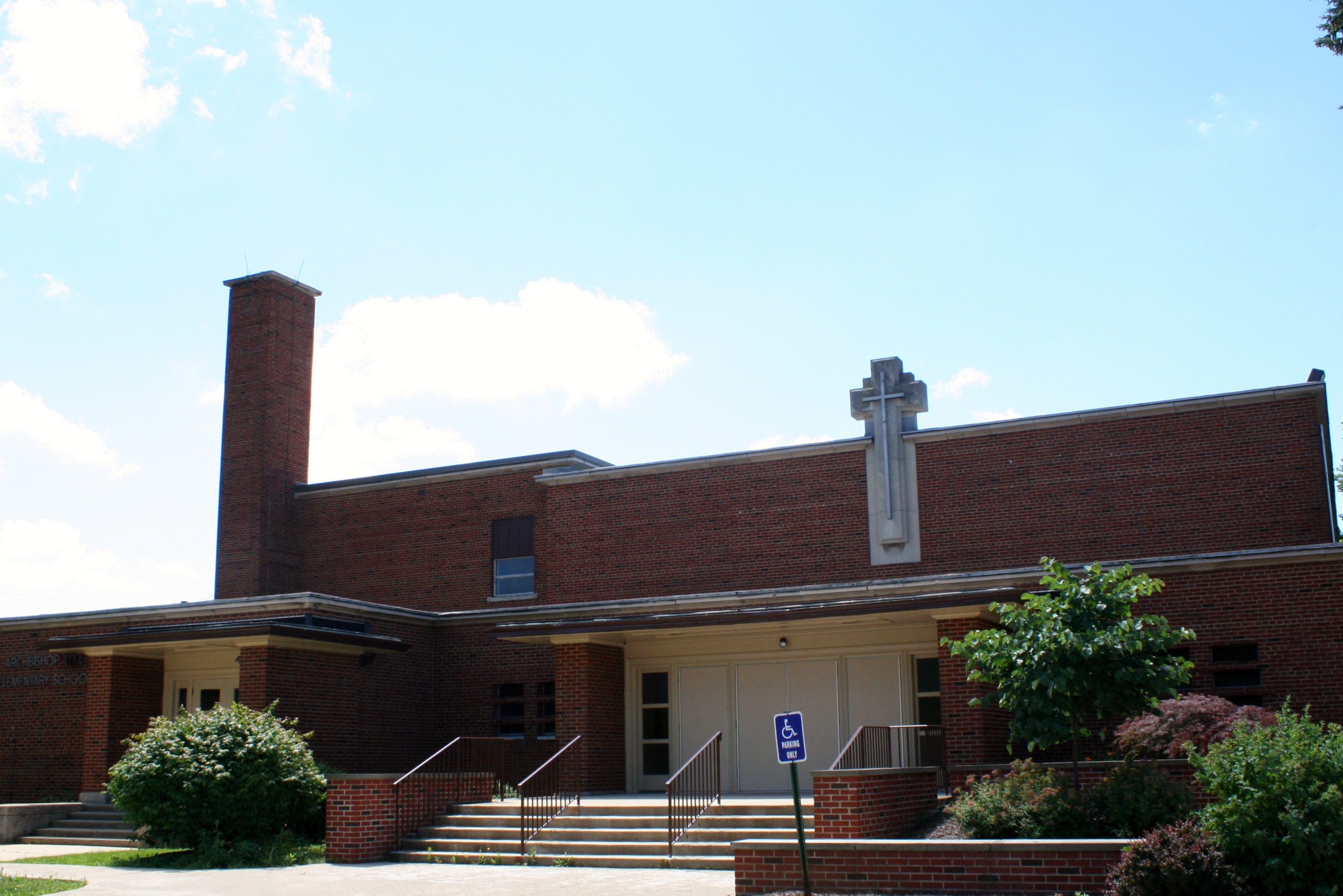
It was the third grade, and at the tender age of eight I was deeply in love. At that age, it was very much like Charlie Brown and the Little Red-Haired Girl, except that my inamorata had curly brown hair and flashing eyes. Her name was Laura Sowinski. At that age, I somehow thought she was Swiss because Sowinski sounded like the word Swiss. (Eight-year-old logic!)

Did I ever whisper sweet nothings to her? No, I don’t think that ever happened at that age. Mrs. McCaffery ran a tight ship in our basement classroom, and any kind of childish spooning would have been nipped in the bud right quick.

Catholic schools like Saint Henry had, in those days, many off days. Sometimes, we did not know until the day before that we would be off the next day. When one of these sudden free days was announced, I was home with a cold and didn’t get the word. So, naturally, I walked to Saint Henry the next day, only to find the school deserted.

The word got around quickly. At the time, Saint Henry had a newsletter, for which the gifted and cruelly beautiful Laura Sowinski was the artist. On the next issue of The Golden Knight, there I was on the back page, in a particularly goofy rendition, walking up the drive to class with a bunch of books secured with a belt. The caption read, “James Paris Going to School on a Free Day.” I was appalled, shamed before the entire school, devastated—my heart had been minced up and handed to me on a lead platter by la belle dame sans merci. My love had turned to ignominy and shame.

I do not know what became of Laura Sowinski, and frankly I don’t care. The bitch!

Pre-Christmas Break

Dan at the Parque del Condors in Otavalo

Dan at the Parque del Condors in Otavalo

I will be taking several days off from blogging. The whole Paris family is gathering at Dan’s place in Palm Desert this weekend, and Martine and I will also be there.

When we get back, I’ll have some interesting Coachella Valley material to post beginning on Monday. While we’re there, we’ll also celebrate Christmas.

You Gotta Have Sole!

The Grier Musser Museum Near Downtown LA

The Grier Musser Museum Near Downtown LA

Today, Martine and I visited the Grier Musser Museum on South Bonnie Brae, about a mile west of downtown L.A. Even before we pulled into the museum’s parking lot, however, disaster struck. The right sole of my New Balance shoes came unglued and flapped like a tongue as I walked.

Fortunately, Ray and Susan Tejada, curators of the museum, allowed me to do the tour in my stocking feet. Else, I would have pitched down the stairs and landed on my head. When we left, Ray and Susan gave me some masking tape to wind around the shoe. The fix held until I walked into my apartment, whereupon the sole flapped—but I immediately tossed the shoes into the nearest trash bin.

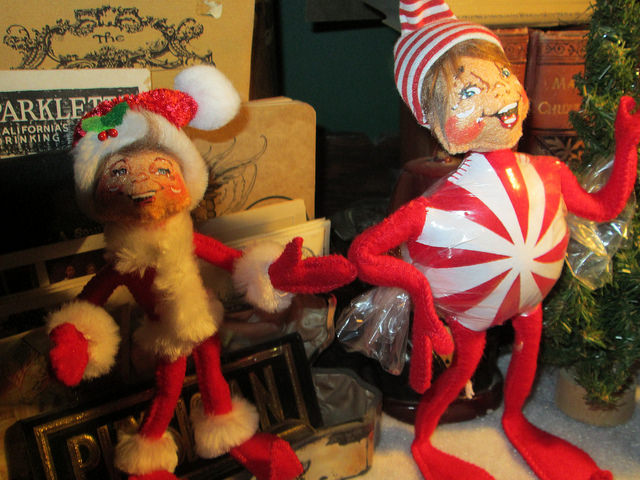
This time of year, the Grier Musser Museum is chock full of Halloween displays ranging from antiques to recent Hallmark creations. The net result is to give us a sweeping view of what is fast becoming one of our major holidays. (I wonder how long it will be before it becomes a national holiday.)

On the Mean Streets of DTLA

The Dash B Bus to Chinatown

The Dash B Bus to Chinatown

Today, as usual, I took the Expo Line train to downtown L.A. (or DTLA), as it is being called colloquially. It was a strange ride: During the last half hour of the trip, a black passenger was loudly swearing at and berating the woman he was with, and cursing at everything and everyone else along the way. The other passengers just became ever more absorbed in their reading or their smart phones. They did not want to draw any irate loony-bird attention to themselves.

When we pulled into the 7th Street Metro terminal, I made a beeline for the Central Library. I returned all the books I had checked out and took the elevator to the third floor Literature and Fiction section, where I spent a couple hours reading James Ellroy’s Blood on the Moon, the first volume of an early trilogy featuring Detective Sergeant Lloyd Hopkins of LAPD Homicide.

Just before 12:30, I made my way to Conference Room A for my weekly Mindful Meditation class, taught by Giselle Jones of the Mindful Awareness Research Center at UCLA. I have become dependent on these weekly sessions to help keep my feet on the ground. Also, they give me a feeling of tranquillity which lasts for hours.

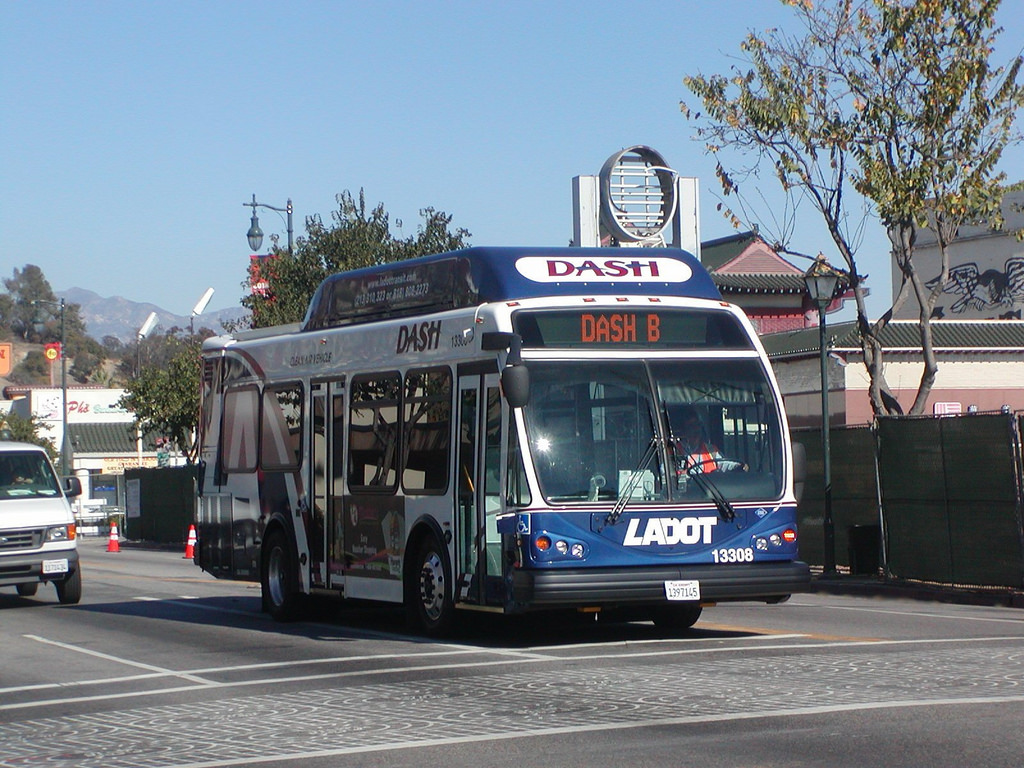
After the session, I grabbed the Dash B bus to 1st Street, where I was planning to transfer to the Dash A bus to Little Tokyo. Opposite me on the sideways bench seating was a slim young barefoot black woman who was stunningly beautiful. She seemed to be looking straight at me and talking, but I never could understand what she was trying to say; and she got off after a couple of stops.

In Little Tokyo, I made my way to Weller Court, where there were a number of Japanese restaurants. I had a bowl of spicy chashu ramen at the Hot Pot Galaxy and walked over to the Kinokuniya Bookstore, where I bought a book by the Dalai Lama.

From Little Tokyo, I made my way to the Santa Monica Rapid 10 bus stop opposite Union Station and waited the usual maximum time for the next bus to appear. I was dropped off at Bundy and Idaho, from where I walked back to my apartment.


Encountering an Old Friend

A Book That Greatly Influenced My High School Years

A Book That Greatly Influenced My High School Years

There it was on the shelf of Iliad Book Store in February 2009: A not-too-beat-up copy of the Committee on College Reading’s Good Reading, circa 1964. Naturally, I picked it up if for no other reason than to walk down memory road when I was a voracious reader. (And, if you read this blog, you know of course that I still am.)

I was the valedictorian of my class of 1962 at Chanel High School in Bedford, Ohio—a school that no longer exists. First it changed its name to Saint Peter Chanel, then, some years later, the Catholic Diocese of Cleveland shut it down. Even though I was in excruciating pain from a tumor that was pressing on my optic nerve, I still read as much as I could. On weekends, I would take the 56A bus downtown, stop in at Schroeder’s Bookstore on Public Square, and then spend some time at the main library, which was built in 1925.

What I felt I needed were books that served as a bibliographic reference to what I ought to be reading. That’s what Good Reading did. There were individual chapters by different members of the Committee on College Reading, all faculty members at various colleges. Just to give an example, here are some of Robert Clark White’s recommendations for 20th Century Continental Novels:

  • Samuel Beckett: Molloy
  • Albert Camus: The Stranger and The Plague
  • Karel Čapek: The War with the Newts
  • André Gide: The Counterfeiters
  • Jaroslav Hasek: The Good Soldier Schweik
  • Hermann Hesse: Steppenwolf and Siddhartha
  • Franz Kafka: The Trial
  • Thomas Mann: Buddenbrooks, The Magic Mountain, and The Joseph Tetralogy
  • Marcel Proust: The Remembrance of Things Past
  • Jean-Paul Sartre: Nausea and Troubled Sleep

These are not bad titles for the time. I probably would have added something by Iceland’s Halldor Laxness and Portugal’s Fernando Pessoa, but these are mere cavils. Thanks largely to this book, my attention was directed to great writers in every field. And the book covered more than literature: There was also history, philosophy, religion, anthropology, physical sciences, and other subjects.

I was such an earnest young student. Even while on the bus, I would pore over books such as Norman Lewis’s 30 Days to a More Powerful Vocabulary and Word Power Made Easy, taking all the quizzes in the books over and over until I got a perfect score. Despite all the physical pain, I had a good childhood, starting with what my loving parents gave me and adding what I could along the way.


Up Escalator, Down Escalator

At One Time, Going on a Down Escalator Was My Greatest Fear

At One Time, Going on a Down Escalator Was My Greatest Fear

When I was a young lad, I was paralyzed with fear every time I had to go down an escalator. I didn’t mind going up one; but going down, I saw how far I had to fall. My parents and my brother made fun of my fear. Eventually, I confronted my sense of terror and had no more trouble.

In today’s China, escalators can kill. There are stories of people stepping on the floor panel either at the start or the end of their ascent or descent, and having the panel break, plunging the victim into the works of the escalator and crushing him or her to death. See the YouTube video by clicking here.

Nowadays, back in the U.S., I am usually more annoyed by escalators being out of service for long periods of time. At the Central Library in Los Angeles, the up escalators to the second and third floors have been out of service for months. At the 7th Street Metro Center, the topmost up escalator to the 7th and Hope exit has been down for at least two weeks for “preventive maintenance.” This leads me to wonder if escalators are just getting too expensive.