“The Echo Elf Answers”

Photo by Ed Weinman

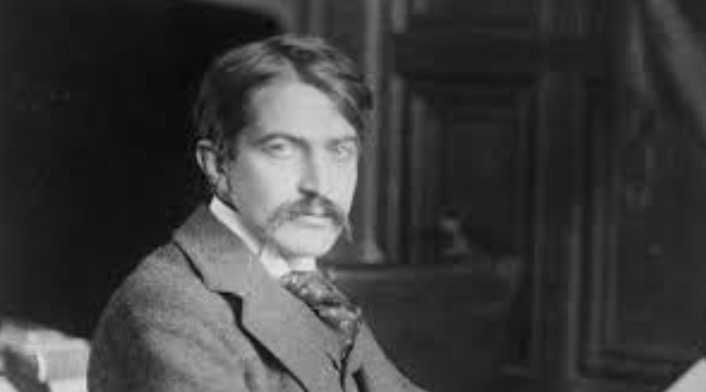
Thomas Hardy (1840-1928) is best known for his novels. Although I admire them as much as anybody, I now like his poetry even more. His subjects seem to be on the somber side, but I love their simplicity and rugged construction, such as this one:

The Echo Elf Answers

How much shall I love her?
For life, or not long?
“Not long.”

Alas! When forget her?
In years, or by June?
“By June.”

And whom woo I after?
No one, or a throng?
“A throng.”

Of these shall I wed one
Long hence, or quite soon?
“Quite soon.”

And which will my bride be?
The right or the wrong?
“The wrong.”

And my remedy – what kind?
Wealth-wove, or earth-hewn?
“Earth-hewn.” 

And ne forhtedon na

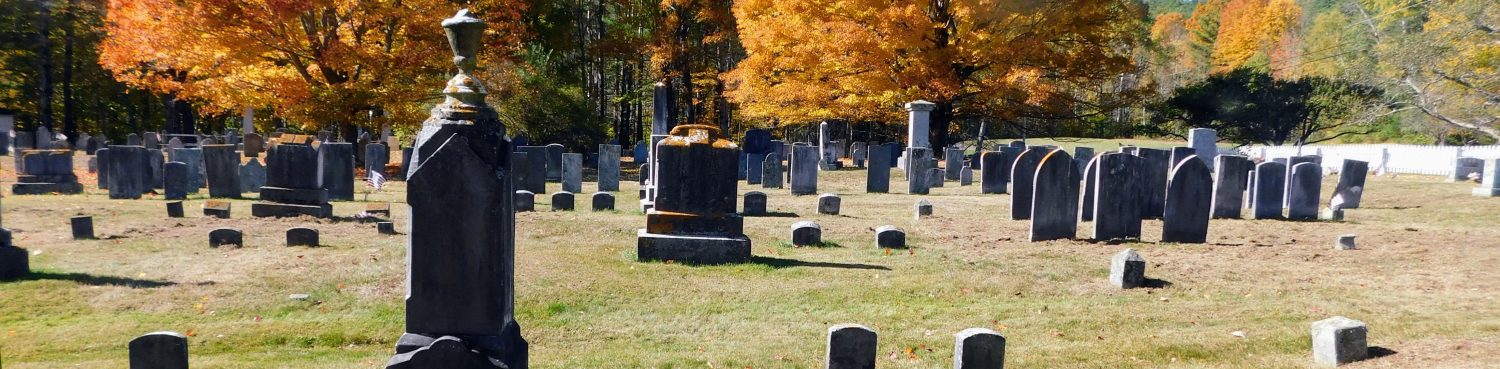
The Tomb of Jorge Luis Borges (1899-1986) in Geneva Switzerland

The title of this post is in Anglo-Saxon from the gravestone of Jorge Luis Borges. It comes from The Battle of Maldon. Translated, it means “Be not afraid.” Toward the end of his life, Borges learned Anglo-Saxon and even studied Old Norse, which is the language of Iceland.

Here is an early poem by Borges (from Fervor de Buenos Aires, 1923) on the subject of death. The translation is by W. S. Merwin.

Remorse for Any Death

Free of memory and hope,
unlimited, abstract, almost future,
the dead body is not somebody: It is death.
Like the God of the mystics,
whom they insist has no attributes,
the dead person is no one everywhere,
is nothing but the loss and absence of the world.
We rob it of everything,
we do not leave it one color, one syllable:
Here is the yard which its eyes no longer take up,
there is the sidewalk where it waylaid its hope.
It might even be thinking
what we are thinking.
We have divided among us, like thieves,
the treasure of nights and days.

Desire’s Dog

There is something in the voice of American Indian writers that is worth listening to. I have just finished reading Louise Erdrich’s Tracks, and now I have come across this delightful poem by Joy Harjo, a Muscogee Creek who was poet-laureate of the United States:

Desire’s Dog

I was desire’s dog.
I ate when I was fed. I did what I was told.
I knew how to sit, stand and roll over on command.
When I was petted, I was made whole.
Even when I dreamed, I dreamed a chain around my neck.

Desire is a bone with traces of fat.
It’s the wag smell of a bitch in heat.
It’s that pinched hit at the end of a beat.
It’s a stick thrown into a rabbit chase.

I lay at the feet of desire for years.

Then I heard this song, calling me.
It was a woman in a red dress,
It was a man with a gun in his hand.
It was a table filled with fruit and flowers.
It was a fox of fire, a bird of stone.

Then, it was gone.

What was left disintegrated by rain and wind.

I had followed desire, to the end.

Tagore’s Garden

Indian Writer Rabindranath Tagore (1861-1941)

An early winner of the Nobel Prize in Literature in 1913, Rabindranath Tagore is almost forgotten today. How is that so? He was a prolific writer of poetry, prose, plays, novels, and songs. He was offered a knighthood by the British, but turned it down. He did not live to see the creation of a free India, but he led a rich and full life. Here is a short excerpt from his poetry:

The Gardener 85

Who are you, reader, reading my poems an hundred years hence?
I cannot send you one single flower from this wealth of the spring, one single streak of 
     gold from yonder clouds.
Open your doors and look abroad.

From your blossoming garden gather fragrant memories of the vanished flowers of an
     hundred years before.
In the joy of your heart may you feel the living joy that sang one spring morning, sending its glad voice across an hundred years. 

“Fame Is a Fickle Food …”

The Hollywood Walk of Fame

Here is a poem by Emily Dickinson on the subject of fame. It is short, but packs a punch.

Fame Is a Fickle Food

Fame is a fickle food
Upon a shifting plate
Whose table once a
Guest but not
The second time is set
Whose crumbs the crows inspect
And with ironic caw
Flap past it to the
Farmer’s corn
Men eat of it and die

Ferlinghetti in Mexico

Poet and Publisher Lawrence Ferlinghetti (1919-2021)

Ever since I saw him speak at Dartmouth College in the early 1960s, I have admired Lawrence Ferlinghetti. I loved his poetry collection A Coney Island of the Mind. And I am fond of the books he has published under his City Lights Books imprint. I am currently reading his Writing Across the Landscape: Travel Journals 1960-2010, which also contains some poetry written during his travels, such as the following untitled piece:

La puerta escondida
	no está escondida
La puerta al invisible
	no está invisibile
The door to the invisible
	is visible
The hidden door
	is not hidden
I continually walk through it
	not seeing it
And I am what I am
And will be what I will be
Sobre las playas perdidas
	del Sur ....

The first four lines are translated in the poem. The last two lines read “On the lost beaches/Of the South.”

London Circa 1700

Detail from ‘The Tête à Tête,’ a painting from William Hogarth’s series ‘Marriage A-la-Mode’ (1743-45)

I have always had a love for Eighteenth Century Literature. It stems from the time I had a course in the novel of the period taught by my favorite professor at Dartmouth, the late Chauncey Chester Loomis. Swift not only wrote great prose, as vouched by Gulliver’s Travels and a slew of essays, but he was a formidable poet as well. The following poem gives us a feeling for the period in much the same way that James Boswell’s London Journal does.

A Description of the Morning

Now hardly here and there a hackney-coach
Appearing, show'd the ruddy morn's approach.
Now Betty from her master's bed had flown,
And softly stole to discompose her own.
The slip-shod 'prentice from his master's door
Had par'd the dirt, and sprinkled round the floor.
Now Moll had whirl'd her mop with dext'rous airs,
Prepar'd to scrub the entry and the stairs.
The youth with broomy stumps began to trace
The kennel-edge, where wheels had worn the place.
The small-coal man was heard with cadence deep;
Till drown'd in shriller notes of “chimney-sweep.”
Duns at his lordship's gate began to meet;
And brickdust Moll had scream'd through half a street.
The turnkey now his flock returning sees,
Duly let out a-nights to steal for fees.
The watchful bailiffs take their silent stands;
And schoolboys lag with satchels in their hands. 

Kennel is a gutter or drain
Brickdust Moll is a street vendor selling powdered brick, used for cleaning knives

“Wessex”

Here is one of my favorite dog poems. It is by Thomas Hardy, who is better known for his novels than his poetry. Wessex was the name of Hardy’s dog, and it is also the scene of his novels, such as Return of the Native and Tess of the Durbervilles.

A Popular Personage at Home

'I live here: "Wessex" is my name:
I am a dog known rather well:
I guard the house but how that came
To be my whim I cannot tell.

'With a leap and a heart elate I go
At the end of an hour's expectancy
To take a walk of a mile or so
With the folk I let live here with me.

'Along the path, amid the grass
I sniff, and find out rarest smells
For rolling over as I pass
The open fields toward the dells.

'No doubt I shall always cross this sill,
And turn the corner, and stand steady,
Gazing back for my Mistress till
She reaches where I have run already,

'And that this meadow with its brook,
And bulrush, even as it appears
As I plunge by with hasty look,
Will stay the same a thousand years.'

Thus 'Wessex.' But a dubious ray
At times informs his steadfast eye,
Just for a trice, as though to say,
'Yet, will this pass, and pass shall I?' 

New Year’s Resolutions?

At this time when we are supposedly making up New Year’s resolutions, I am reminded of this poem by Jorge Luis Borges, the great Argentinian poet who died not long after his poem “Instants” was written.

Instants

If I could live again my life,
In the next - I'll try,
- to make more mistakes,
I won't try to be so perfect,
I'll be more relaxed,
I'll be more full - than I am now,
In fact, I'll take fewer things seriously,
I'll be less hygenic,
I'll take more risks,
I'll take more trips,
I'll watch more sunsets,
I'll climb more mountains,
I'll swim more rivers,
I'll go to more places - I've never been,
I'll eat more ice creams and less (lime) beans,
I'll have more real problems - and less imaginary ones,
I was one of those people who live
prudent and prolific lives -
each minute of his life,
Of course that I had moments of joy - but,
if I could go back I'll try to have only good moments,

If you don't know - that's what life is made of,
Don't lose the now!

I was one of those who never goes anywhere
without a thermometer,
without a hot-water bottle,
and without an umbrella and without a parachute,

If I could live again - I will travel light,
If I could live again - I'll try to work bare feet
at the beginning of spring till
the end of autumn,
I'll ride more carts,
I'll watch more sunrises and play with more children,
If I have the life to live - but now I am 85,
- and I know that I am dying . . .  

“Apostle Town”

Canadian Poet Anne Carson (Born 1950)

My favorite Canadian poet, who I think is equal to the best current U.S. poets, is Anne Carson. A classical r as well as a poet, she did a great translation of three Euripides plays that was published by New York Review as Grief Lessons (2006).

Apostle Town

After your death.
It was windy every day.
Every day.
Opposed us like a wall.
We went.
Shouting sideways at one another.
Along the road.
It was useless.
The spaces between us.
Got hard.
They are empty spaces.
And yet they are solid.
And black and grievous.
As gaps between the teeth.
Of an old woman.
You knew years ago.
When she was.
Beautiful the nerves pouring around in her like palace fire.