Letter from Iceland

View Around Mývatn in Northeast Iceland

In the Thirties, two English poets, W. H. Auden and Louis MacNeice, took a trip to Iceland. Auden wrote a book, published in 1936, called Letters from Iceland, which consisted of mixed prose, poetry, and photographs. The following is from a longer poem in Chapter III entitled “Letter to Graham and Anne Shepard”:

So I came here to the land the Romans missed,
Left for the Irish saint and the Viking colonist.
But what am I doing here? Qu’allais je faire
Among these volcanic rocks and this grey air?
Why go north when Cyprus and Madeira
De jure if not de facto are much nearer?
The reason for hereness seems beyond conjecture,
There are no trees or trains or architecture,
Fruits and greens are insufficient for health
And culture is limited by lack of wealth.
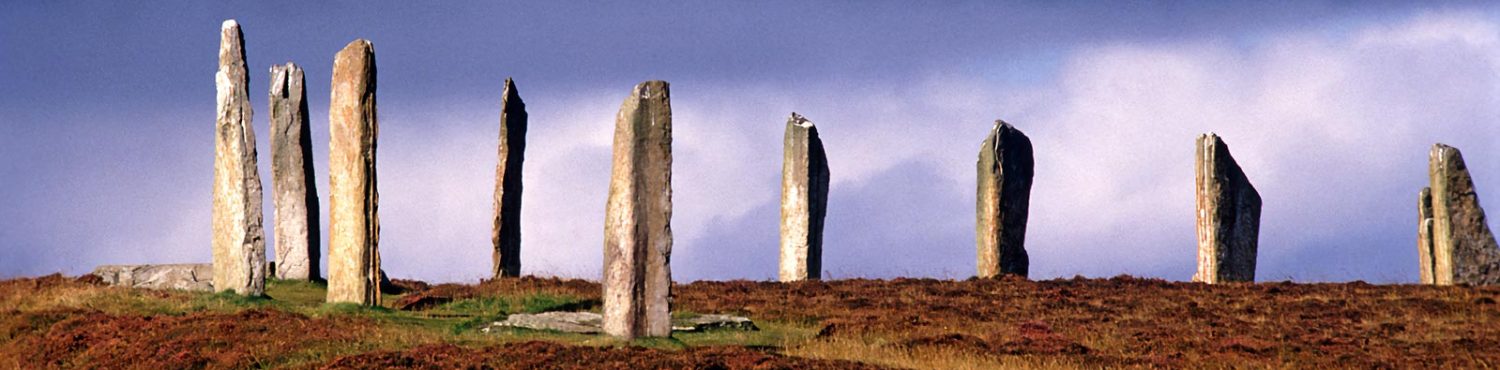
The tourist sites have nothing like Stonehenge,
The literature is all about revenge,
And yet I like it if only because this nation
Enjoys a scarcity of population
And cannot rise to many bores or hacks
Or paupers or poor men paying Super-Tax.
Yet further, if you can stand it, I will set forth
The obscure but powerful ethics of Going North.
*     *     *     *     *     *     *     *     *     *     *    *     *
In England one forgets—in each performing troupe
Forgets what one has lost, there is no room to stoop
And look along the ground, one cannot see the ground
For the feet of the crowd, and the lost is never found.
I dropped something, I think, but I am not sure what
And cannot say if it mattered much or not,
So let us get on or we shall be late, for soon
The shops will close and the rush hour be on.

The reference to a “lack of wealth” refers to the relative poverty of Iceland until it became an independent country in 1946. Under the Danes,  the Icelanders were one of the poorest peoples in Europe. No longer.

Bukowski: “A Dog Walking Backwards”

Poet Charles Bukowski

The title of this poem is “For the Foxes.” I do not understand why. But that’s okay with poetry. It takes quite a lot of readings sometimes to understand what is going on. Whatever it means—specifically—I like the feel of this poem.

Don’t feel sorry for me.
I am a competent,
satisfied human being.

be sorry for the others
who
fidget
complain

who
constantly
rearrange their
lives
like
furniture.

juggling mates
and
attitudes

their
confusion is
constant

and it will
touch
whoever they
deal with.

beware of them:
one of their
key words is
‘love’

and beware those who
only take
instructions from their
God

for they have
failed completely to live their own
lives.

don’t feel sorry for me
because I am alone

for even
at the most terrible
moments
humor
is my
companion.

I am a dog walking
backwards

I am a broken
banjo

I am a telephone wire
strung up in
Toledo, Ohio

I am a man
eating a meal
this night
in the month of
September.

put your sympathy
aside.
they say
water held up
Christ:
to come
through
you better be
nearly as
lucky.


“The Peace of Wild Things”

Finding the Ultimate Peace

I was wondering what to write about today, when I saw this poem quoted on Facebook by my friend Lynette Cahill. At that point, I said to myself, “Yep, that’ll do it!” It is called “The Peace of Wild Things” and was composed by Wendell Berry.

When despair for the world grows in me
and I wake in the night at the least sound
in fear of what my life and my children’s lives may be,
I go and lie down where the wood drake
rests in his beauty on the water, and the great heron feeds.
I come into the peace of wild things
who do not tax their lives with forethought
of grief. I come into the presence of still water.
And I feel above me the day-blind stars
waiting with their light. For a time
I rest in the grace of the world, and am free.

Los Encuentros

Highland Guatemala Town

I picked up a book from the library today by a Fulbright Scholar named Stephen Connely Benz entitled Guatemalan Journey and found the following poem entitled “Los Encuentros” in the front matter. I hope you like it as much as I did:

The phrase book tells me I’m at a crossroads,
I should expect encounters
in the vellum margins of this highway
where buses cough black clouds
and hanging men cry out destinations
I cannot find on the map.
I’ve heard rumors of what lies
ahead, the incidents hidden in hairpin
turns, dire straits for those who seek
passage through gullies, ravines, lava valleys.
The topography of this country,
an explorer said, is like a crumpled page:
palimpsest mountains, parchment plains,
hieroglyphic highlands awaiting interpretation.
Lexicographers take notes on each twisting
nuance in the road, turns of phrase promise
arrival or departure, movement along this text
I’m traveling. I read ahead
through the codex of curves
And straightaways to the congested towns
where babblers hail strangers
in unrelated vocables.
I study the morphemes in a parrot’s squawk,
signals sent up in volcano smoke,
stories revealed in aboriginal textile.
I skim long vistas of calligraphied macadam,
an endless panorama of road signs encoding
a traveler’s tale, a new message
But the phrase book’s no help now,
it all translates the same—
I’m at a crossroads,
expecting encounters, still waiting.

The book itself seems like an excellent introduction to Guatemala. I wonder if he wrote anything else.


Working Within the System

Time Magazine Cover Story on Yevgeny Yevtushenko

There are two Yevtushenkos. Coming to light in the early 1960s was the young Siberian poet who gave poetry readings to huge crowds in the Soviet Union, like some kind of rock star. He was critical of Stalin, of Russian anti-Semitism, and the “blue envelopes” with extra pay given to writers who toed the official line. Yet he clearly worked within the system, considered himself a loyal Communist, and was allowed to visit foreign countries without fear of his escaping.

I have just finished reading the poet’s A Precocious Autobiography, published in 1963, at the height of his fame—at a time when the Western press was touting him as a Communist they admired. It was a book that was at the same time critical of the government and eager to please it. According to an article in The Guardian:

Mr. Yevtushenko did so working mostly within the system, however, taking care not to join the ranks of outright literary dissidents. By stopping short of the line between defiance and resistance, he enjoyed a measure of official approval that more daring dissidents came to resent.

While they were subjected to exile or labor camps, Mr. Yevtushenko was given state awards, his books were regularly published, and he was allowed to travel abroad, becoming an international literary superstar.

As the exiled Russian poet Joseph Brodsky said about Yevtushenko: “He throws stones only in directions that are officially sanctioned and approved.” Here we have the second Yevtushenko, a figure of controversy.

Where do I stand on the poet? I have read his poems, but don’t care for them. But then, I don’t know Russian, and he could be badly translated—or else he might be one of those poets whose works don’t translate well into other languages.

When the Soviet Union blinked out of existence around 1989-1990, the the poet moved to the United States, where he taught courses at colleges in New York and Tulsa, Oklahoma. He died in Tulsa in 2017.


“Samurai Song”

Samurai Warrior with Sword Drawn

I love this poem by Robert Pinsky, formerly Poet Laureate of the United States. It reminds me of my own situation, in which I must deal with the waning years of my life with the spirit of a warrior. The poem is called “Samurai Song.” I first discovered it in The New Yorker. Several years ago, I met Mr. Pinsky at a book festival and told him how much this poem meant to me.

Samurai Song

When I had no roof I made
Audacity my roof. When I had
No supper my eyes dined.

When I had no eyes I listened.
When I had no ears I thought.
When I had no thought I waited.

When I had no father I made
Care my father. When I had no
Mother I embraced order.

When I had no friend I made
Quiet my friend. When I had no
Enemy I opposed my body.

When I had no temple I made
My voice my temple. I have
No priest, my tongue is my choir.

When I have no means fortune
Is my means. When I have
Nothing, death will be my fortune.

Need is my tactic, detachment
Is my strategy. When I had
No lover I courted my sleep.


The Tomb of the Hero

Honor Guard at the Tomb of José de San Martín in Buenos Aires

The liberators of South America from the Spanish are honored throughout South America. One keeps running into the names of Bolivar, San Martin, Sucré, and O’Higgins again and again. The honor guard at the Metropolitan Cathedral on the north side of the Plazo de Mayo in Buenos Aires is dressed in the uniforms of the early 19th century, with swords drawn and standing at rigid attention.

Even Jorge Luis Borges, who never served in any country’s military, bragged of being descended from Colonel Manuel Isidoro Suárez, hero of the Battle of Junín in far-off Peru back in 1824. Many of his poems refer to this ancestral hero. Here is the last stanza of “A Page to Commemorate Manuel Suárez, Victor at Junín”:

His great-grandson is writing these lines
and a silent voice comes to him out of the past,
out of the blood:
“What does my battle at Junín matter if it is only
a glorious memory, or a date learned by rote
for an examination, or a place in the atlas?
The battle is everlasting and can do without
the pomp of actual armies and of trumpets.
Junín is two civilians cursing a tyrant
on a street corner,
or an unknown man somewhere, dying in prison.

I have read biographies of Bolivar and San Martín—as well as Gabriel García Márquez’s excellent The General in His Labyrinth, about the former—only to find that the heroes are more honored today than they were in their lifetimes. San Martín became so disgusted with his fellow Argentines that he moved to France. Only many years later did the Argentines invest him with the sanctity he wears today like an uneasy crown.


“Elegy for the Forgotten Oldsmobile”

1963 Oldsmobile Cutlass

Here is a poem from Adrian C. Louis, a Lovelock Paiute Indian from Northern Nevada, who wrote a poem entitled “Elegy for the Forgotten Oldsmobile.” This poem had a huge effect on Sherman Alexie, my favorite Indian author, a Spokane from Washington. First of all, here is the poem:

July 4th and all is Hell.
Outside my shuttered breath the streets bubble
with flame-loined kids in designer jeans
looking for people to rape or razor.
A madman covered with running sores
is on the street corner singing:
O beautiful for spacious skies…
This landscape is far too convenient
to be either real or metaphor.
In an alley behind a 7-11
a Black pimp dressed in Harris tweed
preaches fidelity to two pimply whores
whose skin is white though they aren’t quite.
And crosstown in the sane precincts
of Brown University where I added rage
to Cliff Notes and got two degrees
bearded scientists are stringing words
outside the language inside the guts of atoms
and I don’t know why I’ve come back to visit.

O Uncle Adrian! I’m in the reservation of my mind.
Chicken bones in a cardboard casket
meditate upon the linoleum floor.
Outside my flophouse door stewed
and sinister winos snore in a tragic chorus.

The snowstorm t.v. in the lobby’s their mother.
Outside my window on the jumper’s ledge
ice wraiths shiver and coat my last cans of Bud
though this is summer I don’t know why or where
the souls of Indian sinners fly.
Uncle Adrian, you died last week—cirrhosis.
I still have the photo of you in your Lovelock
letterman’s jacket—two white girls on your arms—
first team All-State halfback in ’45, ’46.

But nothing is static. I am in the reservation of
my mind. Embarrassed moths unravel my shorts
thread by thread asserting insectival lust.
I’m a naked locoweed in a city scene.
What are my options? Why am I back in this city?
When I sing of the American night my lungs billow
Camels astride hacking appeals for cessation.
My mother’s zippo inscribed: “Stewart Indian School—1941”
explodes in my hand in elegy to Dresden Antietam
and Wounded Knee and finally I have come to see
this mad fag nation is dying.
Our ancestors’ murderer is finally dying and I guess
I should be happy and dance with the spirit or project
my regret to my long-lost high school honey
but history has carried me to a place
where she has a daughter older than we were
when we first shared flesh.

She is the one who could not marry me
because of the dark-skin ways in my blood.
Love like that needs no elegy but because
of the baked-prick possibility of the flame lakes of Hell
I will give one last supper and sacrament
to the dying beast of need disguised as love
on deathrow inside my ribcage.
I have not forgotten the years of midnight hunger
when I could see how the past had guided me
and I cried and held the pillow, muddled
in the melodrama of the quite immature
but anyway, Uncle Adrian…
Here I am in the reservation of my mind
and silence settles forever
the vacancy of this cheap city room.
In the wine darkness my cigarette coal
tints my face with Geronimo’s rage
and I’m in the dry hills with a Winchester
waiting to shoot the lean, learned fools
who taught me to live-think in English.

Uncle Adrian…
to make a long night story short,
you promised to give me your Oldsmobile in 1962.
How come you didn’t?
I could have had some really good times in high school.

Indian Poet Adrian C. Louis

In an article in the Atlantic, Sherman Alexie wrote about the impact of this poem on his life:

In 1987, I dropped out of Gonzaga and followed a high school girlfriend to Washington State University (it’s called Wazoo). And by complete chance, I enrolled in a poetry workshop that changed my life. On the first day, the teacher, Alex Kuo, gave me an anthology of contemporary Native poetry called Songs from this Earth on Turtle’s Back. There were poems by Adrian C. Louis, a Paiute Indian, and one in particular called “Elegy for the Forgotten Oldsmobile.” If I hadn’t found this poem, I don’t think I ever would have found my way as a writer. I would have been a high school English teacher who coached basketball. My life would have taken a completely different path.

This was the first line of the poem:

            Oh, Uncle Adrian, I’m in the reservation of my mind.

I’d thought about medicine. I’d thought about law. I’d thought about business. But that line made me want to drop everything and be a poet. It was that earth-shaking. I was a reservation Indian. I had no options. Being a writer wasn’t anywhere near the menu. So, it wasn’t a lightning bolt—it was an atomic bomb. I read it and thought, “This is what I want to do.”

Interestingly, that wasn’t the first line of the poem, as you can see from above. But the feeling was genuine, and Alexie ran with it. Next week, when I return from the desert, I want to talk more about Alexie.


The Dreams of Dolphins

Dolphins Near Hawaii

Silvina Ocampo is not only the wife of the great Argentinian writer Adolfo Bioy Casares, but she is a world class writer and poet herself. The following poem is called, simply:

Dolphins

Dolphins don’t play in the waves
as people think.
Dolphins fall asleep going down to the ocean floor.
What are they looking for? I don’t know.
When they touch the end of the water
abruptly they awake
and rise again because the sea is very deep
and when they rise, what are they looking for?
I don’t know.
And they see the sky and it makes them sleepy again
and they go back down asleep,
and they touch the ocean floor again
and awaken and rise back up.
Our dreams are like that.


1,000 Yen and Six Haikus

Japanese Author Natsume Sōseki (1867-1916)

One of my major literary discoveries this year was Japanese author Natsume Sōseki, who was best known for his prose and who was honored on the 1,000 yen note between 1984 and 2004. Here, however, are six haiku that he wrote:

Over the wintry
forest, winds howl in rage
with no leaves to blow.

The lamp once out
Cool stars enter
The window frame.

The crow has flown away;
swaying in the evening sun,
a leafless tree.

Watch birth and death:
The lotus has already
Opened its flower.

Plum flower temple:
Voices rise
From the foothills.

On New Year’s Day
I long to meet my parents
as they were before my birth.

My favorite haiku is the second one, but the most poignant is the last one. Natsume Sōseki was born to such aged parents that they, being embarrassed, gave him up for adoption, until they re-introduced themselves as his grandparents. Eventually, Sōseki found out about this subterfuge.