The Houses of Poets

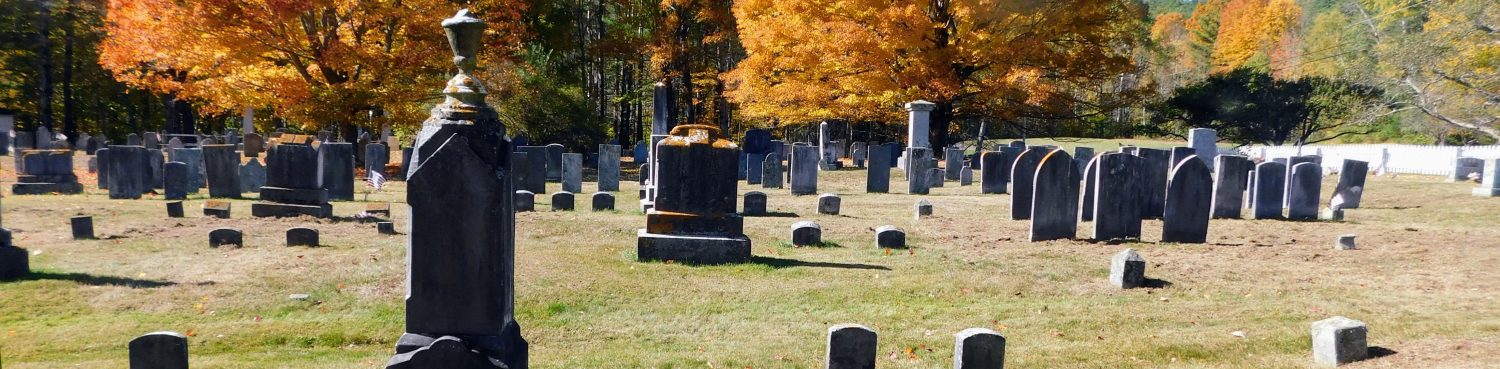
The Robert Frost House in Franconia, NH

When traveling, I like to visit the houses in which poets I admire lived. When I was in Chile in 2015, I made a point of visiting all three of Pablo Neruda’s houses: Isla Negra, La Sebastiana, and La Chascona. In Paris, I visited the flat in which Victor Hugo had lived. And, in Franconia, New Hampshire, I visited the farmhouse which Robert Frost occupied beginning in 1915 after he published his collection A Boy’s Will and afterwards as a summer house through most of the 1930s.

Frost remains one of my favorite American poets, along with Emily Dickinson and Walt Whitman. If you look through the same window a great poet has looked through, you begin to understand something about his work.

Mailbox at the Franconia House

Before he died in 1963, I attended a poetry reading by Frost at the newly opened Hopkins Center at Dartmouth College. Frost had attended Dartmouth for a while, but dropped out. He also attended Harvard, but he never graduated college. As old as he was, Frost was in complete command of his mind at the age of 87. And I have been moved by his poetry ever since. I got the feeling that Frost was not the bumbling old poet who read his poem “The Gift Outright” at John F. Kennedy’s inauguration in 1961: Hearing him speak, I had a feeling that Frost knew exactly what he was doing, and had no trouble handling an auditorium filled with sharp college undergraduates.


“Dinosauria, We”

L.A. Poet Charles Bukowski (1920-1994)

Today I watched a DVD about the life and career of Charles Bukowski, the greatest poet to come from Los Angeles (though by way of Andernach, Germany). The more I read Bukowski, the more I think he is the true successor to Walt Whitman. He may not be a great stylist, but his poems cut to the quick. By the way, the film is called Bukowski: Born Into This (2003), and that’s where I got the idea to present that poem here. The name of the poem is “Dinosauria, We”:

Dinosauria, We

Born like this
Into this
As the chalk faces smile
As Mrs. Death laughs
As the elevators break
As political landscapes dissolve
As the supermarket bag boy holds a college degree
As the oily fish spit out their oily prey
As the sun is masked
We are
Born like this
Into this
Into these carefully mad wars
Into the sight of broken factory windows of emptiness
Into bars where people no longer speak to each other
Into fist fights that end as shootings and knifings
Born into this
Into hospitals which are so expensive that it’s cheaper to die
Into lawyers who charge so much it’s cheaper to plead guilty
Into a country where the jails are full and the madhouses closed
Into a place where the masses elevate fools into rich heroes
Born into this
Walking and living through this
Dying because of this
Muted because of this
Castrated
Debauched
Disinherited
Because of this
Fooled by this
Used by this
Pissed on by this
Made crazy and sick by this
Made violent
Made inhuman
By this
The heart is blackened
The fingers reach for the throat
The gun
The knife
The bomb
The fingers reach toward an unresponsive god
The fingers reach for the bottle
The pill
The powder
We are born into this sorrowful deadliness
We are born into a government 60 years in debt
That soon will be unable to even pay the interest on that debt
And the banks will burn
Money will be useless
There will be open and unpunished murder in the streets
It will be guns and roving mobs
Land will be useless
Food will become a diminishing return
Nuclear power will be taken over by the many
Explosions will continually shake the earth
Radiated robot men will stalk each other
The rich and the chosen will watch from space platforms
Dante’s Inferno will be made to look like a children’s playground
The sun will not be seen and it will always be night
Trees will die
All vegetation will die
Radiated men will eat the flesh of radiated men
The sea will be poisoned
The lakes and rivers will vanish
Rain will be the new gold
The rotting bodies of men and animals will stink in the dark wind
The last few survivors will be overtaken by new and hideous diseases
And the space platforms will be destroyed by attrition
The petering out of supplies
The natural effect of general decay
And there will be the most beautiful silence never heard
Born out of that.
The sun still hidden there
Awaiting the next chapter.

Two Poems

Liu Xiaobo and His Widow Liu Xia

On July 13 of last year, Chinese Nobel Peace Prize laureate Liu Xiaobo died in Shenyang after years of persecution by the monolithic Communist Party he dared to oppose. Here are two poems, first by his widow Liu Xia dedicated to her husband:

Road to Darkness

For Xiaobo

Sooner or later you will leave
me, one day
and take the road to darkness
alone.

I pray for the moment to reappear
so I can see it better,
as if from memory.
I wish that I, astonished, would glow, my body
in full bloom of light for you.

But I can’t make it except
clenching my fists, not letting
the strength,
not even a little bit of it, slip
through my fingers.

The following is a poem by Liu Xiaobo dedicated to his wife:

Morning

For Xia

Between the gray walls
and a burst of chopping sounds,
morning comes, bundled and sliced,
and vanishes with the paralyzed souls
of the chopped vegetables.

Light and darkness pass through my pupils.
How do I know the difference?
Sitting in the rust, I can’t tell
if it’s the shine on the shackles in the jail
or the natural light of Nature
from outside the walls.
Daylight betrays everything, the splendid sun
stunned.

Morning stretches and stretches in vain.
You are far away—
but not too far to collect the love
of my night.

Both poems appeared in the September 28, 2017 issue of The New York Review of Books.


Capitale de la Douleur

The Poet Paul Éluard’s Most Famous Collection of Poetry

Yesterday, I wrote about Jean-Luc Godard’s film Alphaville (1965), one of my favorites. In it, Eddie Constantine carries with him a 1926 collection of poems by Paul Éluard called Capitale de la douleur. In several of his scenes with Anna Karina, he quotes from it to remind her of concepts about love and tenderness that are forbidden in her society in Alphaville. Here is one of my favorite poems from this collection entitled “The Word”:

I am fortunate: mine is an easy beauty
I slide over the roof of the winds
I slide over the roof of the seas
I’m sentimental these days
I no longer know who’s in charge
I no longer move silk over ice
I am ill laughter and pebbles
I nakedly love whatever is most Chinese
I love what’s most naked the darting of birds
I am old but here I’m beautiful
And the shadow coming down from the depths of the windows
Every evening spares the dark heart of my eyes

Here is the same poem in the original French, where it is called “La parole”:

J’ai la beauté facile et c’est heureux
Je glisse sur les toits des vents
Je glisse sur le toit des mers
Je suis devenue sentimentale
Je ne connais plus le conducteur
Je ne bouge plus soie sur les glaces
Je suis malade fleurs et cailloux
J’aime le plus chinois aux nues
J’aime la plus nue aux écarts d’oiseau
Je suis vieille mais ici je suis belle
Et l’ombre qui descend des fenêtres profondes
Épargne chaque soir le cœur noir de mes yeux.


“The Gods Need Me To Entertain Them”

The Campus at Yale University

Here’s a poem from Charles Bukowski entitled “This Kind of Fire.” It is in his poetry collection entitled The Continual Condition.

sometimes I think the gods
deliberately keep pushing me
into the fire
just to hear me
yelp
a few good
lines.

they just aren’t going to
let me retire
silk scarf about neck
giving lectures at
Yale.

the gods need me to
entertain them.

they must be terribly
bored with all
the others

and I am too.

and now my cigarette lighter
has gone dry.
I sit here
hopelessly
flicking it.

this kind of fire
they can’t give
me.


Serendipity: The Acorn Woodpecker

Sometimes There Just Doesn’t Seem To Be Any Rhyme or Reason …

I have been reading Ursula K. Le Guin’s collection of stories and poems entitled Buffalo Gals and Other Animal Presences (1990) with the usual rapture that goes with reading her work. The following is from an introduction to a group of “Seven Bird and Beast Poems” followed by the relevant bird poem. Enjoy!

The first [poem] is a joke about one of my favorite kinds of bird, the acorn woodpecker (Melanerpes formicivorus in Latin, boso in Kesh). They are handsome little woodpeckers, still common in Northern California, splendidly marked, with a red cap, and a white circle around the eye giving them a clown’s mad stare. They talk all the time—the loud yacka-yacka-yacka call, and all kinds of mutters, whirs, purrs, comments, criticisms, and gossip going on constantly among the foraging or housekeeping group. They are familial or tribal. Cousins and aunts help a mated pair feed and bring up the babies. Why they make holes and drop acorns into them when they can’t get the acorns back out of the holes is still a question (to ornithologists—not to acorn woodpeckers). When we removed the wasp- and woodpecker-riddled outer wall of an old California farmhouse last year, about a ton of acorns fell out, all worm-hollowed husks; they had never been accessible to the generations of Bosos who had been diligently dropping them since 1870 or so. But in the walls of the barn are neat rows of little holes, each one with a long Valley Oak acorn stuck in, a perfect fit, almost like rivets in sheet iron. These, presumably, are winter supply.On the other hand, they might be a woodpecker art form. Another funny thing they do is in spring, very early in the morning, when a male wants to assert the tribal territory and/or impress the hell out of some redhead. He finds a tree that makes a really loud sound, and drums on it. The loudest tree these days—a fine example of the interfacing of human and woodpecker cultures—is a metal chimney sticking up from a farmhouse roof. A woodpecker doing the kettledrum reveille on the stovepipe is a really good way to start the day at attention.

What Is Going On in the Oaks Around the Barn

The Acorn Woodpeckers
are constructing an Implacable
Pecking Machine to attack oaks
and whack holes to stack acorns in.

They have not perfected
it yet. They keep cranking
it up ratchet by ratchet
by ratchet each morning
till a Bluejay yells, “SCRAP!”
and it all collapses
into black-and-white flaps and flutters
and redheads muttering curses
in the big, protecting branches.

God, how I miss Ursula and her keen insights!


“So You Want To Be a Writer”

Poet Charles Bukowski (1920-1994)

I know he drank a lot and you probably wouldn’t let your sister go out with him, but the man was a real poet and he had something serious going with the muse. This is one of my favorites among his poems. It’s called “So You Want To Be a Writer.” Good stuff.

if it doesn’t come bursting out of you
in spite of everything,
don’t do it.
unless it comes unasked out of your
heart and your mind and your mouth
and your gut,
don’t do it.
if you have to sit for hours
staring at your computer screen
or hunched over your
typewriter
searching for words,
don’t do it.
if you’re doing it for money or
fame,
don’t do it.
if you’re doing it because you want
women in your bed,
don’t do it.
if you have to sit there and
rewrite it again and again,
don’t do it.
if it’s hard work just thinking about doing it,
don’t do it.
if you’re trying to write like somebody
else,
forget about it.
if you have to wait for it to roar out of
you,
then wait patiently.
if it never does roar out of you,
do something else.

if you first have to read it to your wife
or your girlfriend or your boyfriend
or your parents or to anybody at all,
you’re not ready.

don’t be like so many writers,
don’t be like so many thousands of
people who call themselves writers,
don’t be dull and boring and
pretentious, don’t be consumed with self-
love.
the libraries of the world have
yawned themselves to
sleep
over your kind.
don’t add to that.
don’t do it.
unless it comes out of
your soul like a rocket,
unless being still would
drive you to madness or
suicide or murder,
don’t do it.
unless the sun inside you is
burning your gut,
don’t do it.

when it is truly time,
and if you have been chosen,
it will do it by
itself and it will keep on doing it
until you die or it dies in you.

there is no other way.

and there never was.


On Giving

Guatemala’s Nobel Laureate in Literature, Miguel Ángel Asturias

Miguel Ángel Asturias (1899-1974) was the greatest writer that Guatemala ever produced. Although many of his owrks were translated into English, most are out of print now and hard to find. Here is a short poem by Asturias that I hope you’ll like. It’s called “Caudal (The Fortune)”:

To give is to love,
To give prodigiously:
For every drop of water
To return a torrent.

We were made that way,
Made to scatter
Seeds in the furrow
And stars in the ocean.

Woe to him, Lord,
who doesn’t exhaust his supply,
And, on returning, tells you:
“Like an empty satchel
Is my heart.”

Mayan Stela at Père Lachaise Cemetery Commemorating Asturias

When Martine and I visited Paris’s Père Lachaise cemetery in 2000, we turned a corner and suddenly found a very Mayan stela commemorating the Guatemalan writer.


The Narrow Road to the Deep North

Matsuo Bashō by Hokusai

Several times over the last thirty years, I have returned to the 17th century haiku and commentaries by Matsuo Bashō on the subject of travel:

Amid mountains of high summer,
I bowed respectfully before
The tall clogs of a statue,
Asking a blessing on my journey.

There is a quality to Bashō’s writing that makes me want to hit the road. As he wends his way through Shogunate Japan, stopping at temples along the way, I see him as the ideal traveling companion.

This grassy hermitage,
Hardly any more
Than five feet square,
I would gladly quit
But for the rain.

I think of his poem about a ruined castle:

A thicket of summer grass
Is all that remains
Of the dreams and ambitions
Of ancient warriors.

Bashō’s prose, too, has a certain quality that is worth remembering:

Go to the pine if you want to learn about the pine, or to the bamboo if you want to learn about the bamboo. And in doing so, you must leave your subjective preoccupation with yourself. Otherwise you impose yourself on the object and do not learn. Your poetry issues of its own accord when you and the object have become one—when you have plunged deep enough into the object to see something like a hidden glimmering there. However well phrased your poetry may be, if your feeling is not natural—if the object and yourself are separate—then your poetry is not true poetry but merely your subjective counterfeit.

How marvelous! This is what I seek from my travels—not that I write poetry—a “hidden glimmering” that makes itself manifest when I confront it with my entire being.

The name of this post, and of Bashō’s poetic journal, was also used by Australian novelist Thomas Kavanagh in his novel The Narrow Road to the Deep North, which tells of its physician hero’s imprisonment in World War Two Burma building the bridge on the River Kwai made famous by David Lean’s movie.


Lawrence Ferlinghetti at Dartmouth

Dartmouth Hall

I was shocked to find that Lawrence Ferlinghetti (born in March 1919) was still alive. Today, I borrowed one of his poetry collections from the L.A. Central Library and remembered with great pleasure running into the poet himself at Dartmouth College around the mid 1960s. He was on campus to read a selection of poems from his collection A Coney Island of the Mind (1958) and to answer questions.

Never in my life had I seen someone with his uncanny ability to deflect questions. My classmates posed the usual bullshit queries that were typical of people who wanted to look very intellectual but didn’t know what they were talking about. I enjoyed the poems, and I liked all the anecdotes of the beatnik poets he published, such as Allen Ginsburg,  Gregory Corso, and Gary Snyder. But I kept my mouth shut lest I be exposed like so many of my classmates were.

Ferlinghetti’s Poetry Collection

I was pleasantly surprised to find that A Coney Island of the Mind is the best-selling poetry collection ever published in the United States, having sold in excess of a million copies.