Drugstore Book Rack Literature

Archetypal American Noir Novel by a Noir Writer

Everybody by now knows about film noir. Where that comes from is a genre of drug store paperbacks focusing on tough guys, bad girls, and thugs. There are great mystery writers of the first rank such as Raymond Chandler, Dashiell Hammett, and Ross Macdonald. But beyond them is a whole pantheon of second-rank writers who have contributed to American literature (and to subjects for American films). Here is a list of some of my favorites, listed in alphabetical order followed by the name of one of their representative works:

  • Robert Edmond Alter: Swamp Sister
  • Barry Gifford: Perdita Durango
  • David Goodis: Shoot the Piano Player
  • Chester Himes: The Real Cool Killers
  • Dorothy B. Hughes: In a Lonely Place
  • Elmore Leonard: Get Shorty
  • Mickey Spillane: I, the Jury
  • Jim Thompson: Pop. 1280
  • Charles Willeford: Pick-Up
  • Cornell Woolrich: I Married a Dead Man

My Favorite Jim Thompson Novel

This list does not attempt to be definitive, as I am still making discoveries in this genre all the time. Fortunately, many of the novels are being regularly re-issued.

Interestingly, there are also several excellent European noir novelists, such as Britain’s James Hadley Chase, whose No Orchids for Miss Blandish is a classic. In France, there are Jean-Patrick Manchette (Fatale) and Boris Vian (I Spit on Your Grave).


Desert Dreamers: Cabot Yerxa 1

Scene from the Southern California Desert with Joshua Tree (L)

The deserts of Southern California are beautiful, but can be forbidding. I spent the weekend visiting my brother in Palm Desert. On Friday, I took a ride out to Desert Hot Springs to revisit Cabot Yerxa’s Old Indian Pueblo Museum. Simultaneously, I have been reading Yerxa’s collection of newspaper columns for The Desert Sentinel, written, with a few interruptions, between July 1951 and December 1957. They have been published in a book entitled On the Desert Since 1913 by Cabot’s Museum Foundation.

There, I find such gems as the following from December 11, 1952:

The cabin was swept and dusted, beds made up fresh, dishes put through a bath of soap and water. Then holes in the roof were repaired and firewood gathered. Boxes of groceries were opened, and it gave us a great sense of security to see packages of food on the shelf. We, very few of us, would see a store again for seven months, but we cared not. There was flower and yeast to make bread, sugar, salt, dry beans, cornmeal, canned milk, molasses, and a few other items to make many meals. But the greatest overall joy, with a thankful feeling of independence and satisfaction, was the fact that the land under our feet was ours! To no man must we pay rent or tribute for water, gas, electricity, phone, newspapers, or streetcar rides. We were free men in a new, clean, fascinating world.

Back in 1914, he had written:

Yesterday it rained for the first time in nine or ten months, and the desert was drenche. Just a steady, slow rain without any blustering wind. The sandy soil absorbed the welcome moisture completely and none ran off. The greasewood bushes opened their leaves, which are folded close together for protection during dry weather, and the damp air was full of their clean, haunting fragrance. All the sparse desert growh of bunch grass and small plants, usually quite brittle, were as limp and soft as though made of pretty colored rubber.

This post is the first in a series to be called Desert Dreamers. Tomorrow, I will write about his Pueblo Museum and what is to be found there. In future posts, I will write about other California Desert authors, most particularly Mary Austin.


Geographies: Real

A More Recent Edition of This Invaluable City Atlas Than Mine

This is one of two posts by an inveterate map freak. I will start with real geographies that inspired some of my more fantastic fictional ones. I have read two novels this month which inspired me to dig up my copy of Paris Pratique Par Arrondissement Édition 2005. The first was Cara Black’s Murder in Clichy; and the second, Georges Simenon’s masterful Maigret and the Bum.

Ever since I was a grade school boy, I loved maps and atlases. It became even more pronounced when, at the same time, I collected stamps from such strange corners of the world as Tannu Touva, Bechuanaland, Liechtenstein, and Nejd. Naturally, I had to know where these geographic entities were, their principal cities, and some knowledge of their economies (if any).

No, I Don’t Wear Nail Polish

The best city street atlas I have ever seen is the abovementioned Paris Pratique Par Arrondissement. Each of the twenty arrondissements (districts) of the city gets either two facing pages, or, if required, two sets of two facing pages. In addition, there are maps of the metro, the RER (suburban rail routes), major bus lines, the Bois de Boulogne, the Bois de Vincennes, and La Défense. Throughout, it is organized so logically that I cannot imagine using any other map to follow the action in novels set in the City of Lights.

Absent from this handy atlas are the suburban banlieus which tourists are not likely to visit unless they are in the market for recreational drugs or a bit of the old ultra-violence. Unlike American cities, which tend to be hollowed-out at their core and liveable only in the outlying suburbs, Paris reserves the center for historical buildings and the wealthy, while the areas beyond the peripheral highway are strictly for slumming.


GRUBERG: The Papa Bach Story 2

Bookmarks from the Reincarnation of Papa Bach

When Ted and Eva Riedel left Los Angeles in the mid 1970s, the bookstore was taken over by a “poet” named John Harris. I use the quotes around the word poet because I have found nothing on the Internet either by or about him that was not written by his friend, fellow poet William Mohr. It was around this time that I stopped hanging out at Papa Bach’s Bookstore. I missed Ted and Eva, and I had my doubts about the new management. This was mostly because I noticed that the stock on sale started to thin out: I no longer found it a good source for the material I was seeking.

Still, in its second incarnation, Papa Bach had some influence. In his book Literary L.A., Lionel Rolfe writes:

Papa Bach was significant, I think, because it was the closest thing Los Angeles ever had to a City Lights bookstore and publisher Lawrence Ferlinghetti. I’m not sure that Harris himself would have thought he was on that level, for the synergy of Ferlinghetti and San Francisco are a peculiar and special chemistry. But John Harris was a good if not great poet, and his Papa Bach was a bookstore, a cultural center, a publisher and an important link between many things. Harris made no bones about it; he had burned out.

Papa Bach was to limp along for another ten years or so, but the heart of it as a bookstore was no longer there. I was not and still am not interested in Harris’s poetry events or publications: It was the merchandise that had drawn me. Once the bookshelves started showing lots of blank space between isolated books, I knew that the end was in sight.

For a while, the building occupied by Papa Bach’s became “The Writer’s Computer Store,” which I assumed was a shill for Apple software products. Then the building was torn down and replaced by an Enterprise Rent-a-Car agency.


The Happiness Trap

Ernest Hemingway Poses with a Water Buffalo in Africa, 1953-1954

Having just read Ernest Hemingway’s The Green Hills of Africa, I begin to understand why he shot himself in 1961. I had not read any Hemingway for over thirty years, and I realize now there was a reason for this. There was Papa H in Africa, frequently asserting how he loved the place and the people. Yet he is envious of another member of his hunting party, Karl, who is more successful in grabbing the big trophies. Even when he kills a kudu, which he has been trying to do for the whole length of the book, he has this dialog with Pop, the leader of the group, conscious that Karl has bagged a bigger kudu:

“We have very primitive emotions,” [Pop] said. “It’s impossible not to be competitive. Spoils everything, though.”

“I’m all through with that,” said. “I’m all right again. I had quite a trip, you know.”

The only problem is that I didn’t believe him. Again and again, Hemingway is hyper-conscious of competing, of looking good in the eyes of his fellow hunters and his native assistants. He talks about Droopy, a native tracker:

M’Cola [another tracker] was not jealous of Droopy. He simply knew that Droop was a better man than he was. more of a hunter, a faster and cleaner tracker, and a great stylist in everything he did.

At another point, Papa talks of his “wanting to make a shot to impress Droopy.”

Hemingway, too, was a great stylist—in his own way. The prose of The Green Hills of Africa at times rises to the level of poetry. In this, he falls victim to the happiness trap, of always wanting to be happy, of always overcoming hurdles and progressing from one triumph to another. But life is not like that. One must appreciate the little things, to behave prayerfully and thankfully when he has taken the life of some splendid game, to grab at the moments of happiness that are fleeting and resolve to slog manfully through all the merde with which a life is interlarded.


Henry Miller in My Life

American Writer Henry Miller (1891-1980)

I started out with Henry Miller the (forbidden) writer of erotica. There were the Tropics, Black Spring, Sous Les Toits de Paris, and The Rosy Crucifixion trilogy. Then I started reading his nonfiction, and I began to think more of him, especially with The Colossus of Maroussi (1941), his travel classic about Greece; The Air-Conditioned Nightmare (1945), on his pessimism about America after the War; The Time of the Assassins (1946), an essay on Arthur Rimbaud;  and Big Sur and the Oranges of Hieronymous Bosch (1957), about his life in Big Sur. I have just finished reading Remember to Remember (1947), a sequel to The Air-Conditioned Nightmare, which is mostly about artists he has met.

Henry Miller is very much a Jekyll-and-Hyde type of author. He can run off at the mouth for dozens of pages—but then he can zero in a key point in some Buddhist burst of contemplation. And, what I like about him, his instincts are right. His pacifist essay in this book, “Murder the Murderer,” spends some ninety pages telling us that he is against war and killing. All well and good. No burst of contemplation there, though it took balls to be a pacifist in the final days of the Second World War. But then he impales Hollywood poseurs in a brilliant spoof entitled “Astrological Fricasse,” which may be the best short work of fiction he ever wrote.

The artists Miller recommends—painters Beauford DeLaney and Abe Rattner and sculptor Beniamino Bufano—are worth closer study. It seems that public opinion has caught up with them, though they were controversial when Miller wrote his book.

I will continue to mine Miller for the occasional rich vein that one comes across with no advance warning, particularly in his nonfiction.


A Book Designed to Last

The Statement at the Lower Left Used To Be on All Dover Paperbacks

As long as I can remember, I have been a big fan of Dover paperbacks. I was reminded of this as I started reading Howard Carter and A. C. Mace’s The Discovery of the Tomb of Tutankhamen (1923). There, at the bottom of the back cover, stood this bold claim:

A DOVER EDITION DESIGNED FOR YEARS OF USE:

We have made every effort to make this the best book possible. Our paper is opaque, with minimal show-through; it will not discolor or become brittle with age. Pages are sewn in signatures, in the method traditionally used for the best books, and will not drop out, as often happens with paperbacks held together with glue. Books open flat for easy reference. The binding will not crack or split. This is a permanent book.

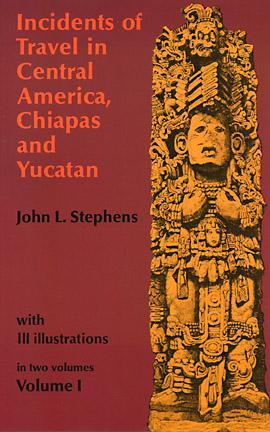
Alas, this claim does not appear on more recent Dover paperbacks. In my collection, I have at least several hundred Dover books on chess, Shakespeare, ghost stories (a Dover specialty), mysteries, G. K. Chesterton, Anthony Trollope, John Lloyd Stephens, and numerous classics in the public domain. Not only were Dover books well made, they used to be relatively inexpensive. No more. I still follow them at their website and still occasionally order from them.


A Signpost to Little-Known Great Books

A Wonderful Book by a Dartmouth English Professor

Although I was an English major at Dartmouth College, I never had a class taught by Professor Noel Perrin (1927-2004). Nevertheless, he has had an outsize influence on my reading with his book A Reader’s Delight, consisting of collected essays on interesting byways in literature which he originally wrote for the Washington Post. I always like to acknowledge my sources. For instance, there were the essays of Jorge Luis Borges, which, since around 1970, have been my principal guide to the world’s literature.

Second, however, has been Noel Perrin’s A Reader’s Delight. Following is an alphabetical list by author of the books that Professor Perrin has pointed me toward:

  • Peter S. Beagle, A Fine and Private Place
  • Ernest Bramah, Kai-Lung’s Golden Hours *
  • Bryher, Roman Wall *
  • Lord Dunsany, The Blessings of Pan *
  • William Dean Howells, Indian Summer *
  • Rose Macaulay, A Casual Commentary *
  • Joseph Mitchell, The Bottom of the Harbor *
  • Marcel Pagnol, My Father’s Glory and My Mother’s House
  • Freya Stark, The Valleys of the Assassins *
  • Stendhal, On Love *
  • Arkady and Boris Strugatsky, Far Rainbow *

What do the asterisks signify? Only that since reading the recommended book, I have read other works by the recommended author. That’s quite a record.


Future Pastoral

Poet and Fantasy Writer Clark Ashton Smith (1893-1961)

He was a strange sort of writer. One of the triumvirate of writers for which Weird Tales was known, along with H. P. Lovecraft and Robert E Howard, he is best known for his dark tales of fantasy. Of him, L. Sprague de Camp wrote, “nobody since Poe had so loved a well-rotted corpse.” Though his short stories may be a bit murky, they are great fun. If you should find copies of Zothique (1970), Hyperborea (1971), Xiccarph (1972), or Poseidonis (1973) in the old Ballantine Adult Fantasy Series, I recommend you pick up a copy and read it. At his best, Smith is as least as good as Lovecraft at his best.

Smith was also an interesting poet in the same vein. Here is a sample:

Future Pastoral

Dearest, today I found
A lonely spot, such as we two have loved,
Where two might lie upon Favonian ground
Peering to faint horizons far-removed:

A green and gentle fell
That steepens to a rugged canyon’s rim,
Where voices of vague waters fall and swell
And pines far down in sky-blue dimness swim.

Toward the sunset lands,
A leafless tree, from tender slopes of spring,
Holds out its empty boughs like empty hands
That vainly seek some distance-hidden thing.

Strange, that my wandering feet,
In all the years, had never known this place,
Where beauty, with a glamor wild and sweet,
Awaits the final witchcraft of your face.

Upon this secret hill
I gave my dark bereavement to the sun,
My sorrow to the flowing air . . . until
Your tresses and the grass were somehow one,

And in my prescient dream I seemed to find
An unborn joy, a future memory
Of you, and love, and sunlight and the wind
On the same grass, beneath the selfsame tree.

Of his writing style, Smith has said, “My own conscious ideal has been to delude the reader into accepting an impossibility, or series of impossibilities, by means of a sort of verbal black magic, in the achievement of which I make use of prose-rhythm, metaphor, simile, tone-color, counter-point, and other stylistic resources, like a sort of incantation.” I think the above poem certainly qualifies.

The Unthinking Detective

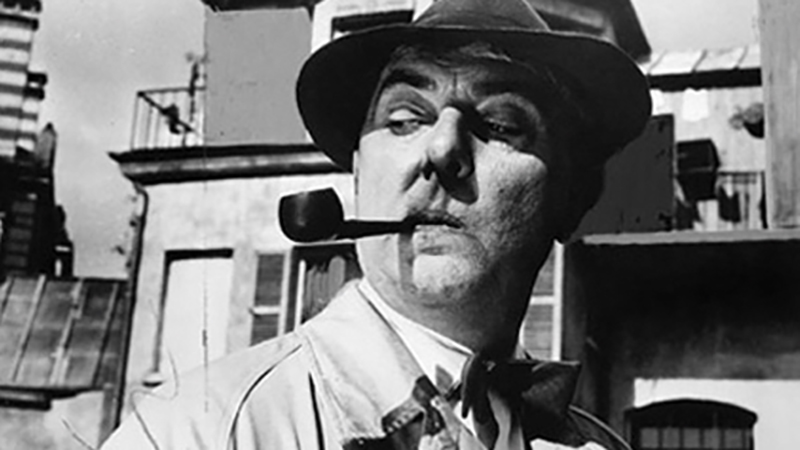
Belgian-Born Mystery Writer Georges Simenon (1903-1989)

The following is a slightly modified reprint of a posting from March 3, 2013. I have just finished reading Georges Simenon’s Maigret and the Killer and decided to look up a five-year-old review of an earlier Maigret novel.

Sometimes I am surprised that Georges Simenon’s work is not part of the university literature curriculum. After all, he did for France what Raymond Chandler, Dashiell Hammett, and James M. Cain did for the United States and what G. K. Chesterton, Dorothy Sayers, P. D. James, and Josephine Tey did for Britain. Although he was a more prolific mystery writer than all the other above mentioned authors put together, his work could stand comparison with the best.

Inspector Maigret is a mystery in his own right. Unlike Edgar Allan Poe’s notion of a tale of ratiocination, Inspector Cadaver gives us a detective who absorbs with the help of intuition more than he reasons from dry facts. In fact, his case comes together when one of the characters, Alban Groult-Cotelle, quite unnecessarily, presents a receipt as alibi that he was not involved in a murder—before it was ever suspected that he was involved. Maigret’s response is classic: “Don’t you know … that there is a saying in the police force that he that has has the best alibi is all the more suspect?”

That starts the Inspector on a train of thought:

The minute he left the house, an idea had occurred to him. It was not even an idea, but something vaguer, so vague that he was now striving to recapture the memory of it. Every now and then, an insignificant occurrence, usually a whiff of something barely caught, reminds us in the space of a second of a particular moment in our life. It is such a vivid sensation that we are gripped by it and want to cling to this living reminder of that moment. It disappears almost at once and with it all recollection of the experience. Try as we might, we end up wondering, for want of an answer to our questions, if it was not an unconscious evocation of a dream, or, who knows, of some pre-existent world?

I love reading about Maigret’s train of thought, because it is not only unique in the genre, but fascinating as an expression of the French concept of débrouillage, working one’s way through a mental fog.

In a few pages more, we see some progress has been made:

At such moments, Maigret seemed to puff himself up out of all proportion and become slow-witted and stodgy, like someone blind and dumb who is unaware of what is going on around him. Indeed, if anyone not forewarned was to walk past or talk to Maigret when he was in one of these moods, he would more than likely take him for a fat idiot or a fat sleepyhead.

“So, you’re concentrating on your thoughts?” said someone who prided himself on his psychological perception.

And Maigret had replied with comic sincerity:

“I never think.”

And it was almost true. For Maigret was not thinking now, as he stood in the damp, cold street. He was not following through an idea. One might say he was rather like a sponge.

Try to get Sherlock Holmes or Philip Marlowe to admit to something like this! He never thinks, and the facts come to him the way a sponge absorbs water. What Maigret does is allow the patterns to form by themselves in his mind. Then, he is ready to pounce!

Inspector Cadaver was published in 1944 during the War in a France under German occupation, and its atmosphere of grimness partakes of the time. And yet, and yet, Simenon, whenever he sets a tale in the provinces, creates an intriguing combination of ugly weather and pompous, ugly characters.